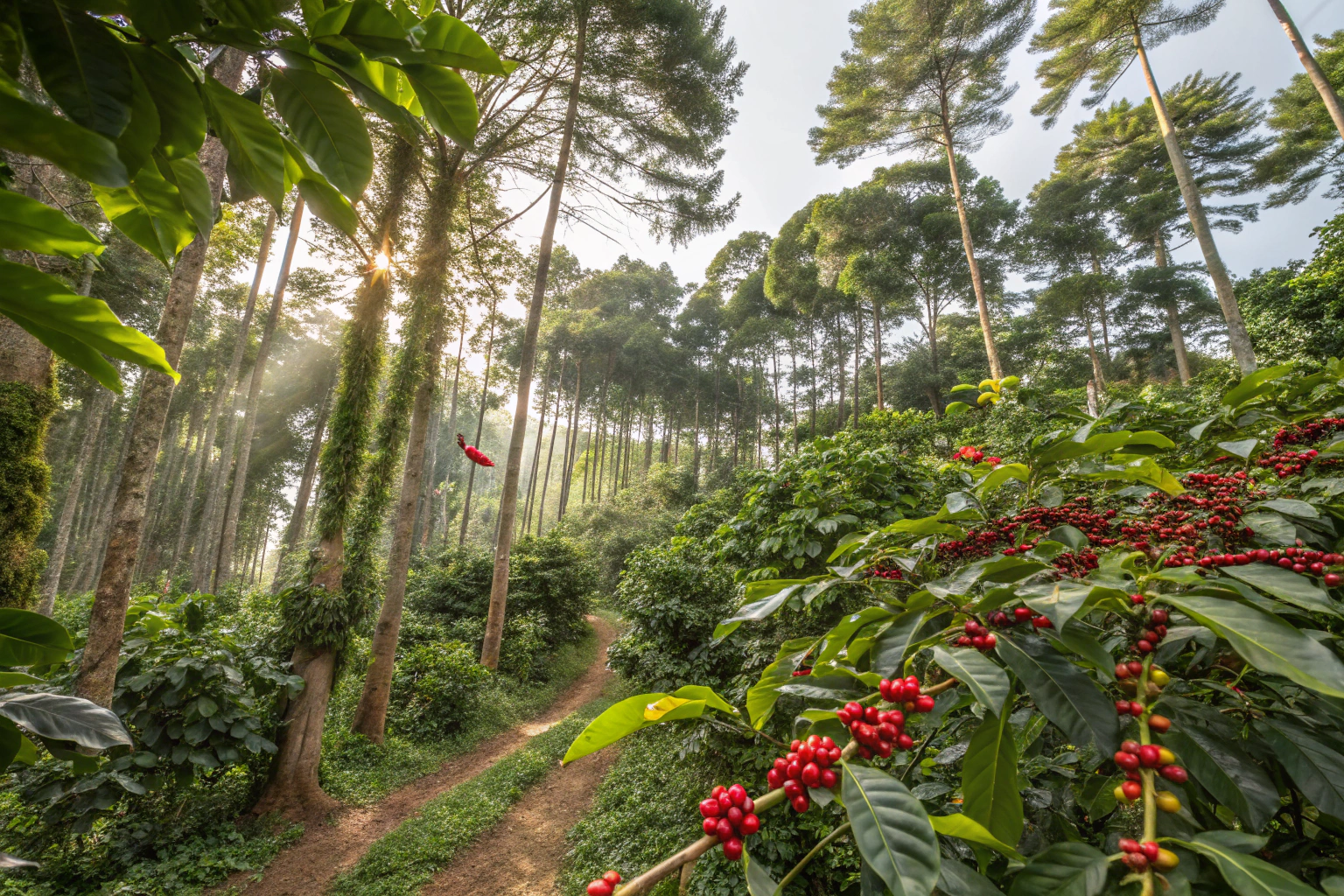
I remember a buyer from a prominent U.S. conservation group visiting our farm. He wasn't interested in our cupping lab first. He wanted to walk our fields. As we walked, he kept looking up, identifying the species of native trees that form the canopy over our coffee. He counted a dozen different types in the first hundred meters. Finally, he stopped, turned to me, and said, "Most farms I visit have coffee. Your farm has a forest. The coffee is a guest here." He understood immediately that our shade-grown system wasn't a marketing claim. It was a visible, verifiable, and thriving ecosystem. The pain for a buyer is the market's flood of meaningless "shade-grown" claims, where a few banana trees are sold as a forest. He knew how to spot the difference.
To source genuine shade-grown coffee from Asian developing countries, you must look beyond a supplier's marketing and instead demand and verify specific, measurable habitat criteria—including a minimum number of native tree species and a required percentage of canopy cover—ideally through the independent, third-party audit of a rigorous certification like the Smithsonian Bird Friendly seal, which is the gold standard of shade verification.
This is not about a feel-good story. It is about a specific, auditable, and scientifically defined farming system that produces a superior, climate-resilient coffee. Let me show you how to find it. At Shanghai Fumao, this is the very landscape of our farm, and you can learn more about our practices on our Sustainability page.
What Defines a True "Shade Grown" Coffee Farm?
The term "shade grown" has been so widely and loosely used that it has almost lost all meaning. A farmer with a couple of scattered, non-native trees can claim it. This is greenwashing. A true, functional shade-grown coffee farm is not a field with a few trees; it is a carefully managed, multi-layered agroforestry system that mimics a natural forest. It has specific, measurable, and verifiable structural characteristics.
A true shade-grown coffee farm is defined by a quantifiable structural complexity: a diverse overstory of native canopy trees providing a minimum of 40% shade cover through at least three vertical layers of vegetation, a system that is best and most credibly verified by the independent audit of the Smithsonian Bird Friendly certification.
This is not an opinion. It is a prescription for a functioning ecosystem that also happens to produce exceptional coffee. The structural definition is what separates an authentic shade farm from a marketing facade. You can investigate the official habitat criteria on the Smithsonian's National Zoo and Conservation Biology Institute website.
What Specific Criteria Define the "Bird Friendly" Habitat Standard?
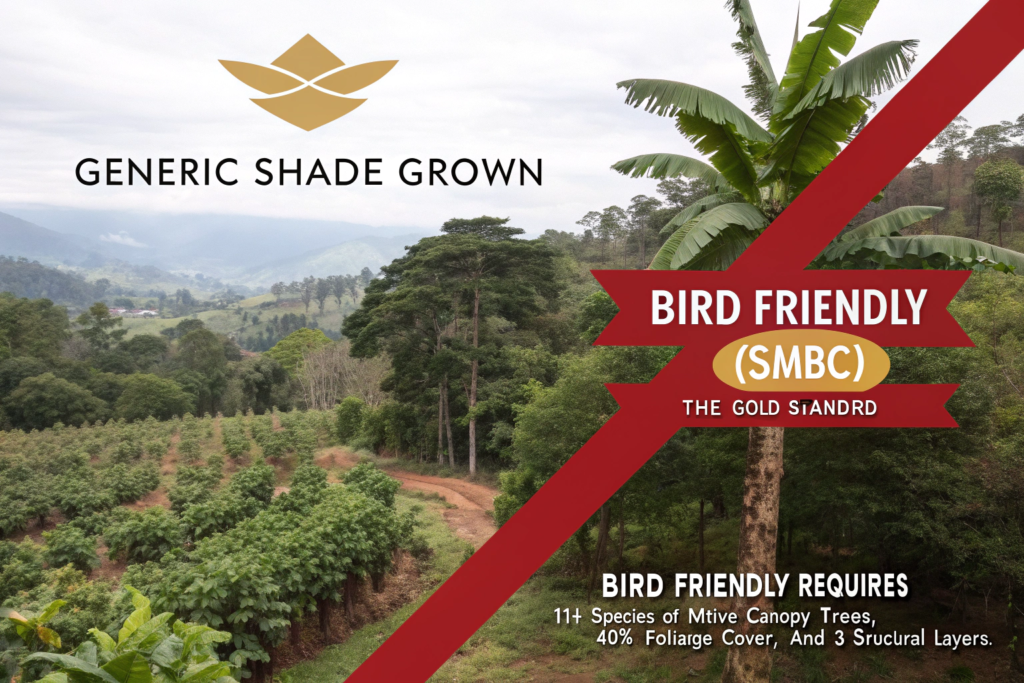
The Smithsonian Bird Friendly certification is the only standard in the world specifically designed around the proven habitat requirements of neotropical migratory birds. It is a scientific prescription, not a set of flexible guidelines. The audit is a botanical census. The inspector is often a trained ecologist or botanist who measures the farm against a strict, non-negotiable set of criteria.
To pass, a farm must demonstrably meet specific thresholds. The canopy must be composed of a minimum of 11 distinct native tree species. The combined foliage of these trees must provide at least 40% dense cover. This canopy must be structurally complex, with a minimum of three distinct vertical layers of vegetation, from a few tall emergents to a diverse understory. And as a prerequisite, the entire farm must first be certified organic. This is the rigorous, quantitative standard you should demand, a process we explain fully in our guide on How to Source Coffee Beans That Are Certified Bird Friendly?.
How Is a "Biodiverse Canopy" Different from "Technified" Sun-Grown Coffee?
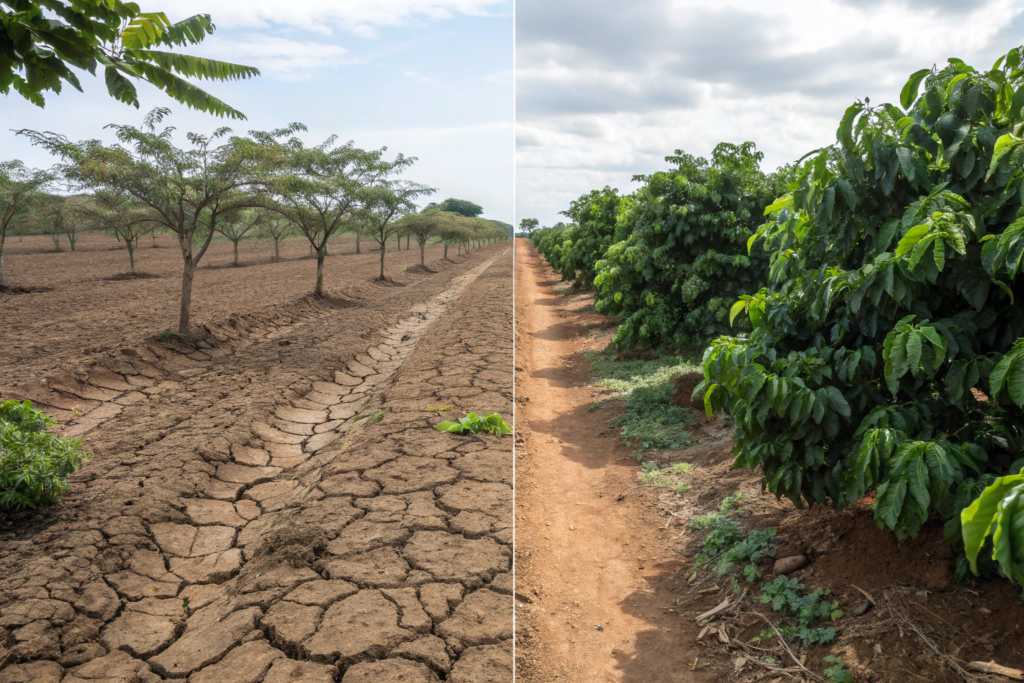
The difference is as stark as comparing a wildflower meadow to a paved parking lot. A technified, sun-grown coffee farm is a monoculture. It consists of dense rows of a single plant, designed for maximum short-term yield. There is no other plant life, and the soil is often bare and exposed. To sustain this unnatural system, it requires heavy applications of synthetic fertilizers and pesticides. It is a biological desert.
A biodiverse shade canopy is the polar opposite. It is a complex, multi-layered ecosystem where the coffee is just one productive understory shrub. The canopy of native trees moderates the temperature, recycles nutrients through natural leaf litter, and provides a habitat for a vast web of life. This system is naturally more resilient to pests and disease, sequesters carbon, and protects the soil and water. The two systems do not just look different; they function on completely different ecological principles, with profoundly different impacts on the environment and the quality of the coffee bean.
How to Verify a Supplier's "Shade Grown" Claim is Audited, Not Just Advertised?
A beautiful website and a vague promise are easy to create. An audited certification is not. Given the high market value of an authentic shade-grown claim, the risk of greenwashing is immense. You must know how to protect yourself from false claims. The good news is that a genuine certification is designed to be independently verified by you, the buyer, in a matter of minutes.
The only way to verify a shade-grown claim is to demand the supplier's unique certification number from a credible third-party standard like Smithsonian Bird Friendly and then independently verify its validity on the certifier's own public online directory, bypassing entirely the supplier's own marketing materials.
Do not accept a logo on a website. Demand the public proof. A transparent supplier will provide this number willingly and encourage you to check. At Shanghai Fumao, we provide these verification tools on our Certifications page.
What Is the SMBC Certificate Number and How Do You Check It?
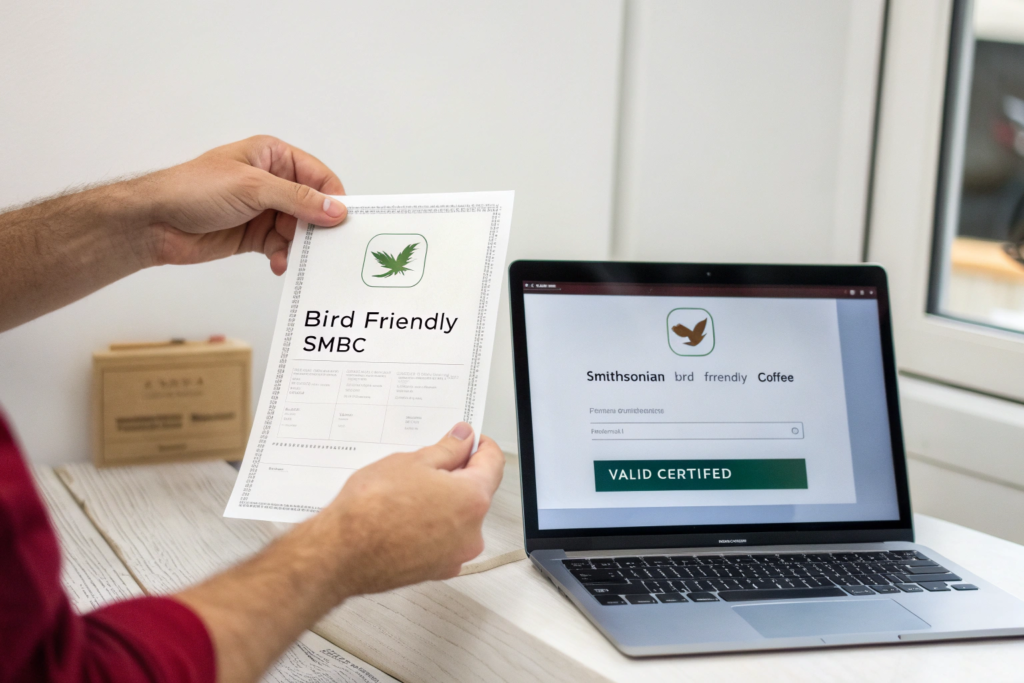
The Smithsonian Migratory Bird Center (SMBC) assigns a unique certificate number to every certified farm or producer group. This number is the public key to the certification's authenticity. It is the most powerful tool you have against fraudulent claims.
When you ask a supplier for this number, you are asking for the one piece of information that cannot be convincingly faked. Then, the verification is simple. Go directly to the official Smithsonian Bird Friendly website. Look for the public directory or the "Find Bird Friendly Coffee" page. Enter the certificate number the supplier provided. If the supplier is legitimate, the official Smithsonian database will confirm that the farm is currently certified. If the number is not recognized, the supplier is making a false claim. This process is the same exact verification philosophy we detail in How Do I Know If a Coffee Factory Certificate of Analysis Is Real?.
How Do You Know If Your Supplier Is a "Certified Farm" vs. a "Verified Roaster"?
The Bird Friendly certification covers the entire chain, from the farm that grows the coffee to the roaster who makes the final product. There are two distinct roles, and both must be certified for you to make a truthful, end-to-end claim. The distinction is critical for your own marketing.
A "Bird Friendly Certified Farm" has passed the habitat audit. A "Bird Friendly Verified Roaster" has undergone a separate supply chain audit to prove they are handling, roasting, and packaging the certified green coffee correctly without co-mingling it with conventional beans. When you are sourcing, you need to verify that your green bean supplier is a certified farm and, if you are buying a roasted private label product, that the final roaster is also verified. A transparent partner will be clear about their certifications and make them easy to verify. This is a key part of the Private Label Program we offer at Shanghai Fumao.
Why Does Shade Grown Coffee Produce a Better, More Resilient Product?
For a commercial buyer, the most compelling environmental story is the one that protects their business. The authentic shade-grown system is not just an ethical choice; it is a direct, measurable investment in product quality and long-term supply chain stability. It is a biological engine that produces a better bean and a more reliable harvest. This is the business case that closes a deal.
Shade-grown coffee produces a demonstrably better and more resilient product because the moderated microclimate under the canopy slows cherry maturation, resulting in a denser, sweeter, and more complex bean, while the deep-rooted, healthy soil of the forest system acts as a massive water sponge, making the farm naturally drought-resistant and de-risking your supply chain.
This is a system where superior quality and climate resilience are not competing goals; they are two sides of the same coin. This is the long-term value we are building for our wholesale partners. You can explore the flavor science behind this in our guide on What Affects the Flavor of Yunnan Arabica Coffee?.
How Does a Cool, Shaded Microclimate Create a Sweeter, Denser Bean?
A coffee plant growing in full, scorching sun is in a state of constant heat stress. It operates in survival mode. It desperately pushes out a large crop of cherry as quickly as possible, sacrificing the complex sugar development for speed. The result is a less dense, less sweet bean. A shaded tree lives a fundamentally different reality.
The canopy of native trees moderates the temperature, protecting the coffee plant from heat stress. This creates a consistently cooler microclimate that slows the entire maturation process of the cherry. This gives the seed weeks of extra time to fill with complex sugars and carbohydrates. It is this slow, patient build-up that directly translates into a physically denser bean and a sweeter, more complex, and more nuanced cup with a velvety body. This is a proven, measurable link between the forest and the flavor.
How Does a Shade-Grown System Create Natural Drought and Pest Resilience?
A sun-grown monoculture is an ecological house of cards; it is inherently fragile and dependent on chemical crutches. A diverse, shade-grown system is a fortress. Its resilience is built on two powerful, interconnected principles: a healthy soil and a balanced ecosystem.
The deep, complex root systems of the native shade trees, combined with the permanent protective layer of leaf litter they create, build a soil that is extraordinarily rich in organic matter. This healthy soil acts as a massive sponge, absorbing and retaining dramatically more water than a bare field, making the farm naturally drought-resistant. Simultaneously, this complex, multi-layered environment provides a year-round home for a vast army of beneficial insects, spiders, and birds that are the natural predators of the coffee berry borer and other pests. In this balanced ecosystem, pests rarely get the chance to become a plague. This built-in resilience is a guarantee of a more reliable supply for your business, year after year.
How Can a "Beyond Bird Friendly" Approach Build a Premium Brand?
Securing a verified shade-grown supply is a significant sourcing achievement. But the true commercial power is unleashed when you translate this ecological commitment into an emotionally resonant brand story for your customers. A "Beyond Bird Friendly" approach means actively using the certification to connect with one of the most passionate and loyal consumer groups in the world. You are not just selling coffee; you are selling a direct, verifiable action that protects the birds they love.
A "Beyond Bird Friendly" approach builds a premium brand by transforming a conservation practice into a powerful, emotional, and highly defensible marketing narrative that directly connects your customer's love of nature with their daily coffee purchase, allowing you to successfully charge a premium price that is seen not as an upcharge, but as a donation to a cause they deeply care about.
The story changes from a transaction to a shared act of conservation. It is the ultimate brand differentiator.
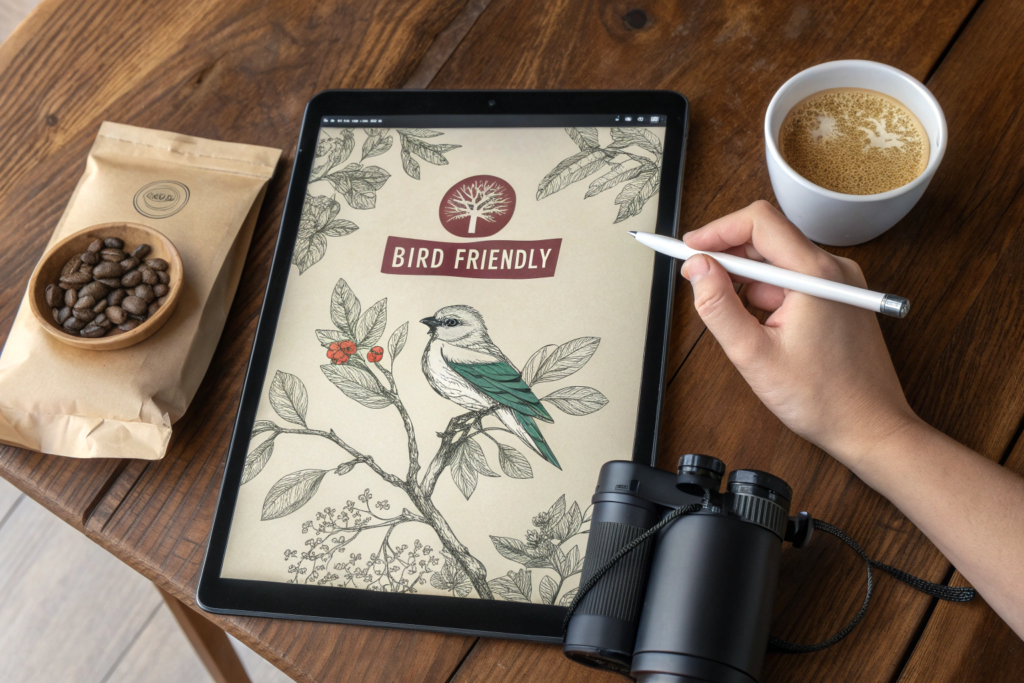
Why Is "Habitat" a More Powerful Story Than Just "Organic"?
A consumer who cares about biodiversity might have a vague understanding that organic is good. But they may not make the direct, personal link between a farmer not using a pesticide and a specific bird in their own backyard. The Bird Friendly story makes this link visceral and undeniable. It is about a specific, tangible habitat.
The narrative shifts from "this coffee doesn't have bad chemicals" to "this coffee is a forest, a thriving, living ecosystem that is a direct, verifiable home for migratory birds." This is a profoundly more personal, emotional, and urgent story. This narrative forms a powerful, unassailable bond with the customer. The premium price they pay is no longer a cost; it is a satisfying, emotional act of direct conservation. It is the warm feeling of knowing your morning cup of coffee is actively saving a piece of forest. This is a story that commands a price premium and builds an intensely loyal community around your brand.
Can You Use This Story to Target the Passionate Birdwatcher Market?
Absolutely. This is one of the most focused and profitable niche marketing opportunities in specialty coffee. The birdwatching community is global, passionate, and highly organized, and they are actively looking for you.
This is a market with its own dedicated media, from the National Audubon Society and the American Birding Association to countless local chapters, online forums, and festivals like "The Biggest Week in American Birding." These consumers are not casually interested; they are deeply committed and have significant disposable income. A direct partnership marketing strategy, where a portion of proceeds from each bag goes to a specific conservation cause, creates an incredibly compelling reason for them to switch brands and become loyal advocates. They will actively seek out your coffee. Partnering with a specific local Audubon chapter or a bird observatory makes the impact tangible and local. This is a strategy that turns a certification into a community, and a customer into a lifelong partner.
Conclusion
Sourcing genuine shade-grown coffee from Asia is a deliberate, strategic choice to verify an ecological claim, invest in a demonstrably superior product and a more climate-resilient supply chain, and build a powerful, emotional brand story.
The path is clear. You must move beyond a supplier's marketing and demand the independent, public proof of a credible third-party audit, such as the Smithsonian Bird Friendly seal. This certification verifies a specific, biodiverse habitat, not a vague promise. It is a system that produces a sweeter, more complex bean in a forest that is naturally drought-proof, and it provides you with an authentic story that commands a premium price from a passionate customer base.
At Shanghai Fumao, our farm in the Gaoligong Mountains is a living example of this philosophy. Our coffee is grown within a biodiverse, shade-rich ecosystem that provides real habitat for migratory birds, and our practices are verified by the rigorous Bird Friendly audit.
If you are ready to source a coffee that is demonstrably good for birds, exceptionally good in the cup, and reliably good for your business, I invite you to explore our Bird Friendly certified lots. Email Cathy Cai. Ask for our "Bird Friendly Certified Lot List, Audit Summary, and Marketing Toolkit." Contact Cathy at: cathy@beanofcoffee.com