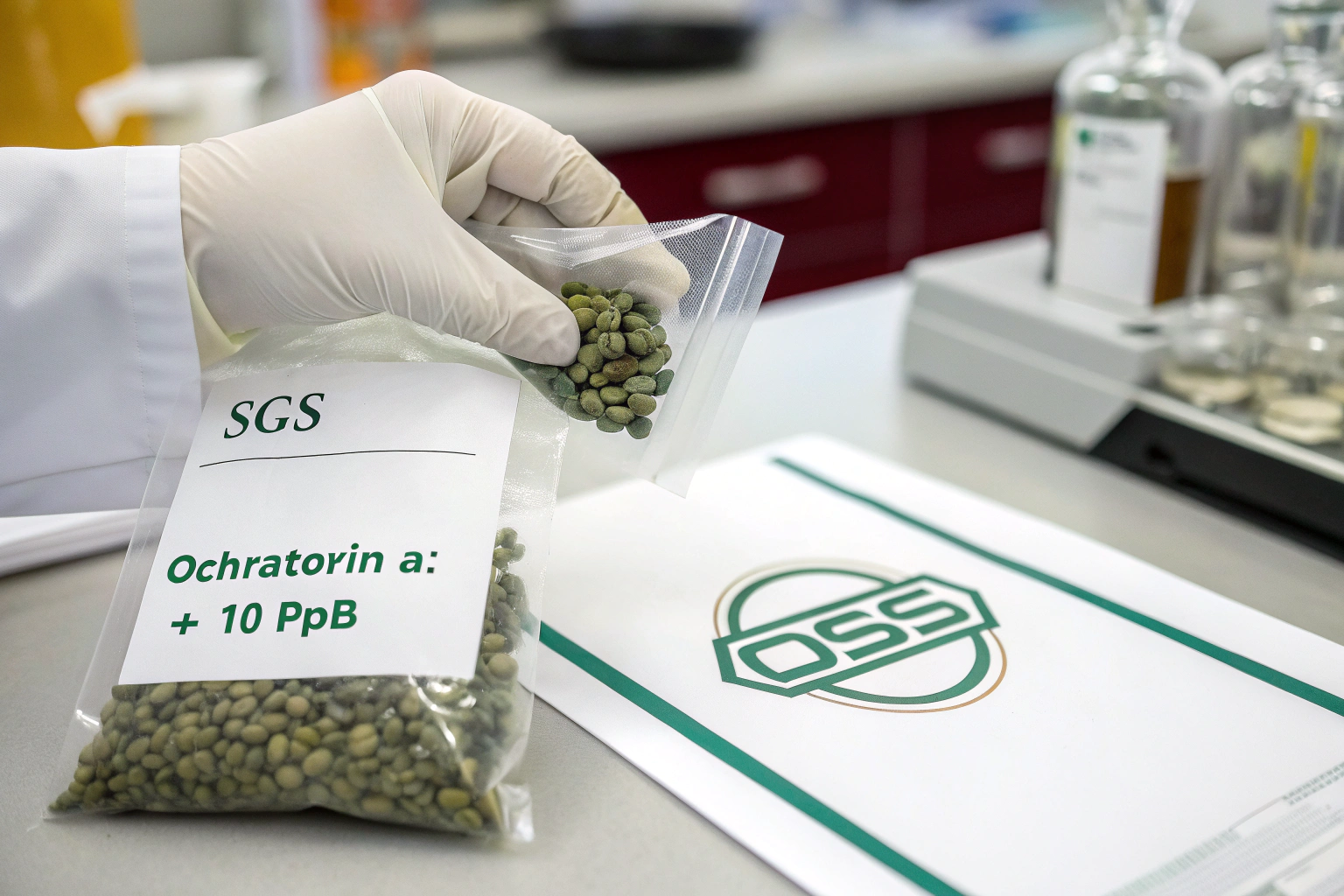
I once received a panicked call from a roaster in Berlin. His entire container of coffee had been flagged at the port. A random EU test had found a trace of Ochratoxin A just above the legal limit. The shipment was rejected. He faced the total loss of the coffee, a crippling blow to his cash flow, and a terrifying knock on his brand's reputation. He asked me, "How did this happen? I thought my supplier tested!" The painful truth was, his supplier had only tested a composite sample from an entire warehouse, not the specific lot that was shipped. The test was a security blanket, not a security system.
To ensure your coffee beans are not contaminated with Ochratoxin A, you must demand a multi-layered, preventive system from your supplier that combines rigorous, climate-smart agricultural and processing practices with a verified, lot-specific, third-party lab test, using an ISO 17025 accredited method with a detection limit of less than 1 part per billion on a true, traceable Pre-Shipment Sample that you can independently verify.
This is not a single test. It is a complete, farm-to-container guarantee. Let me explain the system we built at BeanofCoffee to make an OTA failure a near-impossible event. You can see this commitment in action on our Quality Control page at Shanghai Fumao.
How Do Agricultural and Processing Practices Prevent OTA at the Source?
The most effective way to ensure your coffee is free of Ochratoxin A is not to test for it at the end. It is to create a physical and biological environment where the toxin-producing molds cannot grow in the first place. This is a proactive, preventive strategy that is built into the very climate and processing protocols of our farm. A clean test result should be a foregone conclusion.
OTA contamination is prevented at the source by leveraging our unique dry-season harvest climate, which is a natural fungicide, combined with a rigorous processing protocol that uses raised African drying beds for fast, even, and soil-free drying, and a final stabilization step that verifies the coffee's water activity is below the critical 0.60 aw threshold where mold growth is biologically impossible.
This is about building a fortress against mold. Let me show you how each layer works. This is the same holistic philosophy we detail in Are Yunnan coffee beans organic and non-GMO?.
Why Is Water Activity a Better Predictor of Safety Than Moisture Content?
For years, the coffee industry focused only on moisture content. We would say, "The coffee is at 11.5%, so it's safe." But we saw occasional, unexplained mold outbreaks even in coffee with a "safe" moisture reading. The simple measurement was lying to us. The real master variable is water activity.
Moisture content tells you how much total water is in the bean. Water activity (aw) measures how much of that water is "free" and available for molds and bacteria to use. You can have two beans, both at an identical 11.5% moisture, but one with a biologically stable aw of 0.55 and the other with a dangerous aw of 0.65, where fungi like Aspergillus ochraceus can thrive. Our internal premium standard, as we explain in our deep dive on Why Is Water Activity in Green Coffee Just as Important as Moisture?, mandates an aw of less than 0.60. This is a hard, biological "do-not-cross" line. We measure it on every single lot before it is approved for export.
How Does Our Dry, High-Altitude Climate Act as a Natural Fungicide?
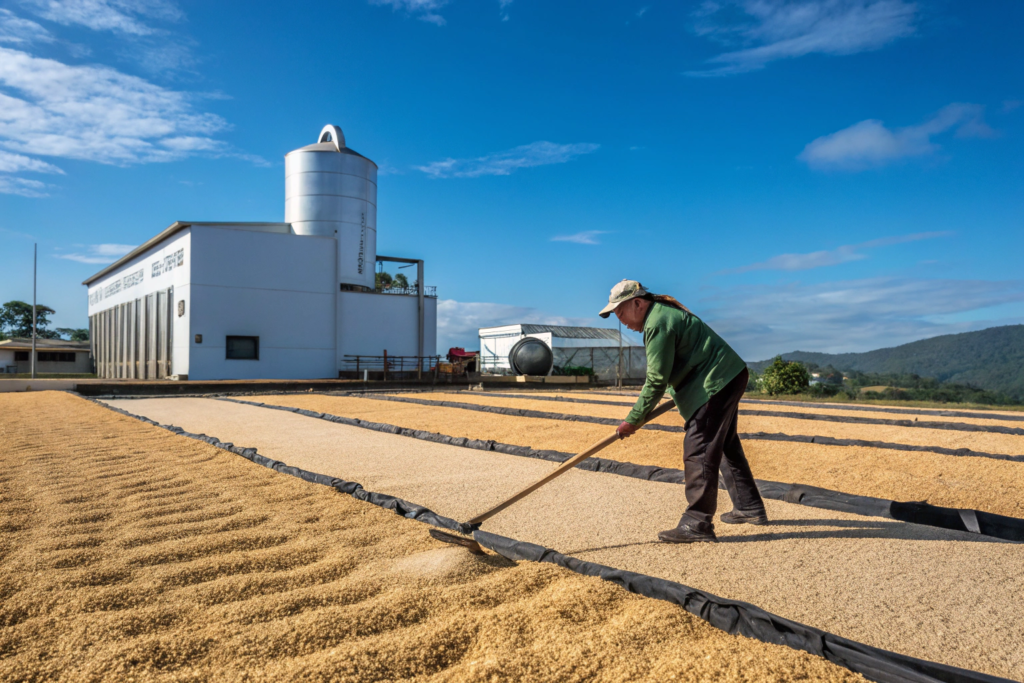
Mold needs water. More specifically, it needs a film of liquid water on the surface of the bean for its spores to germinate. The most powerful weapon we have against OTA is not a chemical; it is our location. Our harvest season is also our dry season, a unique climatic advantage that fundamentally alters the risk profile of our coffee.
In many other coffee origins, the harvest coincides with rain. Coffee dried on patios is in a constant race against afternoon downpours, and the persistent humidity is a constant invitation for mold. In Baoshan, our harvest from November to February takes place under clear skies and low humidity. This dry, sunny, and breezy weather allows us to dry the parchment on our raised beds quickly and evenly, without fear of re-wetting. The environment itself is inhospitable to the Aspergillus fungi. This climatic gift is the first and most powerful step in guaranteeing a clean coffee.
What Is a "Lot-Specific" OTA Test and How Is It Properly Conducted?
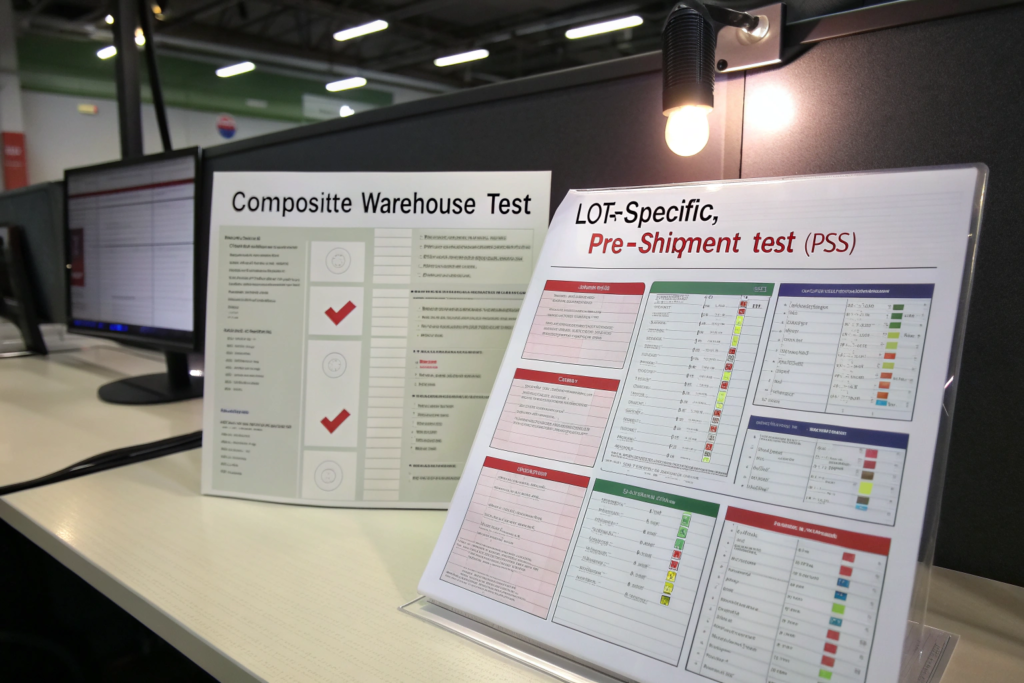
You have asked your supplier for "an OTA test." They send you a clean report. You feel safe. But what if that test was performed months ago on a different batch of coffee? This is the "composite test" gamble, and it is one of the most common ways a buyer is deceived into a false sense of security. A single test is useless unless it is verifiably linked to the specific coffee in your container. The sampling protocol itself is the forensic link.
A lot-specific OTA test derives its validity from a scientifically rigorous sampling protocol, where a true, representative Pre-Shipment Sample (PSS) is drawn from at least 10% of the bags in the finished lot using a sterile trier, then securely sealed, labeled, and tracked with a formal Chain of Custody document to the laboratory, guaranteeing the analytical result belongs to your specific coffee.
You must demand that the laboratory report includes your specific lot number, and that this number matches your contract, your invoice, and the bags themselves. This is the chain of evidence that protects you. The methodologies we use are often benchmarked against standards from the European Commission's Joint Research Centre.
How to Verify the Test Is a "True PSS" from Your Actual Container?
A clever but unscrupulous supplier could send you a clean test on a hand-picked "golden sample" that is not representative of the full lot. You must demand a verifiable protocol that proves the tested sample is a true miniature of your shipment. You must have independently verifiable proof.
A true Pre-Shipment Sample (PSS) must be a statistically representative composite, drawn from at least 10% of the actual bags in your finished, designated lot, using a sterile trier. This process should be documented in a formal Chain of Custody (CoC) document that records the date, the lot number, and the signatures of the sampler. As we explain in our guide on How to Get a Pre-Shipment Sample Approved for Coffee Wholesale?, this CoC, along with a tamper-evident seal on the sample bag, is the forensic proof that the test result belongs to your specific coffee. Without a documented CoC and a matching lot number, the test result is legally worthless.
How to Read a Third-Party CoA for OTA?
The supplier's lab report has arrived. It looks good. But you must know exactly what to look for before you can trust it. A result that simply says "PASS" is insufficient. You need the specific data.
First, and most critically, check the "Lot Number" on the report and verify it matches your contract. A missing or mismatched number is an immediate red flag. Second, look for the analytical method used. It should state a validated method like HPLC with fluorescence detection. Third, do not accept a generic "Not Detected" result. The report must state the Limit of Quantification (LOQ). For a meaningful OTA test, the LOQ should ideally be less than 1.0 ppb and must be at least 5.0 ppb. A result of "< 5.0 ppb" from a test with a 5.0 ppb LOQ does not prove the coffee is clean; it only proves your supplier chose a less sensitive test. A transparent partner will provide a report with all of these details. This is part of the same verification philosophy we discuss in How Do I Know If a Coffee Factory Certificate of Analysis Is Real?.
How Is the Approved Quality Locked In During Storage and Shipping?
You have a lot-specific, verifiable test on a true PSS proving your coffee is clean. The final, crucial step is to ensure that the coffee that leaves the mill in this pristine condition arrives at your roastery in the exact same condition. A clean coffee that is then stuffed into a standard, breathable jute bag for a 4-week ocean voyage is a ticking time bomb for moisture reabsorption and potential mold growth. The packaging is as important as the test.
To ensure the tested quality is preserved, the approved lot must be immediately sealed in an impermeable GrainPro hermetic liner, which physically locks in the stable low water activity, and then shipped in a well-maintained container, a protocol that is as vital as the test itself.
The GrainPro bag is not a luxury; it is the final, non-negotiable link in the food safety chain. It is the physical guarantee that your clean coffee stays clean, all the way from our warehouse to yours.
How Does a Hermetic GrainPro Liner Lock In Low Water Activity?
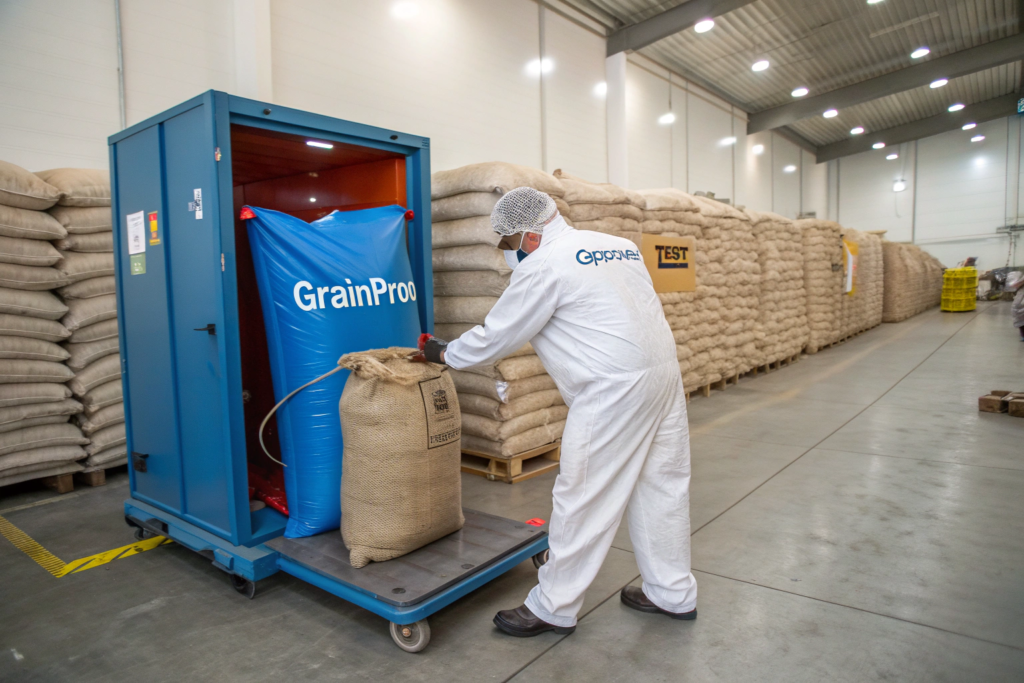
The science is simple but powerful. The EVOH barrier at the core of a GrainPro bag is impermeable to water vapor, creating a completely isolated microclimate around the beans once it is heat-sealed. This barrier effectively puts the aging and spoiling process on pause.
Once our Q-Grader approves a lot and it passes its final OTA test, it is immediately bagged and the GrainPro liner is hermetically sealed. This action physically locks the bean's safe, low water activity of less than 0.60 aw inside a water-proof vault. No external humidity from the monsoon-season warehouse or the long Pacific ocean voyage can penetrate the barrier and "wake up" any dormant mold spores. The coffee is sealed in a state of microbiological stability. This technology is the only reason we can confidently guarantee the safety of our coffee for a full 12-month shelf life, as we explain in Why Do Coffee Roasters Prefer GrainPro Bags for Shipments from Asia?.
Why Is a Clean Container and Proper Stuffing a Final Critical Control Point?
Even a perfectly sealed GrainPro bag can be compromised by a damaged container. A small hole in the roof can allow rainwater in, creating a pool of standing water in which the bags sit for three weeks, inviting mold growth on the outer jute and creating a massive, localized humidity spike. The container is the final physical environment you must control.
Our BRCGS-certified stuffing protocol treats the container as a final Critical Control Point. Our team inspects the container's interior for holes, cleanliness, and odors. We hang powerful desiccant bags to absorb any residual moisture. The bags are loaded on pallets to allow air circulation, and the container is sealed with a high-security bolt seal. This final, meticulous check ensures that the microbiologically stable coffee you tested and approved is placed in an equally stable environment for its journey to you.
How Can a Roaster Conduct Their Own "Safety Audit" of a Supplier?
You now understand the protective systems a supplier should have in place. The final step is to audit a potential partner on these exact parameters. You do not need to fly to Baoshan. You can conduct a powerful, evidence-based safety audit from your own desk by asking the right questions and demanding the right documents.
A roaster can conduct a powerful "safety audit" of a supplier by asking to see their HACCP plan for OTA risk management, requesting a lot-specific CoA and its associated Chain of Custody, and independently searching the supplier's name in public food safety violation databases like the EU's RASFF portal.
A supplier who transparently provides this data passes the audit. A supplier who makes excuses fails it.
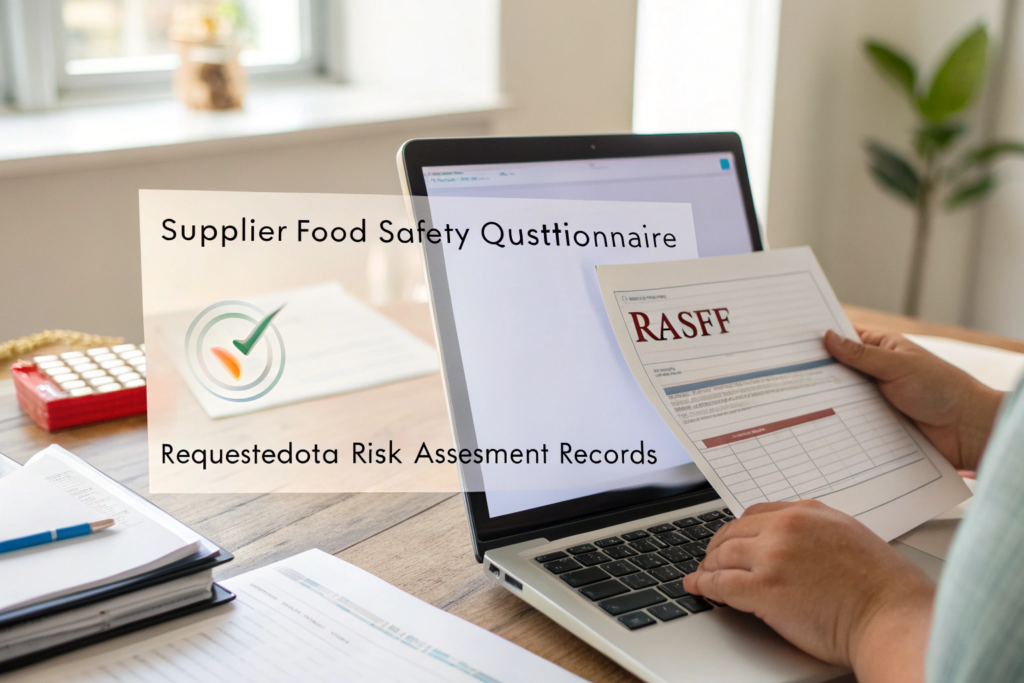
What Specific Questions Should You Ask About a Supplier's HACCP Plan?
A serious supplier will have a documented HACCP plan that specifically addresses the biological hazard of Ochratoxin A. A vague answer about "general quality control" is a failed audit. Your questions should force the supplier to demonstrate their specific, documented controls.
Ask these three precise questions: "Can you share the flow diagram from your HACCP plan that identifies the specific processing steps where OTA contamination is controlled?" "How do you verify that your drying and storage protocols consistently achieve a water activity of less than 0.60 aw?" "What is your specific corrective action procedure if a lot fails its final OTA test?" A supplier who can answer these questions clearly and provide the referenced documents is demonstrating a mature food safety culture, as we detail in our guide on How to Verify a Supplier's HACCP Plan for Coffee Processing?. A supplier who cannot is a significant risk.
How Can You Use the EU "RASFF" Portal to Check a Supplier's Real-World Record?
The European Union's Rapid Alert System for Food and Feed (RASFF) is a powerful, free, and public database that reveals a supplier's actual, real-world food safety history. It is the ultimate tool for an independent background check, and it is something we encourage all of our partners to use.
You can access the RASFF portal and search past notifications by country of origin, product, and even notification subject. You should search for your supplier's company name and also filter for notifications related to "coffee" from China. The presence of a recent RASFF alert for an OTA contamination is a definitive, public-record red flag about a supplier's competence. A clean RASFF history for a large-volume exporter, on the other hand, is a powerful, positive signal. You can access this tool on the official RASFF website.
Conclusion
Ensuring your coffee beans are not contaminated with Ochratoxin A is not about a single, anxious test at the port. It is about building an entire, preventive, farm-to-container guarantee. It starts with climate-smart agriculture and water activity management that prevents the toxin from forming. It is verified by a lot-specific, third-party test on a true, traceable Pre-Shipment Sample. It is then physically secured by hermetically sealing the approved coffee in a GrainPro liner for its journey to you. And the entire system's integrity is something you, the buyer, can independently audit.
At Shanghai Fumao, this complete, multi-layered system is our definition of a safe cup. We don't just hope our coffee is clean. We engineer it to be clean, test it with forensic precision, and then package it in a way that guarantees it stays that way.
If you want to receive a sample of our OTA-free coffee, accompanied by the full, lot-specific documentation and our HACCP plan summary, we welcome the opportunity to earn your trust. Email Cathy Cai. Ask for a "Verified OTA-Free Pre-Shipment Sample and Food Safety Audit Pack." Contact Cathy at: cathy@beanofcoffee.com