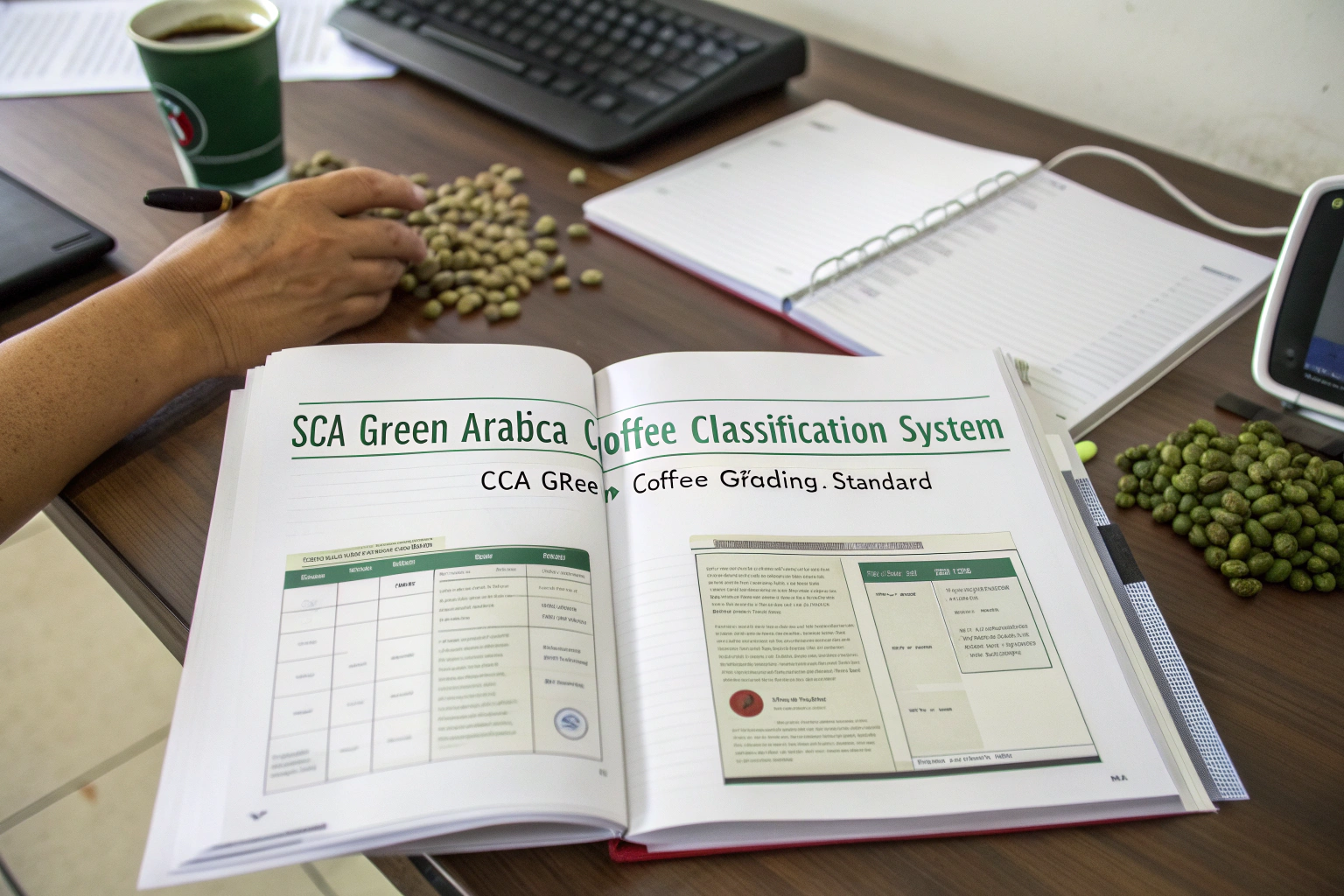
I remember a negotiation with a new buyer from Germany. He was looking at a sample of our Grade 1 Yunnan Arabica, and I could see the doubt on his face. "I've been burned before by 'Grade 1' coffee from new origins," he said. "It sounded good on paper, but the container was a mess of broken beans and defects." I didn't get defensive. I reached for my laptop and pulled up a PDF. It was the official Specialty Coffee Association (SCA) Green Arabica Coffee Classification System. I showed him, line by line, how our internal specification not only met the SCA's definition of Specialty Grade but exceeded it. The doubt on his face vanished. He had a universal, objective, and internationally recognized standard to measure us against.
Yes, there are rigorous, globally recognized industry standards for green coffee quality, with the Specialty Coffee Association (SCA) Green Arabica Coffee Classification System being the definitive international benchmark, complemented by national standards like China's CCA Grading Standard, which together define a universal, measurable language of physical quality based on screen size, defect count, moisture content, and cup score.
A claim of "premium" is meaningless without a specific, objective standard to back it up. Let me explain the two most important standards that govern our industry and how you can use them to guarantee the quality of your supply. At Shanghai Fumao, these are the standards that define our entire Quality Control program.
What Is the SCA Green Coffee Classification and Why Is It the Global Benchmark?
The SCA Green Arabica Coffee Classification System is the Rosetta Stone of coffee quality. It is the universally accepted, scientifically rigorous protocol that translates the physical and sensory properties of a green coffee bean into an objective grade. It is the standard against which all specialty coffee, from every origin, is measured. If you understand this single system, you hold the key to objectively evaluating any coffee in the world.
The SCA system is the global benchmark because it provides a complete, unified, and transparent methodology that combines a strict physical defect count (using a 350g sample) and a calibrated sensory evaluation on a 100-point scale, resulting in a final "Specialty Grade" classification for coffees scoring 80 points or higher with zero primary defects.
This is not a trade secret. It is an open-source, published standard designed to create a transparent and fair market. The official standard can be found on the Specialty Coffee Association website.
How Does the SCA Defect Count Create a Universal "Pass/Fail" Physical Test?
The sensory score is the art. The physical defect count is the science. Before we even discuss the flavor, a coffee must pass a rigid, objective physical exam. The SCA standard specifies a precise methodology and a strict tolerance that is the same for a coffee from Colombia, Ethiopia, or our farm in Baoshan.
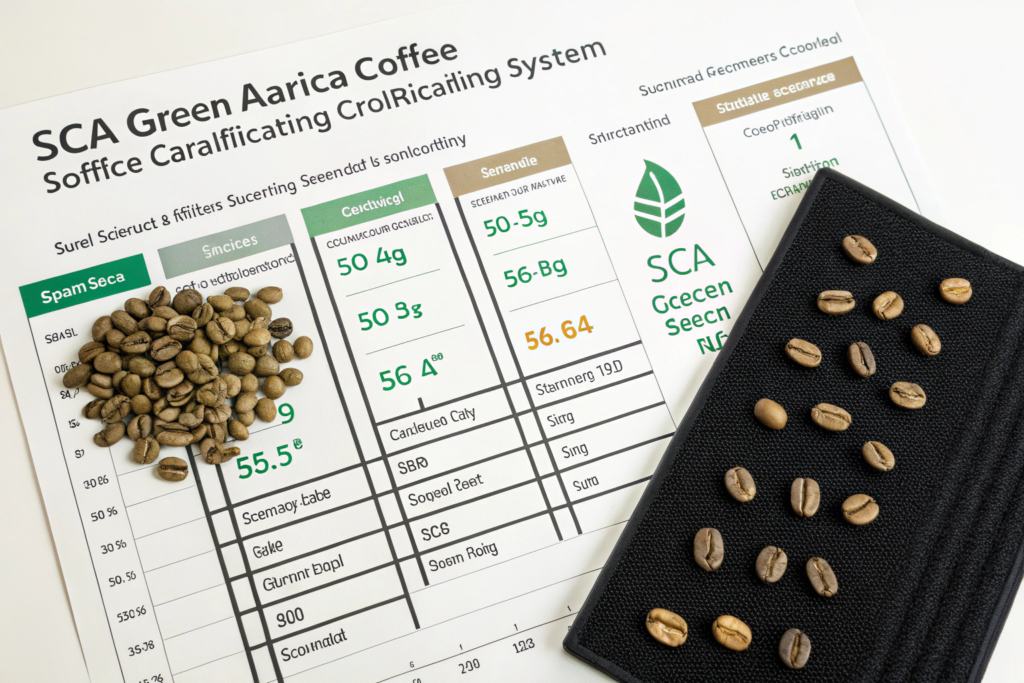
The test is performed on a standard 350-gram sample of green coffee. This sample is meticulously sorted on a black grading mat under bright light. The grader identifies and counts every imperfection, using the official SCA Defect Handbook. A truly premium lot, to be classified as SCA Specialty Grade, must have zero "Category 1" (primary) defects, such as a full black bean or a full sour bean. It is also allowed a maximum of five "Category 2" (secondary) defects. This single, universal pass/fail test is your best defense against mixed beans, as we detail in our guide on How to Ensure Your Coffee Supplier Isn't Mixing Lower Grade Beans?.
What Is the Role of the 100-Point Q-Grader Score in the Standard?
A coffee can be physically perfect and taste dull and uninspired. The second half of the SCA standard brings the human palate into the equation, but in a calibrated, objective, and repeatable way. The 100-point scale is the universal language of coffee flavor.
A certified Q-Grader—a professional taster licensed by the Coffee Quality Institute—evaluates the coffee using a standardized cupping protocol. They score ten specific attributes, including flavor, aftertaste, acidity, body, and balance. A coffee must achieve a minimum total score of 80 points on this scale to be classified as "Specialty Grade." This calibrated sensory evaluation, combined with the physical defect count, creates a complete and trustworthy definition of quality. This is the exact protocol we use in our own cupping process, which you can learn about in What Is the Cupping Protocol at BeanofCoffee for Export Approval?.
How Do National Standards Like China's CCA Grade Align with the SCA?
A smart international buyer might ask, "That SCA standard is great, but does China just follow its own rules?" The answer is a definitive no. The Chinese national standard for green coffee quality, developed and promoted by the China Coffee Association (CCA), is not a separate, lower, "local" standard. It is deliberately and transparently based on the same internationally recognized protocols. This alignment is what makes Chinese specialty coffee credible in the global market.
China's CCA Grade 1 standard for green coffee is directly harmonized with the international SCA Specialty Coffee classification, using the same 350-gram defect evaluation and an equivalent scoring approach, ensuring that a top-graded coffee from China meets the same rigorous physical criteria demanded by the global specialty market.
This alignment is the bridge of trust between our farm and your roastery. You can be confident that a "CCA Grade 1" coffee is evaluated against the same benchmark as an "SCA Specialty Grade" coffee from anywhere else in the world. You can learn more about this in What Is the Role of the China Coffee Association in Export Quality?.
What Is the Official CCA Green Coffee Grading Standard?
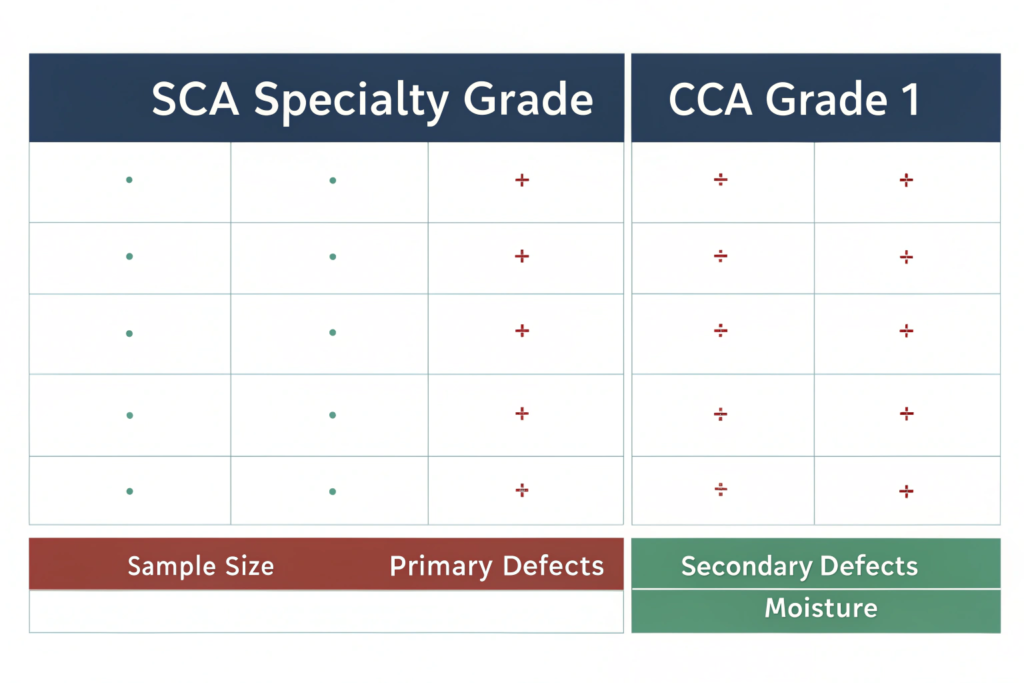
The CCA has published a formal, documented standard for green coffee. For a buyer, this is a crucial reference document. It is not just a marketing slogan; it is a legal and commercial specification that defines what a specific grade means.
The standard, which is referenced in many Chinese coffee contracts, specifies in detail the required criteria for different grades, mirroring the SCA's format. When your contract with a Chinese supplier specifies "CCA Grade 1," you are not relying on a vague promise. You are legally referencing a published, measurable, and auditable set of physical criteria, including specific limits for moisture content and the count of full and partial defects. This provides a clear and legally defensible basis for a quality claim. This is the same principle we use in our Green Coffee Specifications page.
How Does This Dual-Standard System Guarantee a Global Level of Quality?
The existence of a robust Chinese national standard that is harmonized with the SCA system creates a powerful, multi-layered quality guarantee. It means our coffee is not evaluated once by an isolated system, but is subject to a comprehensive, interlocking framework of quality control.
Our coffee's quality is cross-verified by multiple systems. It is internally inspected by our own rigorous Q-Grader-led program, which is itself benchmarked against the SCA protocol. It is then often independently verified by a third-party inspection agency like SGS. Finally, its grade is legally defined by the Chinese national standard, the CCA Grade, which a buyer can independently verify on the SCA and CCA websites. This overlapping, transparent system eliminates the risk of a single supplier making a subjective claim. It makes the quality of your coffee a provable, multi-source fact.
How Can a Buyer Use These Standards to Write an Ironclad Specification?
Understanding the standards is the first step. The most powerful step you can take is to embed them directly into your purchasing contracts. This transforms a generic purchase into a legally binding quality agreement, shifting the risk of an inconsistent shipment away from your business. You are no longer just hoping for a good container; you are contractually defining what a "good container" must look like.
A buyer can create an ironclad specification by explicitly stating in their purchase contract that the coffee must meet the physical and sensory requirements of both the SCA Specialty Grade Standard and the applicable national standard, such as the CCA Grade 1 Standard, thereby creating a legally enforceable, objective, and third-party verifiable definition of quality.
This is your ultimate quality insurance. Let me show you how to do it. At Shanghai Fumao, we welcome and actively encourage our partners to build their custom spec sheets, a process we explain in our guide on How to Write a Clear Specification Sheet for Your Coffee Bean Order?.

What Specific Language Should You Include in Your Contract?
Do not just write "high quality" in your contract. That is a legally meaningless term. You should use the precise and formal language of the industry standards themselves. This makes your definition legally binding and scientifically verifiable.
Here is an example of a quality clause you can include in your next contract with us or with any supplier: "The green coffee supplied under this contract must meet the physical and sensory requirements of a 'Specialty Grade' as defined by the SCA Green Arabica Coffee Classification System, scoring a minimum of 83 points on the SCA cupping form, with zero Category 1 defects and no more than five Category 2 defects in a 350-gram sample. The coffee must also conform to China's CCA Grade 1 Standard." This language leaves no room for subjective argument. It references specific, published, and measurable criteria. It is by far your best form of insurance.
How Can You Use a Pre-Shipment Sample to Verify the Standard Is Met?
The best contract in the world is still just a piece of paper. The true power of these standards is realized when you verify them with a physical sample before the coffee ships. This is where you, the buyer, become the final and most important quality gate.
Before a container of our coffee is sealed, we pull a true, representative Pre-Shipment Sample (PSS) from your exact lot and ship it to you. You then become the independent verifier. You can perform your own physical defect count on the 350-gram sample. You can roast it and cup it yourself, making your own determination of the coffee's score. This is the ultimate application of the standards. Your personal verification of the SCA/CCA criteria on the PSS is the definitive quality control that guarantees the container will meet the ironclad specification you wrote into the contract.
Conclusion
The green coffee industry does not operate on guesswork or empty marketing claims. It operates on a foundation of rigorous, transparent, and internationally harmonized standards, with the SCA's system leading as the definitive global benchmark and national standards like China's CCA Grade 1 providing an aligned, localized implementation.
These standards are your most powerful tools as a buyer. They provide a universal, objective, and legally binding language to define the quality you expect, to verify the claims of any supplier, and to protect your business from the painful cost of inconsistency.
At Shanghai Fumao, our entire quality system—from our field practices to our final cupping—is built to meet and exceed these exact standards. We do not just talk about quality; we grade it, score it, and contract it to a published, verifiable specification.
If you want to receive a sample of our current lot, along with our internal SCA-based scoresheet and a sample contract with these ironclad quality clauses, we invite you to start that conversation. Email Cathy Cai. Ask for a "Standards-Verified Sample and Spec Sheet Pack." Contact Cathy at: cathy@beanofcoffee.com