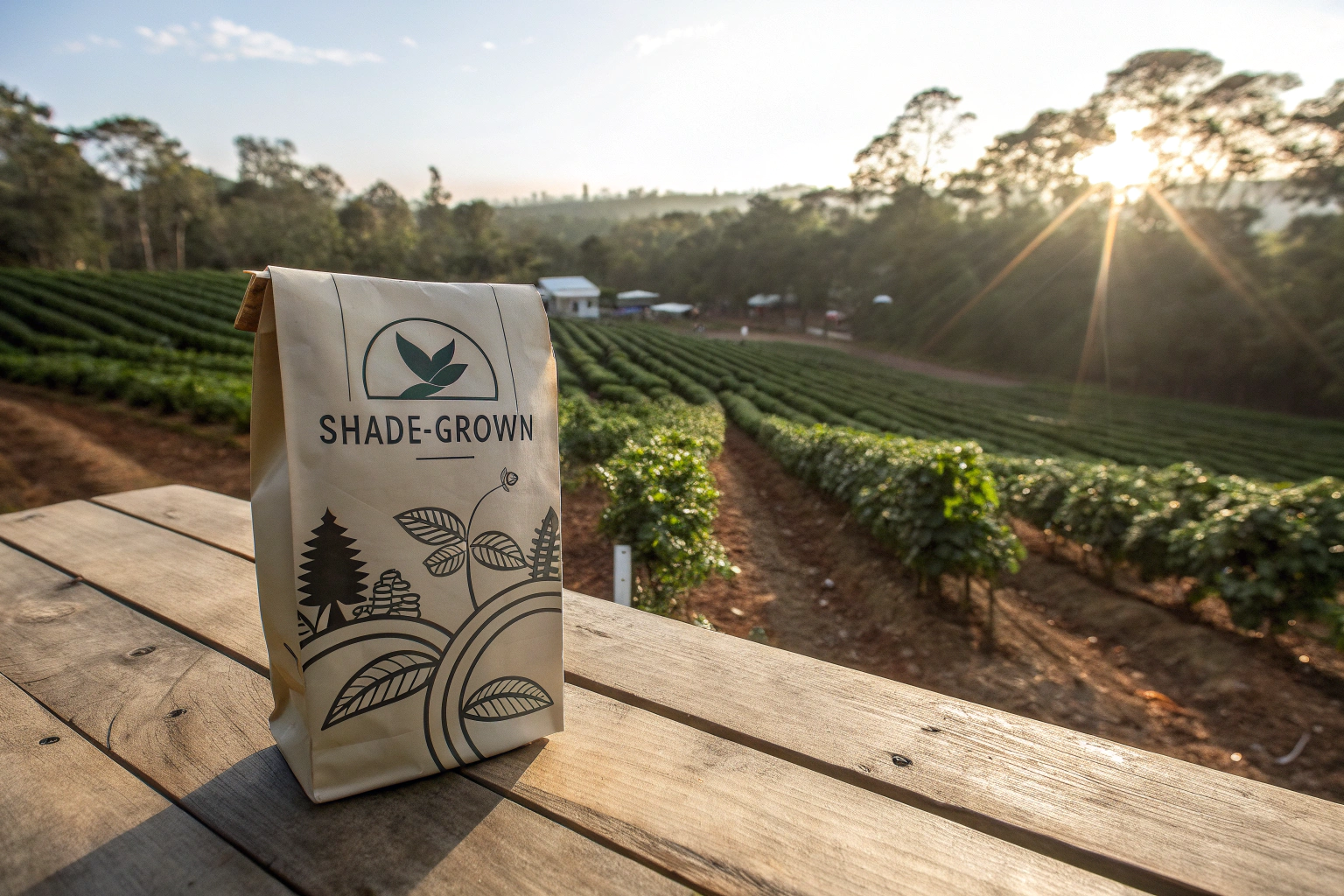
You see the term on a bag. "Shade-Grown." Maybe it has a little bird logo next to it. You think, "Okay, nice marketing." You might even charge an extra dollar for that bag. But do you know what actually happens under that canopy? Do you know why it matters for the dirt, the water, and the air? A lot of buyers treat shade-grown as a consumer trend. It is not a trend. It is a biological system. And it is under attack. Sun-grown coffee, the kind that stretches in neat, treeless rows across Brazil and Vietnam, produces huge volume. But it burns through soil like an engine burns fuel. One day, the engine seizes.
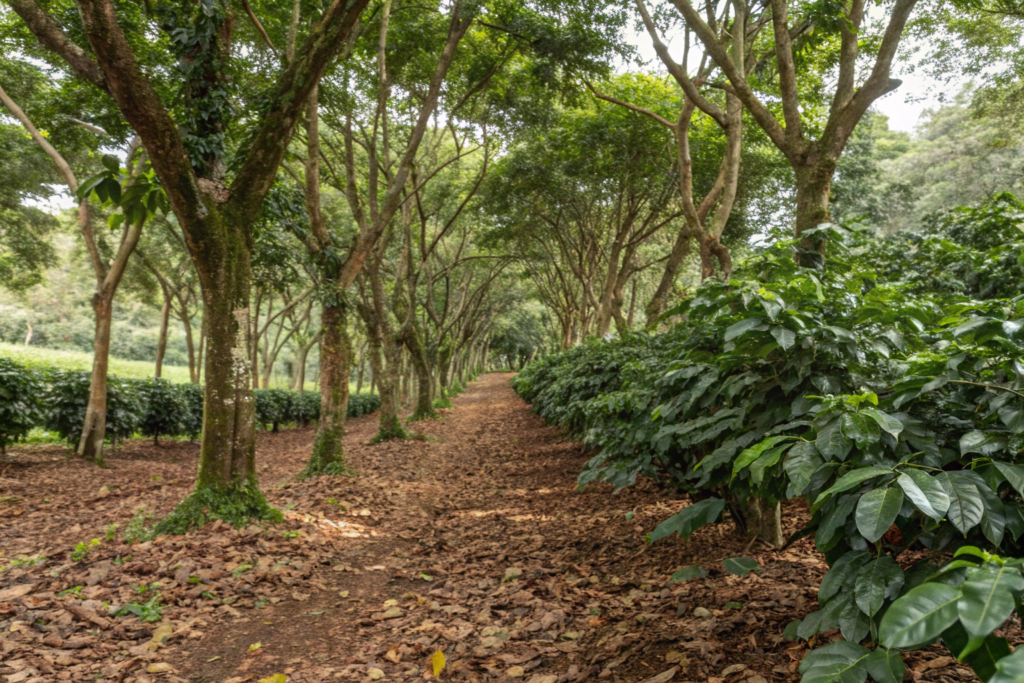
Shade-grown coffee rebuilds the land it uses. It stores carbon in tree trunks, feeds the soil with leaf litter, and filters rainwater before it hits the rivers. At BeanofCoffee, our Baoshan farms use a multi-strata shade system of native Silver Oak and Moringa trees. This is not just an eco-label. It is our long-term yield insurance.
The environmental benefits are not abstract. They translate directly into farm resilience and cup quality. Let me show you what the canopy does that the sun cannot.
How Does Shade-Grown Coffee Contribute to Carbon Sequestration?
Carbon is a currency now. Companies have net-zero targets. Your roastery might have one. Your customers are asking about your carbon footprint. A sun-grown coffee farm is a carbon source. It uses synthetic nitrogen fertilizer that releases nitrous oxide. It deforests land. A shade-grown farm is a carbon sink.
Shade trees capture atmospheric carbon and lock it into wood and soil organic matter. A single hectare of our shaded Arabica at BeanofCoffee can sequester several tons of CO2 equivalent over its lifetime, actively fighting climate change while producing your export-grade beans.
You are not just buying coffee. You are buying a negative carbon asset.
What Is the Carbon Storage Capacity of a Shade Coffee Plantation?
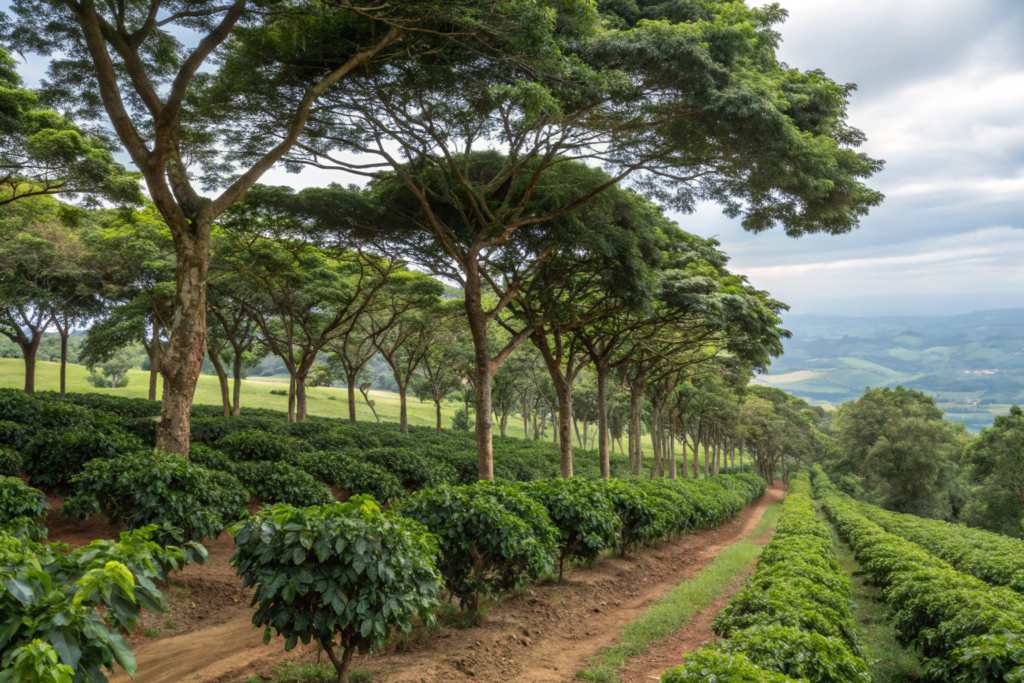
Let's use a concrete number. Research from coffee agroforestry systems in Central America, which are very similar to our Yunnan setup, shows that a hectare of heavily shaded coffee can hold between 50 and 100 metric tons of carbon in the above-ground biomass of the shade trees. That is not counting the coffee bushes themselves. That is just the big trees. The wood, the branches, the roots. Every year, those trees grow wider rings. They pull more CO2 from the atmosphere. A monoculture sun farm, in stark contrast, has almost zero permanent woody biomass. The carbon there is just in the short-lived coffee stems, which are pruned and often burned. Our Baoshan farms are a carbon warehouse. The older the shade trees get, the more carbon they stock. Some of our Silver Oaks are 20 years old. They are massive. They are doing the heavy lifting of carbon drawdown while I sleep.
How Does Leaf Litter Build Soil Organic Carbon?
The carbon in the tree is one bank account. The carbon in the soil is another, bigger account. Shade trees drop leaves. In a tropical highland, this happens constantly. A layer of dead leaves covers the soil. Earthworms and microbes eat these leaves. They convert them into humus, a stable form of soil organic carbon. This humus is black gold. It makes the soil spongy. It holds water. It feeds the coffee roots slowly, like a time-release capsule. A sun farm does not have this. The bare soil between the rows bakes in the ultraviolet radiation. The existing organic matter oxidizes. It literally burns off into the atmosphere as CO2. The soil becomes mineral dust. At our farm, we do not just leave the litter. We actively manage it. We spread the pruned branches from the shade trees back onto the coffee rows. This is a closed-loop carbon cycle. You can measure the soil carbon increase year over year with a simple lab test. A rising soil carbon number is the truest indicator of a healthy, living farm.
Why Does Shade Canopy Protect Water Resources and Prevent Erosion?
Water is the lifeblood of coffee. But water can also be a destroyer. A heavy monsoon rain on a bare, sun-exposed slope is a disaster film in miniature. The raindrops hit the naked soil like tiny bombs. They dislodge particles. Muddy water rushes downhill, carving gullies. The topsoil, which took centuries to form, washes into the river in minutes.
The shade canopy acts as a multi-layered shield. The tree leaves intercept the rain, the leaf litter absorbs the impact, and the complex root systems bind the soil. On our steep Baoshan slopes at BeanofCoffee, this natural infrastructure is the only thing preventing catastrophic erosion during the Yunnan monsoon.
You cannot grow premium Arabica on a slope of bare rock. Soil stays put under trees.
How Do Shade Tree Roots Prevent Hillside Erosion?
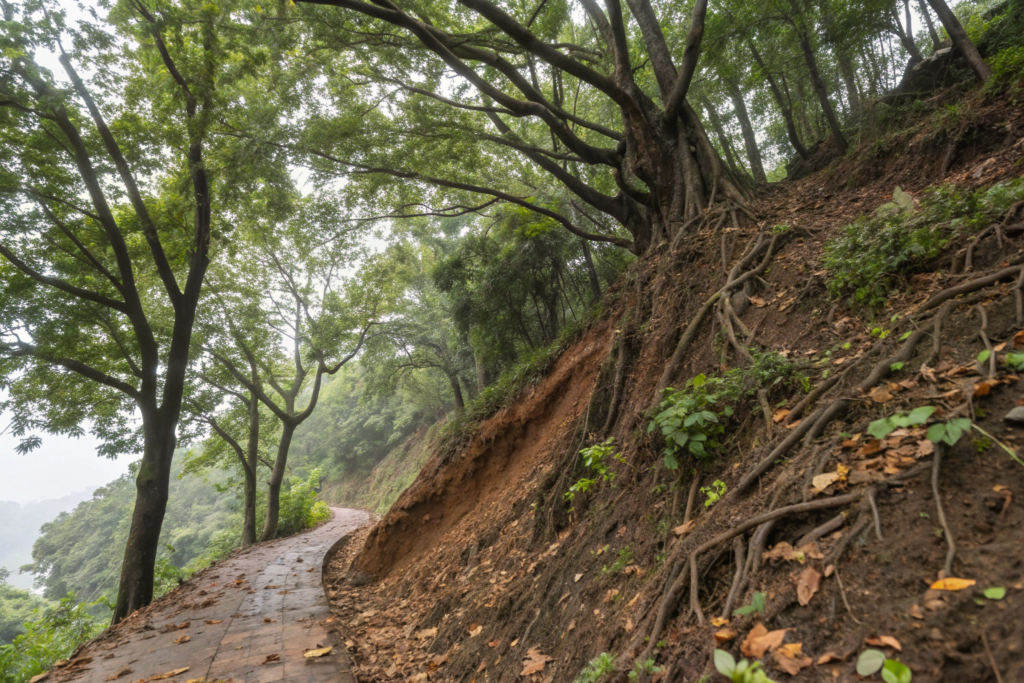
Coffee roots are shallow. They spread out in the top 30 centimeters of soil. They are good at feeding, not anchoring. A steep hillside needs deep anchors. That is the job of the shade tree. A Silver Oak sends a taproot down several meters. Its lateral roots spread wide and grip the subsoil like a net. The coffee roots and the shade roots interlock. They form a composite underground mesh. When the July monsoon hits with 50 millimeters of rain in an hour, the water tries to sheet down the slope. The tree trunks slow the surface flow. The roots hold the soil structure. The water infiltrates down into the aquifer instead of racing to the river. I have seen the difference on our own land. A section of our farm that was cleared for a road suffered a 10-centimeter soil loss in one rainy season. The shaded block right next to it lost almost nothing. The proof is in the dirt.
How Does the Canopy Regulate the Local Water Cycle?
The water benefit is not just erosion control. It is also microclimate regulation. A shade canopy creates a cooler, more humid environment at the coffee bush level. The trees transpire. They release water vapor from their leaves. This raises the relative humidity of the air around the coffee cherries. The coffee plant itself loses less water through its own leaves. It is less stressed. It needs less irrigation. The canopy also captures cloud moisture. In Baoshan, we get misty mornings at 1500 meters. The tree leaves collect this fog. It drips down to the ground as fog drip. This is a supplementary water source that a treeless field simply does not receive. The whole system is a water-harvesting machine. It keeps the streams flowing in the dry season and the slopes intact in the wet season.
How Does Biodiversity in Shade Plantations Reduce Pesticide Dependence?
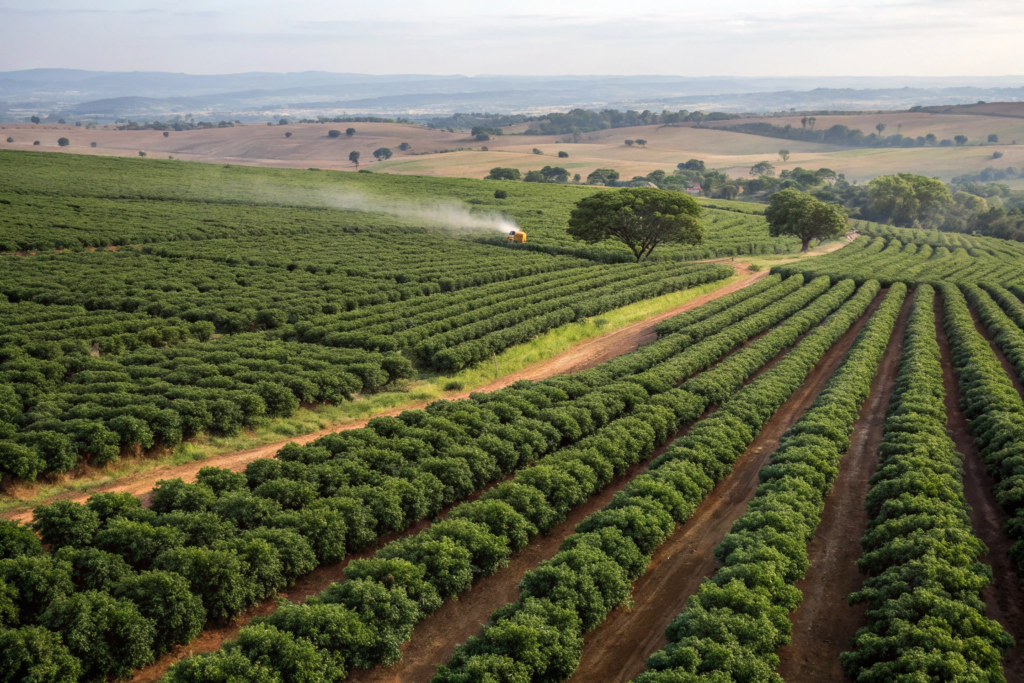
A sun coffee plantation is a biological desert. It is a single plant species, often a single variety, stretching for acres. For a pest or a fungus, this is an all-you-can-eat buffet with no predators in sight. The farmer's only response is the chemical sprayer.
Biodiverse shade plantations break the pest buffet model. The canopy provides habitat for insect-eating birds, predatory wasps, and beneficial fungi. At BeanofCoffee, our shade cover hosts a resident population of natural pest controllers that allows us to drastically reduce chemical interventions, producing a cleaner bean for your roastery.
Pesticides are a cost and a health risk. Biodiversity is a free, self-replicating defense force.
What Role Do Birds and Bats Play in Insect Control?
Birds eat the coffee berry borer. This is a tiny beetle that drills into the cherry and ruins the seed. It is the number one coffee pest globally. In a shade farm, migratory birds from North America, like warblers and vireos, winter in the canopy. They forage for insects. Studies have shown that bird predation can reduce borer infestation by 50% or more. It is a measurable economic service. Bats work the night shift. They eat moths. The larvae of some moths are leaf miners. The bats swoop through the canopy gaps and keep the moth population in check. We put up simple bat boxes on the trunks of our Silver Oaks. The bats moved in. They work for free. Every borer beetle eaten by a bird is a spray of insecticide I did not have to buy and you do not have to test for in the green bean residue analysis.
How Does Fungal Diversity in the Leaf Litter Suppress Diseases?
Coffee leaf rust is the plague of the coffee world. It is a fungus that turns leaves yellow and then kills the tree. It thrives in wet, warm conditions. Chemical fungicides control it, but they also kill other fungi. The good fungi. The leaf litter under a shade tree is a war zone of microbes. Beneficial fungi, like Trichoderma, naturally colonize the decaying leaves. They parasitize the rust spores. They outcompete them for resources. A healthy, diverse litter layer is a biological fungicide factory. When we send leaf litter samples to the lab, we find a rich community of antagonistic fungi. A sun farm leaf sample is, by comparison, almost sterile. The disease pressure there is managed by copper sprays. Copper builds up in the soil and eventually becomes toxic to the coffee roots themselves. Our shade system breaks this cycle. It lets nature do the fighting.
How Does Shade-Grown Farming Build Long-Term Soil Fertility?
Fertilizer is expensive. Synthetic nitrogen fertilizer is made from natural gas. The price swings with geopolitics. A sun farm is addicted to it. The coffee yields, but the soil dies. It becomes a sterile medium that merely holds the plant upright while the farmer pumps in liquid nutrients.
Shade-grown coffee builds its own fertilizer. The deep roots of shade trees mine minerals from the subsoil and deposit them on the surface as leaf litter. Nitrogen-fixing species like Inga add atmospheric nitrogen to the soil. At BeanofCoffee, we prioritize leguminous shade trees that feed our Catimor and Arabica without a bag of synthetic urea.
Fertility becomes a closed loop, not an open pipeline to the petrochemical plant.
What Is the Role of Nitrogen-Fixing Trees in Coffee Agroforestry?
Nitrogen is the main nutrient coffee needs for leaf growth and cherry development. The air is 78% nitrogen gas. Coffee cannot use it directly. But certain trees can. Leguminous trees, like Inga or Leucaena, have a symbiotic relationship with Rhizobium bacteria in their root nodules. These bacteria convert atmospheric nitrogen into a plant-available form in the soil. It is a natural, solar-powered fertilizer factory. We plant Inga trees throughout our Baoshan blocks. When we prune them, we leave the nitrogen-rich leaves on the ground. They decompose and feed the coffee. A soil test from our shaded blocks consistently shows higher total nitrogen than the unshaded test plots, without any synthetic input. This nutrient is free and it is renewable.
How Do Deep Tree Roots Recycle Nutrients from the Subsoil?
The subsoil is a nutrient bank. Over millennia, rock weathers and releases potassium, phosphorus, calcium, and micronutrients. But these minerals are deep down, below the reach of coffee's shallow feeder roots. Shade tree roots go there. They act as nutrient pumps. The tree absorbs potassium from the deep mineral soil. It uses some for its own growth, but a lot of it ends up in the leaves. The leaves fall. They decompose in the topsoil. Now the coffee roots, in the top 30 centimeters, can access that deep potassium. This is a vertical nutrient cycle. It is elegant and it is ancient. A sun farm disconnects this cycle. The deep nutrients stay locked away. The farmer must supply potassium sulfate as a bagged supplement. The shade farm, by contrast, is a self-replenishing system. It mimics a natural forest, where nothing is wasted and everything circulates.
Conclusion
Shade-grown coffee is not a nostalgic return to some rustic past. It is a sophisticated, multi-layered production technology. The canopy is a carbon capture machine, a water regulator, a pest control army barracks, and a nutrient recycling plant, all in one. It stores carbon in wood and soil, fighting climate change from the farm level. It intercepts monsoon rains and anchors steep slopes with deep roots, keeping the soil on the land and the sediment out of the rivers. It houses birds and bats that eat the berry borer, reducing the need for chemical sprays that taint the bean and the farmer's health. And it builds soil fertility through nitrogen fixation and deep nutrient pumping, cutting the dependence on volatile, expensive synthetic fertilizers. Every environmental benefit has a direct economic translation. A stable soil. A cleaner cup. A lower input cost. A more resilient farm in the face of weather chaos.
Taste the canopy. Let's put our shade-grown Yunnan Arabica on your cupping table. Reach out to me, Cathy Cai, at cathy@beanofcoffee.com. I will send you a sample from one of our Silver Oak-shaded blocks, along with the soil carbon data and the biodiversity audit for that lot. You can tell your customers their coffee came from a forest, not a factory. That is a story worth telling, and a coffee worth roasting.