If you buy coffee, you may think of Brazil, Colombia, or Ethiopia first. China may not be on your list. Ron, I know you care about price, quality, shipping time, tariffs, and trust. You may also worry that Chinese coffee is unknown or hard to verify. That worry is fair. But it can make you miss a real opportunity.
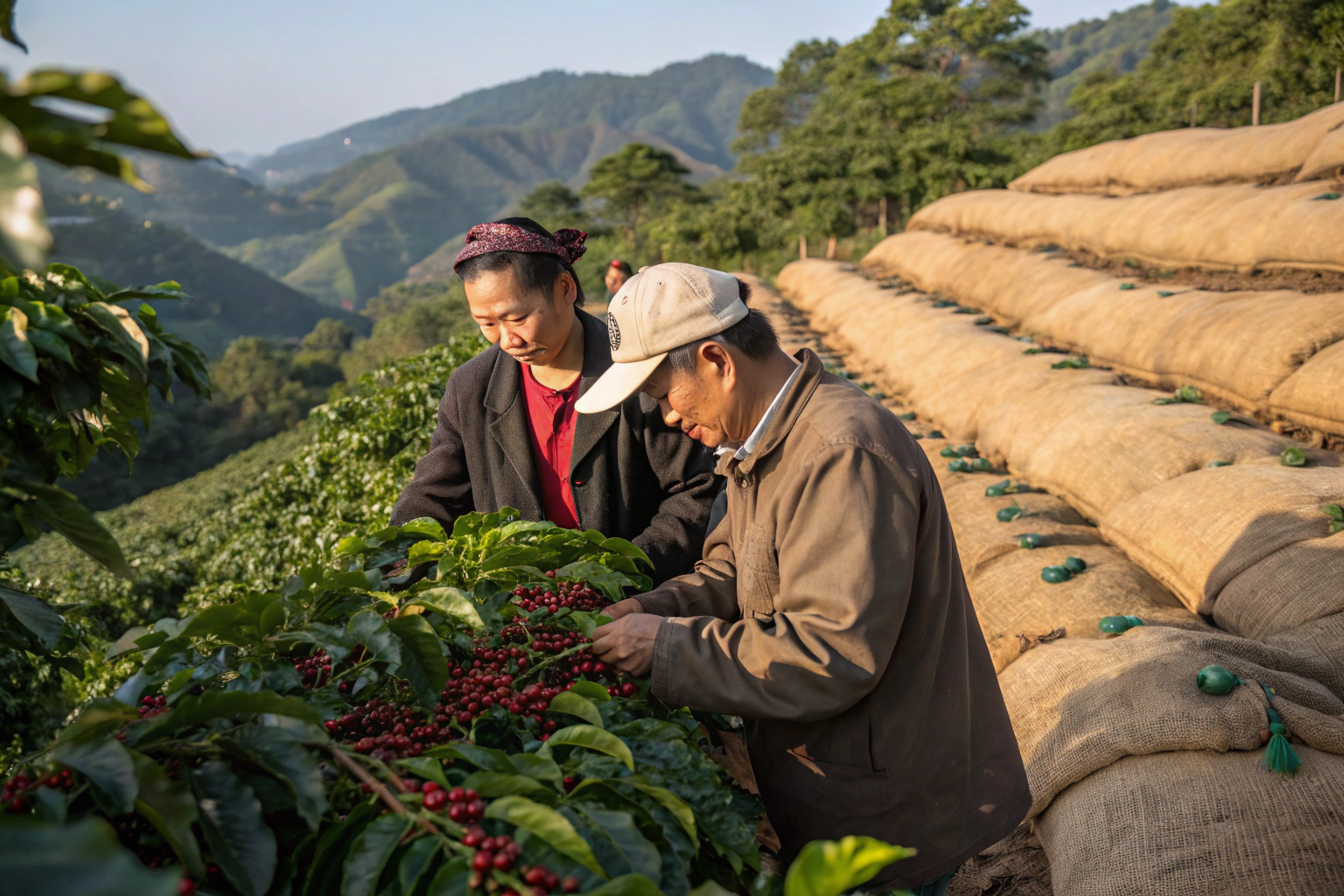
The hidden gems in China’s coffee terroir are Yunnan’s high-altitude valleys, volcanic soil, cool nights, and diverse microclimates. Places like Baoshan, Pu’er, Lincang, and Dehong can grow Arabica, Catimor, and Robusta with clean sweetness, mild acidity, and good body. These areas are not famous yet, but they offer stable supply and strong value.
This article will show you what makes these areas special. I will share what I see as a Chinese coffee exporter. I will also explain how buyers can source these hidden gems without taking too much risk. At BeanofCoffee, we work in Baoshan every day. We own over 10,000 acres of coffee bean plantations there. So, I can speak from real experience, not theory.
Why Is Yunnan Coffee Terroir So Unique?
You may ask why Yunnan matters. It is not a small side note. Yunnan sits in southwest China. It has mountains, rivers, and high plateaus. The coffee belt is roughly 1,000 to 1,700 meters above sea level. That is a good range for Arabica. Cool nights slow cherry growth. Warm days help sugar build. Morning fog and afternoon sun create a slow ripening pattern. This can add sweetness and clarity.
Yunnan coffee terroir is unique because it combines high altitude, volcanic soil, monsoon rain, and large day-night temperature swings. These conditions help coffee cherries ripen slowly and develop complex flavor. The result is often a clean cup with mild acidity, nutty notes, and soft chocolate or caramel sweetness.
I have walked many farms in Baoshan. The soil feels different from place to place. One hill may be red and iron-rich. Another may be darker and looser. A small change in slope can change drainage. That changes flavor. So, Yunnan is not one terroir. It is many small terroirs packed together. That is the hidden part. Buyers often treat China as one origin. But it is more like a group of micro-origins. This is good news for roasters who want something new. It is also good news for brands that want a story.
| Terroir Factor | Effect on Coffee |
|---|---|
| Altitude | Slower ripening, more sweetness |
| Volcanic soil | Good minerals and drainage |
| Cool nights | Less stress, better acidity |
| Monsoon rain | Strong cherry growth |
| Mountain shade | Slower, more even ripening |
What Is Coffee Terroir and Why Does It Matter?
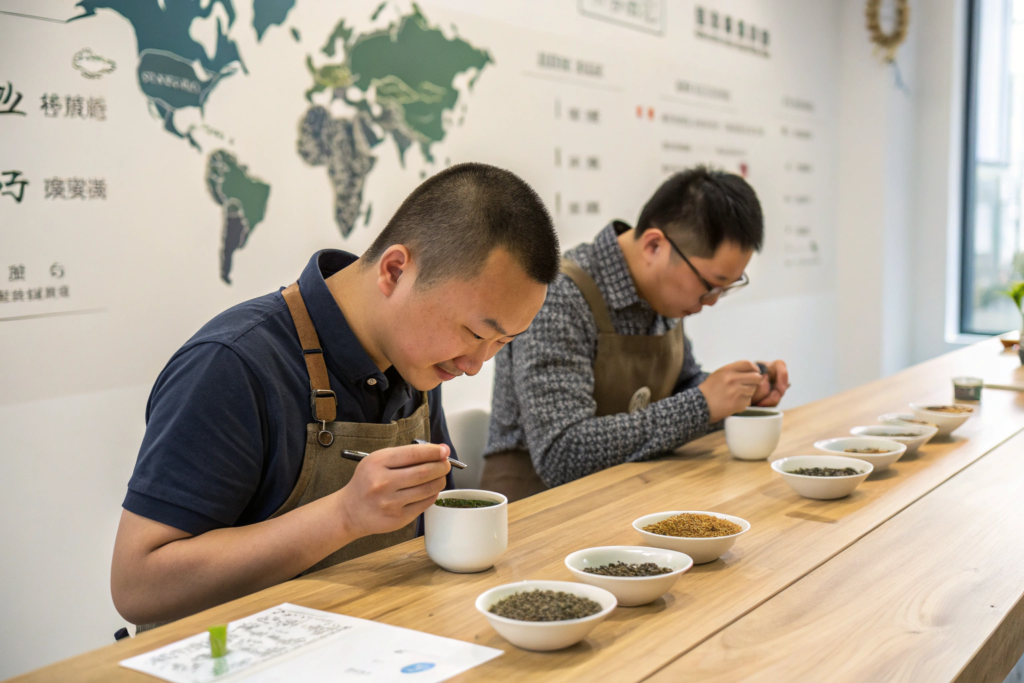
Coffee terroir is the full natural setting of a farm. It includes soil, altitude, rain, sun, wind, and temperature. It also includes the plant variety and the way people farm. Groups like the Coffee Quality Institute and the Specialty Coffee Association use cupping to measure how terroir shows up in the cup. Terroir matters because it explains why two coffees can taste different even when they use the same roast. A bean from a high, cool slope may taste sweeter and cleaner. A bean from a hot, low valley may taste flatter. This is not magic. It is biology and weather. For buyers, terroir helps set price and marketing. You can sell "Yunnan high-altitude Arabica" as a special origin. That story can support a higher price. But you must prove it with data. You need farm records, altitude notes, and cupping scores. That is where a good exporter helps.
How Does Yunnan’s Climate Shape Coffee Flavor?
Yunnan’s climate shapes flavor in a slow, steady way. The rainy season feeds the trees. The dry season helps cherries concentrate sugar. Cool nights slow respiration. That keeps more sugar in the fruit. Warm days help photosynthesis. This push and pull creates a balanced cup. I often taste mild citrus, brown sugar, and nuts in Yunnan Arabica. Some lots show cocoa or herbal notes. Robusta from lower areas can add body and crema. Catimor is common because it resists disease and gives good yield. Research from World Coffee Research and the International Coffee Organization shows how climate affects coffee quality around the world. In Yunnan, the effect is strong. A one-week shift in rain can change harvest timing. That changes shipping plans. So, climate is not just a flavor topic. It is a supply chain topic too.
Which Hidden Coffee Regions Should Buyers Know?
You may know Yunnan as a tea place. But coffee has grown there for decades. The main belt runs through several areas. Each has a slightly different style. Baoshan is one. Pu’er is another. Lincang and Dehong also grow coffee. Some areas are hotter. Some are higher. Some have more rain. This creates different cup profiles and different harvest windows.
The hidden coffee regions buyers should know are Baoshan, Pu’er, Lincang, Dehong, and parts of Xishuangbanna. Baoshan is known for balanced Arabica and Catimor. Pu’er offers larger volume and varied microclimates. Lincang can bring bright acidity. Dehong often adds body. These areas are less famous than Yunnan as a whole, but they offer real sourcing options.
I tell buyers not to stop at "Yunnan." Ask which city. Ask which mountain. Ask which processing station. That is where the hidden gems live. A container of "Yunnan coffee" can taste very different from a container of "Baoshan high-altitude Arabica." The label matters. The records matter more.
| Region | Common Profile | Buyer Note |
|---|---|---|
| Baoshan | Balanced, nutty, sweet | Strong for Arabica and Catimor |
| Pu’er | Mild, clean, varied | Large volume, many microclimates |
| Lincang | Bright, floral, crisp | Good for light roasts |
| Dehong | Full body, cocoa | Good for blends and cold brew |
| Xishuangbanna | Soft, sweet, fruity | Smaller lots, special projects |
Where Are China’s Lesser-Known Coffee Areas?
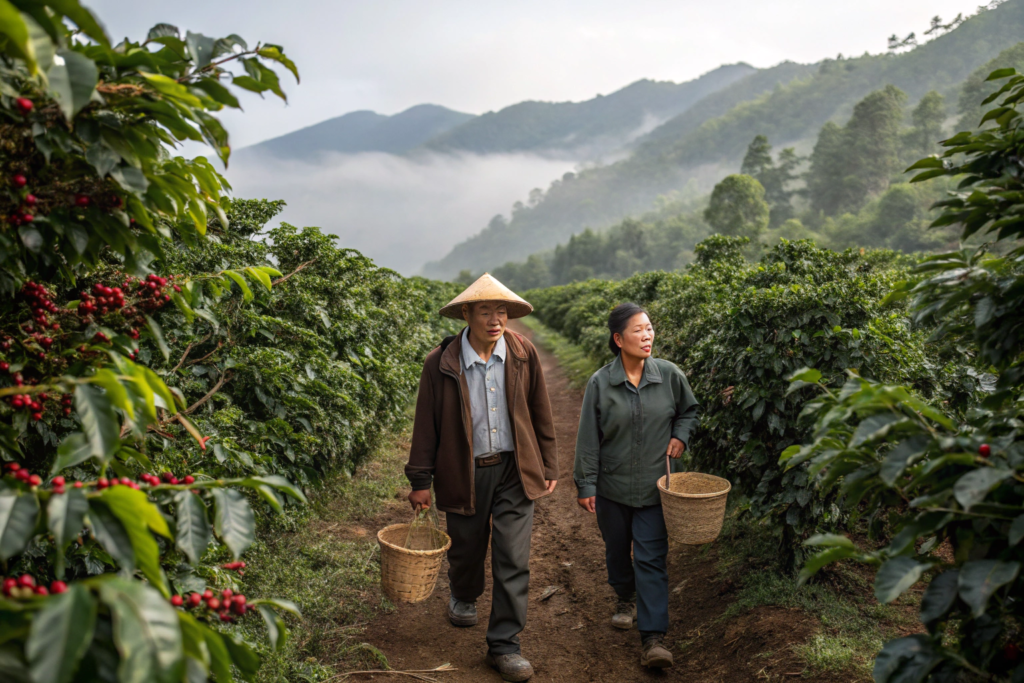
China’s lesser-known coffee areas are mostly in Yunnan, but also in parts of Hainan and Fujian. Yunnan is the biggest. Within Yunnan, places like Baoshan, Pu’er, Lincang, and Dehong are not as famous as coffee giants like Colombia. That is the opportunity. You can find good coffee before the crowd arrives. Perfect Daily Grind and Daily Coffee News have written about China’s growing coffee scene. They show that quality is rising. I have seen this myself. Ten years ago, many farms sold only red cherries. Today, more farms process their own beans. They use raised beds, washed tanks, and better sorting. That change improves flavor. It also gives buyers more traceability. So, the hidden areas are not just hidden. They are improving fast. If you build a relationship now, you can grow with them.
Why Do Altitude and Soil Change Bean Quality?
Altitude and soil change bean quality because they control growth speed and plant health. Higher altitude usually means cooler air. Cooler air slows cherry growth. Slower growth can mean more sugar and better acidity. Soil gives minerals and controls water. Volcanic soil drains well. That helps roots breathe. Too much water can hurt flavor. Too little water can shrink beans. You can learn more from Coffee Chemistry and Barista Hustle. In Yunnan, altitude ranges are wide. A farm at 1,100 meters may taste very different from one at 1,600 meters. Soil also changes within a short distance. I have seen red soil and dark soil on the same hill. The cups were different. So, buyers should ask for altitude and soil notes. Then cup the coffee. Do not assume. Test.
What Makes Baoshan Coffee Beans Special?
You may hear about Baoshan from us. That is because we are based there. Baoshan is in western Yunnan. It has mountains, valleys, and a long coffee history. The altitude is often good for Arabica. The weather is cool at night. The soil has volcanic elements. Farmers there grow Catimor, Arabica, and some Robusta. Each has a role. Arabica gives sweetness and acidity. Catimor gives structure and disease resistance. Robusta gives body and strength.
Baoshan coffee beans are special because they grow at high altitude with cool nights, mineral-rich soil, and a long ripening season. They often cup with nutty, chocolate, and caramel notes, mild acidity, and a smooth body. The area also has strong processing skills now, so buyers can find washed, natural, and honey lots.
At BeanofCoffee, we control over 10,000 acres in Baoshan. That gives us stable supply. We can ship raw beans or processed, packaged products. We also work with nearby cooperatives. That mix helps us fill large orders and keep quality steady. For buyers in North America, Europe, and Australia, this is a strong base. You get a Chinese origin with a real story and real records.
| Baoshan Strength | Buyer Benefit |
|---|---|
| High altitude | Sweet, clean flavor |
| Cool nights | Good acidity and balance |
| Volcanic soil | Mineral notes and good drainage |
| Skilled processing | Washed, natural, honey options |
| Large plantation base | Stable volume and supply |
What Flavor Notes Come from Baoshan Coffee?
Baoshan coffee often shows nutty notes like almond or hazelnut. It can show chocolate, caramel, and brown sugar. Some lots have mild citrus or red apple. The acidity is usually mild. The body is medium and smooth. That makes it easy to drink. It also works well in blends. I have cupped Baoshan Arabica with notes of cocoa and toasted nut. I have cupped Catimor with a firmer body and a clean finish. Robusta from lower areas can add crema and strength. Coffee Review and the National Coffee Association show how U.S. drinkers respond to these profiles. Many American buyers want smooth coffee with low bitterness. Baoshan fits that need. It also works for cold brew. The mild acidity and smooth body hold up well in long extraction. So, it is not just a hot coffee origin. It is a multi-use origin.
How Do Farmers in Baoshan Process Their Beans?
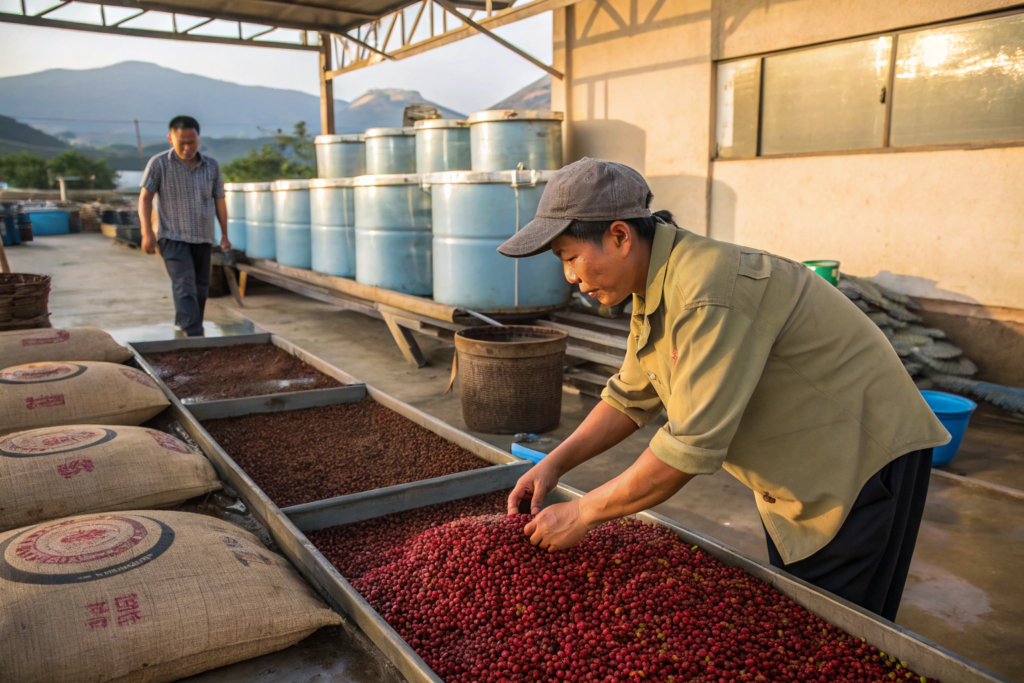
Farmers in Baoshan use several methods. Washed coffee is common. It gives clean flavor and clear acidity. Natural coffee is growing. It gives fruit and sweetness. Honey coffee sits between them. It gives body and mild fruit. The process starts with selective picking. Then cherries go to a washing station or a farm tank. Fermentation time matters. Drying matters too. Raised beds help air flow. Tarps can cause mold if the weather turns wet. Groups like the Rainforest Alliance and Fairtrade support better farming and processing. I have seen farms improve after training. They sort more. They dry slower. They store better. That raises cup quality. It also raises cost. But the price can rise too. So, processing is a business choice. Buyers should ask which method was used. Then cup the result. The method is not just a label. It changes flavor and price.
How Can Importers Source These Hidden Gems?
You may now want to try Chinese coffee. But you need a safe way to buy. You cannot fly to every farm. You cannot test every lot. You need a partner who knows the area. You also need clear terms for price, quality, shipping, and payment. That is how you turn a hidden gem into a real product.
Importers can source China’s hidden coffee gems by asking for farm-level records, sample roasts, production roast plans, certifications, and shipping schedules. They should start with small lots, cup the coffee, check moisture and defects, and compare landed cost. Then they can scale up with a trusted exporter.
At BeanofCoffee, we help buyers do this step by step. We share data. We answer hard questions. We also plan for tariffs and sailing delays. That saves time and money.
| Sourcing Step | What to Do |
|---|---|
| Find | Use Alibaba, LinkedIn, trade shows, and Google |
| Test | Ask for green samples and sample roasts |
| Check | Review moisture, defects, and cupping notes |
| Plan | Confirm production roast and packing |
| Ship | Check tariffs, sailing schedule, and payment |
| Scale | Repeat orders with batch records |
How Do You Find Reliable Chinese Coffee Suppliers?
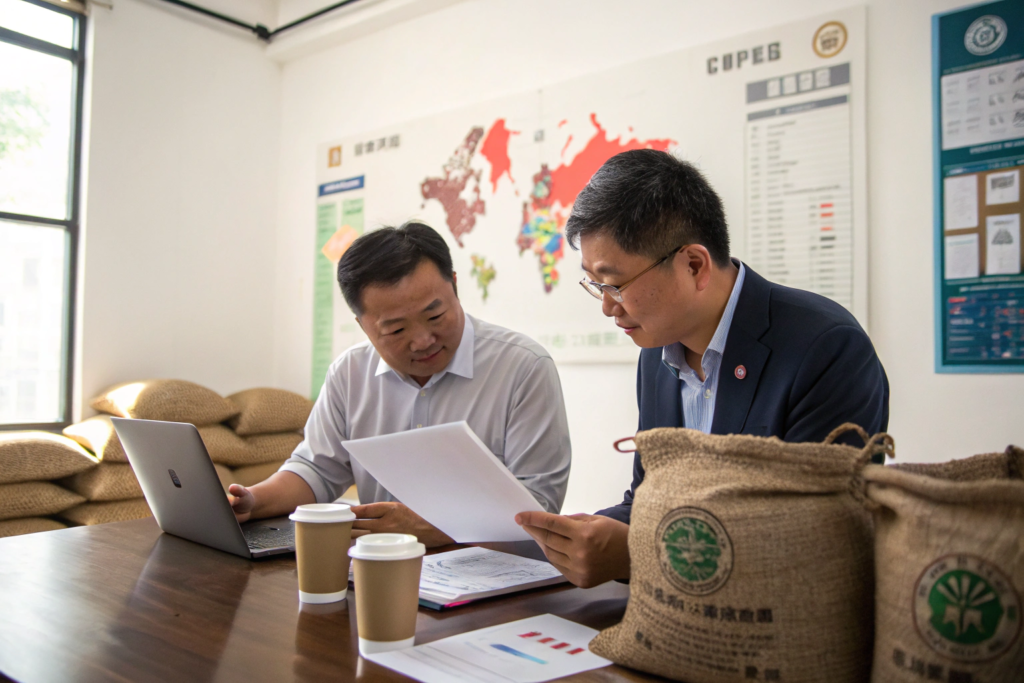
You find reliable Chinese coffee suppliers by checking several channels. Alibaba is a common start. LinkedIn helps you find owners and export managers. Trade shows help you meet people face to face. Google searches help you find company websites. But a listing is not proof. You need to ask for business license, export records, plantation details, and certifications. You also need to ask who owns the coffee. A trading company may not own farms. An exporter with plantations may have more control. At BeanofCoffee, we own over 10,000 acres in Baoshan. We also work with cooperatives. That gives us both control and volume. I tell buyers to start with a video call. Ask to see the warehouse and the roasting line. Ask for a live cupping. This is not rude. It is normal. A serious supplier will say yes. A weak supplier will make excuses.
What Should Buyers Test Before They Import?
Buyers should test several things before they import. First, test the green bean. Check moisture, defect count, screen size, and smell. Second, test the sample roast. Cup it for sweetness, acidity, body, and aftertaste. Third, test the production roast. Compare it with the sample. Fourth, test packing and shipping. Check bag type, seal, label, and carton strength. Fifth, check documents. The FDA and USDA provide food and farm rules for U.S. imports. You may also need a certificate of origin and a phytosanitary certificate. I tell buyers to test roast loss too. If you buy 1,000 kg and lose 15%, you only sell 850 kg. That changes your margin. So, test before you scale. A small test lot can save a large order. It also helps you build a clear cost sheet. Then you know the real landed cost. That is the only cost that matters.
Conclusion
China’s coffee terroir has real hidden gems. Yunnan’s high mountains, cool nights, volcanic soil, and diverse microclimates can grow sweet, clean, and balanced coffee. Baoshan is one of the strongest areas. It offers Arabica, Catimor, and Robusta with stable supply and good value. Buyers should look beyond the country label. Ask about the region, altitude, soil, processing, and records. Then test with sample roasts and production roasts. Check landed cost, tariffs, and shipping time. This process helps you find a special origin without taking blind risk. If you want a reliable coffee bean partner in China, please contact us at BeanofCoffee. We own over 10,000 acres of coffee bean plantations in Baoshan City, Yunnan Province. We export Catimor, Arabica, and Robusta. We support raw beans and processed, packaged products. For orders, samples, and export details, please contact Cathy Cai at cathy@beanofcoffee.com.