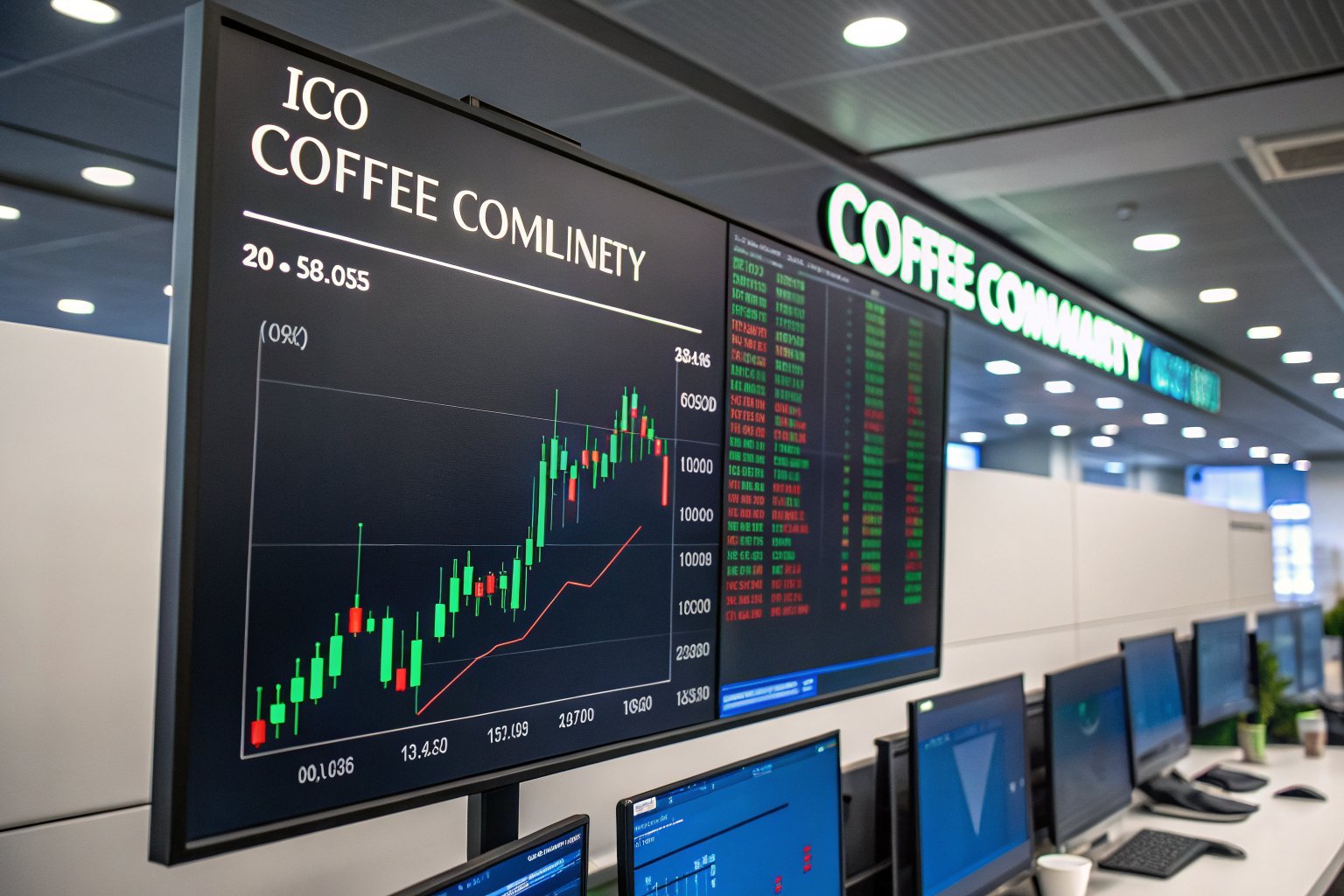
A buyer from a large European importing company called me in February asking for my read on the ICO composite indicator price. It had been trading above 200 cents per pound for Arabica for three months straight, and he was trying to decide whether to lock in forward contracts or wait for a price correction. The ICO indicator prices — the composite, the Colombian Milds, the Other Milds, the Brazilian Naturals, and the Robustas — are the most widely followed benchmark for coffee pricing globally. Understanding what they are telling you about supply and demand trends is essential for making smart buying decisions. Let me walk you through what the current indicators are saying about 2027.
What Are the ICO Indicator Prices and How Do They Work?
The International Coffee Organization publishes five daily indicator prices that track the global coffee market. The Composite Indicator Price is a weighted average of the four group indicators. The group indicators are Colombian Milds, Other Milds, Brazilian Naturals, and Robustas. Each represents a specific category of coffee based on origin and processing method.

What Do the Different ICO Indicator Groups Mean?
Colombian Milds include washed Arabica from Colombia, Kenya, and Tanzania — the highest-priced category. Other Milds include washed Arabica from Central America, Mexico, and Peru. Brazilian Naturals include natural and semi-washed Arabica from Brazil and Ethiopia. Robustas include Robusta from Vietnam, Indonesia, and Uganda. The spread between the groups tells you about relative supply and demand for each category. The International Coffee Organization's price definition guide explains that the spread between Colombian Milds and Brazilian Naturals typically ranges from 20 to 40 cents per pound. A widening spread indicates tight supply of high-quality washed Arabica. A narrowing spread indicates abundant supply.
How Have the Indicator Prices Trended in 2025 and 2026?
The ICO composite has been on a strong upward trend since late 2024, driven by reduced output from Brazil and Vietnam. The composite hit 215 cents per pound in January 2026, up from 160 cents in January 2025. Colombian Milds have led the rally, reaching 260 cents, reflecting tight supply of high-quality washed Arabica. The International Coffee Organization's monthly market report shows that the price rally has been supported by reduced Brazilian Arabica production due to drought, plus reduced Vietnamese Robusta output due to aging trees and disease. At Shanghai Fumao, we have seen this trend reflected in our Yunnan pricing — our premium lots have increased by 18 percent year over year.
What Are the Indicator Prices Telling Us About 2027 Supply?
The indicator prices are a forward-looking signal. The current pricing structure contains information about what the market expects for 2027 supply.

Is the Current Price Rally Sustainable Into 2027?
The futures curve for Arabica is in backwardation — near-term prices are higher than forward prices — which suggests the market expects current tightness to ease by mid-2027. Brazilian farmers have responded to high prices by planting more Arabica, and those new trees will start producing in 2027. The ICO projects a 3 to 5 percent increase in global Arabica production for the 2027-2028 crop year. The International Coffee Organization's 2027 production forecast estimates that global coffee production will reach 178 million bags in 2027, up from 172 million in 2026. The increase is expected to come primarily from Brazil and Colombia. At Shanghai Fumao, we are expanding our Yunnan plantation acreage by 15 percent to capture the growing demand for Asian-origin Arabica.
What Supply Risks Could Disrupt the 2027 Outlook?
The biggest risk is weather. The 2024-2025 drought in Brazil was the worst in 50 years. If La Niña conditions return in 2026-2027, Brazilian production could fall short of projections again. The second risk is coffee leaf rust, which has been spreading in Central America and could reduce production there by 10 to 15 percent. The World Coffee Research supply risk report identifies climate variability as the number one risk to 2027 supply, followed by disease pressure and labor shortages. For Asian origins like Yunnan, the risk is lower because our climate is more stable and our farms use rust-resistant Catimor varieties.
What Do the Indicator Prices Tell Us About 2027 Demand?
The indicator prices also reflect demand trends. The current pricing structure contains signals about where demand is growing and where it is weakening.
Which Coffee Categories Show the Strongest Demand Growth?
The Robusta indicator has risen faster than the Arabica indicators over the past 18 months, reflecting strong demand from Asia and the growing use of Robusta in espresso blends. The Robusta-to-Arabica price ratio has narrowed from 0.45 to 0.55, meaning Robusta is becoming relatively more expensive compared to Arabica. The International Coffee Organization's demand analysis shows that Robusta demand grew by 6 percent in 2025 compared to 3 percent for Arabica. The growth is driven by Chinese instant coffee consumption and the expansion of Robusta-based espresso blends in Europe and North America.
Is Specialty Coffee Demand Growing or Slowing?
Specialty coffee demand continues to grow, but the growth rate has slowed from 10 percent annually in 2020-2023 to 6 percent in 2025. The slowdown is attributed to inflation pressure on consumer spending in developed markets. However, the premium that specialty coffee commands over commercial grade has actually increased, from 0.80 to 1.10 dollars per pound. The Specialty Coffee Association's market size study confirms that the specialty coffee market has grown to 18 percent of total US coffee consumption by volume and 38 percent by value. At Shanghai Fumao, our specialty-grade Yunnan lots have seen consistent demand growth from European and North American buyers.
How Should You Use ICO Indicator Prices in Your Buying Strategy?
Understanding the indicator prices helps you time your purchases and negotiate better contracts.

When Should You Lock In Forward Contracts vs Buy Spot?
When the futures curve is in backwardation — near-term prices above forward prices — spot buying is more expensive than forward contracts. Buyers who can commit to forward delivery at the current forward price lock in a lower cost. When the curve is in contango — forward prices above spot — spot buying is the better strategy. The Green Coffee Association's hedging guide recommends that buyers monitor the ICO composite and the futures curve monthly. A composite above 200 cents for three consecutive months with a backwardated curve suggests locking in forward contracts. A composite below 150 cents with a contango curve suggests buying spot.
How Do You Factor ICO Prices into Supplier Negotiations?
Use the ICO indicator prices as a reference point in price negotiations. If your supplier's price is more than 10 cents above the ICO group indicator for the equivalent coffee category, ask for justification. Legitimate reasons include certified organic, Fair Trade, or direct trade premiums. Illegitimate reasons include pure margin extraction. At Shanghai Fumao, we price our Yunnan lots with reference to the Other Milds indicator plus a quality premium based on cupping score. Our pricing is transparent and tied to the ICO benchmark so buyers know exactly what they are paying for.
Conclusion
The ICO indicator prices are essential tools for understanding global coffee market trends. The composite at 215 cents reflects tight supply from Brazil and Vietnam, with strong Robusta demand narrowing the Arabica-Robusta price gap. The 2027 outlook points to increased production from new Brazilian plantings, but weather risks remain significant. Use the futures curve to decide between spot and forward buying, and use the ICO group indicators as reference points in supplier negotiations. At BeanofCoffee, we track the ICO indicators daily and price our Yunnan lots transparently against the benchmarks. If you want to understand where the market is heading, the ICO prices are the best place to start. Contact Person: Cathy Cai Email: cathy@beanofcoffee.com Website: https://beanofcoffee.com/