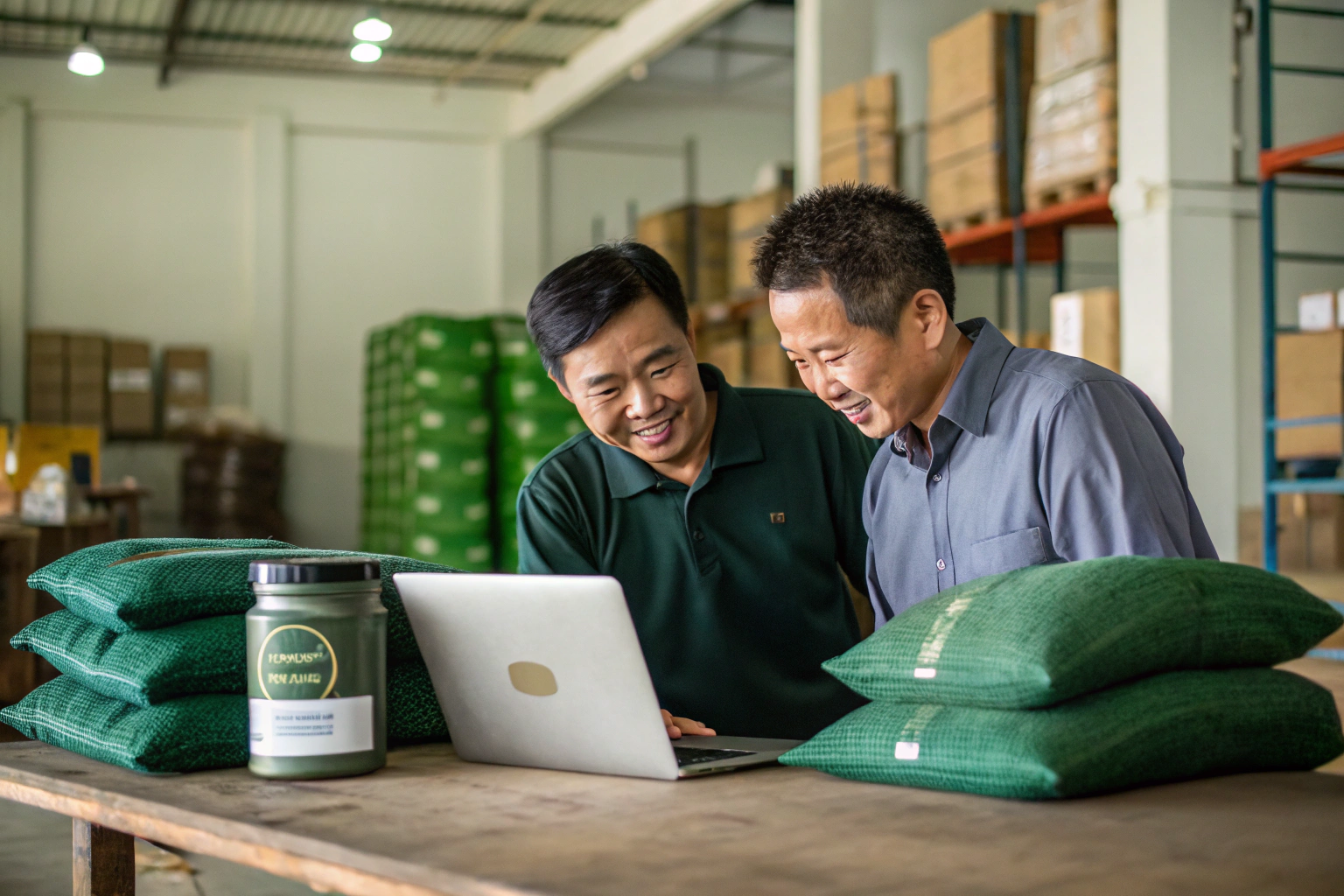
I run BeanofCoffee, a coffee exporter in Yunnan, China. We own more than 10,000 acres in Baoshan City. We sell Catimor, Arabica, and Robusta. We ship to North America, Europe, and Australia. Buyers like Ron ask me about price, quality, and shipping. Ron is 44. He owns a company in America. He cares about price and timeliness. He sources on Google, Alibaba, and at trade shows. He is confident. He likes to lead. But he also knows that one missed connection in Busan can delay a coffee shipment by a week or more. That delay costs money. It costs shelf space. It costs trust. So he asked me how Busan transshipment really works. I will explain it the way I would explain it to a friend.
Busan is one of the main transshipment hubs for coffee moving from China to the United States, Europe, and other markets. The logistics usually work like this: a feeder vessel carries the container from a Chinese port to Busan. The container is discharged, held in a bonded yard, and reloaded onto a larger mother vessel. Then it sails to the final destination. The key steps are booking, feeder sailing, discharge, transshipment declaration, reloading, and final sailing. The main risks are port congestion, schedule changes, winter weather, documentation errors, and container rollovers. The main costs are terminal handling, feeder freight, documentation, storage, and demurrage. So Busan is useful, but it must be managed with clear data and buffer time.
So, what does this mean for you? It means you should not treat Busan as a simple stop. It is a handoff. A handoff adds risk. But it also adds frequency and route options. At BeanofCoffee, we plan Busan transshipments with our forwarders before the container leaves Yunnan. We check the connection time. We check the vessel schedule. We check the winter risk. That planning saves money. Let me walk you through the logistics step by step.
Why Ship Coffee Through Busan?
Busan is not the closest port to Yunnan. Shenzhen and Shanghai are closer. So why use Busan? Because Busan is a hub. It connects many routes. It has frequent sailings. It has strong terminal infrastructure. It has good connections to the U.S. West Coast, the U.S. East Coast, Europe, and Japan. For coffee, that frequency matters. A missed vessel in a small port can mean a two-week wait. A missed vessel in Busan often means a one-week wait. That difference protects your schedule.
You ship coffee through Busan because it offers high sailing frequency, strong carrier competition, reliable connections to major markets, and good terminal handling. Busan is especially useful when direct sailings from China are full, expensive, or unavailable. It also helps when the buyer needs a specific vessel or arrival window. The trade-off is an extra handoff. That handoff adds cost and risk. So Busan works best when the schedule benefit is bigger than the added risk.
Another way to look at this is to compare Busan to a major airport hub. You may not live in the hub city. But you fly through it because it has more flights. Busan works the same way for containers. It gives you more routes. More routes mean more options. More options mean better timing.
What Makes Busan a Top Transshipment Hub?
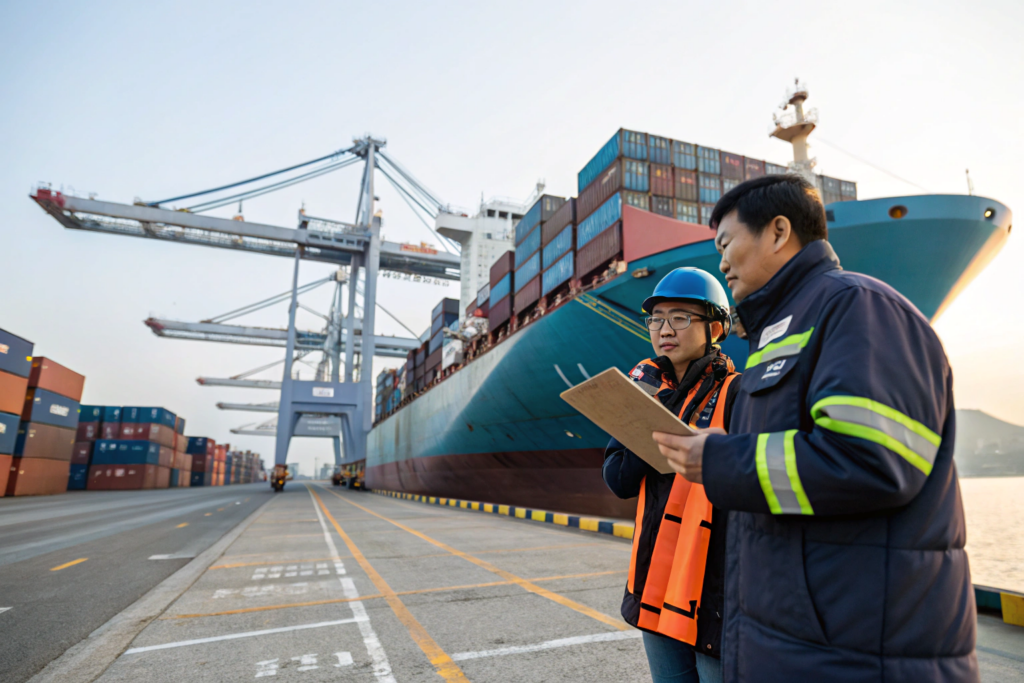
Busan is a top hub for several reasons. It sits on major east-west trade lanes. It has deep water. It has modern cranes. It has fast terminal handling. It has many carrier services. It also has a free trade zone and strong customs systems. The Busan Port Authority explains the port layout and services. The World Shipping Council shares global liner shipping data. I use these when we compare routes. A hub with many services gives you more ways to recover from a delay. That is the real value. So Busan is not just a port. It is a network.
I also tell buyers to check the carrier mix. A port with five carriers is safer than a port with one. If one carrier rolls your container, another may take it. Busan has a wide carrier mix. That reduces risk. So ask your forwarder about the options. Then decide.
How Does Busan Connect China to U.S. and Europe?
Busan connects China to the U.S. and Europe through feeder and mother vessel services. A feeder vessel brings the container from China. A mother vessel takes it to Los Angeles, Long Beach, New York, Savannah, Rotterdam, Hamburg, or other ports. The Maersk supply chain page explains network design. The MSC solutions page shares service information. I use these when we plan a route. The connection time matters. A short connection is cheaper. A long connection is safer. A tight connection saves time but risks a rollover. So match the connection to your deadline. Then book.
For Ron, this means he should ask for the connection time in Busan. If the connection is under three days, he should add a buffer. If it is over five days, he can relax a little. That simple check prevents a missed sailing.
How Does Busan Transshipment Work?
Busan transshipment is a sequence. Each step must happen in order. If one step fails, the next step waits. I have seen a container sit in Busan because one document was wrong. I have seen a container miss its mother vessel because the feeder was late. So the process must be clear. Let me break it down.
Busan transshipment works in six main steps. First, the exporter books the full route. Second, a feeder vessel carries the container from China to Busan. Third, the container is discharged and placed in a bonded transshipment yard. Fourth, Korean customs processes the transshipment declaration. Fifth, the container is loaded onto the mother vessel. Sixth, the mother vessel sails to the final destination. The bill of lading must show the transshipment port. The container number and seal number must match on every document. A mismatch can stop the move.
So, what should you do? Ask for the transshipment plan before shipping. Check the feeder cut-off. Check the mother vessel cut-off. Check the connection time. Then track each step. That is how you stay ahead.
What Happens When Coffee Arrives in Busan?
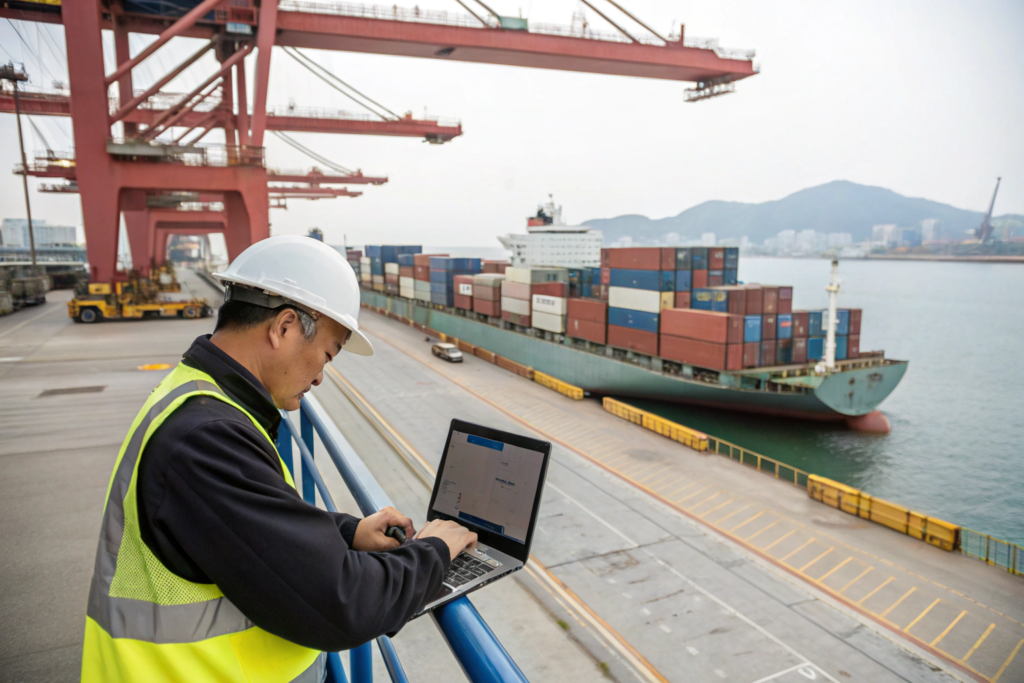
When coffee arrives in Busan, the container is discharged from the feeder. It moves to a transshipment yard. Korean customs reviews the transshipment declaration. The container may be inspected. Then it waits for the mother vessel. The Korea Customs Service explains transshipment and customs rules. The Ministry of Oceans and Fisheries shares port and shipping policy. I use these when we prepare our Korean transit files. A clean declaration speeds the move. A missing document causes a hold. So prepare the file early. Then send it to the broker. That is how you avoid a delay.
I also tell buyers to ask about the bonded yard. A bonded yard stores the container without import duties. That saves money. But the free time is limited. After free time, storage fees start. So track the free time. Then clear the container fast.
How Do You Track a Coffee Container Through Busan?
You track a coffee container through Busan by using the carrier tracking page and the terminal system. Check the feeder arrival. Check the discharge. Check the transshipment declaration. Check the mother vessel loading. Check the final sailing. The CMA CGM tracking page and Hapag-Lloyd tracking page are good examples. I use these when we update buyers. A tracking number is not enough. You need the vessel name. You need the terminal. You need the cut-off time. So keep all numbers in one sheet. Then check them daily. That is how you catch a problem early.
For Ron, this means he should ask for a tracking sheet. The sheet should list the container number, seal number, feeder vessel, mother vessel, and cut-off dates. Then he can check each step. That clarity reduces stress.
What Risks Affect Busan Coffee Transit?
Busan is efficient. But it is not risk-free. Winter can bring cold winds and schedule changes. Summer can bring typhoons. Port congestion can slow the discharge. A missed connection can leave coffee waiting. A document error can stop the move. These risks stack up. So you must plan for them. I have seen a buyer save money on freight and then lose it all on demurrage. That is a bad trade.
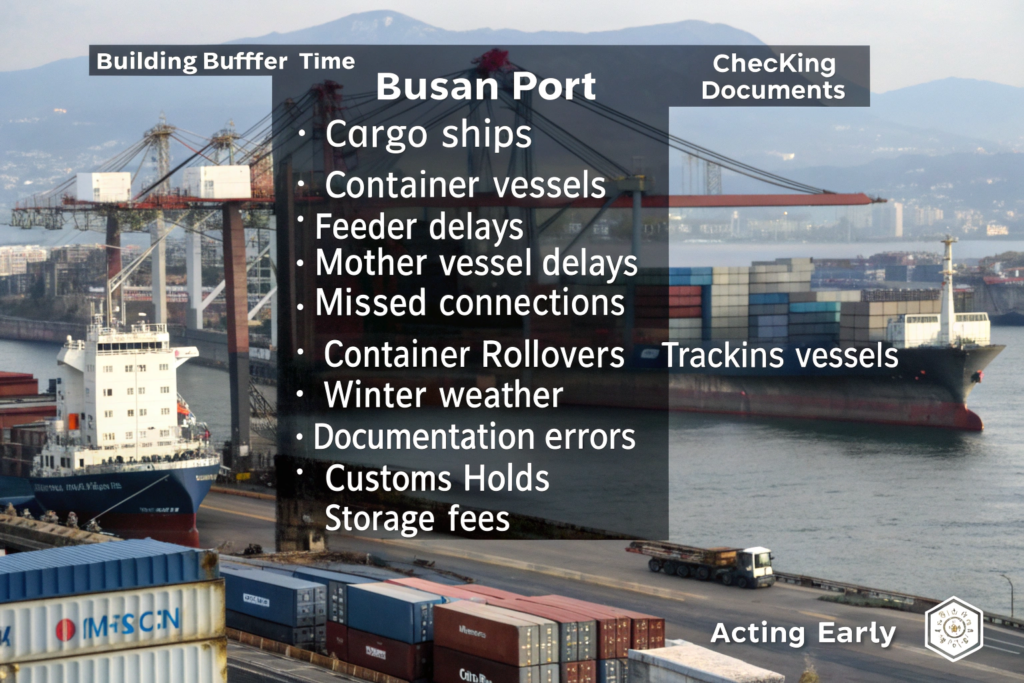
Busan coffee transit risks include port congestion, feeder delays, mother vessel delays, missed connections, container rollovers, winter weather, documentation errors, customs holds, and storage fees. The biggest risk is a missed connection. A missed connection can add one to two weeks. The second biggest risk is a documentation error. A wrong number can stop the transshipment. The third biggest risk is weather. Winter and typhoon season can change schedules fast. So build buffer time. Check documents. Track the vessel. Then act early.
So, what should you do? Ask your forwarder for the risk plan. Ask what happens if the feeder is late. Ask what happens if the mother vessel is full. A good forwarder has answers. A weak forwarder does not. So ask. Then decide.
What Causes Rollovers and Missed Connections?
Rollovers and missed connections happen for several reasons. The feeder may be late. The mother vessel may be full. The terminal may be congested. The documents may be incomplete. The container may be selected for inspection. The Drewry shipping research tracks schedule reliability and port performance. The Freightos index shows freight and route conditions. I use these when we plan a Busan connection. A short connection is risky. A long connection is safer. A peak season is riskier. A winter storm is riskier. So check the season. Then add buffer. That is how you reduce rollovers.
I also tell buyers to avoid the tightest connection. A connection under three days is a gamble. A connection of five to seven days is safer. The extra wait costs less than a missed sailing. So choose the safer connection. Then relax.
How Do You Protect Coffee Quality in Busan?
You protect coffee quality in Busan by controlling moisture, inspecting the container, using liners and desiccants when needed, and avoiding long storage. The SGS coffee inspection page shows how third parties verify quality. The Intertek coffee page shows testing services. I use these when we prepare our export files. A container that sits in a cold yard can form condensation. A container that sits in a warm yard can build moisture. Both hurt the coffee. So keep the storage short. Then ship. That is how you protect the cup.
For Ron, this means he should ask about the storage time in Busan. If the container will wait more than five days, he should ask for extra protection. A liner or desiccant may help. So ask. Then plan.
How to Manage Busan Transshipment Costs?
Cost is where Busan surprises buyers. The ocean freight quote may look good. Then the local charges arrive. Terminal handling. Documentation. Storage. Demurrage. Inspection. Each fee adds up. I have seen a buyer pay more in Busan fees than he saved on freight. So you must see the full cost. Then compare. That is the only fair way.
Busan transshipment costs include feeder freight, terminal handling charges, transshipment documentation, customs brokerage, storage, demurrage, inspection, and insurance. Some costs are fixed. Some depend on time. The time-based costs are the dangerous ones. Demurrage can grow fast. Storage can grow fast. So the goal is to keep the container moving. A fast connection is cheaper. A slow connection is more expensive. So compare the total cost, not just the ocean freight. Then choose.
So, what should you do? Ask for a full cost sheet. Ask what is included. Ask what is not. Ask about free time. Then add a buffer. That is how you avoid a surprise.
What Fees Should You Expect in Busan?
You should expect terminal handling charges, feeder freight, transshipment fees, customs brokerage, and documentation fees. You may also pay storage, demurrage, inspection, and insurance. The World Bank logistics data shows logistics performance by country. The World Customs Organization explains customs standards. I use these when we compare routes. A port with high fees may still be cheaper if it is faster. A port with low fees may be expensive if it is slow. So compare the total. Then decide.
I also tell buyers to ask about the free time. Free time is the number of days before storage starts. A port with five free days is safer than a port with two. So ask. Then plan.
How Can Buyers Reduce Transshipment Costs?
Buyers can reduce transshipment costs by booking early, choosing a reliable connection, preparing documents early, tracking the container daily, and avoiding demurrage. The Trade.gov site offers export and import guidance. The CBP page explains U.S. customs entry. I use these when we build a supply plan. A clean document set is the cheapest tool. A daily tracking habit is the second cheapest. Both prevent delays. Both save money. So use them. Then save.
For Ron, this means he should not wait for the forwarder to call. He should check the tracking himself. He should have the broker ready. He should have the truck ready. That speed reduces cost. So build the habit.
Conclusion
Busan transshipment is a powerful tool for coffee exporters and buyers. It adds route options. It adds sailing frequency. It adds flexibility. But it also adds a handoff. That handoff adds risk. The main risks are missed connections, documentation errors, winter weather, and storage fees. The main costs are feeder freight, terminal handling, documentation, storage, and demurrage. You can manage these risks with buffer time, clean documents, daily tracking, and a reliable forwarder. You can manage the costs with early booking and fast clearance. If you do these things, Busan can be a strength. If you ignore them, Busan can be a surprise. So plan the route. Then track the box. Then protect the coffee.
At BeanofCoffee, we plan Busan transshipments with care. We own more than 10,000 acres in Baoshan City, Yunnan. We export Catimor, Arabica, and Robusta. We work with large buyers, brand owners, distributors, and trading companies. We share container numbers, seal numbers, vessel schedules, and transshipment updates. If you want to ship coffee through Busan, please contact Cathy Cai at cathy@beanofcoffee.com. She will help you with samples, pricing, specifications, and logistics plans. You can also visit BeanofCoffee to learn more. Let us move your coffee through Busan smoothly.