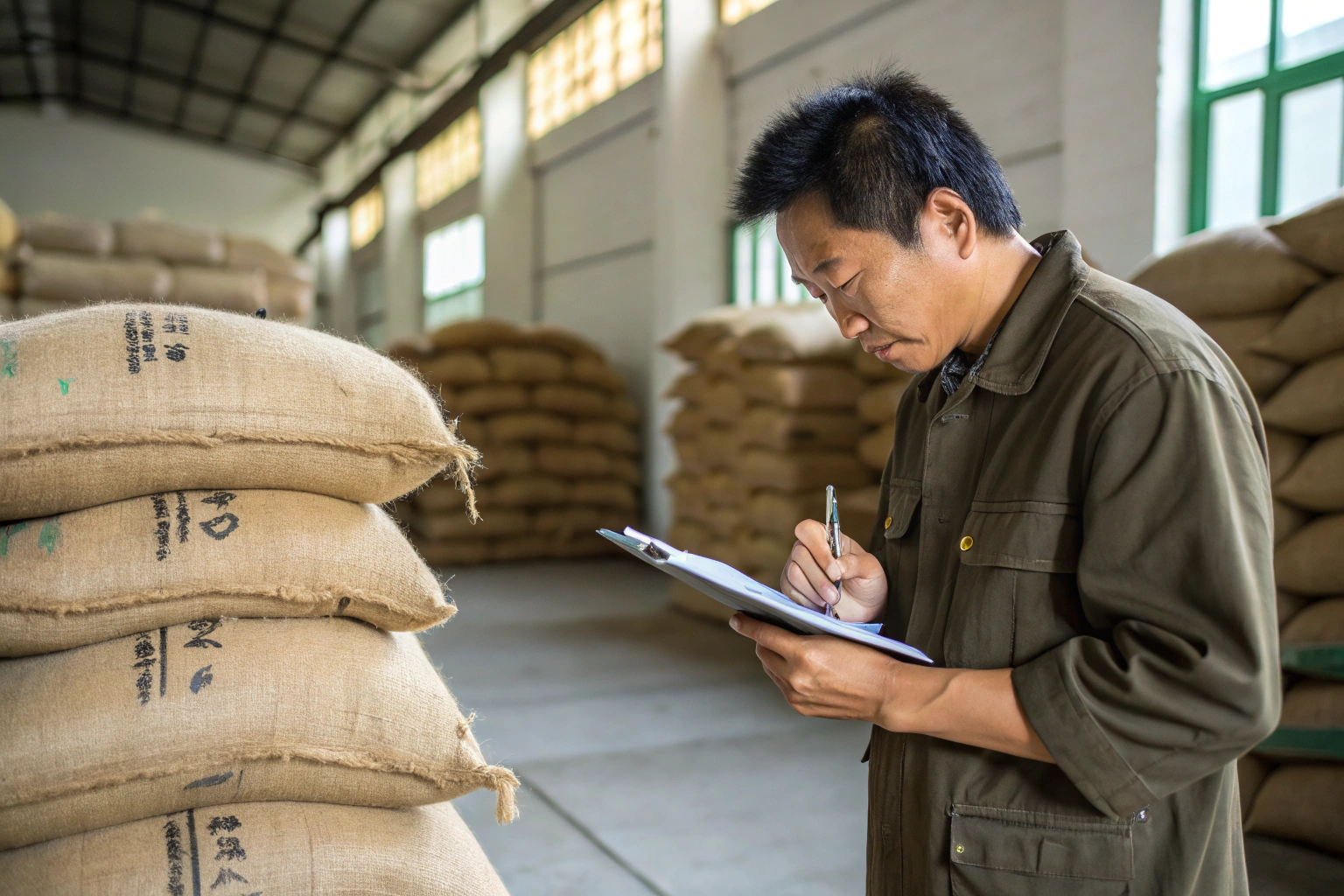
You just bought green coffee in jute bags. You plan to roast it over the next year. But you are not sure how long it stays good. You worry about old crop. You worry about mold. You worry about losing money. That is the problem. Let me give you clear answers.
Green coffee in jute bags usually stays good for 12 to 18 months under dry, cool, and stable conditions. Some well-stored lots can last up to 24 months. After that, quality drops. The beans lose aroma, take on a baggy taste, and may absorb moisture. The exact shelf life depends on moisture content, temperature, humidity, and how you store the bags. At BeanofCoffee, we ship Yunnan Arabica, Robusta, and Catimor in jute and we track moisture and storage dates for every lot.
So, how do you protect your investment? You need to know the signs. You need to know the storage rules. You also need to know when to use older coffee. Let me walk you through it.
How Long Does Green Coffee Last in Jute Bags?
You see a date on the jute bag. You wonder if it is still good. You do not want to roast stale coffee. That is a real fear. You paid good money. You want good cups.
Green coffee in jute bags typically holds quality for 12 to 18 months. In ideal storage, it can reach 24 months. After 18 months, flavor fades. After 24 months, many beans taste flat, woody, or baggy. The harvest date, moisture, and storage conditions decide the real limit.
Let me break it down. Fresh crop coffee has more life. Old crop coffee has less. A dry lot at 10-11% moisture lasts longer than a wet lot at 13%. A cool warehouse at 15-20°C slows aging. A hot warehouse at 30°C speeds it up. Jute breathes. That is good and bad. It lets moisture out. It also lets moisture in. So, the room matters.
| Storage Condition | Expected Shelf Life |
|---|---|
| Cool, dry, stable | 18-24 months |
| Warm, dry | 12-18 months |
| Humid, warm | 6-12 months |
| Wet or damp | 1-3 months |
So, what does this mean? It means you should not judge by the bag alone. You judge by the storage history. Ask your supplier for moisture data. Ask for warehouse conditions. Ask for the harvest date. A good supplier tracks these things. A bad supplier guesses. You know? The details protect you.
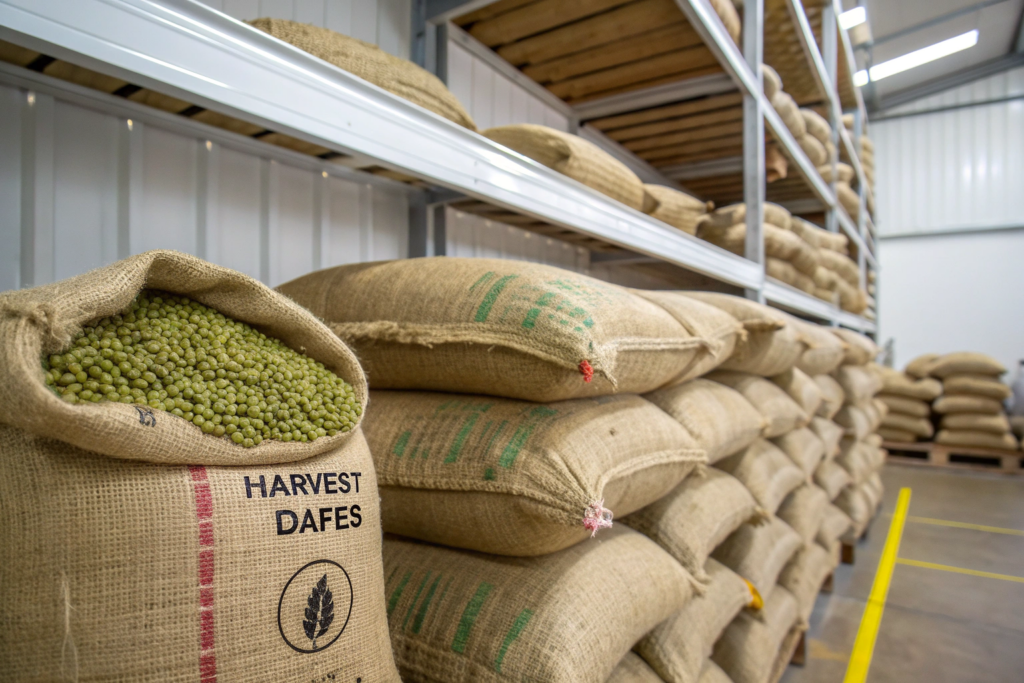
Does Green Coffee Expire in Jute Bags?
Green coffee does not expire like milk. It does not have a hard date. But it does lose quality. The oils slowly oxidize. The beans absorb smells from the air. Jute is porous. That means it can pick up odors from diesel, smoke, or damp walls. After two years, many beans taste dull. You can still use them in dark roasts or blends. But you may need to adjust the roast. I always test a small sample first. Check the smell. Check the moisture. Check the color. The International Coffee Organization tracks trade standards for green coffee. The FAO also shares storage guidance. A simple rule is this: if the beans smell clean and moisture is under 12.5%, they are likely usable. If they smell musty or feel damp, do not risk it.
How Do You Read Harvest Dates on Jute Bags?
Jute bags often show a crop year. You may see "2025/2026" or "Crop 2025." That is the harvest window. It is not a roast date. It is not a pack date. So, a bag from 2024 is not automatically bad. It depends on storage. I also look for the lot number. I look for the exporter name. I look for the ICO mark. The Specialty Coffee Association explains green coffee grading. The Coffee Institute shares handling tips. Ask your supplier for a full trace. Ask when the coffee was milled. Ask when it was loaded. These dates tell the real story. If the supplier cannot answer, that is a warning sign.
What Factors Shorten Green Coffee Shelf Life?
You want your coffee to last. But some things speed up aging. You may not see them at first. Then one day the beans taste flat. That is frustrating. So, let us look at the main causes.
The main factors that shorten green coffee shelf life are high moisture, high temperature, high humidity, poor airflow, strong odors, and pest activity. Moisture is the biggest risk. If green coffee goes above 12.5% moisture, mold and bacteria can grow. Heat speeds up oxidation. Humidity feeds mold. Bad odors soak into the beans. Pests can damage the bag and the beans.
Another way to look at this is simple. Green coffee is a living product. It breathes. It reacts to the room. If the room is hot and wet, the coffee ages fast. If the room is cool and dry, the coffee ages slow. So, what does this mean? It means storage is not just a place. It is a system. You need to control the room. You need to check it often. You need to fix problems fast.
| Factor | Effect on Shelf Life |
|---|---|
| Moisture above 12.5% | Mold risk, fast aging |
| Temperature above 25°C | Faster oxidation |
| Humidity above 60% | Mold and bacteria |
| Strong odors | Flavor taint |
| Pests | Bag damage, contamination |
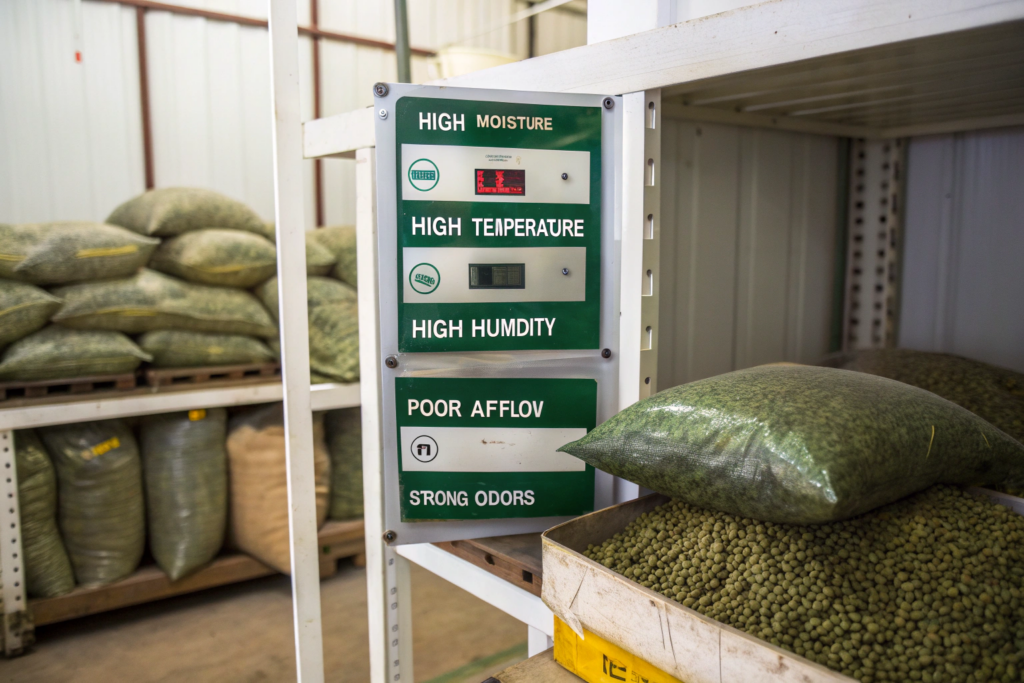
Does Moisture Destroy Green Coffee in Jute?
Yes, moisture is the number one enemy. Jute can hold water. It can also let water in. If the warehouse is damp, the beans pull in moisture. If the bags sit on a wet floor, the bottom rows can spoil. I have seen this happen. A buyer lost the bottom layer of a container because the pallets were too low. The FDA explains food safety risks from moisture. The USDA also provides storage resources. To protect your coffee, keep it dry. Use pallets. Keep bags away from walls. Check moisture every month. If you see condensation, move the bags. If you smell mold, isolate the lot. Do not mix it with clean coffee.
Can Heat and Humidity Ruin Jute-Bagged Coffee?
Heat and humidity work together. Heat makes the beans sweat. Humidity gives mold a home. A hot warehouse at 30°C and 70% humidity is a bad place for green coffee. The beans age in months, not years. The WHO warns about mycotoxins in food. The EFSA also publishes risk reports. I try to keep my warehouse below 20°C and below 60% humidity. That is not always possible. But it is the goal. If you cannot control the room, use a different packing method. Jute alone may not be enough. You may need a barrier bag inside. That slows moisture changes. It also protects the flavor.
How Should You Store Green Coffee in Jute?
You have the bags. Now you need a plan. A good plan keeps quality high. A bad plan wastes money. Let me share what works. I have stored coffee for years. I have made mistakes. I have learned from them.
To store green coffee in jute, keep it cool, dry, and clean. Use pallets. Leave space between rows. Keep bags away from walls. Avoid strong odors. Check moisture and temperature often. If you store for more than six months, consider adding a barrier liner. At BeanofCoffee, we store Yunnan coffee in dry warehouses with airflow and regular checks. We also rotate stock so older lots move first.
So, what does this mean for you? It means storage is active. You do not just stack bags and forget them. You watch them. You test them. You rotate them. That is how you keep shelf life long. That is how you protect your margin.
| Storage Method | Benefit |
|---|---|
| Pallets | Keeps bags off wet floors |
| Airflow | Reduces moisture and odors |
| Rotation | Moves old stock first |
| Barrier liner | Slows moisture exchange |
| Pest control | Protects bags and beans |
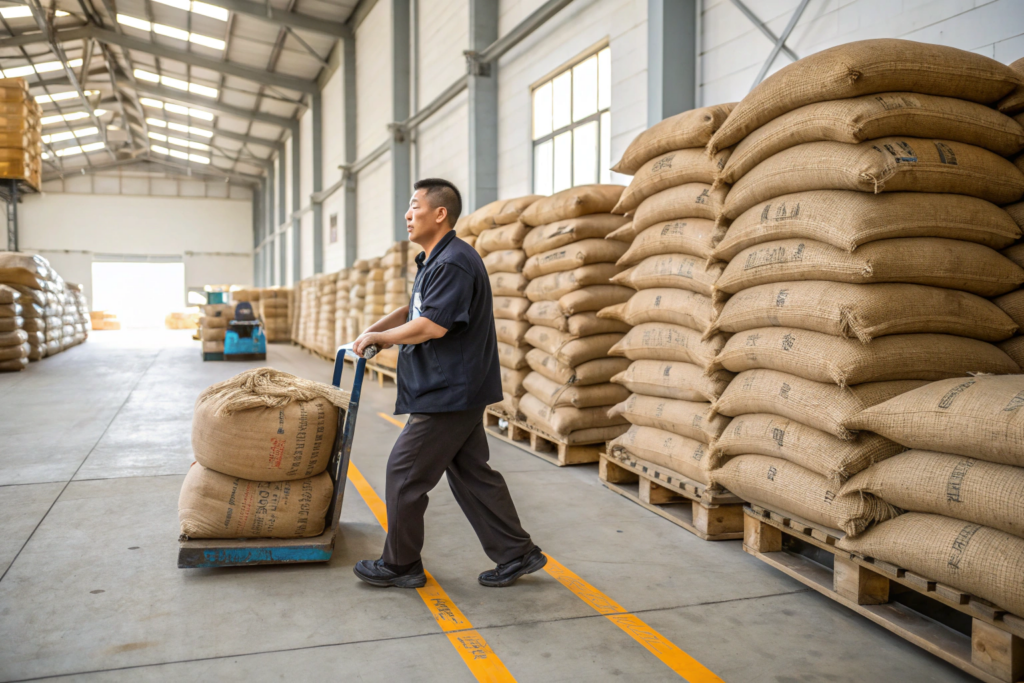
Should You Keep Jute Bags on Pallets?
Yes, always use pallets. Pallets keep the bags off the floor. The floor can be cold. It can be wet. It can carry odors. A good pallet allows air to move under the bags. That helps keep moisture even. I use plastic pallets in some rooms. I use wood pallets in others. Both work if they are clean and dry. The Packaging Digest covers packaging and storage trends. The Global Coffee Platform also shares good practices. Do not stack bags too high. High stacks can crush the bottom bags. They also block airflow. Leave a gap between stacks. Leave a gap from the wall. This small step makes a big difference.
When Should You Move Coffee to GrainPro?
Jute is breathable. That is fine for short storage. But for long storage, you may need a barrier. GrainPro or similar liners slow moisture changes. They also block odors. They can extend shelf life by months. I move coffee to liners when I plan to hold it over six months. I also use them for high-value lots. The Perfect Daily Grind explains liner options. The Daily Coffee News covers storage technology. But liners are not magic. You still need a cool, dry room. You still need to check moisture. A liner inside a hot room will not save the coffee. So, fix the room first. Then add the liner.
When Should You Use Older Green Coffee?
You have coffee that is 18 months old. You do not want to waste it. But you do not want to sell bad coffee. What do you do? You can still use it. You just need to be smart.
You should use older green coffee for dark roasts, blends, cold brew, or value products. Do not use it for light roast single origin. The delicate flavors are gone. But the body and base notes may still work. Test the moisture, smell, and taste first. If the coffee is moldy or musty, do not use it. If it is just flat, you can blend it or roast it darker. This protects your brand and your buyers.
Another way to look at this is to match the coffee to the product. A light roast needs fresh beans. A dark roast can hide some age. A cold brew can handle older beans because the flavors are different. A value blend can use older coffee with fresh coffee. So, what does this mean? It means you should not panic. You should test. You should plan. You should sell the right coffee to the right buyer.
| Age of Coffee | Best Use |
|---|---|
| 0-12 months | Light roast, single origin |
| 12-18 months | Medium roast, blends |
| 18-24 months | Dark roast, cold brew |
| Over 24 months | Test first, value products |
Can Old Green Coffee Still Taste Good?
Sometimes, yes. It depends on the storage. A well-stored 18-month-old coffee can still taste fine. It may lose some brightness. It may have less aroma. But it can work in a blend. I have cupped old coffee that surprised me. It was smooth and sweet. I have also cupped old coffee that tasted like burlap. The difference was storage. The Coffee Review shares tasting notes and review methods. The Roast Magazine covers roasting and quality. So, do not judge by age alone. Cup it. Check it. Then decide. If it tastes good, use it. If it tastes bad, do not risk your brand.
How Do You Sell Coffee Near End of Shelf Life?
You sell it honestly. You sell it for the right use. You do not call it fresh crop. You do not sell it as a premium single origin. You sell it as a value blend. You sell it to a cold brew maker. You sell it to a dark roast brand. The Nielsen data shows what consumers buy. The Mintel reports show what trends are growing. I have seen buyers move old coffee fast with a clear plan. They price it right. They label it right. They keep the quality promise. That is the key. You can still make money. You just need to be honest. Your buyer will respect that. Your brand will stay strong.
Conclusion
Green coffee in jute bags has a real shelf life. Most lots stay good for 12 to 18 months. Good storage can push it to 24 months. Moisture, heat, and humidity are the main risks. You can protect your coffee with pallets, airflow, rotation, and barrier liners. You can use older coffee in dark roasts, blends, cold brew, and value products. Just test it first. Do not guess. The details matter.
If you want a supplier who tracks moisture, storage, and harvest dates, contact us. BeanofCoffee owns over 10,000 acres in Baoshan, Yunnan. We export Catimor, Arabica, and Robusta to North America, Europe, and Australia. We can help you plan your green coffee storage and keep your shelf life long. For orders or questions, email Cathy Cai at cathy@beanofcoffee.com. She will give you clear answers and safe coffee.