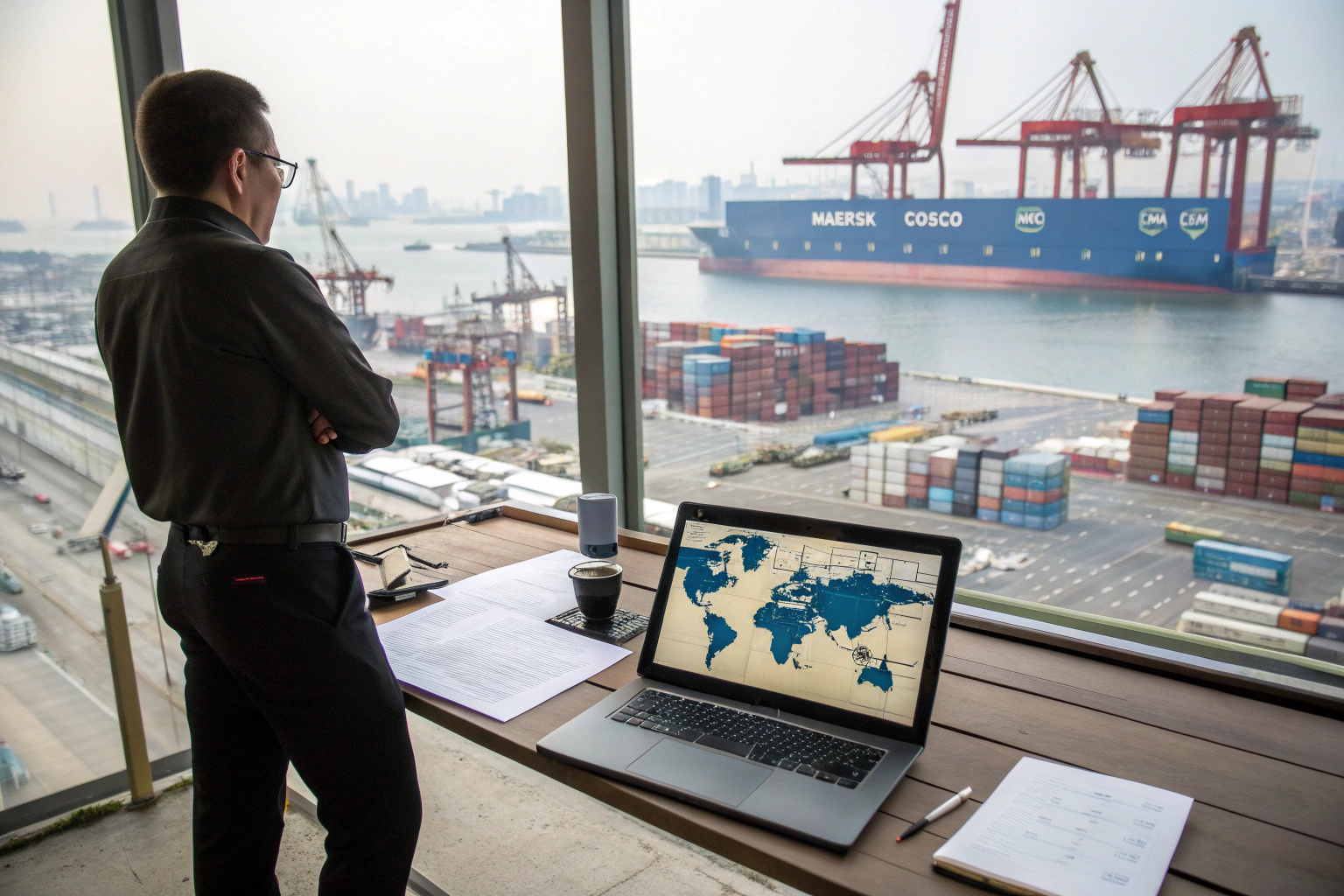
In my first year of exporting, I thought a container was a container and a ship was a ship. I'd call a freight forwarder, ask for a rate to Hamburg, and take whatever they gave me. I didn't know the difference between a direct vessel and a transshipment. I didn't know that the shipping line you choose determines the transit time, the risk of delay, the quality of the container, and even the attitude of the customs officer at the destination port. Then I had a container sit in the port of Singapore for three weeks, waiting for a feeder vessel that never came, while my buyer in Rotterdam called me every day, increasingly furious. I learned my lesson. The shipping line is not a commodity. It's a strategic choice.
The primary shipping line options for coffee export from China fall into three tiers: the global mega-carriers like Maersk, MSC, and CMA CGM, which offer the most extensive networks and the highest reliability; the Chinese state-backed carriers like COSCO Shipping, which often provide competitive rates and strong coverage on Asia-Africa and Asia-Europe routes; and the specialized regional carriers and alliance services that can offer niche advantages for specific destinations. Each tier has different strengths in terms of transit time, container availability, freight rate stability, and service quality. The right choice depends on your destination, your volume, your budget, and your tolerance for risk.
This decision is made for every container we ship. It's a calculation of cost, speed, and reliability. I want to share what I've learned about the major players and how to make this choice intelligently, so your coffee arrives on time, in good condition, and without a logistical nightmare.
What Are the Major Global Shipping Lines for Coffee?
The container shipping industry is dominated by a handful of massive companies. They operate fleets of hundreds of vessels, serving thousands of ports. They set the standard for global trade. When you ship a container of Yunnan coffee to Europe or North America, it almost certainly travels on a vessel owned or operated by one of these giants.
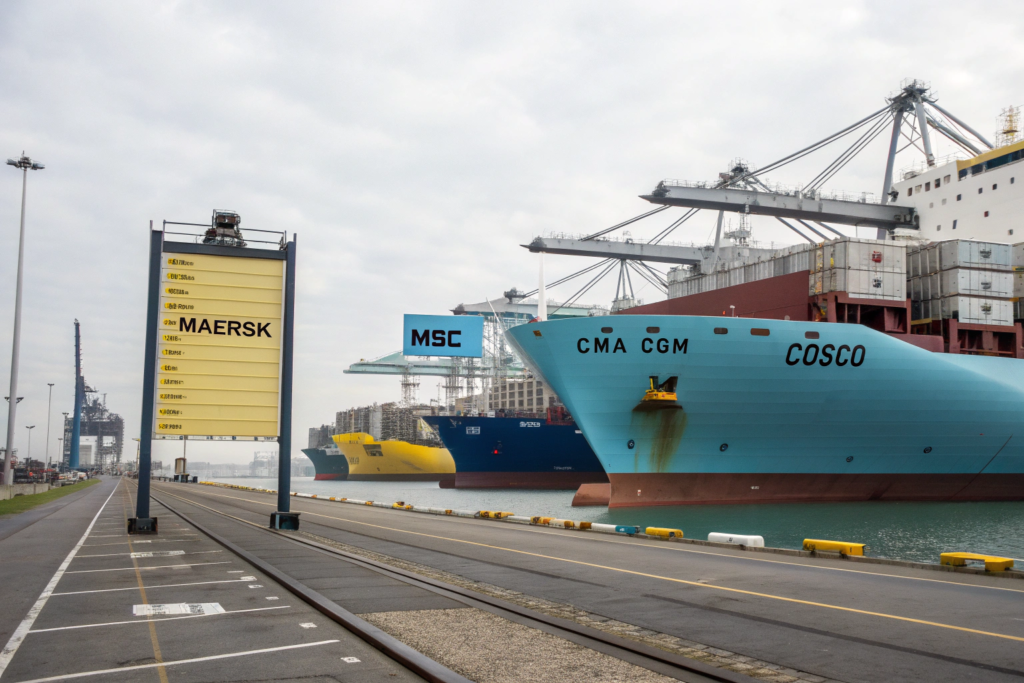
The major global shipping lines for coffee export are Maersk, Mediterranean Shipping Company, and CMA CGM. These three European-headquartered carriers control a significant share of global container capacity. They offer comprehensive service networks, modern fleets, and strong reliability on the major East-West trade lanes. For coffee exporters in China, they provide frequent sailings from Shanghai, Ningbo, and Shenzhen to all major destination ports in Europe and North America. Their premium service comes at a premium price, but the consistency and global infrastructure they provide make them the default choice for many exporters.
What Makes Maersk the Industry Benchmark?
Maersk, headquartered in Denmark, is the largest container shipping company in the world, although MSC has recently surpassed them in total fleet capacity. In the coffee industry, Maersk is the gold standard.
Their vessels are modern, well-maintained, and equipped with advanced temperature and humidity monitoring. This matters for coffee. A container of green beans needs to stay dry. Maersk's container fleet is newer on average, which means fewer leaks, fewer condensation problems, and fewer claims.
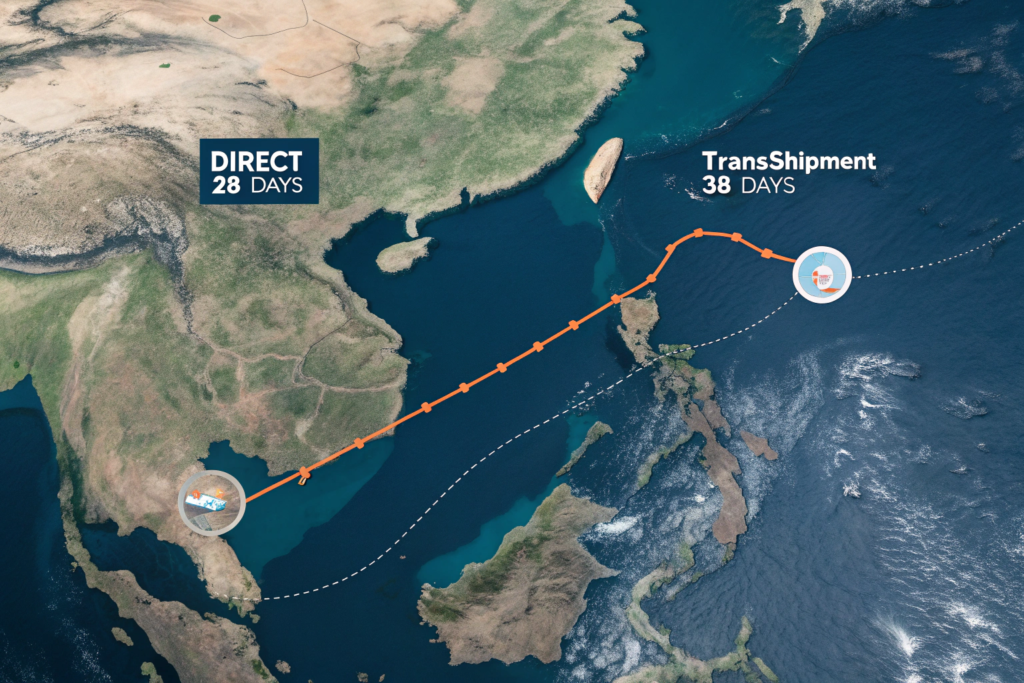
Maersk also has a reputation for schedule reliability. When they say a vessel will depart Shanghai on Tuesday and arrive in Rotterdam in 28 days, it generally does. This predictability is valuable for coffee buyers who are planning production schedules. The downside is cost. Maersk typically charges a premium over other carriers.
How Does MSC Compare on Asia-Europe Routes?
MSC, or Mediterranean Shipping Company, is the largest carrier by fleet size. They are particularly strong on the Asia to Europe route, which is a critical lane for Chinese coffee heading to the European market.
MSC offers frequent sailings and competitive rates. They are often slightly cheaper than Maersk. Their service quality is generally good, though some shippers report that their customer service can be less responsive.
For a coffee exporter shipping to Italy, Germany, or the Netherlands, MSC is often the most cost-effective option that still provides reliable, frequent service. We use MSC regularly for our European shipments.
Why Is CMA CGM Strong for West African and Mediterranean Destinations?
CMA CGM is a French carrier with deep historical roots in Africa and the Mediterranean. They offer excellent connections to West African ports and to Mediterranean destinations that might not be as well-served by other carriers.
For coffee exporters targeting niche markets in Southern Europe or North Africa, CMA CGM can offer direct services that avoid transshipment. This saves time and reduces handling risk. Their service quality is consistently high.
Why Do Chinese Carriers Offer Competitive Advantages?
As a Chinese exporter, I have a unique advantage: access to a world-class national shipping line that is deeply integrated with the Chinese logistics ecosystem. COSCO Shipping is not just another carrier. It's a strategic asset for Chinese trade, and it offers specific benefits for coffee exporters.
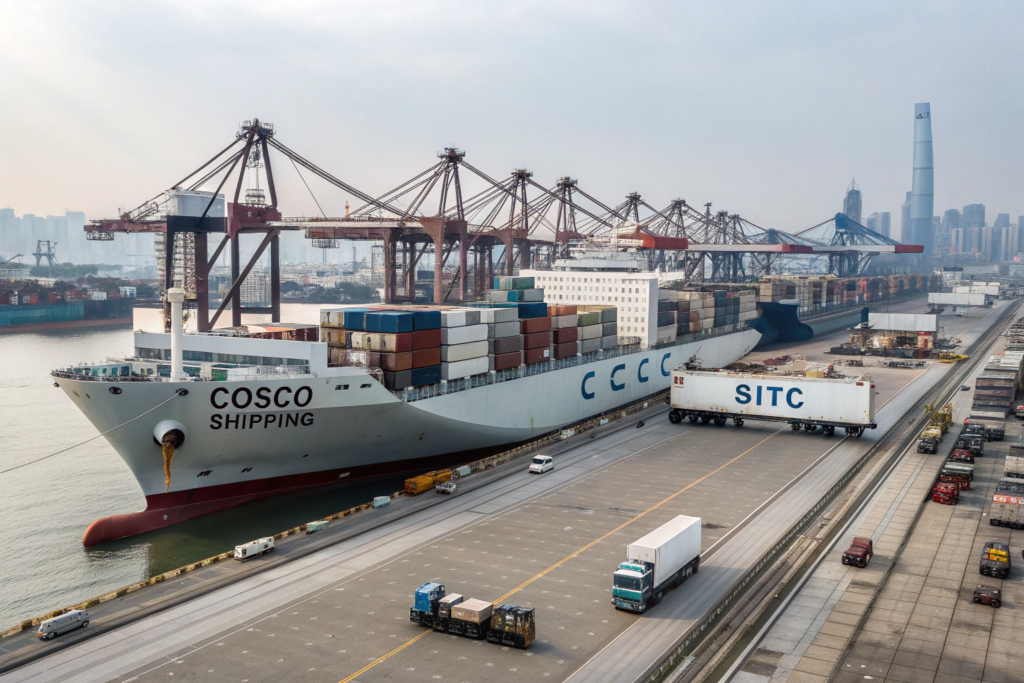
Chinese carriers, primarily COSCO Shipping and to a lesser extent SITC, offer competitive advantages in pricing, container availability at Chinese ports, and strong connectivity to Belt and Road Initiative destinations. COSCO is the fourth-largest container carrier globally and the largest in China. Their vessels are modern, their schedules from Chinese ports are frequent, and their rates are often more competitive than the European mega-carriers. For a Chinese coffee exporter, COSCO provides a reliable, cost-effective option with the added benefit of a shared language and time zone for customer service.
How Does COSCO's Network Support Coffee Export?
COSCO's network is built around China. They have extensive services from Shanghai, Ningbo, Shenzhen, and even smaller ports to destinations worldwide.
For the US West Coast, COSCO offers fast, direct services to Los Angeles and Long Beach. For Europe, they offer competitive transit times via the Suez Canal. They are also expanding their services to emerging markets in Southeast Asia, the Middle East, and Africa.
COSCO's container availability at Chinese ports is generally excellent. During the container shortages of 2021, COSCO was able to prioritize Chinese exporters in a way that foreign carriers sometimes did not. This reliability of equipment is a significant advantage.
Is COSCO More Affordable for Chinese Exporters?
Generally, yes. COSCO's rates are often at or below the market average. They benefit from lower overhead costs and a strategic mandate to support Chinese trade.
For a coffee exporter operating on thin margins, the freight cost difference between a premium carrier like Maersk and a competitive carrier like COSCO can be significant—hundreds of dollars per container. Over a year of shipments, that adds up.
Furthermore, COSCO's customer service operates in Chinese. When there's a problem—a delayed vessel, a documentation issue—I can call a Chinese-speaking representative in the same time zone and resolve it quickly. This operational convenience has real value.
How Do You Choose Between Direct and Transshipment Routes?
The fastest route is not always the cheapest, and the cheapest route is not always the most reliable. One of the most important logistics decisions is whether to ship your coffee on a direct vessel or one that transships through an intermediate port.
The choice between direct and transshipment routes involves trading off speed and handling risk against cost. A direct vessel sails from the origin port to the destination port without stopping to transfer cargo. Transit time is shorter, and the container is handled only at the origin and destination. A transshipment route involves unloading the container at an intermediate hub port—often Singapore, Port Klang, or Colombo—and loading it onto a second vessel for the final leg. This is cheaper, but it adds transit time and handling risk. Every time a container is moved, there is a chance of damage, delay, or misrouting.
When Is a Direct Route Worth the Premium?
A direct route is worth the premium when the buyer is paying a premium for the coffee itself. If you are shipping an 86-point micro-lot to a specialty roaster in Europe, the coffee deserves a direct vessel.
The shorter transit time preserves freshness. The reduced handling reduces the risk of container damage, moisture intrusion, or theft. The predictability of the arrival date allows the roaster to plan their production and inventory.
For premium specialty coffee, the freight cost is a small percentage of the total value. Saving $300 on freight by using a transshipment route makes no sense if it risks a $50,000 container of high-grade coffee.
When Is Transshipment the Smarter Choice?
Transshipment makes sense for commodity-grade coffee, for large volumes where freight cost is a major component of the landed price, or for destinations that are not served by direct vessels.
The freight savings on a transshipment route can be significant—20% to 30% less than a direct vessel. For a commercial-grade coffee with a lower margin, that savings can be the difference between a profitable deal and a loss.
The key is to manage the risk. Use a carrier with a reliable transshipment hub. Track the container closely during the transfer. Ensure the container is in good condition and the coffee is properly packaged to withstand the extra handling. With good risk management, transshipment can be a viable, cost-effective option.
What Documentation and Insurance Do Shipping Lines Require?
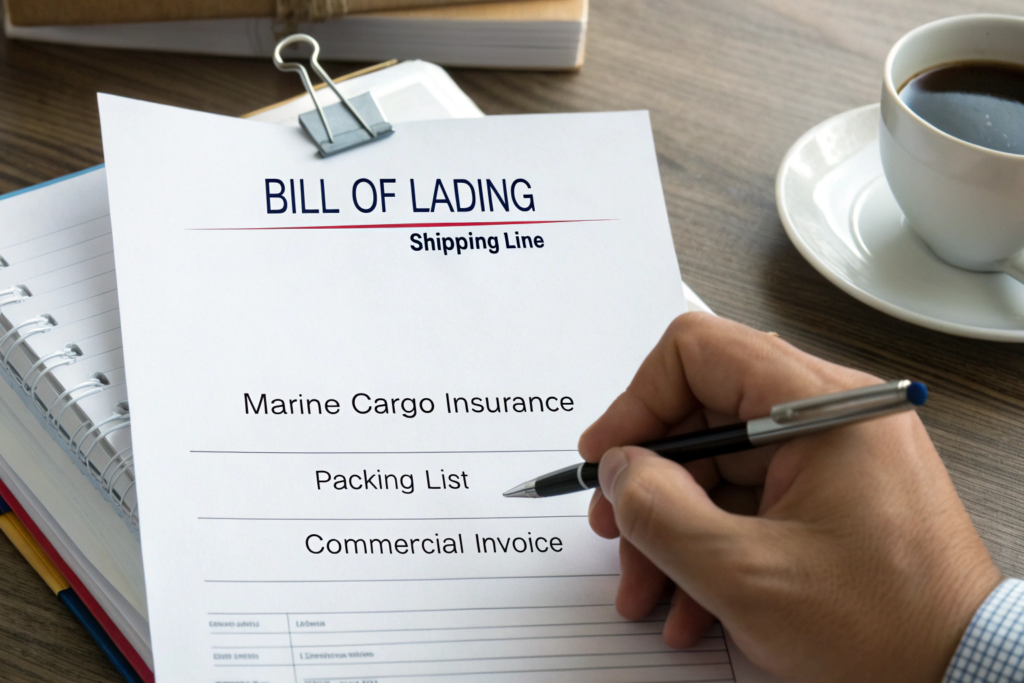
The coffee is in the container. The container is on the ship. But the coffee is not legally "shipped" until the documentation is perfect. The shipping line requires a specific set of documents, accurately completed, to accept the cargo and issue the Bill of Lading. Errors in documentation cause delays, storage charges, and angry buyers.
The essential documents required by shipping lines for coffee export are the Bill of Lading instruction, the commercial invoice, the packing list, and, depending on the destination, a fumigation certificate and a phytosanitary certificate. Cargo insurance is not always required by the shipping line, but it should be considered mandatory by any prudent exporter or importer. The shipping line's liability for cargo damage is limited by international conventions. Without separate cargo insurance, a container of coffee that is damaged in transit represents a total financial loss.
What Is a Bill of Lading and Why Is It Critical?
The Bill of Lading is the most important document in ocean freight. It serves three functions simultaneously: it is a receipt for the cargo, a contract of carriage between the shipper and the shipping line, and a document of title that represents ownership of the goods.
The Bill of Lading must be completely accurate. The shipper's name, the consignee's name, the notify party, the description of the goods, the container number, the seal number, the gross weight—every detail must match the commercial invoice and the packing list.
A typo on the Bill of Lading can prevent the buyer from clearing customs at the destination. The container will sit at the port, accumulating demurrage charges, while the error is corrected. We triple-check every Bill of Lading draft before confirming.
Why Is Cargo Insurance Non-Negotiable?
Coffee is a valuable, perishable cargo. A container of specialty Arabica can be worth $50,000 or more. The shipping line's liability for loss or damage is limited by the Hague-Visby Rules to a few hundred dollars per container. This is essentially nothing.
Cargo insurance covers the full commercial value of the coffee against physical loss or damage during transit. It covers events like container overboard, fire, collision, theft, and water damage. The premium is typically a small fraction of the cargo value—0.2% to 0.5%.
I never ship a container without insurance. Ever. It is a non-negotiable cost of doing business. We include insurance in our CIF quotes, and we strongly recommend that FOB buyers purchase their own policy through their freight forwarder. The International Chamber of Commerce provides standard insurance clauses that clarify coverage.
Conclusion
Choosing a shipping line is not a box-ticking exercise. It's a strategic decision that affects the cost, the speed, the safety, and the reliability of your coffee delivery. The global mega-carriers offer extensive networks and premium service. The Chinese national carriers offer competitive pricing and strong local support. Direct routes offer speed and security. Transshipment routes offer savings and reach.
The right choice depends on your specific coffee, your specific buyer, and your specific destination. There is no single best shipping line. There is only the best shipping line for this container, this week, for this route. Managing that decision well requires knowledge, relationships, and constant attention to a volatile market.
As an exporter, part of my value to buyers is navigating this complexity on their behalf. I monitor the freight market. I compare rates and transit times. I book the vessel, prepare the documents, and arrange the insurance. My goal is to make the logistics invisible, so the buyer can focus on what they do best: roasting, branding, and selling great coffee.
If you're planning a shipment and want to understand the best shipping options for your route and your timeline, we can provide a current freight estimate and a recommended carrier.
Reach out to Cathy Cai. She works with all the major shipping lines and forwarders daily, and she can guide you through the logistics maze with clarity and patience.
Email: cathy@beanofcoffee.com. Let's get your coffee on the water, on time, and fully protected.