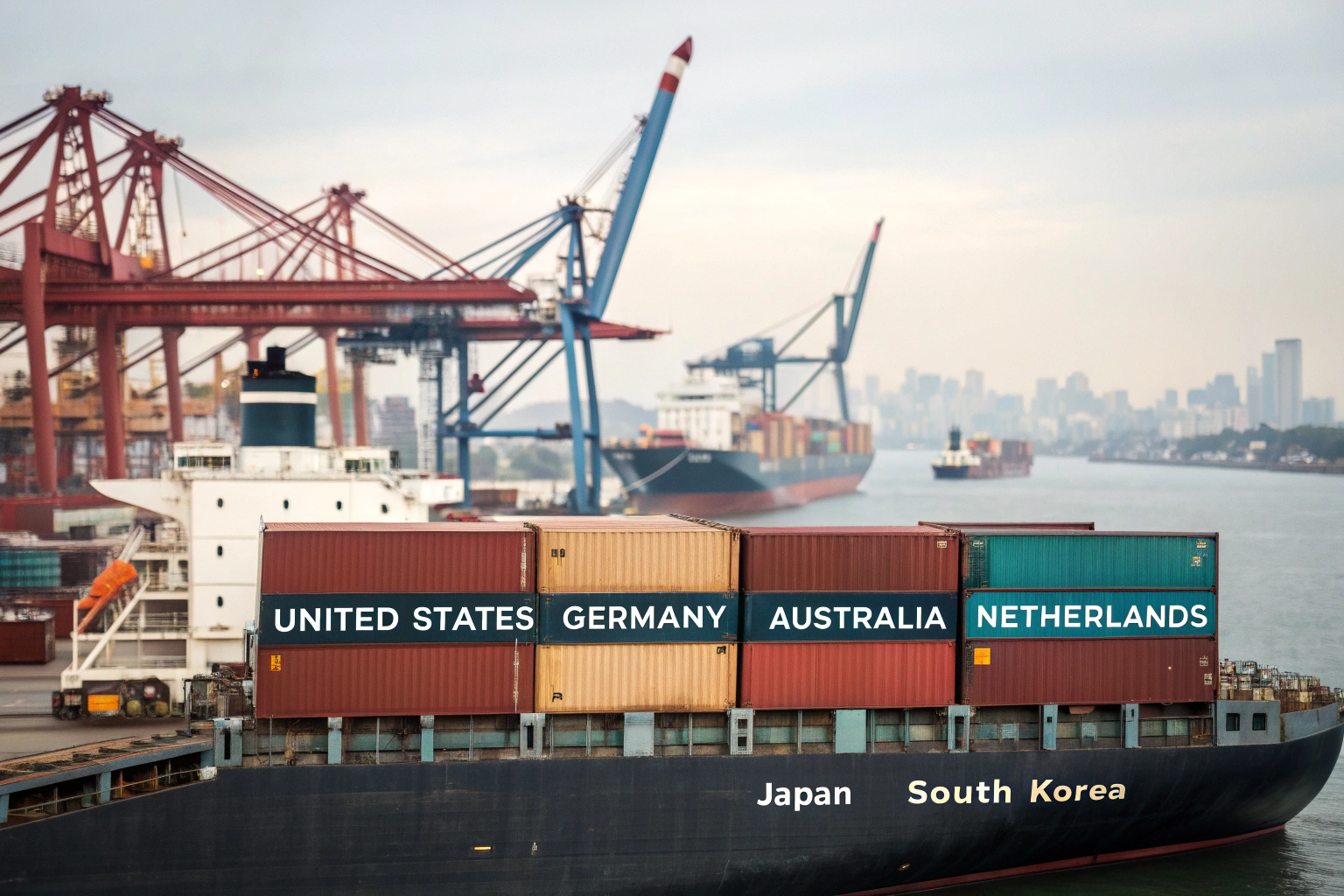
You are a buyer. You care about where the coffee is going. Not just because you want to know the market, but because it tells you something about the coffee itself. If the Germans are buying it, the quality bar is high. If the Americans are buying it, the story is working. If the Australians are buying it, the logistics are solid. The destination map of Chinese coffee is a quality map. It tells you who has discovered the secret, and who is still sleeping. I am a farmer in Baoshan. I watch my containers leave for ports all over the world. I know where they are going. And I know why.
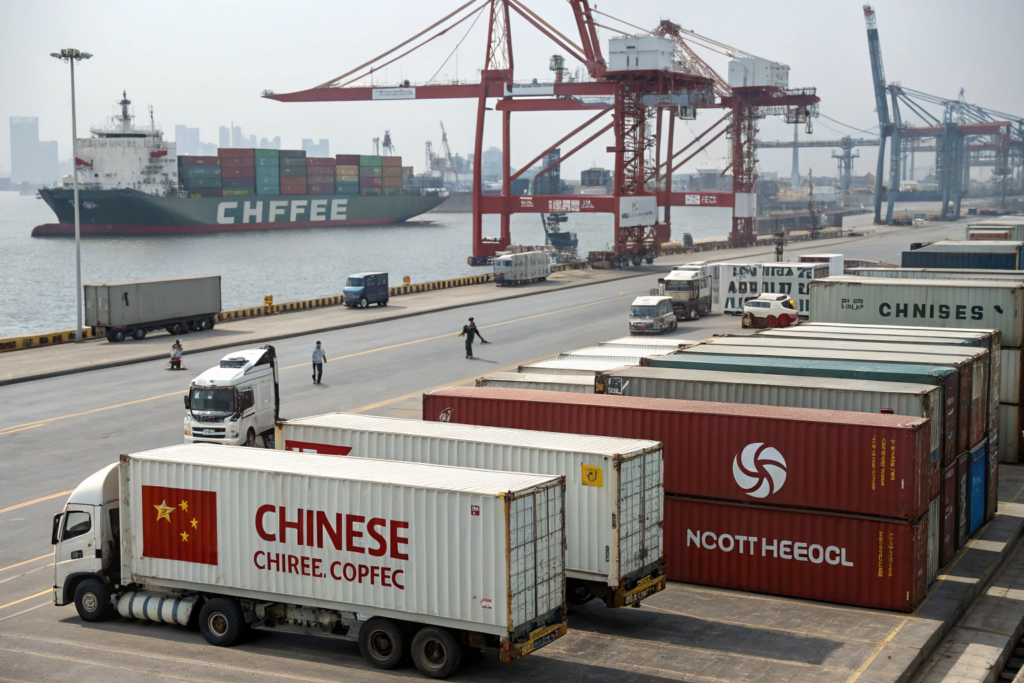
The top importing countries for Chinese coffee are currently the United States, Germany, and Australia, followed closely by the Netherlands, Japan, and South Korea. These markets are drawn by the improving quality, the unique origin story, and the competitive pricing of Yunnan Arabica. At BeanofCoffee, my export records reflect this global demand. I ship consistently to all of these destinations.
The map is changing. It is not a fixed picture. It is a dynamic story of discovery and adoption. Let me break it down for you.
Why Is the United States the Largest Market for Yunnan Green Coffee?
The United States is the biggest coffee market in the world. It is a market of scale, of variety, and of innovation. American roasters are always looking for the next big thing. Yunnan coffee has become that thing. The volume of Chinese green coffee heading to US ports has grown dramatically over the last five years.
The United States is the largest market for Chinese green coffee because of its sheer size, its adventurous specialty coffee culture, and the strategic sourcing needs of its roasters. At BeanofCoffee, my US clients range from small, quality-focused micro-roasters to large commercial brands looking for a consistent, cost-effective specialty component. The US market drives volume and validates quality.
The US buyer is a pragmatic buyer. They want quality, but they also want value. Yunnan delivers both.
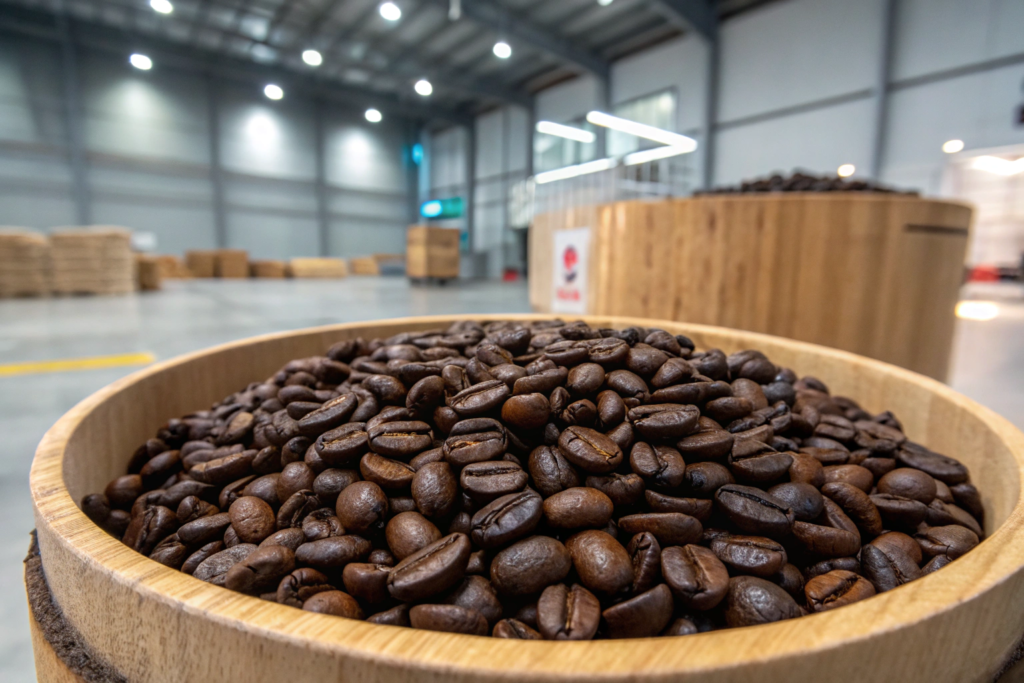
How Has the US Specialty Coffee Scene Embraced Chinese Origins?
The US specialty scene is driven by novelty and story. A new origin is a marketing opportunity. It is a chance for a roaster to stand out from the crowd. Chinese coffee, with its unexpected quality and its compelling tea heritage, is a perfect fit for this market. The early adopters were the quality-driven roasters, the ones who source direct and cup blind. They were not swayed by the "China" label. They were swayed by the cup score. As more of these respected roasters began to feature Yunnan single origins, the reputation grew. The mainstream followed. Today, it is not unusual to see a Yunnan coffee on a specialty cafe menu in Portland or Brooklyn. The origin has earned its place. This is a market-driven validation. It is the most powerful kind.
What Commercial Advantages Attract Large US Roasters?
Large US roasters are businesses. They are driven by the bottom line. They need a consistent supply of high-quality coffee at a competitive price. Yunnan offers this. The cost of production in Yunnan is lower than in many other specialty origins. The infrastructure is modernizing rapidly. The supply chain is reliable. And the quality, as proven by the cupping scores, is on par with established origins. This combination of quality, price, and reliability is a commercial advantage. It allows a large roaster to improve their margins without sacrificing the taste their customers expect. It is a quiet revolution happening in the sourcing departments of America's biggest coffee companies. They are not shouting about it. They are just buying it. And the volumes are growing.
What Makes Germany the Hub for Chinese Coffee in Europe?
Germany is the gateway to Europe. It is the largest economy in the EU. It has a deep and sophisticated coffee culture. And it is a logistics powerhouse. The port of Hamburg is a major entry point for coffee into the continent. A significant portion of the Chinese coffee destined for Europe lands in Germany first.
Germany is the European hub for Chinese coffee due to its large specialty market, its central logistics position, and the strict quality standards of its roasters. At BeanofCoffee, my German clients are demanding but fair. They cup rigorously, they ask detailed questions about processing, and they reward consistent quality with long-term contracts.
A German buyer's approval is a badge of honor. It is a signal that the coffee meets the highest European standards.
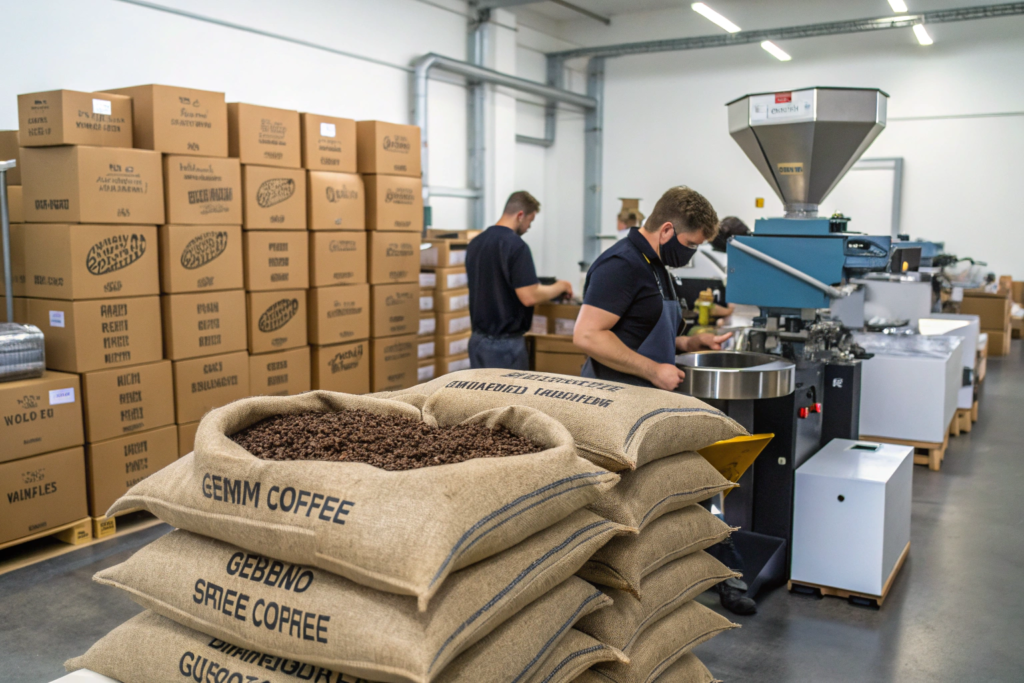
How Does the German Specialty Market's Focus on Clean Cups Favor Yunnan?
The German palate is precise. It abhors defects. The term "clean cup" is not just a box to be ticked. It is the fundamental requirement. Yunnan washed Arabica, processed with meticulous care, delivers this clean cup. The controlled fermentation, the precise drying, the rigorous sorting, all of this results in a coffee that is free of off-flavors. This is not an accident. It is the result of the industry's investment in processing technology. The German roasters recognize this. They know that a clean cup from Yunnan can stand shoulder to shoulder with a clean cup from Colombia or Guatemala. It is the clean cup that opens the door to the German market. It is the clean cup that keeps it open.
Why Is Hamburg a Strategic Entry Point for Yunnan Exports?
Hamburg is more than a port. It is a coffee trading hub. Many of Europe's largest coffee importers and traders have their headquarters in Hamburg. The city has the infrastructure, the expertise, and the financial networks to handle large volumes of green coffee. For a Chinese exporter, routing coffee through Hamburg makes sense. It is the most efficient way to reach the broader European market. The coffee lands in Hamburg, is cleared by customs, and is then distributed to roasters across the continent. This logistical efficiency reduces cost and reduces time. It is a strategic advantage for both the buyer and the seller. My German shipments are a regular part of my export calendar. They are a cornerstone of my European business.
How Is Australia Emerging as a Key Destination for Chinese Coffee?
Australia is a small market by volume, but it is a heavyweight in terms of quality. The Australian cafe culture is legendary. Australian baristas have won world championships. Australian roasters are known for their innovation and their obsession with the perfect cup. A Chinese coffee that succeeds in Australia is a coffee that has passed a very tough test.
Australia is emerging as a key destination for Chinese coffee due to its proximity, its sophisticated cafe culture, and its openness to new Asian origins. At BeanofCoffee, my Australian clients are among my most loyal. They value the direct trade relationship and the speed of shipping from China to Australian ports. It is a naturally efficient supply line.
The proximity is a massive advantage. Shipping from Shanghai to Sydney is faster and cheaper than shipping from South America. This means fresher coffee, which the Australian market demands.
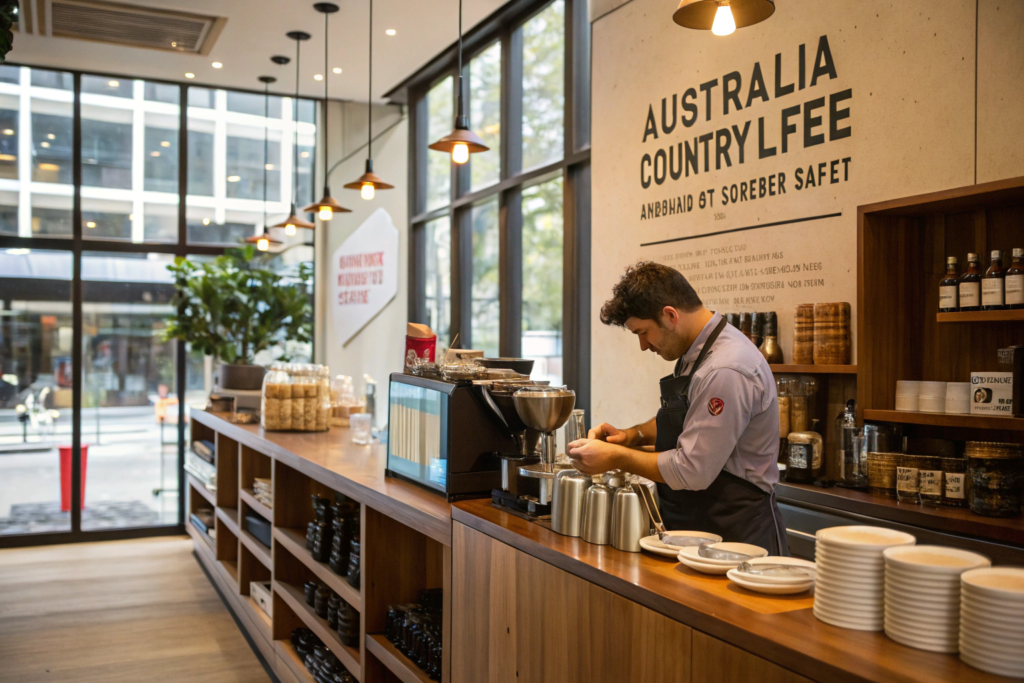
Why Does the Australian Cafe Culture Value Proximity and Freshness?
The Australian coffee drinker is discerning. They can taste the difference between a coffee that was roasted two weeks ago and a coffee that was roasted two months ago. Freshness is not a marketing slogan. It is a quality parameter. The proximity of China to Australia means that Yunnan coffee can go from farm to roastery in a matter of days, not weeks. The shipping time is short. The coffee arrives at its peak. This freshness translates directly into the cup. The aromatics are more vibrant. The acidity is brighter. The overall experience is more alive. This is a huge competitive advantage for Yunnan coffee in the Australian market. It is a natural fit.
How Do Australian Roasters Use Yunnan in Milk-Based Drinks?
The Australian cafe scene is dominated by milk-based drinks. Flat whites, lattes, cappuccinos. The espresso is the foundation. A good espresso for milk needs to be sweet, full-bodied, and have enough acidity to cut through the milk. Yunnan washed Arabica fits this profile perfectly. Its brown sugar sweetness complements the milk. Its malic acidity provides a lively top note. It is a coffee that shines in a flat white. Many Australian roasters have discovered this. They are using Yunnan as a key component in their house espresso blends, or as a single-origin espresso. The result is a drink that is balanced, satisfying, and distinctive. The Australian consumer has embraced it, often without even knowing it is Chinese coffee.
What Role Do Asian Neighbors Play in the Chinese Coffee Export Story?
China's neighbors are not just competitors. They are customers. Japan, South Korea, and increasingly, Thailand and Vietnam, are importing Chinese coffee. This intra-Asian trade is a growing part of the story.
Asian neighbors are significant importers of Chinese coffee. Japan and South Korea have mature, quality-focused markets that respect Chinese tea culture. At BeanofCoffee, I am seeing increasing interest from these markets. The cultural affinity and the short shipping distances make them natural partners.
The Asian market is not a monolith. It is a complex web of different tastes and preferences. But the trend is clear. Asian consumers are discovering Yunnan coffee.
Why Is Japan a Natural Market for High-Quality Yunnan Lots?
Japan has a long history with tea. The Japanese consumer understands the concept of terroir. They understand the value of a specific place. The tea heritage of Yunnan resonates with them. They are also connoisseurs of subtlety. A Japanese cupper can appreciate the delicate black tea finish in a Yunnan Arabica. They are not looking for a loud, aggressive coffee. They are looking for nuance, balance, and a sense of place. Yunnan delivers this. The Japanese market pays a premium for quality. It is a market for our best lots. It is a market that rewards the attention to detail that we put into our processing.
How Does the South Korean Market's Trend-Chasing Nature Help Yunnan?
South Korea is a trend-driven market. Trends move fast. The next big thing is always just around the corner. Yunnan coffee has become a trend. It is new. It is interesting. It is from a country that is a neighbor and a growing economic power. South Korean cafes are featuring Yunnan coffee. South Korean roasters are sourcing it. The trend-chasing nature of the market means that once Yunnan is seen as "cool," the demand spikes. This is a powerful short-term driver. The question is whether it will last. I believe it will, because the underlying quality is there. A trend built on quality has staying power. A trend built on hype fades. Yunnan's quality is real.
Conclusion
The map of Chinese coffee imports is a map of the global specialty coffee world. The United States, with its scale and its hunger for the new. Germany, with its rigorous standards and its central logistics. Australia, with its obsession with freshness and its milk-based cafe culture. Japan and South Korea, with their cultural affinity and their appreciation for nuance. These are not random destinations. They are the natural homes for a coffee that is clean, sweet, distinctive, and competitively priced. The word is spreading. The volumes are growing. Chinese coffee, once a curiosity, is now a fixture on the world stage. The map will continue to change, but the direction is clear. Yunnan is here to stay.
Find your place on the map. Contact me, Cathy Cai, at cathy@beanofcoffee.com. I will send you a sample of our current export lots, along with a breakdown of our shipping routes and lead times to your region. Whether you are in the US, Europe, Australia, or Asia, I can show you how Yunnan coffee can fit into your sourcing strategy. The world is discovering Chinese coffee. Join the discovery.