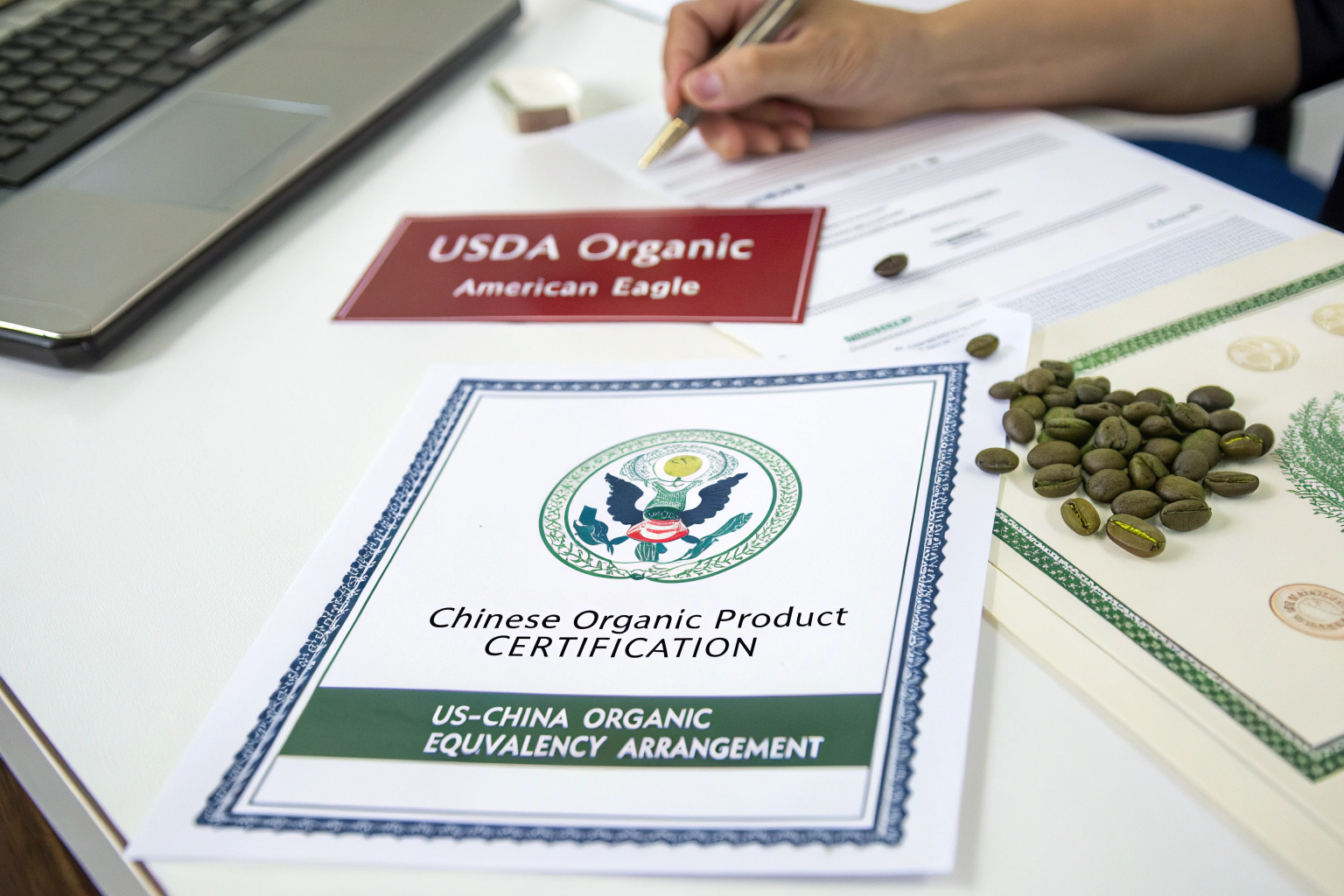
I remember the first time a U.S. buyer asked me for a "USDA Organic" certificate for our Yunnan coffee. I sent him our Chinese organic certificate, thinking it was the same thing. He sent it back, confused. "This isn't USDA," he said. I had to explain the concept of Equivalency. It was a learning moment for both of us. He needed to know that his customers would see the USDA seal. I needed to prove that my Chinese organic certification met the exact same rigorous standards. The pain for a buyer is the complexity. You want to offer organic coffee. You do not want to become an expert in international trade law.
The USDA Organic equivalency standards for Chinese coffee are defined by the U.S.-China Organic Equivalency Arrangement, which recognizes the China National Organic Program (CNOP) standard as equivalent to the USDA National Organic Program (NOP), allowing Chinese coffee certified by a CNOP-accredited certifier to be sold as "USDA Organic" in the United States without needing a separate USDA certification, provided it is accompanied by a specific NOP Import Certificate.
This is the legal bridge that allows our certified organic Baoshan coffee to carry the USDA Organic seal on your retail bags. It is a formal agreement between two governments. Let me explain how it works in practice and what documentation you need to see to ensure your supply chain is compliant.
What Is the US-China Organic Equivalency Arrangement for Coffee?
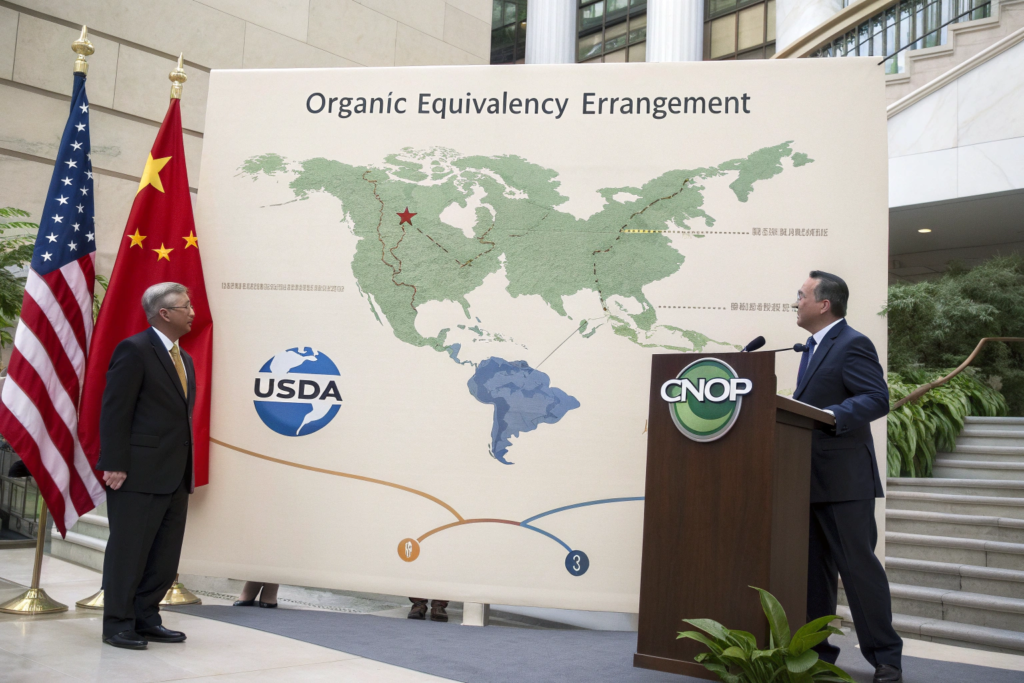
The organic equivalency arrangement is a trade agreement. It is not just a handshake. It is a legal framework signed by the U.S. Department of Agriculture (USDA) and the Certification and Accreditation Administration of China (CNCA). It says, in essence, "We trust your system."
The U.S.-China Organic Equivalency Arrangement is a bilateral agreement that recognizes the organic certification programs of both countries as technically equivalent, meaning that coffee certified as organic under the Chinese National Organic Program (CNOP) by a CNCA-accredited certifier is deemed to meet the requirements of the USDA National Organic Program (NOP) and can be imported and sold as "Organic" in the U.S. market.
This arrangement eliminates the need for Chinese farms to undergo a separate, costly USDA audit by an American certifier. It streamlines trade and makes Chinese organic products more accessible to U.S. buyers.
How Does the China National Organic Program (CNOP) Compare to USDA NOP?
The CNOP standard (GB/T 19630) was deliberately modeled on international organic standards, including the USDA NOP and the EU Organic Regulation. The core principles are the same.
| Key Areas of Equivalence: | Requirement | USDA NOP (U.S.) | CNOP (China) | Comparison |
|---|---|---|---|---|
| Synthetic Pesticides/Fertilizers | Prohibited | Prohibited | Equivalent | |
| GMOs | Prohibited | Prohibited | Equivalent | |
| Soil Fertility Management | Crop rotation, cover crops, compost | Crop rotation, cover crops, compost | Equivalent | |
| Livestock Standards | Outdoor access, organic feed | Outdoor access, organic feed | Equivalent | |
| Record Keeping | Detailed audit trail required | Detailed audit trail required | Equivalent | |
| Annual Inspection | Required by accredited certifier | Required by CNCA-accredited certifier | Equivalent |
The differences are minor and procedural, not substantive. Both systems are built on the same foundation: no synthetic inputs, no GMOs, and a focus on building healthy soil and ecosystems.
This is why the equivalency arrangement works. A farm that is truly compliant with the Chinese organic standard is, by definition, farming in a way that meets the U.S. organic standard. At Shanghai Fumao, we are certified under the CNOP program by the Organic Food Development Center (OFDC), a CNCA-accredited certifier. Our Sustainability page details our organic and regenerative practices. You can read the full text of the CNOP standard on the CNCA website.
What Is the Role of the NOP Import Certificate in This Process?
This is the critical document that you, as the U.S. importer, must understand. The equivalency arrangement allows the coffee to be organic. The NOP Import Certificate is the document that proves it to U.S. customs and your own certifier.
The NOP Import Certificate:
- Issuer: It is generated by the Chinese certifier (e.g., OFDC) for each specific export shipment.
- Purpose: It is an electronic or paper document that accompanies the shipment. It declares that the specific lot of coffee covered by the certificate has been produced and certified in accordance with the CNOP standard, which is equivalent to the NOP.
- Information Included: The certificate includes the exporter's name, the importer's name, the product description ("Green Coffee Beans"), the lot number, the net weight, and the Chinese organic certificate number.
- U.S. Customs & Your Certifier: This certificate is what allows the coffee to clear U.S. customs as an "Organic" product. It is also the primary document that your own organic certifier (e.g., Oregon Tilth, CCOF) will require during your annual audit to verify that the green coffee you purchased was legitimately organic.
Without the NOP Import Certificate, the coffee is NOT legally organic in the U.S., even if it was grown organically. The paper is the proof. At Shanghai Fumao, we provide the NOP Import Certificate as part of the standard documentation package for every organic shipment. Cathy Cai ensures this document is accurate and included. For the official USDA explanation, see the USDA Organic Importing Guidelines.
What Documentation Should a Roaster Request for Chinese Organic Coffee?
You cannot just take a supplier's word that the coffee is organic. You need to see the paper. And not just any paper—the right paper. For Chinese organic coffee entering the U.S., there is a specific set of documents you must collect and retain.
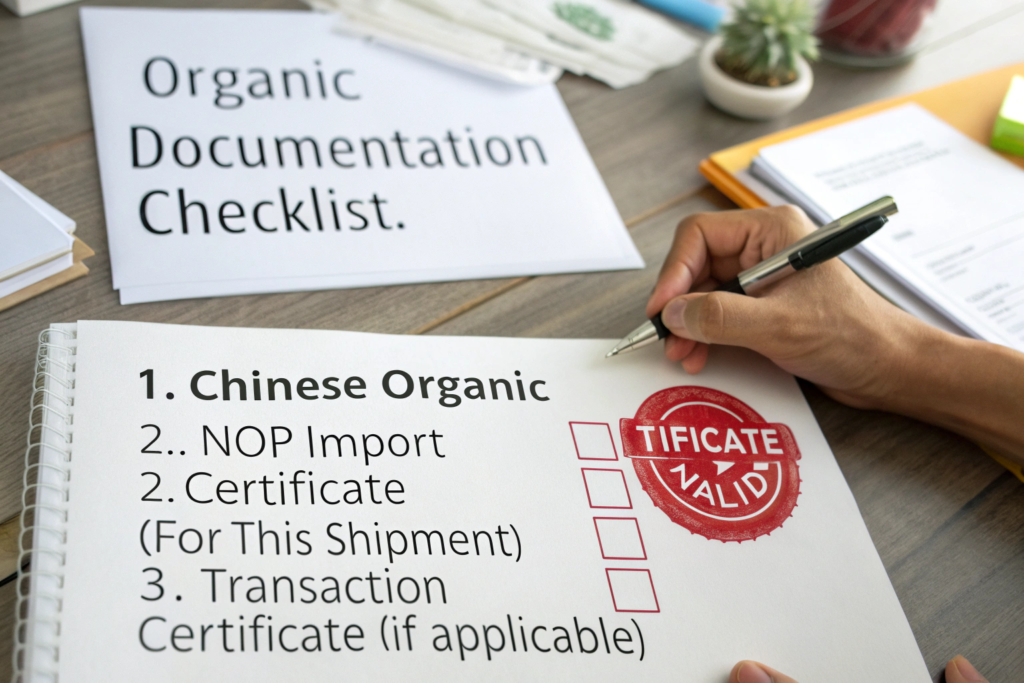
A roaster should request, at minimum, a copy of the Chinese supplier's valid Organic Product Certification Certificate (issued by a CNCA-accredited body), the shipment-specific NOP Import Certificate, and, if the coffee is also Fair Trade or RFA certified, the corresponding transaction certificates, all of which must show a consistent lot number and volume.
This is your due diligence file. It is what protects you in the event of an audit or a fraud accusation.
How Can I Verify the Validity of a Chinese Organic Certificate?
Just because a certificate has a logo on it does not mean it is real. You must verify it.
The Verification Process:
- Identify the Certifier: Look at the certificate. It should be issued by a recognized Chinese certification body accredited by CNCA. Common certifiers for coffee include OFDC (Organic Food Development Center), COFCC (China Organic Food Certification Center), and WIT. The certifier's logo and name will be prominently displayed.
- Check the Expiry Date: Organic certificates are valid for one year. Ensure the certificate was valid on the date the coffee was harvested and processed.
- Check the Scope: The certificate should explicitly list "Coffee" or "Green Coffee Beans" in the scope of certification.
- Verify Online: Most CNCA-accredited certifiers have an online public database where you can enter the certificate number to verify its authenticity and current status. You can also search the CNCA Food and Agricultural Products Certification Information System. While the interface is in Chinese, you can often use a browser translator or ask your supplier to provide a screenshot from the verification portal.
At Shanghai Fumao, we provide our valid OFDC certificate to all organic buyers. We encourage you to verify it. The certificate number is listed on our Certifications page for easy reference. You can also find information on accredited Chinese certifiers on the International Organic Accreditation Service website.
Does the Transaction Certificate (TC) Apply to Organic Coffee from China?
The Transaction Certificate (TC) is a specific document used in the Fair Trade and Rainforest Alliance systems. It is not the same as the NOP Import Certificate. However, it is a relevant question.
- Organic (NOP): Uses the NOP Import Certificate for U.S. imports. This is the mandatory document.
- Fair Trade / RFA: Uses a Transaction Certificate (TC) issued through their respective online platforms (e.g., Fairtrace, RFA Traceability Platform). The TC tracks the sale of the certified product from the producer to the final buyer.
The Scenario: You are buying coffee that is both Organic and Fair Trade. You will need both the NOP Import Certificate (for the organic claim) and a Fair Trade Transaction Certificate (for the Fair Trade claim). They are two separate systems. Do not confuse them.
A common mistake is to accept a Fair Trade TC as proof of organic certification. It is not. Always ensure you receive the specific NOP Import Certificate for the organic claim. At Shanghai Fumao, we can supply coffee with multiple certifications. We provide the correct, specific documentation for each certification claim.
What Are the Practical Implications of Equivalency for Roasters?
The equivalency arrangement is not just a bureaucratic detail. It has direct, practical implications for your business operations, your marketing, and your bottom line.
The practical implications of equivalency for roasters are that Chinese organic coffee can be legally labeled and sold with the USDA Organic seal in the U.S., it satisfies the organic sourcing requirements for roasters who maintain their own organic certification, and it offers a competitively priced entry point into the certified organic coffee market compared to many other origins.
It allows you to build an organic coffee program using Yunnan coffee as a high-quality, cost-effective base component.
Can I Legally Use the USDA Organic Seal on Bags of Roasted Yunnan Coffee?
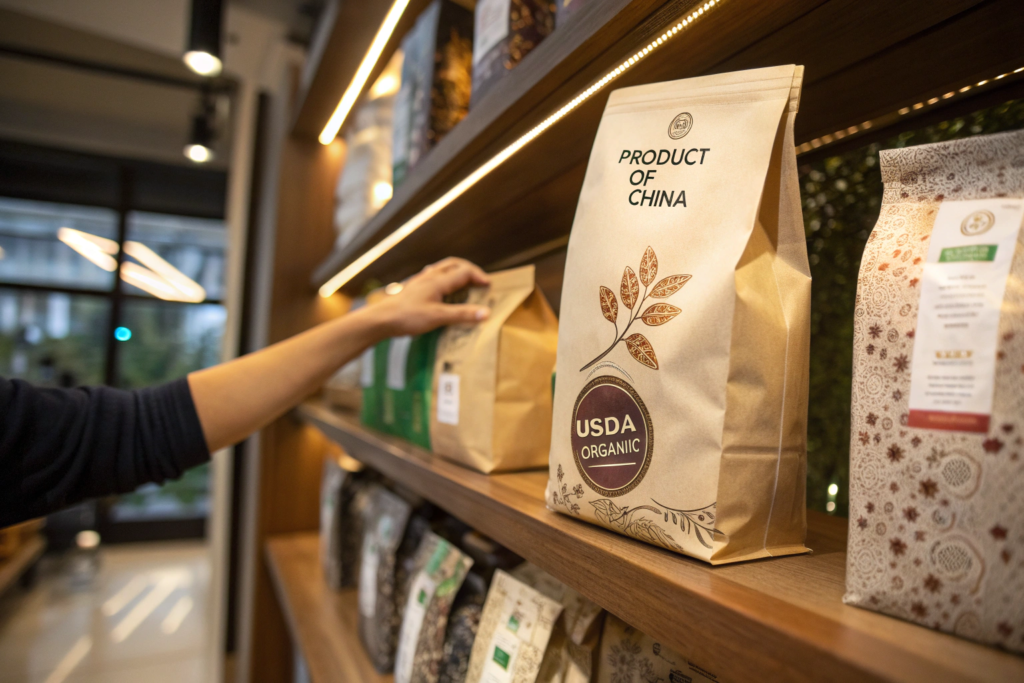
Yes. Absolutely. That is the entire purpose of the equivalency arrangement. Because the coffee was certified under the recognized equivalent CNOP standard and entered the U.S. with a valid NOP Import Certificate, it is legally considered "Organic" under the NOP.
The Requirements for You to Use the Seal:
- You must be a Certified Organic Handler. If you are roasting and packaging the coffee, your roastery must be certified organic by a USDA-accredited certifier. The certification covers your facility, your handling procedures, and your record-keeping.
- Maintain the Chain of Custody: You must receive the NOP Import Certificate with the coffee. You must keep records that link the incoming organic green coffee to the outgoing roasted organic coffee.
- Labeling Compliance: When you design your retail bag, you must follow the NOP labeling regulations. This includes using the USDA Organic seal correctly and identifying your certifier on the information panel.
The origin of the coffee (China) does not restrict you from using the seal. The only thing that matters is the certification status of the coffee and of your handling facility. This is a huge opportunity. It allows you to offer a unique, single-origin USDA Organic coffee from Yunnan, which is still a rarity in the U.S. market. At Shanghai Fumao, our Grade 1 Organic Arabica is specifically produced to support roasters in building this type of premium program. For detailed labeling rules, consult the USDA Organic Labeling Guidelines.
How Does Chinese Organic Certification Affect My Own Organic Audit?
If your roastery is certified organic, you undergo an annual audit. Your certifier will scrutinize your green coffee purchases to ensure they are truly organic. The Chinese equivalency arrangement makes this process smooth and defensible.
What Your Auditor Will Want to See for a Chinese Coffee Purchase:
- The Supplier's Chinese Organic Certificate: Proves the farm/mill is certified.
- The NOP Import Certificate for that specific shipment: This is the golden ticket. It is the document that U.S. organic certifiers recognize and accept as proof that the incoming product meets NOP standards.
- Your Receiving Records: Documents showing the lot number you received matches the lot number on the NOP Import Certificate.
- Mass Balance: A record showing that the amount of organic coffee you purchased matches the amount of organic coffee you sold (minus any shrinkage from roasting).
Because the NOP Import Certificate is an official document generated under the government-to-government equivalency arrangement, it carries significant weight with auditors. They do not need to question the integrity of the Chinese certification system. The arrangement vouches for it.
This provides you with audit security. As long as you have the correct paperwork, your organic certification is not at risk by sourcing from China. For more on organic record keeping, resources from the Organic Trade Association are very helpful.
Conclusion
The USDA Organic equivalency standards for Chinese coffee are a clear, established, and reliable framework that allows U.S. roasters to confidently source certified organic coffee from Yunnan. The U.S.-China Organic Equivalency Arrangement validates the Chinese CNOP standard, and the NOP Import Certificate provides the tangible, shipment-specific proof required for customs clearance and organic audits.
This system removes the legal and bureaucratic barriers to sourcing organic coffee from China. It opens the door to a supply of high-quality, traceable, and competitively priced organic Arabica that can be legally labeled and sold with the USDA Organic seal in the American market.
For roasters looking to expand their organic offerings, differentiate their brand, or secure a stable supply of certified coffee, understanding this equivalency is a powerful strategic advantage.
At BeanofCoffee, we manage the organic certification process at the origin. We provide you with all the necessary documentation—from our OFDC certificate to the shipment-specific NOP Import Certificate—so you can buy with confidence and pass your own organic audits with ease.
If you are interested in exploring our USDA Organic certified Yunnan Arabica and would like to review a sample documentation package, we are ready to assist. Email Cathy Cai. Ask for the "Organic Documentation Sample Pack." Contact Cathy at: cathy@beanofcoffee.com