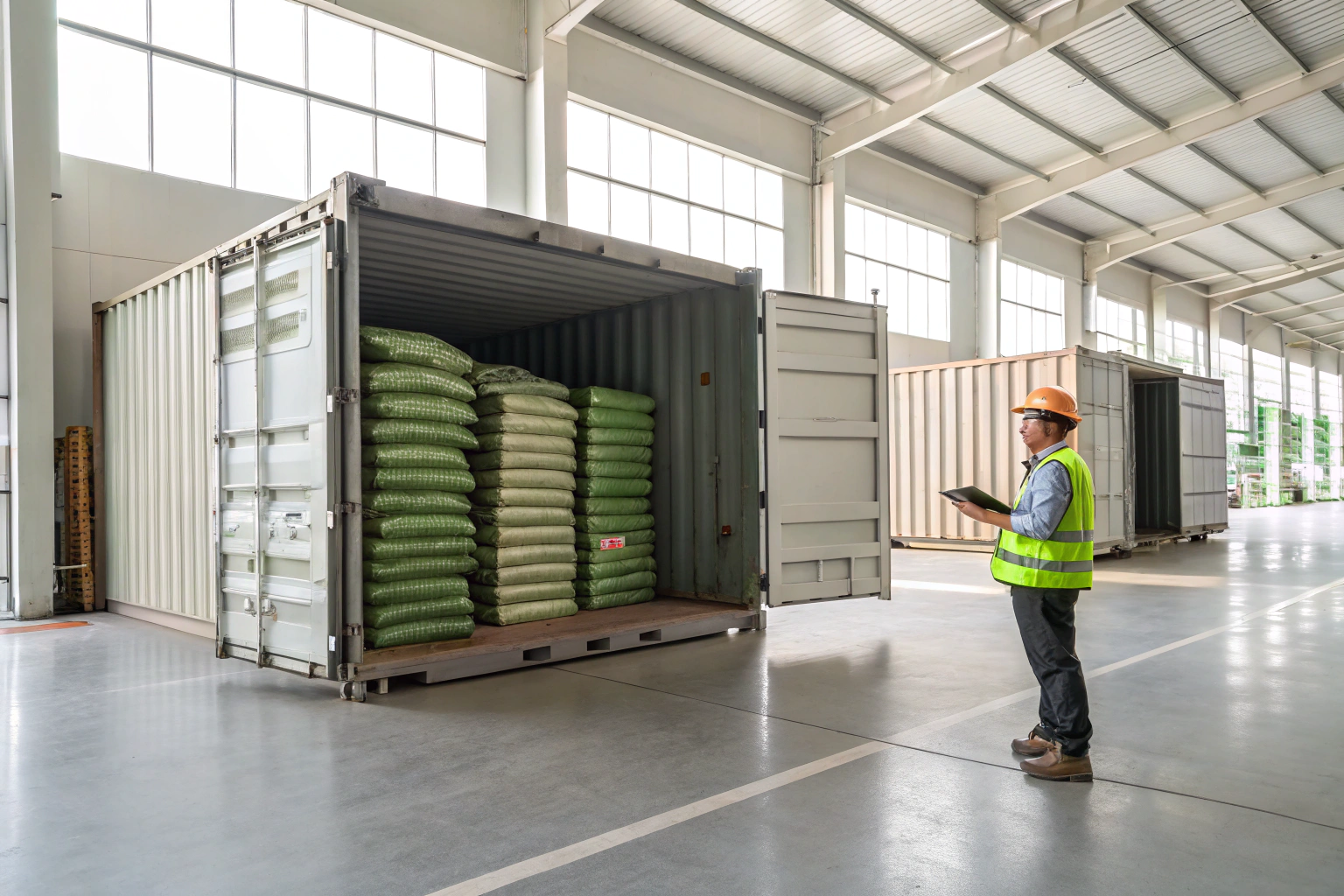
Picking the wrong container size is like buying shoes that don't fit. Walk a mile in them and you're bleeding money. I have seen smart buyers do everything right. They negotiate a great FOB price. They lock in the freight rate. Then they order a full 40-foot container when their sales volume only fills half of it. Now they're paying for air. Or worse. They cheap out and book a 20-foot box. They run out of stock mid-month and have to buy expensive spot market coffee locally to keep the roastery running. That hurts.
The best container size for bulk coffee export depends on your monthly roasting volume and cash flow, but for most mid-sized importers, the 20-foot container loaded with super sacks or vacuum boxes offers the optimal balance of minimizing freight cost per pound while avoiding excessive inventory carry costs.
It’s not just about space. It's about the math of "dead freight" and "warehouse burn rate." Let's figure out which box keeps your bank account and your production schedule happy.
How Many Pounds of Coffee Fit in a 20ft vs 40ft Container?
Let's start with the raw numbers because the difference isn't just double. A 20-foot container is not half the size of a 40-foot in terms of what you can legally carry on the road. It's a trap I see new buyers fall into. They do the math on the interior dimensions and forget the weight limit. Then the container shows up at the port and they can't truck it to their warehouse without a special overweight permit. That's a hidden cost that eats your savings.
A 20-foot container holds roughly 275 to 300 standard 60kg jute bags of green coffee, equaling about 36,000 to 40,000 pounds. A 40-foot container physically holds double the volume but hits the U.S. road weight limit at roughly 44,000 pounds, meaning you can't actually stuff it to full physical capacity.
You have to design your load around the trucking law, not just the ocean freight. That's the bottleneck.
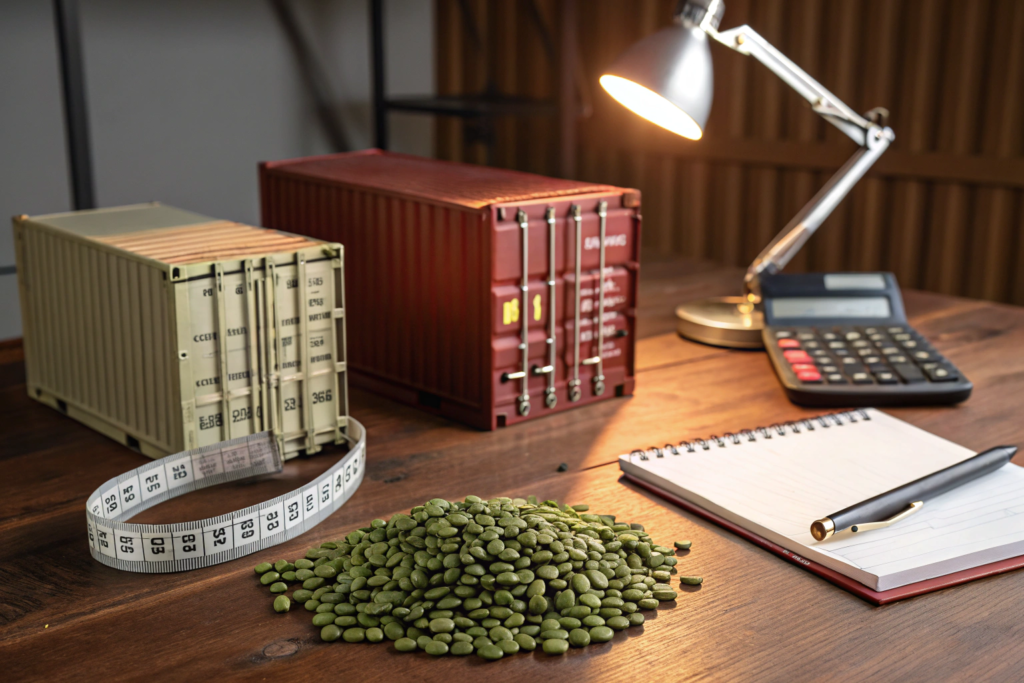
What Is the Maximum Legal Weight for a Coffee Container on U.S. Roads?
This is the detail that separates a smooth delivery from a disaster. When that container lands at the port of Los Angeles or Newark, it goes onto a chassis pulled by a truck. Federal and state laws limit the gross vehicle weight. Usually, that's around 80,000 pounds total. The truck, chassis, and empty container already eat up about 35,000 pounds of that. That leaves you about 44,000 to 45,000 pounds for your actual coffee. If you're packing dense, high-moisture Robusta, you'll hit that weight limit before the 40-foot box is physically full. If you ship Arabica from my farm in Yunnan, it's slightly less dense, so you might cube out (run out of space) before you weigh out. You must calculate the density of the specific lot. I always check the U.S. Department of Transportation bridge weight formula charts with my logistics team. A heavy-load permit is possible, but it adds cost and complexity, which defeats the purpose of buying cheap.
How Do "Super Sacks" Change the Container Equation?
We need to talk about packaging. The old way is jute bags. Hand loaded. Sweaty work. Takes hours. The modern way for a high-volume roaster is the big bag, or super sack. These hold around 1,000 kilos each. On our loading dock at BeanofCoffee, we can load twenty of these into a 20-foot container using a forklift in under thirty minutes. It's clean and fast. The weight distribution is perfect. But here's the math shift. Because you eliminate the wooden pallets and the air gaps between small sacks, you can usually squeeze more net weight of coffee into the same legal road limit. You're shipping almost 100% product. The cost of the super sack itself is offset by the reduced loading labor at origin and the elimination of disposal fees for jute and pallets on your end. If you want the absolute best price per pound, the bulk loading standard of large format bags is the only way to go.
Is LCL Cheaper Than FCL for Coffee Importers?
When money is tight, the Less than Container Load offer looks beautiful on paper. The freight forwarder says, "You only pay for the space you use!" It sounds efficient. You imagine your ten pallets of Yunnan Catimor sharing a smooth ride with some furniture from Vietnam. But the reality of LCL for coffee is uglier. It is a breeding ground for quality damage and demurrage fees. For a product that absorbs odor like a sponge, a shared container is a grenade with the pin pulled.
LCL is usually not cheaper in the long run for coffee importers because the added handling fees, risk of cross-contamination from adjacent cargo, and higher per-unit freight rates often negate the upfront savings compared to a dedicated FCL booking.
The spreadsheet might lie to you. The physical arrival of stained, garlic-scented bags will tell you the truth.
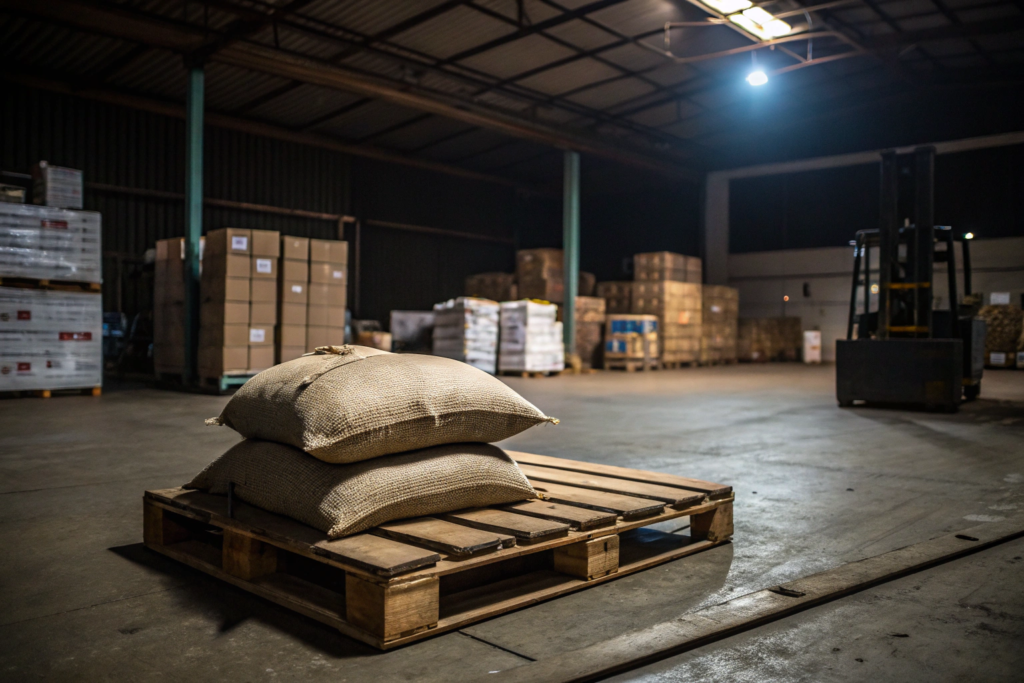
What Hidden Contamination Risks Exist in Shared Containers?
Coffee is a desiccant. It's also a deodorizer. It will suck in whatever is in the air around it. If your ten sacks of premium washed Arabica share a container with a pallet of rubber tires, or worse, raw garlic or spices shipped by another exporter, your coffee is ruined. It will pick up those volatile organic compounds. You can't roast that out. The cupping table will taste like a chemical spill. And the freight forwarder will just point to the small print in the bill of lading. You have no control over the co-loaders in an LCL consolidation. When you book a Full Container Load with us, we seal the box at our farm in Baoshan. It stays sealed until it reaches your loading dock. That seal is a guarantee of purity. For a buyer who values safety and quality, like Ron, the cost of LCL contamination far exceeds the premium of an FCL. You can look at standard international shipping safety protocols for hygroscopic cargo to understand why isolation is the only real quality control.
How Does LCL Handling Crush Your "Good Price"?
The FOB price from China is attractive. You lock it in. But then the LCL journey starts. The pallet is forklifted off my truck at a consolidation warehouse in Shanghai. It sits there. It's forklifted again into the container. At the transshipment hub, it might be pulled out and re-consolidated. At the U.S. port, it's unloaded again at a Container Freight Station. Every single touch is a cost. And every touch is a chance for a forklift blade to punch a hole in your vacuum-packed bags. Plus, LCL shipments are notoriously slow. They only move when the forwarder fills the box. You miss your sailing schedule. Your timeliness goes out the window. I tell my buyers to calculate the true "touched" cost. That good price isn't so good after you add the handling, the exam fees, and the cost of the 200 pounds of beans that spilled on the warehouse floor. For anyone moving more than six or seven pallets a month, a dedicated 20-foot FCL container from BeanofCoffee almost always wins on the final, landed cost calculation.
How to Load a 40ft Container for Maximum Coffee Quality
Ordering the container is step one. How we stuff it is step two. And step two is where your quality lives or dies. You can have the best Catimor in the world, but if we load it wet, or stack it wrong, or ignore the airflow, you're going to get mold and clumping. It's not enough to just "fill the box." You have to engineer the internal environment. A shipping container crossing the equator is a mobile sauna, but with the right loading technique, we can basically put that sauna into hibernation.
Loading a 40-foot container for maximum quality requires using thermal liners to reflect radiant heat, leaving air channels for circulation, and securing the load with heavy-duty strapping to prevent "load shift" that damages bag integrity during ocean swells.
We treat your container not as a dumpster, but as a temporary climate-controlled warehouse. Because it is.
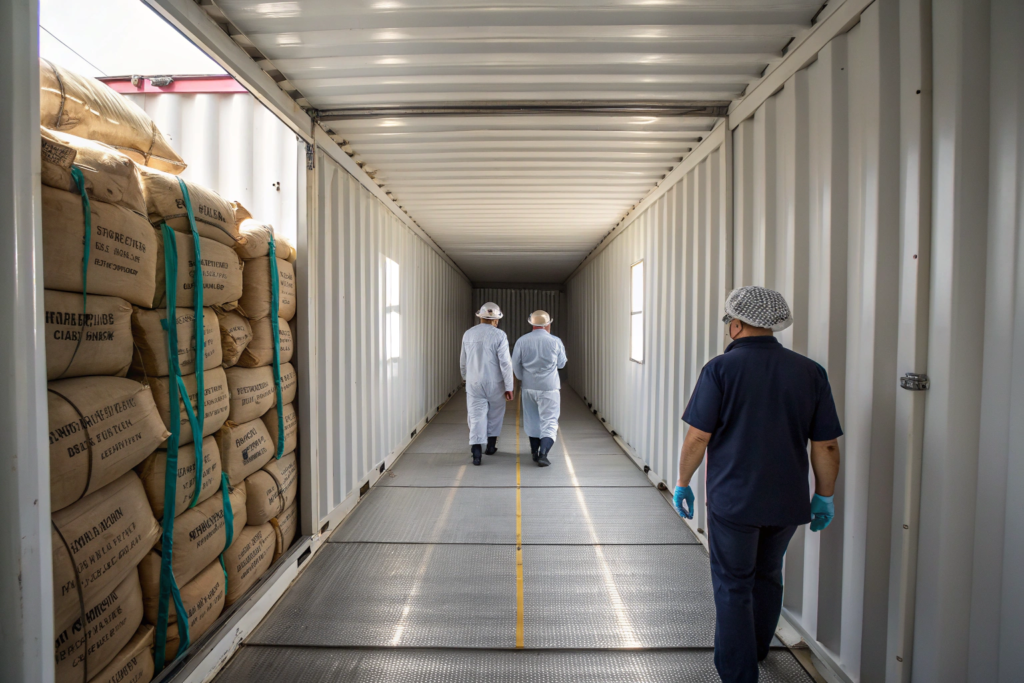
Why Is Container Sweat a Silent Killer of Green Coffee?
Condensation. That's the enemy. Imagine a steel box sitting in a cold Pacific night. The steel gets cold. Inside, the coffee is still warm from the Yunnan sun. The moisture in the air condenses on the cold ceiling. It rains inside the container. We call it "container sweat" or "container rain." If the top layer of jute bags is touching the roof, they get wet. Then mold grows. Then you get a claim denial from insurance because it's "inherent vice." To stop this, we line the ceiling and walls with a thermal blanket, like a high-tech bubble wrap. We also put a layer of cardboard on top of the coffee to catch any stray drips. You can check the Container Handbook guidelines on minimizing condensation damage to see the science behind it. We don't just throw the beans in; we wrap them in a microclimate. It’s the only way to ensure the safe arrival that we promise.
Does "Block Stowing" Keep Your Packaged Products Safe?
Once the container is sealed, it's going to roll. The ship will pitch. The train will jolt. The truck will brake hard. If we just stack the super sacks loosely, they'll shift. A shifting one-ton bag becomes a wrecking ball. It crushes other bags, rips the corners, and spills the beans. When the doors open at your warehouse, you see chaos. We use a method called block stowing. We fill the entire floor space wall-to-wall with no gaps. Then we use cargo nets and wooden braces to press the load against the solid front wall. The goal is to make the entire load one solid brick of coffee. It cannot move. For smaller vacuum-packed cartons, we use airbags to fill the small voids. Safety in transit is a direct function of how we lock the mass in place. A stable load means no ruptured vacuum seals, which means your beans arrive as fresh as when they left our processing mill at BeanofCoffee.
What Insurance Covers a Full Coffee Container from China?
Let's talk about the worst-case scenario. The ship hits a storm. The container is washed overboard. Or it gets to the port, and someone leaves it on the dock, and it gets baked in a 110-degree heatwave for a week. Stuff happens. If you rely solely on the carrier's standard liability, you're going to get pennies on the dollar. The carrier's limited liability is a joke—it covers maybe $500 total. Not $500 for a bag. $500 for the whole container. The insurance is where you protect your profit.
The best coverage for a full coffee container from China is an "All Risks" marine cargo policy, including warehouse-to-warehouse coverage, which specifically covers general average, theft, water damage, and non-delivery, costed at roughly 0.3% to 0.5% of the cargo's value.
It's the cheapest peace of mind you will ever buy. Don't skip it.
What Is "General Average" and Why Should You Insure Against It?
Imagine another ship catches fire at the port next to yours. The fire department floods the whole berth. Your container is saved, but the ship is damaged. The captain declares "General Average." It's an ancient maritime law. It says that every cargo owner on that ship is financially responsible for the loss, even if your container was untouched. You have to post a huge cash bond just to get your coffee released. Without proper insurance, you're stuck. You can't pay, you lose your container. It is a nightmare. A good marine cargo policy covers this General Average bond instantly. I always recommend looking at the international marine insurance guidelines for commodities to understand the legal risks. My shipping team at BeanofCoffee won't release a bill of lading until we know your policy is active. It’s that important.
How Does "Spoilage Coverage" Differ from Standard Theft Insurance?
Theft is obvious. A thief steals the container. Spoilage is slower and sneakier. The ship's refrigeration unit fails. Or there's a six-day delay at customs and the beans, already hot and humid inside, start to ferment. Standard policies often exclude this "inherent vice" deterioration. They say it's the coffee's fault for going bad, not the delay. You need an "All Risks" cargo policy that explicitly covers spoilage due to external accidents, like mechanical breakdown of a ship's ventilation. When you buy insurance, read the exclusions. If it says "loss due to delay excluded," that's normal. But if it says "change in moisture content excluded," you need to negotiate that or find a different insurer. Our export desk provides a detailed packing list and a loading survey so that if a spoilage claim happens, we have the proof that the coffee left our farm in perfect condition. It wasn't the bean's fault. It was the journey. And your comprehensive shipping insurance policy should pay for that broken journey.
Conclusion
Choosing the right container isn't just a logistics decision. It's a financial strategy. A 20-foot FCL might save your cash flow. A 40-foot high cube might maximize your volume. But LCL usually just adds risk and hidden handling fees that poison your bottom line. You have to weigh the road weight limits against your warehouse shelf life. You have to package the beans so they breathe without sweating. And you absolutely must wrap the whole thing in an All Risks insurance policy that protects you from ancient maritime law and modern port chaos.
Don't guess at this. The container size dictates your inventory cost, your quality out-turn, and your insurance premium. At BeanofCoffee, we don't just sell coffee. We engineer the entire break-bulk and container load process for buyers like Ron. We know the exact density of our Yunnan Arabica and how many super sacks fit legally on a U.S. highway. We will design a load plan that maximizes your profit and keeps your beans safe. If you want to run a simulation on your ideal order volume and get a landed cost comparison between a 20-foot and a super sack consolidated load, let's talk numbers.
Reach out to Cathy Cai. She has the container specs, the sailing schedules, and the insurance broker connections to make your life easy. Send her an email at cathy@beanofcoffee.com and ask for a "Container Load Optimization Quote." Let's fill a box the right way.