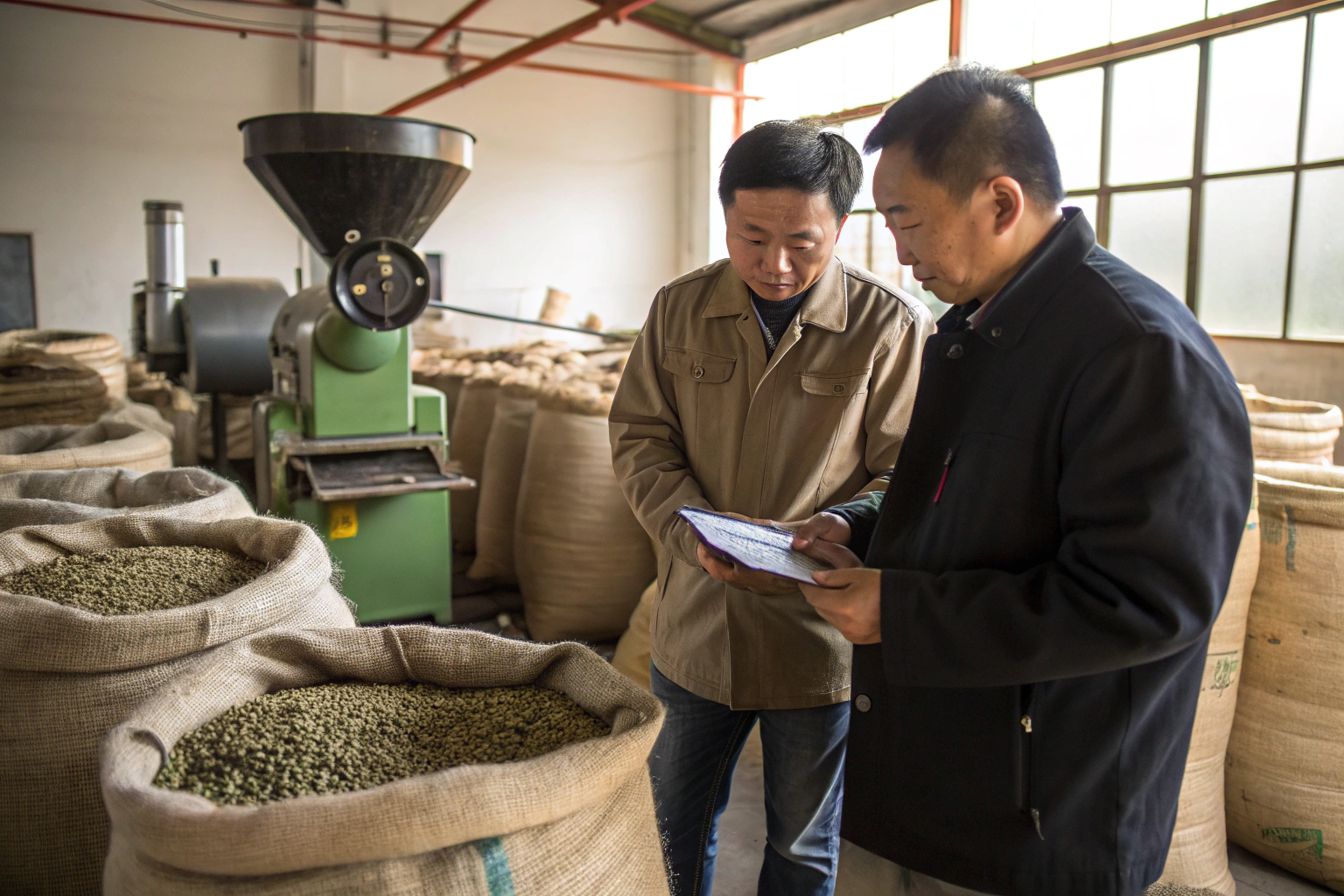
If you buy coffee beans from China, you may see two roast tests before you place a real order. One is a sample roast. The other is a production roast. Ron, I know this can feel confusing. You care about price, quality, shipping time, tariffs, and payment terms. A bad roast decision can cost you money and delay your sales. So, you need a clear way to compare both tests.
A sample roast is a small test roast. A production roast is a full-size roast for real shipment. The sample roast helps buyers check flavor, defects, moisture, and roast profile. The production roast must repeat that profile at scale for export orders.
This difference matters for every importer. I will explain it in plain English. I will also share how we handle it at BeanofCoffee. Then you can ask better questions and avoid costly mistakes.
Why Is Sample Roast Important for Coffee Buyers?
You may ask for coffee samples before you sign a contract. Then you wait. You worry that the sample will not match the real shipment. That worry is fair. A sample roast is your first real look at a coffee lot. It is not just a nice gift. It is a risk control step.
A sample roast is important because it lets buyers test flavor, aroma, acidity, body, and defects before they commit to a large order. It also shows whether the green coffee can hold a roast profile that fits the buyer’s market.
At BeanofCoffee, we use sample roasts for Arabica, Robusta, and Catimor lots. We do not treat them as marketing only. We treat them as a small but serious test. The sample roast helps us talk with buyers about real numbers, not guesses.
A sample roast often uses 100 to 200 grams of green coffee. The roaster controls heat, airflow, and time. Then the team cups the coffee. The buyer may ask for a light, medium, or dark style. The sample roast is not for sale. It is for decision making. This step saves money because it catches problems early.
| Point | Sample Roast | Production Roast |
|---|---|---|
| Batch size | Small, often 100–200 g | Large, often 10–60 kg or more |
| Main goal | Test and approve | Repeat and ship |
| Buyer use | Decide to buy or not | Receive real goods |
| Risk focus | Flavor and defects | Consistency and volume |
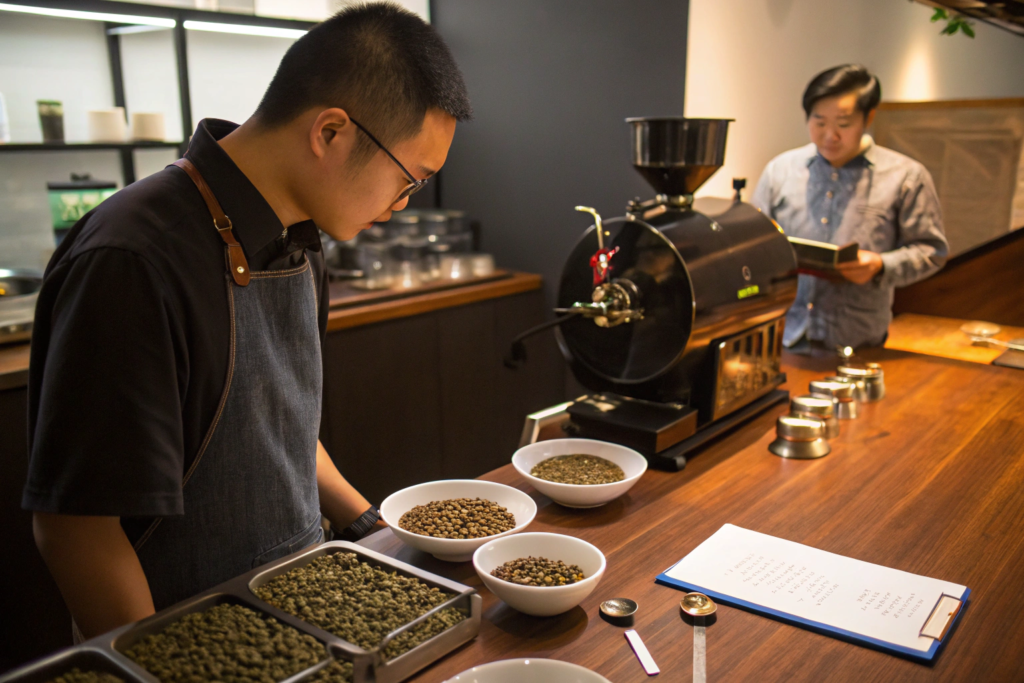
What Happens During a Sample Roast?
During a sample roast, we weigh a small batch of green coffee. We check moisture and defect count. Then we roast it on a small machine. We record first crack, development time, and drop temperature. After that, we cup the coffee. We use standards from the Coffee Quality Institute and the Specialty Coffee Association. This process helps us see if the coffee has clean flavor, stable body, and no bad notes. For a buyer like Ron, this step answers a simple question: is this lot worth a real order?
Why Do Buyers Ask for Sample Roasts First?
Buyers ask for sample roasts first because they want proof. They want to smell the coffee. They want to taste it. They want to compare it with other offers. A sample roast also helps them plan their own roast style. If the sample is good, they can move to price, shipping, and payment talks. If the sample is weak, they can stop early. Sources like Perfect Daily Grind and Barista Hustle often explain this buyer habit. It is normal. It is smart.
How Does Production Roast Differ?
Now you may think a sample roast and a production roast are the same thing, just bigger. That idea is simple. But it can hurt your order. A small roaster and a big roaster do not behave in the same way. Heat moves differently. Airflow changes. Time changes. The coffee may taste different if the team does not control the scale-up.
A production roast differs from a sample roast mainly by batch size, machine behavior, and consistency needs. The production roast must repeat the approved sample profile across many kilos and many bags. It must also meet food safety, packing, and shipping timelines.
This is where many export problems start. A buyer loves the sample. Then the container arrives. The coffee tastes flat or uneven. So, the buyer loses trust. We do not want that. We plan production roasts with clear records and repeated checks.
A production roast needs a written profile. The team sets charge temperature, gas level, airflow, drum speed, and cooling time. They also check batch weight, moisture, density, and screen size. Then they cup each batch. If the coffee is for export, the team also checks packaging, labels, and storage conditions. The goal is not one great roast. The goal is many good roasts that match.
| Check | Sample Roast | Production Roast |
|---|---|---|
| Control | Manual, flexible | Recipe-based, repeatable |
| Records | Basic notes | Full batch logs |
| Output | Cups for approval | Bags for shipment |
| Main risk | Wrong flavor | Inconsistent batches |
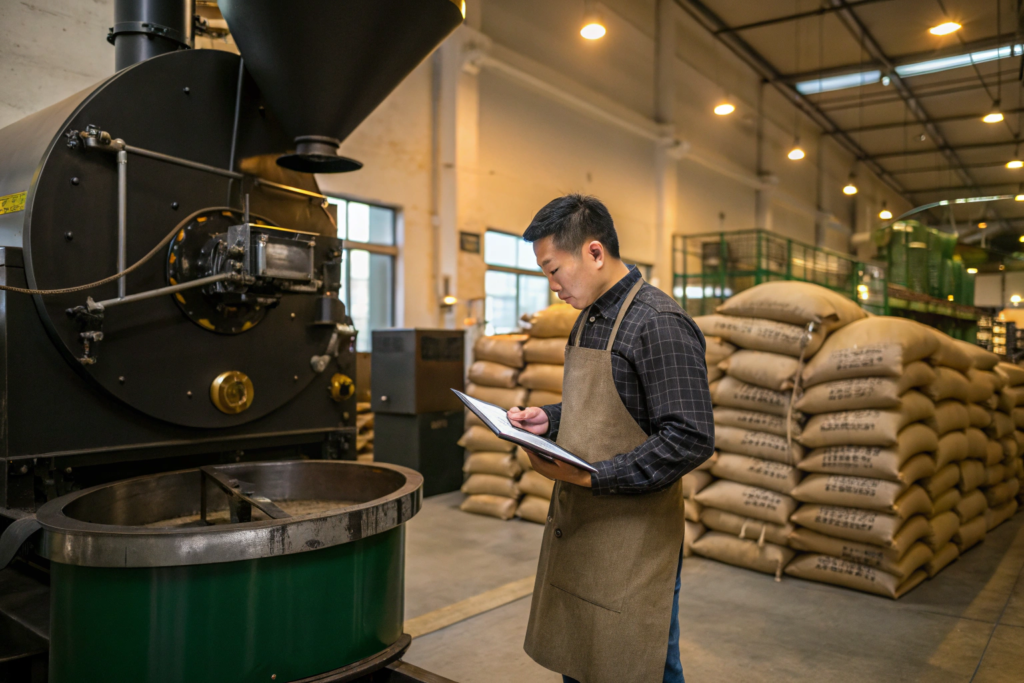
How Is a Production Roast Planned?
We plan a production roast from the approved sample. First, we confirm the green coffee lot. Then we set a target profile. We write down temperatures and times. We also set a cupping schedule. The International Coffee Organization and FAO coffee provide useful context on global coffee trade and quality. We use that context to match buyer needs in North America, Europe, and Australia. Then we roast a small production test. If it matches, we move to full runs.
What Changes When You Scale Up?
When you scale up, many things change. A bigger batch needs more heat at the start. It also needs stronger airflow. The roaster must avoid scorching and baking. The cooling tray must work fast. The team must pack quickly to protect flavor. Import rules also matter. Buyers often review USDA AMS import and export services and U.S. Customs and Border Protection rules. Tariffs, documents, and timing can change the best roast choice.
What Should Coffee Importers Check in Roast Tests?
You may not have time to watch every roast. You may not want to fly to China for every lot. That is normal. But you still need proof. You need to know what to check. You need simple signals that show whether the supplier is serious. If you skip this step, you may pay for coffee that does not match the sample.
Importers should check cupping scores, moisture, defect count, roast profile records, certificate documents, packing details, and shipping terms. They should also compare the sample roast and production roast side by side before final payment.
At BeanofCoffee, we prepare these details for buyers. We know that Ron and other owners care about quality control, certification, logistics, payment methods, and tariffs. So, we keep the process open. We answer hard questions early. That saves time later.
A good roast test is not only about taste. It is also about documents. A buyer may ask for a sample roast report, a production roast log, a moisture reading, and a cupping form. The buyer may also ask for food safety records and packing photos. These items help the buyer clear customs and protect the brand. They also help the seller prove that the coffee is safe and stable.
| Area | What to Check | Why It Matters |
|---|---|---|
| Flavor | Cupping score and notes | Confirms buyer market fit |
| Green coffee | Moisture and defects | Shows lot quality |
| Roast | Time, temp, development | Shows repeatability |
| Papers | Certificates and invoices | Helps customs and risk control |
| Packing | Bag type, weight, seal | Protects coffee in transit |
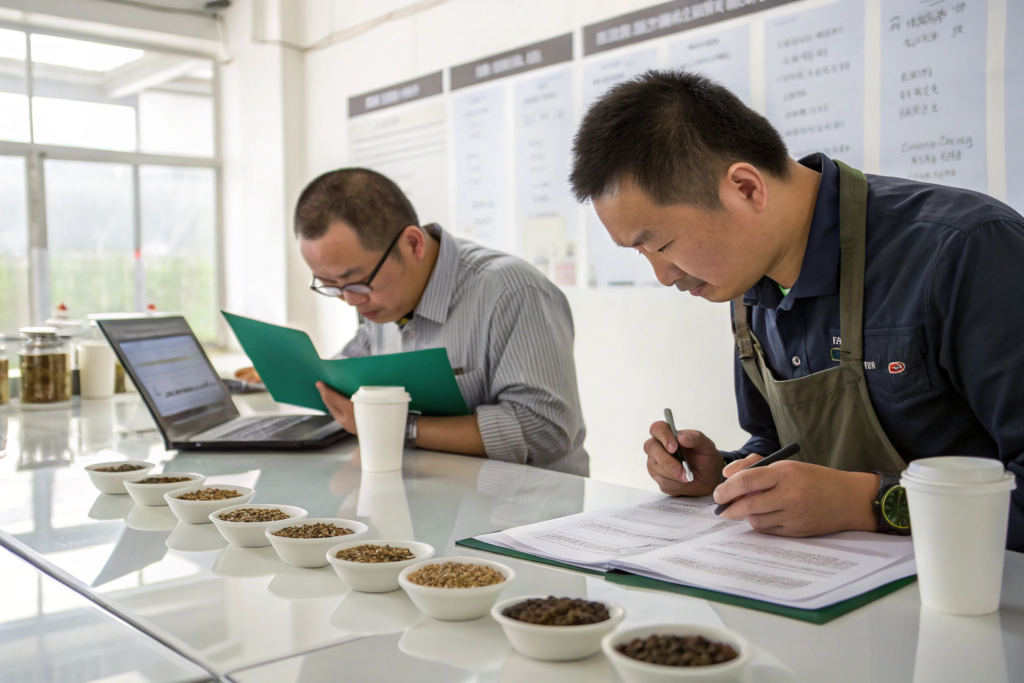
Which Certificates Support Roast Quality?
Several documents can support roast quality. Food safety records help. Export documents help. Organic, fair trade, or other certificates may help for some buyers. The U.S. Food and Drug Administration and USDA provide public information about food and farm rules. Certificates do not replace cupping. But they do support trust. They also help buyers answer questions from their own customers and customs brokers.
How Do You Compare Cupping Scores?
You compare cupping scores with the same method. Use the same roast level. Use the same water. Use the same time after roast. Then cup blind if possible. Write down acidity, body, sweetness, aftertaste, and defects. Groups like the National Coffee Association and Coffee Review share useful industry context. A high score is good. But consistency is better. One high score means little if the next batch falls apart.
How Can Exporters Prove Roast Consistency?
You may hear a supplier say, “Trust me.” That is not enough. You need proof. You need records. You need a clear chain from green coffee to roasted bags. If the supplier cannot show this chain, then price and speed mean little. A low price with poor consistency is not a good deal.
Exporters prove roast consistency with batch logs, cupping records, moisture checks, packing records, and repeatable production profiles. They also keep shipping and tariff documents clear so buyers can plan cost and time.
This is a key point for Chinese coffee exporters. We compete on price, quality, safety, reliability, and trust. We also compete on communication. A buyer in America wants fast answers. A buyer in Europe wants clear papers. A buyer in Australia wants stable supply. We try to meet all three.
Consistency is a system. It starts with green coffee control. Then it moves to roast planning. Then it moves to packing and shipping. If one step fails, the buyer feels it. For example, a coffee may cup well in Yunnan. Then it sits in a hot container for weeks. The flavor drops. So, packing and shipping choices matter. They are part of roast quality, even if they happen after roasting.
| Proof | What It Shows | Buyer Benefit |
|---|---|---|
| Batch log | Time, temp, airflow | Repeatable roast |
| Cupping form | Flavor and defects | Clear quality data |
| Moisture record | Green coffee stability | Less risk of mold |
| Packing photo | Bag and seal condition | Better transit protection |
| Shipping file | Terms and documents | Smoother customs |
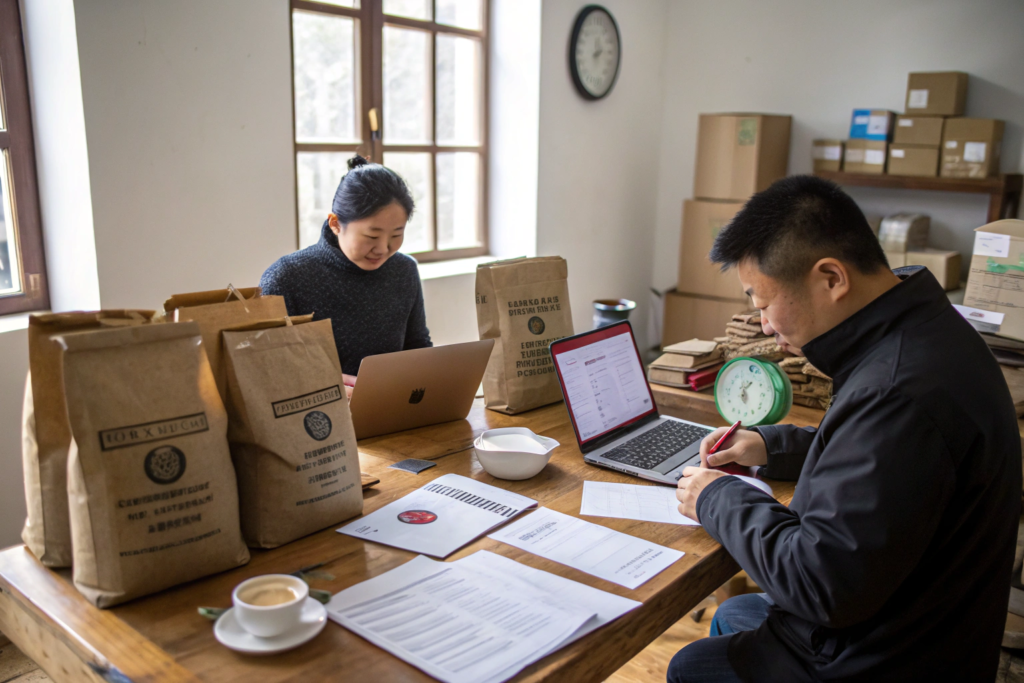
What Records Prove Roast Consistency?
Batch logs prove roast consistency. They show charge temperature, first crack time, development time, and drop temperature. Cupping forms prove flavor control. Moisture records prove green coffee condition. Packing photos prove bag quality. Resources like Coffee Chemistry and Roastmasters explain many roast and bean details. A serious exporter keeps these records ready. Then the buyer can compare sample and production data without guesswork.
How Do Shipping and Tariffs Affect Roast Choice?
Shipping and tariffs affect roast choice more than many buyers think. A long sail schedule may push buyers toward a darker roast or better packing. High tariffs may push buyers toward a different Incoterm or payment plan. Port delays may change order timing. Platforms like Alibaba and LinkedIn help buyers find suppliers. But documents and follow-up still decide the deal. So, roast choice is not only a flavor question. It is also a cost and time question.
Conclusion
A sample roast and a production roast are not the same. A sample roast is a small test for flavor and risk. A production roast is a full-scale run for real shipment. Buyers should check cupping, moisture, defects, records, certificates, packing, shipping, and tariffs. Exporters should prove consistency with clear data. This difference protects both sides. It saves money. It builds trust.
If you want a reliable coffee bean partner in China, please contact us at BeanofCoffee. We own over 10,000 acres of coffee bean plantations in Baoshan City, Yunnan Province. We export Catimor, Arabica, and Robusta. We support raw beans and processed, packaged products. For orders, samples, and export details, please contact Cathy Cai at cathy@beanofcoffee.com.