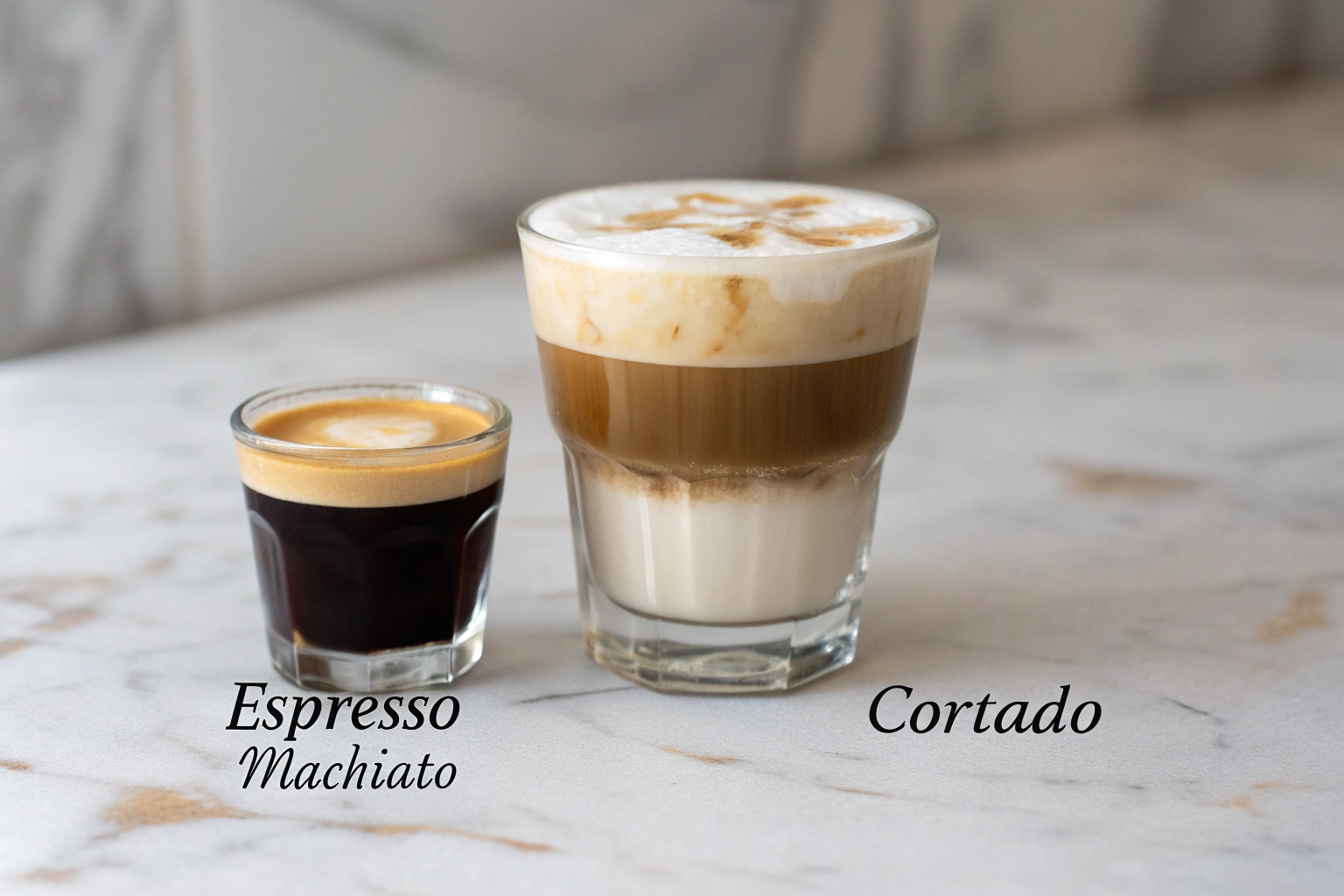
You're standing at the counter of a specialty coffee shop, staring at the menu. You see "Macchiato" and "Cortado." They both sound sophisticated. They both seem to be small, espresso-and-milk drinks. But what exactly is the difference? You're like my client, Ron; you're a precise person, and you want to know exactly what you're ordering or serving. You're worried about ordering the wrong thing or, if you own a cafe, describing them incorrectly to your customers.
Let's settle this debate with the clarity of a perfectly pulled espresso shot. While both are small drinks combining espresso and milk, the core difference lies in their ratio, texture, and cultural origin. A Macchiato is fundamentally an espresso "stained" with a small dollop of milk foam, emphasizing the espresso's flavor. A Cortado is a larger drink that "cuts" the espresso with an equal amount of steamed milk, creating a balanced, harmonious beverage.
As a coffee producer, I'm obsessed with how the final preparation can highlight or hide the nuances of the beans we grow. Understanding these classic recipes is key to appreciating the coffee's journey. In this article, I'll break down these two iconic drinks, so you'll never confuse them again.
What Defines a Traditional Espresso Macchiato?
The name itself is the most important clue. In Italian, "macchiato" means "stained" or "marked." The drink is exactly that: a shot of espresso that has been "stained" with a small amount of milk. The star of the show is, and always should be, the espresso.
A traditional Espresso Macchiato is the purist's choice. Here's the breakdown:
- The Base: A single or double shot of espresso (usually 1-2 ounces).
- The "Stain": A small dollop of steamed milk foam, often just a teaspoon or two, spooned directly onto the center of the espresso's crema. There is very little, if any, liquid milk added.
- The Ratio: The coffee-to-milk ratio is heavily skewed towards coffee, perhaps 4:1 or even higher.
- The Result: A drink that is intensely coffee-forward. You get the full, powerful flavor of the espresso, with just a hint of milky sweetness and a change in texture from the foam to soften the initial acidic punch.
- The Vessel: Almost always served in a small ceramic or glass demitasse, the same cup used for a straight espresso.
Think of the Macchiato as an espresso with a tiny, fluffy hat. It's for someone who loves the intensity of espresso but wants to temper it just slightly.
What About the "Caramel Macchiato" from Starbucks?
This is a crucial point of confusion. The popular Starbucks Caramel Macchiato is a completely different, Americanized invention. It's a much larger, latte-style drink made with vanilla syrup, steamed milk, and espresso poured on top, then drizzled with caramel. It has almost nothing in common with a traditional Italian Espresso Macchiato.
Is it Macchiato or Espresso Macchiato?
In a traditional Italian cafe, if you just order a "macchiato," you will get an Espresso Macchiato. However, in many third-wave specialty coffee shops, baristas use the full name "Espresso Macchiato" to distinguish it from the larger, sweeter drinks that have co-opted the name.
What Defines a Spanish Cortado?
Now, let's travel from Italy to Spain. The name "Cortado" comes from the Spanish verb "cortar," which means "to cut." In this drink, the espresso is "cut" with an equal amount of steamed milk. The goal here is not to stain, but to balance.
A Cortado is all about harmony between coffee and milk. Here's its profile:
- The Base: A standard double shot of espresso (usually 2 ounces).
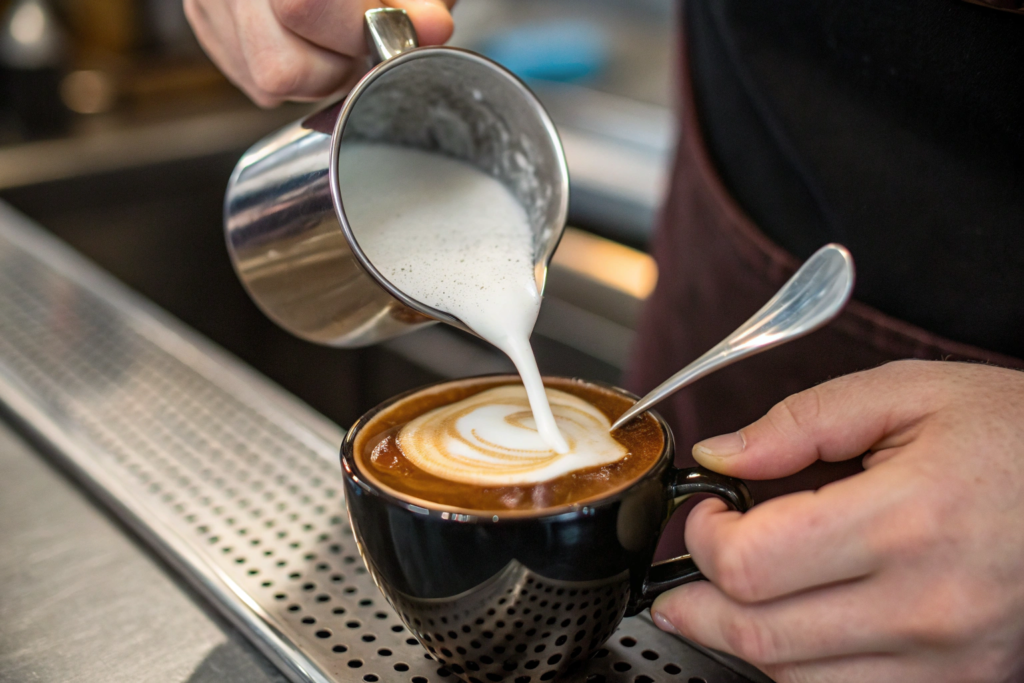
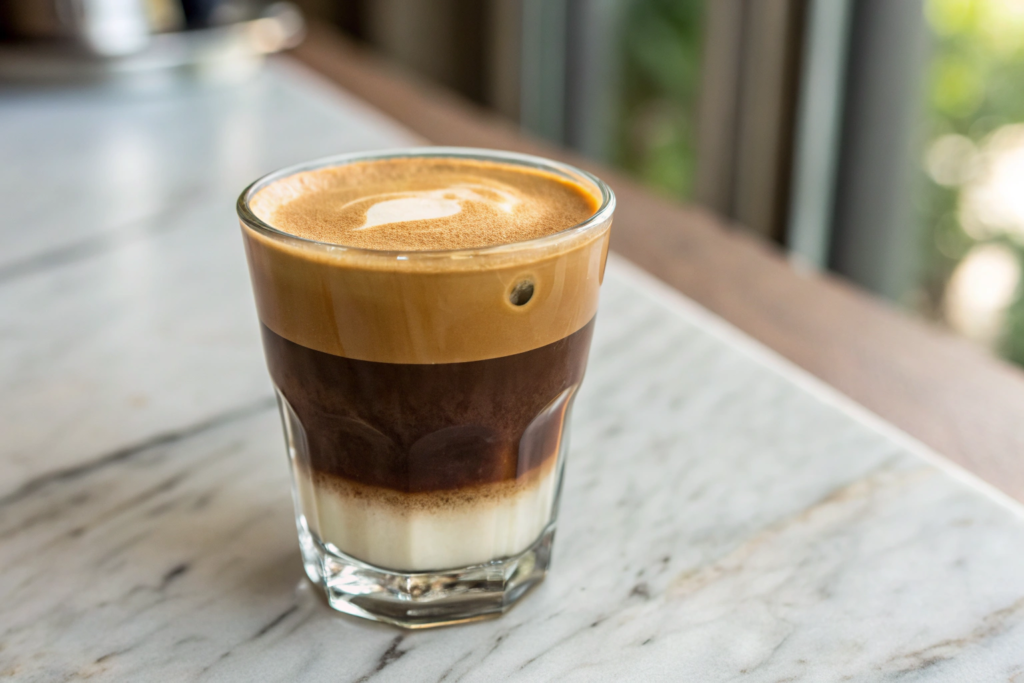
- The "Cut": An equal amount of steamed milk (usually 2 ounces) is poured into and integrated with the espresso. The milk is steamed to be velvety and create a thin layer of "microfoam," but it is not thick and foamy like a cappuccino.
- The Ratio: A balanced 1:1 ratio of espresso to milk.
- The Result: A perfect marriage of coffee and milk. The milk mellows the acidity and intensity of the espresso without overpowering it. The result is a small, strong, but smooth and very sippable drink.
- The Vessel: Traditionally served in a small glass, often a 4.5-ounce glass made by Libbey called the "Gibraltar," which has become synonymous with the drink in many specialty cafes.
Think of the Cortado as a mini-latte, a perfectly balanced fifty-fifty partnership between espresso and milk.
Is a Cortado the Same as a Flat White?
No, although they are similar in their pursuit of a smooth, velvety texture. A Flat White is typically a larger drink (around 5-6 ounces) and has a higher milk-to-espresso ratio (closer to 3:1 or 4:1), making it milkier and less intense than a Cortado.
Why is it Served in a Glass?
The glass is part of the tradition and aesthetic. It allows you to see the beautiful color of the mixed coffee and milk and the thin layer of microfoam on top. The feel of the warm glass in your hand is also part of the classic experience.
How Do You Choose Between a Macchiato and a Cortado?
Now that you understand the technical differences, the choice becomes a simple matter of personal preference. You're not just ordering a drink; you're choosing an experience.
-
Choose a Macchiato if: You fundamentally love the bold, intense, and complex flavor of straight espresso. You want to be able to taste the specific origin notes of the bean—whether it's the floral notes of an Ethiopian or the chocolatey notes of a Yunnan coffee from our farm. You just want a tiny bit of milk to soften the edges.
-
Choose a Cortado if: You find straight espresso a bit too intense, but you still want a strong, coffee-forward experience. You are looking for a perfect, harmonious balance between the richness of the coffee and the sweetness of the milk. You want a smooth, velvety texture in a small, satisfying portion.
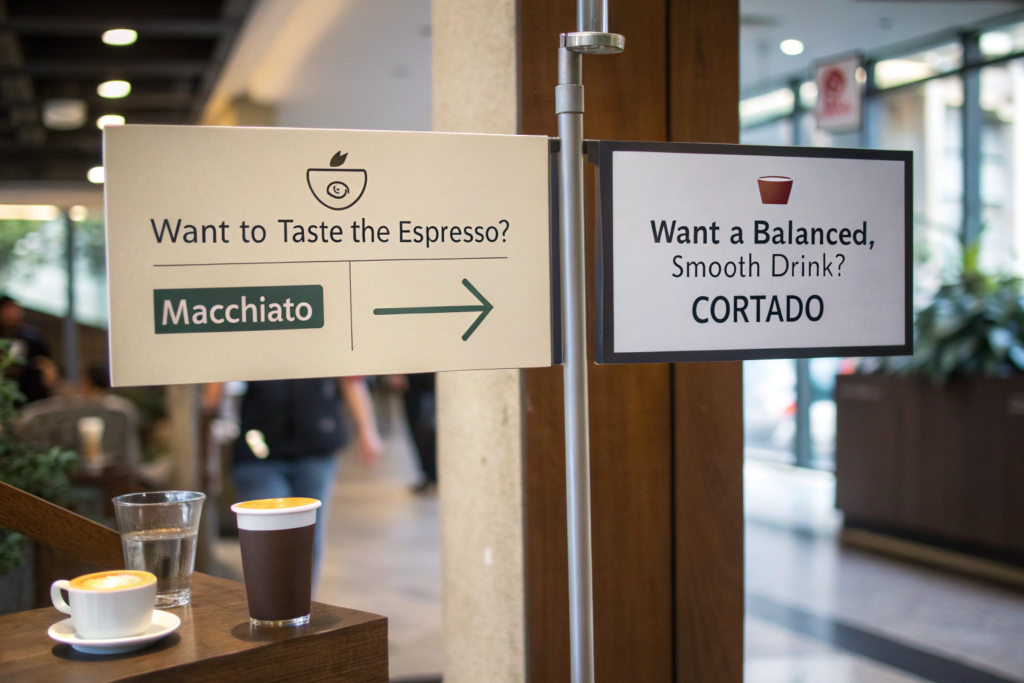
Essentially, the Macchiato is an espresso-dominant drink, while the Cortado is a balanced-partnership drink.
Which is Stronger?
In terms of caffeine, they are virtually identical, as both are typically made with the same amount of espresso (a double shot). In terms of perceived flavor intensity, the Macchiato is much stronger and more coffee-forward.
Can You Use Different Beans for Each?
Absolutely. A roaster might choose a very complex, bright, single-origin Arabica for a Macchiato to showcase its unique flavors. For a Cortado, they might choose a more balanced, classic espresso blend, perhaps one with some high-quality Robusta to help the coffee flavor stand up to the milk and create a richer texture.
How Does Preparation Technique Differ?
The final difference lies in the barista's craft, specifically in how the milk is prepared and poured.
-
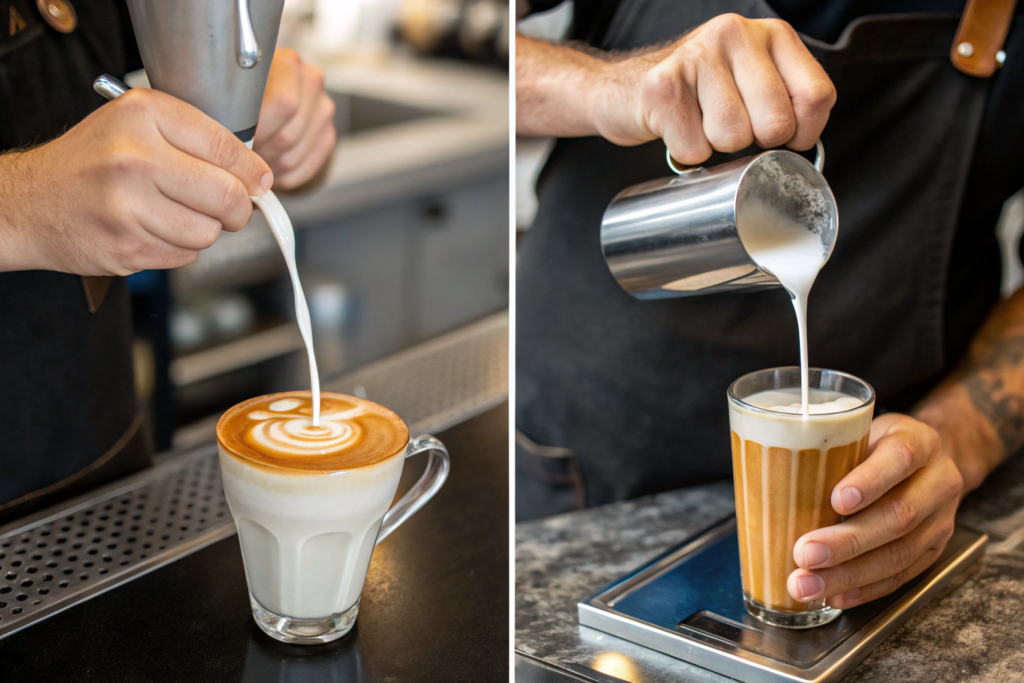
For a Macchiato: The barista's goal is to create a relatively thick, stiff foam. They will aerate the milk more to create a distinct separation between the liquid milk and the foam on top. They then use a spoon to scoop just the foam and place it carefully onto the espresso.
-
For a Cortado: The goal is to create "microfoam"—a silky, velvety texture where the milk is steamed just enough to be hot and have a glossy sheen, with the air bubbles being almost invisible. The milk is then poured directly into the espresso, allowing it to integrate fully and create the drink's signature smooth texture. This technique is much closer to how a latte or flat white is prepared.
Does the Type of Milk Matter?
Yes. Whole milk, with its higher fat content, will generally produce a richer, creamier texture in a Cortado. Alternative milks like oat milk also steam very well and are popular choices. For a Macchiato, the foam structure is the most important part, and most milks can be foamed adequately.
Why is This Important for a Cafe Owner?
Training your baristas to understand and execute these different milk textures is crucial for consistency and for meeting customer expectations. A customer who orders a Cortado and receives a foamy, cappuccino-like drink will be disappointed, just as a customer who orders a Macchiato and gets a milky, latte-like drink will be.
Conclusion
The Macchiato and the Cortado are two distinct and beautiful expressions of the partnership between espresso and milk. They are not interchangeable. The Macchiato is a bold declaration of espresso's dominance, "stained" with just enough milk foam to reveal a softer side. The Cortado is a harmonious dialogue, a perfectly balanced drink where coffee and milk "cut" each other to create a smooth, sippable whole.
Understanding the difference empowers you, whether you are a customer ordering with confidence, a home barista perfecting your craft, or a cafe owner curating a menu. The next time you're faced with the choice, you'll know exactly what you're looking for: the intense "stain" of a Macchiato or the balanced "cut" of a Cortado.
As producers, we are thrilled when our coffee is used with such intention and skill. If you are looking for an exceptional coffee that can shine on its own in a Macchiato or stand up beautifully in a Cortado, we invite you to explore our offerings. Please reach out to my colleague, Cathy Cai, at cathy@beanofcoffee.com.