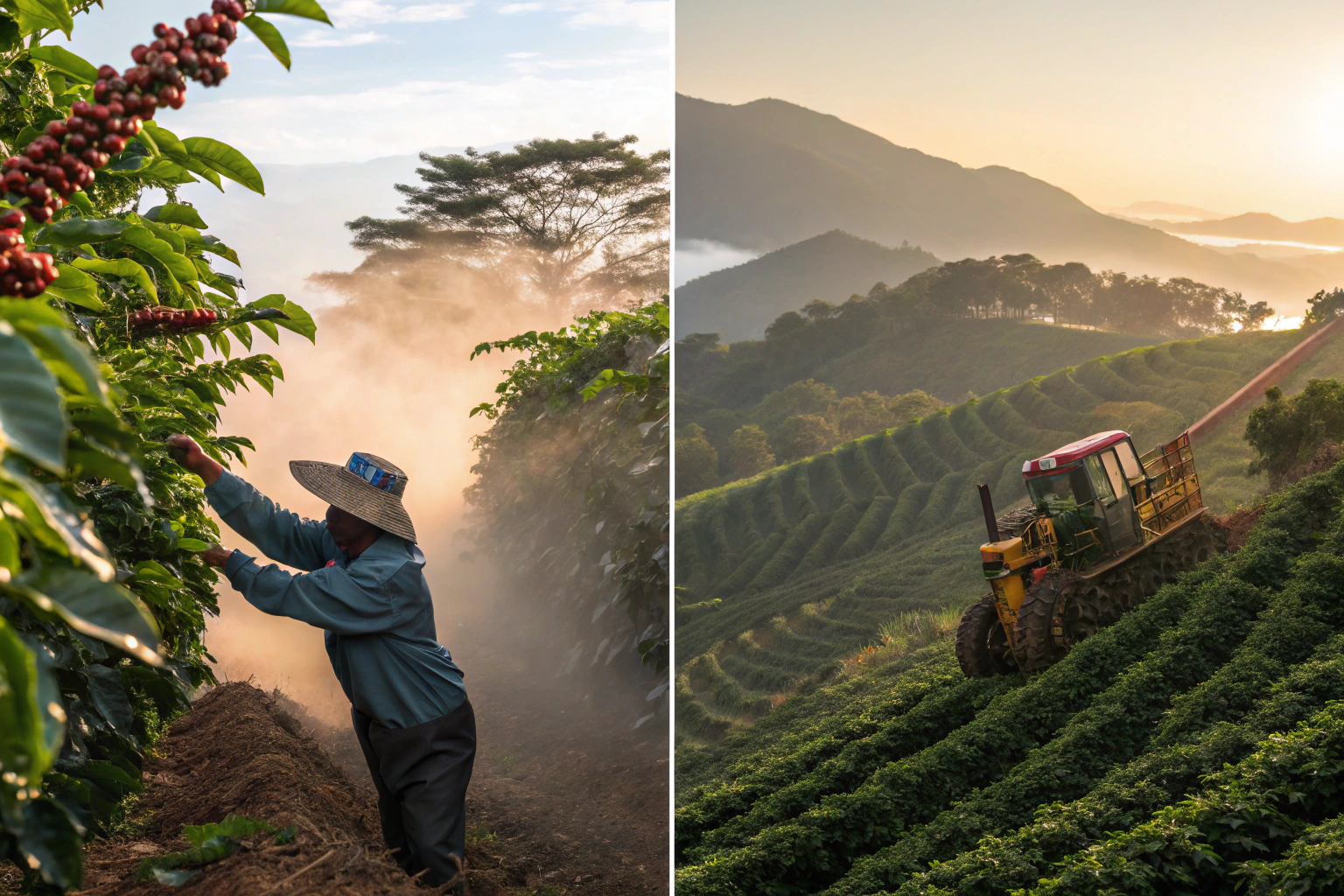
I have spent over 15 years walking through coffee farms. And honestly? The way you pick the cherry changes everything. Not just the cost. The quality. The flavor. The consistency. The whole story of the bean.
When I first started in Yunnan, we picked everything by hand. That was the only way. But as our farms grew to over 10,000 acres, we had to look at mechanical options too. So I have seen both sides. The good and the bad. You know what I learned? There is no single right answer. It depends on your land, your labor, and your market. You can read more about harvesting methods on Specialty Coffee Association or check research on Perfect Daily Grind.
Let me walk you through the real differences. Not the marketing talk. What I have seen with my own eyes on our farms and others around the world.
How Does Manual Harvesting Affect Coffee Quality?
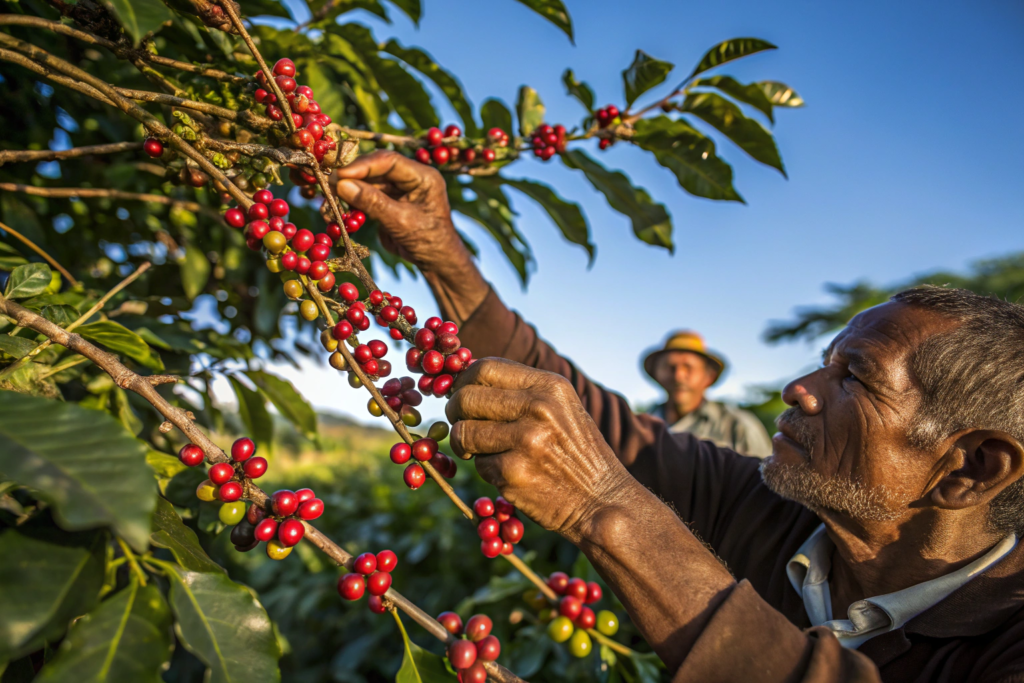
Manual harvesting is simple in concept. Workers walk through the trees. They look at each cherry. They pick only the red ones. The ripe ones. That is the ideal.
But here is the truth. Manual harvesting is only as good as the workers. If they are trained well and paid fairly, they do a great job. If they are rushed or tired, they make mistakes. They pick green cherries to meet their quota. They leave ripe ones behind. So quality depends on management, not just the method.
Can manual pickers really select only ripe cherries?
Yes, when they are trained properly. A good picker can identify ripe cherries by color and feel. They know which ones will give the best flavor. They leave the green ones for later. That selectivity is the biggest advantage of manual harvesting.
At our farms in Baoshan, we train every picker. We show them what ripe looks like. We check their baskets. We pay them by the day, not by the basket. That way they are not rushing. They are not sacrificing quality for speed. It costs more, but the coffee is better. You can learn about picker training on Coffee Quality Institute.
What is the labor cost for manual harvesting?
Labor is expensive. And getting more expensive every year. In Yunnan, we pay competitive wages. We provide housing and meals during harvest. It adds up.
For a typical harvest, labor costs can be 30 to 50 percent of the production cost. That is huge. And labor is hard to find. Young people do not want to do this work. So even if you want to pick by hand, you might not find enough workers. That is the reality.
How Does Mechanical Harvesting Work for Coffee?
Mechanical harvesting is completely different. Machines shake the trees. The cherries fall onto catching frames or collectors. Then they are gathered and transported to the mill.
The machines are fast. Incredibly fast. What takes 100 people a week, a machine can do in a day. But speed comes with trade-offs. The machines cannot tell ripe from unripe. They shake everything. So you get a mix of ripe, overripe, and green cherries all together.
What types of mechanical harvesters are used for coffee?
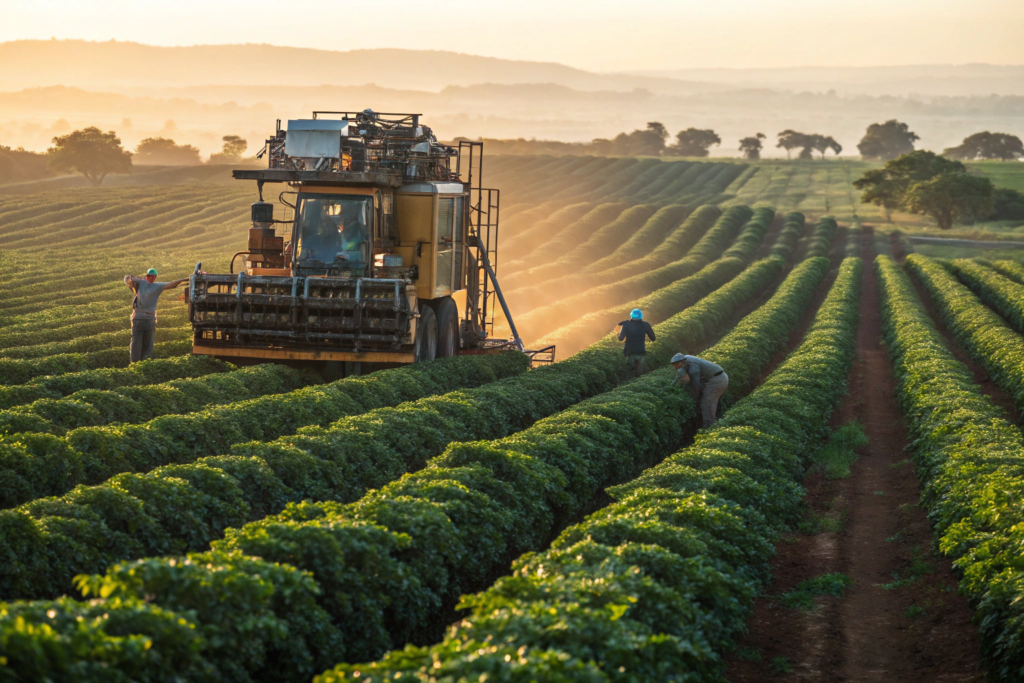
There are two main types. The big self-propelled harvesters. These look like giant tractors. They drive over the rows and shake the trees. They are expensive. Hundreds of thousands of dollars. But they cover huge areas fast.
Then there are smaller portable harvesters. These are handheld or backpack machines. They vibrate and shake individual branches. They are cheaper. They work on steeper land. But they are slower than the big machines. We use a mix on our farms depending on the terrain.
Do mechanical harvesters damage coffee trees?
They can. If not adjusted properly, they shake too hard. They break branches. They strip leaves. They stress the trees. That affects next year's crop.
But modern machines are better. They have adjustable settings. You can tune them to the tree size and variety. And if you maintain your trees properly, prune them right, they handle the shaking better. It is a balance. Speed versus tree health. You can find equipment reviews on Coffee Tech.
What Is the Cost Difference Between Manual and Mechanical Harvesting?
Mechanical harvesting is cheaper per pound. Significantly cheaper. Once you buy the machine, the operating cost is fuel, maintenance, and a few operators. No housing. No meals. No scheduling headaches. For large farms, mechanical is the only way to stay competitive on price.
But the upfront cost is huge. A good harvester can cost $200,000 or more. You need the land to justify it. You need flat land. You need organized rows. If you have 10,000 acres like us, it makes sense. If you have 10 acres, it does not.

How does the cost per pound compare?
Here is a rough breakdown. Manual harvesting in Yunnan costs us about $0.30 to $0.50 per pound of cherry, depending on the year. Mechanical harvesting costs about $0.15 to $0.25 per pound. So mechanical is roughly half the cost.
But that is just picking. You also have to sort mechanically harvested beans more thoroughly. That adds cost. So the gap narrows a bit. Still, mechanical is cheaper. There is no debate about that.
What about the investment in equipment?
You have to think long term. A harvester lasts 10 to 15 years with good maintenance. If you harvest enough volume, it pays for itself. We calculated our payback period at about 4 years. After that, it is pure savings.
But you need the volume. You need at least 500 acres of flat land to make a big harvester worthwhile. Less than that, and you are better with manual or smaller portable machines. Our partners at Shanghai Fumao have helped us analyze these numbers over the years.
How Does Harvesting Method Affect Final Coffee Flavor?
The answer is complicated. Mechanical harvesting itself does not ruin flavor. But mechanical harvesting without proper sorting does. Because you get unripe cherries mixed in. And unripe cherries taste bad. Astringent. Grassy. Bitter.
If you mechanically harvest and then sort thoroughly, you can get good results. You need machines or people to remove the green cherries. That costs time and money. But it works.
Can mechanically harvested coffee be specialty grade?
Yes, it can. But it is harder. You have to be careful. You have to harvest at the right time. You have to sort aggressively. You have to process correctly.
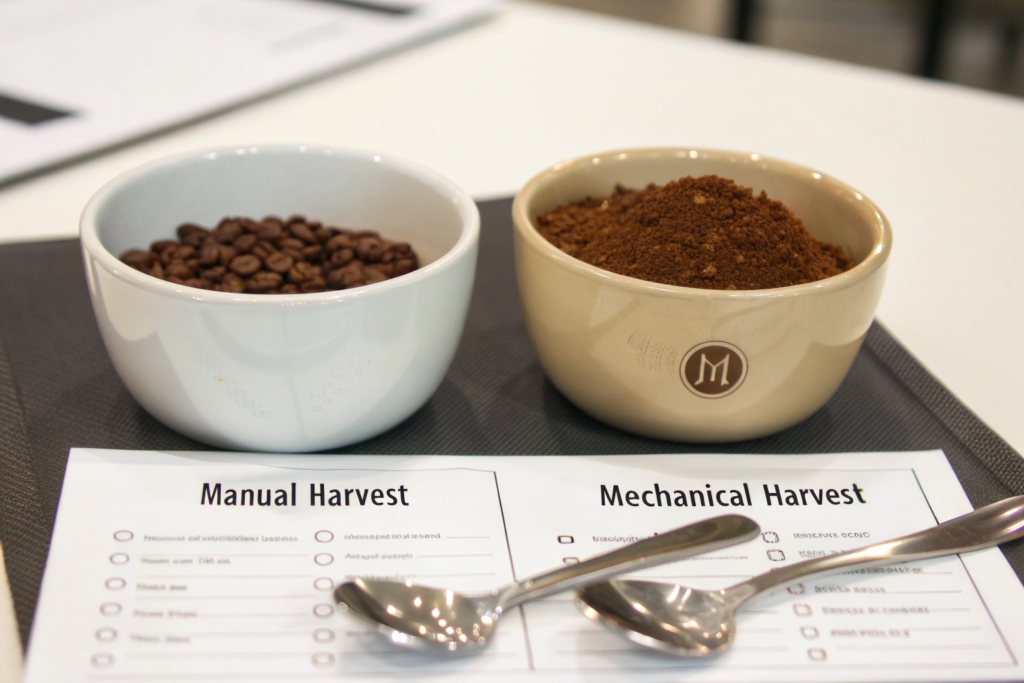
We produce specialty-grade coffee from both manual and mechanical harvesting. The manual lots are usually a little cleaner. A little more consistent. But the mechanical lots can still score 84 or 85 points if we do everything right. The difference is not as big as some people think.
Does manual harvesting always taste better?
Not always. I have tasted awful manually harvested coffee. Picked by people who did not care. Mixed with leaves and sticks. Fermented wrong. Manual does not guarantee quality. It just gives you the potential.
And I have tasted excellent mechanically harvested coffee. From farms that manage their harvest well. That sort properly. That process carefully. The method is less important than the overall system. You can read cupping comparisons on Coffee Review.
Which Method Is Better for the Environment?
Manual harvesting has a smaller carbon footprint per acre. No machines burning diesel. No manufacturing emissions. But manual harvesting requires more people. More housing. More food. More transportation for workers. It is not zero impact.
Mechanical harvesting uses fuel. It emits CO2. But it does the work of hundreds of people. So per pound of coffee, the carbon footprint might actually be lower. It depends on how you measure.
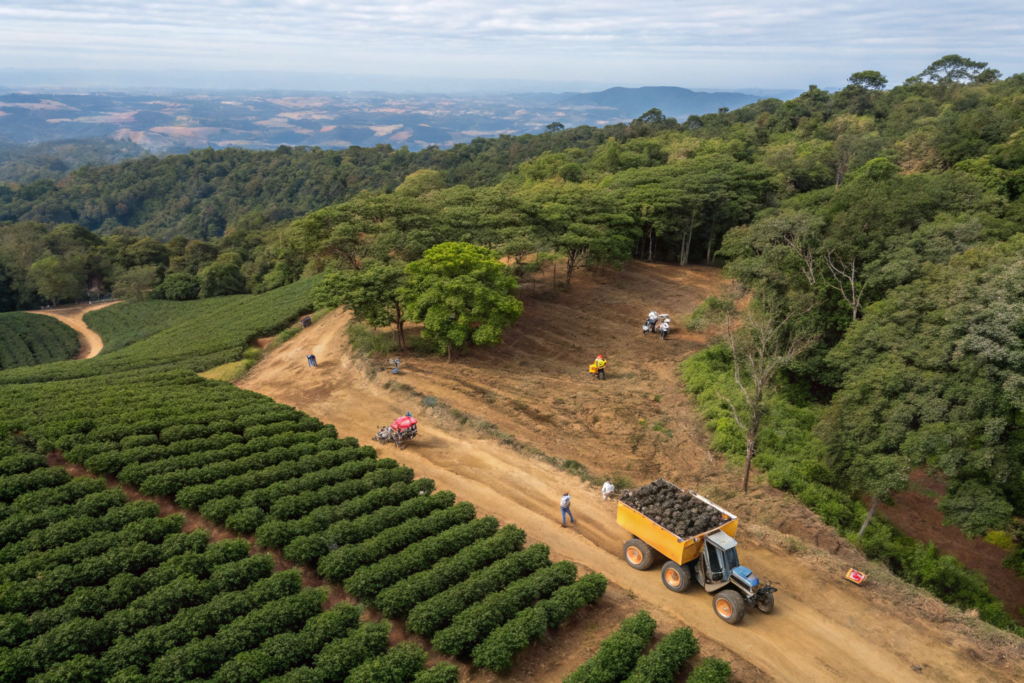
How does soil compaction compare?
This is a real issue. Machines are heavy. They drive over the same ground every year. That compacts the soil. Compacted soil holds less water. Roots struggle. Trees suffer.
Manual harvesting causes almost no compaction. People are light. They walk, they pick, they leave. The soil stays loose and healthy. On our farms, we rotate machine paths. We use lighter machines when possible. We plant cover crops to protect the soil. It helps, but it is not the same as no machines at all.
What about biodiversity on the farm?
Manual harvesting works well on uneven land. On hillsides. On farms with trees and shade. That kind of farm usually has more biodiversity. More birds. More insects. More healthy ecosystem.
Mechanical harvesting needs flat land. Clean rows. No obstacles. That often means removing trees and leveling the land. That reduces biodiversity. It is a trade-off. Efficiency versus ecosystem. You have to decide what matters more for your farm and your market. You can read about sustainable farming on Rainforest Alliance.
Conclusion
Manual and mechanical harvesting are different worlds. Manual gives you selectivity and quality potential. It works on difficult land. It supports more workers. But it costs more and labor is hard to find.
Mechanical gives you speed and lower cost. It works on large flat farms. It is consistent and efficient. But it needs careful sorting and good management to maintain quality.
At Shanghai Fumao, we use both. Manual on our hillside lots where the coffee is dense and the quality potential is highest. Mechanical on our flat land where volume matters and we can sort effectively. Both methods can produce excellent coffee. It is about how you manage, not just what you use.
If you want to learn more about our harvesting methods, or if you want to taste the difference for yourself, reach out to us. Let us send you samples from both manual and mechanical lots. Compare them yourself. See what you think. Contact our export manager, Cathy Cai, at cathy@beanofcoffee.com.