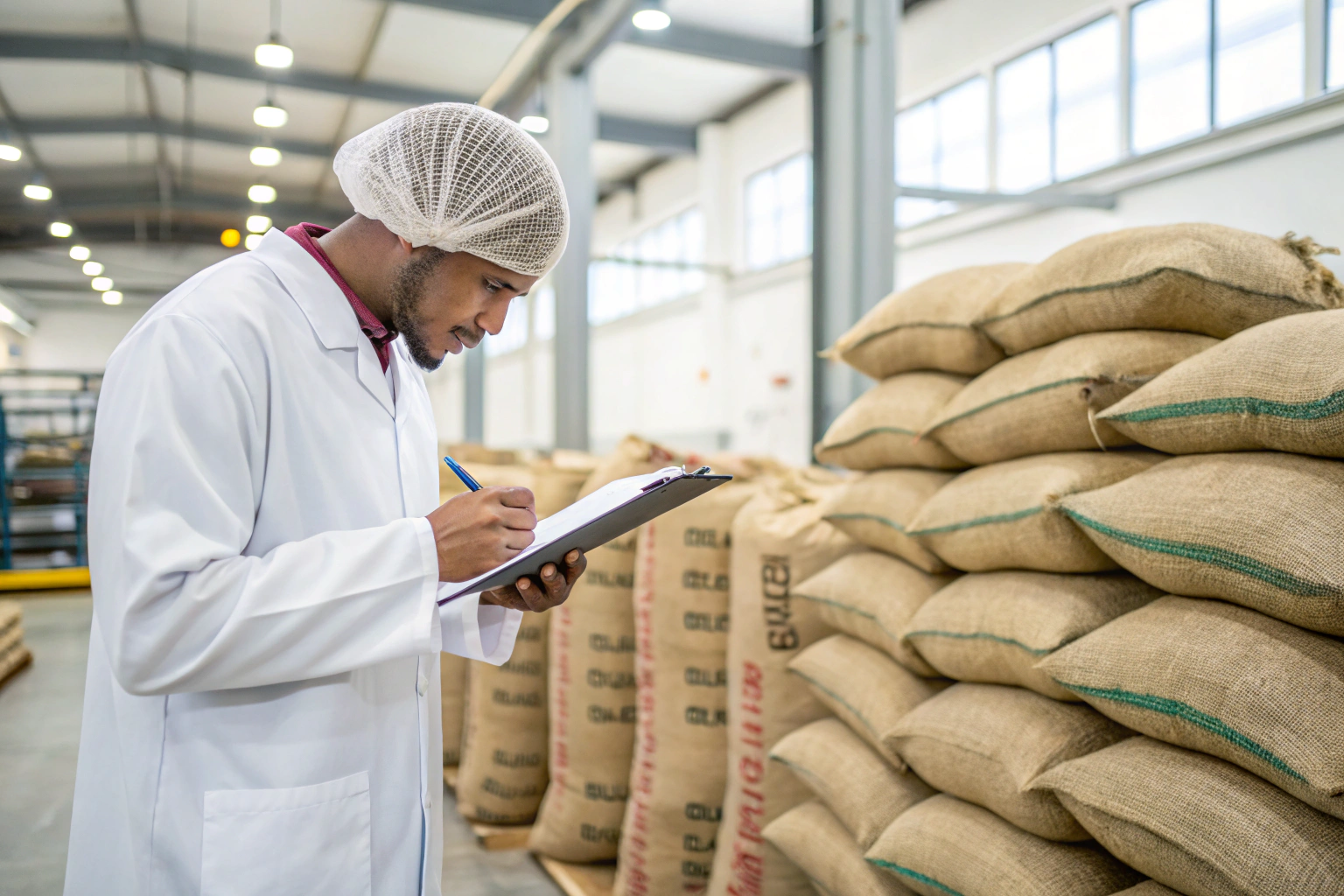
I learned this lesson the hard way. Five years ago, we shipped a container of roasted coffee to Germany. Beautiful beans. Perfect roast. Custom packaging. And it sat at the port for three weeks. Why? Because the font on the nutrition label was two points too small. Two points! The buyer was furious. I was embarrassed. And we ate the cost of relabeling every single bag.
So, how do you ensure your coffee packaging is compliant for export? The short answer is this: you need to know the rules for every country you ship to. Not just the big ones. The specific ones. Label size. Language requirements. Material restrictions. Recycling symbols. And you need to verify everything before the container seals. Because once it ships, fixing mistakes costs a fortune. You can check EU packaging regulations on European Commission or U.S. requirements on FDA.
Let me walk you through what I have learned. The rules I follow. The mistakes I have made. And how we at BeanofCoffee make sure our packaging meets every requirement for North America, Europe, and Australia.
What Label Information Is Legally Required on Coffee Packaging?
Look, every country has its own rules. But some things are universal. You need the basics. Product name. Net weight. Origin country. Roast date. Best before date. Storage instructions. But then it gets complicated.
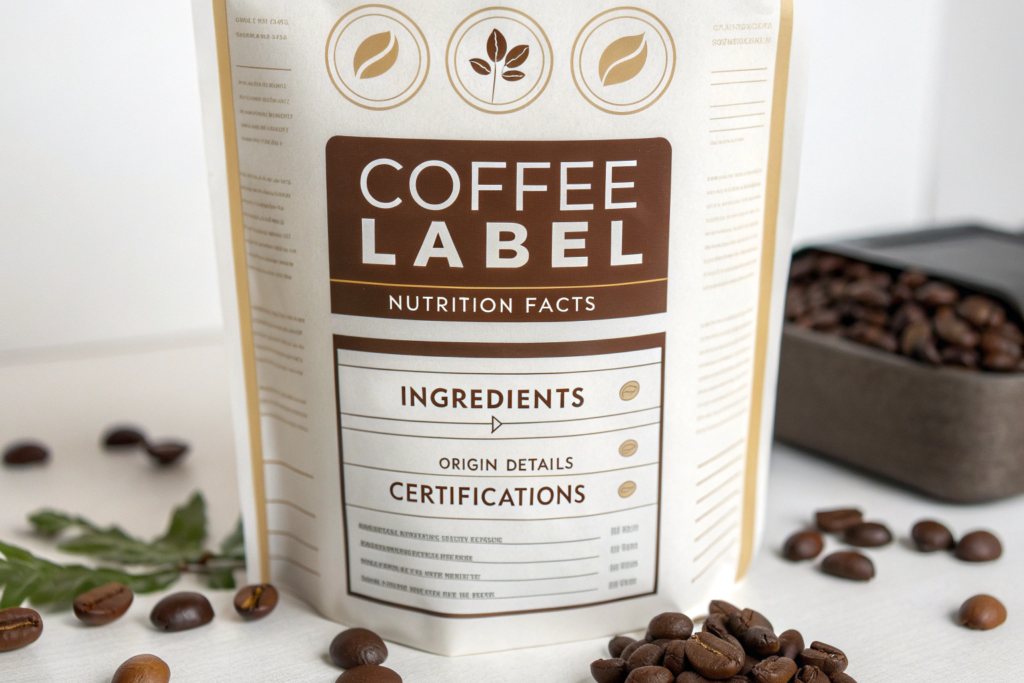
In the U.S., the FDA requires nutrition facts on most packaged foods. Coffee is actually exempt if it contains no added ingredients. But if you add flavor? If you blend with something else? Then you need the full nutrition panel. In the EU, you need the same, but the format is different. Different fonts. Different units. Different placement. You have to know which market you are shipping to. You can download label templates from FDA Labeling or check UK Gov Trading Standards.
What are the specific requirements for U.S. coffee imports?
For the U.S., here is what you absolutely must have. Product identity. "Roasted Coffee" or "Whole Bean Coffee." Net weight in both pounds and grams. Country of origin. "Product of China." Roaster name and address. And if you have any allergens, like nuts in flavored coffee, those must be declared.
Also, the U.S. requires a proper label placement. The principal display panel. The information panel. All of it has to be in the right spot. If your label wraps around the bag, you have to make sure the required information is on the correct side. Our partners at Shanghai Fumao have helped many buyers navigate these rules.
How do EU labeling rules differ from U.S. rules?
The EU is different. Tougher in some ways. You need the same basics, but the format is strict. Nutrition information must be per 100 grams, not per serving. The font size minimum is 1.2 millimeters for most text. If your bag is small, the font can be smaller, but only if it meets the exemption rules.
Also, the EU requires a responsible food business operator address within the EU. If you are shipping from China, you need an importer of record in the EU whose address goes on the label. That is the law. You cannot skip it. You can find EU labeling guides on European Coffee Federation.
What Packaging Materials Are Allowed for Coffee Export?
Here is something many exporters miss. The material itself has to be compliant. Not just the label. Some countries ban certain materials. Some require recyclability. Some have rules about one-way valves.
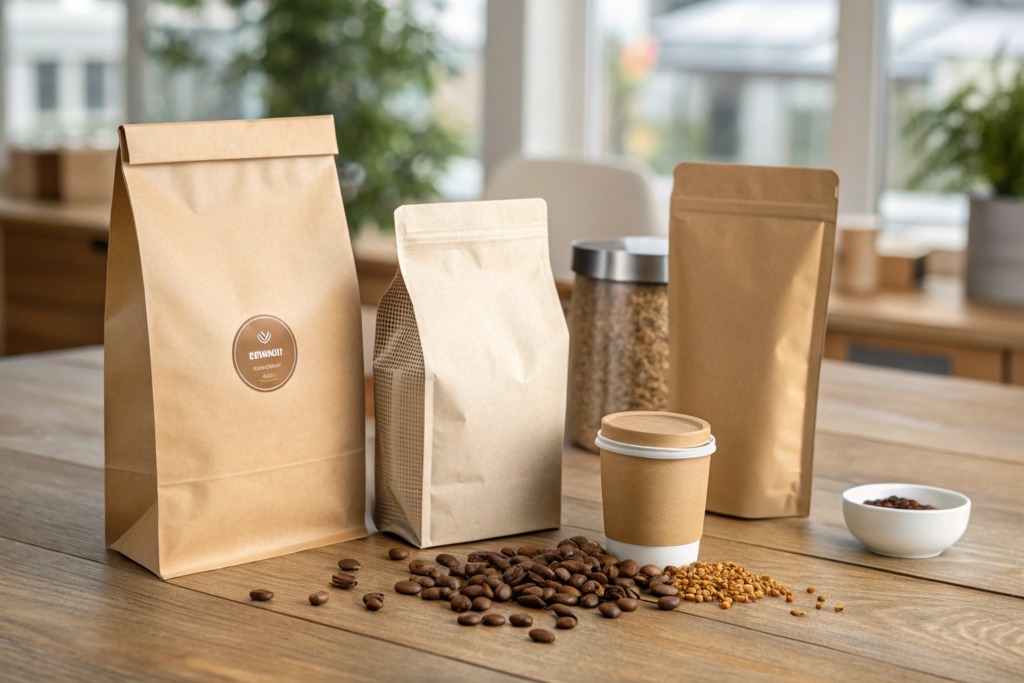
For most markets, the standard is a foil-lined bag with a one-way valve. That keeps oxygen out and lets CO2 escape. But in some European countries, there are restrictions on multi-layer packaging because it is hard to recycle. They want mono-materials. Single-layer plastics that can be recycled easily. If you ship the wrong material, your coffee might still sell, but your buyer might face fines or bad press.
Are one-way valves required for all coffee packaging?
Not legally required, but practically required. If you package fresh-roasted coffee without a valve, the bags will bulge. They might burst. And the coffee will stale faster because oxygen gets in.
Some countries have started questioning the recyclability of bags with valves. The valve is usually plastic and metal. Hard to separate. So some buyers are moving to "degassing panels" or other solutions. But for now, one-way valves are still the standard. You can check material regulations on Sustainable Packaging Coalition or ask your packaging supplier.
What about biodegradable or compostable coffee bags?
These are popular now. But be careful. "Biodegradable" means different things in different places. Some countries require industrial composting facilities to actually break the material down. If those facilities do not exist, the bag is just garbage.
Also, compostable bags often have shorter shelf life. They might not protect the coffee as long as foil. And they cost more. So you have to balance your brand's environmental goals with practical performance. We have tested several options for our buyers and can share what we have learned.
How Do You Handle Language Requirements on Packaging?
This one trips up a lot of exporters. You ship to Belgium, and suddenly you need French and Dutch. You ship to Canada, and you need English and French. You ship to Switzerland, and you might need German, French, and Italian.
The rule is simple: the label must be in the official language of the destination country. Or at least the consumer must understand it. In practice, that means bilingual or multilingual labels for many markets. If your label is only in English and you ship to France, it will be rejected. Period.
Do you need separate labels for each country?
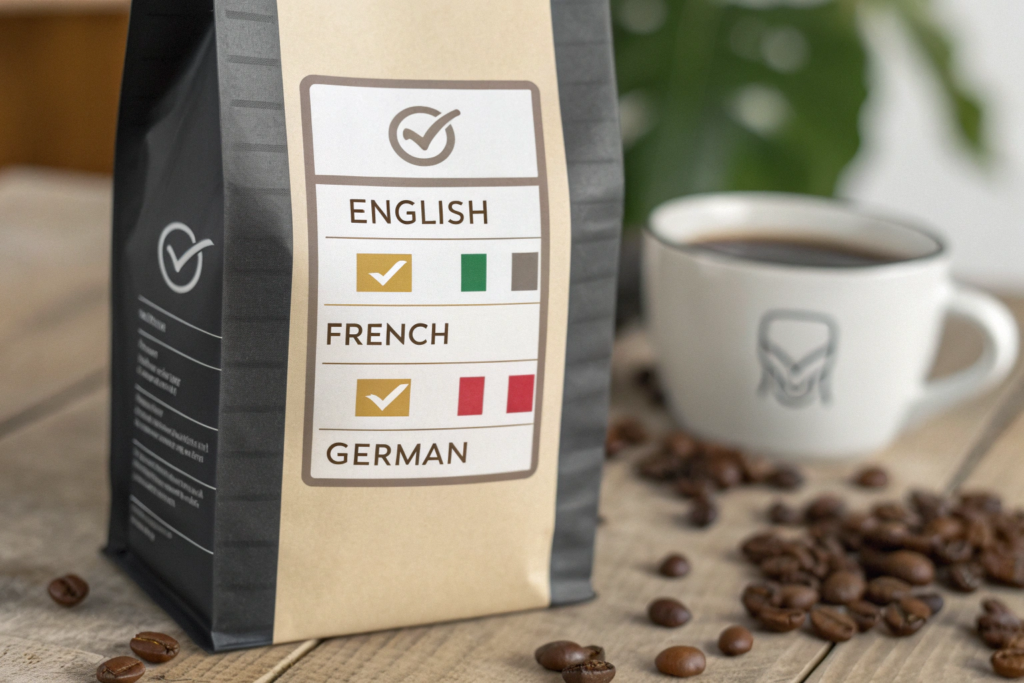
You can do one label with multiple languages. That is common. For Europe, many roasters use a label with English, French, and German. That covers most markets. But you have to make sure the translations are correct. Bad translation is almost as bad as no translation.
We recommend working with a native speaker for each language. Do not trust Google Translate for legal text. One wrong word can change the meaning. And if that wrong word is about allergens or ingredients, you could face serious consequences.
What about English-only for North America?
For the U.S., English is required. Spanish is optional. For Canada, you need both English and French. The French text must be the same size and prominence as the English. You cannot hide it in small print.
We have seen shipments held because the French was too small or incomplete. That is an easy mistake to avoid. Just double-check. Or work with a partner who knows the rules. Our partners at Shanghai Fumao have experience with Canadian and U.S. customs and can review your labels before shipping.
What Recycling and Environmental Symbols Are Required?
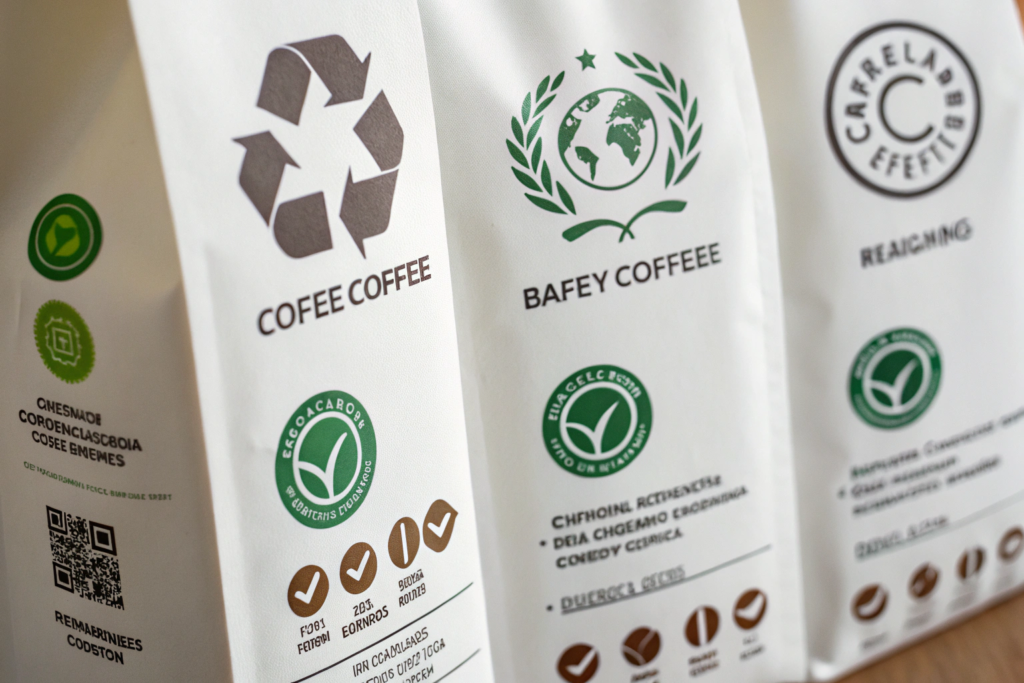
This is the newest and fastest-changing area. Europe leads the way. The Green Dot. The Tidyman. The recycling symbols. If you ship to Europe, you will need these.
The Green Dot means the manufacturer contributes to packaging recovery. It is not required by law in all countries, but it is expected. The Tidyman symbol reminds consumers to dispose of packaging properly. The recycling symbols tell people what material the bag is made from. PAP 21 for paper. LDPE 4 for plastic. If you do not have these, your buyer might have to add them. Or worse, the shipment might be refused.
Which countries require specific recycling labels?
France is strict. They have the Triman logo. Required on all recyclable packaging. Germany expects the Green Dot. The UK has their own symbols now post-Brexit. Italy has different rules.
You cannot use one label for all of Europe anymore. You have to know which country the coffee is going to. And if it is going to multiple countries? Then you need a label that covers all of them, or you need separate production runs. That adds cost, but it is the only way to be compliant.
How do you stay updated on changing environmental regulations?
Honestly? This is hard. Rules change fast. What was fine last year might be illegal this year. The EU is constantly updating its packaging directives. Single-use plastic rules. Recycled content requirements. Carbon footprint labeling.
We subscribe to industry updates. We work with compliance consultants. And we ask our buyers to share their local requirements. Because they know their market better than we do. You can sign up for updates from Packaging Europe or check EU Packaging Directive.
How Do You Test Packaging for Shelf Life and Durability?
Packaging is not just about labels. It has to work. It has to keep the coffee fresh. It has to survive shipping. It has to arrive looking good.
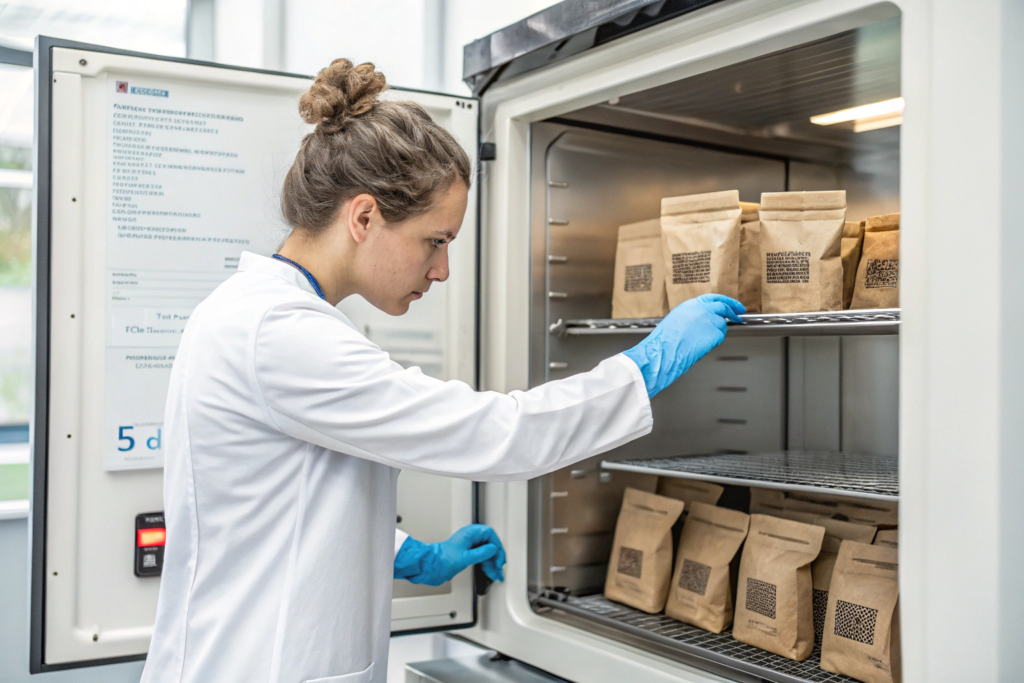
We test every new packaging format before we use it. We put bags in a warm, humid environment for weeks. We check oxygen levels inside. We check seal strength. We drop test boxes. If a bag fails in testing, it is annoying. If it fails in a customer's warehouse, it is a disaster.
How do you know if your packaging will survive shipping?
Shipping is rough. Containers get hot. They get cold. They get tossed around. Your packaging has to handle it.
We do simulated shipping tests. We pack a box, then drop it from different heights. We stack heavy boxes on top. We leave samples in a hot warehouse for a month. Then we open them and check the coffee. If it is still fresh, we are good. If not, we go back to the drawing board.
What is the standard shelf life for packaged coffee?
For whole bean coffee in a valve bag, 6 to 12 months is typical. Ground coffee stales faster, maybe 3 to 6 months. But that depends on the packaging quality. Better barrier films give longer life. Worse films give shorter life.
We guarantee our packaged coffee for 12 months from roast date when stored properly. But we test to 18 months. Because we want a safety margin. If the container sits at the port for an extra month, the coffee should still be good. You can find shelf life testing standards on ASTM International.
Conclusion
Coffee packaging compliance is not glamorous. But it is essential. One mistake can cost you thousands. One oversight can ruin a customer relationship. The rules are different everywhere, and they keep changing.
At Shanghai Fumao, we take compliance seriously. We research every market. We test every package. We check every label. And we work with partners who know the local rules. Because we want your shipment to arrive, clear customs, and sell fast. Not sit at the port waiting for relabeling.
If you are planning to export packaged coffee, or if you need help ensuring your packaging is compliant, reach out to us. Let us talk about your target markets. Your packaging design. Your volume. We can help you avoid the mistakes I made. Contact our export manager, Cathy Cai, at cathy@beanofcoffee.com. She can connect you with our packaging compliance team. Visit our website at Shanghai Fumao to learn more about our 10,000 acres of plantations in Yunnan and our experience exporting to North America, Europe, and Australia.