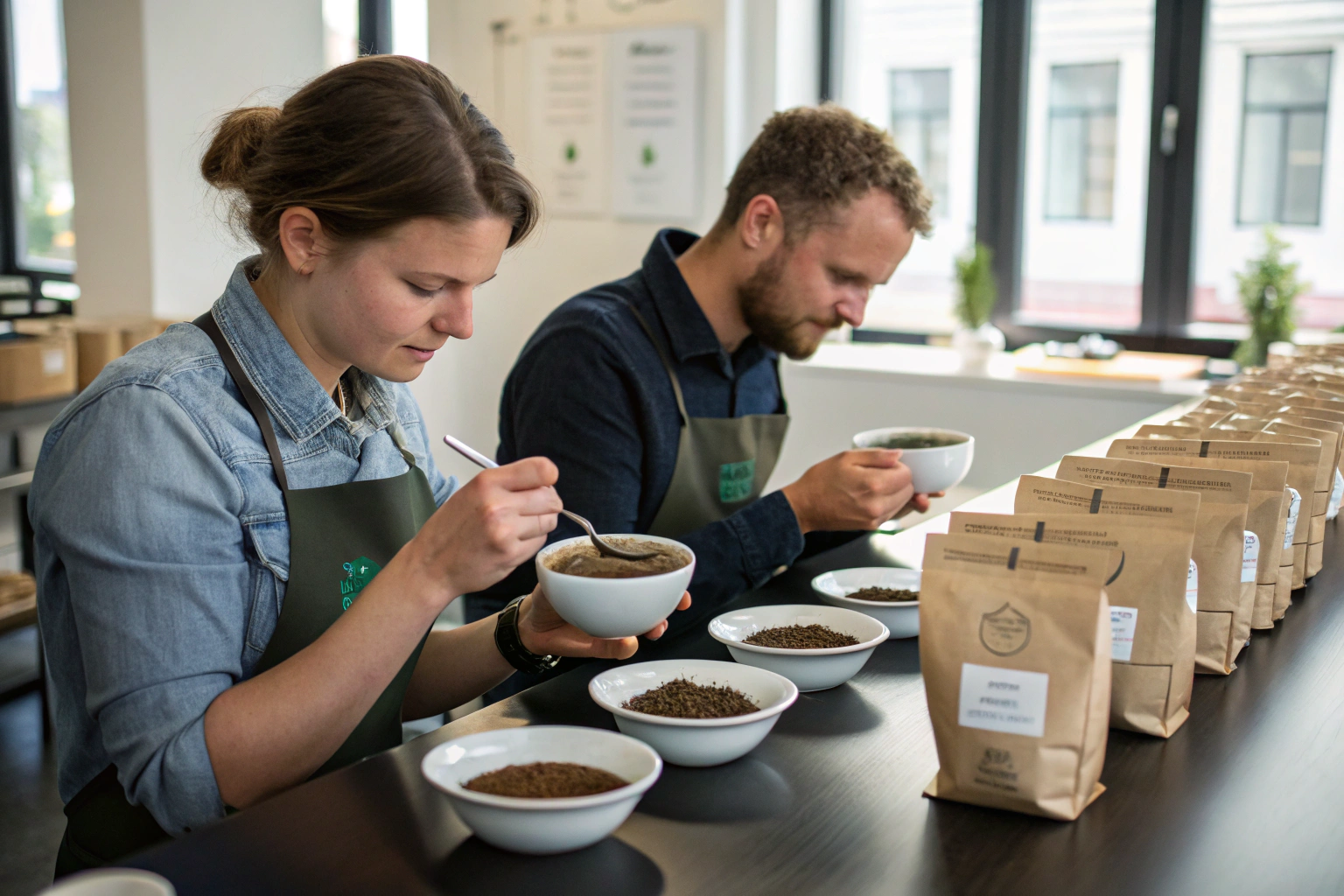
I have been doing this for over 15 years now. And honestly? Sampling green coffee still makes me nervous sometimes. Not because I doubt our beans. But because I know what is at stake for you. One bad sample can waste weeks. One wrong purchase can cost thousands. You know that feeling, right? When you cup a sample, love it, order a container, and then... something is different. The color is off. The moisture feels wrong. The flavor is not the same.
So, what is the best way to sample green coffee before buying? The short answer is this: you need a systematic process that covers the sample request, the roasting, the cupping, and the verification. But more than that, you need a supplier who samples the same way you do. Who understands that the sample should match the shipment exactly. At BeanofCoffee, we treat sampling as seriously as you do. Because if the sample is wrong, everything else is wrong. You can check cupping standards on Specialty Coffee Association or read sampling guides on Coffee Review.
Let me walk you through what I have learned. From requesting samples the right way to cupping like a pro. And I will share some hard lessons too. Because the best way to learn? That is from someone else's mistakes.
How Do You Request Green Coffee Samples the Right Way?
Look, most people get this first step wrong. They send a generic email: "Please send samples." That is it. And then they wonder why the samples do not match what they need. You have to be specific. You have to tell the supplier exactly what you are looking for.
When you request samples, include your target flavor profile, your preferred processing method, your roast level, and your intended use. Are you blending? Single origin? Espresso or filter? The more details you give, the better we can match you. We keep a database of every lot on our farm. If you tell me you want a washed Arabica with high acidity for light roast, I know exactly which section of our plantation to pull from. If you just ask for "coffee samples," I have to guess. And guessing leads to mismatches. You can find sample request templates on Perfect Daily Grind or check buyer guides on Global Coffee Report.
How many samples should you request at once?
Do not go crazy. I have seen buyers ask for 20 samples from one supplier. That is too many. You will get overwhelmed. You will cup poorly. You will forget what you tasted.
I recommend starting with three to five samples max. Pick the lots that seem closest to what you want. Cup them carefully. Then narrow down. If none of them work, ask for a different set. But do not try to cup 15 coffees in one session. Your palate will fatigue. Your notes will blur. And you will make a bad decision. Trust me, I have seen it happen.
What information should the supplier provide with the sample?
This matters a lot. A good supplier gives you more than just beans. They give you data. Moisture content. Water activity. Density. Screen size. Defect count. Harvest date. Processing method. Drying method. Altitude. Variety.
Without this data, you are cupping blind. You might love a sample, but if the moisture is too high, that coffee will degrade on the ship. If the density is low, it might roast unevenly. We include a full data sheet with every sample we send. And we work with partners like Shanghai Fumao to ensure all documentation is accurate and complete.
How Should You Prepare and Roast Green Coffee Samples?
Here is where things get tricky. You have the samples. Now you have to roast them. But how? If you roast too dark, you kill the origin character. If you roast too light, you might not develop the bean enough. The goal is consistency. You want to roast every sample the same way so you can compare them fairly.
We recommend using a sample roaster if you have one. Something like a Probat or a Ikawa. These give you repeatable results. Roast to a standard Agtron color, usually between 55 and 65 for cupping. That is a medium roast. It shows the bean's true character without adding too much roast flavor. And always rest the samples for at least 8 hours after roasting. Fresh-roasted coffee is gassy. It does not taste right. You can find roasting guides on Roast Magazine or check equipment reviews on Coffee Tech.
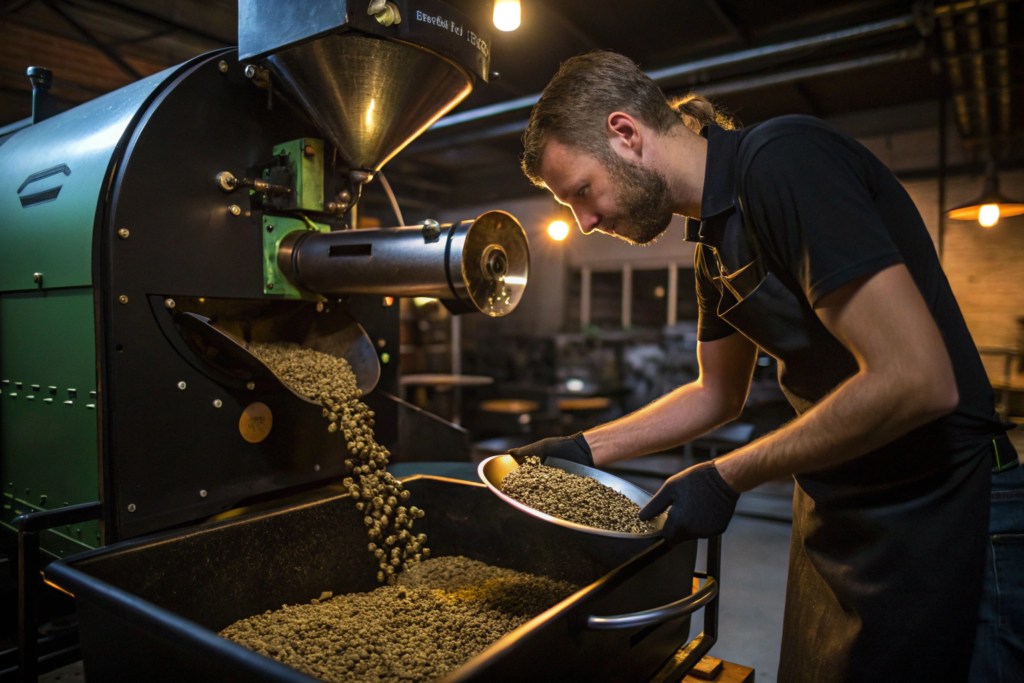
Should you roast samples yourself or ask the supplier to do it?
Honestly? Both. If the supplier can send roasted samples, that is helpful. It shows you how they think the coffee should taste. But you also need to roast your own samples. Because you know your roaster. You know your water. You know your palate.
We often send both green and roasted samples to serious buyers. The roasted samples give them a benchmark. The green samples let them do their own work. That combination works well. It builds trust. It shows we have nothing to hide.
What roast level is best for evaluating green coffee?
Stick to medium. Not too light, not too dark. About 30 to 60 seconds into first crack, depending on the bean. That is the sweet spot for cupping. At this level, you taste the bean's intrinsic qualities. The acidity, the body, the sweetness. If you go darker, roast flavor takes over. If you go lighter, you might get grassy or underdeveloped notes that are not really the bean's fault.
We provide recommended roast profiles for every lot we sell. Based on our own testing. But we always tell buyers to adjust for their own equipment and preferences. There is no single right answer.
What Is the Proper Way to Cup Green Coffee Samples?
Cupping is the heart of evaluation. But you have to do it right. The SCA has a standard protocol for a reason. It removes variables. It lets you compare apples to apples.
Start with clean water. Filtered, not tap. Water chemistry affects extraction. If your water is too hard or too soft, the coffee will taste wrong. Use the right grind size. Medium-coarse, like sea salt. Use the right ratio. 8.25 grams of coffee to 150 ml of water. That is standard. And use the right temperature. 200°F or 93°C. Not boiling. Not lukewarm. You can find the full SCA cupping protocol on Specialty Coffee Association or watch video guides on Barista Hustle.
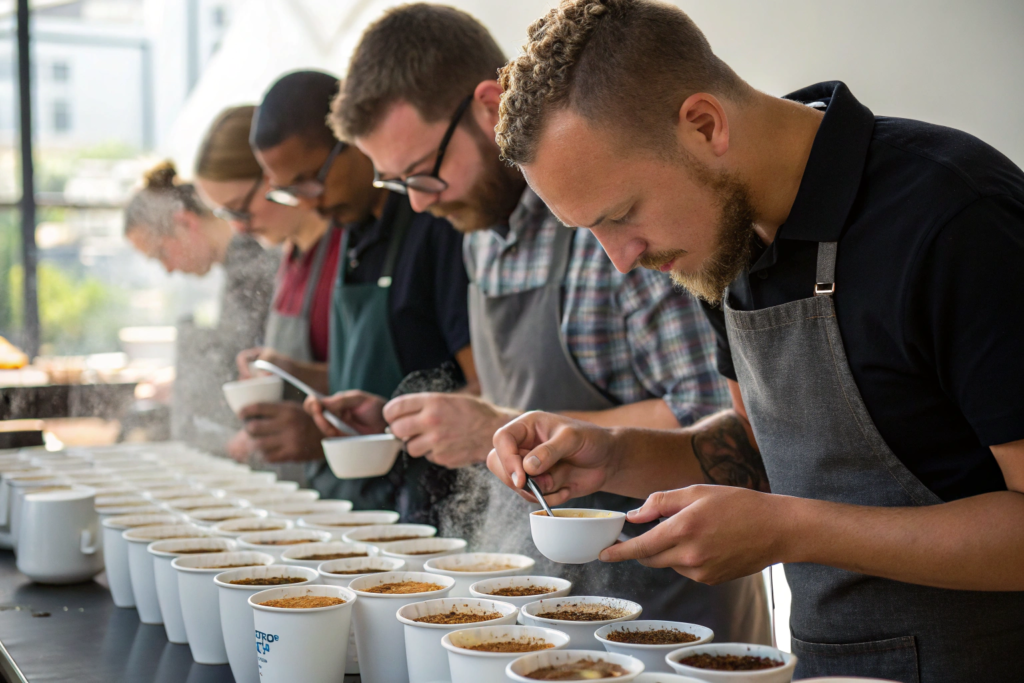
How do you evaluate acidity, body, and flavor objectively?
This is hard. Because taste is subjective. But you can make it more objective by using a score sheet. Rate each attribute on a scale. Acidity from 1 to 10. Body from 1 to 10. Flavor from 1 to 10. Sweetness. Cleanliness. Aftertaste. Balance. Overall.
Do this for every sample. Write down your scores. Write down your impressions. Use descriptive words. "Citrus." "Chocolate." "Floral." "Nutty." The more specific you are, the easier it is to compare later. And do not cup alone if you can help it. Cup with a partner. Compare notes. Two palates are better than one.
What defects should you look for during cupping?
Watch for the bad stuff. Phenolic? That medicinal taste. That is a serious defect. Usually means over-fermentation or contamination. Sour? Maybe under-ripe beans. Woody or papery? That is old crop. Stale. Fermented? That funky, rotten fruit taste. That is over-fermentation.
If you find these defects, mark them down. Ask the supplier about them. Sometimes defects are isolated to one lot. Sometimes they indicate a bigger problem. We log every defect we find during our own cupping. And we share that information with buyers. Because we want you to know exactly what you are getting. Our partners at Shanghai Fumao help us maintain these quality records for every shipment.
How Do You Verify That the Shipment Matches the Sample?
This is the moment of truth. The container arrives. You open the bags. And you need to know: is this the same coffee you sampled?
The best way to verify is to sample the shipment properly. Do not just grab beans from the top of one bag. Use a trier. That long, pointed tool. Insert it deep into the bag. Pull samples from multiple bags. Mix them together. That is your composite sample. Then roast and cup that sample. Compare it to your original cupping notes. If it matches, you are good. If it does not, you have a problem.
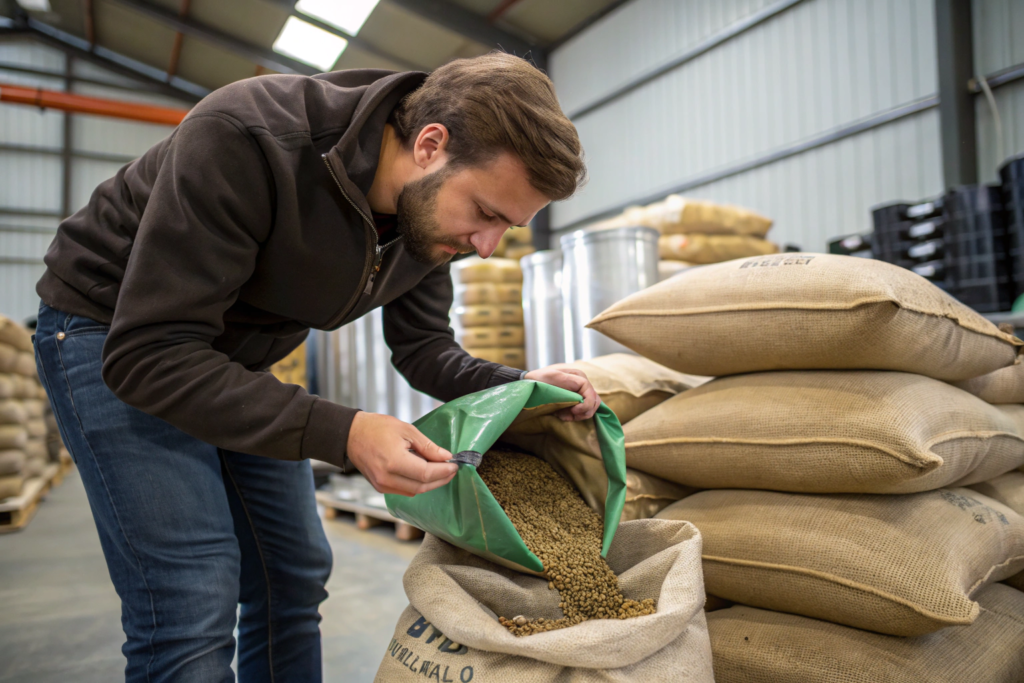
How many bags should you sample from a shipment?
There are standard sampling plans. For a container of 300 bags, sample at least 30 bags. That is 10 percent. Spread them out. Front of the container, middle, back. Different pallets. Different layers. You want a representative sample, not just the easy bags.
We actually encourage buyers to sample heavily. Because if the coffee is consistent, heavy sampling just confirms that. If it is not consistent, you need to know. We want you to know. We have nothing to hide. And if there is a problem, we want to fix it fast.
What do you do if the shipment does not match the sample?
First, do not panic. Contact the supplier immediately. Send photos. Send your cupping notes. Send a sample of the shipment coffee if you can. Most reputable suppliers will work with you to find a solution.
We have had this happen. Rarely, but it happens. Maybe a bag tore during shipping. Maybe moisture got in. Maybe there was a mix-up at the warehouse. When it happens with us, we do not argue. We work with you on a claim, a credit, or a replacement. Because one bad shipment should not ruin a relationship. How we handle it? That is what matters. And we handle it by putting you first.
Conclusion
Sampling green coffee is both an art and a science. You need a clear process for requesting samples. You need consistent roasting. You need proper cupping. And you need verification when the shipment arrives. Skip any of these steps, and you are gambling. And in the coffee business, gambling is expensive.
At Shanghai Fumao, we take sampling seriously. We provide detailed data with every sample. We offer both green and roasted samples. We follow SCA cupping standards. We keep records of every lot. And we stand behind our shipments. Because we want you to buy with confidence, not with fingers crossed.
If you are looking for a supplier who understands the importance of sampling, reach out to us. Let us send you samples from our Yunnan farms. Let us walk you through our data. Let us prove that our coffee is as good as we say it is. Contact our export manager, Cathy Cai, at cathy@beanofcoffee.com. She will make sure you get the samples and information you need. Visit our website at Shanghai Fumao to learn more about our 10,000 acres of plantations and our commitment to quality exports to North America, Europe, and Australia.