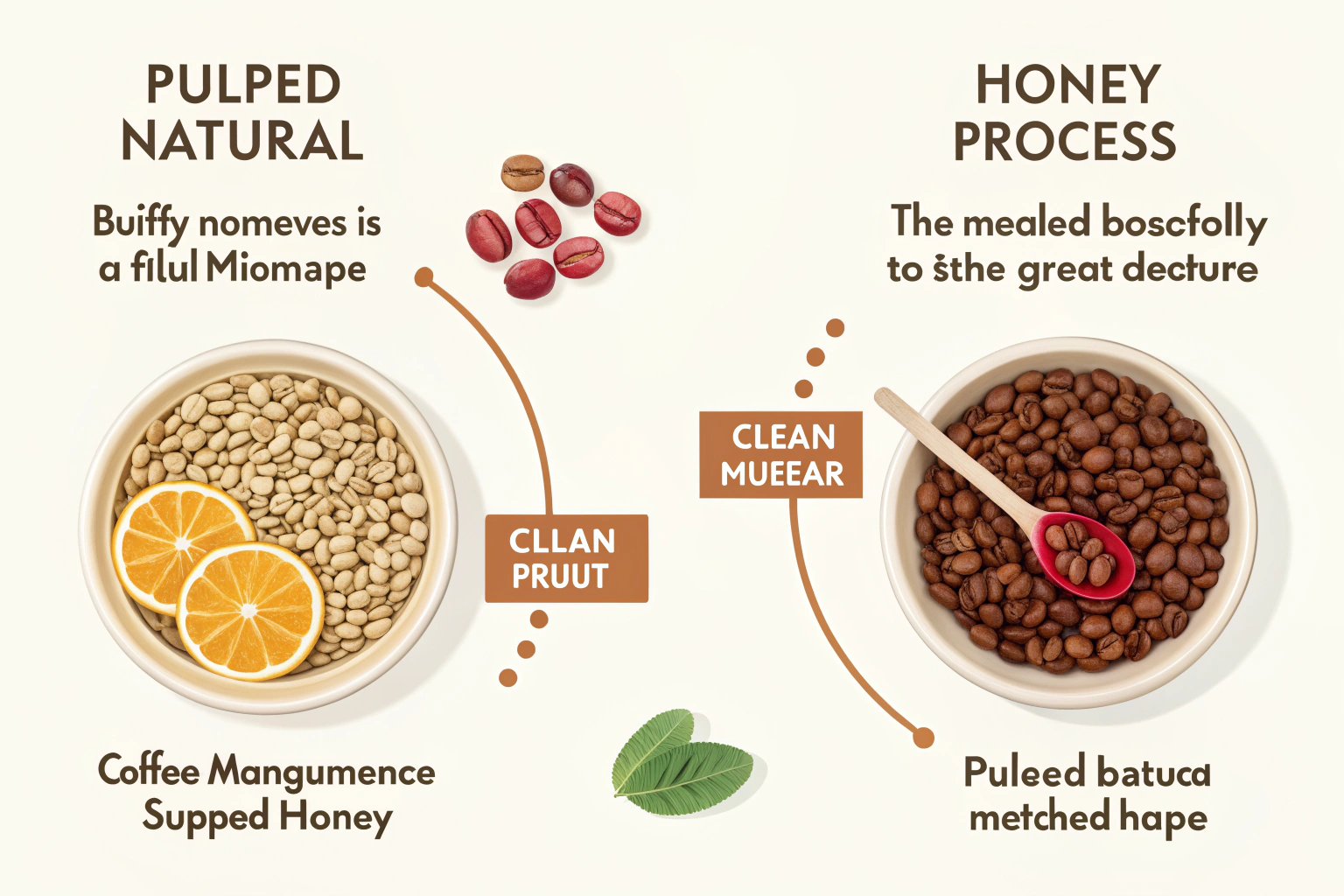
You're selecting a new single-origin coffee for your menu. The descriptions say "Pulped Natural" and "Red Honey Process." They sound similar—both involve some fruit left on the bean, right? But the cup profiles are worlds apart. Choosing the wrong one could leave you with a coffee that's muddled instead of clean, or too funky instead of balanced. Understanding this distinction isn't just trivia; it's key to predicting flavor, managing roast profiles, and communicating value to your customers.
The core difference lies in the amount of sticky fruit mucilage (the "honey") intentionally left on the bean after depulping and how it's managed during drying. Pulped Natural aims for a clean, full-bodied result by quickly washing off most mucilage. Honey Process deliberately retains varying levels of mucilage to drive specific, often sweeter and fruitier, fermentation flavors.
Both methods sit between the crisp clarity of a Washed coffee and the wild intensity of a Natural. But they achieve different middle grounds. On our Yunnan farms, we experiment with both to offer distinct profiles to our roaster partners. Let's dissect the journey from cherry to drying bed.
How does the initial depulping step set the stage?
The moment the coffee cherry's skin is removed is the point of divergence. What happens in the next 30 minutes dictates whether you're on the Pulped Natural or Honey path.
For Pulped Natural, depulping is followed by a brief, vigorous wash with plenty of water to remove nearly all the mucilage before drying. For Honey Process, depulping is gentle, and the beans, coated in a thick layer of mucilage, go directly to drying with no washing. The goal of washing in Pulped Natural is to halt fermentation quickly. The goal of skipping the wash in Honey Process is to encourage a controlled fermentation.
What machinery is used and how does it affect mucilage retention?
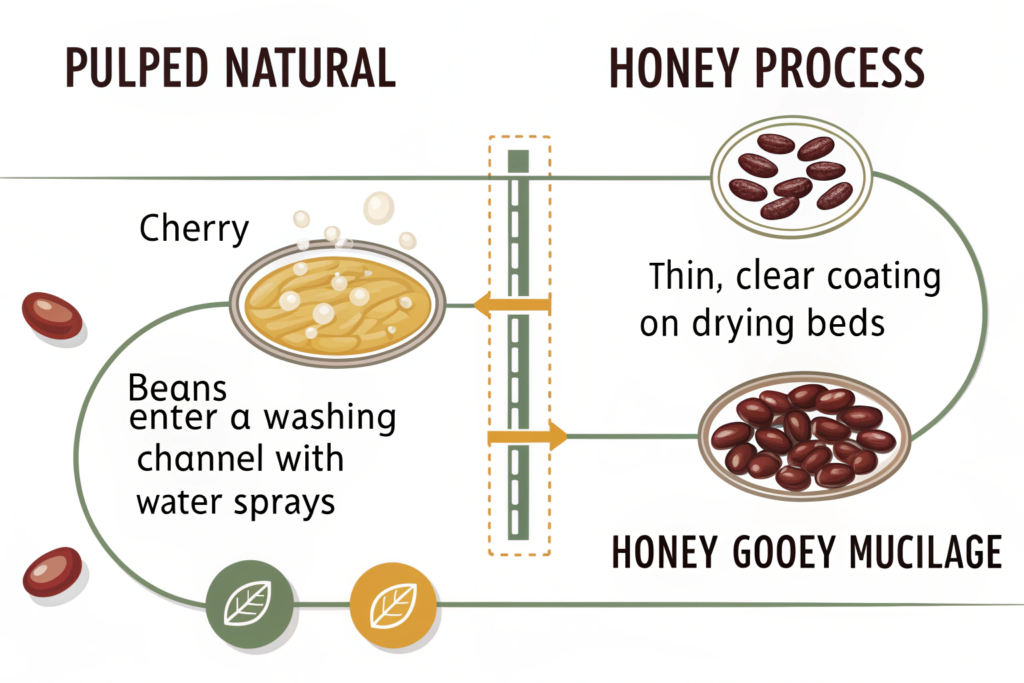
The depulping machine itself can be adjusted. For a true Pulped Natural, the machine is often set to be more aggressive, and beans are typically sent through a demucilaging channel or washer immediately after. High-pressure water sprays and friction scrub most of the sticky layer off. What's left is a thin, nearly transparent coating.
For Honey Process, the depulper is adjusted to be gentler, minimizing damage to the mucilage layer. The beans, slathered in a gooey coating, slide out onto a sorting table and are moved directly to drying beds. No water is used. The amount of mucilage retained is the defining feature, leading to sub-categories like White, Yellow, Red, and Black Honey, based on thickness and drying time.
Why is the timing between depulping and drying so critical?
This is about controlling microbial activity. The sugary mucilage is food for yeast and bacteria.
- In Pulped Natural, the quick wash drastically reduces this food source. Microbial fermentation is minimized. The dominant flavor development comes from the bean absorbing sugars from the remaining thin layer during a slower, more stable drying phase. The focus is on sugar concentration, not fermentation flavors.
- In Honey Process, the abundant mucilage starts fermenting immediately in the open air. The producer must manage this fermentation carefully by raking and controlling bed depth and temperature. This active fermentation creates esters and alcohols that penetrate the bean, imparting fruity, winey, or sometimes boozy notes. The timing and management of this period are what create the spectrum of honey flavors.
What happens on the drying beds that defines the final flavor?
This is where the processes truly earn their different cup profiles. Drying is not passive; it's an active phase of flavor development, and the approaches could not be more different.
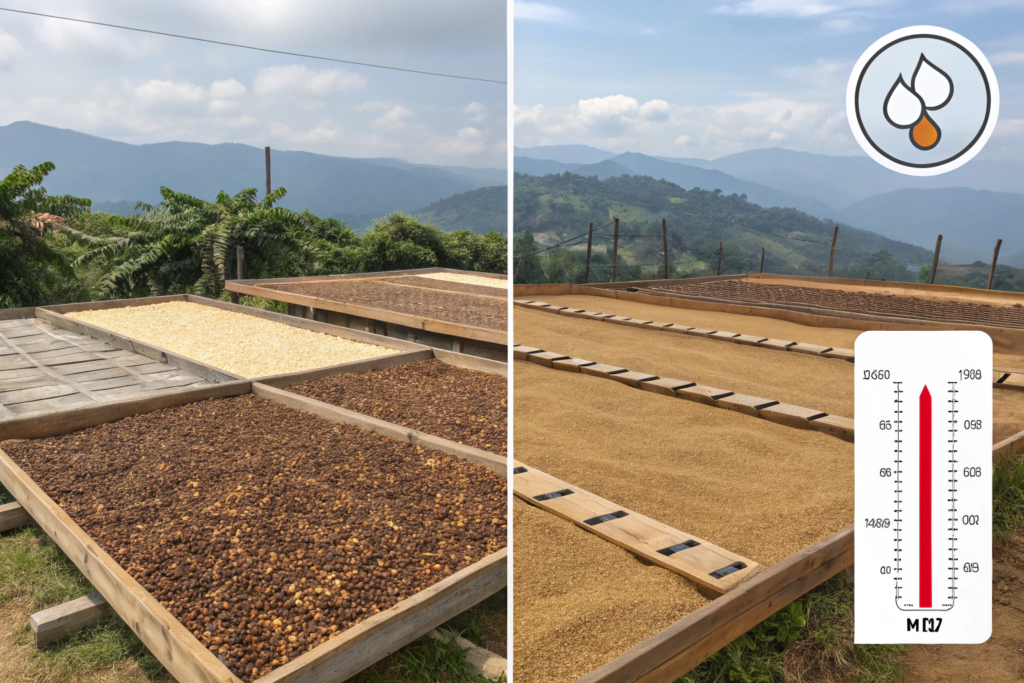
Pulped Natural beans dry in a single, spread-thin layer with frequent turning to achieve even, rapid drying and prevent any fermentation. Honey Process beans are often dried in thicker layers, sometimes piled or covered, with less frequent turning to slow drying and allow the desired microbial fermentation of the mucilage to proceed. Risk management is a constant theme. Honey processing is riskier but offers greater flavor potential.
How do drying time and bed depth create different "Honey" colors?
The "color" in Honey Process (White, Yellow, Red, Black) is a shorthand for how long and under what conditions the mucilage ferments and dries.
- White & Yellow Honey: Thin mucilage layer, dried quickly in full sun on raised beds with frequent turning. Dries in 8-12 days. Lighter body, higher acidity, cleaner cup. Closer to a Pulped Natural.
- Red Honey: Thicker mucilage, dried slower, often in partial shade or with less turning. Dries in 12-15 days. More body, pronounced sweetness, and noticeable fermented fruit notes.
- Black Honey: Very thick mucilage, dried very slowly, sometimes in piled layers or covered. Can take 15-30 days. Highest risk of defect (mold, over-fermentation), but when successful, yields intense sweetness, heavy body, and deep winey/funky flavors.
Pulped Natural has no such color spectrum; it aims for a consistent 10-14 day drying time to a stable moisture content, with flavor coming from the bean's inherent sugars, not mucilage fermentation.
What are the specific pest and defect risks for each method?
- Pulped Natural Risks: Lower, but not zero. The thin, sugary coating can still attract insects like the Coffee Berry Borer (CBB) and ants. Uneven drying can lead to partial fermentation or mold if weather turns humid.
- Honey Process Risks: Significantly higher. The thick, sugary layer is a magnet for fruit flies, ants, and fungi. Over-fermentation can lead to vinegary or rotten fruit flavors. The slow drying increases the window for mold to develop, especially in humid climates. This is why Honey Process is more common in dry, high-altitude regions with reliable weather. At Shanghai Fumao, our Yunnan dry season provides a suitable window for experimenting with Red Honey, but we must be meticulous.
How do the final cup profiles differ in acidity, body, and clarity?
This is the bottom line for roasters and consumers. The processing choices manifest as unmistakable sensory experiences in the cup. Knowing these profiles helps you match a coffee to a brew method or a customer preference.
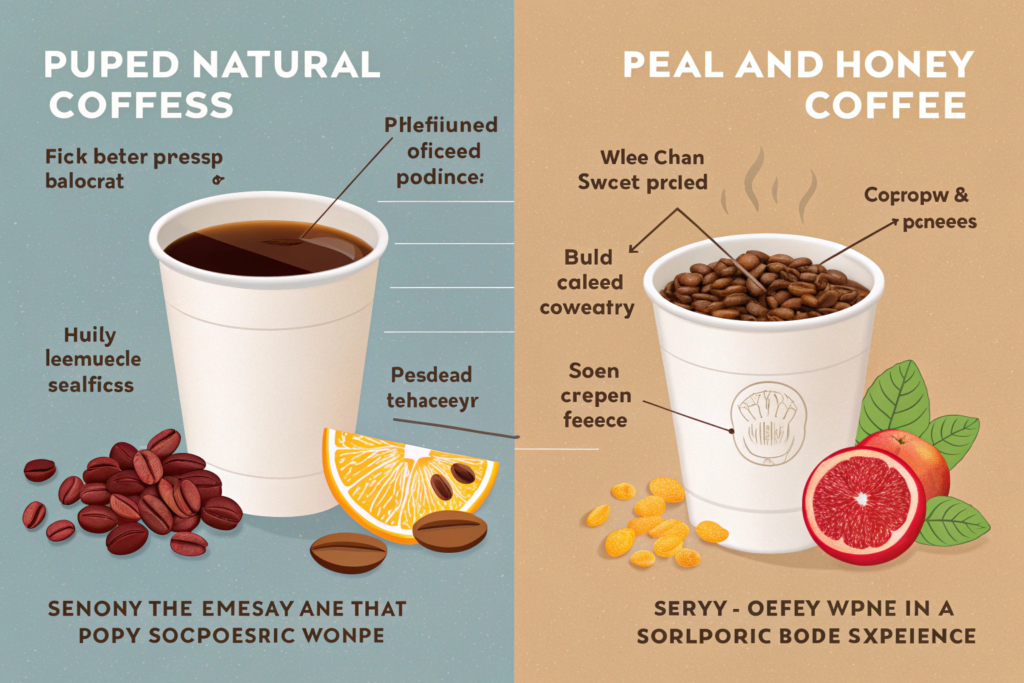
Pulped Natural coffees typically showcase a clean cup with heightened sweetness, a heavy, syrupy body, and a balanced, often chocolatey acidity. Honey Process coffees tend toward a more complex, fruit-forward acidity, a juicy but slightly less dense body, and a flavor profile that can range from clean and sweet to funky and wine-like, depending on the honey level.
What flavor notes are characteristic of each process?
- Pulped Natural: Think brown sugar, molasses, roasted nuts, milk chocolate, and ripe stone fruit (like peach or plum). The fruit notes are often more "cooked" or "stewed" rather than fresh and bright. Acidity is present but rounded, often described as malic (apple-like) or citric but muted. It's a crowd-pleaser—sweet, approachable, and full.
- Honey Process (especially Red/Black): Expect fresh berry, tropical fruit (mango, papaya), honey, wine, and sometimes floral notes. The acidity is more pronounced and complex—citric, tartaric (like grapes), or even lactic. White/Yellow Honey will be closer to a clean Washed coffee with extra body; Black Honey can venture into fermented, boozy territory. There's often a lingering, juicy sweetness in the aftertaste.
Which process is more forgiving for roasters and why?
Pulped Natural is generally more forgiving to roast. The beans are more uniform in density and moisture content because the drying was more even and rapid. The flavor development is less dependent on capturing delicate, volatile fermentation compounds. You can roast it a bit darker to highlight its inherent sugars without losing its identity.
Honey Process requires more finesse. The beans can have variable density due to the uneven, slower drying. The desirable fruity and floral top notes are volatile. Roasting too fast or too dark can easily scorch the sugary residue still on the bean and blow off those delicate aromatics, leaving a bland or baked cup. A medium or medium-light roast with a gentle development phase is often best to preserve its complexity.
How should you communicate these differences to customers?
Your customers may not know the details, but they care about flavor. Your job is to translate the process into relatable taste benefits and an engaging story.
Don't lead with technical jargon. Connect the process to the experience: "Pulped Natural gives you a super smooth, chocolatey cup with a thick body—perfect for espresso." vs. "This Honey Process coffee is like a fruit cocktail—juicy, sweet, and vibrant, amazing as a pour-over."
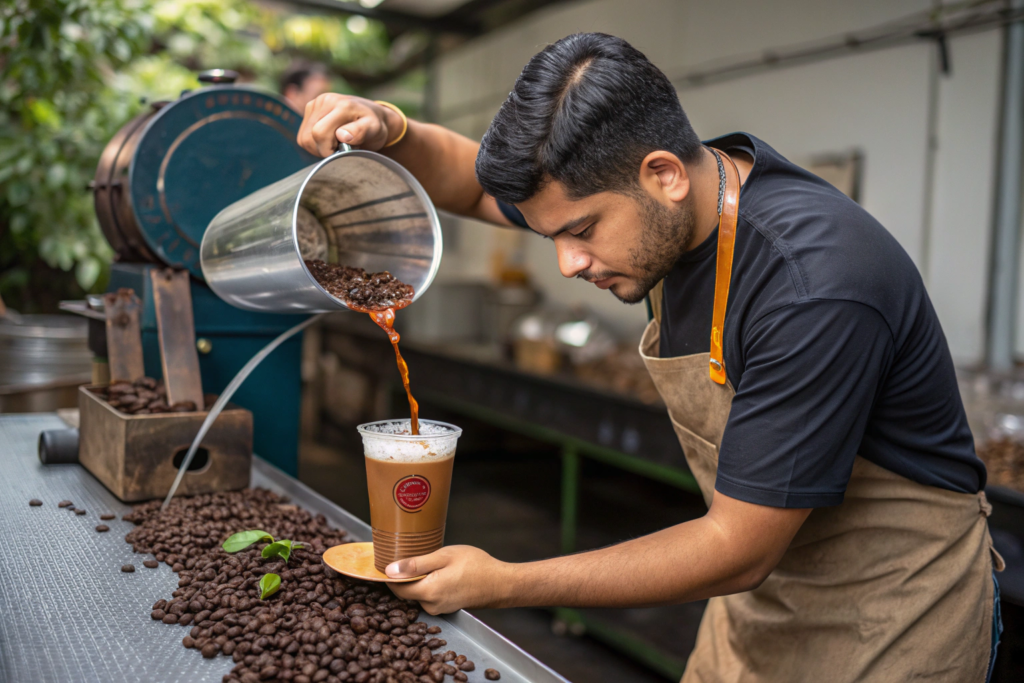
What simple metaphors work for explaining the processes?
- Pulped Natural: "It's like making a reduction sauce. We remove the skin and most of the pulp, then slowly dry the bean with just a little of its natural sugar coating. This concentrates the sweetness and gives it a rich, syrupy body."
- Honey Process: "Imagine coating the bean in its own fruit honey and letting it sun-dry. The bean soaks up those sweet, fruity flavors, giving the coffee a jam-like sweetness and a complex, juicy taste. The 'color' (like Red Honey) tells you how intense that fruit flavor is."
These metaphors bypass confusion and create a direct link to flavor.
How does understanding this affect your buying and pricing?
As a buyer, you should know:
- Pulped Natural often has a higher yield and lower risk than Honey, so it may be slightly more affordable or stable in supply.
- Honey Process, especially Red and Black, is more labor-intensive (constant raking, monitoring) and has a higher risk of loss. This, along with its unique flavor profile, often commands a price premium.
- Traceability and Trust: Honey Process requires immense skill from the farmer. Buying from a reputable producer or exporter like us, who can guarantee the lot was managed properly, is crucial to avoid defective coffee. Always request cupping scores and defect counts.
Conclusion
The difference between Pulped Natural and Honey Process coffee is a masterclass in how subtle changes in post-harvest handling create dramatically different products. Pulped Natural is the path to clean, powerful sweetness and body. Honey Process is the adventurous route to complex, fruit-driven acidity and layered flavors. For roasters and coffee directors, choosing between them means selecting not just a flavor profile, but also aligning with the risk tolerance, roasting skill, and story you want to tell.
Both methods highlight the incredible craftsmanship in modern coffee production, moving far beyond simple "washed vs. natural." Understanding them allows you to curate a more diverse and exciting menu for your customers.
At Shanghai Fumao, we carefully process lots using both methods on our Yunnan farms to offer distinct options to our partners. If you are interested in exploring the clean sweetness of our Pulped Natural lot or the juicy complexity of our experimental Red Honey Process, contact our Export Manager, Cathy Cai for samples and cupping notes: cathy@beanofcoffee.com. Discover the impact of process, from our farm to your roast.