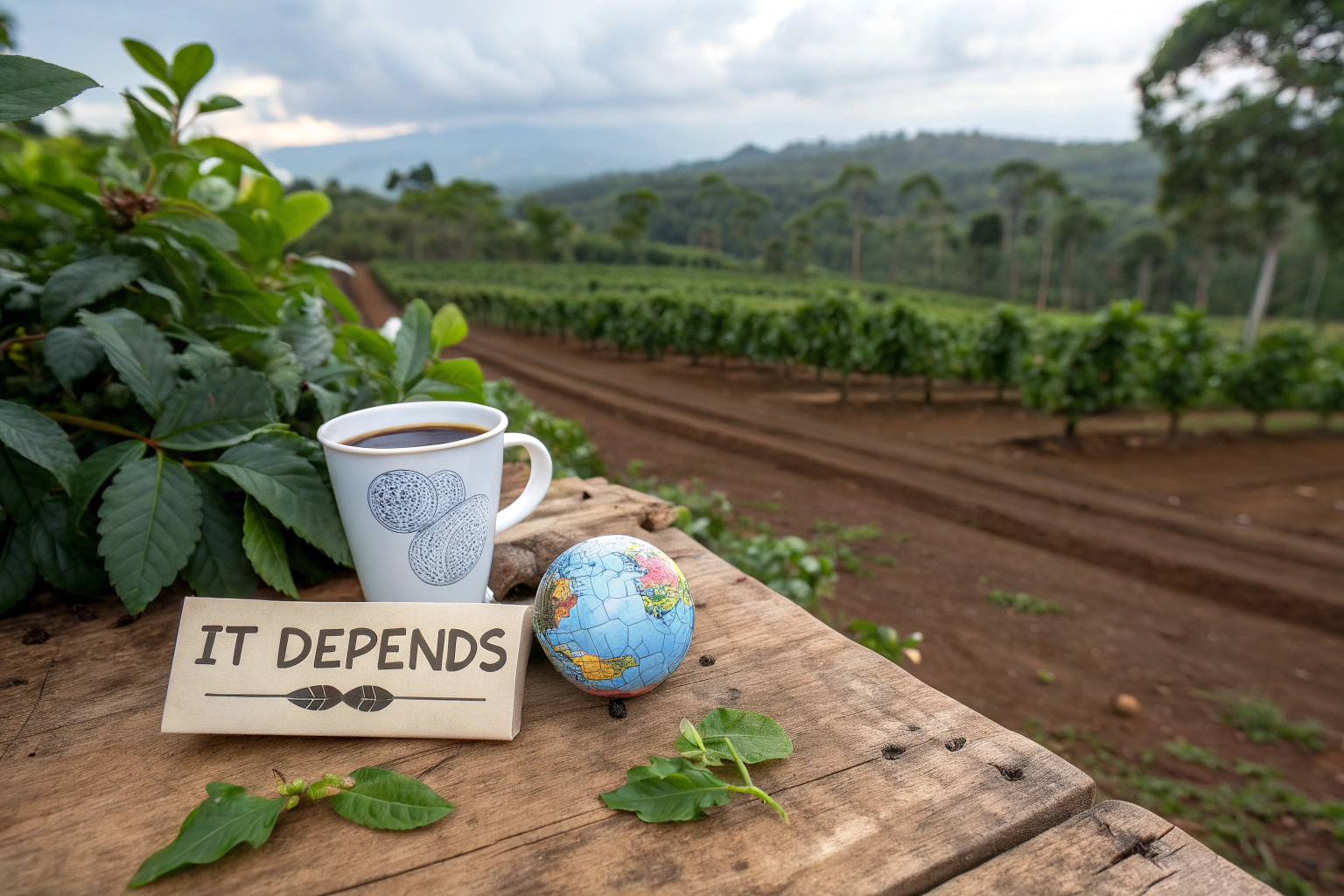
I run BeanofCoffee, a coffee exporter in Yunnan, China. We own more than 10,000 acres in Baoshan City. We sell Catimor, Arabica, and Robusta. We ship to North America, Europe, and Australia. Buyers like Ron ask me about price, quality, and shipping. But a new question is coming up more often. They ask about the environment. Ron is 44. He owns a company in America. He cares about price and timeliness. He also cares about what his customers think. They want to know if their coffee is green. Not the color. The footprint. So he asked me a hard question. What is the ecological footprint of a cup of Yunnan coffee? I did not have a simple answer. So I did the work. I measured. I asked. I learned. And I want to share what I found.
The ecological footprint of a cup of Yunnan coffee includes water use, carbon emissions, land use, biodiversity impact, and waste. A single cup can use 100 to 200 liters of water across growing, processing, and brewing. It can emit 50 to 200 grams of CO2 equivalent depending on farming, shipping, and roasting. It can affect soil, shade trees, and wildlife. Yunnan coffee often has a smaller footprint than many people think because it is grown at high altitude, shipped from a nearby port, and increasingly farmed with shade and water-saving methods. But the footprint is not zero. It depends on how the coffee is grown, processed, shipped, and brewed. So the real answer is: it depends. And that is good news. Because what depends on choices can be improved.
So, what does this mean for you? It means you should not accept a simple green label. You should ask questions. You should look at the data. You should support the farmers and exporters who are doing the work. At BeanofCoffee, we are not perfect. But we measure. We share. We improve. Let me show you what the footprint looks like, step by step.
How Much Water Does Yunnan Coffee Use?
Water is the first footprint. And it is the one people miss. Most coffee talk focuses on carbon. But water is local. And local water matters more. A cup of coffee takes water to grow. It takes water to process. It takes water to brew. In Yunnan, water is not always abundant. The dry season can be long. The mountain springs can run low. So water use is not just an environmental issue. It is a business risk. I have seen a mill run out of water in a dry year. The cherries waited. The quality dropped. The buyer was upset. That is when I started measuring.
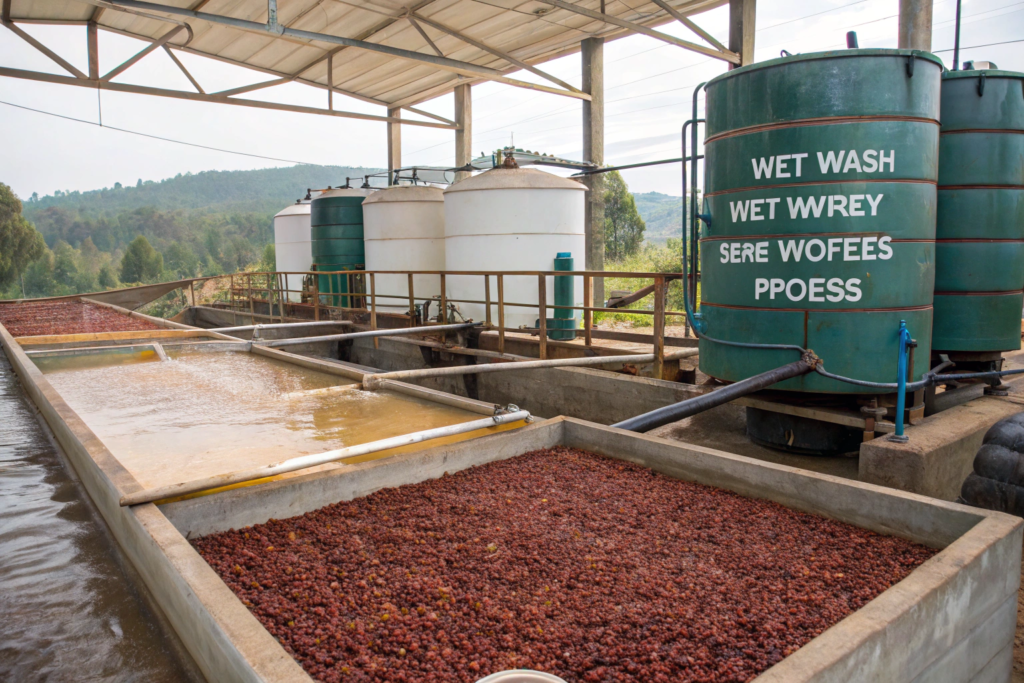
Yunnan coffee water use depends on the processing method. A full wet wash can use 10,000 to 20,000 liters per ton of cherries. A semi-wash can use 5,000 to 10,000 liters. A honey process can use 1,000 to 3,000 liters. A natural process can use almost none. So the method matters more than the farm size. A small mill with a wet wash can use more water than a large mill with a natural process. The key is to measure your own method and compare it with better options. Then improve.
Another way to look at this is to compare it to laundry. Washing one shirt by hand uses less water than running a full machine. But if you wash ten shirts by hand with the tap running, you waste more than the machine. Coffee works the same way. The method and the discipline decide the water use. So do not guess. Measure. Then improve.
Does Wet Processing Waste Water in Yunnan?
Yes, wet processing can waste water. I have seen mills where water runs all day. I have seen pipes leak. I have seen tanks overflow. I have seen waste water flow into rivers. That is the old way. The new way is different. The new way measures every liter. The Water Footprint Network explains how water is used in food production. The UN-Water shares global water facts. I use these when I train our mill team. A clean water source is not enough. The tanks must be clean. The pipes must be clean. The workers must follow a process. A small mistake can waste thousands of liters. So we train. We check. We log. That is how we reduce waste.
I also tell buyers to ask about water use. If a supplier cannot provide a number, that is a warning. It does not mean the supplier is bad. It means the supplier is not measuring. A supplier who does not measure cannot improve. A supplier who cannot improve may face water risk later. So ask the question. The answer tells you a lot.
How Can Farmers Reduce Water Use?
Farmers can reduce water use in several ways. Eco-friendly pulpers use less water. Mechanical demucilagers can replace fermentation and washing. Recirculating systems can reuse water. Dry fermentation can use almost no water. Honey processing uses less water than full wash. The Global Coffee Platform shares sustainable coffee practices. The Rainforest Alliance explains sustainability standards. I use these when we review mill upgrades. A simple system can cut water use by 30% or more. That is a big win for a small cost. So start with a water audit. Find the biggest loss. Fix that first. Then move to the next one. That is how you save water without losing quality.
For Ron, this means he should ask his supplier about water use. He should ask about the method. He should ask about recycling. A supplier with a plan is a safer supplier. A supplier without a plan is a risk. So ask. Then decide.
What Is the Carbon Footprint of Yunnan Coffee?
Carbon is the second footprint. And it is the one people talk about most. But carbon is tricky. It is global. It does not matter where the emissions happen. They all count. A cup of coffee emits carbon at every step. The farm. The mill. The truck. The ship. The roaster. The brewer. The waste. Each step adds a little. Together, they add up. I have measured our own chain. I was surprised by what I found. The biggest part was not the ship. It was the farm. And the second biggest part was the brew. That changed how I think about carbon.
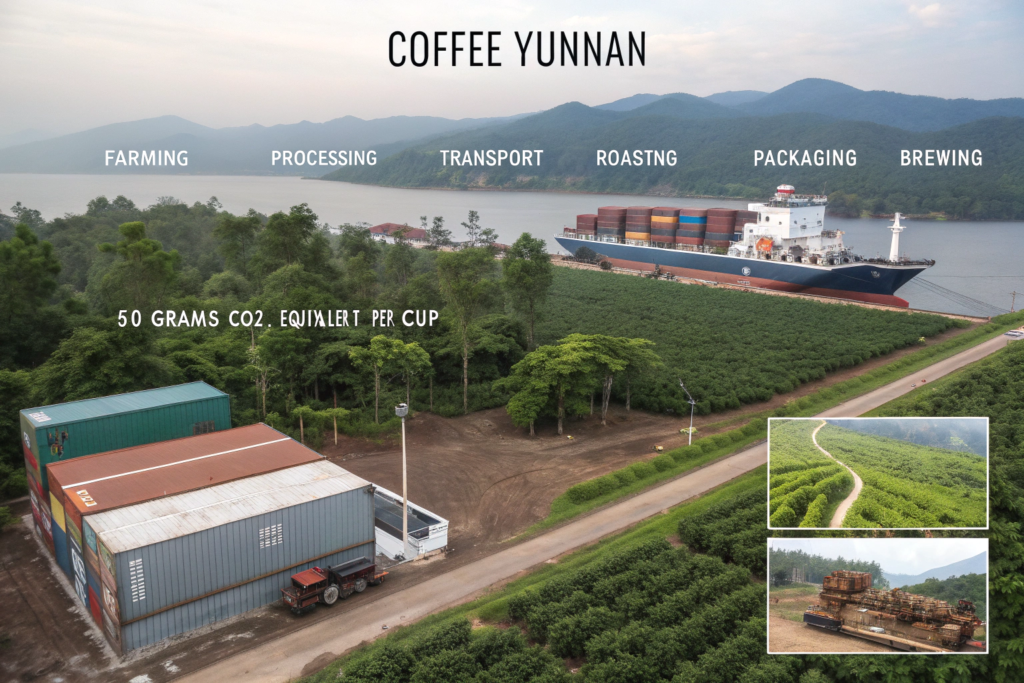
The carbon footprint of Yunnan coffee depends on farming, processing, transport, roasting, packaging, and brewing. A cup can emit 50 to 200 grams of CO2 equivalent. The farm often produces the largest share because of fertilizer, fuel, and land use change. Transport is smaller than many people think because coffee travels by ship, which is efficient per ton. Roasting and brewing depend on the energy source. A gas roaster and an electric brewer have different footprints. So the total depends on the whole chain. Not just one step.
So, what does this mean for you? It means you should not focus on one step. You should look at the whole chain. A coffee shipped from China may have a smaller footprint than a coffee trucked across a continent. A coffee roasted with renewable energy may have a smaller footprint than one roasted with coal power. So ask about the whole chain. Then compare. That is how you find the real number.
How Does Shipping Coffee Affect Carbon Emissions?
Shipping coffee affects carbon emissions less than many people think. Ocean freight is efficient. A large vessel can move a container across the ocean with relatively low emissions per ton. The International Maritime Organization tracks shipping emissions and rules. The Clean Cargo initiative shares shipping emissions data. I use these when we compare routes. A direct route has lower emissions than a transshipment route. A full container has lower emissions per bag than a partial container. So the route and the load factor matter. A well-packed container is a greener container. That is one reason we optimize pallet configuration. It saves money and carbon.
I also tell buyers to ask about the route. A direct sailing from Shenzhen to Los Angeles may have a smaller footprint than a route through Singapore. So compare the routes. Then choose. That is how you reduce carbon without losing time.
Can Shade Trees Reduce Carbon Footprint?
Yes, shade trees can reduce carbon footprint. Trees store carbon. They also cool the farm. They reduce water stress. They support biodiversity. The FAO Land & Water shares global water and agriculture data. The World Wildlife Fund coffee page explains coffee and environmental risks. I use these when we plan our own shade strategy. A shade-grown farm can store more carbon than a full-sun farm. It can also produce a better cup. So shade is not just a carbon tool. It is a quality tool. That is a rare combination. So use it. Then measure it.
For Ron, this means he should ask about shade. A supplier with shade trees is a supplier with a smaller footprint. A supplier without shade may have a larger one. So ask. Then support.
How Does Coffee Farming Affect Yunnan's Biodiversity?
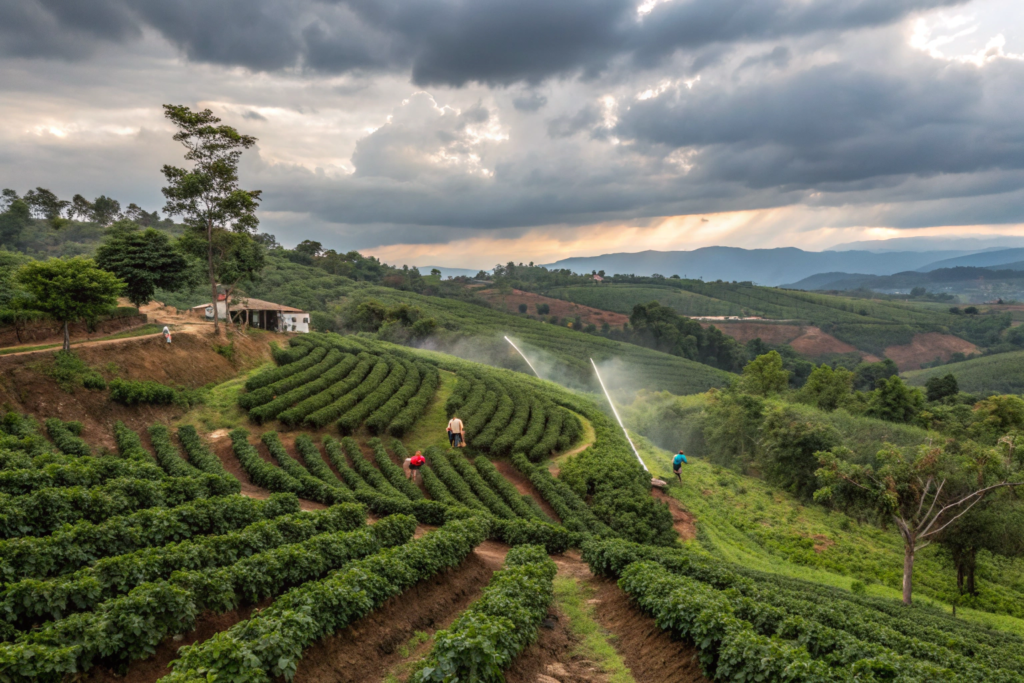
Biodiversity is the third footprint. And it is the one people forget. Carbon and water get the headlines. But biodiversity is the foundation. Without pollinators, without soil life, without birds and insects, the farm does not work. Yunnan is a biodiversity hotspot. It is home to many species. Coffee can help or hurt those species. It depends on how the farm is managed. A shade farm with native trees supports wildlife. A full-sun monoculture does not. So the choice matters. I have seen both. The shade farms are alive. The full-sun farms are quiet. That difference is the footprint.
Coffee farming affects Yunnan's biodiversity through shade management, pesticide use, soil health, and habitat connectivity. Shade-grown coffee with native trees supports birds, insects, and soil life. Full-sun monoculture reduces habitat and increases chemical use. Pesticides can harm pollinators and beneficial insects. Soil erosion can damage streams and rivers. So the farming method matters. A farm that protects biodiversity is a farm that protects its own future. A farm that ignores biodiversity may face pest problems, soil loss, and lower yields over time.
So, what does this mean for you? It means you should ask about the farm. You should ask about shade. You should ask about pesticides. You should ask about soil. A supplier who knows these answers is a supplier who cares. A supplier who does not may be cutting corners. So ask. Then decide.
Does Shade-Grown Coffee Help Birds and Wildlife?
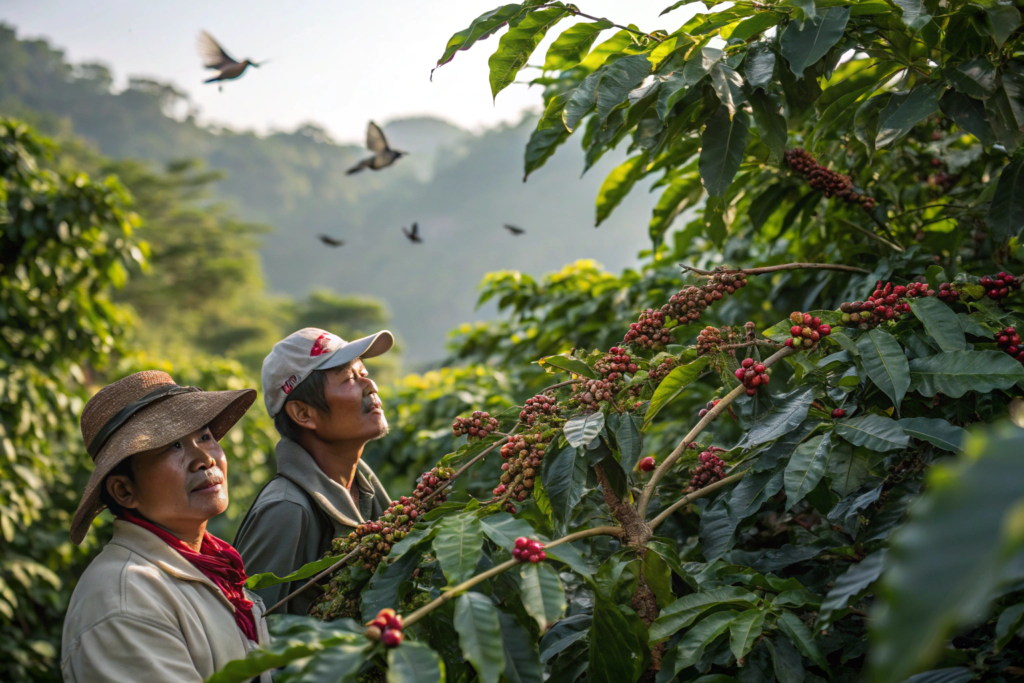
Yes, shade-grown coffee helps birds and wildlife. Trees provide habitat. They provide food. They provide shelter. The Smithsonian Migratory Bird Center shares research on coffee and birds. The Audubon Society explains how shade coffee supports migratory birds. I use these when I talk to buyers about biodiversity. A shade farm can host dozens of bird species. A full-sun farm may host only a few. That difference is measurable. It is also marketable. Buyers who care about birds will pay more for shade coffee. So shade is not just good for the environment. It is good for business. So use it. Then tell the story.
I also tell buyers to ask for bird-friendly certification. The Smithsonian Bird Friendly program certifies shade coffee. It is a strong standard. A supplier with this certification is a supplier who takes biodiversity seriously. So ask. Then support.
How Does Monoculture Farming Hurt Biodiversity?
Monoculture farming hurts biodiversity by removing habitat. A full-sun coffee farm has no trees. It has no shade. It has no homes for birds. It has no food for insects. It may use more pesticides. It may erode more soil. The Convention on Biological Diversity shares global biodiversity data. The International Union for Conservation of Nature tracks species and habitat loss. I use these when we plan our own farm strategy. A monoculture farm may produce more coffee in the short term. But it may fail in the long term. Pests build up. Soil loses nutrients. The farm becomes dependent on chemicals. That is not sustainable. So diversity matters. Even on a coffee farm. Especially on a coffee farm.
For Ron, this means he should avoid suppliers who use full-sun monoculture. He should look for shade. He should look for diversity. That choice supports biodiversity. It also supports quality. So choose shade. Then enjoy the cup.
Can Yunnan Coffee Be Sustainable at Scale?
Scale is the final question. A small farm can be sustainable. A large farm can be sustainable. But can the whole Yunnan coffee industry be sustainable? That is the real challenge. I have seen progress. I have also seen problems. The industry is growing. The demand is rising. The pressure on water, land, and labor is increasing. So the answer is not simple. But I believe it is possible. With the right methods. With the right support. With the right buyers. Yunnan can grow coffee without destroying the place that makes it special.
Yunnan coffee can be sustainable at scale if farmers adopt shade growing, water-saving processing, soil conservation, and fair labor practices. It also requires buyer support, certification, training, and long-term contracts. The challenges include climate change, water scarcity, youth migration, and price volatility. But the opportunities are real. Yunnan has high altitude, good soil, and a growing reputation. With the right investment, it can become a model for sustainable coffee. Without it, it may repeat the mistakes of other origins. So the choice is now.
So, what does this mean for you? It means you have a role. You can support sustainable Yunnan coffee by buying it. By paying a fair price. By signing long-term contracts. By asking for data. By telling the story. Your choices shape the industry. So choose well. Then watch the industry improve.
What Certifications Support Sustainable Yunnan Coffee?
Several certifications support sustainable Yunnan coffee. Organic certification supports soil and water health. Fairtrade supports fair prices and community development. Rainforest Alliance supports sustainability and shade growing. Bird Friendly supports biodiversity. The SGS organic certification page shows how third-party verification works. The Intertek organic certification page shows testing and certification services. I use these when we prepare our export files. A certification is not a magic answer. But it can open doors. It can provide training. It can provide market access. So it is worth considering. For buyers, it is proof. For farmers, it is a tool. Both sides win.
I also tell buyers to check the certificate number with the issuing body. A fake certificate may look real. But the number will not match. So call or email the issuer. It takes a few minutes. It can save thousands. So do it. Do not skip it.
How Can Buyers Support Sustainable Farming?
Buyers can support sustainable farming by paying fair prices, signing long-term contracts, providing technical training, sharing market data, and telling the farmers' story to consumers. The Trade.gov site offers export and import guidance. The Global Coffee Platform shares sustainable sourcing practices. I use these when we structure our own partnerships. A fair price is not a cost. It is an investment in quality. A long-term contract is not a risk. It is a shield against volatility. So support is not charity. It is good business. So do it. Then benefit from it.
For Ron, this means he should ask his supplier what they do for sustainability. He should ask about water. He should ask about shade. He should ask about training. A supplier with a plan is a supplier with a future. A supplier without one is a risk. So ask. Then decide.
Conclusion
The ecological footprint of a cup of Yunnan coffee is not one number. It is a set of numbers. It includes water, carbon, land, biodiversity, and waste. It depends on how the coffee is grown, processed, shipped, roasted, and brewed. It can be large. It can be small. It can be improved. Yunnan coffee has real advantages. High altitude. Shade potential. A short route to Asian ports. A growing culture of quality. But it also has real challenges. Water scarcity. Climate change. Youth migration. Price swings. The future depends on choices. The choices farmers make. The choices exporters make. The choices buyers make. If we choose well, Yunnan coffee can be a model for sustainable coffee. If we choose poorly, it can become another story of depletion. I choose well. I hope you do too.
At BeanofCoffee, we are working to reduce our footprint. We own more than 10,000 acres in Baoshan City, Yunnan. We export Catimor, Arabica, and Robusta. We work with large buyers, brand owners, distributors, and trading companies. We measure water. We plant shade trees. We share data with buyers. We are not perfect. But we are honest. If you want to support sustainable Yunnan coffee, please contact Cathy Cai at cathy@beanofcoffee.com. She will help you with samples, pricing, specifications, and sustainability data. You can also visit BeanofCoffee to learn more. Let us build a better coffee future together.