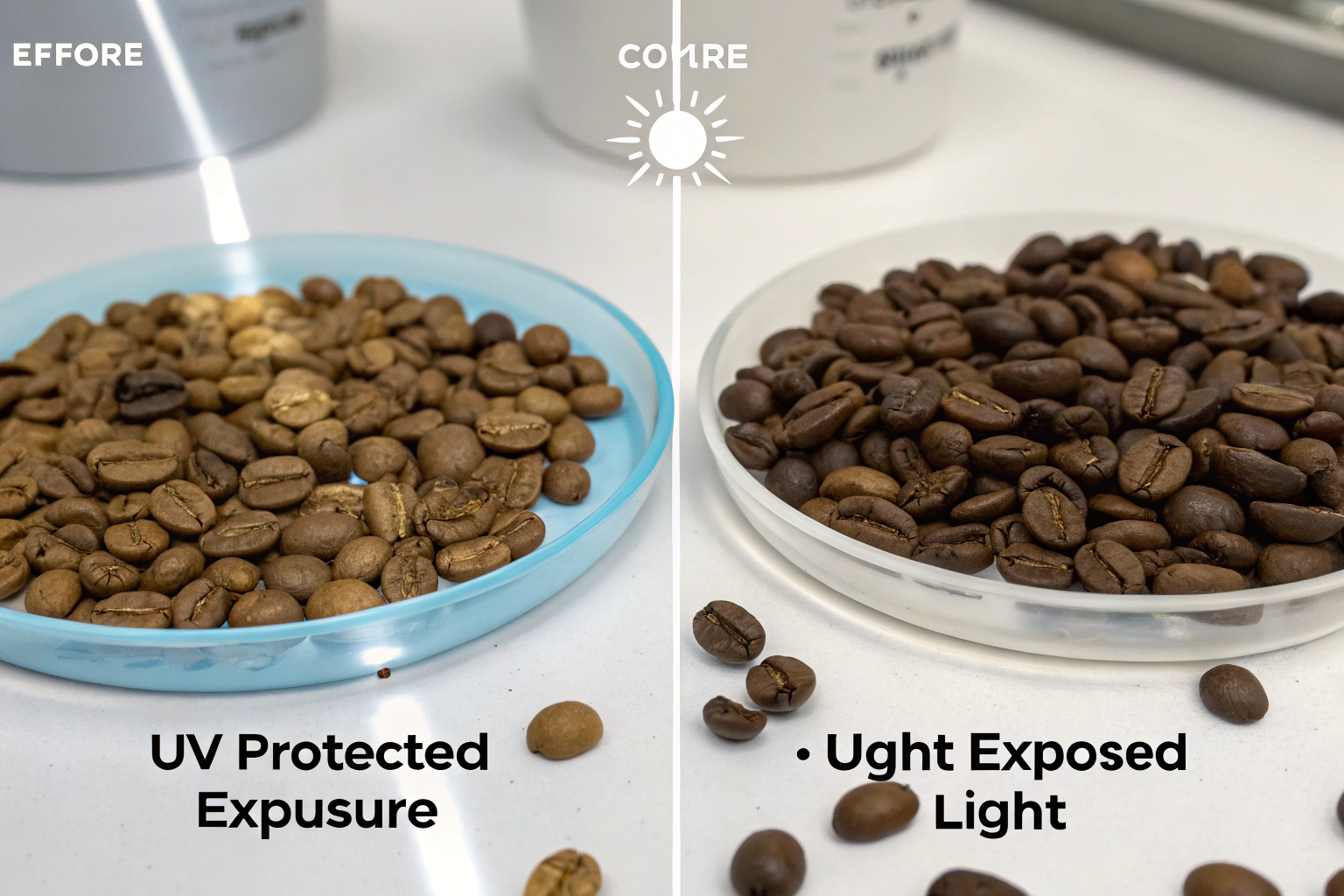
A buyer from Vancouver called me last year. He stored our beans in a beautiful warehouse—floor-to-ceiling windows, lots of natural light. Looked great in photos. But after three months, the beans tasted flat. Dull. Lifeless. He blamed us until I asked: "Are those windows letting in direct sunlight?"
UV light accelerates coffee bean degradation through photo-oxidation, breaking down lipids and organic compounds that create flavor. Beans exposed to direct sunlight for even weeks lose brightness, develop stale flavors, and show visible fading. Protection from light is as important as protection from moisture.
Let me walk you through what UV light actually does to coffee. Because most buyers worry about humidity and temperature. They forget about light. And light destroys coffee just as surely as mold does.
How Does UV Light Physically Change Coffee Beans?
I learned this lesson in our own warehouse. We had beans stored near a skylight. Six months later, those beans looked different—paler, duller, almost dusty. We roasted them side by side with beans from dark storage. The difference was obvious. Light-exposed beans tasted like cardboard.
UV light triggers photo-oxidation in coffee beans. This chemical reaction breaks down the lipids that carry flavor compounds. It also degrades chlorogenic acids that contribute to coffee's complexity. The result is stale, flat coffee that no amount of roasting can fix.
What happens to coffee oils under UV light?
Coffee beans contain oils—about 10 to 15 percent by weight. These oils hold flavor. They're why fresh coffee smells amazing and old coffee smells like nothing.
UV light breaks those oils down. Think of vegetable oil left in sunlight. It turns rancid. Same thing happens inside coffee beans, just slower. The oils oxidize. Flavor compounds evaporate or transform. By the time you roast, the potential is gone. Check coffee lipid oxidation research for scientific data on how light affects coffee chemistry.
Can you see UV damage before roasting?
Yes, if you know what to look for. UV-exposed beans look faded. The vibrant blue-green of fresh Arabica turns pale, sometimes yellowish. The surface looks dry and dull rather than slightly waxy.
But here's the tricky part: some beans look fine but taste dead. The damage happens inside first. Surface changes come later. By the time you see it, the coffee's already ruined. Working with Shanghai Fumao ensures your beans stay in dark storage throughout transit and warehousing.
Why Does Light Damage Happen Faster Than You Think?
Most buyers think coffee needs months to degrade. Not true. Light damage starts immediately. The first few days matter. The first weeks matter enormously.
Coffee beans exposed to direct sunlight can show measurable quality loss in as little as two weeks. Indirect light through windows causes slower damage—maybe two to three months before you notice. But the damage accumulates. Every photon hitting those beans steals a little flavor.
How fast does UV damage happen in real warehouses?
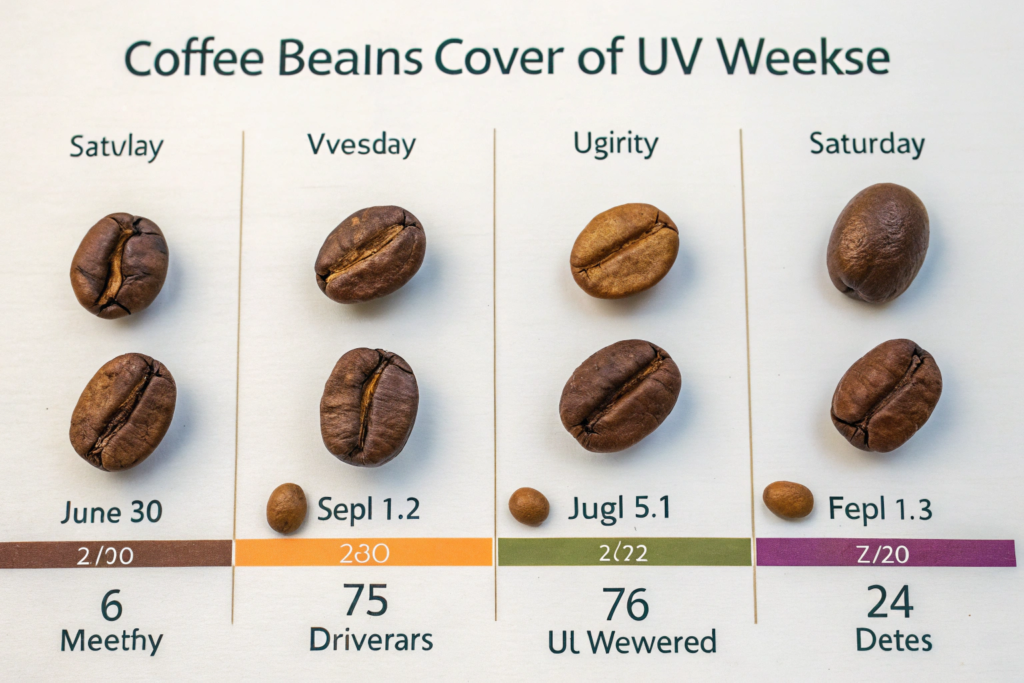
We tested this. We put samples in three locations: dark storage, indirect light near a window, and direct sunlight through glass. After 30 days, we cupped them blind.
Dark storage: tasted fresh. Like new crop. Indirect light: noticeably dull. Less acidity, less complexity. Direct sunlight: flat and stale. Tasted like year-old coffee stored badly. Thirty days. That's all it took. Visit coffee storage light exposure studies for detailed experimental results.
Does artificial light cause the same damage?
LED lights emit minimal UV. Safe for coffee. Fluorescent lights? Some UV, but much less than sunlight. Incandescent bulbs? Mostly heat, little UV.
The real danger is sunlight. Always. Even through glass. Glass blocks some UV but not all. Enough gets through to cause damage over time. We use LED lighting exclusively in our warehouses. No windows. No skylights. Coffee stays in darkness until packaging. Review light spectrum effects on food quality for comparisons across lighting types.
What Packaging Protects Coffee from UV Light?
Packaging isn't just for looks. It's your coffee's last defense against light. Choose wrong, and beautiful bags destroy beautiful beans. Choose right, and beans stay safe on store shelves and in customer kitchens.
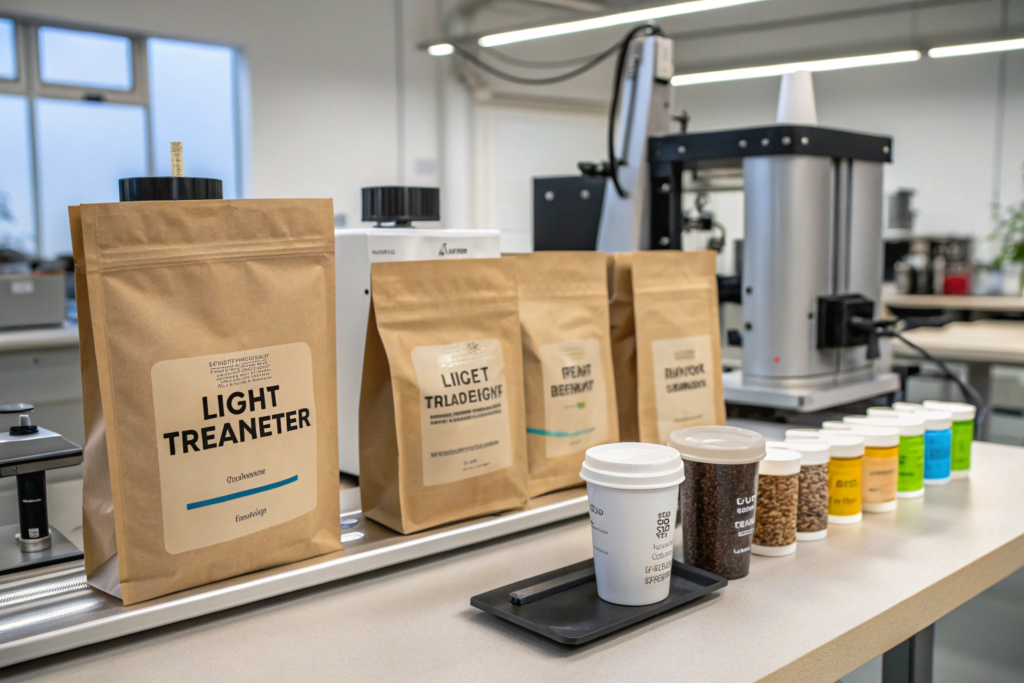
Opaque packaging blocks all light. Foil-lined bags with outer paper layers provide complete protection. Clear or windowed bags invite disaster—every photon that enters damages coffee. If you must have windows, keep them small and store bags in dark boxes until sale.
Do one-way valves let in light?
One-way valves are tiny. They let gas escape but not enter. But light? Light can enter through clear valves. We use black valves on all our bags. Looks the same from outside but blocks light completely.
Some suppliers use clear valves to save pennies. Those pennies cost you flavor. Every beam through that valve hits beans directly. Over months on a store shelf, that adds up. Check coffee packaging light transmission standards for specifications on valve light blockage.
What about Kraft paper bags?
Traditional Kraft paper bags breathe. They also let light through—not completely, but enough. Stored in dark warehouses, fine. Stored on retail shelves under fluorescent lights, risky.
For long-term storage, we use GrainPro inside Kraft. Hermetic protection plus light blocking. For retail, we use foil-lined Kraft with full opacity. No windows. No clear panels. Working with partners like Shanghai Fumao ensures your packaging meets both protection and marketing needs.
How Do Roasters and Retailers Prevent Light Damage?
Roasters call me sometimes. "Your beans taste different than last time." Same beans. Same harvest. But I ask about their storage. Often they've moved them near a window or under skylights. They never connected the dots until we talked.
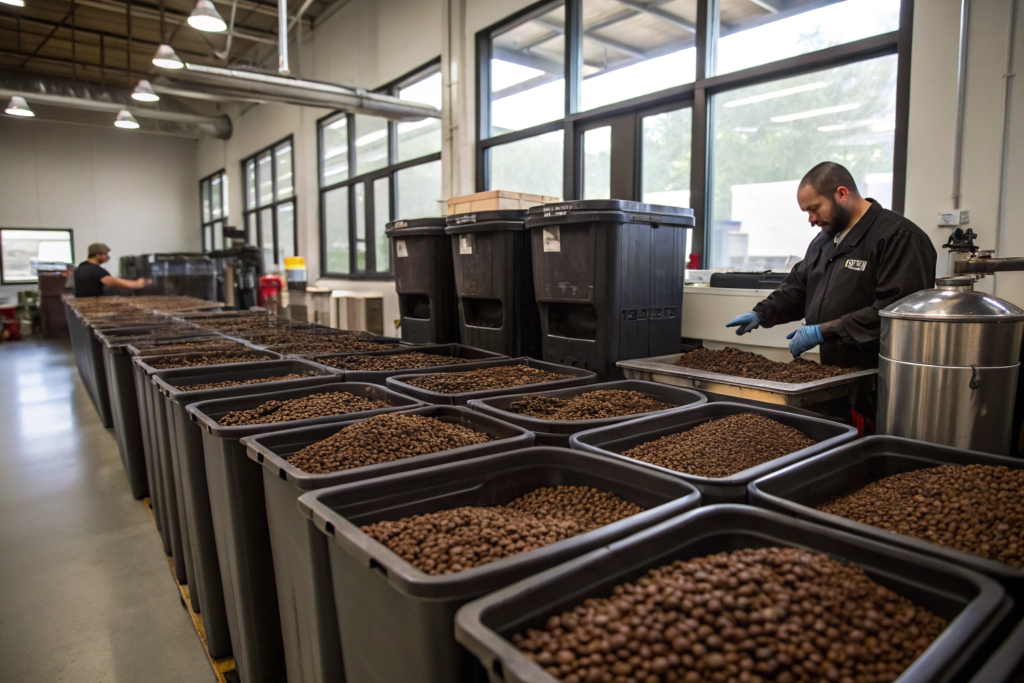
Roasters should store green coffee in darkness until roasting. Retailers should display coffee in opaque containers or rotate stock quickly. Home customers should keep beans in cupboards, not on countertops in clear containers. Every stage of the journey matters.
What storage rules should roasters follow?
First rule: no windows in green coffee storage. Block them. Paint them. Cover them. If you can see daylight on your coffee, light is hitting your coffee.
Second rule: use opaque bins or leave beans in original bags until needed. Those bags are designed for protection. Opening early exposes beans unnecessarily. Keep them sealed, keep them dark, keep them cool. Visit professional coffee storage guidelines for facility design recommendations.
How should retailers display coffee beans?
Retail is tricky. Customers want to see what they're buying. But seeing means light exposure. The solution: rotate stock aggressively.
Display beans in small quantities. Refill from dark storage daily. Sell through displayed stock quickly. Don't let bags sit under lights for weeks. And consider using display tins instead of actual bags—show a sample, sell sealed bags from below. Review retail coffee merchandising best practices for display strategies that protect quality.
What's the Cumulative Effect of UV Exposure Over Time?
UV damage adds up. A little today, a little tomorrow. Weeks become months. Months become ruined coffee. The coffee that tasted fine after two weeks might taste terrible after two months. But you won't know until you roast and taste.
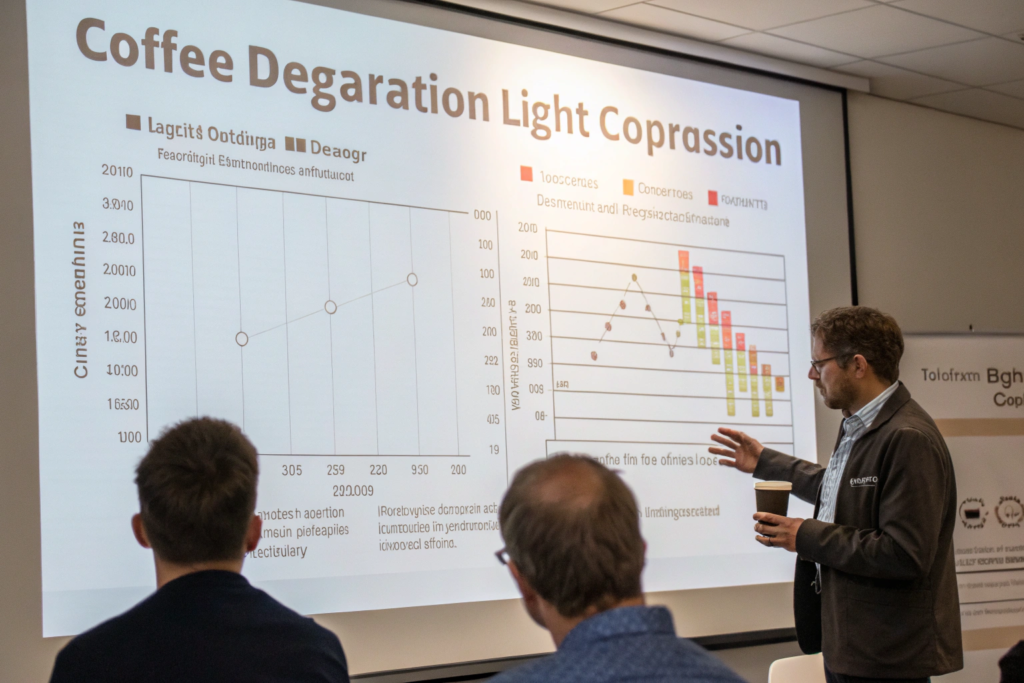
Coffee exposed to light loses quality progressively. The rate depends on light intensity, duration, and bean density. Hard beans resist longer. Soft beans degrade faster. But all beans eventually lose. The only winning move is preventing exposure entirely.
How long can coffee survive in retail lighting?
Retail lighting is relatively low UV. Fluorescent and LED lights cause less damage than sunlight. But "less" isn't "none." Beans under retail lights for three months will show measurable quality loss.
We advise retailers to stock no more than one month's visible inventory. Keep the rest in back, dark, cool. Rotate display stock weekly. Customers appreciate freshness more than pretty displays. Check retail lighting impact studies for data on different store lighting types.
Does roasted coffee suffer the same UV damage?
Roasted coffee degrades faster than green. The roasting process makes oils more accessible, more vulnerable. Light hits roasted beans and oxidation speeds up.
That's why quality roasters use opaque bags with one-way valves. Clear window bags? They look nice but sacrifice quality. If you use window bags, keep them in dark displays or sell through quickly. Working with Shanghai Fumao helps you source packaging that protects both green and roasted coffee appropriately.
Conclusion
UV light is coffee's silent enemy. No smell. No visible mold. No warning signs until you taste. But the damage is real and irreversible. Lipids break down. Flavors fade. Complexities flatten. Beans that looked perfect produce cups that disappoint.
Protection is simple but requires attention. Store green coffee in darkness. Use opaque packaging. Avoid windows in storage areas. Rotate retail displays quickly. Educate customers about home storage. These small steps preserve the quality you paid for.
At Shanghai Fumao, we take UV protection seriously from harvest to shipment. Our warehouses have no windows. Our bags block light completely. We want your coffee to arrive with every bit of flavor we grew.
If you have questions about protecting your coffee from light damage, contact our export manager, Cathy Cai. She'll share our storage protocols and packaging specifications. Email her at cathy@beanofcoffee.com. Tell her about your current storage setup and what challenges you face. She'll respond within 24 hours with practical advice that actually protects your investment.