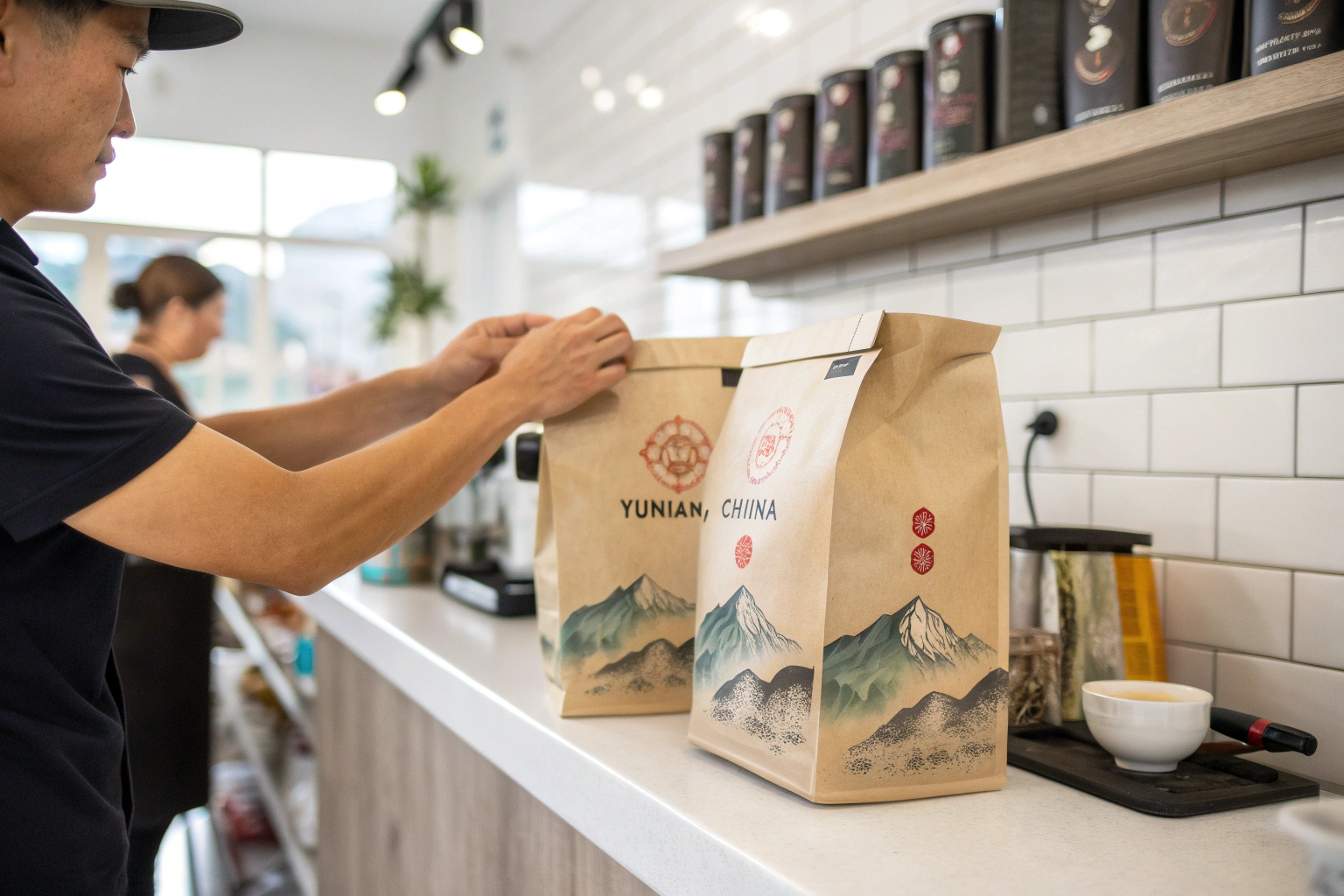
You run a coffee business. You are looking at your menu. You have a Colombian. A Kenyan. An Ethiopian. Maybe a blend. It is a safe lineup. It is what every other roaster in your city has. Your customers are happy enough. But you are not growing. You are competing on price, not passion. You feel the pressure to stand out. To offer something different. But the origins you have not tried feel risky. You see "China" on a spec sheet, and you hesitate. The stigma is still there. The fear of a negative customer reaction is real. You are stuck between playing it safe and becoming invisible.
Adding a China origin coffee line is not a gamble. It is one of the most strategic moves you can make in the current specialty market. The benefits hit every part of your business. Your margins improve because of the direct sourcing advantage. Your brand story becomes instantly unique. Your customer loyalty deepens when they discover a new favorite they cannot get anywhere else. And you position your company as a forward-thinking pioneer, not a follower. At Shanghai Fumao, we have watched roasters go from skeptics to evangelists in a single cupping session. The coffee speaks for itself. The story just seals the deal.
China is not just a new origin. It is a complete reset of the specialty value proposition. You get the quality of a high-end Central American, the clean profile of a washed African, but with a price and a story that breaks the old model. The country that taught the world to drink tea is now growing specialty coffee on those same ancient mountains. That is a headline that stops a customer in their tracks. It is a conversation that starts a sale. It is a cup that breaks the bias. Let me show you exactly what a China line can do for your brand, your bottom line, and your customer relationships.
How Does a China Line Boost My Overall Brand Differentiation?
The specialty coffee market is noisy. Every roaster claims to source the best beans, roast them perfectly, and care deeply about farmers. The words all sound the same. A China origin line cuts through that noise instantly. It is inherently newsworthy. It is a "wait, what?" moment on a shelf full of familiar names. You are not just another roaster with another single-origin. You are the roaster who discovered Yunnan. The one who went where others were afraid to go. This boldness is a core brand attribute that attracts curious, quality-seeking customers.
This differentiation is not just a gimmick. It is built on a solid foundation of quality. When a customer tries your China offering and it tastes clean, sweet, and complex, their surprise turns into admiration. They become a brand advocate. They tell their friends, "You have to try this coffee from China. No, really, it's amazing." That word-of-mouth is priceless. It positions your brand as a trusted guide. You are not just selling them products. You are taking them on a journey of coffee discovery. You are introducing them to the next big thing before it becomes mainstream. This "early adopter" identity is magnetic. It builds a community of enthusiasts around your brand. You stop being a commodity supplier and become a curator of unique experiences. For more on how unique product offerings drive brand loyalty, the Harvard Business Review has published extensive research on differentiation strategy. A truly distinctive product is a defensible competitive advantage.
Why Is "Newness" a Powerful Driver of Consumer Trial?
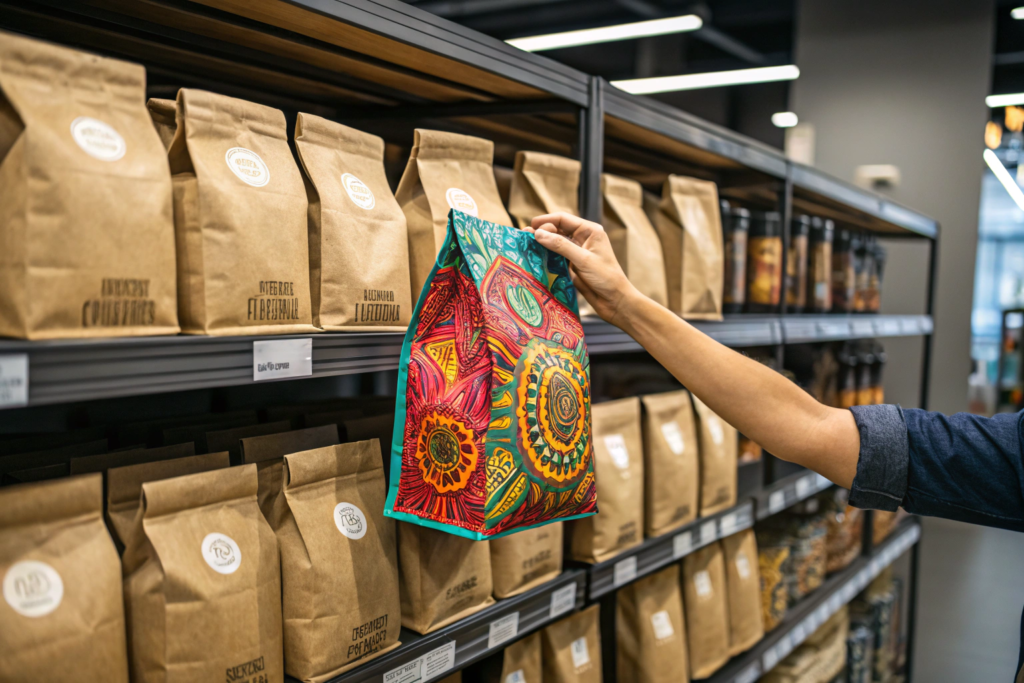
Humans are wired for novelty. The brain releases dopamine when we encounter something new and unexpectedly rewarding. A familiar Colombian coffee on a shelf is expected. It triggers no special excitement. A China origin coffee is unexpected. It triggers curiosity. "Newness" is a powerful psychological driver of trial. A consumer who might walk past your booth at a market will stop when they see a sign for Chinese specialty coffee. They will ask a question. That question opens a conversation. That conversation leads to a taste. That taste leads to a sale.
This novelty factor also gives your wholesale accounts a powerful tool. A cafe owner is always looking for something new to feature, a story to tell their customers. Your China line gives them an exclusive product that no other cafe in town has. They can promote it as a limited-time offering, a "Discovery Series" coffee. This drives foot traffic to their shop. They become a hero to their customers for finding something cool. And because you are the supplier, you become a hero to the cafe owner. The newness of the origin creates a chain of value. It is a B2B sales tool as much as a B2C one. The news cycle around Chinese coffee is still young. You have a window to be the first mover in your market. Seize it.
How Can a "Discovery Series" Packaging Elevate the Perceived Value?
The packaging must match the novelty of the origin. Don't put your China coffee in the same standard bag with a different sticker. Create a dedicated "Discovery Series" or "Explorer Series" line. Use a distinctive format. Maybe a matte white box with a magnetic closure. Maybe a glass tube for the beans. Maybe a sleeve with a hand-drawn map of the Tea Horse Road. The unboxing experience should feel like opening a treasure chest from a distant land.
This special packaging immediately signals higher value. The customer visually understands that this is not a standard offering. This is something special. Limited. Curated. This perception allows you to command a higher price point. The packaging physically embodies the story of discovery. It also makes the product incredibly giftable. A beautiful box of rare Chinese coffee is a more impressive gift than a standard bag of Colombian. You open up a new gift market segment. The perceived value is a combination of the coffee's inherent quality, the origin's novelty, and the tactile luxury of the packaging. All three elements work together to justify a premium price. Look at how specialty chocolate and tea brands use discovery box sets for inspiration. The structure of the offer is as important as the beans inside.
What Are the Tangible Cost Advantages of a Chinese Specialty Line?
The romance of the story is essential, but the business must make money. This is where the China origin line truly shines. The economics are structurally different from traditional specialty origins. The supply chain is shorter and more vertically integrated. Our farm, Shanghai Fumao, controls the production, processing, and export. This consolidation eliminates layers of middlemen and their respective markups. The result is a landed cost for an 83-85 point specialty Arabica that consistently undercuts comparable quality from Colombia or Kenya.
This cost advantage flows directly to your bottom line. You have two choices. You can maintain a standard specialty retail price and enjoy a significantly higher profit margin. A few extra dollars per bag, multiplied by hundreds of bags, transforms the profitability of your roasting operation. Or, you can price the coffee slightly more aggressively than your competition, capturing market share while still maintaining a healthy margin. You can offer a premium-tasting coffee at a "value" price point, winning over price-sensitive but quality-conscious customers. This is a rare strategic position. In most categories, higher quality means higher cost. With a direct-sourced China line, you can access specialty quality at a near-commodity price. This is not a temporary market anomaly. It is a structural advantage based on vertical integration and the still-developing land and labor dynamics of the Yunnan coffee sector. It is a window of opportunity for agile brands to lock in a cost structure that their competitors cannot easily replicate.

How Does the Direct Farm Model Cut Out Unnecessary Markups?
The traditional coffee supply chain is a relay race with too many runners. Farmer sells to a local middleman. Middleman sells to a regional cooperative. Cooperative sells to a national exporter. Exporter sells to an international importer. Importer sells to a broker. Broker sells to you, the roaster. Each handoff adds a margin. Each margin inflates the final price you pay. The direct farm model is a sprint. We are the farmer, the processor, and the exporter. We hand the coffee directly to you, or we manage the entire DDP journey to your door. There is only one margin. Ours. And because we are the farm, we are incentived to build a long-term partnership, not maximize a single transaction.
This eliminated markup is not theoretical. It is a visible reduction in the cost per pound. It is the reason a specialty-grade Yunnan coffee can land in your roastery for a price comparable to a generic commercial lot from a traditional origin. You are paying for the coffee and the essential logistics, not for a chain of traders. This model also creates transparency. You know exactly where your money is going. You can tell your customers, "We pay the farm directly." This transparency is a powerful marketing asset in an era of conscious consumerism. The direct model is not just a cost play. It is a brand integrity play. It feels good, it does good, and it profits well. This triple-win is the holy grail of specialty coffee sourcing.
Can a China Line Offer Better Stability Against the C-Market?
The C-market is a rollercoaster. The price of Arabica futures swings on weather speculation, currency fluctuations, and global economic news. A roaster buying coffee tied to the C-market price is a passenger on a wild ride. Your budget is at the mercy of a trading floor in New York. A direct relationship with a vertically integrated farm like ours largely decouples your coffee cost from the C-market. Our production costs are relatively stable. Labor, fertilizer, and logistics move a bit, but not with the violent volatility of the futures market. We do not base our farm-gate price on a speculation index. We base it on the cost of sustainable, high-quality production plus a fair margin.
This allows us to offer fixed-price annual contracts. You can lock in the price of your China origin line for a full year. In a world of erratic inflation, this stability is a superpower. You can set your retail and wholesale prices with confidence. You can print your menus and your packaging without a fear of an impending price spike. This predictability is immensely valuable for business planning and cash flow management. It reduces your financial stress and allows you to focus on growth and marketing, not on hedging against commodity volatility. The China origin line is not just a unique product. It is a financial safe harbor in a stormy commodity market. It turns your supply chain from a variable risk into a fixed asset.
How Do You Build an Engaging Consumer Story Around "Coffee from China"?
The story is the engine of your brand. You are not just selling beans. You are selling a narrative. The China origin narrative is a gift. It is rich with historical resonance, cultural intrigue, and a powerful underdog story. The key is to frame it as a discovery, not a debate. Do not start with defensive statements. Do not say, "Despite what you think, Chinese coffee is good." That frames the conversation negatively. Start with the wonder. Start with the mountains.
The hero of your story is the Gaoligong Mountain range. It is the ancient Tea Horse Road. It is the family farmers, like our lead farmer Lao Li, who have cultivated these slopes for generations. The narrative is simple and true. For a thousand years, this land grew the world's finest tea. A century ago, French missionaries brought coffee. For decades, it was a hidden secret. Now, the world is waking up to the incredible specialty coffee being produced here. The same meticulous hand-picking, the same respect for the land, the same misty, high-altitude terroir that made the tea legendary is now making the coffee exceptional. This is not a "Made in China" industrial story. It is an ancient mountain, a new crop, a rediscovered legacy story. It is romantic, authentic, and completely unique. You cannot tell this story about any other origin. When you partner with us, we provide the photos, the videos, and the farmer profiles to bring this story to life for your customers. It is an entire content library ready to fuel your marketing.
What Specific Visuals Overcome the Industrial Stereotype?
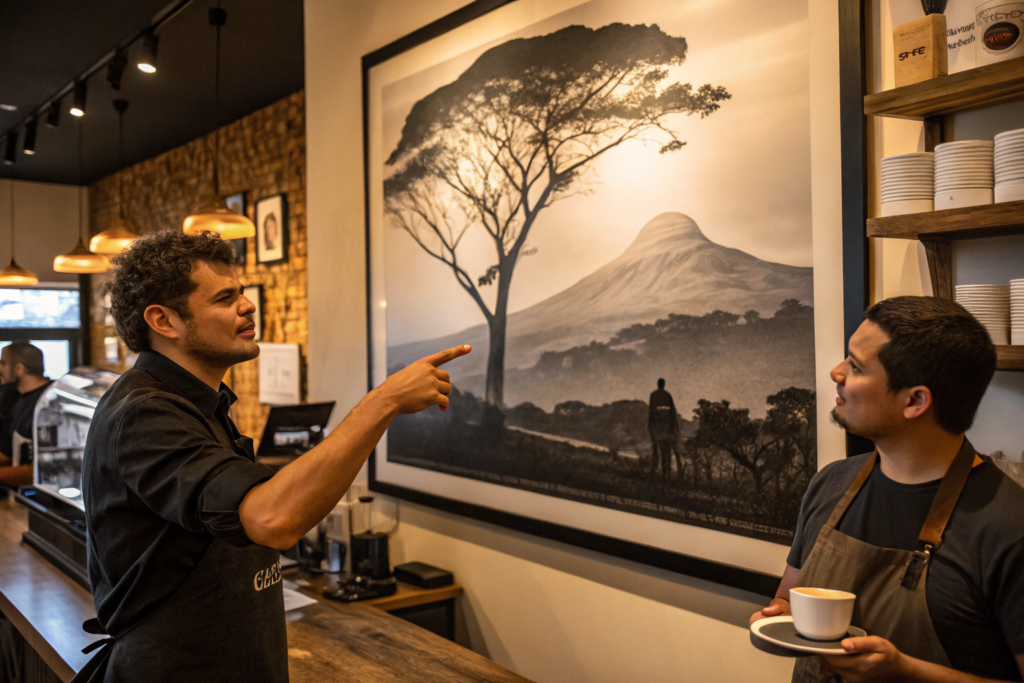
The stereotype of China is smokestacks and megacities. You must shatter this visually. Your marketing must be flooded with images of pristine, untouched nature. Mist-shrouded peaks. Crystal-clear mountain streams. Lush, biodiverse coffee plots shaded by native trees. Farmers in traditional clothing, hand-picking cherries with care. The visual contrast to the stereotype is so strong that it instantly rewires the brain. The customer sees an image of a farmer in a bamboo grove and thinks, "This is not what I expected. This is beautiful."
Video is even more powerful. A slow-motion clip of ripe coffee cherries being gently dropped into a spring-water flotation tank. The sound of the water. The vibrant red against the clear liquid. The calm, focused face of a worker. This is pure sensory poetry. It transports the viewer to the farm. It replaces the abstract concept of "China" with the concrete reality of "this specific, beautiful place." We provide this high-quality visual content to our wholesale partners specifically for this purpose. Use it on your Instagram. Put a rotating slideshow on a screen in your cafe. Print it on your tasting cards. The visuals are the first, most powerful line of defense against the stigma. They don't argue. They enchant. The World Coffee Research sensory lexicon is a great resource for linking visual origin elements to expected flavor notes, adding depth to your visual storytelling.
How to Craft Tasting Notes That Evoke a Sense of Place?
Generic tasting notes kill the story. "Chocolate and nut" could be from anywhere. You must connect the flavor directly to the landscape. Instead of "chocolate," write "Dark cacao nurtured by mountain mist." Instead of "nutty," write "Toasted wild Yunnan walnut." Instead of "clean finish," write "As pure as the spring water from which it was washed." The language paints a picture. The customer tastes the chocolate note, reads "mountain mist," and the two become one in their mind. The flavor is no longer just a sensation. It is a postcard from Baoshan.
Develop a small glossary of terroir-driven descriptors for your China line. "Stone fruit sweetness from the high-altitude sun." "Syrupy body from the slow, cool ripening." "Malic acidity like a crisp mountain apple." Use these consistently on your bags, your menu, and your social media. When a customer asks about the coffee, your barista can point to the description and say, "The syrupy body comes from the fact that the beans grow slowly at 1,400 meters. It is a really cool terroir effect." This educates the customer. It makes them feel like an insider. It elevates their coffee experience from a habit to a hobby. The tasting notes become a vehicle for the origin story. Every sip is a journey.
Conclusion
Offering a China origin coffee line is a multifaceted business strategy disguised as a product launch. It is a profit lever, a brand differentiator, a customer acquisition engine, and a supply chain stabilizer, all rolled into one. You gain a unique product that stands out on a crowded shelf. You access a superior cost structure through a direct farm relationship that cuts out the middlemen and insulates you from commodity market swings. And you acquire a rich, authentic, and deeply resonant brand story that your competitors cannot copy.
The era of hiding the Chinese origin is over. The new era is about celebrating it. It is about putting "Yunnan, China" proudly on the front of the bag and telling the world why that is a mark of quality, not a mark against it. The coffee is ready. The quality is here. The market is curious and waiting for a trusted guide. You can be that guide. You can be the roaster who took a chance on an overlooked origin and won big.
If you want to explore adding a China line to your menu, let's start with a cupping. We will send you a sample kit of our washed Arabica, our honey process micro-lots, and our full brand story package. Taste the quality. See the visuals. Run the numbers. I am confident you will see the opportunity.
Contact our export director, Cathy Cai, at cathy@beanofcoffee.com. She will put together a personalized sample kit and provide an all-in DDP quote for your specific needs. Let's build the most exciting coffee line in your market, together.