You have a client who loves the aroma and flavor of your premium Yunnan Arabica, but they can't handle the caffeine. Do you offer them an inferior, bitter decaf? Not anymore. The Swiss Water Process (SWP) has changed the game for decaffeination, and as an exporter who supplies beans for this very purpose, I've seen how it allows us to deliver a product that truly honors the original coffee. It’s a process that aligns perfectly with our values of offering safe, reliable, and high-quality products.
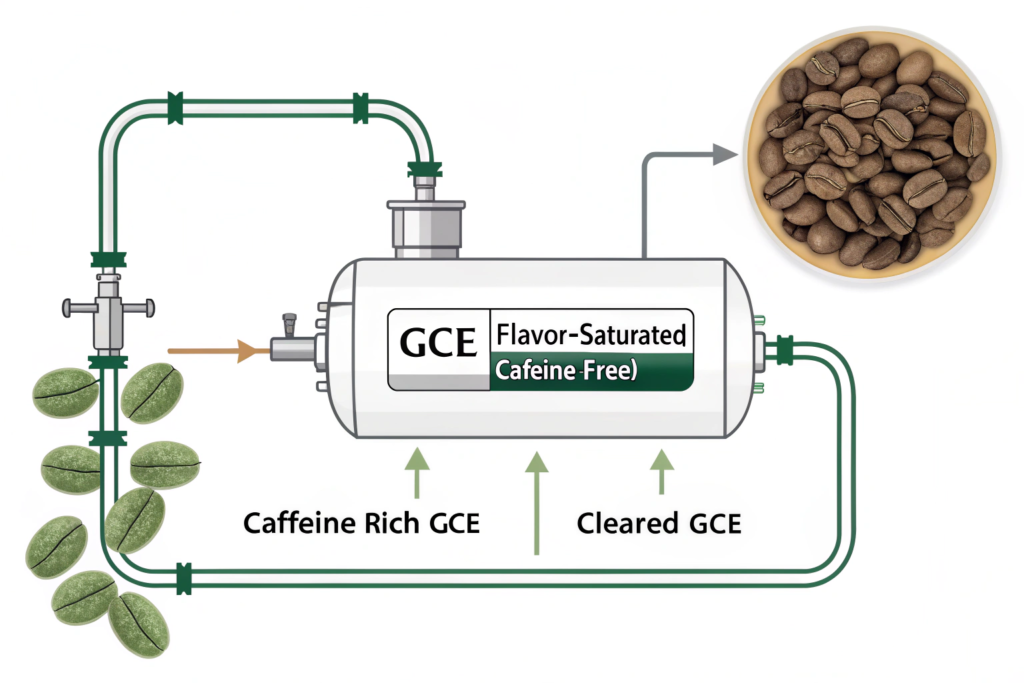
The Swiss Water Process is a chemical-free, 100% organic certified method of decaffeination that uses only water, temperature, and time to remove caffeine. The core of the process relies on a proprietary Green Coffee Extract (GCE)—a solution saturated with all the water-soluble flavor components of green coffee except caffeine. When caffeine-rich green beans are immersed in this GCE, osmosis and solubility gradients cause caffeine to leave the beans and enter the solution, while the flavor compounds remain in equilibrium, thus preserved. The caffeine is then filtered from the GCE using activated carbon, and the GCE is reused.
That’s the elegant principle. But the magic is in the meticulous execution. It’s a gentle, yet highly controlled, orchestration of physics and chemistry that happens not on a mountain farm, but in a specialized facility. For a buyer concerned with quality, purity, and security of their product, understanding this process is key to selecting the right decaf. Let’s walk through the steps that turn our flavorful green beans into equally flavorful, caffeine-free ones.
How Does the Green Coffee Extract (GCE) Work?
The Green Coffee Extract is the heart and genius of the Swiss Water Process. It’s not just plain water; it’s a "flavor-charged" solution that acts as a selective sponge for caffeine.
Think of the GCE as a flavor-locked bath. It’s created by soaking a batch of green coffee beans in hot water until all caffeine and water-soluble flavor compounds (the oils remain in the bean) are transferred into the water. This solution is then passed through a specialized activated carbon filter. The pores of this carbon filter are sized precisely to trap the larger caffeine molecules while allowing the smaller, complex flavor molecules to pass through. What remains is a solution—the GCE—that is saturated with coffee’s flavor solids but is 99.9% caffeine-free. This GCE is now in a state of equilibrium for flavor. When new, caffeine-loaded beans are introduced, only the caffeine will move, seeking to balance the concentration gradient. The flavors stay put. This is the fundamental innovation: decaffeination without flavor stripping.
Why Can't Caffeine Simply Be Washed Out with Water?
If you soak green coffee in plain hot water, you will indeed remove caffeine. But you’ll also remove all the sugars, acids, and aromatic precursors that give coffee its taste—leaving you with a flavorless bean and a pot of coffee-flavored water. This is the problem the GCE solves. By pre-saturating the water with coffee’s flavor components, it creates a scenario where the water is "full" of flavor and can only accept more caffeine. It’s a brilliant workaround that respects the integrity of the bean. For an exporter supplying beans for this process, it means we must start with high-quality, flavorful beans, as the process will faithfully reflect their character.
How Is the GCE Maintained and Reused?
Sustainability is a core tenet of the Swiss Water Process. The GCE is not a single-use product. After a batch of beans is decaffeinated, the now caffeine-rich GCE is circulated through the activated carbon filters again. The carbon traps the caffeine molecules, which are then cleared from the filters, and the "cleaned" GCE is returned to the system, ready for the next batch. This closed-loop system is highly efficient, using primarily water, heat, and a renewable filter medium. This aligns with the values of many modern brand buyers and consumers who prioritize environmentally safe and transparent production methods.
What Are the Step-by-Step Stages of Decaffeination?
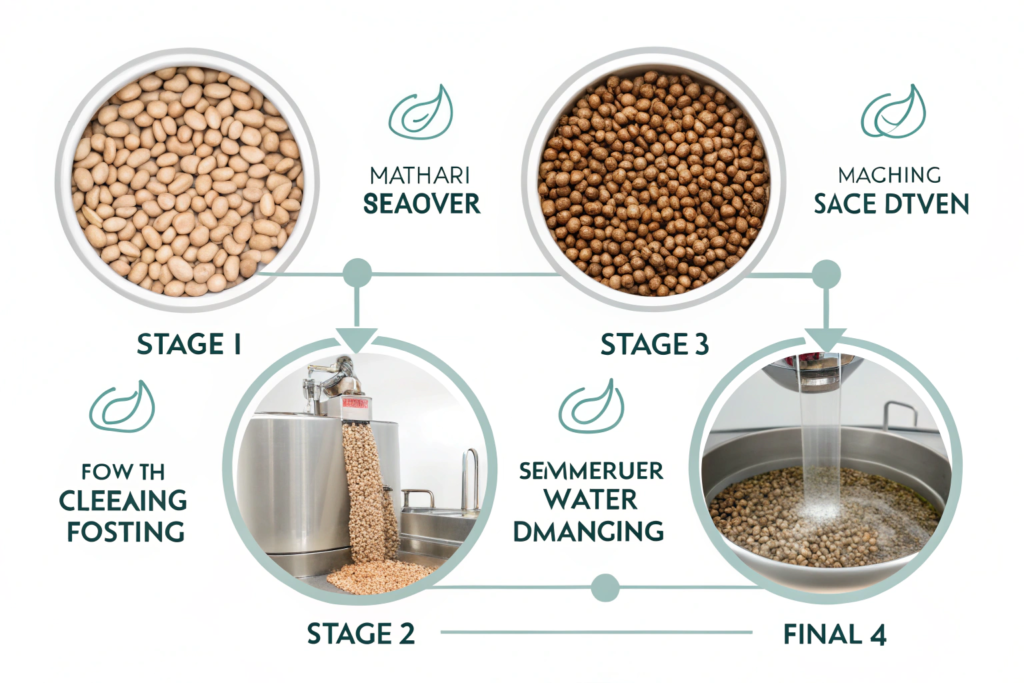
The Swiss Water Process is a carefully timed and monitored journey for the green beans, typically taking 8-10 hours. It’s a sequence of soaking, diffusion, and drying.
Step 1: Preparation & Soaking: High-quality green beans (like our Yunnan Arabica or Catimor) are cleaned and hydrated with pure water and steam. This prepares the beans, opening their pores for the efficient transfer of caffeine.
Step 2: Caffeine Removal Bath: The pre-soaked beans are immersed in the vats of the proprietary Green Coffee Extract (GCE). Here, over several hours, caffeine migrates out of the beans and into the GCE. The temperature and flow of the GCE are carefully controlled to optimize extraction while preserving flavor.
Step 3: Rinsing & Drying: Once the caffeine content has been reduced to the target level (well below the 0.1% industry standard for decaf), the beans are removed from the GCE bath. They are rinsed with fresh water and then gently dried to their original moisture content (around 10-12%).
Step 4: GCE Regeneration: Simultaneously, the caffeine-laden GCE from the bath is passed through the activated carbon filters to remove the caffeine, regenerating the GCE for the next batch.
The beans that emerge are 99.9% caffeine-free, yet they retain the essential flavor compounds that were in the original green bean.
How Is the Process Monitored for Consistency?
Consistency is paramount. The facility continuously monitors key parameters: GCE saturation levels, temperature, flow rate, and caffeine concentration in both the beans and the GCE throughout the cycle. Samples are tested in-lab to ensure the final product meets the strict standard. This level of quality control mirrors what we do on the farm and in milling. It ensures that a buyer ordering a container of Swiss Water Decaf Yunnan Arabica will receive a product with the same reliable flavor profile every time. This directly addresses the pain point of inconsistent quality, especially important for private label businesses.
What Happens to the Bean's Structure and Moisture?
The process is gentle but does have a physical effect. The beans swell slightly during the soaking phases. The professional drying stage is critical to return them to a stable, shippable moisture level without "baking" them. Properly processed SWP beans should have a color only slightly lighter than their original green state and maintain good density. They roast similarly to their caffeinated counterparts, though roasters may make minor profile adjustments. A good decaffeination plant will return beans in a condition that is stable for international logistics and storage.
Why Is Swiss Water Preferred Over Chemical Methods?
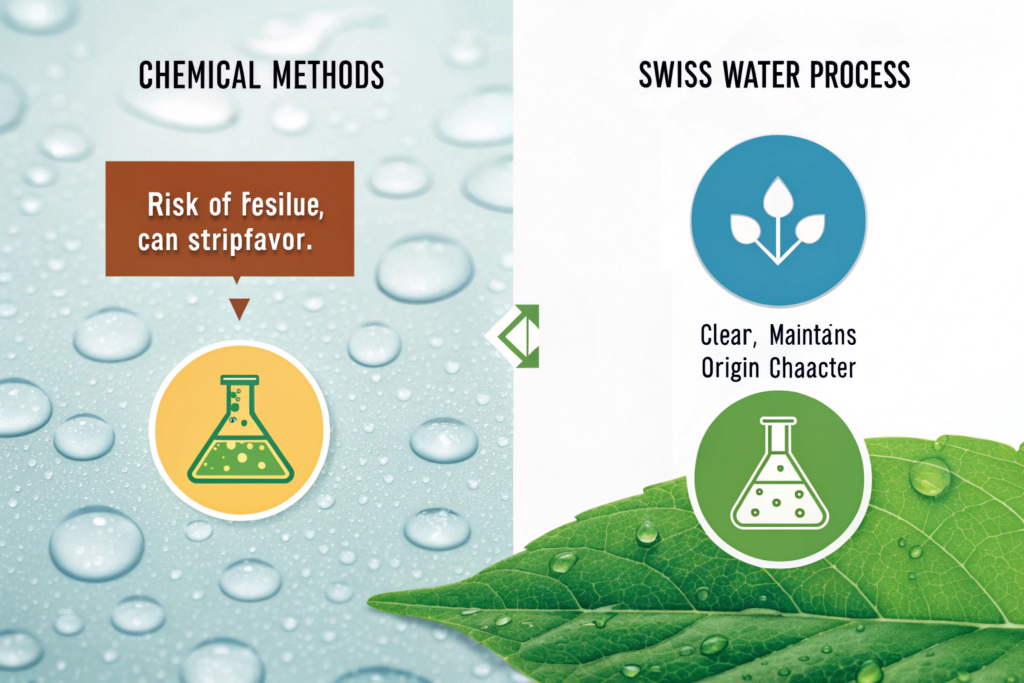
For decades, decaffeination relied on chemical solvents like methylene chloride or ethyl acetate. While effective, these methods carry stigma and regulatory scrutiny. Swiss Water offers a clean, transparent alternative.
Swiss Water is preferred because it is certified organic (by USDA, EU, etc.), chemical-free, and preserves the coffee's origin character more faithfully. There is no risk of solvent residues, making it a safe choice for health-conscious consumers. The process also aligns with clean-label trends. From a flavor perspective, while no decaf process is perfectly lossless, SWP is renowned for producing a decaf that tastes remarkably close to original, high-quality coffee, without the "processed" or hollow notes sometimes associated with older methods. For an exporter, being able to offer a chemical-free decaf option is a strong market differentiator, especially when targeting buyers in North America and Europe where organic and natural products are in high demand.
What Are the Flavor Differences Compared to Solvent-Based Decaf?
Chemical methods, particularly the direct solvent method, can sometimes leave a slight chemical aftertaste or strip away more of the coffee's delicate top notes (fragrant, floral aromatics). The Swiss Water Process, because it is a pure water-based osmosis, tends to produce a cleaner, more balanced cup that retains the base flavor notes of the bean—its chocolate, nut, and caramel tones—exceptionally well. It may slightly mute the very brightest acidic notes, but the overall integrity is superior. This makes SWP decaf an excellent candidate for premium espresso blends and single-origin offerings where the story of the origin (like our Yunnan Arabica) is important to tell.
Does the Organic Certification Matter for Commercial Buyers?
Absolutely. For large company buyers, distributors, and brands, sourcing an organically certified decaf that is also processed without chemicals simplifies compliance and marketing. It allows them to make definitive "Chemical-Free" and "Organic" claims on packaging, which is a powerful sales driver in retail and food service. It reduces liability and aligns with corporate social responsibility goals. When we partner with a Swiss Water facility, we are not just processing beans; we are adding a valuable certification and marketability to our product, enhancing its reliability and trustworthiness in the eyes of the end consumer.
What Should Buyers Look for in a Swiss Water Decaf Supplier?
Not all decaf is created equal, even within the Swiss Water Process. The quality of the final product is a function of both the process and the input bean.
When sourcing Swiss Water Decaf, a buyer must evaluate: 1) The Quality of the Green Bean Input: The process reflects what you put in. Insist on decaf made from specialty-grade or high-quality commercial green beans, not the lowest grade. Ask: "What was the origin, variety, and grade of the bean before decaffeination?" 2) The Partner Facility: The Swiss Water Process is a proprietary method, only licensed to one facility located in Canada (Burnaby, B.C.). Ensure your supplier is truly sourcing from the Swiss Water® Process facility or a licensed partner. 3) Traceability and Documentation: Request documentation, including organic certificates and proof of process. A reputable supplier will provide this. At Shanghai Fumao, when we arrange for our beans to be decaffeinated, we maintain lot traceability from our farm to the decaf facility and back to the customer.
How Does Bean Origin Affect the Final Decaf Product?
The origin character is preserved, not created. A bland, low-acid bean will become a bland, low-acid decaf. A complex, fruity Yunnan Bourbon will become a complex, fruity decaf (though perhaps slightly less bright). Therefore, sourcing decaf from a reputable origin known for quality is paramount. We often recommend our Yunnan Catimor or certain Arabica lots for decaffeination because they have a strong, sweet base profile that translates beautifully into the decaf cup, providing a satisfying and distinct taste.
What Are the Logistics of Sourcing and Shipping SWP Decaf?
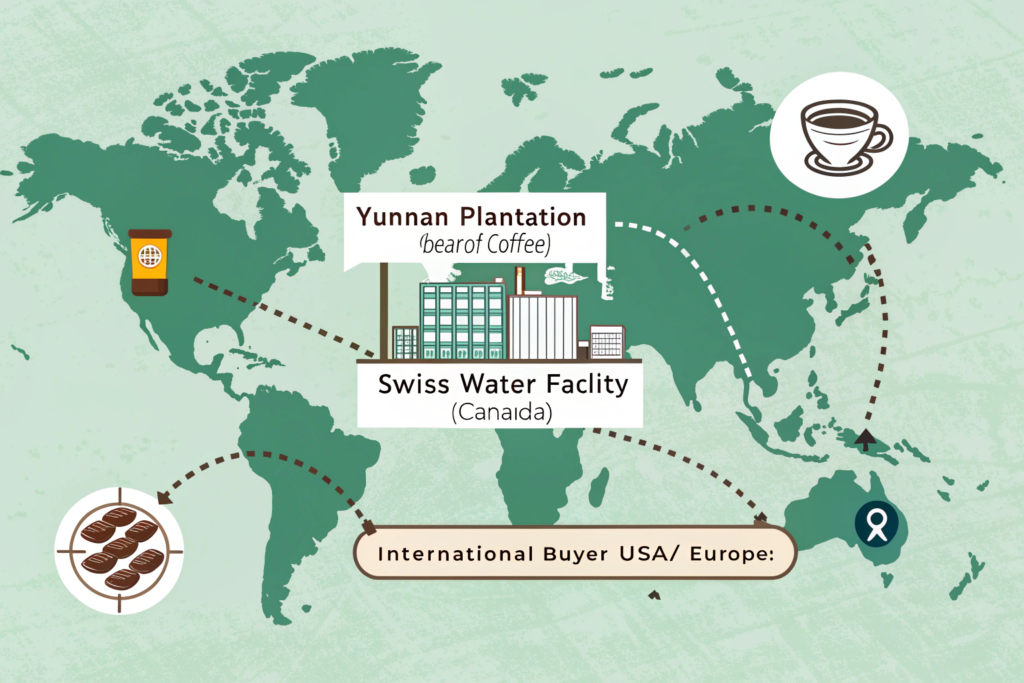
Typically, the green beans are shipped from the origin (e.g., our warehouse in Yunnan) directly to the Swiss Water facility in Canada. After processing, the decaffeinated green beans can be shipped to the buyer, or roasted and packaged if the facility offers that service. This adds a transit leg and requires coordination. An experienced exporter like us manages this entire chain. We handle the logistics to the decaf plant and can ship the finished decaf green beans directly to you, roasted or unroasted. We ensure timeliness and security throughout, managing the documentation and tracking. This integrated service is what makes a supplier a true partner, not just a vendor.
Conclusion
The Swiss Water Process represents the pinnacle of consumer-friendly, quality-focused decaffeination. It demystifies decaf, transforming it from a necessary compromise into a genuine, flavorful coffee choice. By leveraging the simple principles of solubility and equilibrium, it removes caffeine with surgical precision while safeguarding the soul of the coffee.
For exporters and buyers, it opens a premium market segment without sacrificing quality principles. It requires starting with excellent green beans and partnering with a transparent, certified processor. The result is a product that is safe, reliable, stable, and trustworthy—qualities that align perfectly with the demands of modern global coffee trade.
At Shanghai Fumao, we are proud to offer the option of Swiss Water Decaffeination for our select lots. It allows us to serve all of our customers' needs without ever compromising on our commitment to purity and flavor.
If you are looking to add a high-quality, chemical-free decaf to your product line, let us guide you through the process. We can supply the premium green beans and manage their journey through Swiss Water decaffeination to your doorstep.
To discuss samples and sourcing options for Swiss Water Process decaf from Yunnan, contact Cathy Cai at cathy@beanofcoffee.com. Offer a decaf that tastes like real coffee, because it is.