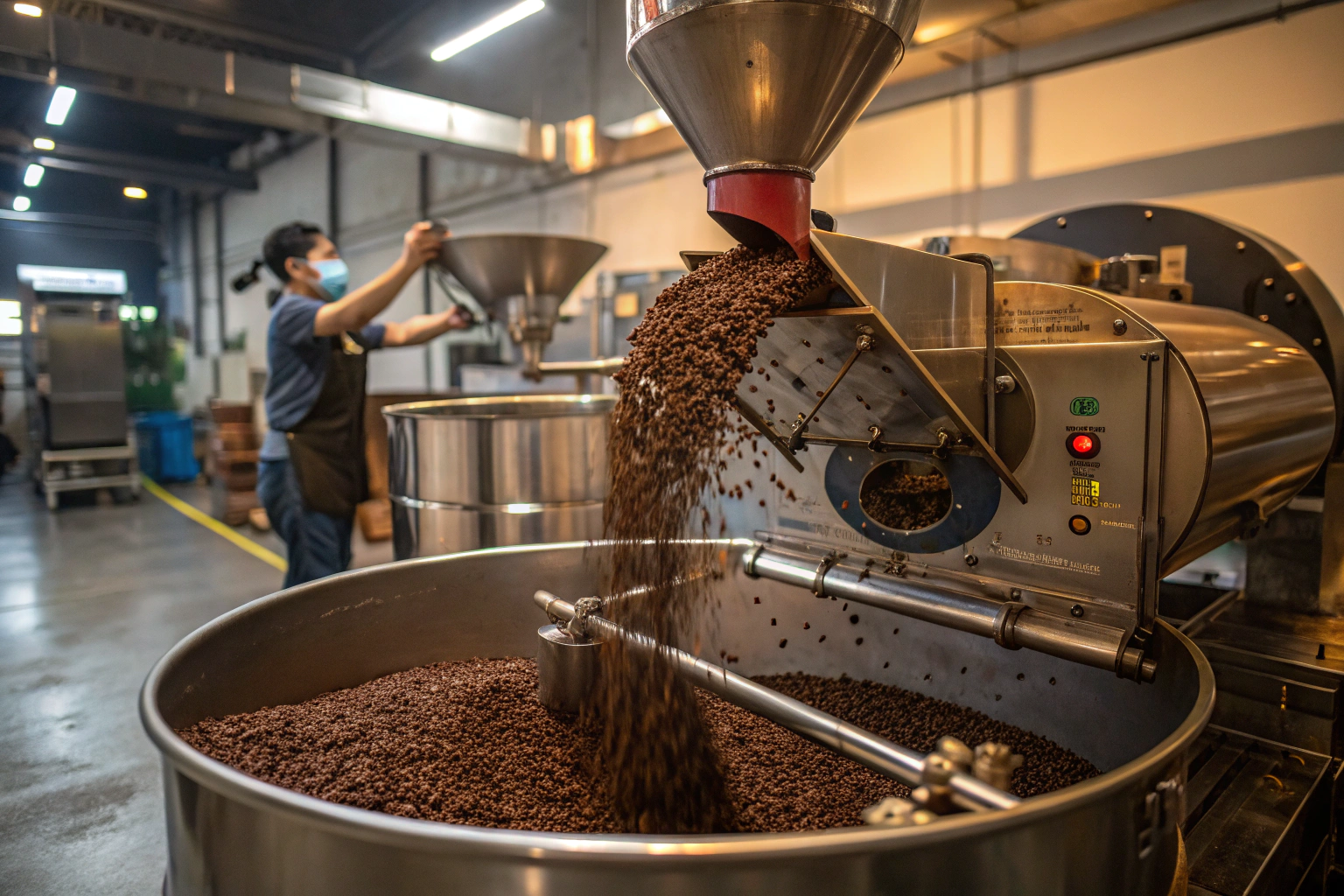
Most people think instant coffee is made from bad beans. You know, the broken ones. The rejects. The stuff nobody else wanted. For decades, that was actually true. The industry swept the floor and threw everything into the extractor. But that doesn't work anymore. Today’s instant coffee market isn't just about cheap caffeine. It's about speed, consistency, and clean labels. And if you try to use a delicate, floral Geisha for spray-drying, you’re going to burn money. Literally. You need a workhorse. You need high extractability and a bold backbone. That’s exactly why you need Catimor.
Catimor is ideal for instant coffee production because its hybrid vigor delivers a significantly higher extraction yield compared to pure Arabica, while its natural disease resistance ensures a massive, stable supply at a price point that makes the complex manufacturing math work. It is not just a filler bean; it is the structural backbone of a profitable soluble coffee recipe.
I see a lot of buyers who get trapped in a single-origin mindset. They think every bean must be an 85-point micro-lot. But if you’re running a factory that processes 20 tons of green beans per day to make spray-dried powder, your bottleneck isn't the cupping score. It's the cost per kilo of soluble solids. If you're sourcing for a jar of crystals on a supermarket shelf, the game changes. It’s a game of extraction chemistry. And Catimor, especially the stuff we grow in Yunnan, was born to win this game.
Why Does High Extraction Yield Matter for Soluble Coffee Manufacturing?
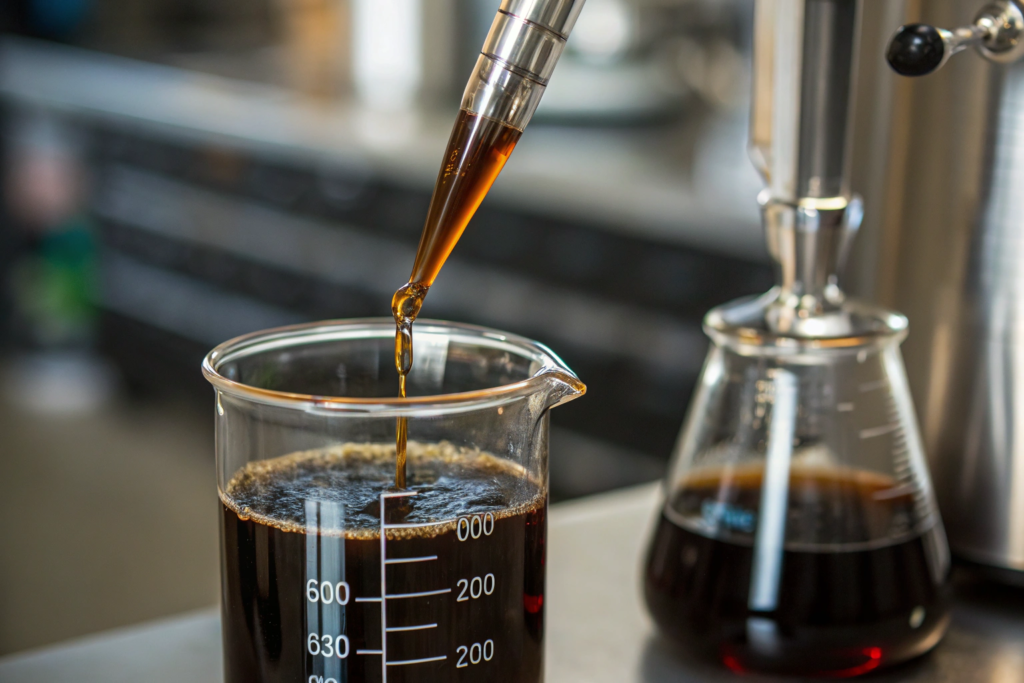
Let’s get nerdy for a second. Making instant coffee is basically a process of stealing the good stuff from the bean. You grind it, you blast it with hot water under high pressure, and you strip away the soluble solids. What’s left? Wet, spent grounds. That’s waste. Your profit doesn’t come from the beans you bought. It comes from the percentage of the bean’s weight that you can dissolve into your final powder. That percentage is the extraction yield.
High extraction yield is the single most critical profit lever in soluble coffee manufacturing. A shift from a 32% yield to a 40% yield doesn't just improve efficiency; it massively reduces raw material costs. If you can get more dissolved coffee from fewer green beans, you save on purchasing, shipping, and energy. Catimor’s dense cellular structure, shaped by its Robusta lineage, naturally withstands the brutal temperatures of industrial extraction without disintegrating into un-extractable mud.
How Does Catimor’s Solubility Compare to Pure Arabica?
Pure Arabica is beautiful. It’s sweet, it’s acidic, but it’s fragile. Under the pressure of a high-temperature percolator—we're talking 180°C to 200°C here—the cell walls of a pure Arabica bean collapse too quickly. It turns into a mushy paste that blocks the filters. You lose flow rate. You lose time.
Catimor, because it’s a hybrid with a touch of Robusta genetics, has thicker cell walls. When you hit it with that blast of hot water, it doesn’t turn into porridge immediately. It opens up slowly. It lets the water carry away the carbohydrates and caffeine without clogging the system.
I’ve run trials on our Baoshan Catimor where we tested the difference. The Arabica batch clogged the filter press in under 10 minutes. The Catimor batch ran clean for 20. In a factory, that difference is worth thousands of dollars an hour.
What About the Soluble Solid Content of the Bean?
This is the big number. If you look at the data, green Arabica usually has about 28% to 30% soluble solids available. The rest is cellulose fiber. Robusta has 34% to 36%. That’s why Robusta is the king of instant coffee. But Robusta tastes earthy and harsh.
Catimor sits right in the middle. We consistently measure our Yunnan Catimor at around 32% to 34% available solubles. Crucially, it delivers these solids without that heavy, rubbery note you get from cheap Vietnamese Robusta. You get the mass, but you also get a cleaner cup.
Think about the logistics, too. If I’m shipping a container from China to a factory in Australia, freight is based on weight. If the Catimor yields 3% more soluble solids than the Arabica alternative, you’re shipping less water and less fiber. Over a year, that’s a massive logistics saving. You are essentially concentrating your shipping on the active ingredient.
| Bean Type | Typical Solubility Yield | Cell Wall Structure | Flow Rate in Percolation |
|---|---|---|---|
| Pure Arabica | 28% – 30% | Thin, fragile | Slow, blocks easily |
| Catimor | 32% – 34% | Thick, robust | Fast, steady |
| Pure Robusta | 34% – 36% | Very thick | Very fast |
The math is simple. For a factory needing 1,000 tons of extract, you need fewer containers of Catimor. With the global freight rates being what they are, that is a huge selling point you can take to your buyers.
What Flavor Attributes Does Catimor Bring to a Soluble Blend?
There’s a stubborn myth that instant coffee has no flavor. Or that it all tastes the same. But if you’ve ever done a side-by-side cupping of instant powders, you know that's false. You can taste the source material. The bean matters. Especially if you’re marketing a premium freeze-dried product, you can’t just rely on “coffee flavor.” You need specific notes—chocolate, nuts, maybe a hint of caramel.
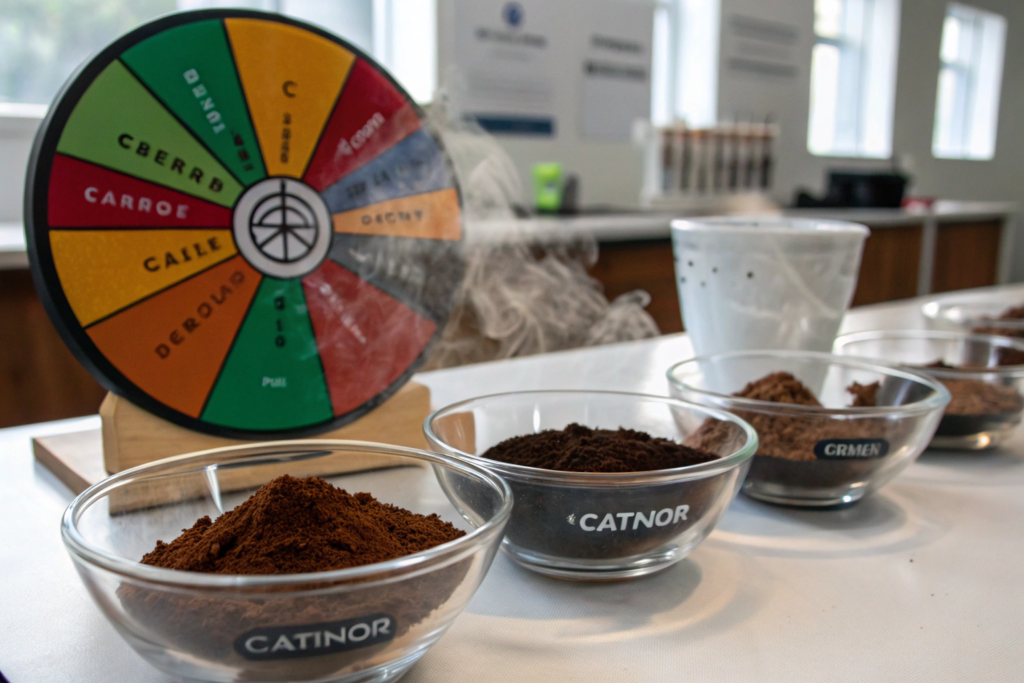
Catimor brings a heavy body and a distinct dark chocolate, nutty flavor profile that serves as a perfect canvas for soluble blends. It lacks the sharp acidity of pure Arabica that often turns sour in the retort process, but it also lacks the harsh, medicinal rubber taste of low-grade Robusta. It fills the middle ground, providing a smooth, "coffee-like" bitterness that consumers in North America and Europe actually expect in their morning cup.
Does Acidity Survive the Instant Process?
No, not really. That’s the problem with expensive washed Arabica. You pay a premium for citric and malic acidity, but when you cook it at 190°C in a sterilizer, that acidity either evaporates or turns sharp and metallic.
Catimor is naturally low in acidity. That’s a weakness if you’re selling roasted whole beans to a specialty café. But it’s a superpower if you’re making instant coffee. Because you aren’t trying to preserve a delicate fruit note. You want a stable, flat pH that tastes “strong” but not sour. Catimor gives you exactly that. It’s a stable base. And you can always add a tiny bit of high-acid Arabica extract later to balance the flavor. But you can’t remove bad acidity once it's in the mix.
How Does It Mask the "Processed" Taste?
Instant coffee sometimes has a "processed" note. It tastes flat. Like cardboard. This happens when the beans don’t have enough structure to survive the extraction and drying.
Catimor has a strong body. It’s thick. When you dissolve it in hot water, it feels full in the mouth. This body distracts the palate from the micro-chemical changes that happen during spray drying. It coats the tongue. A roaster I work with in Melbourne calls it “the cheat code.” He uses 30% Catimor in his freeze-dried blend just to give the final cup a weight that pure Arabica instant can’t provide.
And that bitter-sweet chocolate note? It’s a perfect fit for the 3-in-1 coffee sachets that are huge in the Asian market. You don't need to add as much artificial chocolate flavoring if the coffee itself already hints at cocoa. It brings a cleaner label, which is a huge trend right now in the food and beverage industry.
How Does Catimor Cultivation Ensure Supply Stability for Factories?
A factory is a hungry beast. You can’t feed it sometimes. You have to feed it every single day. If a factory runs out of green beans, the spray dryer empties. You cannot start a spray dryer cold. The startup cost is astronomical. Supply stability is more important than a slight difference in flavor. And this is where a lot of pure Arabica suppliers fail. A bad year for leaf rust, a bad flowering season, and suddenly your factory is buying spot-market beans at a 20% premium, losing money on every jar you produce.
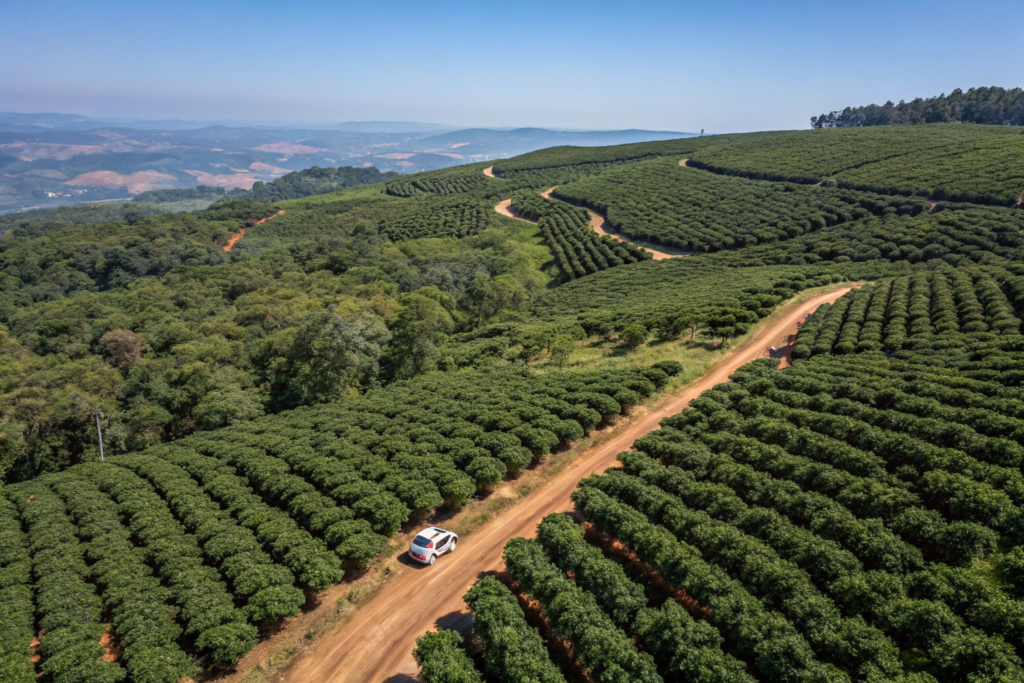
Catimor cultivation guarantees supply stability because the variety is genetically fortified against coffee leaf rust and berry disease. For a large-scale grower in Yunnan like us, this means a predictable, high-yield harvest every year, regardless of minor weather shocks. A factory can sign an annual contract with confidence, knowing that 20 containers will arrive on time, every quarter.
Why Is Disease Resistance a Supply Chain Metric?
Most buyers don’t care about the farm's problems. They just want the beans. But if the farm has a problem, the buyer soon has a bigger problem.
Let’s be honest. Arabica is a diva. It gets sick easily. In a wet year, leaf rust can wipe out 40% of an unprotected Arabica crop. If a buyer has a contract for 100 tons, and the farmer only harvests 60 tons, the factory is short. The buyer has to go to the open market. They pay extra. They lose money.
Catimor was bred specifically to fight rust. Our plantation in Baoshan has very high humidity in the summer. Perfect for rust. Our Catimor trees don't care. The leaves stay healthy. This means our production forecasts are reliable. We don't break contracts. For a large company buyer, especially a CEO planning a year-end budget, this predictability is better than a small price cut. You can’t budget for chaos.
How Does Mechanical Harvesting Affect Quality and Cost?
Because Catimor grows in dense, uniform clusters and the cherries ripen very evenly, we can do mechanized harvesting. Pure Arabica in steep terrain often has to be picked by hand. Hand-picking is expensive and slow.
Mechanical harvesting in Yunnan cuts the labor cost significantly. It also speeds up the harvest. We can strip the trees in two passes over two weeks, instead of having 300 workers in the field for two months.
There’s a false belief that mechanical harvesting damages the quality for instant coffee. It doesn’t. For instant coffee, you are going to grind and extract the bean anyway. A small amount of bruised cherry skin doesn’t affect the soluble yield. It actually adds a little more sugar to the ferment. The key benefit is speed: we process the cherries within 4 hours of stripping. This fast turnaround locks in the green bean density. A quick harvest leads to a uniform drying process.
| Feature | Pure Arabica (Typica/Bourbon) | Catimor (Hybrid) |
|---|---|---|
| Rust Resistance | Low to Medium | High |
| Harvest Method | Mostly Manual | Mechanical/Manual |
| Yield per Hectare | Low to Medium | High |
| Supply Risk Factor | High (Weather Dependent) | Low (Stable) |
How Does Catimor Optimize the Price-to-Solids Ratio for Export?
At the end of the day, instant coffee is a math game. It’s not art. It’s engineering. You buy a container of green beans for a specific price. That container holds 19,200 kilograms. But you’re not selling kilograms of beans. You’re selling kilograms of dissolved powder. The Price-to-Solids Ratio tells you how much you are paying for the "active ingredient."
Catimor optimizes the Price-to-Solids Ratio by hitting the golden intersection of a low FOB price and a high extraction yield. When you compare the cost per kilogram of extract, Catimor frequently beats both high-end Arabica and even low-grade Robusta because the logistical costs for a cleaner bean are comparable to a dirty one, but the yield loss is much smaller.

What Is the Cost of Extraction Loss?
Let’s break down a real example. Let’s say you buy a metric ton of Pure Arabica for $4,500. The extraction yield is 30%. You get 300 kg of soluble solids. You paid effectively $15.00 per kg of solid.
Now, take a ton of our Yunnan Catimor. The FOB price might be $3,200. The extraction yield is 34%. You get 340 kg of solids. You paid $9.41 per kg of solid.
You just saved 37% on your raw material cost for the exact same amount of finished product. And because we are shipping from China, the freight cost is spread out over those solids. For the Arabica, you paid freight on 700 kg of waste fiber. For the Catimor, you paid freight on 660 kg of waste fiber.
It’s not sexy, but this is the kind of math that helps large company buyers win their internal budget meetings.
Does the Bean Size Matter?
Yes, but maybe not how you think. For instant coffee, huge screen 18 beans are a waste of money. You pay a premium for large bean size in whole bean coffee because it looks good. But when you are going to crush the bean into powder, size means nothing.
Actually, smaller, denser beans are better for the grinder. Catimor is naturally smaller than Typica, but it’s heavier. It grinds more uniformly. This matters because if the particle size is uneven during extraction, the big chunks under-extract and the fine dust over-extracts. Uniform grinding leads to maximum yield.
This is why we often recommend our Catimor specifically for extractors. You aren't paying an inflated price for visual traits that don't matter to a soluble processor. You are paying purely for density and chemical content. It strips the vanity out of the price, and it leaves just the function.
Conclusion
Instant coffee production is one of the most demanding and unforgiving sectors of the coffee industry. You can’t hide behind a nice bag design or a charismatic barista. You are selling a pure chemical extraction. The bean must deliver weight. It must deliver flavor that survives the machine. And it must be there, ready to ship, every single month.
Catimor is the logical choice for this. Its high extraction yield makes the factory profitable. Its stable, chocolate-driven flavor profile masks the process notes and creates a satisfying cup for consumers. It doesn't get sick, so the supply chain doesn't break. And the price-to-solid ratio is almost impossible to beat. It’s the smart choice, not the romantic choice. But in business, smart choices pay the bills.
If your factory is sourcing green beans for soluble production, you should be talking to us. We have the volume. We have the consistency. We have the science. Our 10,000 acres in Yunnan are ready to supply your percolators with stable, clean, and dense Catimor.
Let’s run the numbers together. Our team can provide full extraction yield data sheets and send a pre-shipment sample for your trials. You can reach our export director, Cathy Cai, directly. She handles all our factory accounts.
Email her at: cathy@beanofcoffee.com. Let's find the profit hidden in your extraction rate.