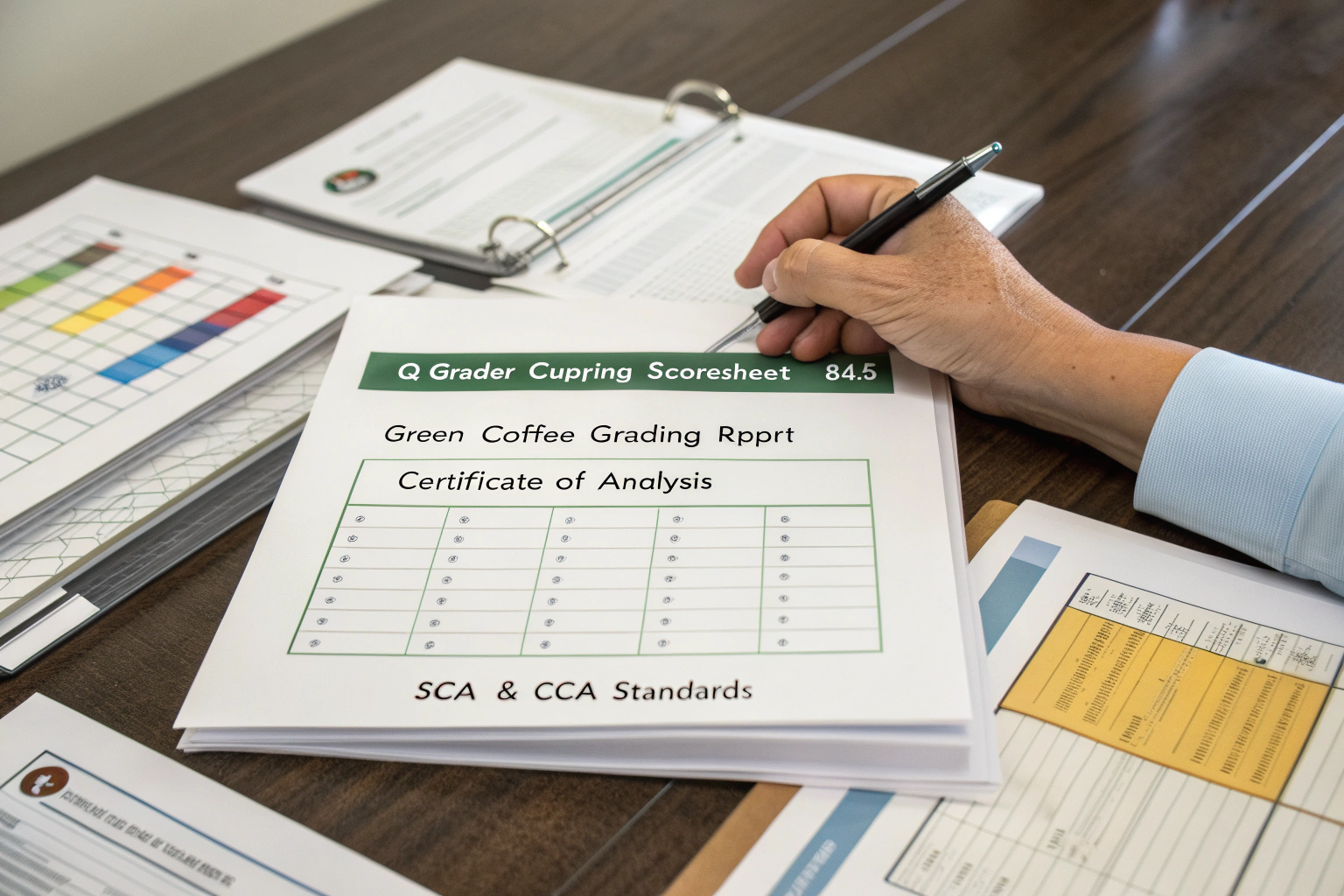
I was on a call with a new client, a sharp roaster from Canada. He had been burned before. He had bought a container of "Grade 1" coffee from another origin, and when it arrived, the roast was inconsistent, and the cup was a muddled mess. He was skeptical. So I did not send him a brochure. I sent him our quality dossier for a recent shipment. It contained the SCA scoresheet from our Q-Grader, the physical grading report showing zero primary defects, the moisture and water activity readings, and a link to independently verify our BRCGS certification. A week later, he called me back. "This is what I needed," he said. "Not a story. Data."
Reliable coffee bean quality is ensured by a rigorous, multi-layered system of internationally recognized standards, starting with the objective physical and sensory classification of the SCA and CCA grading systems, secured by a HACCP-based food safety management system like BRCGS, and finally verified by a buyer's own contractual specification and independent Pre-Shipment Sample approval.
A quality promise is just words. A quality guarantee is a set of auditable, verifiable standards. Let me explain the exact framework that protects your business. At Shanghai Fumao, this is the architecture of our entire Quality Control program.
How Do the SCA and CCA Grading Standards Define Physical and Sensory Quality?
A claim of "high quality" is meaningless without a specific, objective, and universally understood standard to measure it against. In the global coffee trade, two essential systems provide this language. They are the foundation of every reliable contract. Understanding these two standards and their relationship is the first step to guaranteeing what you buy.
The SCA and CCA standards define physical and sensory quality by providing a unified, measurable framework: a strict physical defect count on a 350g sample and a calibrated sensory evaluation on a 100-point scale, which together classify a coffee as Specialty Grade, with the CCA's Chinese national standard being deliberately harmonized with the international SCA protocol.
This is a global language. At Shanghai Fumao, our own internal grading system is built upon and fully aligned with these national and international standards.
What Makes the SCA 350g Defect Count a Universal "Pass/Fail" Test?
The sensory score is the art. The physical defect count is the science. Before we ever taste a coffee, it must pass a rigid, objective physical exam that is the same for a coffee from Colombia, Ethiopia, or our farm in Baoshan. This is your best defense against a container full of broken, moldy beans.
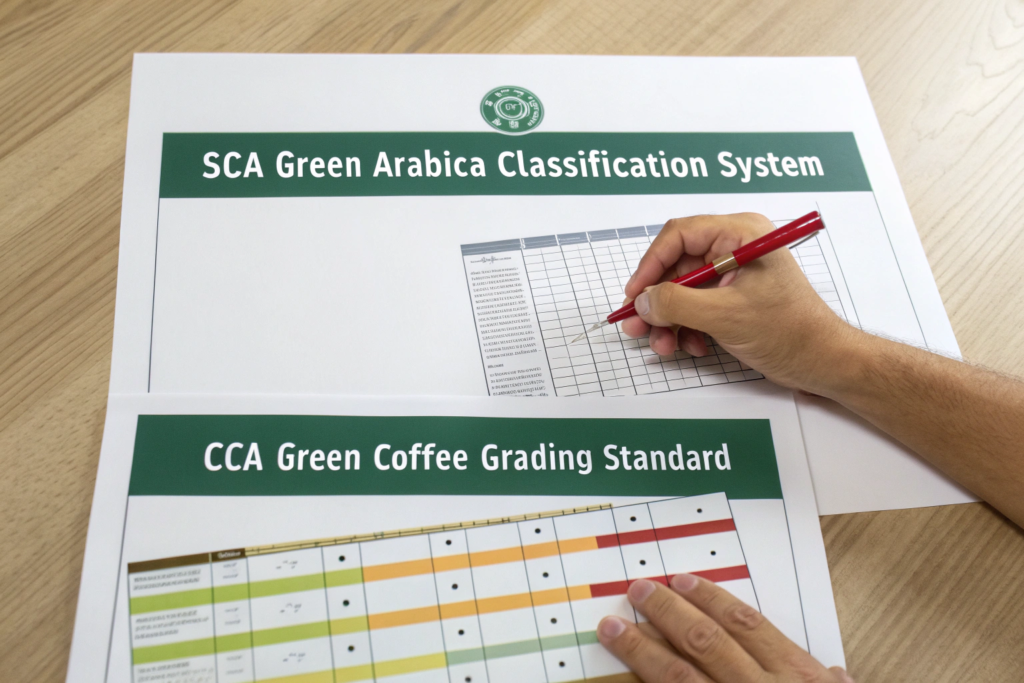
The test is performed on a standard 350-gram sample of green coffee. A trained grader meticulously sorts the sample on a black mat, identifying and counting every imperfection using the official SCA Defect Handbook. To be classified as SCA Specialty Grade, the lot must have zero Category 1 (primary) defects, such as a full black bean. It is also allowed a maximum of five Category 2 (secondary) defects. This single, universal, and objective pass/fail test is your guarantee of physical integrity. A lot that fails this test is not a premium product. This is how we ensure your coffee is clean, as detailed in our guide on How to Ensure Your Coffee Supplier Isn't Mixing Lower Grade Beans?. You can find the official standards on the Specialty Coffee Association website.
How Does a National Standard Align with a Global One to Build Trust?
A smart international buyer might ask, "That SCA standard is great, but does China just follow its own, possibly lower, rules?" The answer is a definitive no, and this is a crucial point of trust. The Chinese national standard is not a separate, weaker system.
China's national standard for green coffee quality, defined by the China Coffee Association (CCA), is deliberately and transparently aligned with the international SCA protocol. This means a "CCA Grade 1" coffee is evaluated against the same defect counts as an SCA Specialty Grade coffee from anywhere else in the world. When your contract specifies "CCA Grade 1," you are legally referencing a standard that is harmonized with the global benchmark. This dual validation eliminates the fear of a lower, local standard and ensures that your coffee is being measured on a world-class scale, a point we explore further in What Is the Role of the China Coffee Association in Export Quality?.
How Do Certifications Like BRCGS Guarantee a Food Safety Culture?
Great taste and physical perfection are worthless if the coffee is not safe. A single food safety incident can destroy a brand. This is where a certification like BRCGS moves beyond quality and into the realm of a legally defensible guarantee. It is not just a certificate; it is evidence of a living, breathing, and independently verified food safety culture.
A GFSI-benchmarked certification like BRCGS guarantees a food safety culture by requiring a comprehensive HACCP plan, unannounced audits that verify daily operational reality, and a management system that turns safety from a set of rules into a verifiable, everyday practice.
This is your protection against physical and biological contamination. At Shanghai Fumao, we invest in the highest level of this certification, achieving a BRCGS AA grade through unannounced audits. We are transparent about this; you can learn more about verifying it in How to Find a Coffee Supplier with BRCGS Food Safety Certification?.
What Is the Role of a HACCP Plan in Preventing Physical Contamination?
A clever name for a coffee lot or a great story from the farm cannot protect your grinder from a stray piece of metal. A Hazard Analysis and Critical Control Points (HACCP) plan is the scientific, engineering-level defense against physical contamination. It is the system that guarantees the bag of coffee you receive is free from dangerous foreign objects.
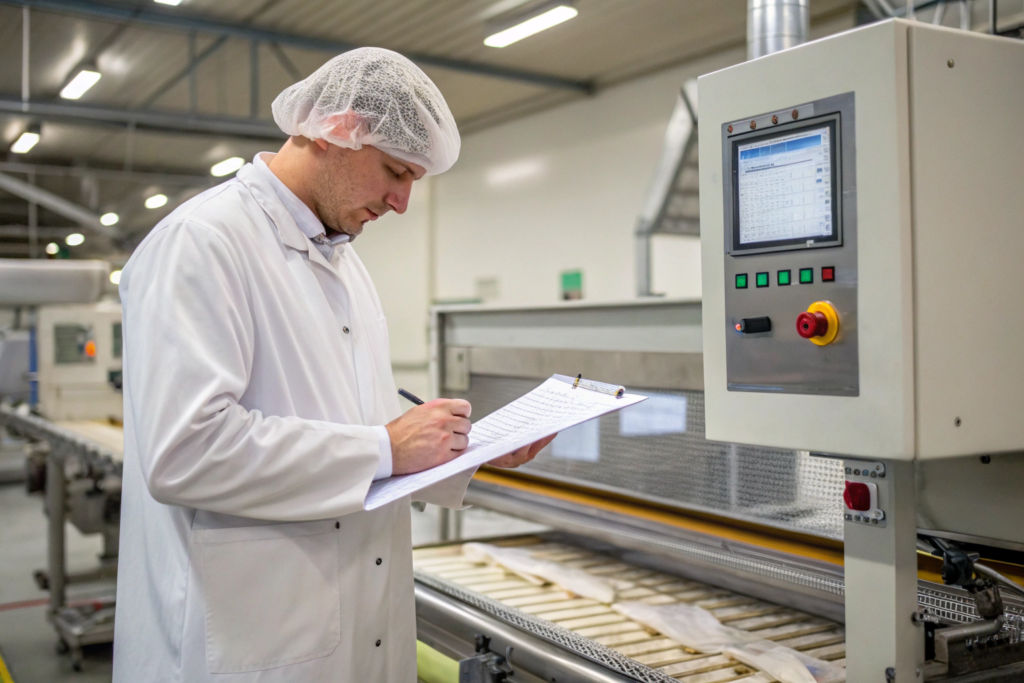
The HACCP plan identifies where a physical hazard, like a metal fragment from a huller, could enter the process. It then designates a "Critical Control Point" (CCP) to eliminate it. In our dry mill, the final metal detector before bagging is the definitive CCP. This is not just a machine; it is a managed, audited procedure. Our operator performs a documented check every two hours with a certified test sphere. If the machine fails, a pre-written corrective action is triggered, quarantining all affected product. Every check and every action is logged. This is auditable, scientific proof that your coffee is physically pure. You can read more about this process in How to Verify a Supplier's HACCP Plan for Coffee Processing?.
How Do "Unannounced Audits" Prove a Supplier's Daily Commitment?
A scheduled audit is a performance. A factory cleans for a week, preps the paperwork, and puts on a show. An unannounced audit, like the one required for a BRCGS AA grade, is a probe of reality. It is the ultimate test of a supplier's genuine, everyday commitment to safety.
We voluntarily opt into the unannounced audit program. An auditor can arrive at our gate on any random Tuesday within a 90-day window. What they find is our real factory: the actual state of the floor, the live CCP monitoring logs, the unscripted behavior of our staff. An AA grade certifies that our systems were fully compliant on that random day. This is the highest form of trust a supplier can offer. It is an audited guarantee that we do not just prepare for inspections; we live the standard every single day.
How Can a Roaster Create Their Own Ironclad Contractual Standard?
You now understand the independent, third-party standards that ensure quality. The final and most powerful standard is the one you create yourself. It is the contractual language that binds all of these external verifications into a specific, measurable, and legally enforceable guarantee for your business. This is what separates a hopeful buyer from a protected one.
A roaster creates an ironclad contractual standard by embedding the objective language of the industry's quality and safety frameworks directly into their purchase contract, explicitly stating the required SCA/CCA grade, the minimum cupping score, the acceptable moisture range, and the specific food safety certification, along with the pre-agreed financial remedy if that standard is not met.
This is not about being confrontational. It is about being professional and creating absolute clarity from the outset. At Shanghai Fumao, we welcome and actively encourage our partners to build this level of detail into our contracts. You can see a template of this in our guide on How to Write a Clear Specification Sheet for Your Coffee Bean Order?.

What Specific Language Should You Include for a Quality Dispute?
A vague clause about "good quality" in a contract is a recipe for a costly, relationship-damaging legal dispute. Smart buyers use the precise, published language of the industry's own standards to create an objective, third-party verifiable benchmark for quality.
Your contract should state that the green coffee must score a minimum of, for example, 83 points on the SCA cupping form with no single attribute below 7.5, and that it must have zero Category 1 defects in a 350g SCA standard evaluation. It should also reference the correct standard, such as the CCA Green Coffee Grading Standard. Using this specific language leaves no room for subjective argument about what "good" means. If a lot fails, the failure is defined. The most critical clause is the pre-agreed remedy: a price allowance of a specific dollar amount per pound, a replacement, or a return.
How Does a Pre-Shipment Sample Transform the Contract into a Guarantee?
The best contract in the world is still just a promise on paper. The true moment of verification, the point where the standard is transformed from a written specification into a physical reality, is the Pre-Shipment Sample (PSS). This is where you, the buyer, become the final, most important quality gate.
Before a container of our coffee is sealed, we pull a true, representative sample from your exact lot and ship it to you. You then become the independent verifier. You can perform your own physical defect count on the 350g sample. You can roast it and cup it yourself. This is the ultimate application of the standards. Your personal verification of the SCA/CCA criteria on the PSS is the definitive quality control that guarantees the container will meet the ironclad specification you wrote into the contract. For a complete guide, see our article on How to Get a Pre-Shipment Sample Approved for Coffee Wholesale?.
Conclusion
Reliable coffee bean quality is not an accident or a subjective judgment. It is the predictable, verifiable outcome of a system of rigorous, internationally harmonized standards. The SCA and CCA grading systems provide the universal, objective language of physical and sensory quality. A BRCGS food safety certification, verified by unannounced audits, guarantees a culture of process safety. And finally, your own carefully crafted, ironclad contract and your personal approval of a Pre-Shipment Sample seal the guarantee.
At Shanghai Fumao, we do not just talk about quality; we grade it, certify it, and contract it to these exact, published, third-party verifiable standards. Our quality dossier is always ready for your review.
If you want to experience this system firsthand, I invite you to receive a Pre-Shipment Sample of our current Grade 1 lot, accompanied by our full internal scoresheet and a sample contract with our ironclad quality clauses.
Email Cathy Cai. Ask for a "Quality Standards Verified Sample and Spec Sheet Pack."Contact Cathy at: cathy@beanofcoffee.com