I once received a panicked call from a client. Her container of certified organic coffee had just arrived at the Port of Oakland. Her customs broker had filed the entry, but U.S. Customs had flagged the shipment. The reason was simple and devastating. Her coffee's USDA Organic certificate, the NOP Import Certificate, had expired while the container was on the water. The coffee, worth over $80,000, could not be legally cleared as "Organic." She faced the immediate, costly choice of re-exporting the container or accepting it as a conventional, lower-value product. She had assumed all the paperwork was in order when the ship left Shanghai. She had never checked the expiry date.
Coffee certifications expire mid-shipment because a certificate's annual validity period can end during the 4-6 week ocean voyage, which is legally the seller's obligation to prevent, and you can protect yourself by not just accepting a paper certificate, but by independently verifying the current, real-time status of every certification on the issuing body's public online directory before the vessel departs.
A valid piece of paper on the day the coffee is loaded is not a guarantee that it will be valid when the coffee arrives at your border. This is a critical, often overlooked, risk. Let me explain how to prevent it. At Shanghai Fumao, this is a core part of our pre-shipment compliance check, as detailed on our Logistics & Planning page.
Why Do Certificates Have Fixed Expiry Dates That Can Lapse During Transit?
The root cause of this devastating problem is a simple, mathematical conflict between two fixed systems. One is the administrative calendar of a certification body. The other is the physical timeline of global logistics. They operate on different clocks, and it is the supplier's legal and professional duty to synchronize them. A failure to do so is not an accident; it is a preventable compliance failure.
All major food safety and ethical certifications, from BRCGS and Organic to Rainforest Alliance, operate on a fixed annual cycle, requiring a successful on-site audit that results in a certificate with a hard "Valid From" and "Valid To" date, and if a container's estimated arrival date falls even one day after that expiry, the shipment can be legally refused at the destination port.
This is not a matter of leniency. A customs computer system has no discretion. If the certificate's expiry date has passed, the certificate is legally invalid. It is a binary, pass-fail logic. The PDF that was perfectly valid when the coffee was stuffed into the container is worthless when the container is sitting at the dock. The responsibility for preventing this lies entirely with the exporter.
Why Is "Time at Sea" a Hidden Variable in Certificate Management?
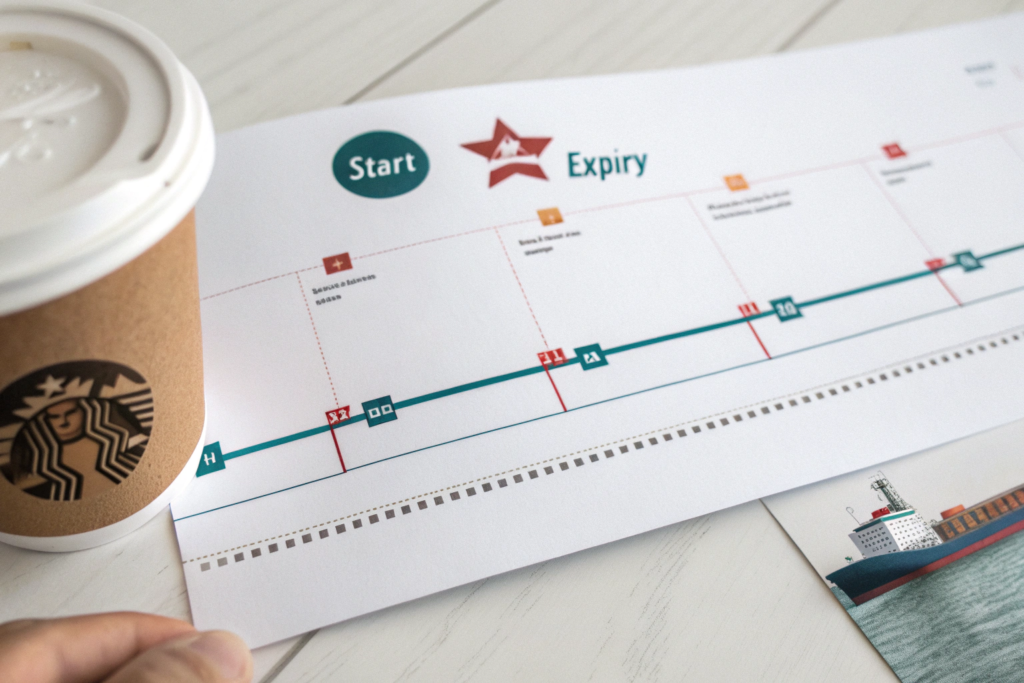
Most suppliers and buyers focus on the departure date. "We have all the documents," they say. "Everything is valid." They forget that the legal point of entry is not the departure date, but the arrival date. The 30-45 days a container spends on the ocean is a hidden window of risk that must be actively managed for every certificate.
A valid certificate must be valid for the entire journey, right up to the moment it is scanned by a customs officer. A certificate with just two months of remaining validity left before sailing might seem fine. But a 45-day voyage, plus a week of port delays, could very easily push the arrival date past the expiry. A professional supplier manages this risk by maintaining a dynamic compliance calendar for every single shipment and ensuring that every certificate has a comfortable buffer, typically a minimum of 3-6 months of remaining validity, beyond the latest estimated arrival date. This is a core standard of our Quality Control program.
What Types of Coffee Certifications Are Most Vulnerable to This Risk?
Not all certifications carry the same legal weight at the border. A generic "membership" certificate from a trade association is not a legally mandated import document. The highest-risk, most damaging lapses are for certifications that have direct, hard legal and financial consequences at the destination port.
The most critical certificates to monitor are those that define the product's legal and market status. For the U.S. market, the NOP Import Certificate is the definitive document for the organic claim, and a lapse means the coffee is legally conventional. A destination market's organic certificate has the same effect in the EU or Japan. For food safety, the BRCGS certificate demonstrates compliance with rigorous standards to a retail buyer. And for sustainable sourcing programs, a lapsed Rainforest Alliance certificate means your shipment cannot be sold under that seal. A failure on any of these is not a minor paperwork issue; it is a catastrophic loss of certified value. You can learn to verify these yourself, using the process we outline in How to Find a Coffee Supplier with BRCGS Food Safety Certification?.
How Can a Roaster Independently Verify the "Real-Time" Validity of a Certificate?
We have established that a PDF of a certificate is just a piece of paper, and its validity is time-sensitive. The antidote to this risk is radical and empowering: you must verify the status of a supplier's certifications yourself, directly with the source. The certifier's own public, online database is the only source of truth you should trust. Do not rely on the supplier's copy. Check the original.
A roaster can verify the real-time validity of any major certification by requesting the certificate's unique public identifier, such as a BRCGS Site Code or an Organic Certificate Number, and then independently checking that code on the certification body's official public directory, which will show the current, live status and the exact expiry date.
This is a simple, free, five-minute check that should be a mandatory part of every new supplier qualification and a regular practice before every major shipment. A transparent supplier will not only tolerate this; they will encourage it.
What Is the "BRCGS Directory" and How Does It Prove an Audit Happened?
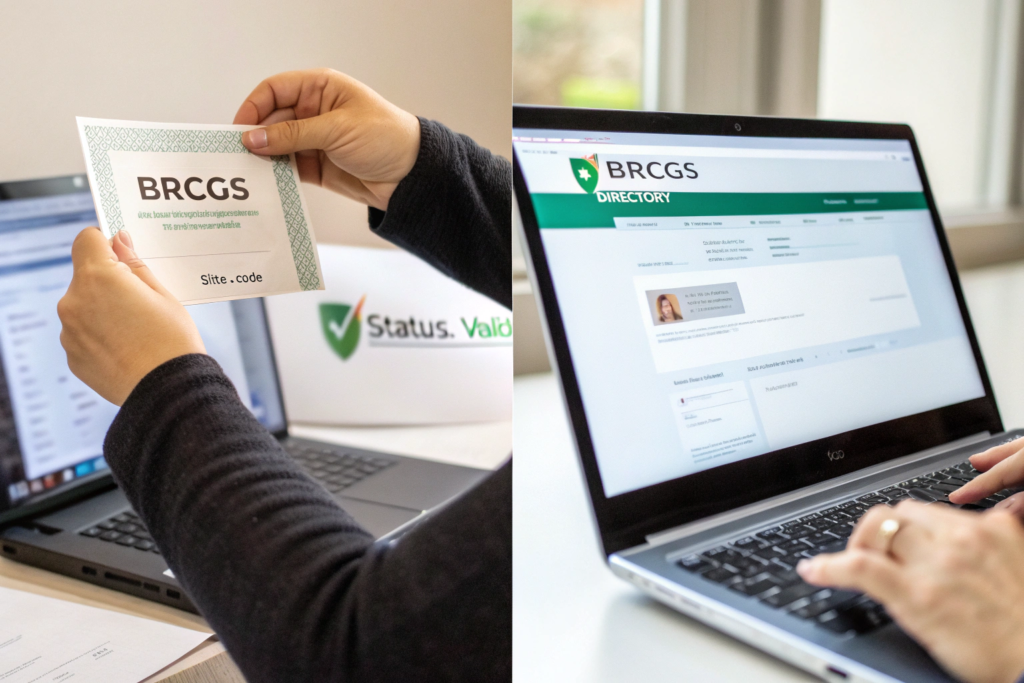
The BRCGS Global Standard is one of the most rigorous and respected food safety certifications. But its value lies in its public verification system. A PDF of a BRCGS certificate is easily forged. The BRCGS Directory is a tool that makes fraud impossible. It is the definitive answer to the question, "Did this audit actually happen, and is it still valid?"
Ask your supplier for their unique "BRCGS Site Code." Then, navigate directly to the official "BRCGS Directory" website. Enter the code. The public database will instantly tell you the current certification status of that specific facility. It will show the audit grade (AA, A, B, etc.), the scope of the certification, and the exact expiry date. If the certificate cannot be found, or the status is "Expired," the supplier's claim is invalid. As we explain in How to Find a Coffee Supplier with BRCGS Food Safety Certification?, this is your ultimate defense against food safety fraud.
How Can a Platform Like "Fairtrade International" Verify a License Status?
The same principle of independent, live verification applies to ethical certifications. A Fairtrade logo on a website can be easily copied. A valid, active Fairtrade license is a specific legal status that can be verified through the system's official tools.
For a U.S. buyer, you can visit the Fairtrade America website and use their "Find a Licensee" or product search tool to verify the status of a company's license. For an international check, the FLOCERT database, which is the independent certifier for Fairtrade, serves a similar function. A supplier with a current and active license is compliant. A supplier who hesitates to provide their license number or whose number does not appear in the database is operating outside the system. This is a non-negotiable due diligence check for any buyer making a Fairtrade claim.
How Can a Proactive Supplier Prevent This from Ever Being a Problem?
While you can and should verify a supplier's certifications yourself, the true mark of a world-class partner is that they make this entire process invisible to you. They accept the responsibility for managing certificate validity and build a proactive system that guarantees a compliance crisis will never reach your desk. They see a potential lapse coming months in advance and fix it long before a container is ever stuffed.
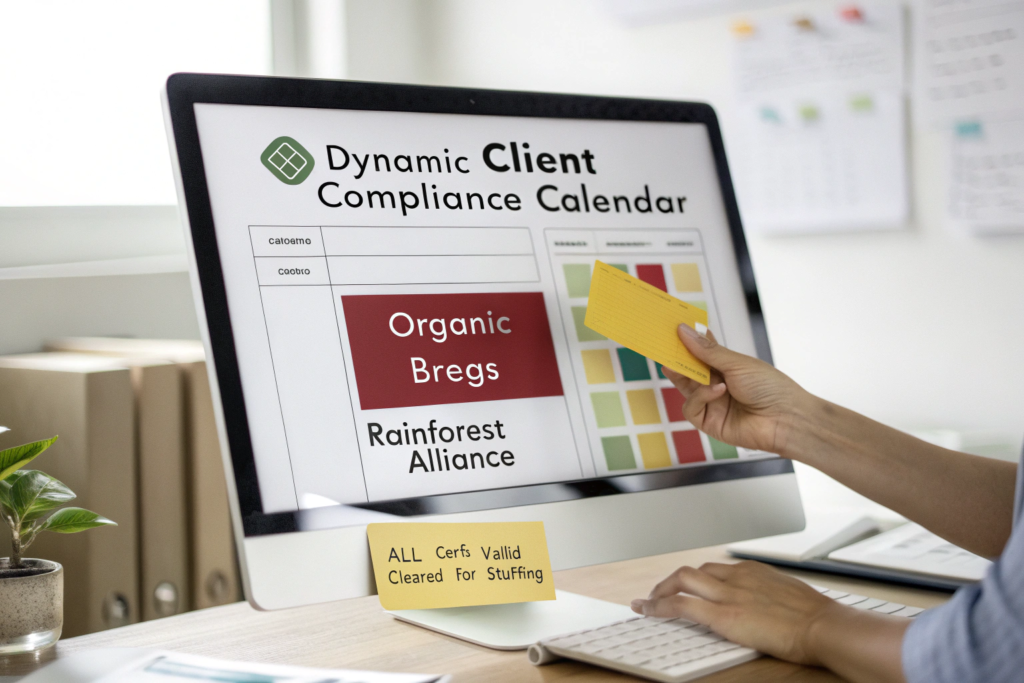
A proactive supplier prevents mid-shipment expiry by using a dynamic logistics calendar that tracks and alerts on the expiry dates of every critical certification for every client's shipment months in advance, and by scheduling the required annual re-audits to ensure a new, valid certificate buffer exists before any coffee bound for that client is shipped.
This is the difference between a supplier who reacts to a problem and a supplier who has a system to prevent it. At Shanghai Fumao, this is the daily work of Cathy and her logistics team.
What Is a "Pre-Shipment Compliance Check" and Why Should You Demand It?
A final, systematic pre-shipment audit of all documents is the last line of defense. This is not a cursory glance. It is a formal, documented check by a logistics professional who knows exactly what to look for. You should demand evidence of this check from your supplier.
A few days before a container is scheduled to be loaded, our logistics team pulls the complete documentation package for that specific shipment. They verify that the organic certificate will be valid for a minimum of six months after the estimated arrival date. They check the BRCGS directory to confirm the site's status is "Valid." They confirm the Rainforest Alliance license is current. Only when every single certification for that specific client and that specific destination passes this check does the shipment receive the final "Cleared for Stuffing" status. Asking your supplier if they perform this specific check is a powerful question.
How Does a Supplier's Audit Schedule Prevent Last-Minute Panic?
A supplier who is scrambling to pass an audit a week before your coffee is supposed to ship is a supplier who is not in control. A mature food safety and compliance culture is defined by long-term planning, not last-minute panic. The timing of an annual re-audit is a strategic business decision.
We plan our annual organic, Rainforest Alliance, and BRCGS re-audits for the same time every year, strategically scheduled to occur several months before our peak shipping season. This guarantees that every container of coffee we ship is covered by a brand-new certificate with a full 12 months of validity remaining. This long-term, proactive scheduling is the single most effective way to eliminate the risk of a mid-shipment expiry. It is a key indicator of a sophisticated, well-managed operation, and it is a question you should ask any new supplier.
Conclusion
The nightmare of a coffee certification expiring mid-shipment is a preventable supply chain failure. It comes from a supplier who is merely reactive, who treats a certificate as a static piece of paper rather than a living document with a hard, binary deadline at the destination port. Your protection is twofold. You must become an independent verifier, using the public directories of certifiers like BRCGS and Fairtrade to check the real-time, live status of a supplier's credentials before your coffee sails.
And, more fundamentally, you must choose a partner who has built a system that makes this risk impossible. A proactive supplier does not just have a certificate; they have a managed compliance calendar that anticipates the problem months in advance and resolves it before a container is ever loaded. At BeanofCoffee, Cathy and her team perform this rigorous pre-shipment check on every single order, ensuring your coffee's credentials are impeccable when they arrive.
If you want to experience the peace of mind that comes with a fully managed, proactive compliance program, and you would like to independently verify all of our certifications right now, we invite you to do so. Email Cathy Cai. Ask for our "Public Directory Links and Pre-Shipment Compliance Protocol" document. Contact Cathy at: cathy@beanofcoffee.com