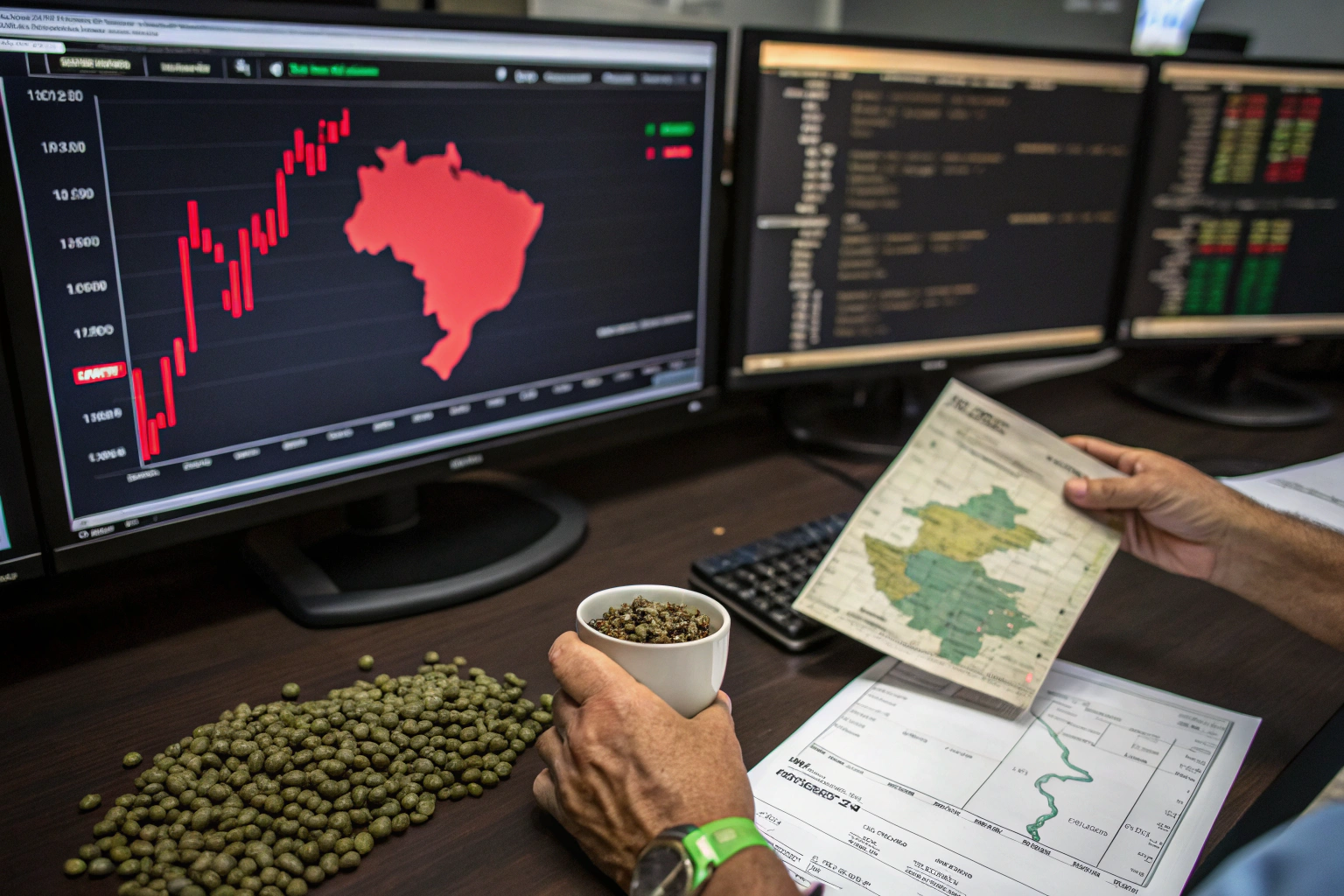
I got a WhatsApp message from a buyer in Germany last Tuesday. He was staring at his inventory sheet and panicking. His landed cost for a container of Arabica had jumped 18% in six weeks. He wanted to know if I was raising my prices too. I had to tell him the truth. My prices were up. Not because I wanted them to be. But because every input—fertilizer, labor, shipping—had climbed. And the global market was not cutting anyone a break.
Coffee prices are rising worldwide right now due to a perfect storm of supply shortages in Brazil and Vietnam, surging shipping costs on critical trade routes, depleted global inventory stocks, and speculative buying on commodity exchanges that amplifies every weather headline into a price spike.
This is not a single-factor story. It's a chain reaction. One shock triggers another, and before you know it, the cost of your morning cup is up 30 cents. As a farmer, I feel the squeeze from the cost side. As an exporter, I see the shock in my buyers' eyes when I send the updated quote. Everyone along the chain is adjusting to a new reality. The cheap coffee era is taking a beating right now.
What Is Causing the Supply Shortage in the Global Coffee Market?
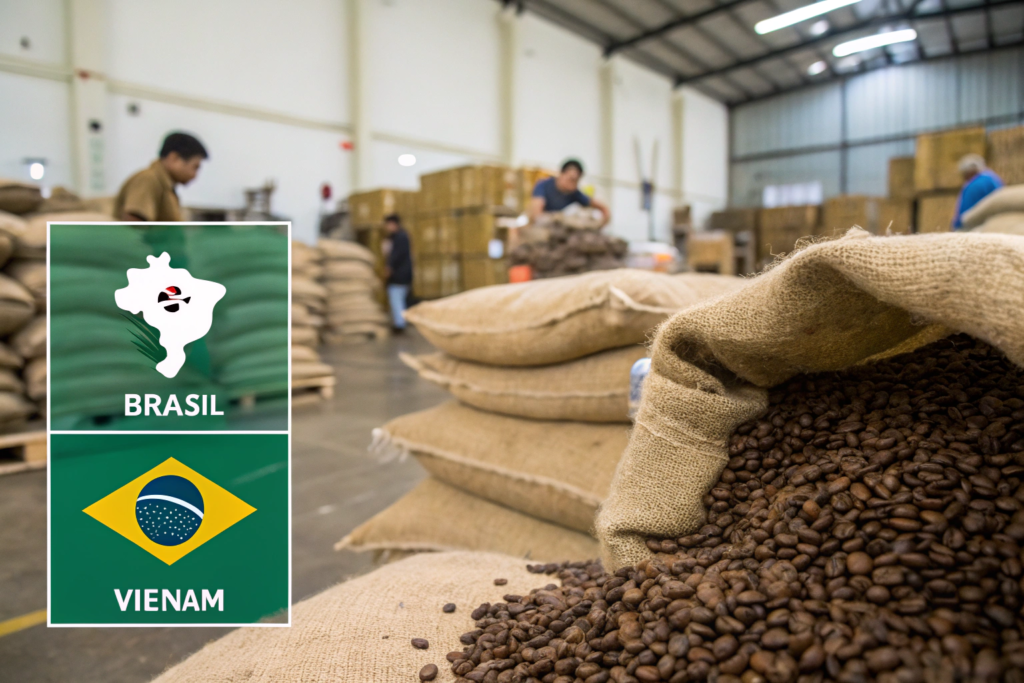
Supply is the engine of the coffee market. When supply sputters, prices roar. Right now, the engine is misfiring on two of its biggest cylinders. Brazil, the world's largest Arabica producer, and Vietnam, the Robusta king, are both struggling. These are not small hiccups. These are structural production shortfalls.
The current supply shortage is driven by severe drought followed by frost damage in Brazil's Arabica belt and prolonged dry conditions in Vietnam's Central Highlands, which together have cut global coffee output by millions of bags below annual consumption demand for consecutive seasons.
The numbers are stark. Brazil's 2025/26 harvest, already an off-year in the biennial cycle, was hammered by the driest weather in decades during the critical flowering and fruit-setting months. Trees dropped their cherries. The ones that survived produced smaller, lower-density beans. Vietnam's Robusta farms faced a similar water crisis. Irrigation reservoirs ran low. Farmers could not pump enough water to sustain the crop during the dry season. The global balance sheet shows a deficit. Consumption is running at around 175 million bags annually. Production is falling short by 5 to 8 million bags. That gap has to come from somewhere. It comes from the warehouses. And when warehouses empty, the market panics.
How Did Extreme Weather in Brazil and Vietnam Impact Harvests?
Brazil's coffee zones in Minas Gerais and Espírito Santo experienced a brutal sequence. First came a drought that lasted from April through September. The soil moisture dropped to levels not seen since the 1960s. The coffee trees went into survival mode, aborting flowers to save energy. Then, when the rains finally returned, they came with violent hailstorms in some regions that physically stripped cherries off the branches.
Vietnam's story is different but equally damaging. The Central Highlands, where most Vietnamese Robusta grows, rely on a predictable monsoon cycle. The 2024 monsoon was erratic. Total rainfall was below average, and the dry season extended longer than usual. Farmers with access to groundwater pumped heavily, but many smallholders without deep wells saw their trees wilt. The impact on Robusta output was significant. Vietnam exported less coffee in 2024/25 than in any of the previous five years. Robusta prices, which used to trade at a steep discount to Arabica, have shot up to levels that almost erase the traditional spread. This is unprecedented. The cheap filler bean is no longer cheap.
Why Are Global Coffee Inventories at Historically Low Levels?
When production falls short of consumption, the gap is filled by drawing down stored inventory. Coffee is traded globally months before it is roasted. Certified stocks held in ICE exchange warehouses act as a buffer. When those stocks are high, the market feels safe. When they drop, fear enters the pricing.
Right now, ICE-certified Arabica stocks are hovering near historically low levels. The same is true for Robusta stocks in London. Why? Because roasters, facing rising prices and uncertain future supply, have been buying spot coffee aggressively to lock in whatever they can get at current prices. This "panic buying" accelerates the inventory drain. It's a self-fulfilling prophecy. The fear of future shortage causes immediate buying, which creates an immediate shortage in the spot market. I've seen buyers who usually purchase one container at a time trying to secure three or four, just to have a buffer. That surge in demand at origin further tightens the available supply and pushes FOB prices higher.
How Are Shipping Costs and Logistics Disruptions Affecting Coffee Prices?
The coffee can be perfect. 90 points. Beautifully processed. But if it cannot get from my farm to your roastery on time and at a predictable cost, the price you pay is going to rise. Shipping is the hidden multiplier in the coffee price equation. And right now, shipping is a mess.
Shipping costs are inflating coffee prices through elevated container freight rates, extended transit times due to rerouting around geopolitical conflict zones, and port congestion at major hubs that delays the release of coffee from the vessel to the warehouse.
The freight rate from a coffee origin to a consumption market has doubled or tripled compared to pre-pandemic norms in some cases. The Red Sea crisis, which forces vessels from Asia to Europe to sail around the Cape of Good Hope instead of through the Suez Canal, adds two weeks to the journey and massive fuel and insurance costs. For coffee from Vietnam or Indonesia heading to Europe, this is a direct hit. For coffee from Brazil heading to the Middle East or Asia, similar rerouting applies. The global shipping network is not a single market. It's a web of interconnected lanes. A disruption in one lane sucks capacity away from others, driving up rates everywhere.
Why Is Port Congestion Delaying Coffee Deliveries?
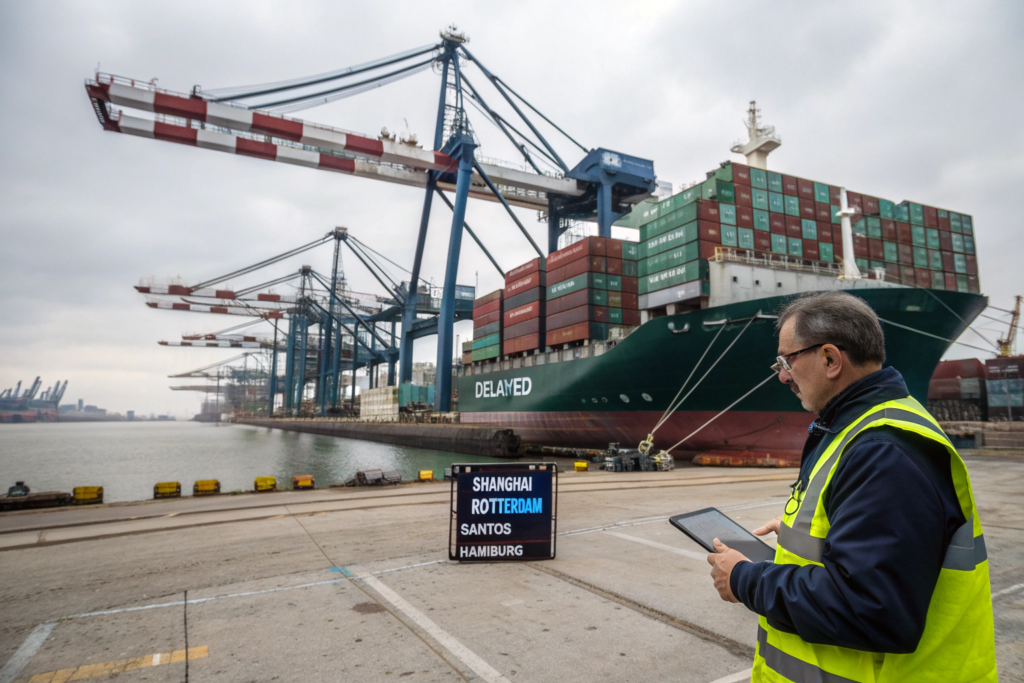
Even when the ship arrives, the coffee is not safe. Major import ports—Hamburg, Los Angeles, Savannah—have experienced waves of congestion. Ships wait at anchor for days, sometimes a week, before a berth opens. The containers sit on the dock waiting to be unloaded and cleared by customs.
This delay has a direct cost. Demurrage charges kick in after the free storage window closes. A container stuck at the port for an extra five days can rack up $1,000 in demurrage fees. That cost gets added to the landed price. But there is also an indirect cost. The roaster is waiting for beans. Their inventory is running low. They might have to buy expensive spot coffee locally to bridge the gap, or worse, pause production. I had a buyer in Los Angeles whose container sat untouched for 11 days because the terminal was backed up. He lost two weeks of roasting time on that lot. The stress alone aged him, I think. He started asking me about air freight, which costs ten times more, just to avoid the port roulette.
How Do Fuel Prices and Container Shortages Factor In?
Bunker fuel, the heavy oil that powers container ships, tracks crude oil prices. With energy markets remaining volatile, shipping lines pass fuel costs directly to the shipper through Bunker Adjustment Factor surcharges. This is a variable line item on the freight invoice that moves with oil.
Then there is the container equipment imbalance. China exports far more manufactured goods than it imports. Empty containers pile up in European and American ports and need to be repositioned back to Asia. Shipping lines charge a premium for the return leg, which is exactly the leg coffee travels on from origins like Brazil, Colombia, or Vietnam to consumer markets. The cost of repositioning an empty box is baked into the freight rate for loaded coffee containers. A container of coffee from Brazil to Europe is essentially subsidizing the return of empty boxes to China. This structural imbalance has existed for years, but in times of high energy costs and logistical strain, the surcharge becomes significant. It's a hidden factor that a coffee buyer never sees itemized, but pays for nonetheless.
What Role Do Currency Fluctuations Play in Coffee Import Costs?
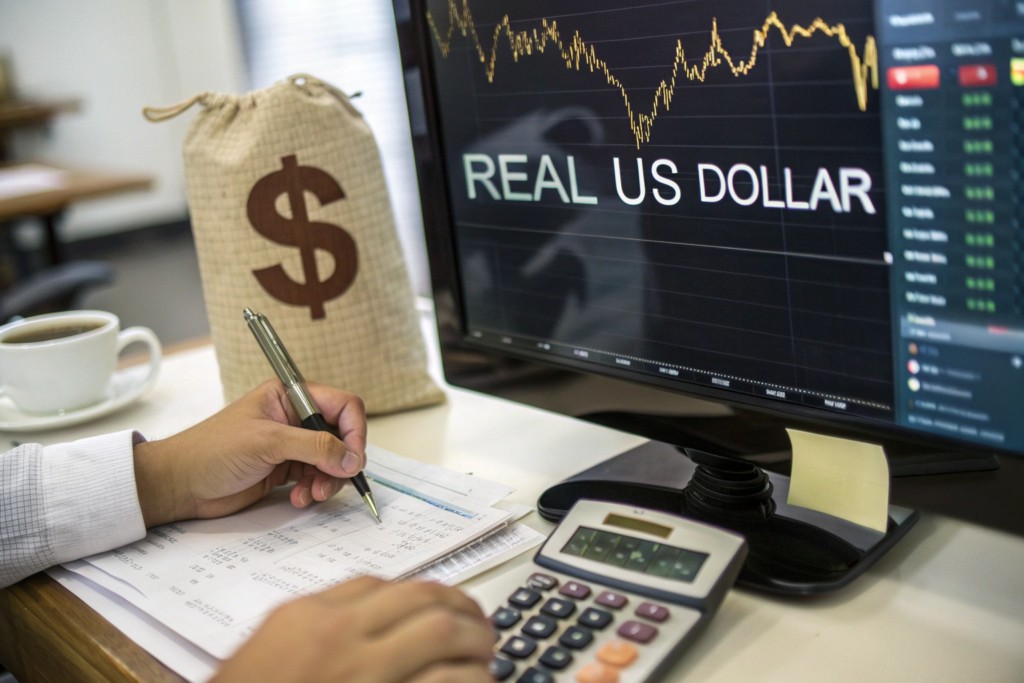
Coffee is traded in U.S. dollars. But it is grown in countries where costs are in local currency—the Brazilian Real, the Colombian Peso, the Vietnamese Dong, the Chinese Yuan. This creates a second layer of pricing that operates independently of supply and demand. Currency markets can amplify or dampen price moves.
Currency fluctuations are increasing coffee import costs because the U.S. dollar has strengthened against many origin currencies, making dollar-priced coffee more expensive for local farmers to produce, while a weaker dollar against some currencies makes importing into those regions more costly.
Here is how it works. A Brazilian farmer pays for labor, fertilizer, and diesel in Reais. If the Real weakens against the dollar, the farmer gets more Reais per dollar of coffee sold. That can incentivize selling and keep dollar prices from rising too fast. But if the Real strengthens, the farmer's dollar revenue converts to fewer Reais. The farmer holds back, waiting for a better rate. Supply tightens. Dollar prices rise. Right now, the currency picture is mixed. The Real has been volatile, swinging between 4.80 and 5.50 to the dollar. This uncertainty makes forward contracting difficult and adds a risk premium.
How Does a Strong Dollar Affect Coffee Farmers?
A strong dollar is a double-edged sword for a coffee farmer. On one hand, coffee sold in dollars brings more local currency when converted. On the other hand, many agricultural inputs are dollar-priced. Fertilizer is a global commodity. Oil, which drives transport and drying costs, is priced in dollars. So, a strong dollar increases the farmer's purchasing power for local goods but does not fully shield them from global input cost inflation.
For us in China, the Yuan has been relatively stable against the dollar, which provides some predictability. But our competitors in Brazil or Colombia face wilder swings. I've spoken to a Colombian producer friend who told me his production cost in pesos rose 15% last year while the dollar price he received was flat. His margin evaporated. He is now asking for higher dollar prices just to break even. This is a microcosm of what is happening globally. The farmer is not necessarily getting rich from high coffee prices. Often, the higher price is simply covering higher costs.
Do Importers Hedge Currency Risk, and Does This Cost Get Passed On?
Large importers and roasters do hedge. They use forward exchange contracts to lock in the dollar-to-euro or dollar-to-yen rate for a future payment. This hedging is not free. It costs a premium based on interest rate differentials between the two currencies.
A roaster in Europe buying a container of coffee for delivery in three months faces two volatile numbers: the C-market price and the EUR/USD exchange rate. They can hedge both. The coffee price via futures, the currency via a forward. But these hedging costs add up. For a small to medium roaster, hedging is often too complex and expensive. They take the spot rate and hope for the best. When the currency moves against them, they eat the loss. Either way, the cost of managing currency volatility, or the risk of not managing it, gets built into the retail price. There is no free lunch in international trade.
How Is Speculation Driving Up Coffee Futures Prices?
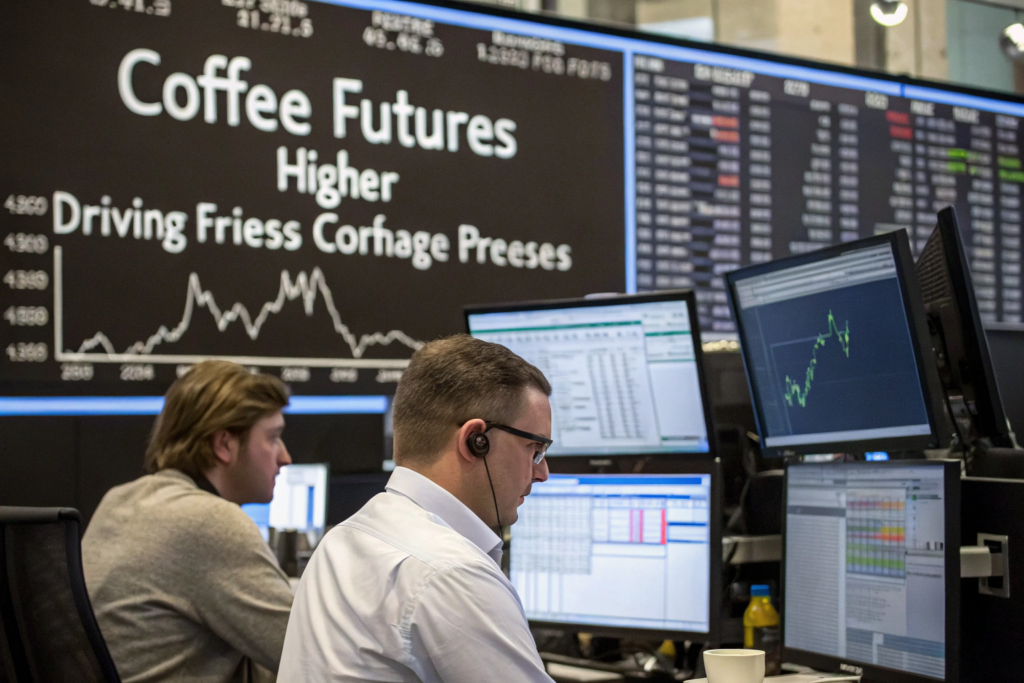
Not everyone buying coffee futures plans to take delivery of 37,500 pounds of green beans. In fact, most don't. The ICE Arabica futures market is populated by hedge funds, commodity index funds, and algorithmic traders who buy and sell contracts based on macro trends, technical chart patterns, and weather news. They never see a coffee bag. But their trades set the price that physical coffee buyers pay.
Speculative activity is driving coffee futures prices higher because algorithmic trading amplifies weather headlines into outsized price moves, and momentum-driven funds pile into long positions in commodities as a hedge against broader inflation, creating a price floor that physical buyers must accept.
When a weather report predicts a cold front in Brazil, a human trader might pause and assess. An algorithm scans the keyword "frost," cross-references it with historical price reactions, and buys within milliseconds. A thousand other algorithms do the same. The price spikes before any actual damage to the crop is confirmed. This "headline trading" injects volatility that is disconnected from physical coffee supply. The market moves on fear of shortage, not confirmed shortage. For a farmer, this creates wild swings in the board price. I can watch the screen change 5% in a day on a rumor. My coffee didn't change. The cost to grow it didn't change. But the reference price for my next sale just bounced around like a pinball.
Can Speculation Create a Price Bubble in Coffee?
Yes, and it has happened before. In 1977, the infamous "Black Frost" destroyed a large portion of Brazil's crop, but speculators had already driven prices to extreme highs before the full impact was known. Prices later crashed. The boom-bust cycle is a recurring feature of commodity markets.
The current situation has elements of a speculation-driven rally. The supply fundamentals are genuinely tight. But the speed and amplitude of the price moves suggest that non-commercial money is amplifying the trend. When investment banks publish bullish reports on soft commodities, money flows into exchange-traded funds that track coffee futures. These funds buy contracts regardless of the day-to-day news. Their buying creates upward pressure that attracts more momentum traders. The cycle feeds itself. The danger is that this liquidity-driven rally can detach from the underlying physical market. A roaster may see a futures price of $3.00 per pound, but the actual physical coffee of comparable quality might not be available at that price. The futures price is an index. The physical coffee is a specific lot with specific attributes. The gap between the two, the basis, can widen dramatically in a speculative frenzy.
How Should Physical Coffee Buyers Navigate a Speculative Market?
The first rule is to not panic. Do not chase the screen. The futures price is a reference, not a destiny. Your relationship with the producer or exporter is your anchor.
Use forward contracts to lock in a fixed price for a specific delivery period, divorced from the daily noise. Negotiate a floor price with a premium-sharing mechanism if the market moves above a certain level. This keeps the farmer motivated to deliver and gives the buyer protection against further spikes. Diversify your sourcing. If your entire coffee program depends on one origin that is in the center of a speculative storm, you are vulnerable. Having a relationship with an origin like Yunnan, which is less exposed to the algorithmic headline trading focused on Brazil, provides a stabilizing force in your portfolio. At BeanofCoffee, we prefer the fixed-price contract model precisely because it removes the speculative noise. We agree on a fair price that covers production and a margin, and we both sleep at night.
Conclusion
So, why are coffee prices rising worldwide right now? It's not one reason. It's a pile-up. Supply is short because weather slammed Brazil and Vietnam. Shipping is expensive and slow because geopolitics and congestion choke the trade lanes. Inventories are low because fear has triggered a buying scramble. Currencies are swinging, adding financial friction. And speculators are riding the trend, amplifying every headline. Each factor alone would be manageable. All of them together create the price environment we are living in.
For a buyer who is price-sensitive, this market is a stress test. But it is also a sorting mechanism. It separates buyers who rely on spot market luck from buyers who have built supply chain partnerships. The latter are paying more than they did two years ago, yes, but they are not panicking. They have contracts. They have relationships. They have transparency.
If you are looking for a supply partner that offers price stability and predictability in this chaotic market, let's talk. We contract directly, we price based on real costs, and we ship on time. Reach out to Cathy Cai at cathy@beanofcoffee.com to discuss how a fixed-price forward contract with our farm can shield your business from the worst of the volatility.