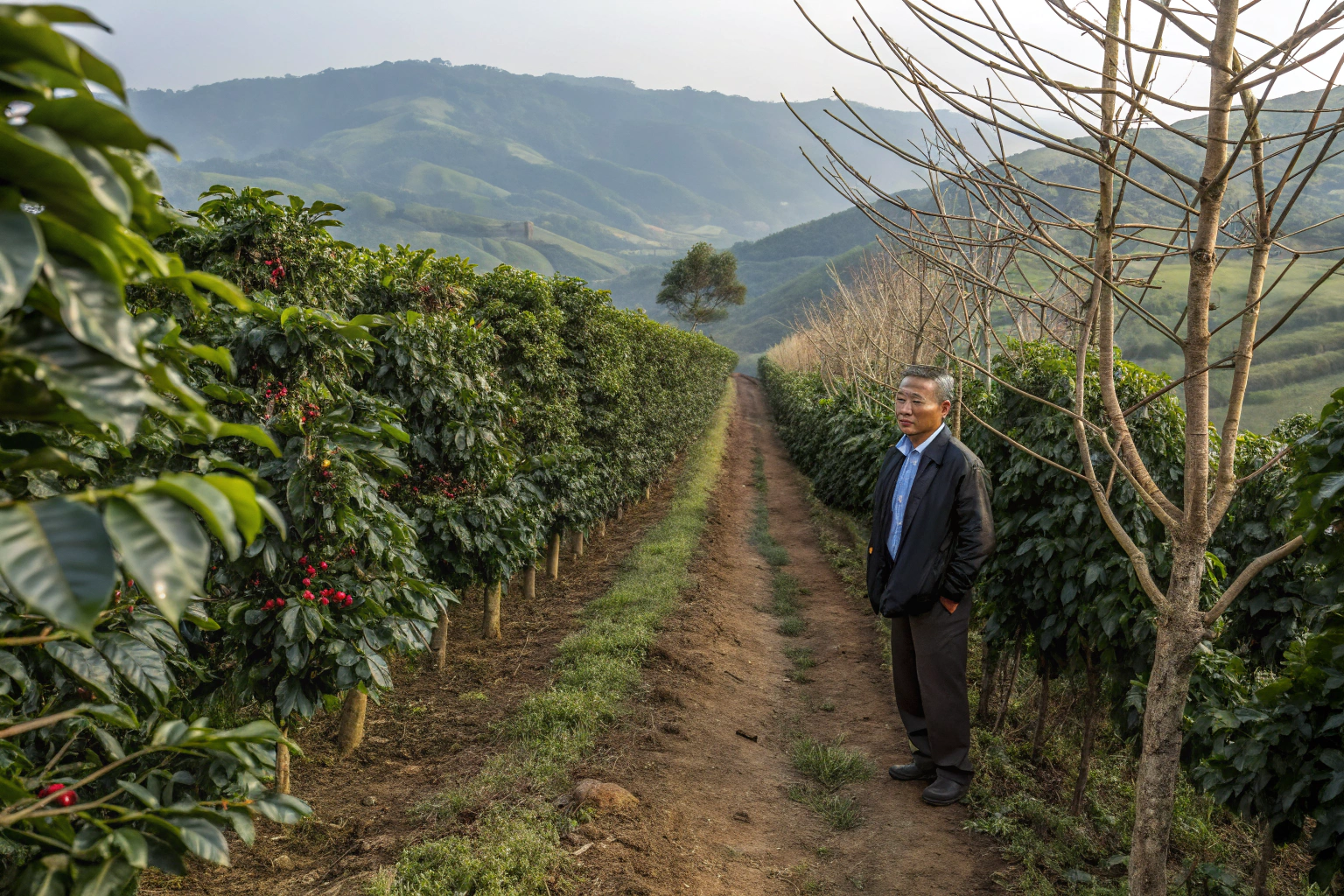
I used to hate Catimor. There, I said it. Ten years ago, I thought it tasted flat and boring. I wanted to grow only classic Arabica varieties. Then leaf rust hit our neighbor’s farm in Baoshan City. His Typica trees lost almost every leaf. His harvest dropped by half. Our Catimor trees stayed green and healthy. That season, we shipped coffee while he struggled to survive. That is when I changed my mind. Disease resistance is not a small feature. It is money. It is stability. It is the difference between a farm that lasts and a farm that closes. At BeanofCoffee, Catimor is a core part of our 10,000-acre operation. Let me explain why it lowers farming costs and why buyers should care.
So let me walk you through the real economics of disease resistance, not just the science.
What Makes Catimor Resistant to Disease?
Catimor is a hybrid. It comes from a cross between Caturra and a Timor hybrid. The Timor hybrid carries genes from Robusta. Those genes give it strong resistance to coffee leaf rust. Leaf rust is a fungus. It attacks the leaves and weakens the tree. A weak tree produces few cherries. Sometimes it dies. So resistance matters a lot. Catimor also shows good tolerance to coffee berry disease in some regions. This does not mean it never gets sick. It means it fights back better. It recovers faster. It keeps producing. That resilience is the foundation of its value. You know, farming is a fight against nature. A tree that fights well saves you money.
What is coffee leaf rust and why is it so damaging?
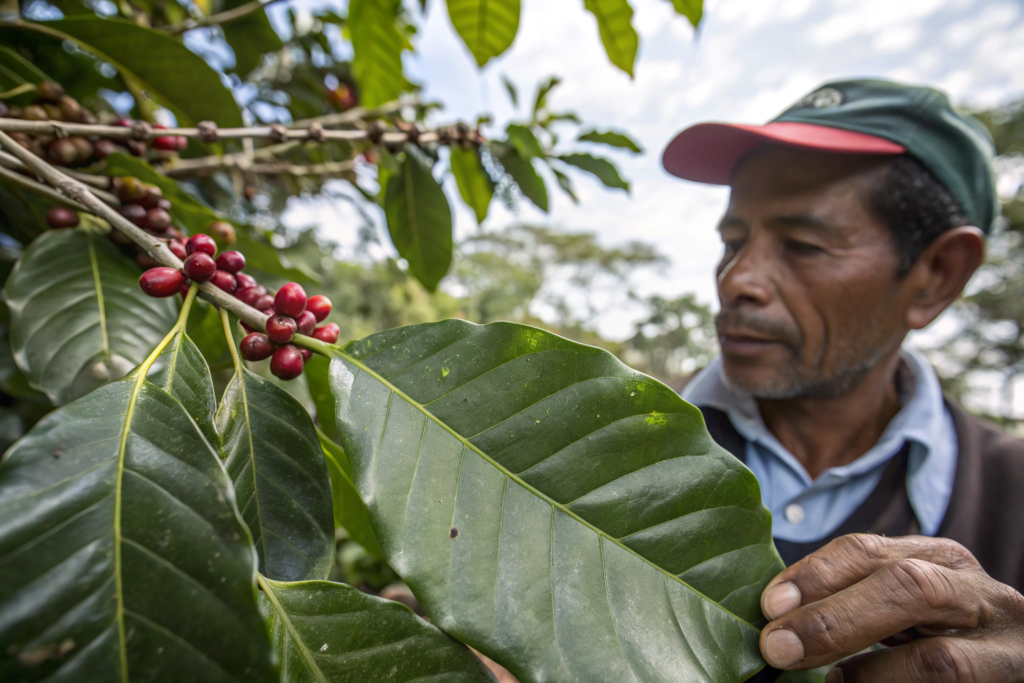
Coffee leaf rust is a fungus called Hemileia vastatrix. It shows up as orange-yellow powder on the underside of leaves. Then the leaves fall off. Without leaves, the tree cannot make energy. So it drops its cherries. It stops growing. In bad years, whole farms lose most of their crop. In the 2012 outbreak in Central America, rust caused over one billion dollars in damage. Farmers lost jobs. Some left coffee farming forever. That is how serious this disease is. So a resistant variety is not a luxury. It is protection. It is insurance you plant in the ground.
How does Catimor's Robusta lineage help it survive?
Catimor's Robusta lineage gives it a genetic shield. Robusta is naturally tougher than Arabica. It resists rust, nematodes, and some root diseases. When breeders crossed Robusta with Arabica, they passed some of that toughness to Catimor. So Catimor keeps Arabica's flavor and adds Robusta's strength. This does not make it bulletproof. Heavy rain and poor management can still cause problems. But it survives better than most Arabica varieties. That survival is worth real money. Every tree that lives is a tree that pays you back.
How Does Disease Resistance Lower Farming Costs?
Disease resistance lowers costs in several ways. First, you spend less on fungicides. Second, you spend less on labor for spraying. Third, you lose fewer trees, so you replant less often. Fourth, you get more stable harvests, so you plan better. Fifth, you reduce risk, which helps you get credit and contracts. These savings add up fast. A farm that sprays eight times a year spends a lot. A farm that sprays twice spends much less. And the money you save can go into quality improvements. So resistance is not just about survival. It is about profit. You know, the cheapest input is the one you do not need to buy.
How much money do farmers save on chemicals?
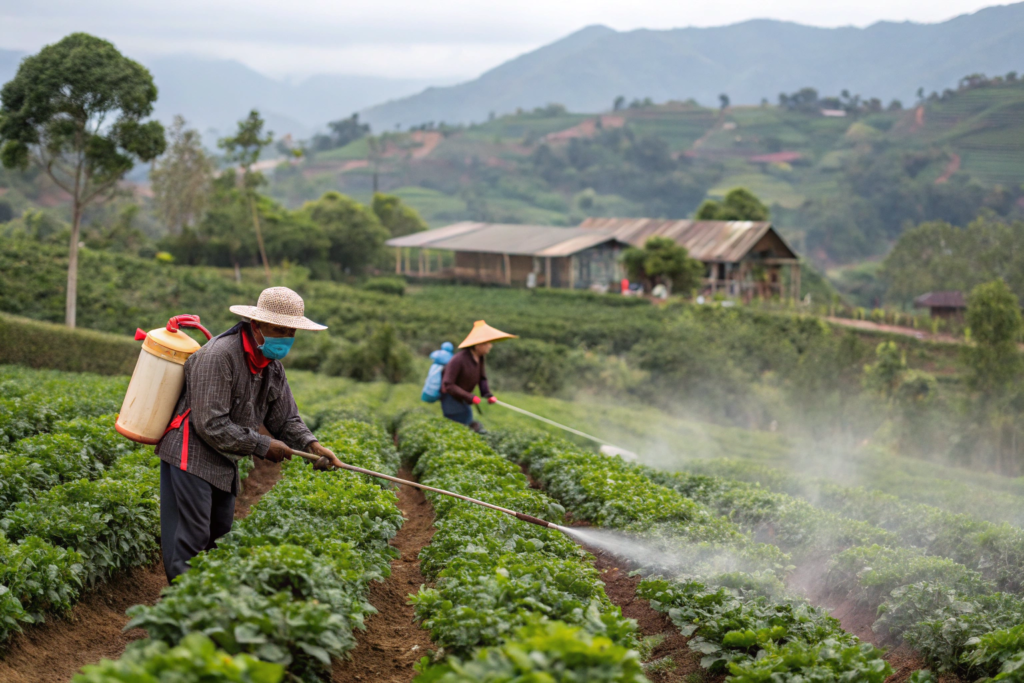
Farmers save a lot on chemicals. A typical non-resistant Arabica farm in Yunnan may spray fungicide six to ten times per year. Each spray costs money for the product and money for the labor. If you add it up, that can be hundreds of dollars per hectare per year. With Catimor, many farms spray only one to three times. Some spray zero in dry years. That is a huge saving. For a 10-hectare farm, the difference can be thousands of dollars. That money can pay for better picking, better processing, or better equipment. So resistance directly improves the farm's bottom line.
How does lower disease pressure reduce labor needs?
Lower disease pressure reduces labor needs in simple ways. Every spray takes workers. Every spray takes time. Every spray takes fuel for the pump. If you spray less, you free up workers for other tasks. Those tasks include picking, weeding, and processing. All of those affect quality. So the labor you save on spraying can improve the product. That is a double benefit. Another point is tree replacement. When trees die, you must replant. Replanting takes years to pay off. So fewer dead trees means less replanting labor. Less replanting means more money in your pocket.
What Are the Risks and Trade-Offs of Catimor?
Catimor is not perfect. I will be honest about that. Some Catimor lots taste flat or bitter. The cup can be simple. It may lack the floral notes of a good Bourbon or Gesha. This is a real trade-off. But quality depends on farming and processing. A well-managed Catimor can taste sweet and clean. A poorly managed Bourbon can taste bad too. So the variety is not the whole story. Altitude, picking, fermentation, and drying all matter. At our farm, we pick only ripe cherries and process carefully. That work turns Catimor into a product buyers enjoy. So the trade-off is manageable. It is not a deal breaker.
Does Catimor always taste inferior?
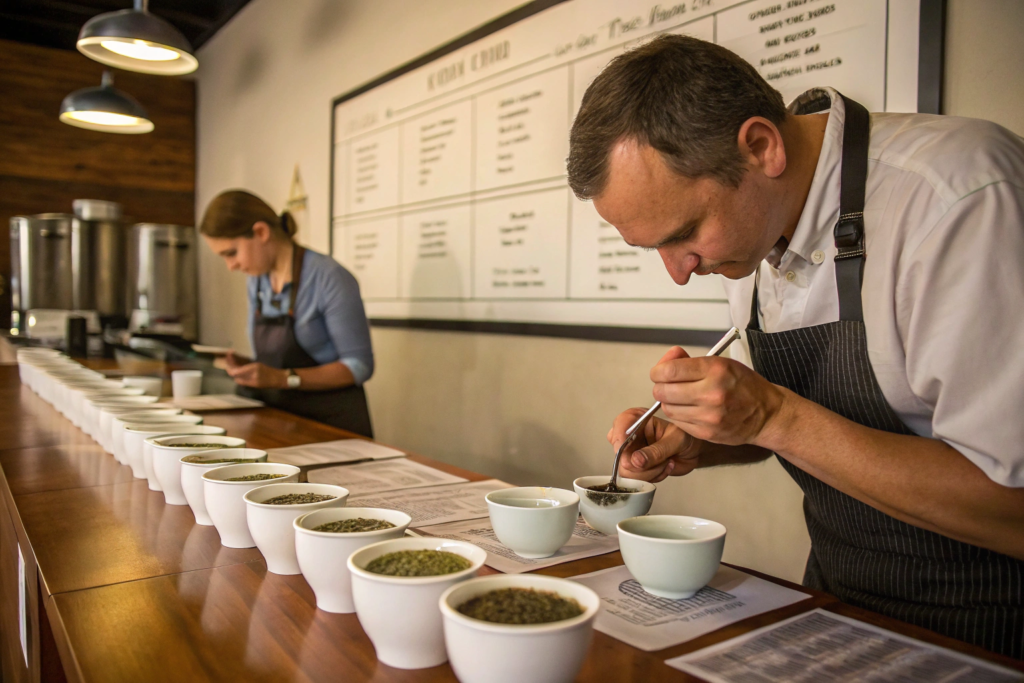
No, Catimor does not always taste inferior. That is a myth. Old Catimor lots from the 1990s often tasted rough. But new varieties and better processing have changed that. Today, many Catimor lots score 83 to 86 points. Some score higher. The key is care. Pick ripe cherries. Control fermentation. Dry slowly. Store well. Do those things, and Catimor can taste good. It may not be a competition coffee. But it can be a great everyday coffee. And it can be a great espresso base. So the flavor question depends on the farmer, not just the variety.
How do we manage quality in Catimor lots?
We manage quality with a strict system. First, we plant at good altitude. Higher altitude gives more acidity and sweetness. Second, we pick only ripe cherries. We pay pickers by quality, not just volume. Third, we process within hours of picking. Fourth, we dry slowly on raised beds. Fifth, we cup every lot. If a lot does not meet our standard, we do not sell it as specialty. We also use colour sorters to remove defects. This system turns Catimor into a reliable product. It also shows buyers that we do not cut corners. You know, the variety gives you a head start. The work gives you the finish.
Why Should Buyers Care About Catimor?
Buyers should care because Catimor helps keep prices stable. A farm that spends less on chemicals can offer a better price. A farm that loses fewer trees can promise better supply. A farm that plans better can ship on time. All of these things help buyers. So Catimor is not just a farmer's tool. It is a buyer's tool too. If you import coffee from China, you benefit from the stability Catimor provides. Ron, this is why I often recommend Catimor for blend and espresso buyers. It gives you consistent quality at a fair price. That is a strong combination in any market.
How does stable supply help your roast schedule?
Stable supply helps your roast schedule in direct ways. If your supplier can deliver the same coffee every month, you can keep the same roast profile. You do not need to adjust heat or airflow. You do not need to retrain staff. You do not need to explain changes to customers. That stability saves time and money. It also protects your brand. Customers expect the same taste every time. If the coffee changes, they notice. So stable supply is not just a logistics issue. It is a brand issue. Catimor helps provide that stability because the farms that grow it survive better.
How does lower farm cost translate to better prices?
Lower farm cost translates to better prices in a simple way. If a farmer spends less on chemicals and labor, the cost per pound drops. That farmer can sell at a lower price and still make a profit. So buyers get a fair price. This is not about cutting corners. It is about efficiency. A resistant tree is efficient. It produces more with less input. That efficiency moves through the supply chain. Exporters pay less. Buyers pay less. Everyone wins. So when you buy Catimor from a well-run farm, you are not buying a cheap product. You are buying an efficient one. That is a better story for your customers.
Conclusion
Catimor gets a bad reputation in some circles. I understand why. Old lots tasted rough. But the variety has changed, and farming has changed too. Its disease resistance lowers costs for farmers. It lowers risk for exporters. It gives buyers stable supply at fair prices. That is a powerful combination. We grow Catimor on our farms in Yunnan because it works. We also process it with care so it tastes good in the cup. If you want a reliable Catimor for your blend or espresso, we can help. Please contact Cathy Cai at cathy@beanofcoffee.com to discuss your order with BeanofCoffee. We will share samples, defect reports, and cup scores with you.