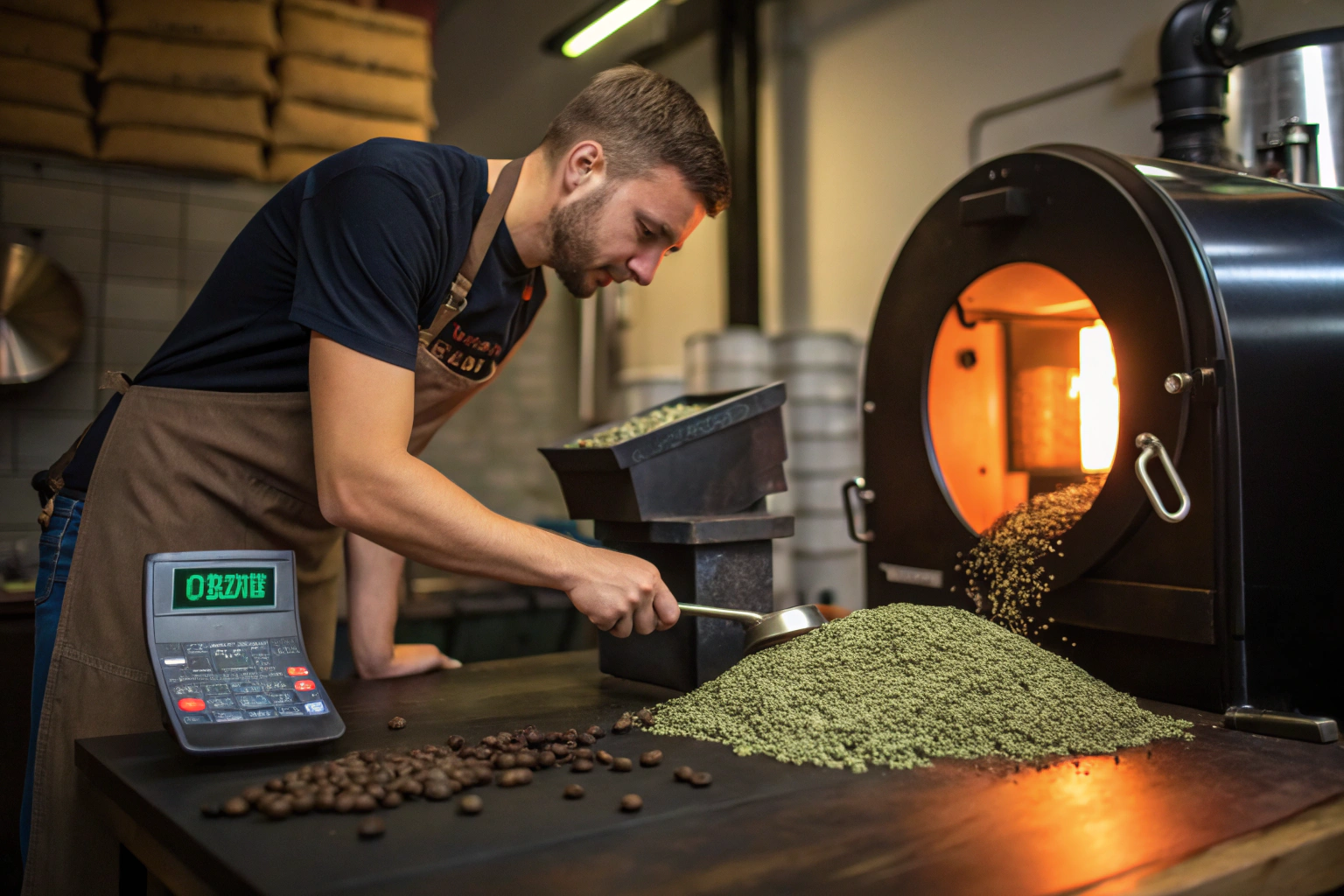
I once ruined a $10,000 batch of Yunnan specialty beans in my early days. I treated a high-density Catimor like a soft Brazilian bean. I cranked the heat too fast. The outside of the bean scorched. The inside stayed raw. The cup tasted like bitter peanuts and grass. It was a painful lesson. Nobody talks about this in the glossy marketing brochures. We talk about origin and altitude. We rarely talk about how the physical hardness of the seed dictates every decision you make with fire. Ignoring density is like cooking a thick steak on the same heat as a thin one. You'll ruin one of them.
Bean density dictates exactly how energy enters the coffee seed during roasting. A hard, high-density bean grown at 1,500 meters in our Yunnan plantations conducts heat slowly and requires a more aggressive charge temperature to avoid baking, while a low-density bean absorbs heat too fast and scorches easily, forcing the roaster to pull back the gas immediately.
Now, I run an export operation in Baoshan. We ship these hard, heavy beans all over North America and Europe. My clients are roasters. They need to know this. If you are buying premium Arabica from high altitudes, you are buying a brick. And you need to treat it with the respect a brick deserves, or it will fight you. Let’s break down the science in a practical, no-nonsense way.
How Does High Altitude Affect Green Bean Hardness?
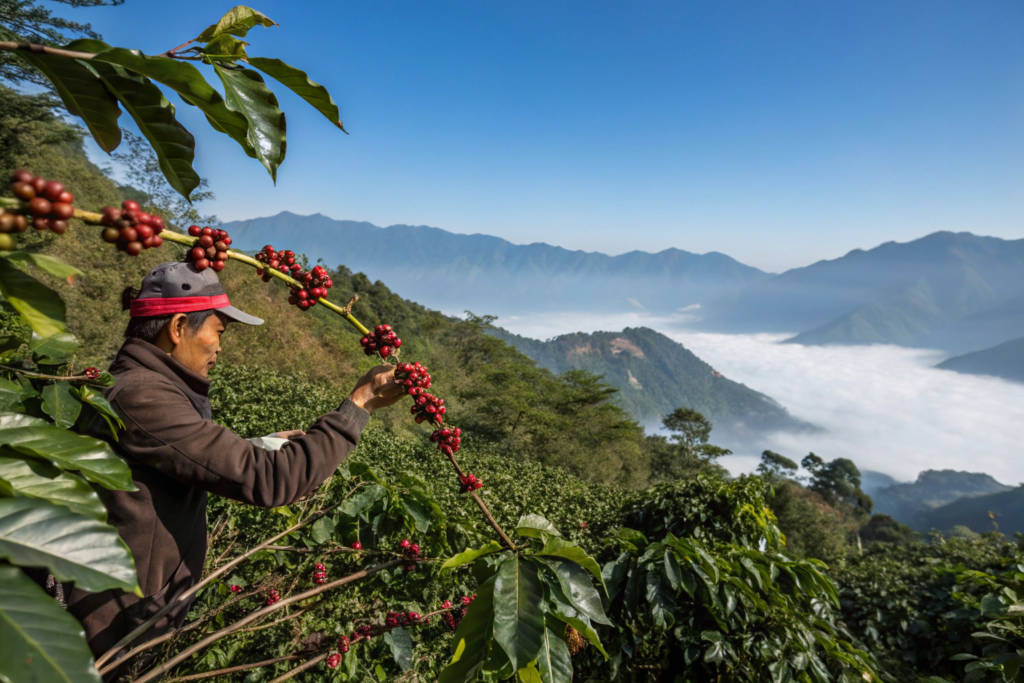
High altitude is the core reason you have a job as a roaster. If coffee grew easily everywhere, it would all taste like paper. The stress of the cold nights up in those mountains forces the coffee plant to struggle. And that struggle concentrates sugars and starches inside a physically tighter package. I always tell my buyers, don't just look at the screen size. Weigh the bag. A bag of high-grown Catimor feels like it's full of stones.
Altitude directly affects green bean hardness by slowing the cherry’s maturation cycle. The prolonged cold at elevations above 1,400 meters forces the seed to compact its internal cellulose structure to survive, resulting in a dense, closed fissure line and a moisture-retaining, stone-like physical core.
The air is thin up there. That matters because the plant can't breathe out as much oxygen. This is Biology 101, but applied to your roast log. A bean from Brazil at 600 meters ripens fast and is open and airy inside. A bean from our farms at 1,600 meters fights for two months longer to ripen. That fight adds mass. And, well, that mass resists heat.
What Is the Relationship Between Altitude and Cellular Structure?
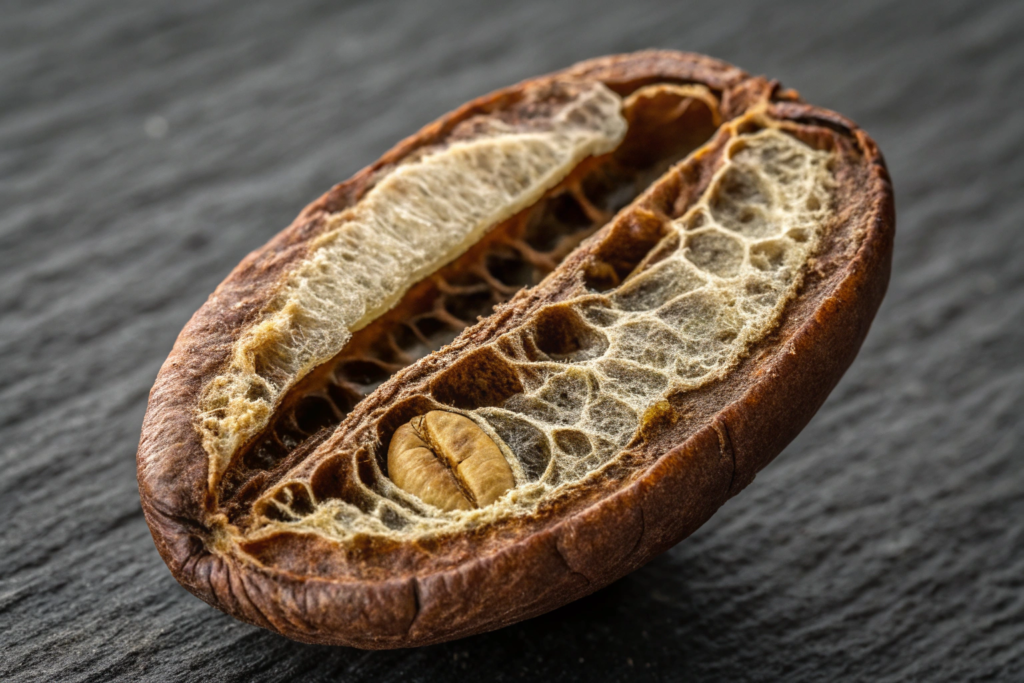
So, let's look inside the seed. Not literally, but thinking about the pore structure helps. A low-density bean is like a dry sponge. Heat enters fast. A high-density bean is like a dense hard wood. It takes patience to burn a log of oak. It takes a spark to burn paper. It’s the same thing.
When we measure density in Baoshan, we use the simple water displacement method. A liter of our high-elevation bean weighs roughly 730 grams or more. A lower elevation bean might hit 650 grams. It doesn't sound like much, but visually, the beans are smaller, and the center cut, or the fissure line, is often closed up tight. A wide, open center cut often signals lower density. It’s a tiny detail, but I always peek at that fissure line before roasting.
How to Identify High-Density Beans Before Buying?
You can’t always measure density from a digital photo on Alibaba. So, how do you know before you buy? You ask for the elevation meters above sea level. Anything above 1,400 meters is usually hard. Then, you ask about the variety. Catimor grown in Yunnan, for instance, is notorious for being denser than Typica at the same farm.
A quick trick? Ask for a sample. 50 grams is enough. Try to bite it. If you risk cracking a tooth, it's high density. If it crunches like a peanut, it's soft. Also, look at the appearance. A vitreous, glassy, slightly translucent core indicates the starch is packed tight. A chalky, opaque surface often means the structure is open. Those physical traits are your cheat sheet before you even turn on the gas.
What Happens If You Roast Low and High Density Together?
Mixing beans with different hardness is a business decision. But, you need to know you are playing with a dirty fire. You cannot roast a blend of high-density Arabica and low-density Robusta at the exact same profile and expect magic. The physics won’t allow it. I shipped a container of mixed Yunnan grades to a small roaster in Texas once. He dumped it all in a drum and set his standard curve. He called me angry. The dense beans were underdeveloped and grassy, and the soft beans tasted burnt.
You cannot optimally roast beans of varying hardness together because thermal conductivity differs completely. The denser seed resists heat transfer to the core, requiring a prolonged Maillard phase, while the softer bean races through the development stages and tips into carbon as you wait for the hard bean to finish.
When you blend, one bean is always the victim. The heat wave hits both, but the internal migration of vapor is totally different. In a hard bean, water is trapped in a tight matrix, and it needs a soft, long push. In a soft bean, the water explodes out quickly. So, you get a double defect: one bean baked, the other scorched.
How to Adjust Charge Temperature for Hard Beans?
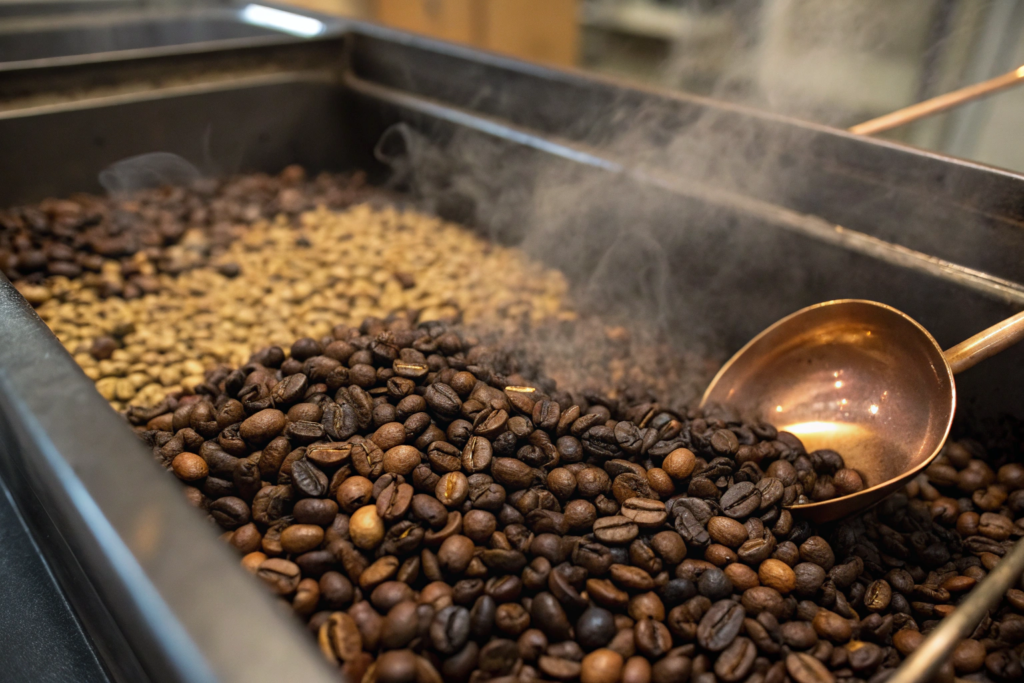
Okay, so you can't avoid roasting high-density coffee if you buy from us or other high-altitude spots. You want the good stuff. So, fix your starting point. The charge temperature, that initial heat when the beans hit the drum, has to be turned up.
With a soft bean, a low charge of 190 degrees Celsius is gentle to avoid scorching the tips. With a hard, high-density bean, this low charge causes a fizzle. You lose all your momentum right at the start. You need to hit it harder, say at 210 degrees Celsius or even higher, to break through the thermal barrier of that hard outer shell. Then, you immediately pull the gas back so you don't overshoot the turning point. It’s a short, violent shock of heat, followed by restraint. Think of it like searing a steak. Hot pan first, then lower the flame.
Can You Salvage a Mixed Roast Batch?
Let's be real. You might try it anyway. Maybe a supplier "accidentally" mixed a few bags. Can you save it? The honest answer is: you can improve it, but not perfect it. You have to choose which bean to favor. If the blend is 80 percent high-density and 20 percent soft, you sacrifice the soft beans. You roast for the hard bean’s timeline. The soft beans will get a little oily and smoky, but at least the base is properly developed.
If you try a middle-ground "baked" profile, you end up with a dead cup. No sweetness, just flat grain. Honestly, the smartest move is to separate them. Use a density sorting table. I know it’s extra work. But losing a roast on a gas-powered machine for 12 minutes costs more than the labor to sort. You can't trick physics. If the bean is hard, it will always absorb energy slower.
Why Do Dense Beans Store More Flavor Compounds?
This is the reward. The headache of roasting high-density beans is worth it. The reason they are hard is the reason they taste incredible. A thick-walled cell is a vault. It locks away the precursors of acidity and sweetness until you—the roaster—decide to release them. Soft beans have been sitting there breathing out their flavor since they were processed.
Dense beans store more flavor because their compact intracellular space provides a protective barrier against oxidation. The thickened cellulose walls preserve volatile aromatic compounds and the high concentration of sucrose, which is essential for the caramelization reactions that define a high-quality Arabica wholesale export product.
A soft bean has already lost its fizz. Its internal real estate is empty. When you apply heat, you get a hollow caramel. When you apply heat to a dense bean, the inside contains a pressurized chemical soup of sugars and acids. The cracking is sharper because the pressure release is more violent.
How Does Density Impact the Maillard Reaction?
The Maillard reaction, which turns raw bread into a steak crust, doesn't work in a vacuum. It needs amino acids and reducing sugars. A dense bean has a high concentration of these packed in tight. The reaction doesn't just happen on the surface. The heat penetrates slowly, so you can actually extend the Maillard phase from yellow to brown.
You know, I see this on my roast log as a roaster. With a low-density bean, the "yellow to first crack" window is a sprint. You have maybe 3 minutes to develop it. With high-density, I can stretch that to 5 or 6 minutes. More time equals a thicker mouthfeel and more complex layers of sweetness. It's not just sugar browning. It's structural. You are building a flavor matrix that is deep, not just a surface char.
Are High-Density Beans More Forgiving in Storage?
This is a business point you might care about. Shipping takes time. If you buy a container of dense green beans from BeanofCoffee, how long do you have before they fade? A whole year, often. A soft, low-density bean starts fading after 6 months. It rapidly absorbs moisture from the air, and its water activity goes wild.
When a bean is physically compact, atmospheric oxygen can't easily sneak into the lipid layer to turn the oil rancid. The bean acts as its own storage shield. For you, this means a more reliable supply chain. If a sailing schedule is late and the container sits at the Port of Long Beach for two weeks in the summer heat, a high-density bean is much more likely to survive the delay without losing its cup score. It's a natural insurance policy against timeliness issues. Again, physics, but useful physics.
How to Adjust Airflow for Different Bean Densities?
Heat transfer isn't just the metal drum. It's the air moving through it. If density changes, the aerodynamics of the bean mass change. A basket of small, hard, heavy beans has fewer air pockets. The air resistance is higher. A bed of big, fluffy, soft beans is full of gaps, so the air blows right through. You can't treat them the same.
Airflow adjustment must match bean density because hard beans create a denser bean mass in the drum. Low airflow under a pile of high-density beans causes core conduction and bitter tipping, while high airflow through a soft bean pile strips away essential moisture too early and kills the body of the cup.
It's all about the "fluid bed" effect. You want the beans to dance a little, not just slide. But a brick-heavy mass of hard beans won't lift easily. You need more fan pressure to agitate them. If you don't turn up the fan, the beans on the bottom sit still, absorbing pure conduction heat from the metal. This creates a black spot, a tiny little burn point on the flat part of the bean that tastes harsh.
What Is the Effect of Chaff Management on Density?
Chaff is annoying. With low-density beans, it flies off. With our high-altitude Catimor, the chaff clings to the inside of the curled fissure. It's like the hard shell welded itself shut over the chaff. If you don't blow it out during the roast, it sits there, catches fire, and imparts a smoky, ashy note to the whole batch.
This ties back to airflow. You need a strong, intermittent blast of air right at first crack to evacuate this trapped debris. I tell my people: clean the window. If you can't see the bean color clearly because of chaff dust in the air, you are roasting blind. And a blind roaster burns the dense beans every time.
Can Data Logging Solve Consistency Issues?
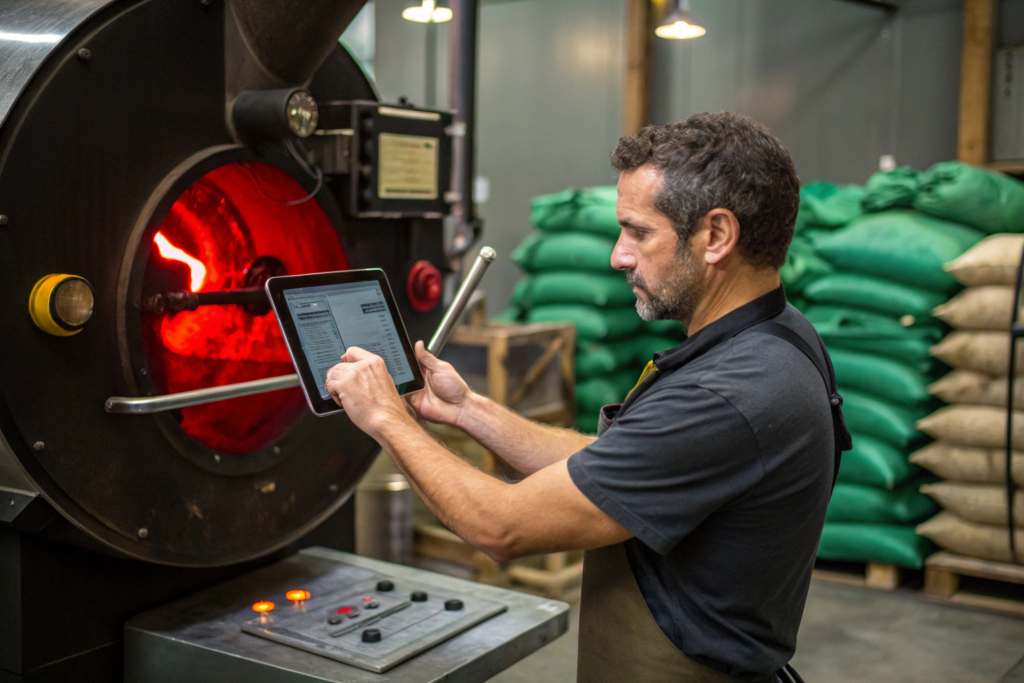
A hard bean has a high mass, so its Rate of Rise curve will look slow and flat if you use the wrong setting. If you try to force the curve by cranking the gas to make it look like a soft bean profile, you cause a crash in the turning point later.
Data logging software helps you see the delay in real-time. The Delta BT is your best friend. For high-density, don't panic if the rate drops to 1 or 2 degrees per 10 seconds during the drying phase. That's normal. For a soft bean, that drop would mean a stall. For a dense bean, it's just the core absorbing the shock. You must write these profiles down. Separate logs for Yunnan hard beans versus soft island beans. It’s the only way to stay safe and repeatable.
Conclusion
Ignoring density is flying blind. It’s the hidden variable behind the crack, the color, and the taste. We started with my $10,000 mistake, and we ended with airflow levers and real-time heat curves. The lesson here is simple. If you buy beans from high places, you buy potential energy. That potential is locked inside an armored shell. Your job is to unlock it with patience and a hot start.
You can't boss a hard bean around. You have to negotiate with it. You have to look at the fissure line, adjust your gas, and manage the weight of the bean mass. That tight core is holding the sweetness, the acidity, and the long shelf life. Treat it wrong, and it fights you with a scorched tip and a grassy heart. Treat it right, and it gives you a cup that a soft bean could never touch.
I know this is a lot. But this is the science we live by on our 10,000 acres in Yunnan. We don't just grow coffee; we measure it, we cup it, and yes, we roast it to test it before it ships. If you ever want to talk numbers, density charts, or need specific roast profiles for a fresh shipment of Yunnan Catimor, don't hesitate. Our logistics lead, Cathy Cai, can send you a sample and the hard data you need. Reach her at cathy@beanofcoffee.com. Let’s make sure that hard bean hits the roast drum right.