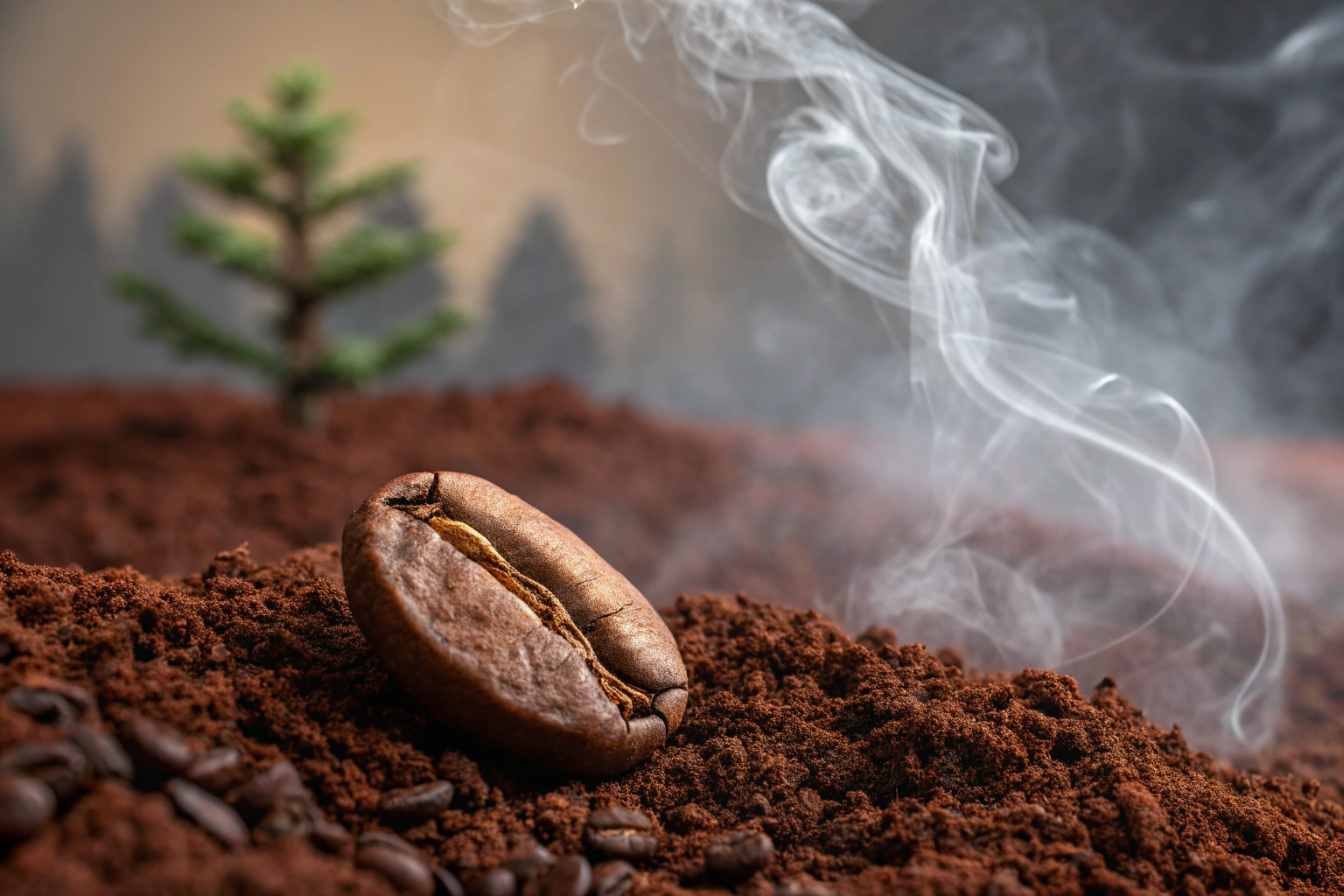
You have cupped a lot of coffees. A clean, citrusy washed Ethiopian. A nutty, chocolatey Colombian. A heavy, earthy Sumatran. The flavor profiles of the major origins are etched in your memory. But then someone hands you a cup of Yunnan. You taste it. It is clean. It is sweet. There is chocolate. There is a hint of stone fruit. But there is something else. A subtle, lingering note you can't quite name. It is not the wild ferment of a natural. It is not the sharp acidity of a high-altitude Kenyan. It is something different. You are intrigued. You want to understand what creates this unique signature. Because a coffee that tastes like nowhere else is a coffee you can build a brand around.
The unique flavor of Yunnan coffee is not an accident. It is the direct result of a rare convergence of four factors. A distinct varietal, Catimor, meticulously rehabilitated for quality. An ancient, tea-influenced terroir on the slopes of the Gaoligong Mountains. A specific, cold-water washed processing method rooted in local tradition. And a modern commitment to specialty precision. These forces combine to create a cup profile that is simultaneously comforting and mysterious. It has the heavy body and low acidity that comfort-seeking coffee drinkers crave. But it carries a subtle, complex top note—a whisper of black tea, a hint of plum, a fresh, spicy pine quality in the finish—that marks it as undeniably unique. You are not drinking a generic "good coffee." You are drinking a taste of a specific, ancient place. At Shanghai Fumao, we have spent decades understanding and perfecting this flavor signature. It is our identity. Let me take you through the layers of what makes a cup of Yunnan so wonderfully distinct.
How Does the Catimor Varietal Taste Different in Yunnan?
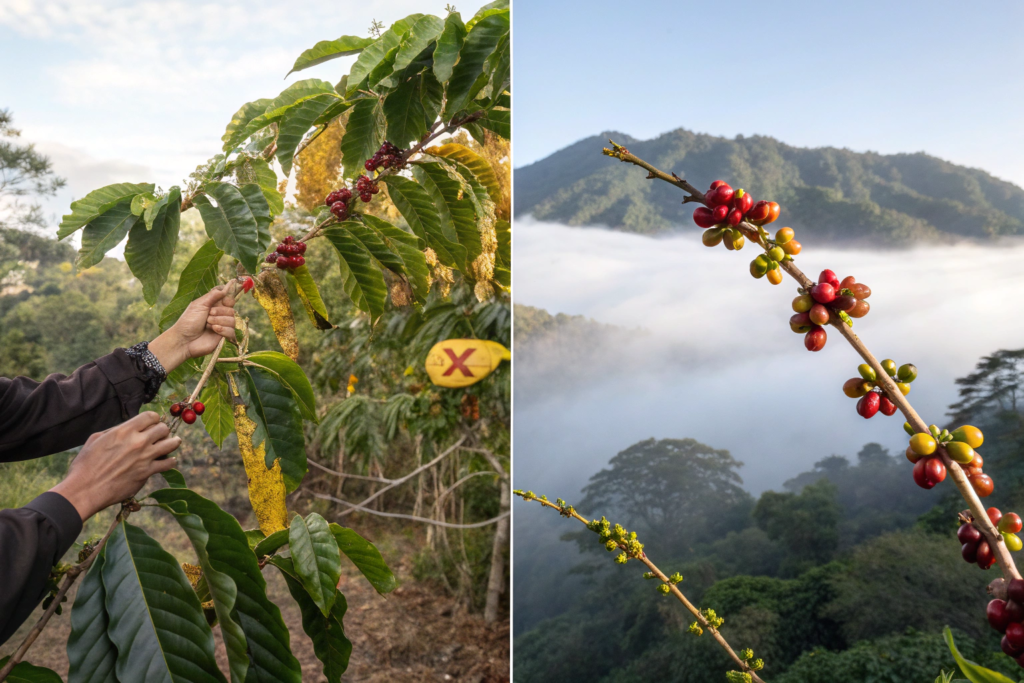
Let's address the elephant in the room. Catimor. The word has baggage. In many origins, Catimor is known for its robust disease resistance and its harsh, astringent, sometimes herbal cup profile. It was planted for yield, not for flavor. So how can a Yunnan Catimor taste sweet, clean, and complex? The answer is a combination of altitude, selective breeding, and painstaking processing. The old, poorly grown Catimor is a thing of the past. We are cultivating a new generation. On our farm, we have selected specific, high-performing Catimor cultivars over decades. These are not the generic seeds from a government program. These are our proprietary selections, chosen for their cup quality over their raw yield.
When this improved Catimor is planted at the high altitudes of Baoshan, between 1,200 and 1,600 meters, the cool temperatures slow the cherry maturation. The bean becomes denser. The plant's metabolism shifts. It produces more sugars and fewer of the bitter alkaloids that plague low-altitude Catimor. The result is a varietal transformed. Its natural body, which is inherently heavy, becomes a silky, syrupy asset. Its acidity, instead of being sharp and vegetal, softens into a mellow, malic profile. Instead of harsh herbs, you taste a deep, resonant dark chocolate note. The genetic potential of the plant is unlocked not by changing the plant, but by giving it the right environment and the right care. The Catimor in Yunnan is not the Catimor you think you know. It is a phoenix rising from the ashes of a bad reputation.
What Is the "Tea-like" Note Tasters Describe?
One of the most common descriptors that surprises tasters is a subtle "black tea" note in the finish. This is not a defect. It is a terroir marker. It is a direct nod to the botanical history of the soil. The coffee trees are grown on ancient tea terraces. They share the same volcanic, iron-rich soil that produces Yunnan's famous Pu'erh tea. This does not make the coffee taste literally like tea, but it imparts a similar structural elegance in the cup. There is a floral, slightly tannic, but smooth quality that is more reminiscent of a fine black tea than a traditional coffee.
This note is particularly present in our washed coffees. It comes through as a clean, dry, and elegant sensation on the finish. It is the opposite of a heavy, lingering, syrupy aftertaste. It is a gentle, aromatic lift that cleanses the palate. For a roaster, this is a gift. It makes the coffee incredibly food-friendly. It allows the coffee to be both bold in body and delicate in its finish. It is a point of delightful confusion for the customer. "I taste chocolate, but then it finishes like a really good Earl Grey?" That moment of discovery is memorable. It is a flavor signature that is impossible to find in a Brazilian or a Colombian. It is purely, authentically Yunnan. The World Coffee Research catalog details how specific varietals and environments interact to create unique flavor compounds, a science that fully supports our experience with Yunnan Catimor.
How Does the High Altitude Affect the Bean's Sugar Development?
Altitude is the master sculptor of flavor. In the high, thin air of the Gaoligong Mountains, the coffee cherry struggles. The nights are cold. The days are intensely sunny, but the overall temperature is low. This environmental stress slows the cherry's respiration. The seed inside does not rush to mature. It develops slowly, over many months, packing away carbohydrates and nutrients. This prolonged development cycle is what creates a dense, sugar-rich bean. The sugars are the fuel for the Maillard reaction during roasting. More sugars mean more complex caramelization, deeper chocolate notes, and a rounder, sweeter body.
A low-altitude bean matures quickly. It is often less dense. Its sugars are simpler, and its flavor can be one-dimensional. A high-altitude Yunnan bean is like a complex carbohydrate compared to a simple sugar. It roasts more evenly. It withstands more heat development without scorching. It yields a more layered sweetness in the cup. The intense UV radiation at this altitude also plays a role. The plant produces more protective compounds, including certain antioxidants and aromatic oils. These compounds contribute to the "clean" and "bright" perception, even when the acidity is low. The high altitude does not make the coffee sour. It makes it sweet, dense, and complex. It is the defining influence of the Baoshan terroir.
How Does Yunnan's Volcanic Soil Influence the Cup Profile?
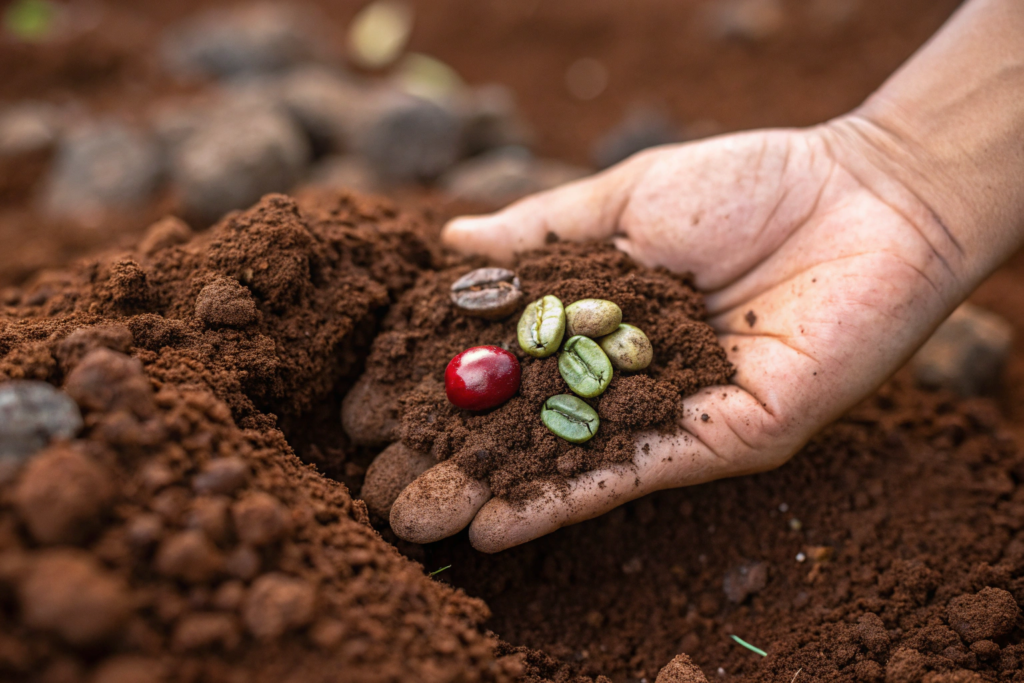
Soil is the silent author of flavor. The red volcanic soil of Baoshan is not just dirt. It is a highly mineralized, well-drained, slightly acidic medium. This soil is a legacy of ancient geological activity in the Himalayas' foothills. For a coffee plant, this is paradise. The volcanic origin means the soil is rich in iron, magnesium, and potassium. These minerals are not just nutrients. They are flavor precursors. They are absorbed by the roots, transported to the cherries, and become part of the bean's chemical makeup.
The high iron content is particularly interesting. It is associated with the development of deeper, savory, and sometimes slightly "earthy" or "chocolatey" flavors, but in Yunnan's washed coffees, it expresses as a clean, mineral sharpness—like the taste of a spring water, or a wet stone. This minerality is a distinctive part of our coffee's personality. It adds a layer of complexity beyond the fruit and chocolate. The excellent drainage is equally critical. Coffee roots hate to be waterlogged. The porous volcanic soil allows water to drain quickly after the monsoon rains, preventing root rot and stressing the plant just enough to concentrate its efforts on fruit production. The result is a bean that is a concentrated, mineral-rich expression of its specific piece of land. It tastes the way that mountain smells after a rain.
Why Is the "Mountain Spring Water" Washing Method Important?
Water is the most important ingredient in coffee processing, yet it is often overlooked. On our farm, we do not use stagnant, recirculated water from a pond. We use fresh, cold mountain spring water that flows directly from the Gaoligong peaks. This water has a unique chemistry. It is soft, with a low mineral content, and has a neutral pH. It is pristine. The temperature of this water is naturally cool, often between 18 and 22 degrees Celsius. This low temperature is critical during fermentation. It slows the microbial activity, allowing for a longer, gentler removal of the mucilage. A slow, cool ferment favors the production of clean, lactic acid notes and bright, malic acidity, while suppressing the growth of vinegary acetic acid bacteria.
The purity of the water also means that the coffee is not absorbing any off-flavors from the processing medium. It is being cleansed by the purest water nature can provide. This is a profound sensory difference. You can taste the cleanliness. The coffee has no muddy, swampy, or fermented notes. It has a crystalline clarity. The finish is polished and pure. This "mountain spring water" effect is a unique selling point. It is a true story of terroir that extends beyond the soil to the very water that shapes the bean. It is a level of detail that a large, industrial farm cannot replicate.
How Does the Biodiversity of the Gaoligong Mountains Add Complexity?
Our coffee does not grow in a sterile monoculture. The Gaoligong Mountains are a global biodiversity hotspot. Our coffee terraces are interspersed with native trees, wild tea plants, fruit orchards, and a rich understory of herbs and flowers. This biodiverse ecosystem directly affects the coffee's flavor. The shade trees moderate the temperature and protect the coffee from the harsh midday sun. The leaf litter from these diverse plants decomposes, creating a rich, complex compost that feeds the soil. The roots of the coffee interact with the mycelial network of the forest floor.
This complex, living environment contributes to what winemakers call "the taste of place." The aromatic compounds from the surrounding vegetation, the specific local yeasts on the cherry skins, the unique microbial life in the soil—all of these find their way into the cup in trace amounts. This creates a subtle layer of aromatic complexity that is impossible to dissect but is felt as a whole. It is the difference between a tomato grown in a hydroponic factory and one grown in a rich garden. The garden tomato has a complexity that transcends simple sweetness. Our coffee has that wild, living complexity. It has the faint whisper of the forest. It is a taste that a monoculture farm in a deforested valley can never produce. It is the ultimate expression of a healthy, thriving, and biodiverse terroir. The UNESCO World Heritage Centre recognizes the Three Parallel Rivers area, which includes the Gaoligong range, for its extraordinary biodiversity, a fact that deeply informs our coffee's character.
How Does Modern Specialty Processing Refine the Unique Flavor?
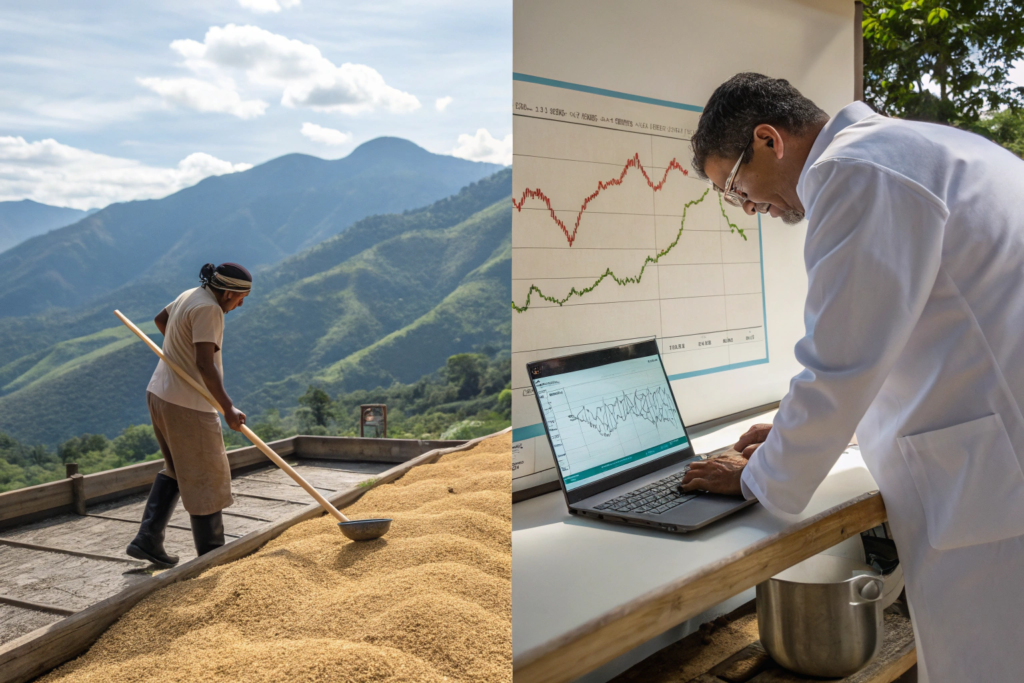
Tradition provides the raw material. Modern specialty processing provides the precision. Our farm is a blend of ancient wisdom and cutting-edge technology. We use optical sorters to remove a single defective bean from a thousand. We use digital moisture meters and cloud-based drying logs. We have a dedicated cupping lab where our Q-graders analyze every single lot. This is not the image of a rustic, traditional farm. It is a flavor factory built on scientific principles. This precision is what takes the unique Yunnan terroir and polishes it into a world-class specialty product.
The traditional method of sun-drying on raised beds is still our core. But it is now meticulously managed. We measure the thickness of the parchment layer every hour. We adjust the raking frequency based on the sun intensity and humidity. We use parabolic covers to protect the coffee from rain and harsh UV. This controlled drying preserves the volatile aromatics and prevents the development of phenol or mold defects. The modern fermentation tanks allow us to experiment with controlled anaerobic processes for specific micro-lots, while our standard washed process remains a model of consistency. The modern approach does not overwrite the terroir. It amplifies it. It removes the distractions of defects and inconsistencies, allowing the true, unique voice of the Yunnan bean to be heard clearly in every single cup. It is the combination of an ancient place and a modern mind. The result is an origin that offers the comfort of a classic, clean profile with the thrill of a completely unique signature.
What Role Does the "Slow Drying" Philosophy Play?
Speed is the enemy of sweetness. In coffee drying, rapid, aggressive drying cracks the bean, locks in vegetal flavors, and destroys the sugars. Our philosophy is patience. After the wash, our parchment coffee is moved to raised African beds. It is spread in a thin, even layer. It is not blasted with mechanical hot air dryers to speed things along. It is allowed to dry naturally under the sun and the mountain breeze. This process can take ten to fourteen days, sometimes longer if the weather is cool. This is painstakingly slow.
This slow, gentle dehydration allows the moisture to migrate evenly from the center of the bean to the surface. The cell structure remains intact and undamaged. The complex sugars and amino acids have time to stabilize and bond. The volatile aromatic oils are locked inside the dense cell matrix. The result is a bean that is exceptionally stable in storage and erupts with a complex, sweet aroma when ground. The slow drying is a deliberate choice that costs time and labor. But it is the only way to fully realize the sweetness and aromatic potential that the high-altitude terroir has created in the bean. It is the final, crucial step in the flavor journey.
How Do Micro-Lots Highlight the Terroir's Nuance?
While our standard washed lot provides a consistent, signature Yunnan profile, our micro-lots are the explorative edge. We identify single plots on our farm with hyper-specific micro-climates. A south-facing slope that gets more sun. A corner shaded by a particular wild peach tree. We process these cherries separately. We experiment with honey and anaerobic fermentation on these tiny batches. These micro-lots are a deep dive into terroir. They isolate and amplify a specific variable.
One micro-lot might taste of intense, sun-dried plum and cinnamon. Another, from a colder, shadier plot, might taste of jasmine and white grape. These are not different coffees. They are different verses of the same song. They reveal the incredible nuance hidden within a single farm. For a roaster, these micro-lots are the ultimate storytelling tool. They allow you to show your customers the depth and artistry of Yunnan coffee. You can sell a "Discovery Series" that features two micro-lots from the same farm, teaching your customers about the impact of terroir. This deepens their appreciation and builds an obsession with the origin. The micro-lot program proves that Yunnan is not just a one-note origin. It is a complex, multifaceted coffee landscape waiting to be explored.
Conclusion
The unique flavor of Yunnan coffee is a symphony of place, plant, and people. It is the transformed Catimor varietal, shedding its harsh reputation and singing with sweet chocolate notes in the high-altitude air. It is the ancient, volcanic soil, rich with minerals, that whispers of tea heritage and imparts a clean, distinctive minerality. It is the pure mountain spring water, cool and soft, that washes the beans to a crystalline clarity. And it is the fusion of traditional slow-drying wisdom with modern specialty precision, which polishes this unique raw material into a world-class cup.
The result is a coffee that stands apart. It has the comforting, heavy body and low acidity that make it a versatile canvas for espresso and milk. But it possesses a delicate, tea-like finish and a complex, forest-floor nuance that makes it a fascinating solo pour-over. This is not a generic "good coffee." It is a taste of a specific, beautiful, and ancient landscape. It is a flavor that cannot be found anywhere else on earth.
If you want to taste this unique flavor for yourself, to experience the mountain, the tea, and the craft in a single cup, I invite you to reach out to us. We can send a sample kit of our signature washed lot and our current micro-lot offerings. Contact our export director, Cathy Cai, at cathy@beanofcoffee.com. Let her know you are interested in discovering the taste of Yunnan. She will prepare a personalized cupping box for you.