I was on a call with a distributor from Australia last month. He was frustrated. His blend costs had spiked, and his CFO was pushing him to swap his Arabica base for cheaper Robusta. He asked me, "Is Arabica really worth the premium, or am I just paying for a name?" That's the million-dollar question. The pain is familiar. You see the invoice. Arabica is double the price. Your accountant sees a line item. You, the roaster, see the flavor, the brand, the customer expectation. But how do you justify it in a spreadsheet?
Arabica coffee is more expensive than Robusta because it costs significantly more to grow, handle, and ship. It demands high altitude, careful hand-picking, complex processing, and yields less cherry per tree. The premium you pay isn't just for taste—it's for a fragile, labor-intensive agricultural product that fails more easily and tastes exponentially better.
So, why does this matter for your bottom line? It matters because cheap coffee can be very expensive. If you replace your Arabica with cheap Robusta and your customers taste the difference, you lose them. I own 10,000 acres in Baoshan, Yunnan. We grow both species. I know the profit and loss of each tree. The cost gap is real, but it's not arbitrary. It's built into the soil, the labor, and the biology. Let me walk you through the real reasons, so the next time your CFO asks, you have the hard numbers, not just cupping notes.
What Makes Arabica Coffee More Difficult to Cultivate?
Growing Arabica is like raising an orchid. Growing Robusta is like growing a weed. That's not an insult to Robusta—it's a biological fact that dictates everything about the price. Arabica is a fragile, demanding plant. It throws a tantrum if the temperature is too high, if the humidity is wrong, if the soil isn't just so. Robusta, true to its name, is robust. It shrugs off pests, heat, and neglect.
Arabica is harder to cultivate because it requires a narrow temperature band of 15-24°C, high altitudes above 1,200 meters, and well-drained volcanic or laterite soil. It is susceptible to coffee leaf rust, berry borer, and frost. Robusta grows at sea level, tolerates heat up to 30°C, and has a natural chemical defense system—caffeine—that repels most insects.
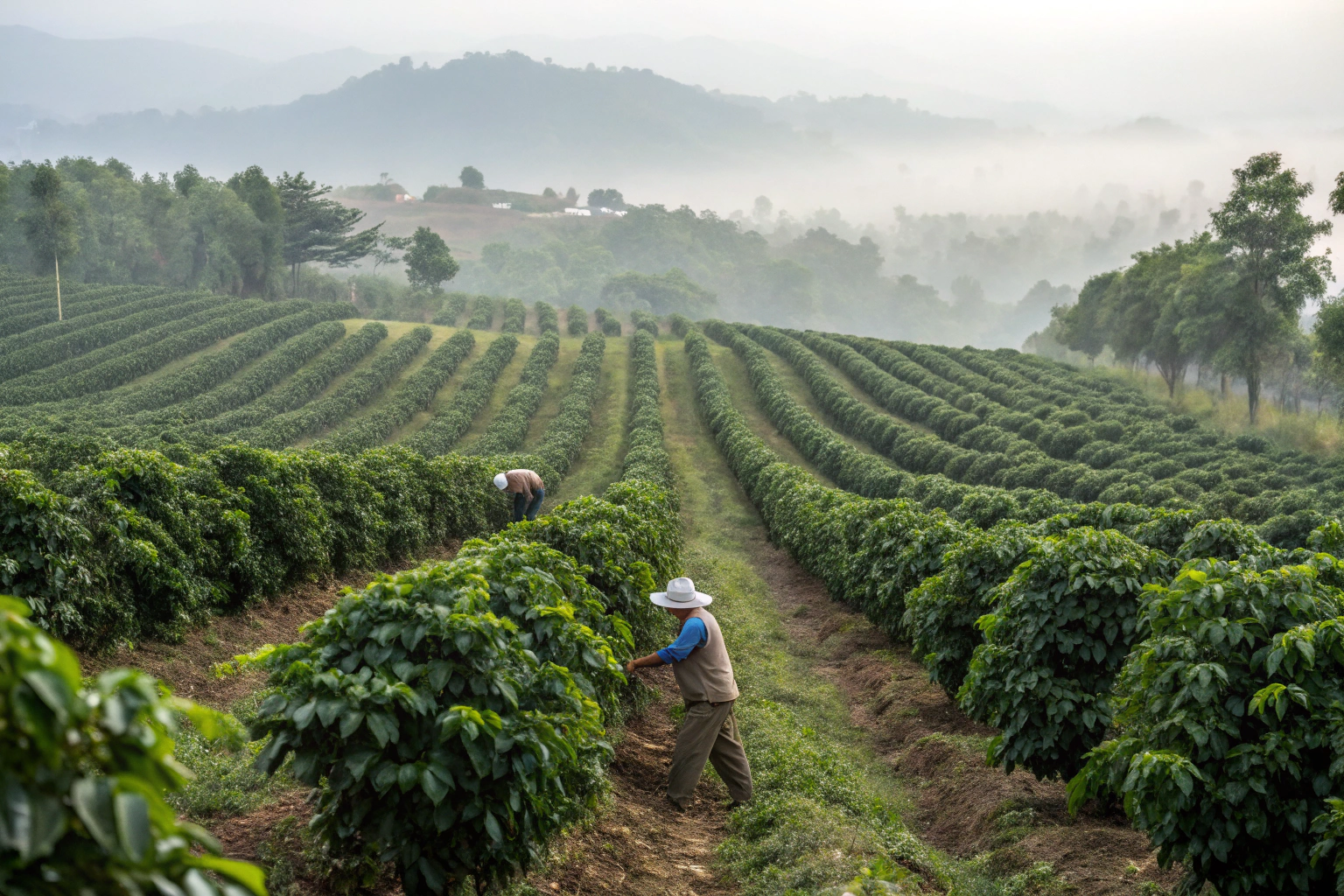
The altitude requirement alone dictates the cost. You can't grow Arabica just anywhere. You need mountains. Our farm in Baoshan sits at 1,500 meters. That means no flat, mechanized harvesting. Every cherry on our steep terraces is picked by a human hand. Machines can't balance on those slopes. When you pay for Arabica, you're paying for mountain real estate and human judgment. Robusta, on the other hand, can be strip-picked by a harvester on flat Brazilian or Vietnamese plains. One machine replaces fifty workers. That's a massive cost compression right there. At BeanofCoffee, our Arabica blocks demand constant monitoring. We scout for leaf rust daily. We prune by hand. We fertilize with precision. The labor input per kilo of Arabica is roughly triple that of Robusta. That's not markup. That's just what it costs.
How Does Altitude Affect Arabica Yield and Survival?
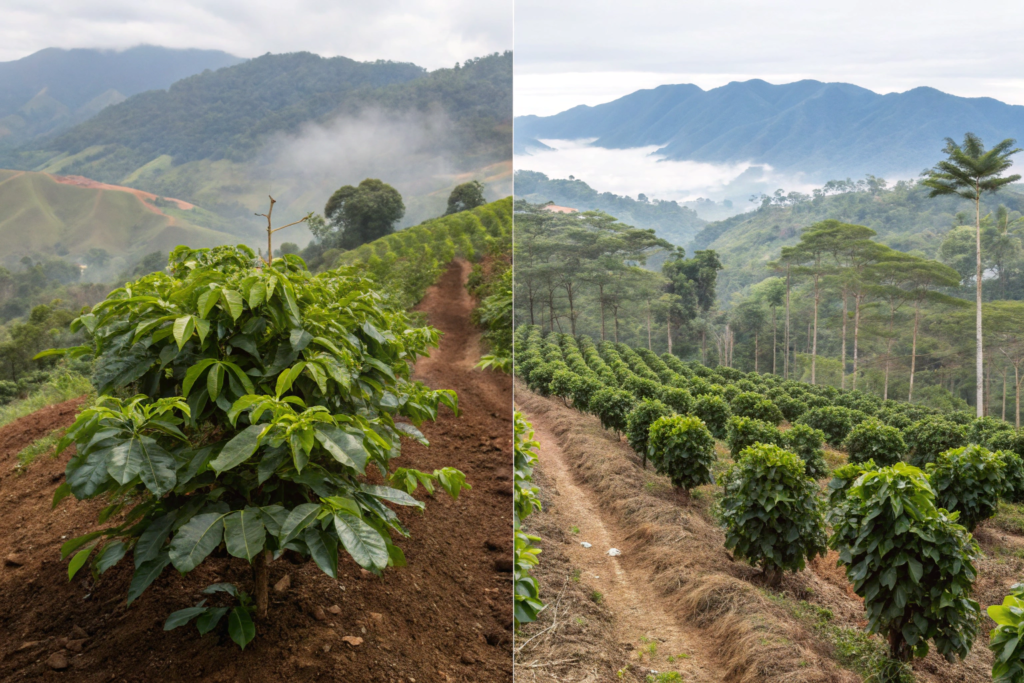
Altitude is the ultimate gatekeeper. Arabica needs cool nights to slow down the cherry maturation. A slow maturation means the bean fills with sugars and complex acids. At sea level, the cherry ripens too fast. The bean is hollow, starchy, and tastes like cardboard. So, sea-level Arabica is essentially worthless. But the high-altitude requirement comes with a yield penalty.
Trees at 1,500 meters produce fewer cherries than trees at 800 meters. The cold stresses the plant. The growing season is compressed. Photosynthesis is slower. It's a direct trade-off: quality over quantity. Our Arabica trees yield roughly 30-40% less fruit by weight than our Robusta blocks in the same farm footprint. Yet they consume the same amount of water, fertilizer, and labor hours. That yield gap goes straight into the price. There's also a survival risk. A frost at 1,500 meters can wipe out a whole Arabica block overnight. Robusta at 300 meters never sees frost. I lost a terrace of young Catimor seedlings three winters ago to an unexpected cold snap. That loss is amortized into every pound of surviving Arabica I sell. The tree itself is more vulnerable. Coffee leaf rust, a devastating fungus, loves Arabica leaves. Robusta leaves are too thick and waxy for the fungus to penetrate. Controlling leaf rust on Arabica requires copper-based fungicides and intense labor. Some years, we spray. Some years, we prune aggressively. Either way, it's an operating expense that Robusta farms barely know exists. The World Coffee Research catalog lists rust resistance scores for each varietal. Arabica varieties almost always score lower than Robusta crosses. It's the price of delicacy.
Why Does Arabica Require More Labor Than Robusta?
Labor is the silent giant in your coffee bill. Arabica is not just picked; it's selected. A ripe Arabica cherry is bright red. An unripe one is green. A single overripe cherry can add a fermented, vinegary note to a whole batch. So, pickers must be selective. They pass the tree multiple times over the harvest season, taking only the red ones.
This selective hand-picking is slow and expensive. A skilled picker in Yunnan can harvest maybe 100-150 kilos of Arabica cherry per day. That same picker, strip-picking Robusta without caring about color, can harvest 300-400 kilos. Double or triple the output for the same daily wage. Robusta also benefits from a quirk of botany. The ripe Robusta cherry sticks to the branch longer. It doesn't fall off as quickly after ripening. This means you can wait and do one big strip-pick. Arabica cherries drop fast. If you don't pick them at peak red, they ferment on the ground. That time pressure drives up the labor intensity. Processing is another labor sink. Arabica is typically washed, which requires pulping machines, fermentation tanks, washing channels, and drying patios with constant raking. Robusta is often processed naturally—spread out, left to dry, and bagged. Less handling, less equipment, less chance of error. The double-picking and sorting required for specialty Arabica is a labor multiplier. I pay a team of women to hand-sort our dried Arabica on conveyor belts, removing even the slightest visual defect. That step alone adds cents per pound, but it's the difference between a Grade 2 commercial lot and a Grade 1 specialty lot. For a deeper look at labor practices, the specialty coffee transaction guide breaks down how labor contributes to the true cost of production.
How Do Processing Methods Impact the Final Price?
Picking the cherry is only half the story. What happens between the tree and the dry mill is where value is either created or destroyed. Arabica processing is a high-wire act. Robusta processing is a walk in the park. The method you choose—washed, natural, honey—has a direct line to the price you pay per pound.
Arabica processing costs more because it often involves water-intensive washed methods, controlled fermentation, and extensive hand-sorting to remove defects. Robusta is typically dry-processed with minimal handling. The precision required to unlock Arabica's delicate floral and fruity notes adds layers of labor, equipment, and risk that Robusta's one-dimensional profile doesn't demand.
I oversee both processing streams on our farm. The Robusta line is almost boring. Cherries come in, we float them to remove sticks, we spread them on the patio, we turn them twice a day with a tractor, and ten days later, they're dry. The Arabica line is a hospital operating room by comparison. We measure Brix levels. We calibrate the pulper to the millimeter so it doesn't nick the parchment. We monitor the fermentation tank temperature to the degree. If the fermentation overruns by an hour, the lot tastes like vinegar. If the drying is too fast, the cell structure cracks. Every step is a potential failure point. That risk is priced into the bean. If I lose one Robusta lot to mold, it's a minor annoyance. If I lose one specialty Arabica lot to over-fermentation, that's thousands of dollars gone. The margin for error is razor-thin.
Why Is Washed Arabica More Expensive Than Natural?
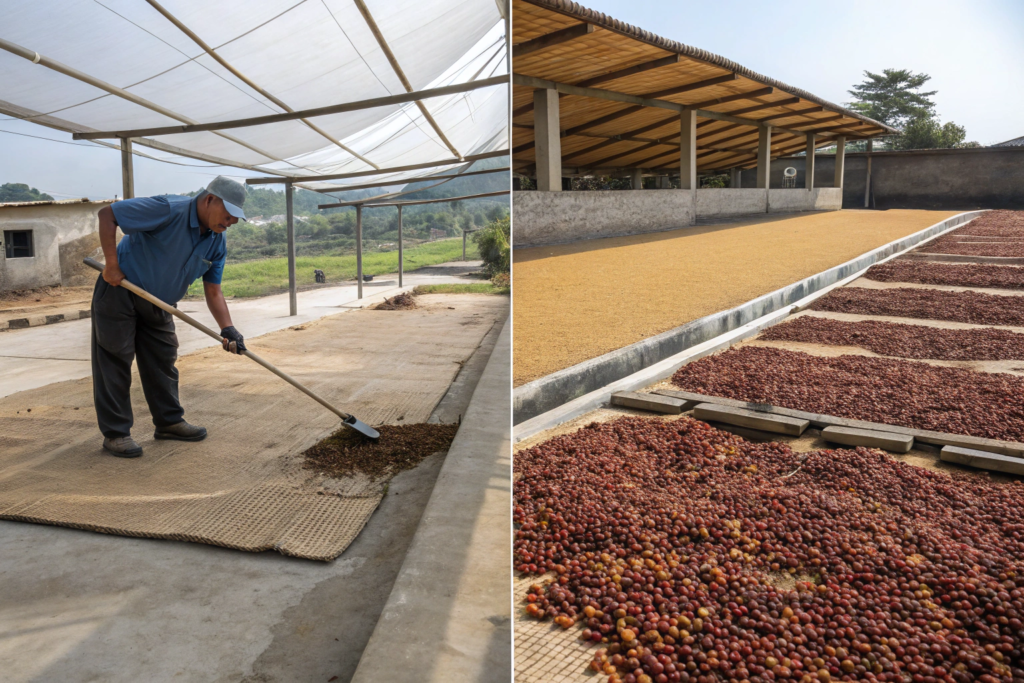
Washed processing, the standard for high-end Arabica, is basically a water park. You need massive amounts of clean water. The cherry is pulped, removing the skin. Then the slippery, mucilage-covered parchment soaks in fermentation tanks for 12 to 36 hours. Natural microbes eat the sugar layer. Then the beans are washed in channels to scrub them clean. Finally, they're dried on raised beds.
Every step adds cost. Water isn't free—we have to pump it, filter it, and treat the wastewater so it doesn't pollute the local rivers. That wastewater treatment system was a six-figure investment. Natural processing, by contrast, is the oldest trick in the book. Pick the cherry. Lay it in the sun. Wait. The fruit dries like a raisin around the bean. No pulper, no tanks, no wastewater. It uses a fraction of the equipment and labor. So, why isn't everything natural? Because the risk of defect is much higher. A natural coffee can easily develop ferment, mold, or phenolic tastes if the drying isn't uniform. When it goes right, it's fruity and wild. When it goes wrong, it's unsellable. A washed Arabica is a safer bet for a clean, transparent cup. You pay for that guarantee. The washed process strips away the fruit and leaves the naked bean flavor. If the naked bean flavor is exquisite, it shines. If it's mediocre, there's no fruit to hide behind. So, a washed process demands a high-quality cherry to begin with. It's a test that only good Arabica can pass, and the cost of the test is on the invoice. The CQI processing guide explains how these methods affect cup score potential.
Does Screen Size Sorting Really Add That Much Cost?
Yes. It's a hidden tax on uniformity. Roasters hate uneven beans. A mix of large 18-screen beans and small 14-screen beans roasts horribly. The small ones scorch. The big ones stay underdeveloped. So, we screen. We pass the green Arabica over a series of vibrating sieves with precisely drilled holes—size 19, 18, 17, 16, 15, and down to peaberry.
This sounds simple. A machine shakes, beans fall through holes. But the process is slow, the machinery is expensive, and there's weight loss. Any bean that's the wrong size gets kicked out of the target lot. If a buyer orders a container of Screen 18 Arabica, maybe only 60% of the harvest makes the cut. The rest—the 16s, the 15s, the broken bits—gets sold at a lower grade, often at a loss. That yield loss gets loaded onto the price of the premium 18-screen beans. Robusta buyers rarely demand this precision. They want a container of "Grade 1" which is mostly about defect count, not exact size uniformity. Many Robusta blends are destined for instant coffee, where the beans are ground to dust anyway. Size doesn't matter. But for a specialty Arabica roaster, size is a non-negotiable. I have a client in Seattle who rejects a lot if the screen size variance is over 5%. That forces me to double-screen, which doubles the machine time and the bean loss. If you want a perfectly uniform roast, you need perfectly uniform beans. That perfection is tedious to produce. The green coffee grading standards detail the strict screen size requirements for each classification. Every extra millimeter of uniformity has a price.
What Are the Key Flavor Differences That Justify the Cost?
Taste is the ultimate justification. If Arabica and Robusta tasted the same, no one would pay the premium. They don't taste the same. They don't even taste like cousins. This isn't wine snobbery. It's chemistry. You can measure the difference in a lab, and you can taste it in the cup. The flavor gap is why your customers ask for Arabica by name.
Arabica justifies its higher cost through a complex, nuanced flavor profile: sweet, smooth, with layered acidity and aromatics like fruit, chocolate, and nuts. It has 60% more lipids and almost half the chlorogenic acids of Robusta, which means it's less bitter and more aromatic. Robusta tastes earthy, woody, and sharply bitter with a flat, heavy body.
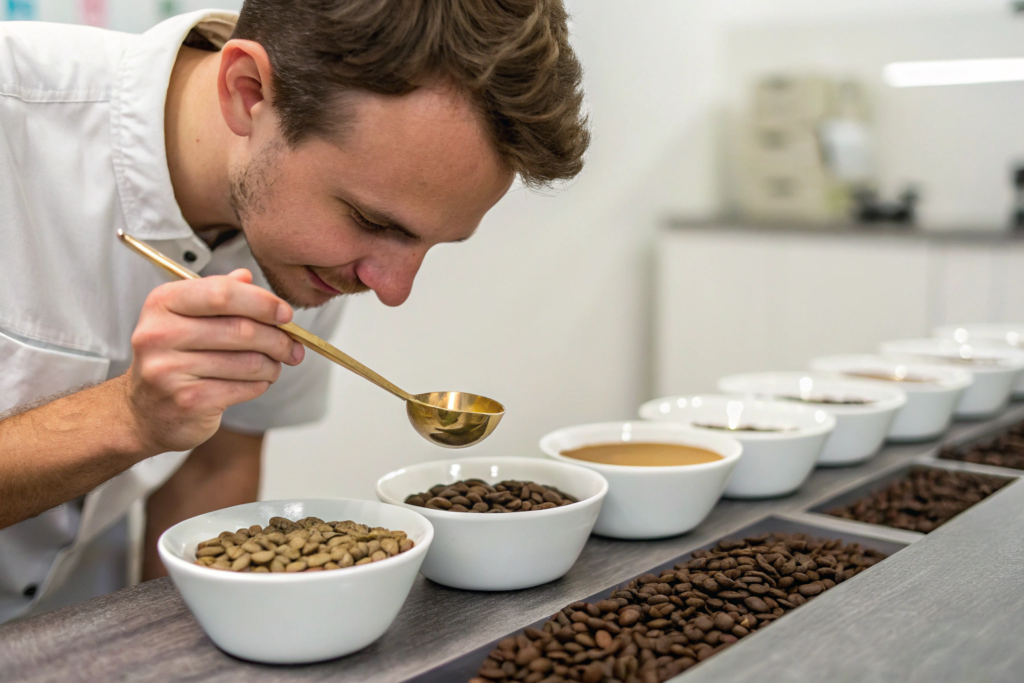
Let me describe a cupping session I do with new buyers. I roast a sample of our Baoshan Catimor and a sample of a high-grade Robusta from a neighbor's farm. I grind them. The Arabica smells like caramel and baking spice. The Robusta smells like roasted peanuts and something vaguely burnt. We pour hot water. The Arabica crust releases a bloom of fruit. The Robusta crust smells like toast. We break the crust. Arabica is bright, clean, with a hint of green apple. Robusta is heavy, like unsweetened cocoa powder and dirt. The bitterness in Robusta is physical. It coats the back of your tongue and doesn't leave. It's the chlorogenic acids and caffeine. Robusta has almost twice the caffeine. Caffeine is bitter. Arabica's lower caffeine and higher sugar content let the sweetness and acidity take center stage. You can't fake this. A cheap Robusta will always taste like cheap Robusta. Some high-end Robustas, if processed immaculately, can be clean and inoffensive. But they never taste like Arabica. They never hit those high floral or fruity notes. That's why a cafe's house espresso is Arabica. The customer expects a certain softness, a certain sweetness. Give them a straight Robusta shot, and they'll think the coffee is stale or burnt. The flavor difference is the brand promise of specialty coffee.
Can a Specialty Robusta Ever Compete with Arabica on Taste?
This is a question I get from cost-conscious roasters. They want the best of both worlds: low price, high flavor. There is a movement, especially in Asia, to produce "Fine Robusta." These are Robustas grown at slightly higher altitudes, carefully picked and washed, then roasted lighter.
The result? It's better than commodity Robusta. It's clean. It lacks the rubbery, burnt-tire notes of cheap Vietnamese Robusta. It can have a pleasant cereal or nutty character. But—and this is a big but—it still lacks the acidity and aromatics of Arabica. Acidity in coffee is the bright, sparkling sensation you get on the sides of your tongue. It's the lemon, the apple, the berry notes. Arabica has a lot of organic acids: citric, malic, tartaric. Robusta has much less. A cup of Fine Robusta is like a chair with three legs. It has body, it has a bit of sweetness, but it has no brightness. It feels flat and one-dimensional. You can improve it with a skilled roast, but you cannot inject acidity into a bean that doesn't contain it. Some roasters use Fine Robusta in a blend to add body and crema to an espresso. They'll do 10-15% Robusta, 85-90% Arabica. That's a valid, honest use. The Robusta adds a thick, syrupy mouthfeel and a monster crema. It also cuts the blend cost slightly. But if you tip over 20%, the bitter, heavy character starts to dominate. The blend loses its complexity. If you're a specialty roaster, your brand is built on complexity. You can't replace your Arabica base with Robusta, even fine Robusta, without fundamentally changing the product. The cupping score doesn't lie. A great Arabica scores 85+. The best Robusta in the world might scrape an 82. That's a different league. The SCA cupping form quantifies this gap: acidity and flavor are weighted categories where Arabica's genetic advantage is insurmountable.
How Does Caffeine Content Affect Roast and Brew Profitability?
Caffeine isn't just a stimulant. It's a roast variable and a cost variable. Robusta's high caffeine content—2.2% to 2.7% compared to Arabica's 1.2% to 1.5%—means it reacts differently to heat. Caffeine is a heat sink. It absorbs energy during roasting. A Robusta bean requires more thermal energy to achieve the same degree of roast. It's physically harder, denser, and less porous.
This means you spend more on fuel to roast a batch of Robusta. Your roaster runs hotter and longer. That's an incremental cost that adds up over thousands of batches. Robusta also doesn't develop sweetness in the roast the way Arabica does. The Maillard reaction—the browning that creates caramel and chocolate notes—works best with sugars and amino acids. Arabica has more sugars. Robusta has fewer sugars and more bitter chlorogenic acids that break down into harsh phenols when heated. The roast profile for Robusta is a defensive maneuver: you're trying to minimize bitterness, not maximize flavor. The economics get tricky. If Robusta is 40% cheaper green, but you lose 18% of the weight in moisture and chaff versus 14% for Arabica, the price gap narrows. Plus, if your customers use more milk and sugar to mask the bitterness, they're not tasting your roast skill. For a cafe, the real cost isn't the green bean price. It's the cost per cup. If Arabica costs you an extra $0.02 per cup and keeps your customer loyal, it's the cheapest insurance you can buy. The caffeine differences in coffee also dictate how you market the brew. Arabica is a relaxed, all-day drink. Robusta is a morning punch. Your customers self-select.
How to Build a Profitable Blend Without Sacrificing Quality?
Blending is the art of compromise. You're balancing flavor against cost, body against acidity, freshness against shelf life. If you get it right, a blend is more than the sum of its parts. If you get it wrong, you've destroyed a perfectly good Arabica by adding a little bit of garbage. The pressure to cut costs is real. I talk to owners like Ron all the time. Margins are tight. The temptation is to slip more cheap filler into the blend and hope nobody notices. But they do notice.
A profitable, high-quality blend uses a base of cost-effective specialty Arabica (like high-altitude Catimor) for sweetness and acidity, a small percentage of premium Robusta for body and crema, and avoids cheap commodity fillers entirely. The strategy is to find value at origin—buying direct from farms that offer cup quality above their price point.
The smartest roasters I work with use my Yunnan Catimor as their blend workhorse. It cups at 84-86 points. It has the red apple acidity, the brown sugar sweetness, the clean finish. It costs a fraction of a Colombian 84-point coffee because the market hasn't fully priced in Yunnan's quality surge yet. That's the value play. They build 70% of the blend on that base. Then they might add 20% of a big, chocolatey Brazilian for body. Then 10% of a high-grade Indian Cherry Robusta for crema and a caffeine kick. That blend delivers a sweet, complex shot with a gorgeous crema, and the landed cost is manageable. The key is to never sacrifice the base. The base dictates the flavor. If your base is a cheap, baggy, past-crop Arabica, no amount of fancy top notes can cover the stale taste. A friend of mine in Melbourne does a "working man's blend" that's 80% our Catimor and 20% Vietnamese Robusta. He's honest about it. He doesn't market it as a single origin. He markets it as a strong, smooth, everyday cup. It flies off the shelf. The lesson? Quality within the blend is about intention, not just price. An intentional blend with a good base is a tool. A cheap blend that just tries to hit a price point is a trap.
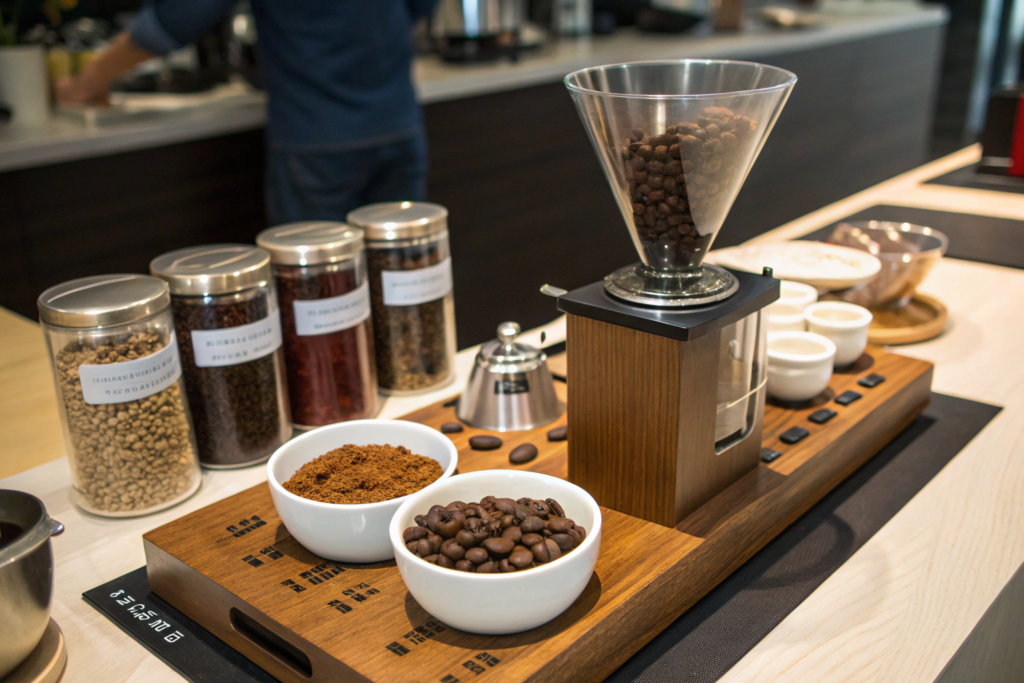
What Is the "Sweet Spot" Percentage for Robusta in an Espresso Blend?
Every roaster has a secret ratio. But over years of cupping blends, I've found a range that works. For an Italian-style espresso—dark roasted, thick, used in milky drinks—you can push Robusta up to 15-20%. The dark roast tames the bitterness and caramelizes the sugars. The Robusta's caffeine cuts through the milk. It gives you that "kick" and a crema that looks like whipped mousse.
For a modern, medium-roast espresso—the kind served in specialty cafes where you taste the origin—the limit is much lower. 5-10%, tops. And that Robusta must be "fine washed," not just any commodity bean. A dirty, natural Robusta at 10% will introduce a moldy, earthy taint. A clean washed Robusta at 5% will just add a quiet bass note and some texture. Go beyond 20%, and you're making a statement. The bitterness becomes the main event. That can work for a traditional Neapolitan espresso culture where they drink short, intense shots with sugar. But for the mainstream specialty market, that bitterness is a defect. I did an experiment once. I made a blend that was 50% Catimor and 50% high-grade Robusta. I served it blind to my team. They guessed it was 100% cheap pre-ground supermarket coffee. The Robusta simply overwhelmed the Arabica. The sweet spot, in my view, is the lowest percentage that achieves your body and cost goals. For most, that's 10%. You get a noticeable crema boost and a slight cost savings, without anyone asking, "Why does this taste so harsh?" Start at 5%, cup it, and inch up until you find the tipping point where the bitterness starts to bloom. Then pull back. The espresso blend strategies taught by professional trainers emphasize this iterative approach.
How to Source a Cost-Effective Arabica Without Sacrificing Score?
This is the question that should keep Ron up at night—in a good way. The answer is: look where others aren't looking. Old-world origins like Colombia, Guatemala, and Ethiopia have a prestige factor. Their 84-point coffees carry a romance tax. You're paying extra for the name.
New-world origins—China, Thailand, even some regions of India—are undervalued. The quality is there, but the brand recognition isn't. Yet. Our Catimor from Baoshan is a prime example. It scores the same as a mid-range Colombian Supremo in a blind cupping. It has the acidity, the body, the cleanliness. But because China isn't yet on the tip of every roaster's tongue, the FOB price is lower. It's an arbitrage opportunity. You're buying quality, not narrative. Another strategy is to buy larger lots of a lower grade from a top-tier farm. A single estate might have 85-point micro-lots and 83-point "estate blend" lots. The 83-point lot comes from the same trees, the same soil, just slightly less perfect sorting. It's a fraction of the price. For a house espresso blend, that 83-point estate lot is a steal. It has the same DNA, just a bit less clarity. I offer exactly this at BeanofCoffee: our "Reserve" is 86+ and our "Estate" is 83-84. The Estate lot is the value play for smart blenders. You also build a direct relationship. When you buy spot from a trader, you pay a convenience fee. When you contract with me directly, we set a fair price that works for both of us, and I allocate the volume before it hits the open market. The direct trade coffee model is built on this principle. It's not charity. It's a sourcing strategy that delivers better value by cutting out the middle layers.
Conclusion
Arabica is more expensive than Robusta for a thousand small reasons that add up to one big truth: it's a premium agricultural product that demands more from the land, the farmer, and the processor. It's harder to grow, more vulnerable to disease, yields less fruit, requires painstaking hand-picking, and needs precise, water-intensive processing to unlock its complex flavor. Robusta is a survivor. It grows easy, processes cheap, and tastes bitter. The gap in the cup is the gap in the cost. You're not paying for a logo. You're paying for sugar content, for volatile aromatics, for the clean acidity that makes coffee taste like fruit instead of ash.
But paying more doesn't mean overpaying. The smartest buyers I know aren't chasing the cheapest Arabica. They're chasing the best value Arabica. And in 2026, that value is increasingly found in origins that deliver the score without the hype tax. That's where we come in.
At BeanofCoffee, we grow Arabica and Robusta, but our heart is in the Arabica terraces. We know exactly what it costs to produce a clean, sweet 84-point lot, and we know how to ship it to your roastery with zero drama. If you're trying to build a blend that wows your customers and keeps your accountant happy, let's talk numbers. Reach out to my export director, Cathy Cai. She can send you a sample pack of our Catimor and our Robusta, and you can taste the difference yourself. Email her at: cathy@beanofcoffee.com.