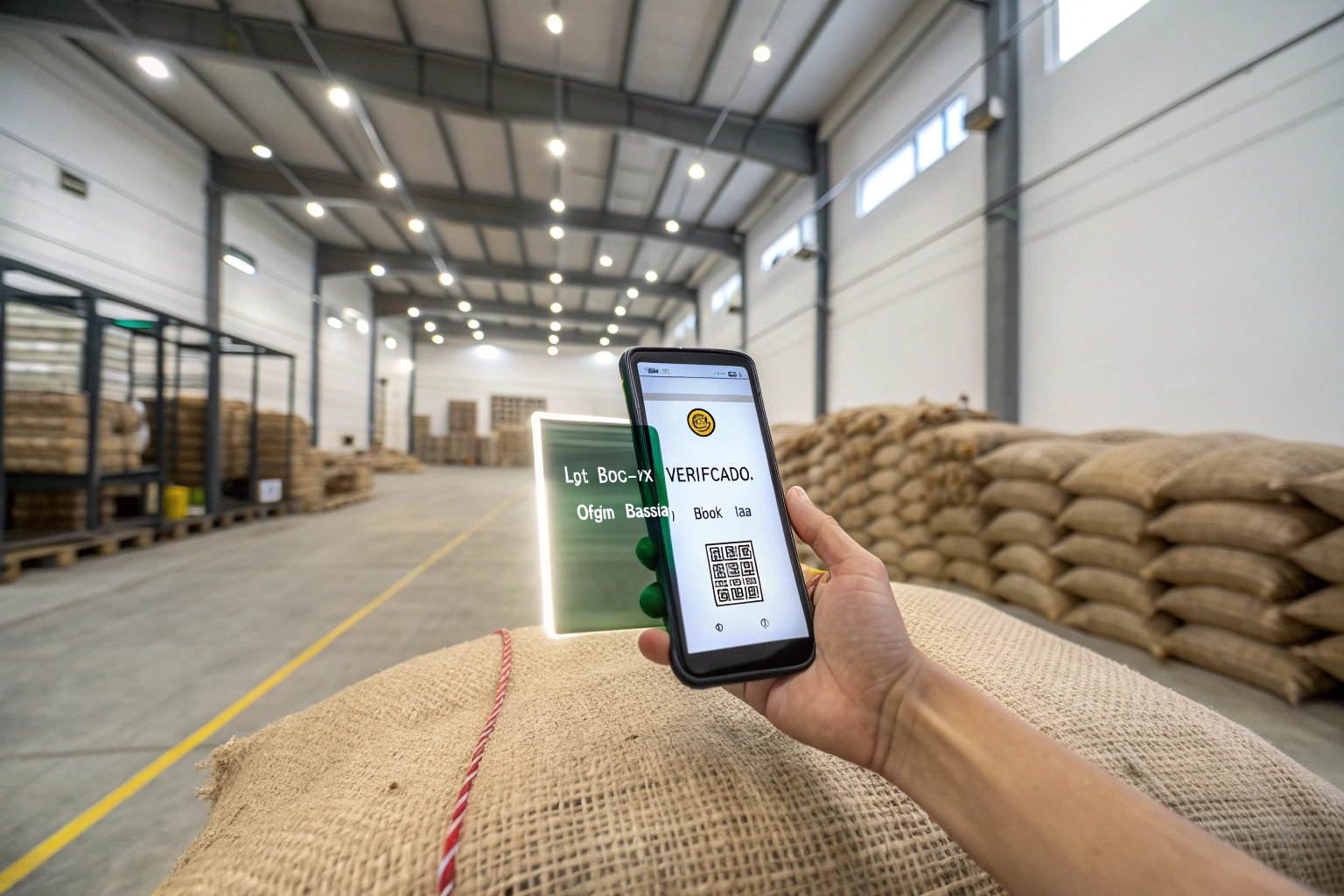
I remember a buyer telling me a few years ago, "I love your coffee, and I love your story. But how do I know the story is true? How do I know the organic certificate you showed me is real and not a photocopy?" It was a fair question. In an age of sophisticated fraud, a PDF is just a promise. And I realized that to build the ultimate trust with a distant buyer, we needed to move beyond paper. We needed a system that was not just transparent, but mathematically unchangeable. That was when I began exploring blockchain.
Blockchain is being used for coffee bean traceability from China because it creates a single, immutable, and shared record of the coffee's journey, transforming verifiable data—from GPS coordinates and harvest dates to organic certificates and export documents—into an unalterable digital chain that can be independently verified by a roaster or consumer anywhere in the world, definitively solving the problem of document fraud and opaque supply chains.
It is not just a buzzword. It is a practical tool for building an unbreakable bond of trust between our farm and your roastery. Let me explain how it works in simple terms and what it means for you. At Shanghai Fumao, we are pioneering this technology because we believe the future of specialty coffee is built on verifiable truth.
How Does Blockchain Create an "Immutable Ledger" for a Coffee's Journey?
To understand why blockchain is different, you must first understand the problem it solves. Today, a coffee's journey generates data from many different actors: the farmer, the miller, the certifier, the shipper. Each keeps their own record. This fragmented system is vulnerable to errors, delays, and, critically, fraud.
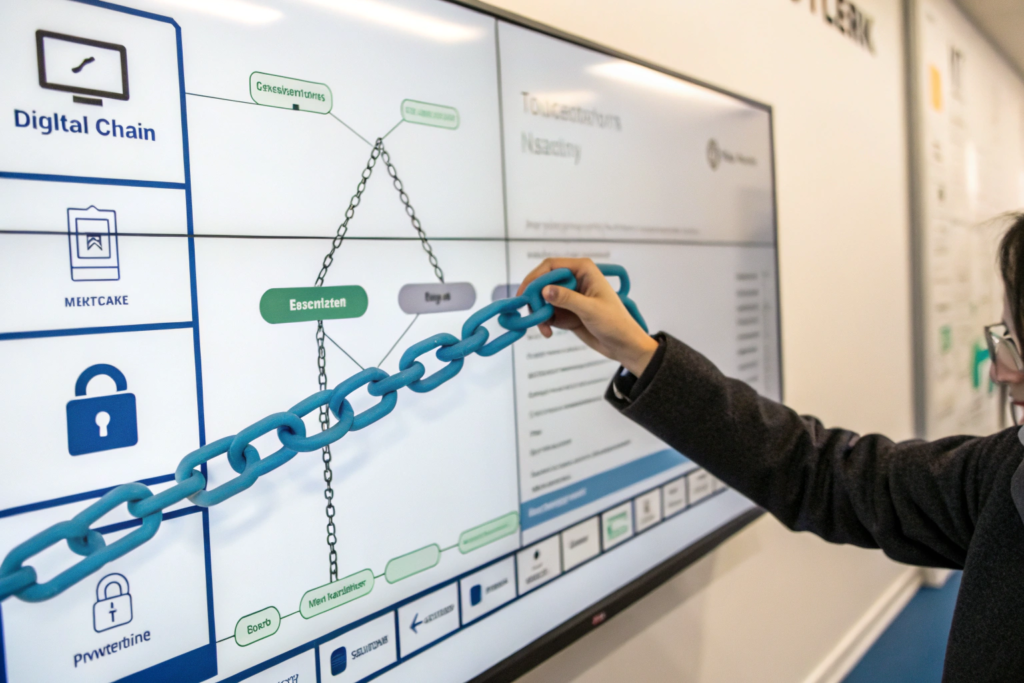
Blockchain creates an "immutable ledger" by collecting each critical data point from a coffee's journey into a shared digital record, linking those records in chronological order using advanced cryptography so that once a piece of information is recorded, it becomes mathematically and practically impossible to alter or delete without detection.
It replaces a hundred separate, editable files with one single, unchangeable, shared truth. It is a permanent, digital witness to the coffee's entire life.
What Is a "Digital Token" and How Does It Link Bag to Data?
This is the core concept. You cannot physically attach the blockchain to a bag of coffee. So, we create a digital twin. A "digital token" is the unique, non-fungible digital identity of a specific batch of coffee that exists on the blockchain. It acts as a permanent, cryptographically secure link between the physical world and its digital data.
When a lot, like our micro-lot from Block 14A, is created after milling, a corresponding digital token is created on the blockchain. This token is the digital twin of that specific batch of coffee. Every subsequent action in the physical world that adds value or information to that coffee—a quality analysis from our Q-Grader, the issuance of its organic certificate, a change in custody to the trucking company—is recorded as a new, timestamped "transaction" permanently linked to that single token. The QR code on the bag is simply the key that scans and activates a query on the blockchain explorer to instantly pull the complete, unalterable life story of that one specific token's journey. It proves that the exact bag you are holding was produced on December 12th, 2025, at 1,650 meters, from Catimor trees, and that it achieved a cupping score of 85.
How Does a "Shared Record" Eliminate Conflicts in the Supply Chain?
In the traditional supply chain, disputes are a nightmare. The exporter's driver says they delivered 320 bags. The importer's warehouse says they received 318. Each has their own receipt. One claims a document was lost; the other claims it was never sent. It becomes a costly, stressful "he-said, she-said" argument with no clear source of truth.
Blockchain solves this by replacing siloed, internal records with a single, shared, and permissioned view of the truth. All authorized participants in the chain view the same record. When our logistics manager at Shanghai Fumao records the transaction "320 bags, Lot #BOC-XX, dispatched on truck ABC," that is the truth. When the shipping line records "320 bags, Seal #XYZ, loaded on vessel M/V Ever Glory," the system automatically reconciles it. There is no disagreement because there is only one record. The transparency eliminates the friction, fraud, and costly delays that arise from mismatched paperwork. This is one of the key pillars of trust we detail in our Quality Control philosophy.
How Can Blockchain Prove Claims Like "Organic" or "EUDR Compliant" in China?
The world's most powerful coffee claims—"Organic," "Fair Trade," "Deforestation-Free"—are exactly the ones most vulnerable to fraud. A PDF certificate can be easily forged, and the devastating truth is often discovered too late. Blockchain transforms these promises into independently verifiable, digital proofs directly linked to a specific batch of coffee.
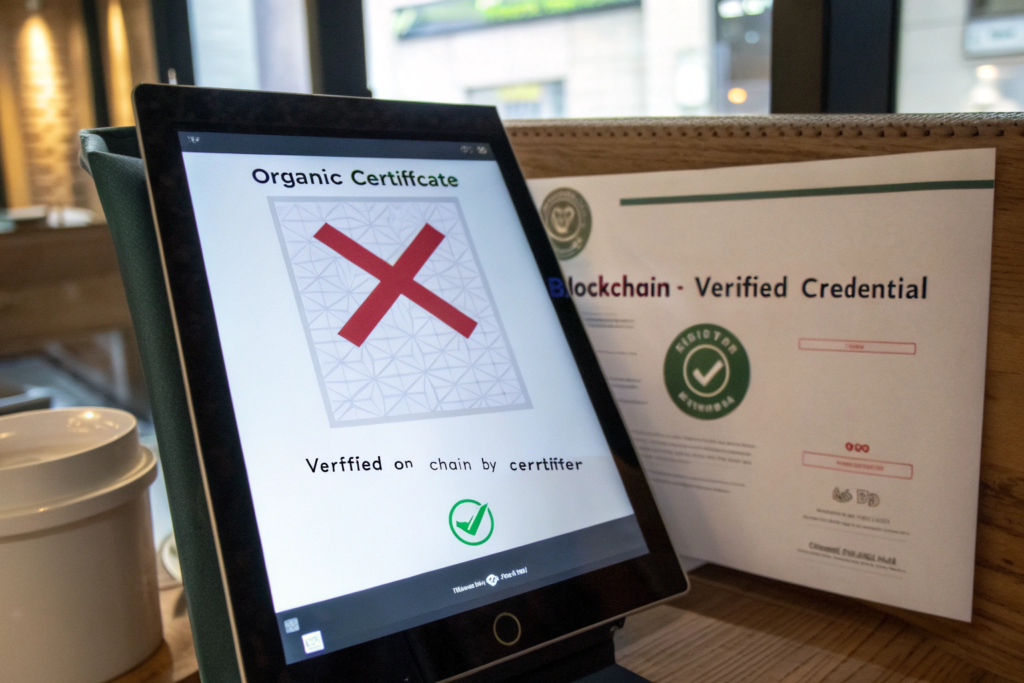
Blockchain proves claims like "Organic" or "EUDR Compliant" by enabling certifying bodies and auditors to cryptographically attach a coffee's official credentials directly onto its immutable digital token, allowing a buyer or regulator to click on the claim and instantly verify the original, authentic certificate on the auditor's own system, eliminating the risk of a forged or outdated paper document.
It turns a claim into a piece of auditable, executable code. This is a paradigm shift in certification and regulatory compliance.
Can an Organic Certifier Directly Attach a Certificate to the Token?
Yes, and this is the revolutionary step. In the old system, an organic certifier issues a paper or PDF certificate to our farm. We then make a copy and email it to you, the buyer. At each step, the integrity of the document relies on trust. At any point, it could be digitally altered.
With an integrated blockchain platform, the workflow is fundamentally more secure. The certification body, such as OFDC, becomes a "trusted issuer" node on the network. When they issue an organic certificate for our farm, they digitally sign it using their own private cryptographic key and directly attach that verified credential to our farm's permanent digital profile on the blockchain. When you, as a buyer, scan the QR code on your bag of coffee, you are not just seeing our copy of the certificate. You are seeing the original, verifiable digital credential, and you can cryptographically prove that it was issued by OFDC and has not been altered. This directly addresses the concerns raised in our article on How Do I Know If a Coffee Factory Certificate of Analysis Is Real?, taking verification to its ultimate, tamper-proof conclusion.
How Does Geolocation on the Blockchain Simplify EUDR Compliance?
The European Union Deforestation Regulation (EUDR) is now the single most critical regulatory requirement for any coffee entering the European market. It requires importers to collect precise geolocation data and a deforestation risk assessment for their coffee. This is a massive, expensive data collection and verification headache for the industry. Blockchain provides the perfect architecture to solve this.
As we detail in our article on What Is the Rainforest Alliance Standard for Coffee Farms in China?, our farm is mapped with precise GPS polygons as part of our certification. This geolocation data, along with a timestamp and satellite imagery verifying the land was forest-free on the cut-off date, is anchored to the coffee's digital token. An EU customs authority or an importing roaster can then verify this data directly on the blockchain. This transforms a costly, manual compliance burden into an instant, auditable, digital truth. It is a practical, scalable solution to a global regulatory challenge, positioning verified Chinese coffee as a leader in compliant trade.
What Specific Information Can a Roaster Verify on the Blockchain?
This technology is not just for regulators. It is a powerful tool for you, the roaster. It empowers you to be the most informed and transparent brand in your market. When you receive a batch of our blockchain-verified Yunnan coffee, you are not just getting beans. You are getting a portable, interactive, and unalterable data file that tells that specific coffee's complete story.
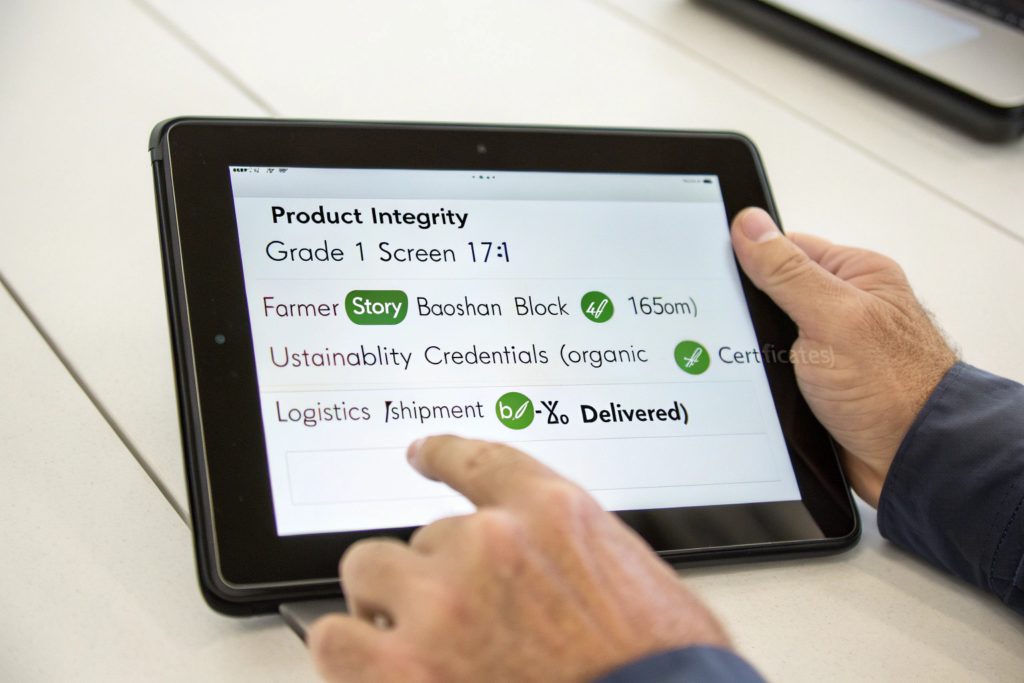
A roaster can verify a comprehensive set of immutable data points for each specific lot, including the coffee's exact physical quality specifications like its cupping score, screen size, and moisture content; its authentic origin and farmer story complete with GPS data; its sustainability credentials with cryptographically verified certificates; and a transparent, timestamped logistics history of its journey.
This is the ultimate due diligence and marketing tool. It allows you to say, with absolute confidence, "Do not just take my word for it. Verify it for yourself."
How Can You Check a Lot's Physical Quality Specs and Cupping Score?
You are buying a specific quality, and you need to know that what is in the bag matches the promise. The blockchain can make your contract's quality specifications an auditable part of the product's DNA.
The Q-Grader's analytical report for the specific lot—which includes the essential numbers like moisture content, water activity (as discussed in our guide on Why Is Water Activity in Green Coffee Just as Important as Moisture?), screen size retention, and the final cupping score—is directly attached to the coffee's digital token as a certified data block. When you scan the bag, you can instantly verify, for example, "This is Lot BOC-26-14A. It was cupped on [Date] by our Q-Grader. It has a verified moisture of 11.2% and a water activity of 0.55, and achieved a score of 84.5." This eliminates any subjective disagreement about the coffee's measured quality when it left the mill. The quality baseline is forever set and verified at the source.
What Farmer Story and Sustainability Credentials Are Verifiable?
Your brand story is only as powerful as it is true. Blockchain allows you to market a story that is not just compelling, but demonstrably factual. The origin story and the sustainability credentials are no longer marketing copy; they are an immutable fact.
A consumer, or your wholesale client, can scan the QR code on a retail bag and see, on their phone, a map pinpointing the exact block of our Baoshan farm where the coffee was grown. They can read about the farmer and the terroir of the Gaoligong Mountains, a story we outline in our Private Label Program. And they can do something no other coffee allows: they can click on the "USDA Organic" logo and instantly pull up the verified, digitally-signed organic certificate from OFDC. This level of radical, independently verifiable transparency is a brand superpower. It builds an unshakeable fortress of trust with an increasingly skeptical consumer, and it is a defense against any accusation of "greenwashing."
Conclusion
Blockchain is being used for coffee traceability from China because it moves the entire buyer-seller relationship from a foundation of trust to a foundation of verifiable truth. It solves the ancient problem of document fraud and opaque supply chains by creating a single, shared, immutable record of a coffee's life, from a specific GPS coordinate on our farm to your loading dock.
For a roaster, it provides a powerful tool to verify quality, authenticate sustainability claims, and build a brand story that is demonstrably, mathematically true. It is not a gimmick; it is the new architecture for trust in an age of skepticism.
At Shanghai Fumao, we are not just waiting for this future. We are building it. We are implementing blockchain traceability on our premium lots because we believe that the future of our industry belongs to those who can prove their promises.
If you want to be an early partner in this technology and learn how to bring blockchain-verified Yunnan coffee to your customers, let's have that pioneering conversation. Email Cathy Cai. Ask about our "Blockchain-Verified Micro-Lot" program. Contact Cathy at: cathy@beanofcoffee.com