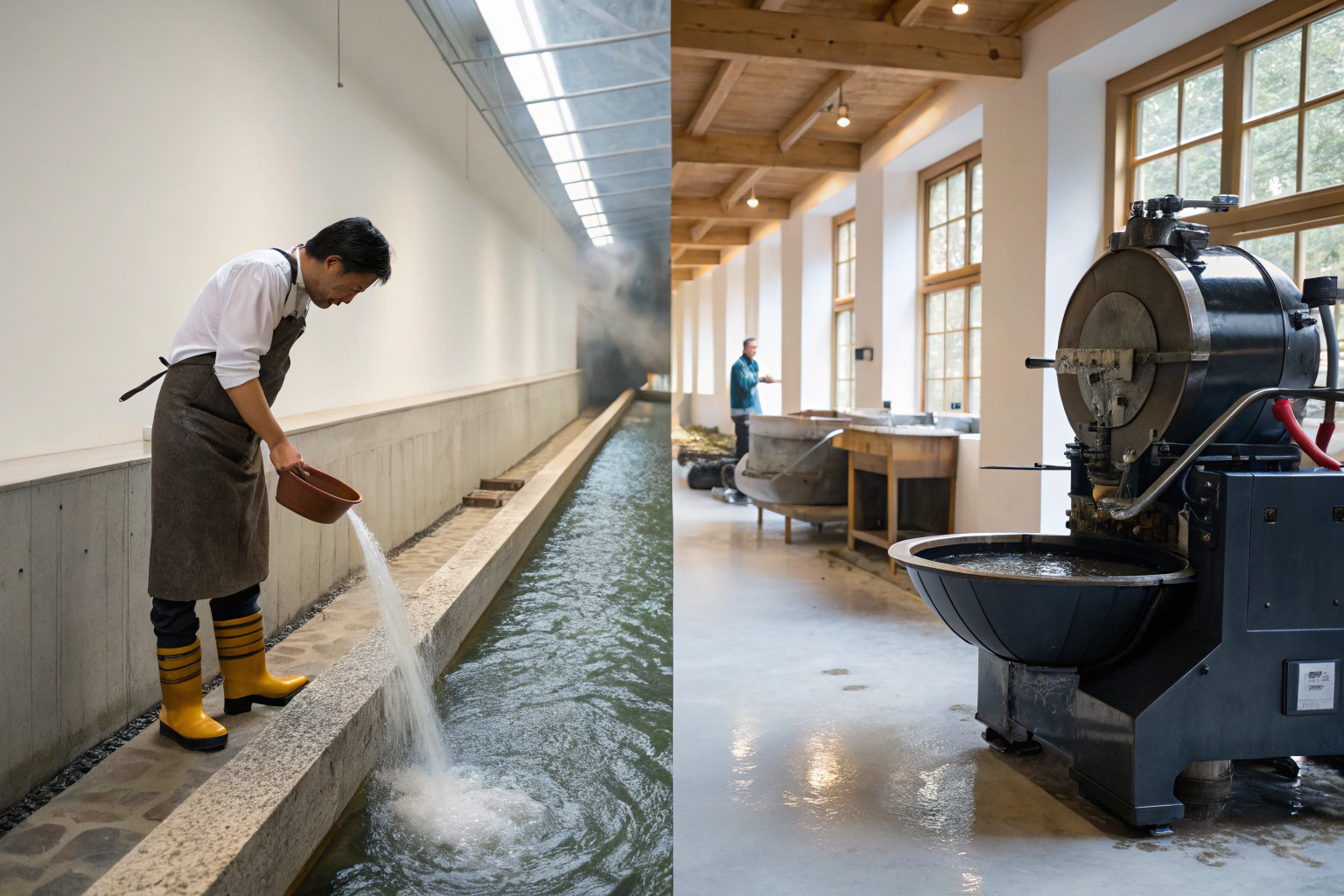
A roaster from Oslo told me something at a cupping event in Berlin. "We don't buy coffee. We buy cleanliness. If the coffee has even a hint of ferment, my customers will reject it." He cupped our standard washed Catimor and liked it. But he asked for something cleaner. Something he could roast light and serve black without any flavor covering the defects.
That is when I started running double washed fermentation trials in Baoshan. It adds cost. It adds time. It uses more water. But the result is a coffee that strips away everything except the purity of the bean. And that, he explained, is exactly what the Scandinavian market demands.
Scandinavian roasters prefer double washed coffee because the extra fermentation and soaking phase removes virtually all residual mucilage and microbial byproducts, producing a cup with glass-like clarity, high acidity, and zero earthy or fermented notes—ideal for the characteristic Nordic light roast approach.
This is not a minor processing tweak. It changes the pH, the water activity, the shelf stability, and the way the coffee reacts to a fast, hot drum in a Copenhagen roastery. Let me take you through what double washing actually does at the bean level.
What Makes Scandinavian Roasting Style Distinct from Mediterranean Roasting?
The difference is not subtle. It is extreme. And it dictates what kind of green coffee a roaster can actually use.
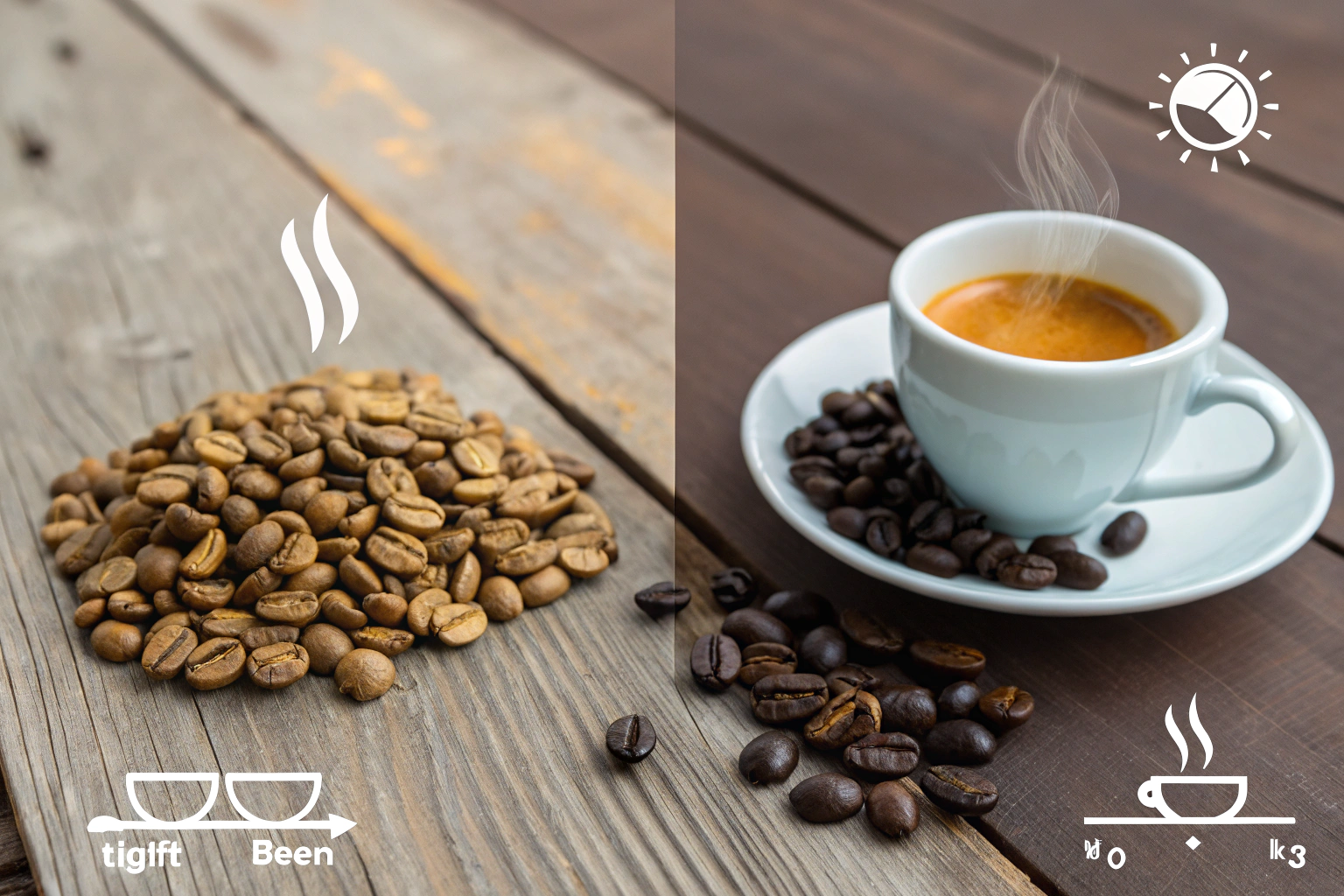
Scandinavian roasters—the ones in Norway, Sweden, Denmark, Iceland—roast light. Very light. They drop the coffee at a bean temperature around 205 to 210 degrees Celsius. First crack has barely finished. The bean is still dense. The color is cinnamon, not chocolate. There is no oil on the surface. The roast is meant to preserve everything the origin and processing put into the bean.
Mediterranean roasters—Italy, Spain, southern France—roast dark. They push through second crack. Drop at 225 degrees Celsius or higher. The bean is oily, expanded, more carbon than cellulose. The roast flavor dominates. The origin gets partially buried under caramelization and pyrolysis.
Scandinavian light roasting acts like a magnifying glass on green coffee quality. Every processing defect, every off-note, every hint of ferment becomes glaringly obvious. Mediterranean dark roasting acts like a filter, smoothing out defects through caramelization and roast character.
So, if you sell green coffee to a roaster in Stockholm, they will taste things that a roaster in Naples will never notice. That is why processing matters so much more in Nordic markets. The green coffee has nowhere to hide.
What Chemical Changes Occur During a Nordic Light Roast?
Let me simplify the chemistry. When you roast coffee, two big reactions happen. Maillard browning, which creates savory and caramel notes. And Strecker degradation, which breaks down amino acids into volatile aromatics.
In a light roast, the Maillard reaction is barely getting started when the roaster drops the batch. The bean is still mostly intact chemically. A lot of the original chlorogenic acids are still present. These acids are sharp. Bright. Some taste like green apple or lemon zest. In a washed coffee with clean processing, they taste pleasant. In a natural or a poorly fermented washed coffee, they taste harsh, sour, and astringent.
The Nordic roaster wants those bright acids. But only if they are clean. If there is a trace of butyric acid from fermentation, it tastes like vomit at a light roast. At a dark roast, that same defect burns off. The roaster in Naples never knows it existed. The roaster in Oslo spits it out.
This is why I treat the double washed process as a filter. I am removing everything that could become nasty under a light roast. The roaster pays more for the green coffee. But they avoid a customer complaint, a returned bag, or a bad review online. That trade-off makes sense in a market where quality expectations are extreme.
Why Do Nordic Consumers Prefer Tea-Like Body?
This is a cultural preference that runs deep. Northern European coffee culture does not center around thick, syrupy espresso the way Italian culture does. It centers around filter coffee. Pour-over. Aeropress. Batch brew. Drunk black. Often without sugar.
In that context, body is not an asset. It is a distraction. A tea-like body lets the acidity and the origin character shine without weight on the tongue. The coffee feels more like a delicate tea, less like a meal. Florals, citrus, bergamot, jasmine—these are the words that sell coffee in Copenhagen. Chocolate and nuts? Those are for darker roasts or for the espresso crowd in Milan.
When I cup with my Scandinavian buyers, they describe an ideal coffee with words like "crisp mouthfeel," "silky finish," and "crystalline clarity." The phrase "heavy body" is usually a criticism. A coffee that coats the tongue too much masks the subtle notes they prize. The double washed process, by scrubbing away the lipids and polysaccharides that build body, aligns perfectly with this aesthetic.
How Does the Double Washed Process Enhance Cup Clarity?
Standard washed coffee goes through one fermentation. The pulped beans sit in a tank of water for twelve to eighteen hours. Enzymes and microbes break down the mucilage. Then the beans are washed in channels and dried. Clean cup. Predictable. Good.
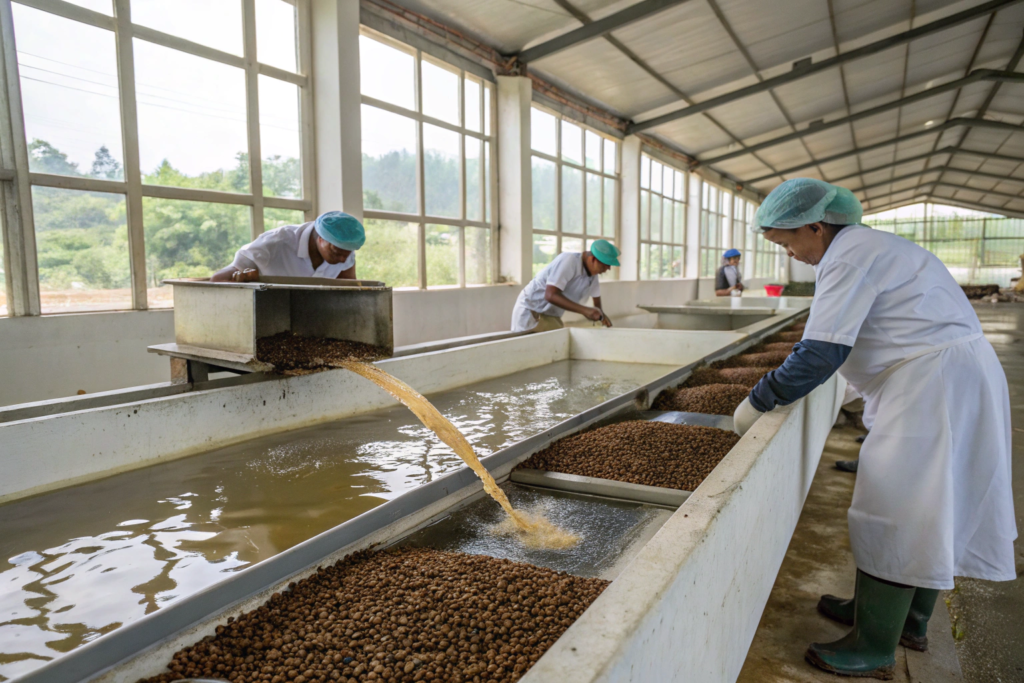
Double washed coffee goes through two fermentations, or more accurately, a fermentation followed by a prolonged clean-water soak. After the first fermentation and a thorough channel wash, we put the beans back into a second tank of fresh, clean water. No mucilage this time. Just a water soak that lasts another eight to twelve hours. This second stage pulls out any remaining sugars, microbial residues, and loose organic material from the parchment surface.
The double washing process creates clarity by dissolving away residual compounds that would otherwise contribute earthy, dirty, or overly heavy notes during roasting, leaving behind only the intrinsic flavor precursors of the bean's cell structure.
After double washing, the drying stage matters even more. The beans are stripped of their protective mucilage entirely. They dry faster. They are more vulnerable to sun damage. So we dry them slower, under shade, with more frequent turning. The result is a parchment that smells almost neutral before milling. No fruit. No ferment. Just clean grain and a hint of grass. That neutrality is exactly what a Scandinavian roaster pays for.
Does Double Fermentation Reduce the Risk of Phenolic Defects?
Yes. And this point is not discussed enough. Phenolic defects—those medicinal, band-aid, smoky off-notes—come from microbial contamination during processing. Certain bacteria and wild yeasts produce volatile phenols when they metabolize sugars in the mucilage. The standard washed process usually controls this. But not always. If the fermentation tank is not cleaned properly, or if the ambient temperature spikes, phenol-producing organisms can take hold.
The double wash adds a second safety net. The first fermentation handles the bulk of mucilage removal. The second, clean-water soak dilutes any remaining microbial load. The water also leaches some of the phenolic compounds that might have formed. The result is a much lower probability of phenolic taint.
For a roaster buying a full container blind, this matters. A single bag with a phenolic defect can ruin a production batch. Double washing makes the container consistency more reliable. I have seen arrival cupping stability improve measurably since we started offering this process to our Scandinavian accounts. For more on fermentation management, the Coffee Quality Institute publishes processing guides that discuss how water quality and tank hygiene affect cup cleanliness.
Why Is Water Quality Critical for the Second Wash?
Here is a detail that separates average double washed coffee from excellent double washed coffee: the water.
If the water used for the second soak is not pristine, you defeat the purpose of the extra step. If the water contains iron, the coffee picks up a metallic note. If the water is high in organic matter, the beans reabsorb impurities. If the pH of the water is too high, alkaline hydrolysis starts attacking the bean cellulose.
Our Baoshan washing station uses spring water from the Gaoligong Mountain watershed. The water is naturally filtered through granite and comes out with a neutral pH around 7. Total dissolved solids are very low. This water does not add anything to the coffee. It only removes. That is the ideal.
I test the second soak water every few hours. Temperature, pH, clarity. If the water starts to look cloudy, it means residual compounds are still dissolving out of the parchment. I drain and refill with fresh spring water. This is labor-intensive. It increases production cost. But it is non-negotiable for the Scandinavian grade. For wider context on water chemistry in processing, World Coffee Research has published studies on how water composition interacts with green coffee during post-harvest processing.
How Do You Source Double Washed Yunnan Coffee for Nordic Markets?
Sourcing for Nordic markets means changing your buying spec at a fundamental level. You are not looking for the highest cupping score. You are looking for the cleanest cup. A coffee that scores 84 with zero defects is more valuable to a Scandinavian buyer than a coffee that scores 87 with a slight ferment note.
I have learned to cup differently when I am selecting lots for Stockholm versus selecting lots for Houston. For Houston, I look for body, sweetness, and chocolate notes. For Stockholm, I look for acidity clarity, absence of taint, and a transparent finish. Same origin. Same variety. Completely different selection criteria.
To source double washed Yunnan coffee for Nordic roasters, you must specify a processing protocol that includes a second clean-water soak, request pH readings and drying data, and cup intentionally for cleanliness and acidity clarity rather than body or sweetness.
Your sourcing calendar also shifts. Double washed lots take longer to process. Add three to four extra days for the second soak and the extended drying. The coffee is ready to ship later in the season. Plan accordingly. If your usual container booking is in May, a double washed lot might not be ready until June.
What Specifications Should a Nordic Roaster Require?
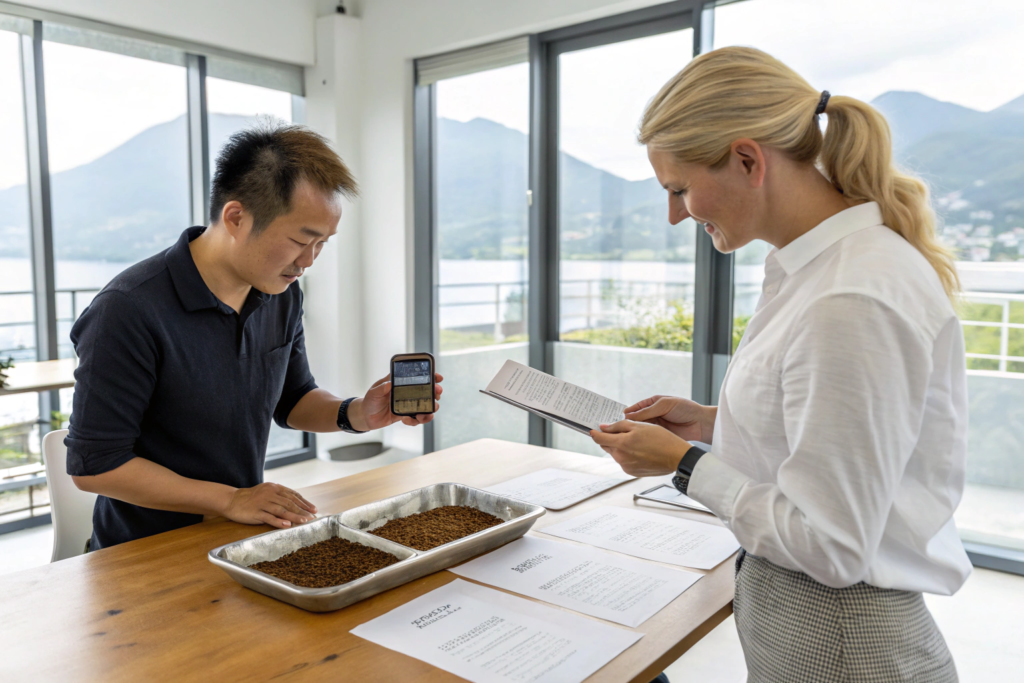
I recommend a tight spec sheet for any double washed coffee destined for a light roast program. Here is what I typically agree to with Scandinavian clients:
| Specification | Target Range | Rationale |
|---|---|---|
| Moisture Content | 10.5% - 11.5% | Lower moisture supports faster, even heat transfer in light roast |
| Water Activity | Below 0.55 | Prevents age-related flavor deterioration in light roasts |
| Screen Size | 16/18 or 18+ | Uniform bean size for even roasting in hot, fast drum profiles |
| Defect Count | Zero primary, max 3 secondary per 350g | Light roasts magnify even small defects |
| Cupping Score | 82+ with zero ferment notes | Cleanliness matters more than score ceiling |
| pH of Green Bean Extract | 5.2 - 5.6 | Indicates proper fermentation control and clean processing |
These specs are stricter than what you would write for a standard commercial Arabica. They cost more. But the Scandinavian roaster builds that cost into their retail pricing and their brand promise of "pure, clean, transparent" coffee. For an example of the level of documentation these buyers expect, Shanghai Fumao provides detailed lot cards and drying logs specifically for Nordic-grade micro-lots.
Can Double Washed Yunnan Coffee Develop Sweetness Over Time?
Yes, and this is something I discuss often with Nordic roasters who age their green coffee before roasting. Some Scandinavian roasters intentionally hold green coffee for six to nine months after harvest. They believe the aggressive, grassy acidity of fresh-crop coffee mellows out, and the sweetness becomes more integrated.
Double washed coffee ages differently than natural coffee. Because the lipid content is lower and the mucilage is fully stripped away, the aging is slower and more predictable. The acidity drops gradually, not sharply. The sweetness edges up as some of the chlorogenic acids break down into softer compounds.
I have cupped an eighteen-month-old double washed Catimor from Baoshan that tasted remarkably vibrant. The acidity was softer, but the cleanliness was still fully intact. A natural coffee of the same age would have tasted flat and possibly baggy by then. This shelf stability adds value for roasters who buy container volumes and need the coffee to hold up across a full selling season.
Conclusion
Scandinavian roasting and double washed coffee are a natural fit. The light roast profile acts like an X-ray, exposing every processing flaw. The double washed process removes those flaws before the coffee ever reaches the roaster. What remains is a transparent, high-acidity cup that lets the origin character stand alone.
The second soak in clean mountain water strips away residual sugars and microbial residues. The slower, shaded drying protects the parchment from cracking and contamination. The result is a coffee with tea-like body, a crisp finish, and a flavor profile that reads as jasmine, citrus, and clean stone fruit rather than heavy chocolate or fermented fruit.
For a roaster in Oslo or Gothenburg, this is the ideal canvas. They can roast it light, brew it as a filter, and serve it black to customers who expect absolute clarity. The higher price per pound is offset by the lower risk of customer rejection and the stronger alignment with Nordic café culture.
If you represent a Scandinavian roasting company—or a US roaster with a Nordic-inspired light roast program—get in touch with Cathy Cai at BeanofCoffee. She manages our double washed micro-lot allocations and can share current cupping scores, pH data, and drying logs. She can also arrange a video walkthrough of our Baoshan washing station so you can see the second soak process firsthand. Write to cathy@beanofcoffee.com. She knows exactly which lots meet the cleanliness threshold for light roast applications.