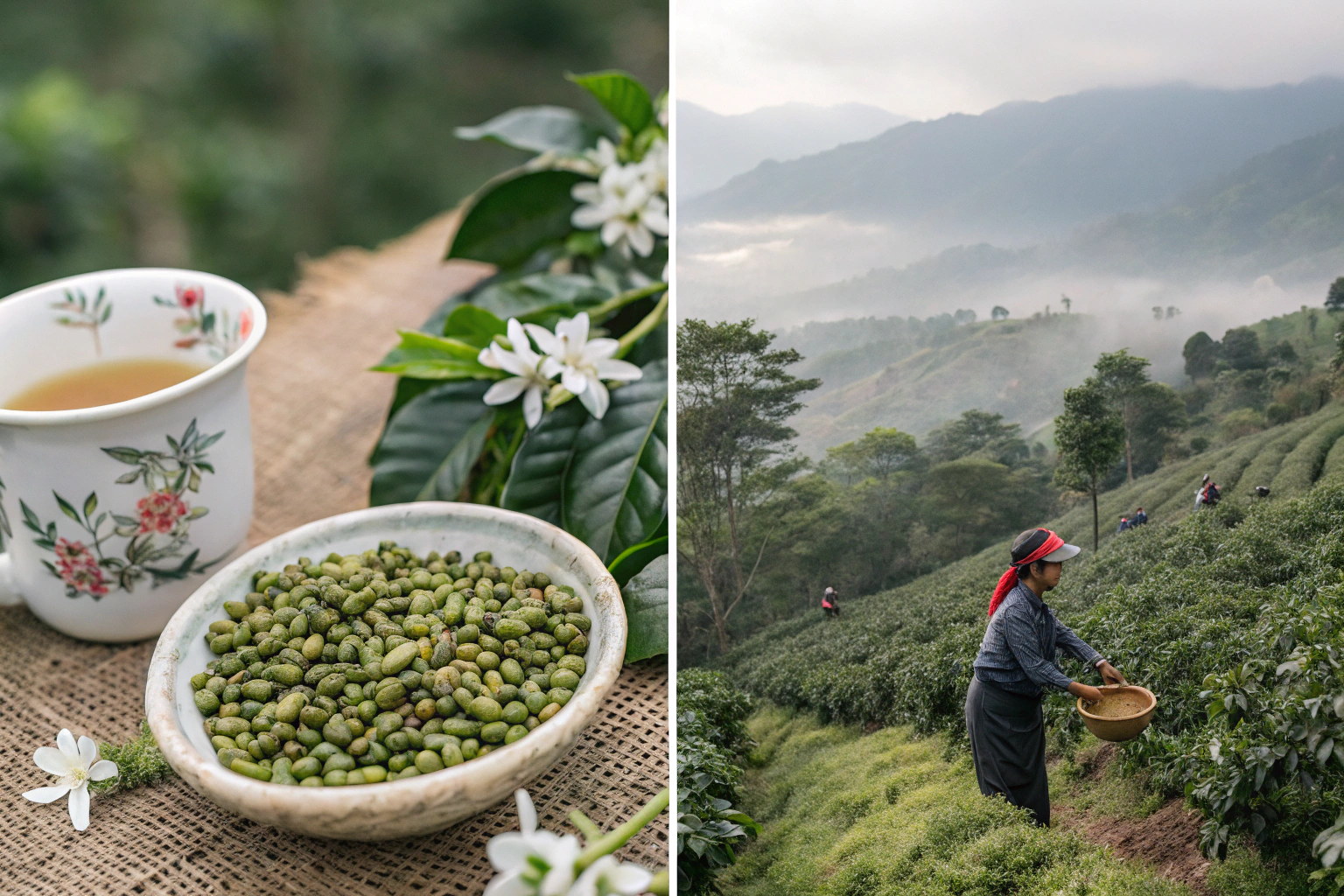
A buyer from a specialty roastery in Copenhagen emailed me three weeks ago. "I heard a rumor that China is growing Geisha now. Is this real? Because if it is, I want in before my competitors find out." He had been sourcing Geisha from Panama for years. His customers paid premium prices. But his per-pound cost was killing his margins. Shipping from Central America was unpredictable. And honestly, he was tired of fighting for the same lots against twenty other European buyers.
I wrote back. "The rumor is true. But there are only a handful of lots in all of Yunnan that I would actually cup and call Geisha-level." He booked a video call with me the next morning.
Wholesale Geisha coffee beans from China are currently available in extremely limited micro-lot quantities, primarily from the high-altitude areas of Yunnan province near the Myanmar border, and must be sourced directly from specific farms that imported verified Geisha seedlings years ago—not from general Yunnan Arabica suppliers who may mislabel high-grown Catimor as Geisha.
The Chinese Geisha story is new. It is small. It is expensive. And it is absolutely real. But sourcing it requires a different approach than buying a standard container of Yunnan Catimor. Let me walk you through what actually exists, how to verify authenticity, and what kind of pricing you should expect.
Is the Geisha Variety Truly Grown in Yunnan, China?
Let me clear this up immediately. Yes. Chinese Geisha exists. But the quantity is tiny. There are probably fewer than five hundred hectares of Geisha planted in all of Yunnan. Compare that to the thousands of hectares of Catimor growing across the province. Geisha in China is not an industry. It is an experiment. A serious one. But an experiment nonetheless.
The Geisha plants in Yunnan were brought in legally from Panama and Costa Rica, starting around 2012 and 2013. A few private farms and research institutes imported seedlings and seeds. These were not smuggled plants. They passed through proper quarantine and agricultural inspection. The farms that invested early understood that Geisha would take five to seven years to produce harvestable volumes. They were playing the long game. And the long game is only now starting to deliver.
China's Geisha coffee is legitimate, genetically verified Geisha material grown in Yunnan at elevations above 1,500 meters, with the first meaningful commercial harvests only becoming available to international buyers within the last two to three harvest seasons.
So when a buyer asks me if Chinese Geisha is real, I say yes. But I follow up with a warning. Because some sellers on Alibaba will label any high-grown Arabica as "Geisha." They rely on buyers who cannot distinguish varieties visually or by cup profile. Do not be that buyer.
What Elevation Is Required for Chinese Geisha to Cup Well?
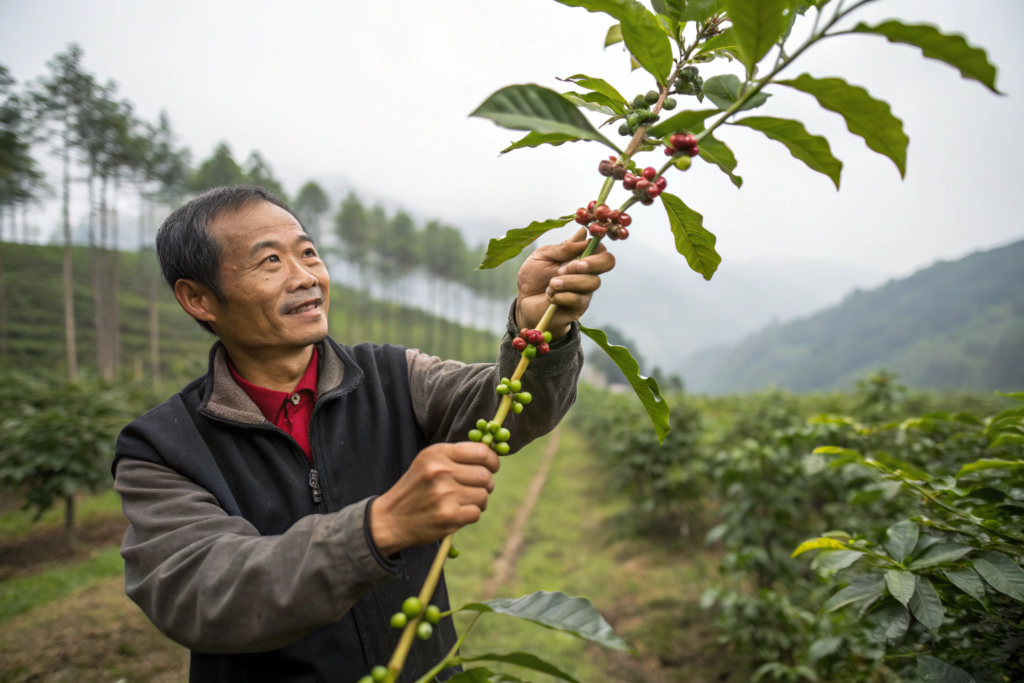
Geisha is famously altitude-sensitive. Plant it too low, and you get a boring coffee with none of the floral fireworks. Plant it above fifteen hundred meters, and the genetics express fully. Jasmine. Bergamot. Stone fruit. The cup sparkles.
In Yunnan, the viable Geisha zone is narrow. Most of the province's coffee grows between eight hundred and twelve hundred meters. That is perfect for Catimor. It is too low for Geisha. There are only a few areas that break above fifteen hundred meters with sufficient rainfall and mineral-rich soil suitable for coffee. The hillsides near the Gaoligong Mountains are one such zone. Some farms near Pu'er have also planted Geisha at altitude.
I have cupped Geisha from Baoshan farms at 1,650 meters that scored 88 points. Floral, delicate, clean. I have also cupped Geisha from a farm at 1,100 meters that scored 81 and tasted like cardboard with a hint of lemon. Same genetic material. Different altitude. The result was night and day.
You as a buyer must ask: "What is the GPS-verified elevation of the farm plot where this Geisha was grown?" If the answer is below 1,400 meters, walk away. You are buying expensive Catimor alternative, not Geisha. For those wanting to understand why altitude affects coffee quality so profoundly, World Coffee Research publishes sensory and agronomic data on how elevation shifts metabolic pathways in coffee plants. You can also explore Perfect Daily Grind for articles on Geisha cultivation requirements at origin.
How Can You Verify the Authenticity of Chinese Geisha Green Beans?
Physical inspection helps. Geisha beans are distinct. They are elongated, narrow, and often slightly curved. A washed Geisha green bean looks visibly different from the rounder, more compact Catimor bean. But visual inspection is not enough.
Cupping is the next filter. Geisha has a signature profile. Jasmine florals. Bergamot citrus. Delicate tea-like body. If the coffee cups like chocolate and nuts, it is not Geisha. Period. No matter what the bag label says.
The gold standard for verification is genetic testing. Some labs offer DNA fingerprinting for coffee varieties. It is not cheap, but neither is a container of fake Geisha. I have heard of buyers pooling samples and sending them to a lab for batch verification. The results confirm whether the genetic markers match the Geisha reference genome.
For my own lots, I keep propagation records showing the lineage of the mother trees used for seedlings. The original Panama source is documented. I also invite buyers to visit the farm and see the Geisha plot with their own eyes. If a seller refuses to show you the actual Geisha trees on video, that tells you everything you need to know. The Specialty Coffee Association occasionally hosts lectures on variety verification and genetic traceability that are worth attending.
What Does Chinese Geisha Coffee Taste Like Compared to Panama Geisha?
This is the question that every serious buyer asks. And the answer is nuanced. Chinese Geisha is not a copy of Panama Geisha. It is more like a cousin. The genetics share a common ancestor. But the soil, the climate, the processing traditions—these change the final expression.
I have cupped Panama Geishas that scored above 90. They are ethereal. Jasmine, honeysuckle, white peach, and an acidity so crisp it feels like biting into a green apple. The body is light, almost weightless. The aftertaste fades like a clean whisper.
Chinese Geisha, from the best lots I have tasted, is slightly different. The floral notes are there—jasmine and osmanthus, not honeysuckle. The fruit is more tropical, more mango and pineapple than white peach. And the body is heavier. The soil in Yunnan tends to produce coffee with more body, even in delicate varieties. The aftertaste stays longer, with a brown sugar sweetness that Panama Geishas often lack.
Chinese Geisha cupping profiles show distinct jasmine and tropical fruit notes with a heavier, more syrupy body than Panama Geisha, typically scoring between 85 and 89 points for top micro-lots from elevations above 1,500 meters.
If you are looking for a 90-plus competition coffee, Chinese Geisha might not beat the best Panama lots yet. But if you want a floral, complex coffee with a richer mouthfeel and a lower FOB price than an equivalent-scoring Central American Geisha, Chinese Geisha becomes very interesting.
What Is the Typical Cupping Score of Yunnan Geisha?
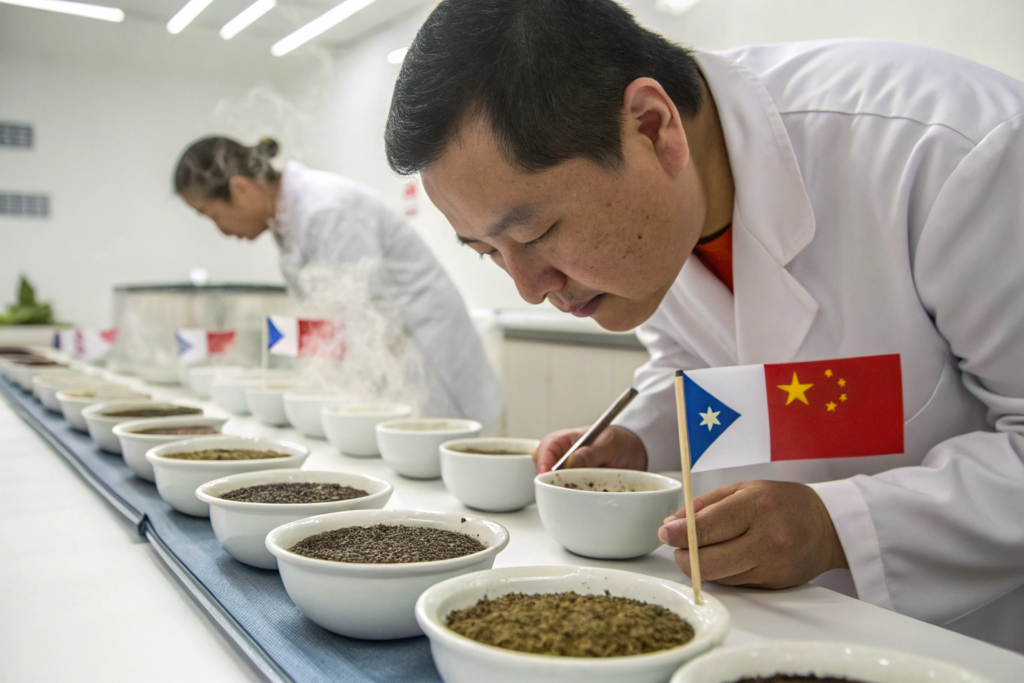
Here is a table summarizing cupping scores I have recorded from various Yunnan Geisha lots over the past three harvests:
| Farm Elevation | Processing Method | Cupping Score | Dominant Notes |
|---|---|---|---|
| 1,650m | Washed | 88.25 | Jasmine, orange blossom, mango, clean |
| 1,550m | Natural | 87.5 | Tropical fruit, rum raisin, heavy body |
| 1,500m | Washed | 86.0 | Lime, green tea, mild floral |
| 1,450m | Honey | 84.5 | Brown sugar, stone fruit, medium body |
| 1,100m | Washed | 81.0 | Lemon, cardboard, thin |
The pattern is clear. Altitude drives score. Processing modifies the expression. A washed Geisha at 1,650 meters is the cleanest, most floral expression. A natural Geisha at 1,550 meters is wilder, fruitier, with a heavier body that some buyers prefer for espresso applications.
One thing to note: the sample sizes here are small. Each lot might be only 100 to 300 kilograms total. These are not container-volume coffees. They are micro-lots. Each one is unique. You cup the specific lot being offered, not just the variety name. For additional reference on how Geisha cups globally, Coffee Review regularly publishes blind cupping assessments of Geisha lots from various origins, including newer origins like China and Colombia.
Can Chinese Geisha Compete in International Auctions?
It has already started. Small volumes of Chinese Geisha have appeared in private auctions and limited offerings, though not yet at the scale of Best of Panama.
I know of a Yunnan Geisha lot that sold privately to a Japanese buyer for a price that made my eyebrows rise. The cupping score was around 88. The buyer understood the novelty value. He was not just buying coffee. He was buying a story. The first wave of commercial Geisha from China. That narrative adds value in certain retail markets.
Will Chinese Geisha win Best of Panama one day? Probably not. That competition is geographically specific. But could a Chinese Geisha lot someday score above 90 points and win an international coffee competition? I believe it will happen within five years. The genetics are there. The altitude is there. The processing knowledge is improving fast.
A detail often overlooked is that many Chinese coffee farmers are now hiring processing consultants from Costa Rica and Colombia. They are bringing washed Geisha protocols and anaerobic techniques to Yunnan. The quality is climbing year over year. I have watched the scores tick upward steadily since 2020. The trajectory is undeniable.
How Do You Source a Reliable Wholesale Geisha Supplier in Yunnan?
Sourcing Geisha from Yunnan is not like sourcing Catimor. You are not comparing ten suppliers on Alibaba. The supplier pool is tiny. Maybe five to ten farms in all of China have genuine Geisha lots available for export. You need to find them. You need to build trust. And you need to move fast once a lot is offered because volumes are so small that hesitation means missing out.
My advice is to start with a direct introduction. If you know a green coffee importer who already sources from China, ask for a referral. If you attend trade shows, visit the China pavilion and ask specifically about Geisha micro-lots. The suppliers who actually have Geisha will talk about it proudly. The ones who do not will dodge the question.
To source wholesale Geisha from Yunnan reliably, you need to identify the farm directly, request proof of variety via genetic records or visual lot inspection, cup the specific micro-lot yourself, and negotiate FOB pricing on a bag-by-bag basis rather than container volume—most lots are between 100 and 500 kilograms total.
Shanghai Fumao supplies a limited allocation of high-grown Yunnan Geisha through our direct farm partnerships, and I always advise buyers to cup pre-shipment samples because the lot variation is still significant.
What Is the Price Per Pound of Chinese Geisha FOB?
This is the number that shocks buyers. But it should not. Geisha is Geisha.
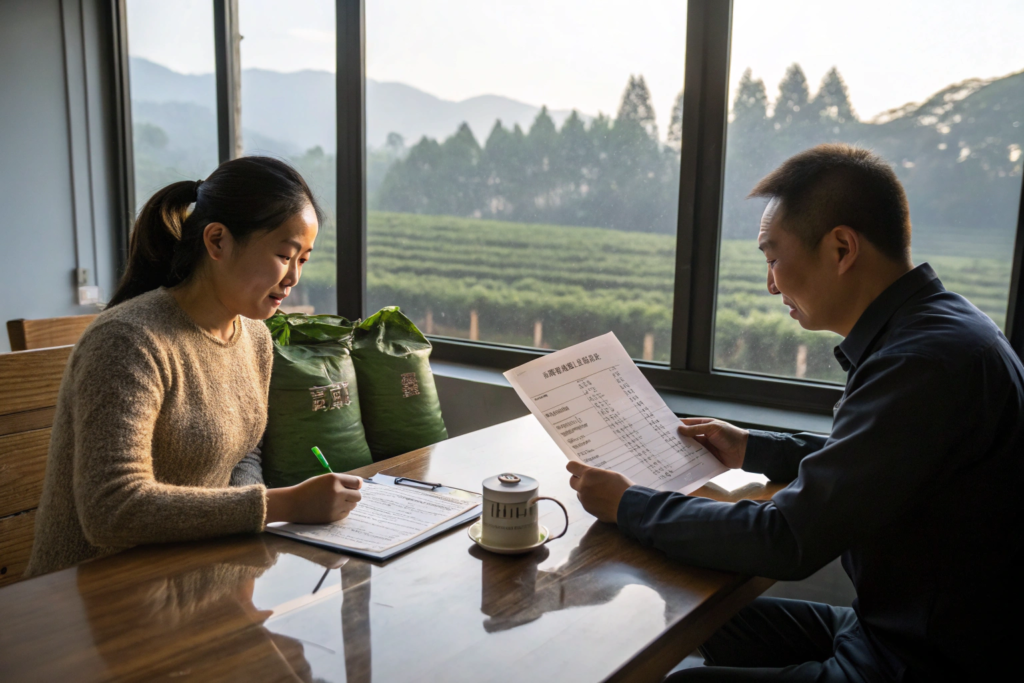
The FOB price for high-quality Yunnan Geisha currently ranges between $8 and $15 per pound, depending on the cupping score and lot size. That is cheaper than equivalent Panama Geisha, which can easily hit $20 to $50 per pound FOB for lots scoring 88 points. But it is far more expensive than Chinese Catimor, which sits in the $2.50 to $3.50 range.
The price makes sense when you break it down. Geisha yields are lower. The trees produce fewer cherries per branch. The picking is more selective. The processing is more meticulous. The total production cost per pound of exportable green coffee is three to four times higher than Catimor.
For a specialty roaster, the retail math can still work. Buy a 150-kilogram lot at $12 per pound. That is roughly $3,960 total. Roast it. Package it as a limited release. Charge $28 to $35 per retail bag. The margin per bag is healthy because the story—Chinese Geisha, limited micro-lot—commands a premium among enthusiasts. You sell 150 kilos roasted, and you have generated revenue that justifies the green cost many times over.
What Minimum Order Quantity Do Geisha Farms Require?
Low. Very low. And that is a good thing for small roasters.
Most Geisha lots in Yunnan are small farm productions. A single lot might be just 100 kilograms. Some farms will sell 30-kilogram sample shipments, though the per-kilo price is higher to cover logistics.
I do not impose a strict minimum on our Geisha micro-lots. If a roaster wants to buy 50 kilograms to test their market, I will make it work. The freight cost per pound is higher for small volumes, obviously. But I believe in letting the coffee prove itself. My suggestion: buy a 30-kilogram sample. Cup it. Roast a test batch. Sell it to your subscription customers. Gather data. Then decide whether to commit to a larger future booking.
Conclusion
Chinese Geisha is real. It is not a myth. It is not rebagged Panamanian coffee. It is a legitimate, genetically verified specialty coffee growing on a handful of high-altitude farms in Yunnan. The best lots cup between 85 and 89 points. The flavor profile leans toward jasmine, tropical fruit, and a richer body than its Central American cousins. The FOB price is a fraction of what Panama Geisha commands, making the economics compelling for roasters who want to offer a luxury single-origin without destroying their margin.
But sourcing Chinese Geisha requires care. You need to verify the farm elevation. Confirm the variety with genetic records or cupping proof. Taste the specific lot before committing. And move quickly, because the volumes are tiny and the best lots sell out within weeks of harvest.
If you want to explore what Geisha lots we have available this harvest from our high-altitude Baoshan partnerships, contact Cathy Cai. She handles micro-lot allocations and can send you a current cupping score sheet and green samples within a week. She will tell you honestly if the available lot suits your roast style—or if you should wait for the next harvest. Write to her at cathy@beanofcoffee.com. She responds quickly. And she knows the Geisha plot as well as I do.