A roaster from Austin once rejected my natural-processed Catimor. He cupped it blind. He wrote "fermented, heavy, weird" on his scoring sheet. Then he tasted a washed lot of the exact same variety, harvested the same week. He wrote "clean, chocolate, balanced." Same beans. Different process. The only variable was water. Or the lack of it.
That was the moment he understood. Natural processing is not a defect. It is a tool. And it transforms Chinese coffee in ways that some buyers crave and others simply cannot sell to their customers.
Natural processing dramatically increases the body of Chinese Arabica—specifically Yunnan Catimor—by preserving the fruit mucilage during a prolonged sun-drying phase, which allows sugars and lipids to migrate into the bean and produces a heavy, syrupy mouthfeel with jammy fruit notes that washed processing cannot replicate.
So, when does natural processing make sense for your lineup? When does it go wrong? And how do you source a natural Chinese coffee that actually cups well? Let me walk through all of this from the farm side. Because I have seen both the brilliance and the disaster of this method under the Baoshan sun.
What Is the Difference Between Natural and Washed Processing in Yunnan?
Let me start with the physical reality. In washed processing, we depulp the cherry within hours of harvest. The sticky mucilage gets fermented off in water tanks. Then the clean parchment is dried on raised beds or patios. The bean inside never touches the fruit pulp during drying. The result is a coffee that tastes like the seed itself—clean, mild, defined by the variety and the soil, not by the fruit.
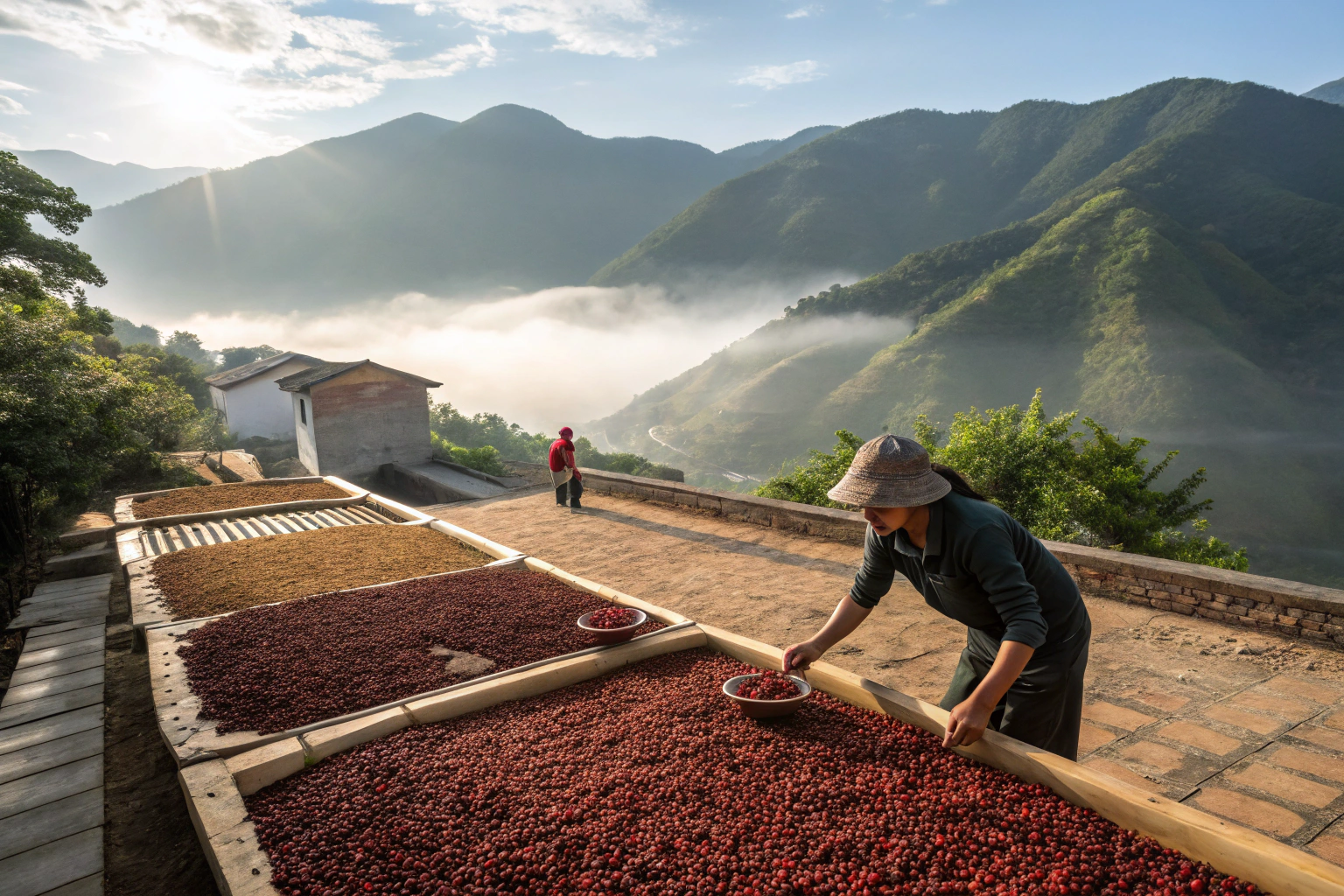
In natural processing, we skip the depulper entirely. We take the whole cherry, straight from the picker's basket, and spread it on raised beds. The cherry dries intact. It takes 20 to 30 days, depending on the weather. During that time, the bean is marinating inside the fruit. Sugars seep in. Fermentation starts and stops naturally. The bean darkens. The final cup is unrecognizable from its washed sibling.
Washed Yunnan coffee tastes clean, mild, with chocolate and nut notes dominant. Natural Yunnan coffee tastes wild, fruity, with heavy body and fermented berry undertones. They are essentially two different products from the same tree.
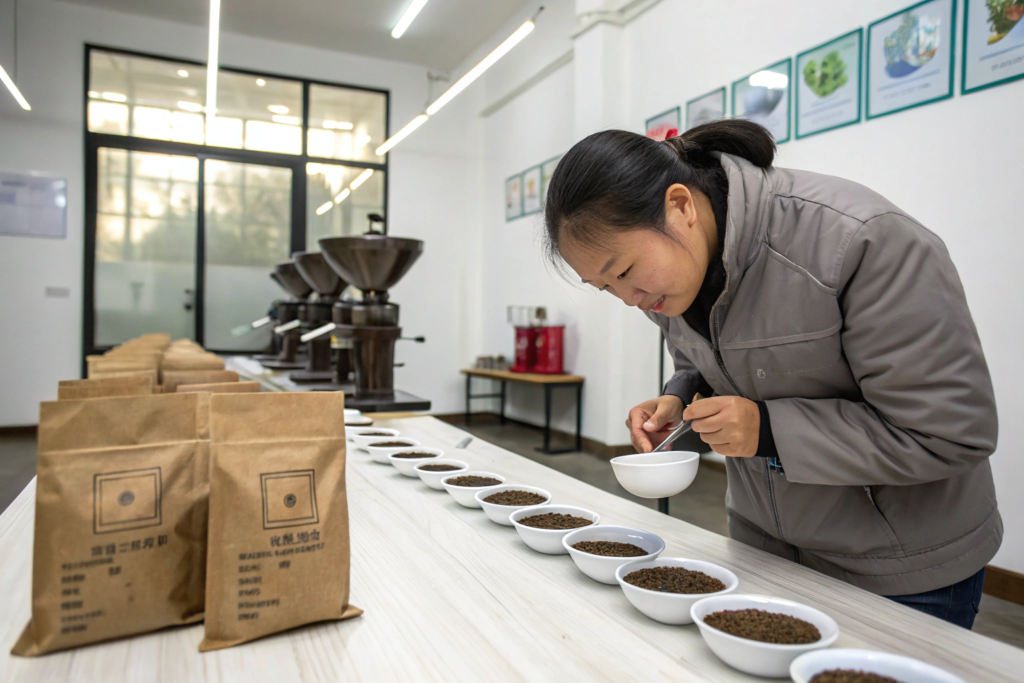
This is not a small difference. If a washed Catimor scores 82 points with a profile of "milk chocolate, almond, clean finish," the same lot processed naturally might cup at 84 points but taste like "strawberry jam, molasses, winey, thick." The body shifts from medium to heavy. The aftertaste clings much longer.
How Long Does the Natural Drying Process Take in Yunnan?
Timing is everything. And Yunnan's climate drives the timeline completely.
Baoshan sits at a high altitude, between one thousand two hundred and one thousand six hundred meters. The dry season runs from November to April. Daytime temperatures hit twenty-five degrees Celsius. Nighttime drops to ten or twelve. Humidity stays low. These are good natural drying conditions.
Here is a typical drying timeline for our natural lots:
| Drying Phase | Duration | Moisture Content Target | Key Observation |
|---|---|---|---|
| Initial skin drying | 3-5 days | 40-45% | Cherry skin turns leathery, dark purple |
| Mid-phase sugar concentration | 8-12 days | 20-25% | Cherries shrink, syrupy smell develops |
| Final slow drying | 5-8 days | 10.5-12% | Beans rattle inside husk when shaken |
| Total process | 20-25 days | 10.5-12% final | Ready for hulling after rest period |
Compare that to a washed lot, which dries in 7 to 12 days because we remove the fruit first. The natural takes twice as long. That doubling of drying time is exactly where the body builds. The slow dehydration gives sugars time to migrate and complex Maillard precursors to form.
But risk hides in that extra time. An unexpected rain shower during mid-phase can spike the moisture back up and introduce mold. I have lost small batches to unseasonal rain in December. It is devastating. You watch two weeks of careful work turn into compost. You can find useful articles on managing drying risks on Perfect Daily Grind, where producers share field-level experiences.
What Defects Are Common in Poorly Processed Natural Coffee?
Natural processing is less forgiving than washed. Cut corners, and the defects are loud.
The most common defect is over-fermentation. If the cherry layer is too thick on the drying bed, heat builds up in the center. Anaerobic pockets form. The coffee starts to taste like vinegar or rotten fruit. Not the pleasant winey note. The unpleasant, nail-polish-remover note. This is why we rake the beds every two hours during the first ten days. Constant turning. No hot spots allowed.
The second defect is mold. If the ambient humidity spikes above seventy percent at night, mold spores find a home in the sticky cherry skin. The result shows up in the cup as musty, earthy, or baggy flavors. The defect is technically called "phenolic taint." It ruins the lot. We mitigate this by covering the beds with shade netting at night and monitoring weather forecasts obsessively.
The third defect is incomplete drying. Some processors rush the final phase. They hull the cherries when the moisture is still at thirteen or fourteen percent, to save time. The green bean looks fine. But the water activity is high. Within weeks, the bean ages rapidly. Cell structure breaks down. The cup goes flat, papery, and eventually moldy. I test every batch with a moisture meter before hulling. No exceptions. For international grading standards on these defects, the Green Coffee Association provides detailed defect handbooks that many importers use as reference.
How Does Mucilage Retention Change the Mouthfeel of the Brew?
Oily. Syrupy. Coating. These are words cuppers use to describe heavy body. And body, in coffee, is largely about dissolved solids and lipids. Natural processing increases both.
When the mucilage dries on the bean, the sugars in that mucilage do not just evaporate. They caramelize. They polymerize. Some of them bond with the cellulose structure of the bean. When you grind and brew that coffee, those compounds dissolve into the cup as complex carbohydrates. They add weight. They add a tactile sensation of thickness that a washed coffee of the same variety simply does not have.
The retention of mucilage during natural drying introduces higher concentrations of polysaccharides and lipids into the green bean, which translates directly into a heavier, more viscous mouthfeel in the brewed cup—what cuppers describe as a "syrupy" or "jammy" body.
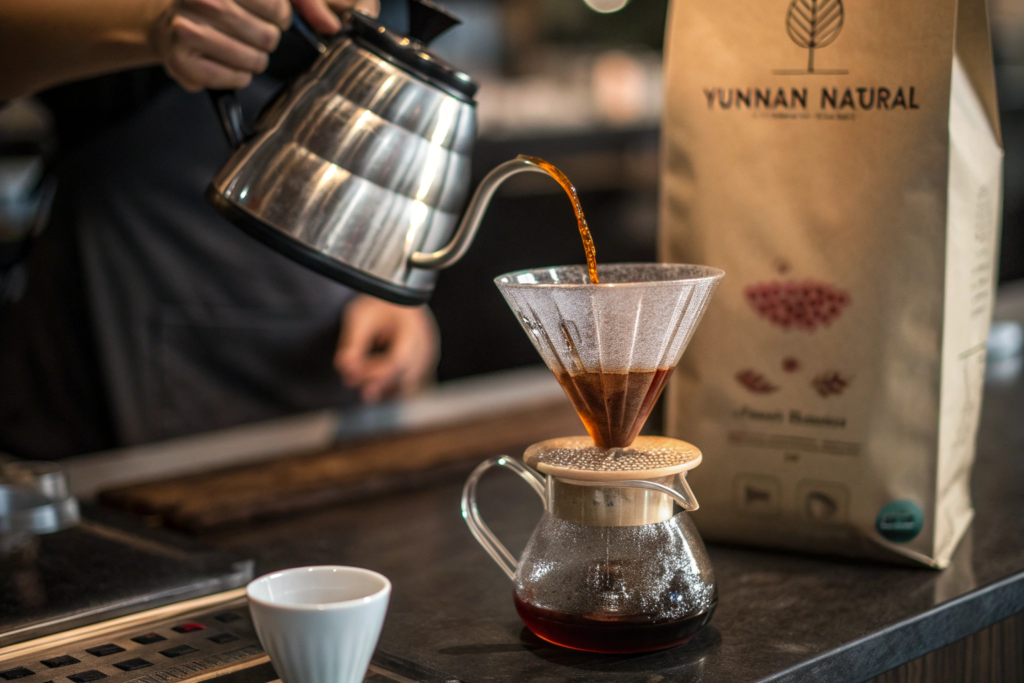
This is exactly why natural-processed Yunnan Catimor works so well for espresso. The increased body creates a thicker crema, a more rounded mouthfeel, and a better ability to carry milk. A washed Catimor as a single-origin espresso can taste a bit thin, a bit hollow. The natural version fills that gap. It holds its structure under pressure.
Does Natural Processing Increase the Perceived Sweetness?
Yes. But it is a specific kind of sweetness. Not the sharp, clean sweetness of a washed Ethiopian coffee. It is more like brown sugar, molasses, or cooked fruit.
The science here is straightforward. During the extended drying, enzymes within the cherry break down complex carbohydrates into simpler sugars. Fructose and glucose concentrations rise. These sugars survive roasting better than the sugars in washed coffee because they are bound up with larger molecules that protect them from burning.
The result is a cup that tastes sweeter on the cupping table, even if the actual sugar content by refractometer is not wildly different. Perception matters more than measurement here. A cupper will write "intense sweetness, like dried blueberries, like strawberry jam" on the cupping form. That descriptor drives buying decisions.
One of my American clients blends our natural Catimor at 30 percent with a washed Colombian base. The natural component adds exactly this perceived sweetness and a little fruit funk. The blend cups like a premium comfort coffee. Sweet, heavy, complex. And the cost blended is lower than buying a single-origin natural from Africa. That is a winning strategy for a mid-sized roaster.
Why Do Baristas Prefer Natural Coffees for Espresso?
A barista pulling shots at 9 bars of pressure wants a coffee that does not fall apart. Some high-acid, light-roast washed coffees turn sour and thin under pressure. The body vanishes. The shot looks watery. The crema is pale and dissipates in ten seconds.
A natural-processed coffee brings more dissolved solids. The extraction yields a thicker liquid. The crema is darker, more persistent, with tiger-stripe patterns that look beautiful in a white cup. And the flavor intensity—those jammy, fermented fruit notes—cuts through milk like a knife. A flat white made with natural Yunnan Catimor tastes like a berry mocha, even with no syrup added.
I have had multiple roasters tell me they buy our natural lots specifically for their espresso program. The filter customers get the washed. The espresso customers get the natural. This segmentation allows a roaster to use the same farm relationship to serve two entirely different product lines. You can find more discussion on how barista preferences drive green buying decisions in industry reports from the Specialty Coffee Association.
How Do You Source a Reliable Natural Processed Yunnan Coffee?
Sourcing a great natural coffee from Yunnan is harder than sourcing a washed one. More can go wrong. The margin for error is smaller. So you need a supplier who is obsessive about process control and willing to be transparent when a lot does not meet spec.
I tell potential buyers this upfront: I do not offer a natural processed lot every season. If the weather does not cooperate during the drying window, I wash-process the whole harvest. I will not force a natural lot just because a buyer requested one. Forced naturals taste terrible. And they damage trust.
To reliably source a clean natural Yunnan coffee, you need a supplier who only offers naturally processed lots during the dry season months, who provides detailed drying logs and cupping scores, and who is willing to offer a small trial volume before scaling up to full container loads.
The timeline also matters. Natural processed Yunnan coffee is not available year-round. The harvest runs from November to February. Drying completes by March or April. The coffee rests for a month or two before milling. The first shipments of natural lots typically leave Shanghai in May or June. If you want to book a natural lot, plan your sourcing calendar around that window.
What Questions Should You Ask About Drying Protocols?
This is where you separate the serious producers from the gamblers. Ask specific questions. Listen for specific answers.
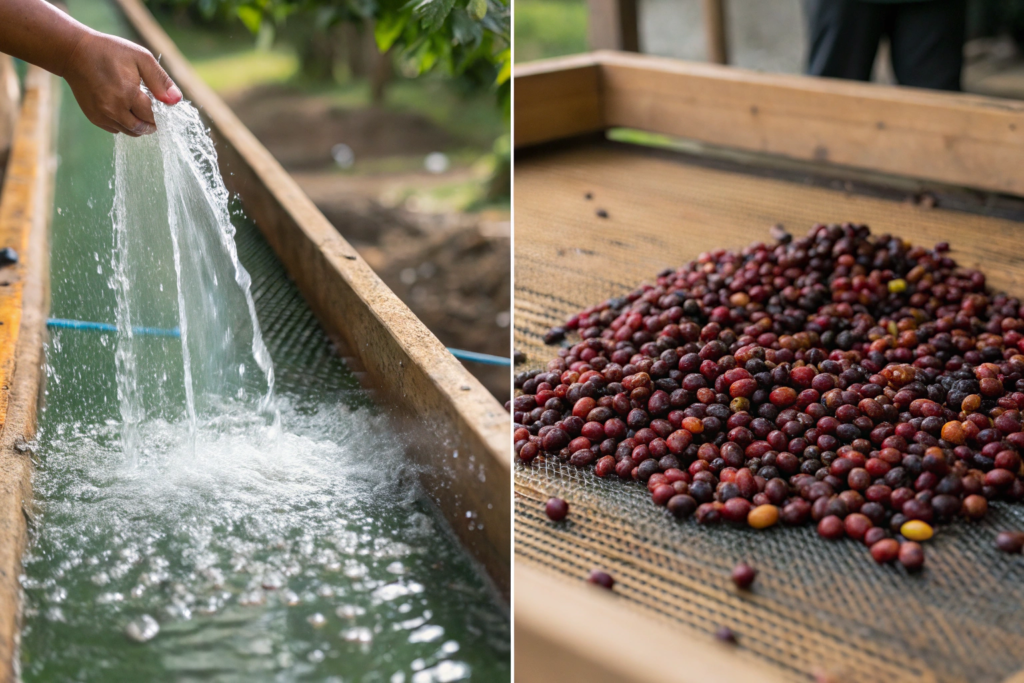
First: "What is your cherry selection process before drying?" The correct answer involves floatation tanks to remove under-ripes and over-ripes. A natural lot can be ruined by including unripe cherries, which add a grassy, astringent harshness that no amount of fermentation can fix.
Second: "What is your bed thickness and turning frequency?" The correct answer is a single layer of cherries, no more than three to four centimeters thick, turned every two hours during the first phase. If the supplier says "we just spread them out and let them dry," that is a red flag.
Third: "Do you use shade netting for the final slow-dry phase?" The correct answer is yes. Direct midday sun during the final moisture drop can case-harden the bean—dry on the outside, wet on the inside. Shade netting slows the process and evens out moisture distribution.
I log all of this data for every natural lot I produce. Buyers receive a drying log sheet with daily moisture readings, turning schedules, and weather notes. For guidance on what documented drying protocols look like, Cropster offers software that tracks processing data, and some producers share anonymized lot logs publicly.
Is Natural Yunnan Coffee More Expensive Than Washed?
Yes. The price difference is real and justified.
Natural processing costs more to produce. Labor costs are higher because of the constant turning and monitoring over a longer drying period. Risk of loss is higher, so the producer must build a risk premium into the price. And the yield loss is significant—some cherries will over-ferment or get damaged during the extended drying, and those are sorted out before hulling.
Here is a rough comparison of FOB pricing for our lots, as a reference:
| Processing Method | Quality Tier | Typical FOB Price per Pound | Production Cost Factor |
|---|---|---|---|
| Washed Catimor | Standard | $2.40 - $2.80 | Baseline |
| Washed Catimor | Premium | $2.80 - $3.20 | 1.1x |
| Natural Catimor | Standard | $3.20 - $3.80 | 1.3x to 1.5x |
| Natural Catimor | Micro-lot | $3.80 - $4.50+ | 1.6x to 2.0x |
The premium exists because the product is riskier to make and the cup profile is distinctive. Whether it is worth it for your business depends on your customers. A roaster selling $18 bags of drip coffee will struggle to make the margin work. A roaster selling $24 bags of limited-release specialty coffee will find the margin comfortable.
I always recommend buyers check global market context for these price ranges. The International Coffee Organization publishes monthly composite price reports that help importers understand how specific premiums compare to the broader market.
Conclusion
Natural processing changes everything about Chinese coffee. It takes the clean, chocolate-forward Catimor that Yunnan is known for and transforms it into a heavy-bodied, fruity, and undeniably distinctive cup. The difference sits in the mucilage. In the 20 to 25 days that the cherry spends drying in the Baoshan sun with the fruit still attached.
The body shifts from medium to syrupy. The flavor shifts from nutty to jammy. The espresso shots become thicker, more saturated, more memorable. But this method demands precision. It costs more. It fails more often when the weather refuses to cooperate.
If you are building a coffee program that needs variety—a clean washed base and a wild natural highlight—Yunnan can supply both from the same farm, the same variety, the same harvest season. That consistency of origin, combined with the processing contrast, is a powerful sourcing strategy.
Curious if our natural process Catimor suits your roast profile? Reach out to Cathy Cai. She will send you cupping scores, drying logs, and a sample from our current micro-lots. She can also tell you exactly which processing style fits your target extraction method. No guesswork. Just data and coffee. Write to cathy@beanofcoffee.com. She responds to every inquiry, usually the same day.