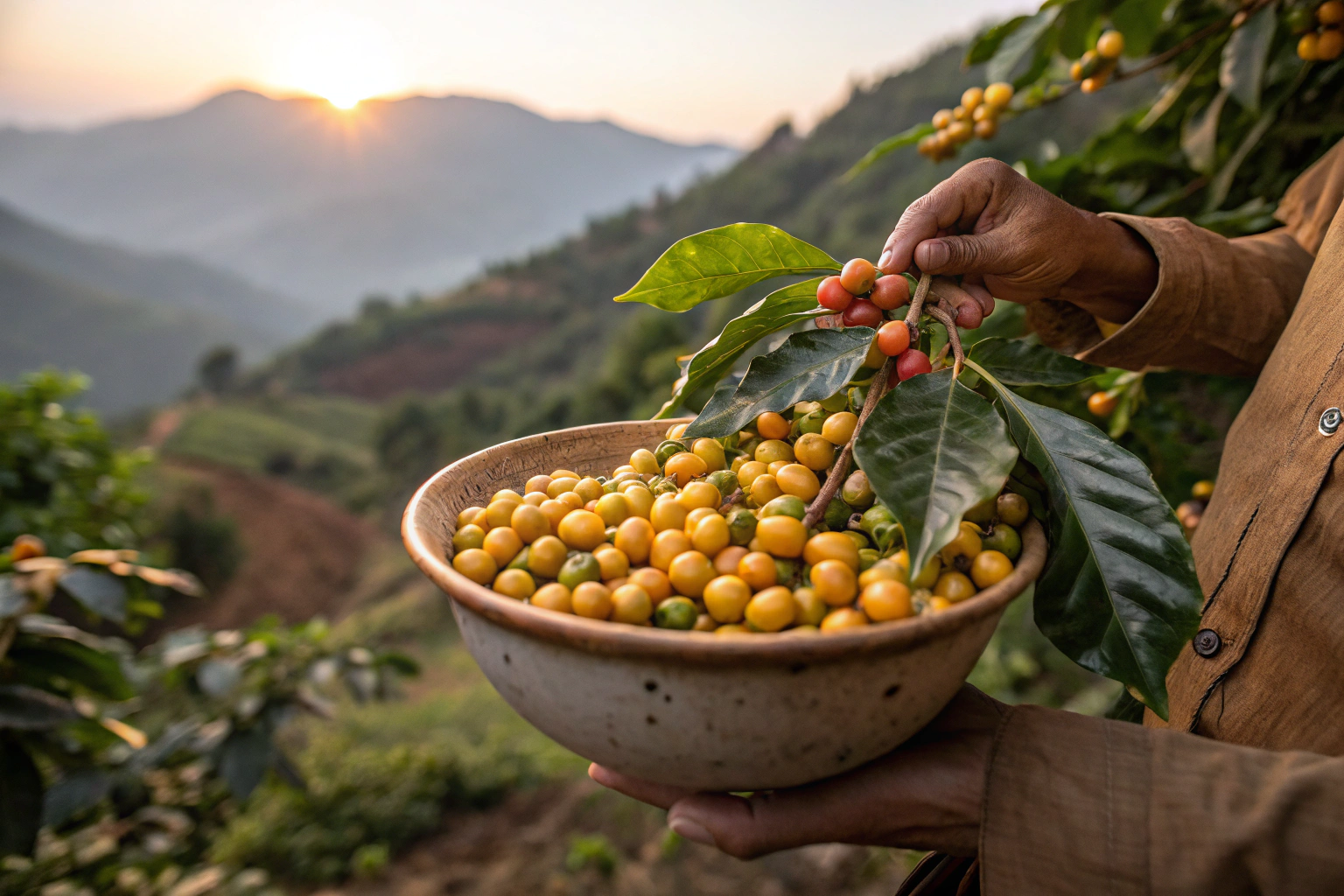
A specialty roaster from London visited our Baoshan farm two years ago. He cupped through twelve lots in one morning. Catimor washed. Catimor natural. A honey process lot I was proud of. Then he pointed to a small cluster of trees with yellow cherries. "What is that?" he asked. I told him Yellow Bourbon. He cupped it. He went silent. Then he wrote one word on his scoring sheet: "Exceptional."
That was the moment I realized we had something rare. Most buyers do not know that China grows Yellow Bourbon. They know Yunnan for Catimor. Maybe they have heard about Chinese Geisha experiments. But a proper Bourbon varietal, with yellow fruit, grown at altitude in Baoshan? That is almost unheard of outside a small circle of specialty buyers.
Chinese Yellow Bourbon beans deliver a distinctly elegant cup with bright citric acidity, a creamy body, and complex notes of stone fruit, honey, and macadamia nut—offering a more balanced sweetness than Catimor while maintaining the clean finish that high-altitude Yunnan processing is known for.
This is not a volume coffee. It is a micro-lot through and through. The trees yield less than Catimor. They need more care. But for a roaster looking to differentiate their single-origin menu, Chinese Yellow Bourbon opens a door that most competitors do not even know exists.
What Makes the Yellow Bourbon Variety Unique in Yunnan?
Yellow Bourbon is not a new variety. It has been grown in Brazil for decades. It is a natural mutation of Red Bourbon, which itself traces back to the original Typica lineage from Yemen and Ethiopia. The yellow fruit color comes from a recessive gene that affects xanthophyll retention during ripening. The cherries stay yellow instead of turning red.
What makes it unique in Yunnan is the combination of genetics and terroir. Yellow Bourbon grown in Brazil tends to produce a nutty, chocolatey cup with mild acidity. That is the Brazilian soil and lower altitude speaking. Put the same genetics at 1,500 meters in Baoshan, with volcanic red soil and cool nights, and the flavor shifts dramatically. The acidity becomes brighter. The sweetness becomes more complex. Stone fruit notes emerge.
Yellow Bourbon in Yunnan expresses itself differently than in Brazil because the high altitude and wide diurnal temperature range of the Baoshan plateau intensify sugar development and acid retention during cherry maturation.
This is what excites specialty buyers. They know Brazilian Yellow Bourbon. It is a known quantity. But Chinese Yellow Bourbon is a discovery. It cups differently. It tells a new story. And the small volumes make it genuinely scarce. A detail often missed: our Yellow Bourbon trees were brought to Yunnan through a legal varietal introduction program years ago. They are not smuggled plants. They are documented, traceable, and adapted to Baoshan's microclimate.
How Does Altitude Affect Yellow Bourbon Cherry Development?
Altitude changes everything about how a coffee cherry matures. At lower elevations, cherries ripen fast. Sugars develop quickly, but complex acids do not. The cup tastes sweet but simple. The acidity is muted. The flavor is one-dimensional.
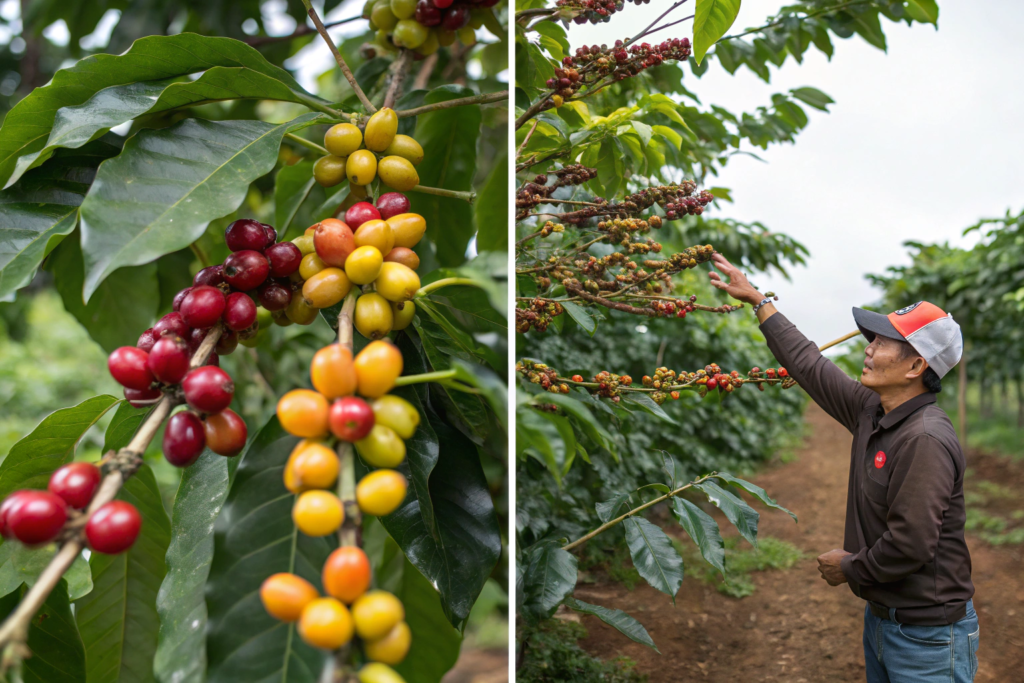
At 1,500 meters and above, the cooler temperatures slow down cherry maturation. A Yellow Bourbon cherry at our Baoshan farm takes roughly eight to nine months from flowering to harvest. Compare that to six or seven months at 1,000 meters. That extra time on the branch lets the seed accumulate more sugars and more complex precursors. The result is a denser bean with higher sucrose content and a broader range of volatile aromatics.
The yellow color itself plays a role. Yellow cherries reflect more sunlight than red cherries, which absorb more heat. In a high-UV environment like Baoshan, where the sun is intense at altitude, yellow cherries stay cooler on the tree. They do not overheat. This preserves delicate acids and prevents the development of cooked-fruit flavors that sometimes appear in red cherries grown under strong sun.
I have cupped Yellow Bourbon from a plot at 1,650 meters that tasted like apricot jam, orange blossom honey, and roasted almond. The same genetics grown at 1,200 meters produced a softer cup with more caramel and less fruit. Altitude is the variable that unlocks the potential. For deeper insight into altitude effects, World Coffee Research publishes sensory data on how elevation shifts metabolic development in different varietals.
Why Do Yellow Cherries Require Different Picking Discipline?
This is a practical detail that buyers rarely consider. But it directly affects cup quality and sorting cost.
Red cherries are easy to pick selectively. You scan the branch. Red means ripe. Green means unripe. The contrast is obvious. Picking mistakes are fewer. Yellow Bourbon complicates this because ripe yellow cherries look similar to unripe green cherries, especially in the early morning light when pickers are working. An inexperienced picker will mix under-ripe fruit into the harvest bag.
Under-ripe yellow cherries are a serious defect risk. They contain immature seeds with high concentrations of chlorogenic acids and undeveloped sugars. In the cup, these beans taste grassy, astringent, and harsh. A single under-ripe cherry in a micro-lot can drag down the cupping score by a noticeable margin.
We train pickers specifically for Yellow Bourbon plots. The rule is simple: only pick cherries that feel soft when squeezed between thumb and forefinger. Color alone is not enough. The tactile test prevents green cherry contamination. This training takes time. It slows down picking speed. It increases labor cost. But without it, the lot quality collapses. For more on harvest protocols and their impact, Perfect Daily Grind regularly publishes field-level articles on selective harvesting techniques for specialty varietals.
What Cupping Profile Defines Chinese Yellow Bourbon Beans?
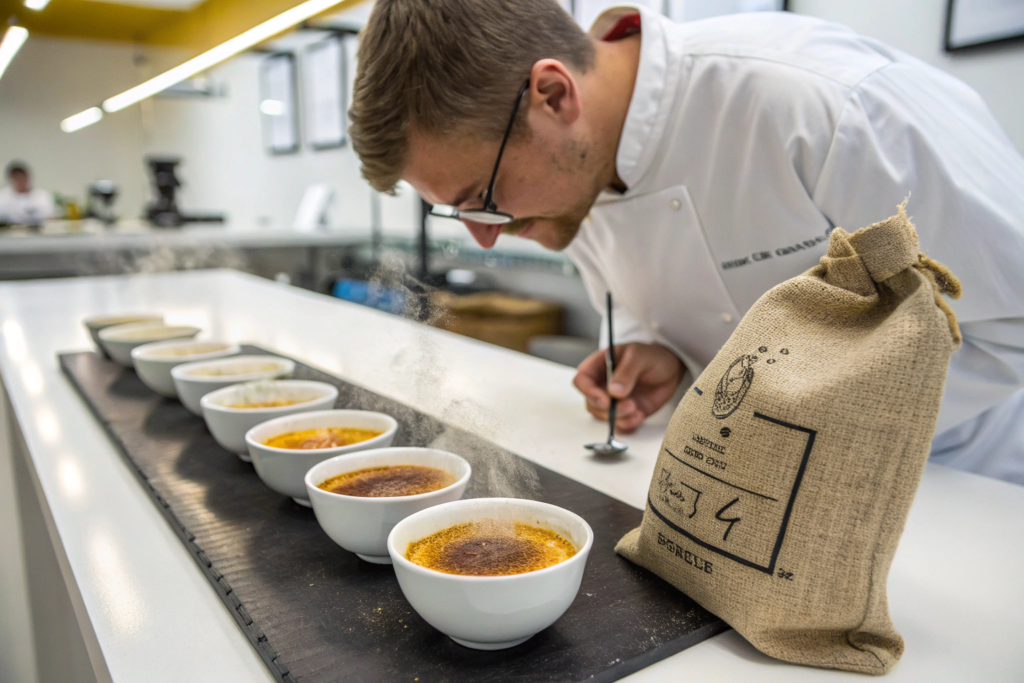
Let me walk you through a cupping session from last December. The lot came from a half-hectare Yellow Bourbon plot at 1,580 meters. It was washed process. The drying was slow, over eighteen days on raised beds under shade netting.
The dry fragrance hit first. Honeycomb. Toasted almond. A hint of orange zest. Not overpowering. Elegant. When the hot water hit the grounds, the wet aroma bloomed into something more floral and brighter—jasmine, apricot blossom, a wisp of brown sugar.
On the break, the aroma intensified. The first slurp confirmed what the nose promised. The acidity was citric, like ripe tangerine, not sharp or sour. It landed cleanly on the sides of the tongue and faded smoothly. The body was a surprise. Yellow Bourbon often cups lighter than Catimor, but this lot had a creamy, almost buttery mouthfeel. Medium weight. Coating without being heavy.
The defining cupping characteristics of Chinese Yellow Bourbon are bright tangerine-like acidity, a creamy medium body, and a flavor structure anchored by stone fruit sweetness, toasted nut, and a clean honey finish with no earthy or fermented off-notes.
The aftertaste lingered with a mild macadamia nut note and a residual sweetness that reminded me of honeydew melon. No bitterness. No astringency. The cup scored 86.5. Not a competition winner, but a beautiful, balanced coffee that any specialty roaster could proudly sell as a limited-release single origin.
How Does Processing Method Change Yellow Bourbon's Flavor?
The same Yellow Bourbon cherry processed three different ways produces three different coffees. I have run this experiment multiple times. Here is how the cup shifts.
| Processing Method | Acidity | Body | Dominant Flavor Notes | Cupping Score Range |
|---|---|---|---|---|
| Washed | Bright, citric | Medium, creamy | Tangerine, honey, almond, jasmine | 85 - 87 |
| Natural | Muted, jammy | Heavy, syrupy | Dried apricot, brown sugar, dark chocolate | 84 - 86 |
| Honey (Yellow) | Soft, lactic | Medium-heavy, smooth | Caramel, stone fruit, macadamia | 85 - 87 |
Washed Yellow Bourbon is the purest expression. The acidity is the star. The flavor is transparent. Every defect, if there were any, would show immediately. This is the version I recommend for roasters who do light Nordic-style filter roasts.
Natural Yellow Bourbon is a different animal. The fruit pulp ferments around the bean for three to four weeks. The acidity softens. The body thickens significantly. Dried fruit flavors dominate—apricot, raisin, maybe a hint of fermented pineapple. This version works for espresso roasters who want a heavy, sweet, complex shot that cuts through milk.
Honey process sits between them. Some mucilage is left on the parchment during drying. The sweetness intensifies without going full-fruit-ferment. The body stays smooth, not syrupy. The acidity shifts from citric to lactic, like yogurt or cream. For roasters who want balance and accessibility, honey-processed Yellow Bourbon hits the sweet spot.
I always cup each lot separately and write processing-specific tasting notes. A roaster who buys washed Yellow Bourbon expecting natural fruit bomb flavors will be disappointed. The contract must specify the processing method. For more on how fermentation choices affect cup chemistry, the Specialty Coffee Association sensory science resources provide deeper technical context.
What Roast Level Best Suits Chinese Yellow Bourbon?
Light to medium-light. No question. Pushing Yellow Bourbon past a medium roast is a mistake.
The bean density is high because of the altitude. The cell structure is compact. This means heat transfers more slowly into the bean core during roasting. A light roast, dropped just after first crack finishes, preserves the volatile aromatics that make this coffee special. The tangerine notes survive. The jasmine florals are present. The honey sweetness shines.
Drop the same coffee at a medium-dark roast, and most of that character burns away. The acidity flattens. The stone fruit notes become generic caramel. The nuttiness takes over. It still tastes pleasant, but it could be any well-processed high-grown Arabica. The distinct Yellow Bourbon identity disappears.
I advise roasters to aim for an Agtron whole-bean reading of 60 to 70. Drop temperature around 205 to 208 degrees Celsius. A development time ratio of 12 to 15 percent after first crack. This produces a coffee that works beautifully as a filter brew and can also function as a bright, complex single-origin espresso for customers who appreciate acidity in their shots.
For specific roast profiling data, Cropster offers tools that many specialty roasters use to track bean temperature curves and replicate successful Yellow Bourbon profiles across batches.
Where Can International Buyers Source Authentic Chinese Yellow Bourbon?
Sourcing Chinese Yellow Bourbon is difficult. Not because the coffee is not good. It is. But because there is almost none of it.
The total Yellow Bourbon production in Yunnan is measured in hundreds of kilograms per year, not containers. A handful of farms grow it. Fewer still process it to specialty standards. When a lot becomes available, it usually goes to buyers who have existing relationships with the farm. It rarely hits open B2B platforms because it sells out before it needs to be listed.
To source authentic Chinese Yellow Bourbon, a buyer should directly contact farms known for specialty micro-lot production in the Baoshan or Pu'er highlands, request a video walkthrough of the specific Yellow Bourbon plot during harvest season, and cup the specific lot before purchase—this is not a coffee bought from a catalog listing.
I allocate our Yellow Bourbon lots through direct communication with roasters who have cupped our samples at trade shows or who reach out through our website. It is a relationship-based market, not a transaction-based one. The volumes are too small for arms-length trading.
What Is the Average FOB Price for Yellow Bourbon Micro-Lots?
Expect to pay a significant premium over standard Yunnan Catimor. The price reflects the rarity, the lower yield per tree, and the extra labor involved in selective picking and careful processing.
Here is a price comparison from our recent harvests:
| Yunnan Variety | Quality Tier | FOB Price per Pound (USD) |
|---|---|---|
| Catimor Washed | Standard | $2.50 - $3.00 |
| Catimor Natural | Premium | $3.20 - $3.80 |
| Yellow Bourbon Washed | Micro-lot | $5.50 - $7.00 |
| Yellow Bourbon Honey | Micro-lot | $6.00 - $7.50 |
| Geisha Washed | Micro-lot | $8.00 - $15.00 |
Yellow Bourbon sits between premium Catimor and Geisha in pricing. It is more expensive than standard specialty Arabica but significantly more affordable than a Panama Geisha of equivalent cup quality. For a roaster building a luxury single-origin line, the economics work. A 150-kilogram lot at $6.50 per pound FOB costs roughly $2,150. Roasted and sold at premium retail pricing, the margin is healthy.
The Shanghai Fumao team provides transparent FOB pricing with a full breakdown of the lot size, cupping score, and processing details. No hidden costs. Buyers know exactly what they are paying for.
How Do You Verify the Authenticity of Yellow Bourbon Lots?
Yellow Bourbon is easier to verify than some other varietals because the cherry color is distinctive. A video call during harvest, when the trees are full of yellow cherries, provides immediate visual proof. If a supplier claims to have Yellow Bourbon but cannot show you yellow cherries on the tree, they do not have it.
Beyond visual verification, cupping confirms the variety indirectly. Yellow Bourbon has a flavor signature that experienced cuppers recognize. The combination of citric acidity, stone fruit sweetness, and creamy body with a clean finish is distinct. If a coffee labeled "Yellow Bourbon" cups with heavy chocolate notes and low acidity, it is likely mislabeled Catimor.
For buyers who want absolute certainty, DNA fingerprinting is available through coffee research laboratories. This is expensive and typically only justified for large forward contracts. For micro-lot purchases, visual verification during harvest plus cupping the specific lot is the practical standard.
I keep detailed propagation records for our Yellow Bourbon trees. The mother tree lineage is documented. The planting date for each plot is recorded. The processing log ties each lot to a specific set of trees. That traceability chain is part of what the buyer receives.
What Marketing Story Do Chinese Yellow Bourbon Beans Tell?
Every coffee tells a story. Chinese Yellow Bourbon tells a story of rarity, botanical curiosity, and terroir surprise.
The narrative starts with the cherry itself. Yellow. Unusual. Customers who only know red coffee cherries are immediately curious. The story continues with the variety's journey—from its origins in Brazil, through a careful introduction program, to a high-altitude farm in Yunnan where it found a new expression. The story finishes with the cup. Bright. Elegant. A Brazilian classic reinterpreted through Chinese soil and Chinese processing tradition.
The marketing story of Chinese Yellow Bourbon is built on rarity, visual distinctiveness, and the unexpected discovery of a world-class cup from an origin most consumers do not associate with specialty coffee—a narrative that engages curious, premium-paying customers.
This story sells. Not to everyone. But to the customer who reads the back of the coffee bag. Who wants to know where the coffee came from and why it tastes the way it does. Who shares the story with friends while pouring a Chemex on a Saturday morning. That customer is loyal. And they come back for the next limited release.
How Do You Educate Consumers About This Rare Chinese Varietal?
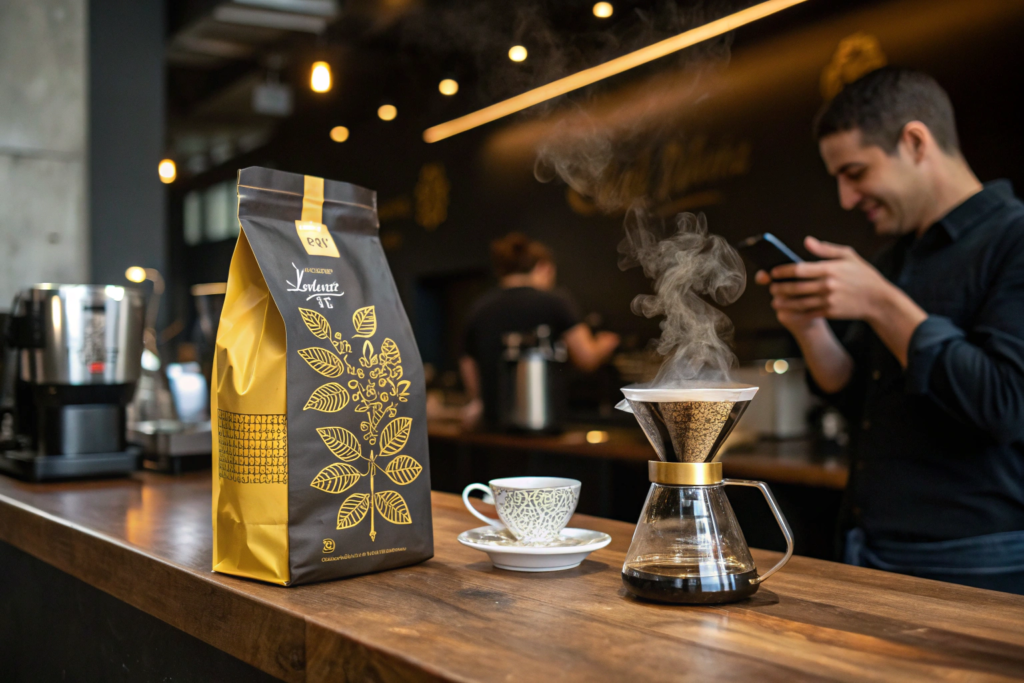
Education starts on the bag. A short paragraph on the label that explains, simply, what Yellow Bourbon is and why it is special. Avoid jargon. Say "yellow coffee cherries" instead of "xanthophyll retention in the exocarp." The message must land in three seconds.
The second education channel is digital. A QR code on the bag links to a short video. The video shows the yellow cherries on the tree. It shows the washing station. It shows the cupping table. I provide these videos to buyers who purchase our Yellow Bourbon lots. The content is ready to embed on a product page or share on social media.
The third channel is the barista. In a café, the barista is the storyteller. When a customer orders a pour-over, the barista can say, "This is a Chinese Yellow Bourbon. The cherries are yellow, not red. It tastes like tangerine and honey. Only a few hundred kilos were produced." That twenty-second conversation creates a memory. The customer tells someone else. The story spreads.
For guidance on origin storytelling and consumer engagement strategies, the National Coffee Association publishes annual reports on US coffee consumption trends, including what messaging resonates with specialty coffee buyers.
Can Yellow Bourbon Compete With Established Bourbon Origins?
The honest answer is: not yet in volume, but yes in cup quality. A well-grown, well-processed Chinese Yellow Bourbon at 1,600 meters cups alongside a quality Rwandan or Salvadoran Bourbon without apology. The scores are competitive. The flavor profile is distinct enough to stand out.
What China lacks is reputation. Buyers trust Bourbon from Rwanda because they have tasted it for years. Chinese Yellow Bourbon is new. It has no track record. Building that reputation takes time, multiple harvests, and consistent quality.
I believe we are on that path. Every season, the cupping scores improve slightly. Processing gets more refined. More specialty roasters take a chance on a small lot and are pleasantly surprised. Word spreads. The trajectory is upward. In five years, I expect Chinese Yellow Bourbon to be a recognized specialty origin within the varietal's global footprint. The trees are young. The quality ceiling is still being discovered.
Conclusion
Chinese Yellow Bourbon is a rare, high-quality varietal that deserves attention from specialty coffee roasters looking for differentiation. The combination of Bourbon genetics, Yunnan's high-altitude terroir, and careful processing produces a cup with bright citric acidity, a creamy medium body, and complex notes of stone fruit, honey, and toasted nut.
The volumes are tiny. The picking requires discipline. The processing demands precision. But for the roaster willing to invest in a relationship-based sourcing model, the reward is a coffee with a compelling story and a flavor that stands apart from the standard Yunnan Catimor offerings. It competes on quality with established Bourbon origins while offering the novelty of a still-emerging specialty region.
If you want to explore what Yellow Bourbon micro-lots we have available from the current Baoshan harvest, contact Cathy Cai. She manages our rare varietal allocations—Yellow Bourbon, Laurina, Geisha—and can provide current cupping scores, lot sizes, and FOB pricing. She can also schedule a video call during the harvest so you can see the yellow cherries on the tree with your own eyes. Write to cathy@beanofcoffee.com. She responds quickly, sends samples promptly, and will give you honest advice about whether this coffee matches your roast program.