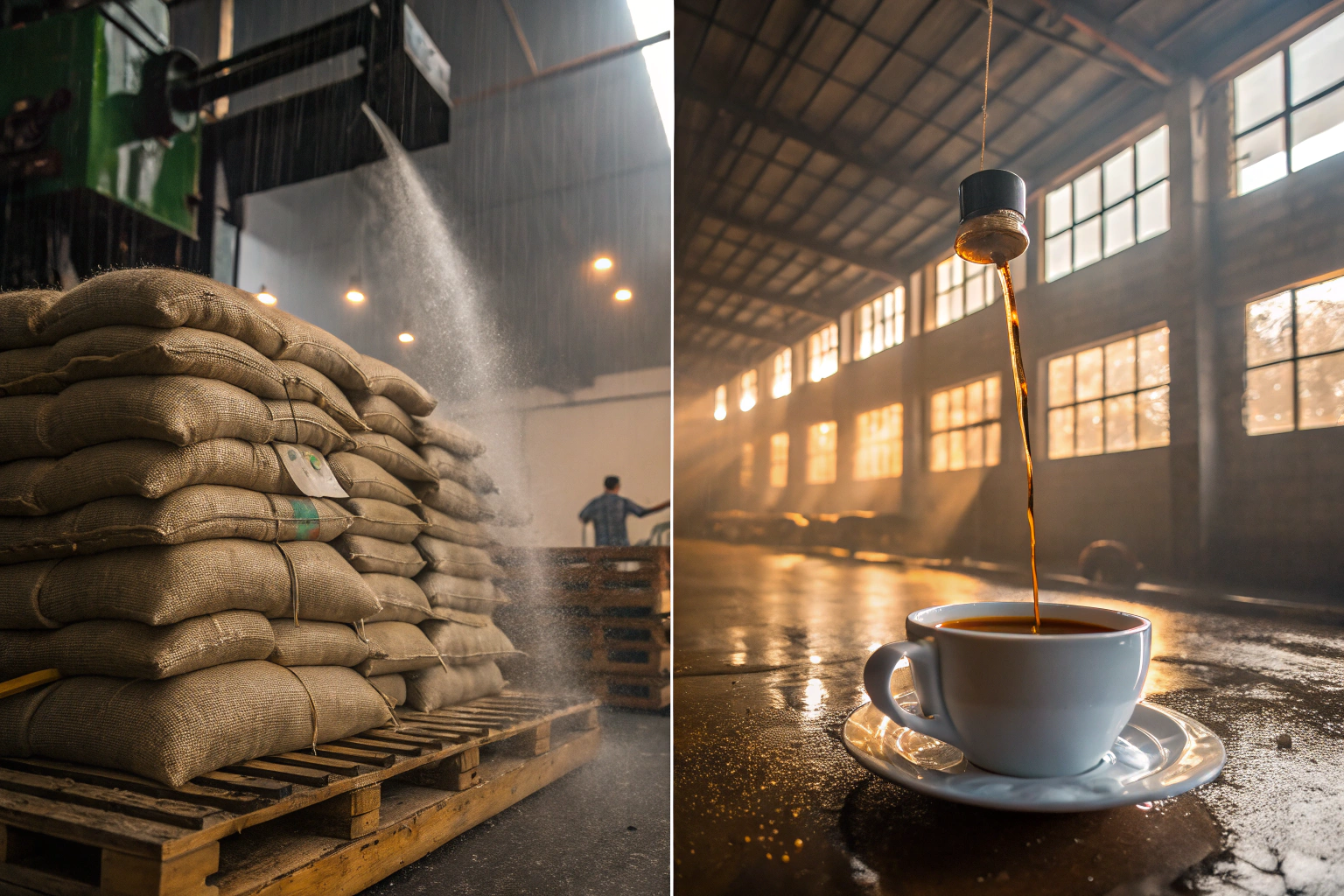
Last July, a veteran roaster from Melbourne asked me a strange question. "Can you replicate monsooning in Yunnan? I want that heavy, funky, low-acid cup. But I'm tired of paying the freight premium from India."
I laughed. Baoshan's rainy season was hammering the roof of our warehouse as we spoke on the video call. Humidity was at ninety percent. The conditions were already there. We just had never tried to deliberately expose our green coffee to them. Six months later, we sent him a sample of our first monsooned Catimor. He cupped it. He said it tasted like aged Sumatra crossed with Indian Monsooned Malabar, but with a cleaner finish. He booked a full container.
Monsooning coffee beans transforms the green coffee physically and chemically by exposing dried beans to high humidity and moist monsoon winds for several weeks, which dramatically lowers acidity, swells the bean size, bleaches the color to a pale gold, and creates a heavy-bodied, earthy, and nearly acid-free cup profile prized by traditional espresso roasters.
This is a radical processing method. It intentionally pushes beans to the edge of mold risk to achieve something unique. Let me explain exactly what happens inside the bean and how we adapted this Indian technique to the mountains of Yunnan.
What Is the Monsooning Process for Green Coffee Beans?
Monsooning was invented in India. Historically, coffee shipped from India to Europe took months by sea around the Cape of Good Hope. The beans sat in wooden ship holds. They absorbed moisture from the ocean air. The color changed from green to pale gold. The acidity vanished. When European buyers got the coffee, they noticed it had a completely different character—mellow, heavy, earthy. They liked it. When steam ships shortened the voyage, the beans arrived green and bright, and buyers complained. So Indian producers reverse-engineered the process on land.
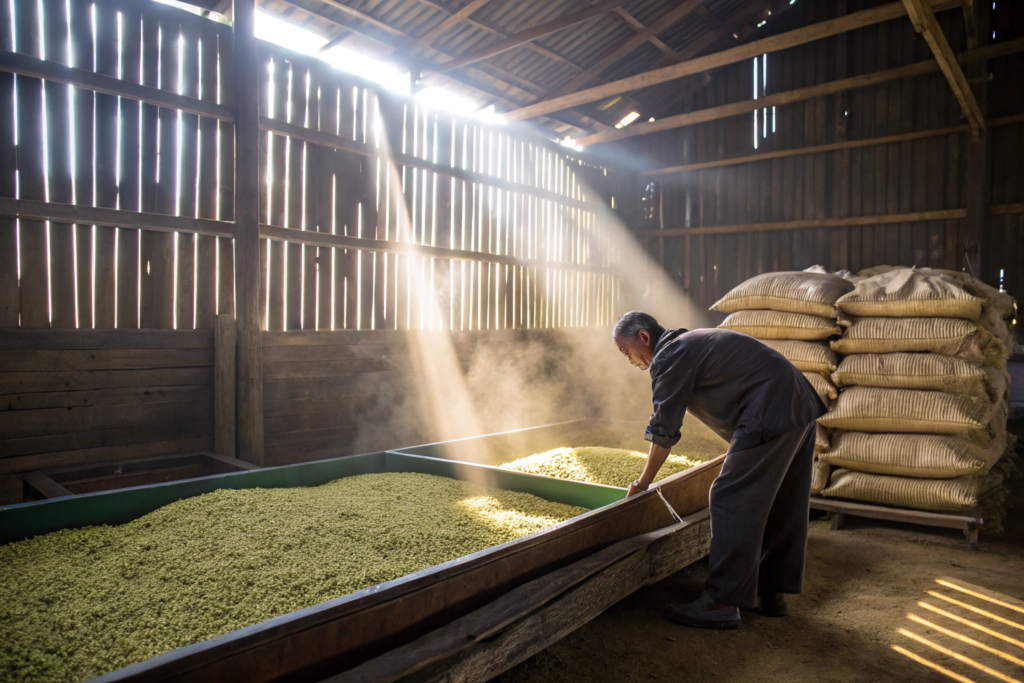
Here is the mechanics. Fully processed and dried green coffee, already at eleven percent moisture or lower, is spread in open-sided warehouses during the monsoon season. The monsoon winds blow through the warehouse for twelve to sixteen weeks. The beans absorb moisture, swell in size, and undergo internal chemical changes. Workers rake the beans regularly to prevent mold and ensure even exposure. By the end, the moisture content climbs to around fourteen to sixteen percent. The beans bloat up to nearly double their original volume. The color shifts to a pale, straw-like yellow.
Monsooning is a controlled aging process that uses seasonal monsoon humidity to increase green bean moisture content to fourteen to sixteen percent, swell the bean size, bleach its color, and fundamentally restructure its internal chemistry before re-drying it for export.
After the exposure phase, the beans are re-dried back down to export-safe moisture levels. But the chemical changes already happened. The re-drying does not reverse them. You end up with a bean that looks and tastes nothing like the original green coffee that entered the warehouse. For a deeper historical dive into the practice, the Specialty Coffee Association has archived lectures on processing innovations, including the roots of Indian monsooning.
How Is Yunnan Adapting the Indian Monsooning Technique?
India has the Malabar Coast. The monsoon there is predictable. The winds are steady. The humidity is consistent for months. Yunnan is different. Our monsoon is intense but shorter. The rainy season in Baoshan runs from June to October. Heavy afternoon downpours, then clear nights. The humidity spikes and dips daily rather than staying constant.
We had to adapt. Instead of open-sided warehouses directly exposed to the elements, we use modified drying houses with adjustable louvered walls. We can open them during periods of steady humidity and close them when the rain gets too heavy or the humidity drops too low at night. This gives us control.
We also shortened the cycle slightly. Our standard monsooning cycle runs eight to ten weeks instead of the twelve to sixteen weeks common in India. The higher daytime temperatures in Baoshan accelerate the moisture absorption. Beans reach the target fourteen to sixteen percent moisture faster. We monitor daily with a moisture meter and cup weekly to track the flavor evolution.
The variety matters too. Indian monsooning traditionally uses Arabica selections like Kent or S795. We use Catimor. The denser bean structure of our high-grown Catimor absorbs moisture more slowly, which actually helps prevent over-absorption and mold. The result is a monsooned coffee that has the classic heavy body and low acidity but retains a cleaner finish than some Indian monsooned lots I have cupped.
What Physical Changes Occur Inside the Monsooned Bean?
The bean goes through a visible transformation. When green Catimor enters the monsooning warehouse, it is a deep blue-green color. Dense. Hard. The seed coat is tight. After ten weeks of monsoon exposure, it emerges pale gold, almost white in some lights. Swollen. Less dense. The seed coat is looser.
Here is what is happening at the cellular level. The absorbed moisture reactivates enzymes that were dormant since drying. Polysaccharides begin to hydrolyze. Long carbohydrate chains break down into simpler sugars. Lipids oxidize gently. The cell walls, which were rigid and structured, start to soften. This is why the bean swells—water is filling the cellular matrix and the structure is relaxing.
The color change is driven by chlorophyll degradation and oxidation. Chlorophyll, which gives green coffee its color, breaks down under the combined stress of high humidity and oxygen exposure. The bean fades. This is the same process that ages paper or fabric left in the sun, but happening internally.
A detail often missed: the bean's density drops significantly. A standard high-grown Catimor has a density around 720 to 750 grams per liter. After monsooning, the density can drop to 620 to 650 grams per liter. This matters for roasting. The lower density means heat penetrates faster. Roasters must adjust their profiles or risk scorching the pale, puffy beans. You can learn more about bean density science from World Coffee Research, which has published data on how processing affects physical bean properties.
How Does Monsooning Affect the Acidity and Body of the Cup?
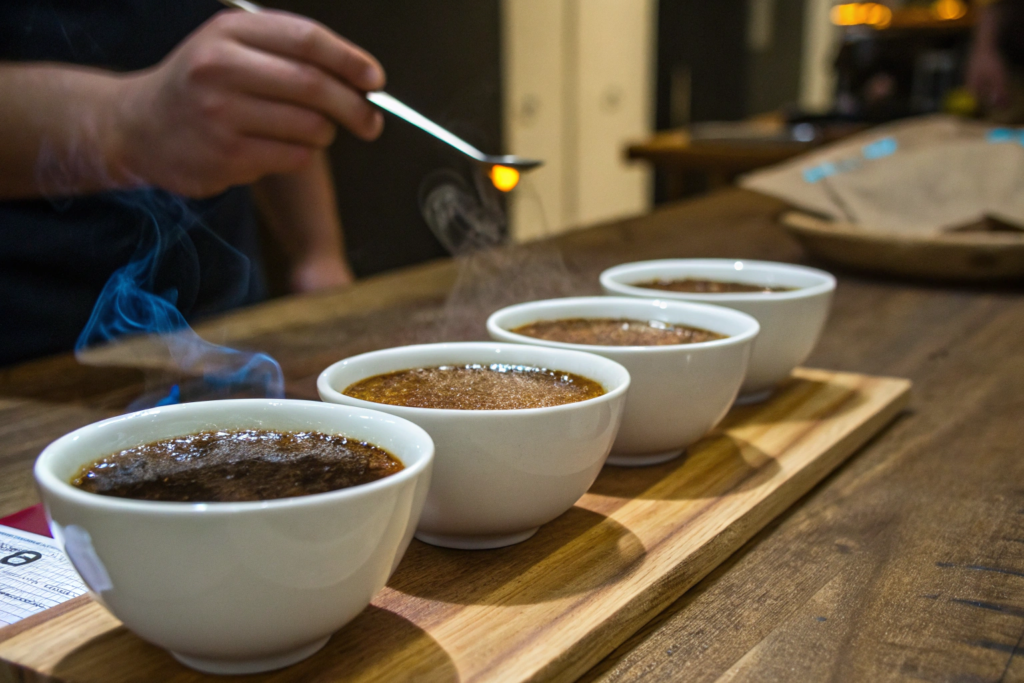
Let me describe a cupping session I ran comparing standard washed Catimor against the same harvest monsooned. The washed lot was bright. Citric acidity hit immediately on the first slurp. The body was medium. The finish was clean and quick. A classic, pleasant high-grown Arabica.
The monsooned lot was unrecognizable. The acidity was virtually gone. Not muted. Gone. The pH had shifted upward. What replaced it was a deep, brooding, earthy body. The mouthfeel was syrupy, coating the entire tongue. The flavor was not fruity or floral. It was more like leather, tobacco, dark chocolate, and a hint of cedar. The aftertaste lingered for minutes.
Monsooning coffee beans systematically destroys bright organic acids, especially citric and malic acid, while leaving behind a heavy, syrupy body and developing earthy, spicy, and smoky flavor compounds not present in the original green coffee.
This transformation is not subtle. A customer who orders a monsooned coffee expecting the bright, clean profile of a washed Yunnan will be shocked. This is a different product entirely. It is an ingredient for specific applications, not a general-purpose drinking coffee.
Why Does Acidity Decrease So Dramatically During Monsooning?
The science here is clear. Organic acids in green coffee—citric, malic, acetic, and chlorogenic acids—are not stable under prolonged high humidity.
During monsooning, water activity inside the bean spikes. This creates an environment where acid compounds can react and break down. Some acids are leached out of the bean physically as water moves through the cell walls during moisture absorption and subsequent evaporation cycles. Others are metabolized by dormant enzymes that reactivate in the humid conditions. Chlorogenic acid, which contributes to perceived acidity and astringency, degrades significantly.
Think of it like aging wood or curing tobacco. The harsh, bright, volatile elements mellow out over time and exposure. What remains are the heavier, more stable compounds. The same thing happens inside the coffee bean over those ten weeks.
For roasters who specialize in traditional Italian espresso blends, this low-acid profile is perfect. High acidity in espresso can taste sour and unpleasant, especially in milk-based drinks. A monsooned coffee provides body, chocolate, and earth without any sharpness. It anchors a blend beautifully. For more technical background on coffee acidity chemistry, the Coffee Quality Institute has educational resources on how processing methods alter acid composition in green coffee.
What Unique Flavor Compounds Develop in Monsooned Beans?
Monsooned coffee does not just lose flavors. It gains new ones. The process is not subtractive only. It is transformative.
During the long humid exposure, low levels of controlled fermentation occur. Wild yeasts and bacteria on the bean surface become active. They produce small amounts of volatile compounds. Some of these are earthy, like geosmin, which smells like damp soil after rain. Others are spicy, like eugenol, which smells like clove. The lipid oxidation contributes nutty and slightly smoky notes.
The flavor wheel for a well-processed monsooned Yunnan Catimor reads completely different from the original washed lot. Here is a typical comparison:
| Cupping Attribute | Washed Catimor | Monsooned Catimor |
|---|---|---|
| Acidity | Bright, citric | Almost none, mellow |
| Body | Medium | Heavy, syrupy |
| Flavor Notes | Chocolate, almond, citrus | Leather, tobacco, dark chocolate, cedar |
| Aftertaste | Clean, quick | Long, earthy, smoky |
| Cupping Score | 82-84 | 80-82 |
The cupping score is lower. Let me be honest about that. Monsooned coffee rarely scores above 83 points. It is not a specialty competition coffee. It is a utility coffee with a specific purpose. The score reflects the unusual flavor profile, which cuppers trained on clean washed coffees often find strange. But the score does not reflect the value. For a roaster who needs a low-acid, heavy-bodied blender, a monsooned 80-point coffee is more valuable than an 87-point bright floral Geisha. For more cupping reference, Coffee Review occasionally publishes assessments of monsooned and aged coffees alongside traditional washed lots.
Why Do Traditional Espresso Roasters Value Monsooned Coffee?
The answer comes down to three words: crema, body, and blend stability.
Espresso is a demanding brewing method. Nine bars of pressure. Fine grind. Short contact time. The coffee must deliver body and crema under those conditions or the shot looks thin and tastes harsh. High-acid, light-roasted single origins often fail this test. They produce pale crema, sour flavors, and a watery mouthfeel.
Monsooned coffee solves these problems. The swollen, less-dense bean structure roasts more evenly at darker roast levels. The low acidity means the shot does not taste sour even when pulled at a higher extraction. The heavy body produces thick, persistent crema with tiger-stripe patterns. And the earthy, chocolatey notes blend seamlessly with other components in a traditional Italian-style roast.
Traditional espresso roasters value monsooned coffee because its low acidity, heavy body, and earthy-chocolate flavor profile provide the ideal base for classic espresso blends, producing thick crema and a smooth, non-sour shot that performs exceptionally well in milk drinks.
I have an Italian client who buys our monsooned Catimor at ten percent of his blend. The other ninety percent is a mix of Brazilian natural and a washed Central American. He told me the monsooned component is the "glue" that holds the blend together. Without it, the shot is thinner, the crema fades faster, and the flavor feels disjointed. With it, everything integrates. That is a small volume but a critical function.

How Does Monsooned Coffee Perform in Milk-Based Drinks?
This is where the product truly shines. A cappuccino or flat white made with a high-acid espresso can taste sour and curdled. The milk reacts with the sharp acids and creates an unpleasant tang. The coffee flavor gets lost behind the milk fat.
Monsooned coffee cuts through milk differently. The low acidity means no sour interaction with the dairy. The heavy body stands up to the milk texture. The earthy, chocolate flavors are strong enough to be tasted even through steamed whole milk. The result is a rich, comforting, chocolaty cup that reminds many consumers of classic café experiences from Italy or old-school American espresso bars.
If you sell beans to cafés that do a high volume of milk-based drinks, a monsooned blend component can improve consistency across hundreds of shots per day. The low acidity gives a wider margin for error. Even if the barista pulls the shot a few seconds too long, it does not turn sour and undrinkable. That operational forgiveness is worth a lot in a busy café environment.
What Roast Profile Works Best for Monsooned Beans?
Monsooned beans roast very differently from standard green coffee. If you drop them into a drum at your usual charge temperature, you will scorch them. The pale, swollen beans have less density and higher porosity. Heat penetrates faster. The surface can burn before the core is developed.
I advise roasters to drop the charge temperature by ten to fifteen degrees Celsius compared to their standard Arabica profile. A slower start. A gentler ramp through the drying phase. The beans will still reach first crack earlier than expected. Be ready. The cracks themselves are quieter, less distinct—more like a soft rustling than a sharp pop.
The target roast degree is medium-dark to dark. Agtron whole-bean readings in the 45 to 55 range. This develops the chocolate and smoky notes fully without incinerating the bean. Pushed into a very dark Italian roast above 40 Agtron, the monsooned character can turn ashy and carbonized. The sweet spot is somewhere just into second crack, where the earthy notes meld with roast caramelization.
For more on profiling unusual green coffee densities, Cropster provides tools that allow roasters to overlay bean density data onto their roast curves and adjust thermal energy inputs accordingly.
How to Source and Use Monsooned Chinese Coffee in Your Blends?
Monsooned coffee is not a standalone single-origin retail product for most roasters. It is a blender. A tool. And sourcing it requires understanding how it fits into your larger green coffee inventory.
I tell buyers to think of monsooned coffee the way a chef thinks of a spice. You do not eat a bowl of black pepper. You add a pinch to the dish. Monsooned coffee is similar. Five to fifteen percent of a blend is usually enough. Too much, and the earthy, leathery notes dominate and make the blend taste muddy. Just enough, and the body thickens, the acidity mellows, and the crema improves without anyone noticing why.
Sourcing monsooned Chinese coffee for blends involves selecting lots with a moisture-stabilized post-process reading below twelve percent, verifying low water activity for shelf stability, and working with your roaster to dial in a specific inclusion ratio—usually between ten and twenty percent of the total green blend weight—to achieve the desired body and crema enhancement.
The coffee itself has a long shelf life. The monsooning process already aged it. It is stable. It does not fade quickly like a fresh natural. You can buy a larger volume and use it across multiple blend batches over six to twelve months without quality drift.
What Specifications Should a Monsooned Lot Meet?
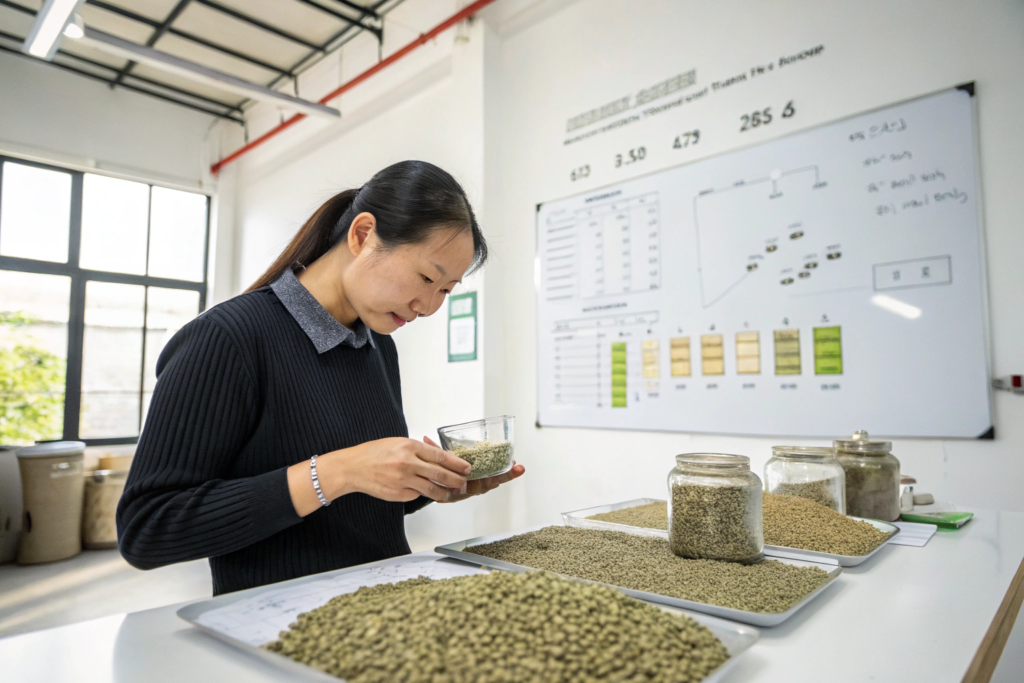
This is not a high-scoring coffee, but it must be clean. A poorly monsooned lot will have mold, musty off-notes, or even visible surface fungi. You need specs.
| Specification | Target | Why It Matters |
|---|---|---|
| Moisture Content | 11.0% - 12.5% | Must be re-dried after monsooning to stable export level |
| Water Activity | Below 0.60 | Prevents mold reactivation during storage |
| Visual Defects | No visible mold, uniform pale color | Inconsistent color suggests uneven exposure |
| Cup Profile | Clean earthy, no musty or sour off-notes | Mustiness indicates uncontrolled mold |
| Bean Size | Swollen, 17/18 screen or larger | Monsooned beans expand; small beans indicate incomplete process |
I also require a mold and yeast lab test from a third-party lab before shipping any monsooned container. This is non-negotiable. The process pushes beans into the danger zone for mold. Most lots come through clean. But verification protects the buyer. For more on green coffee quality standards for specialty and non-specialty grades, the Green Coffee Association publishes defect and grading handbooks used across the US importing trade.
How Do You Integrate Monsooned Coffee Into an Existing Blend?
Start with a small percentage. Five percent. Cup the blend against your current formula. Taste the difference. Increase to ten percent. Cup again. The changes will be subtle at five percent—slightly heavier body, slightly less perceived acidity. At ten percent, the effect becomes noticeable. At fifteen to twenty percent, the monsooned character begins to define the blend.
Here is a sample blend development process I have seen work:
| Blend Iteration | Monsooned Component | Base Components | Observation |
|---|---|---|---|
| Control | 0% | 100% washed Catimor | Bright, clean, medium body |
| Test 1 | 10% | 90% washed Catimor | Softer acidity, heavier body, crema improves |
| Test 2 | 15% | 85% washed Catimor | Earthy note emerges, acidity muted, syrupy body |
| Final | 12% | 88% washed Catimor | Sweet spot for this base; balanced, thick, smooth |
The exact percentage depends on your base coffee and your target profile. An espresso blend that already includes natural Brazil may need less monsooned coffee. A bright, acidic single-origin blend may benefit from more. The only way to find the ratio is to cup systematically.
Shanghai Fumao provides small sample lots of monsooned Catimor for blend testing. Roasters can request five kilograms, run their own blend trials, and determine the right inclusion percentage before committing to a full container or pallet volume.
Conclusion
Monsooning coffee is a deliberate, controlled process that fundamentally changes the bean. Color shifts from green to pale gold. Acidity drops to near zero. Body thickens to a syrupy, heavy mouthfeel. Flavor notes transform from bright and fruity to earthy, leathery, and smoky. The bean density decreases, and the roast behavior changes.
This coffee is not for everyone. It will never win a specialty cupping competition. But for a traditional espresso roaster, a monsooned component solves specific problems: low crema persistence, sour shots, thin body in milk drinks. A small inclusion—ten to fifteen percent—can anchor a blend and improve shot consistency in a busy café environment.
We adapted the Indian monsoon technique to the Yunnan rainy season and our high-grown Catimor. The result is a distinct product that combines the classic monsooned profile with the cleaner finish characteristic of Baoshan altitude coffee. If you are curious about adding a monsooned component to your espresso program, get in touch with Cathy Cai. She can send a sample for your roast team to test, provide current moisture and water activity data, and quote FOB pricing for trial or production volumes. Write to cathy@beanofcoffee.com. She responds quickly and knows the monsooned inventory inside and out.