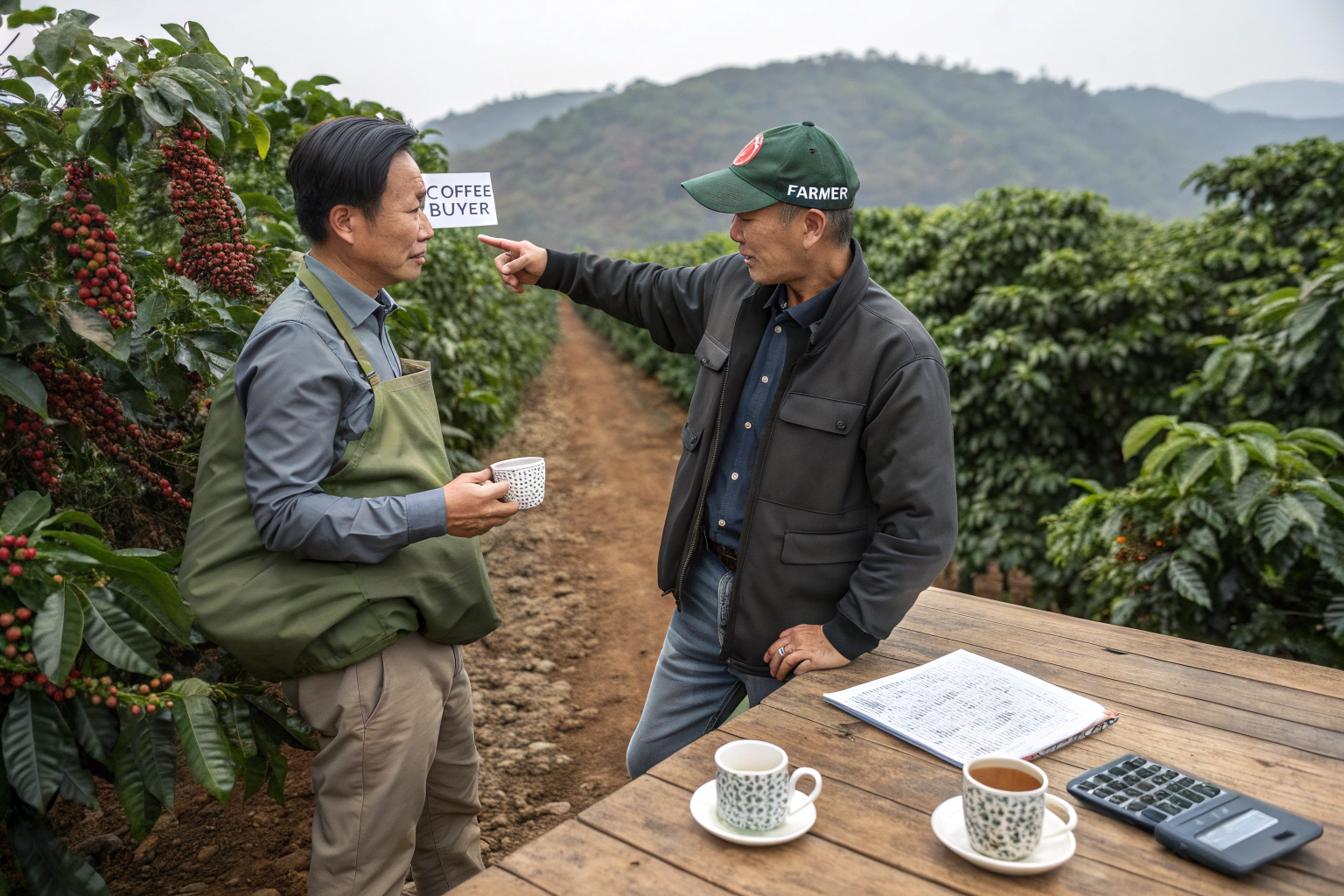
A buyer from Melbourne called me last spring with a problem. He had been buying his Yunnan coffee through a broker in Singapore for three years. The coffee was fine. Consistent. But his margin kept shrinking. The broker's price climbed every quarter, and the explanation was always the same: "market conditions." He asked me a simple question: "What if I just buy from you directly? Cut out the middle step?" I told him the truth. He could save 20% on his landed cost immediately. Same coffee. Same farm. Different supply chain. Three weeks later, he visited Baoshan. We cupped the same lots his broker had been selling him. They were ours all along. He just had not known it.
Buying directly from a coffee plantation eliminates intermediary markups, gives you full transparency into growing and processing practices, allows you to lock in specific lots and quality tiers, and builds a long-term partnership that stabilizes supply and pricing far better than anonymous spot market transactions.
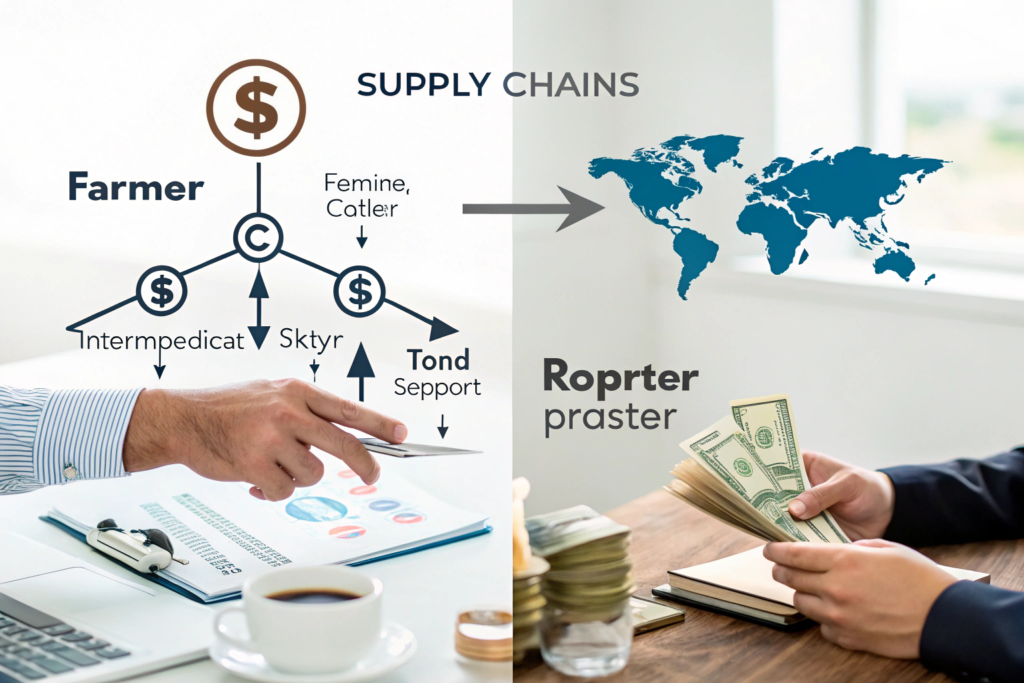
The coffee supply chain is full of hidden hands. Local collectors. Regional aggregators. Export brokers. Import agents. Every hand takes a cut. The coffee does not change. The price does. When you buy direct from a plantation that owns its processing and export infrastructure, you collapse that chain. You pay for the bean, the processing, and the shipping. Nothing else. The savings are real and measurable.
How Does Buying Directly from a Plantation Reduce Your Green Coffee Costs?
Money leaks out of the coffee supply chain at every handoff. The farmer sells parchment to a local collector at the farm gate price. The collector sells to a processor. The processor sells to an exporter. The exporter sells to an importer. The importer sells to the roaster. Each transaction adds a margin. The final price has little to do with what the farmer received.
Buying directly from a plantation reduces green coffee costs by eliminating the cumulative margins of collectors, regional brokers, and export intermediaries. A direct FOB price from the farm can be 15% to 30% lower than the equivalent quality purchased through a multi-tier broker chain, with zero compromise on bean quality.
Let me give you real numbers from our own operation. A lot of our 84-point washed Catimor sells FOB directly to roasters at around $3.00 per pound. That same lot, if it were routed through a regional broker and an international trader, would land on the roaster's desk at $3.80 or $4.00 FOB. The coffee inside the bag is identical. The extra dollar went to intermediary margins. For a roaster buying five containers a year, that spread represents tens of thousands of dollars in annual savings. That money can fund better packaging, a new roaster, marketing, or simply a healthier profit margin. The math is not complicated.
What Hidden Fees Do Import Brokers Add to the Price?
Brokers provide a service. They aggregate supply, manage logistics, and offer credit terms. Those services have a cost. The problem is that the cost is often opaque. A broker's invoice shows a single FOB price. It does not itemize how much of that price went to the farmer and how much went to the broker's commission.
Typical broker markups range from 8% to 15% on top of the exporter's price. But that is not the only hidden fee. Some brokers charge a "sourcing fee" for finding the coffee. Others mark up the freight rate, pocketing the difference between the actual carrier cost and what they bill the roaster. There may be warehousing charges, sampling fees, and documentation fees layered in. None of these improve the coffee. They are pure transaction costs. When you buy direct from a plantation that handles its own export documentation and shipping arrangements, those fees disappear. You pay the actual freight rate. You pay the actual mill cost. There is no shadow margin buried in the line items.
How Does Direct Sourcing Help You Lock In Better Pricing?
The spot market is a casino. Prices swing on weather news, currency moves, and speculative trading. A roaster who buys exclusively on the spot market is a price taker. They have no control. They buy when they need coffee and pay whatever the market demands that week.
Direct sourcing flips the script. When you have a relationship with a plantation, you can negotiate a fixed-price forward contract. We agree on a price in January for delivery in September. That price is based on real production costs, not on the ICE futures screen. If the C-market spikes in August, your price does not change. If the C-market crashes, my price is protected too. Both sides trade price volatility for price stability. This stability is worth real money. You can set your retail prices for the season and not worry about a sudden cost squeeze. Your cafe customers appreciate not seeing menu prices change every quarter. The predictability of a direct fixed-price contract is a competitive advantage that spot buyers do not have.
What Quality Control Advantages Do Direct Plantation Buyers Get?
Quality control is not a single checkpoint at the end of the line. It is a continuous process from seedling to container stuffing. When you buy through a broker, you are several steps removed from that process. You receive a sample. You approve it. You hope the container matches the sample. Sometimes it does. Sometimes it does not.
Direct plantation buyers gain quality control advantages including access to pre-harvest field assessments, the ability to reserve specific micro-lots before they reach the open market, real-time visibility into processing conditions, and the right to reject a lot at the farm gate rather than after the container has crossed an ocean.
I walk my direct buyers through the farm on video calls. I show them the flowering stage so they can estimate the harvest volume. I show them the drying beds with the current lot's moisture readings. I cup with them live over a video link, tasting the same lot at the same time. This level of engagement is impossible through a broker. The broker does not want you talking directly to the farmer. If you talk to me, you might discover the broker's margin. Direct sourcing removes the information asymmetry. You see what I see. You know what I know.
Can You Request Custom Processing for Your Order?
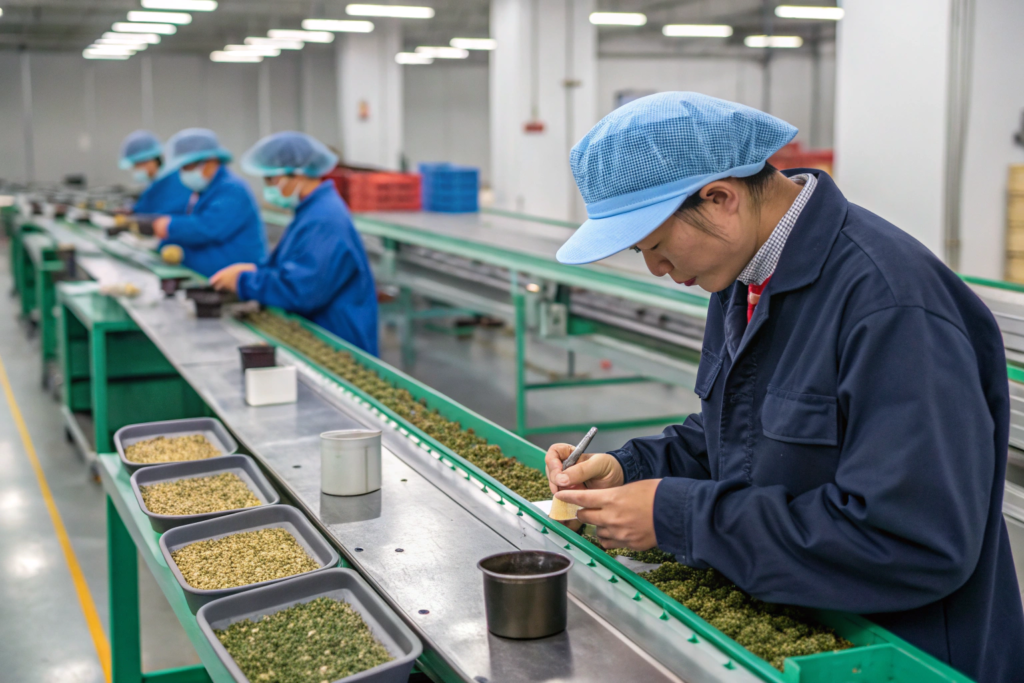
Yes. This is one of the most underrated benefits of direct plantation buying. If you are a roaster with a specific flavor target, you can collaborate with the farm on processing protocols. You are not limited to whatever the broker has in the warehouse.
A roaster I work with in Portland wanted a honey-processed lot with a specific fermentation time—36 hours in cherry, followed by a slow shade-dry. We ran a small experimental batch for him. He cupped the sample. He liked it but asked for a slightly shorter fermentation to preserve more acidity. The next batch, we did 30 hours. He loved it. That lot is now his signature single-origin espresso. It does not exist on any broker's offer sheet. It was co-created between his palate and our processing team. This kind of custom work is only possible when the buyer and the producer have a direct line of communication. It turns the farm into an extension of the roastery's production team.
How Does On-Site Inspection Reduce Quality Risk?
Photos and certificates are useful. But nothing replaces standing on the drying patio and looking at the parchment with your own eyes. Direct buyers who visit the farm, even once, build a level of trust that no document can replicate.
During a farm visit, you can inspect the picking discipline. Are the pickers stripping branches or selecting only red cherries? You can check the fermentation tanks. Are they clean? You can review the drying records. Is the moisture curve smooth or erratic? You can cup from different drying beds and compare them. A broker's sample might represent the best bed. A direct buyer can taste from the worst bed and decide if it is still acceptable. This reduces the risk of a container arriving that does not match the approved sample. If you have walked the farm, checked the records, and cupped from multiple points in the lot, there are no surprises. The container will be what you expect because you verified it at the source.
How Does Direct Trade Build a More Reliable Coffee Supply Chain?
Reliability is the most valuable currency in the coffee business. A roaster's worst nightmare is running out of coffee. Empty hoppers mean idle staff, missed wholesale orders, and lost cafe customers. The spot market cannot guarantee reliability. A direct plantation relationship can.
Direct trade builds a more reliable supply chain by creating a mutual dependency where the farmer reserves specific volumes for the buyer, the buyer commits to annual purchase targets, and both parties plan logistics together months in advance, insulating the relationship from the volatility and availability gaps of the open market.
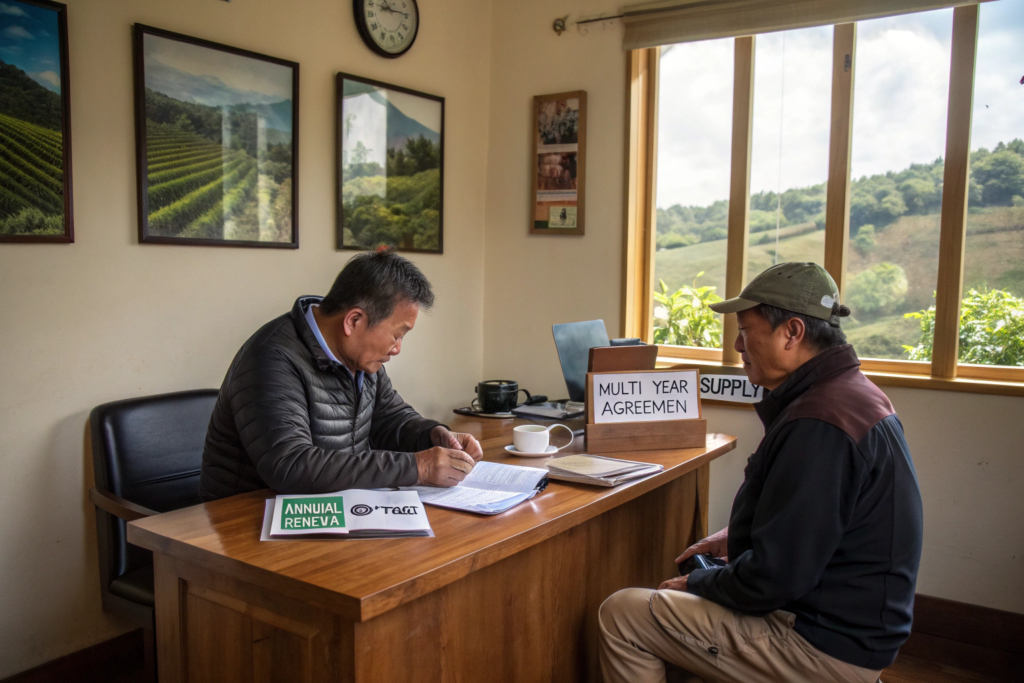
When a roaster signs a multi-year contract with our farm, I plant with their demand in mind. I allocate specific blocks to their program. I schedule their milling slot before the harvest even begins. They are not competing with other buyers for a limited spot lot after the coffee is already bagged. Their coffee is reserved. If production is short one year, they get priority over spot buyers. If production is abundant, they get first refusal on the extra volume. This priority treatment is not a favor. It is the economic logic of the relationship. The buyer who commits early and consistently is the buyer who gets protected when supply tightens.
Why Do Long-Term Contracts Stabilize Supply During Shortages?
Coffee is a boom-and-bust crop. A drought in Brazil, a frost in Colombia, a logistics disruption in the Suez Canal—any of these can suddenly tighten global supply. When that happens, spot prices spike, and spot availability vanishes. Brokers allocate scarce coffee to their biggest clients and leave small buyers scrambling.
A direct contract is a legal and moral commitment that sits outside the spot market chaos. My contract with a direct buyer says I will deliver 300 bags of 84-point washed Arabica at $3.20 per pound in September. If the market price in September is $4.00, I still deliver at $3.20. The buyer's supply is secure. The price is secure. The contract insulates both of us from the panic. I have honored these contracts even when selling on the spot market would have made me more money in the short term. Why? Because the long-term relationship is worth more than a one-time windfall. The buyer who I protect during a shortage is the buyer who stays with me for ten years.
How Does Direct Communication Speed Up Problem Resolution?
Problems happen. A container gets delayed at the port. A bag arrives with a torn liner. A cupping result differs from the pre-shipment sample. When these problems arise, the speed of resolution depends on the communication chain.
In a brokered relationship, the chain is long. The roaster contacts the broker. The broker contacts the exporter. The exporter contacts the processor. The processor contacts the farmer. Each link adds delay. Each link filters the message. In a direct relationship, the roaster messages me. I respond within hours. We solve the problem together. No intermediaries to slow things down or misunderstand the issue. I once had a direct buyer in Germany receive a container where one pallet of bags had shifted during transit and torn. He sent me photos on WhatsApp. I authorized a credit for the damaged bags within the hour. He did not have to file a claim with a broker and wait weeks. The trust we had built over years of honest dealing allowed a five-minute resolution. That speed saves money and stress.
What Traceability Benefits Come from Plantation-Direct Purchasing?
Consumers are asking harder questions. Where did this coffee come from? Who grew it? Were they paid fairly? Is the farm environmentally responsible? A roaster who cannot answer these questions loses credibility. A roaster who can answer them with precision builds brand loyalty.
Plantation-direct purchasing provides end-to-end traceability that cannot be achieved through multi-tier broker chains, giving roasters the exact GPS coordinates of the farm, the harvest date, the processing lot number, and the farmer's story, all of which translate into powerful marketing material that consumers trust and pay premium prices for.
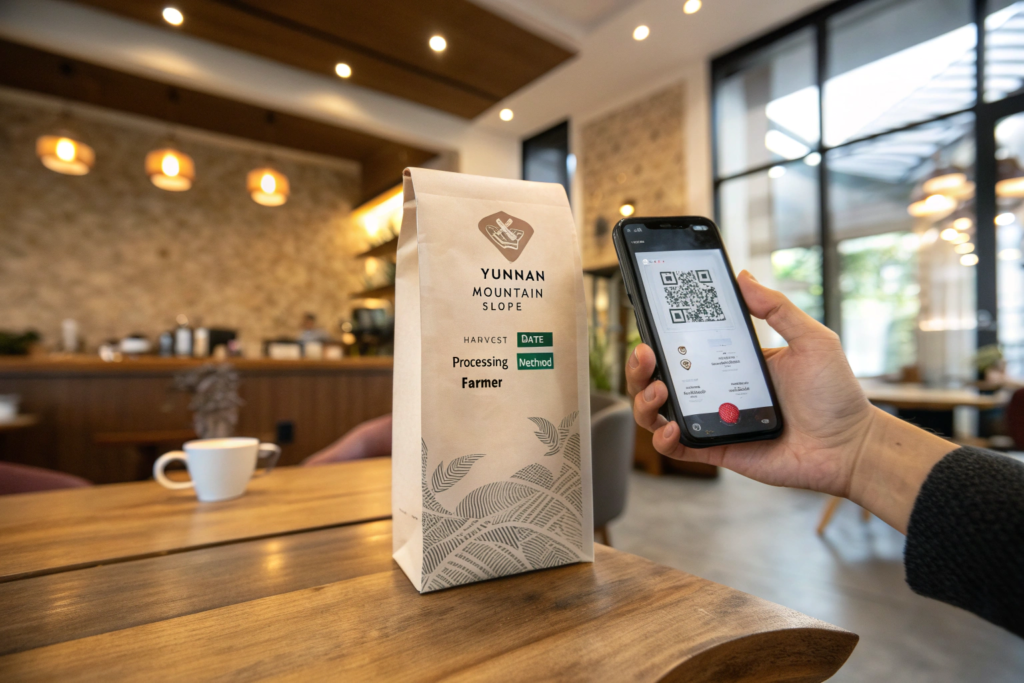
When you buy from BeanofCoffee directly, you get more than green beans. You get a digital dossier. The specific mountain block. The picking date. The drying bed number. The cupping score from our Q-grader. You can put a QR code on your retail bag that links to a page showing the exact location of the farm on Google Maps. Your customer can zoom in and see the Lancang River winding through the valley. That level of concreteness is impossible when the coffee passed through four hands before reaching you. The broker does not have the farm data. Even if they wanted to provide it, they often cannot because the lot was aggregated from many small farms.
How to Use Farm GPS Data in Your Coffee Marketing?
Storytelling is the roaster's superpower. A bag of coffee is not just a product. It is an experience, a connection to a distant place. Farm GPS data turns a vague origin claim into a specific, verifiable fact.
One of our direct buyers, a roaster in Vancouver, prints the coordinates of our Baoshan farm on his retail bags next to a small map illustration. On his website, customers can click the coordinates and open Google Earth. They fly virtually from Vancouver to Yunnan, zoom down into the mountain valley, and see the coffee trees on the slope. He told me his single-origin Yunnan bag sells out faster than any other origin. The transparency creates a sense of discovery. The customer feels like they found a secret spot. That emotional connection justifies a higher retail price. The GPS data is not a gimmick. It is a trust anchor. In a market flooded with vague claims, specificity wins.
Can Blockchain Traceability Replace Traditional Paper Trails?
The paper trail—bills of lading, phytosanitary certificates, invoices—is the legal backbone of coffee trade. But paper can be lost, altered, or fabricated. Blockchain traceability adds a digital layer that is tamper-proof and permanently accessible.
We are piloting a blockchain traceability system with select direct buyers. Every step in the chain—cherry delivery, pulping date, drying start, drying end, milling, bagging, container stuffing—is logged on a distributed ledger. The buyer gets a unique token that links to that record. The consumer scans a QR code and sees the entire history of the bag. Blockchain does not replace the paper documents for customs. It supplements them for the end consumer. It creates a story that cannot be faked. For a roaster marketing to a tech-savvy, ethically conscious demographic, blockchain traceability is a powerful differentiator. It says: "We are so confident in our supply chain that we put it on an unchangeable public record."
Conclusion
Buying directly from a coffee plantation is not just a romantic idea about connecting with the farmer. It is a hard-nosed business decision that improves your margins, tightens your quality control, secures your supply, and gives you marketing ammunition that brokers cannot match. The cost savings from cutting out intermediaries are immediate and measurable. The quality benefits from direct collaboration compound over time. The supply reliability from long-term contracts protects you when markets go haywire. And the traceability data allows you to tell a specific, verifiable story to a consumer who increasingly demands transparency.
The broker model served its purpose in an era of information scarcity. That era is over. You can video call a farm in Yunnan tomorrow. You can cup a sample delivered by courier next week. The tools for direct trade are in your hands.
If you are ready to experience the difference between buying coffee and sourcing coffee, we invite you to contact us directly. No brokers. No agents. Just a conversation between a roaster and a farmer about what you need and what we grow. Reach out to Cathy Cai at cathy@beanofcoffee.com. She can arrange sample shipments, share our current lot list with FOB pricing, and schedule a video walk of the farm. Let's build a supply chain that makes sense for both of us.