
You negotiate hard. You squeeze the FOB price down by 10 cents a pound. You feel good. The contract is signed. Then, over the next six weeks, the Chinese Yuan strengthens against the U.S. Dollar by 3%. You don't notice it. The invoice arrives. The dollar amount is the same. But your supplier's margin just got crushed. They cut corners on the next shipment to compensate. Or worse, they come back to you asking for a price renegotiation mid-contract. The currency moved, and you didn't see it. I've been on both sides of this table. I price my coffee in USD to give buyers stability. But I pay my pickers, my mill staff, and my fertilizer bills in Chinese Yuan. The exchange rate is the silent partner in every deal we do.
The CNY exchange rate matters because it directly affects the stability of your FOB price and the financial health of your Chinese supplier. A weak Yuan makes our coffee cheaper for you. A strong Yuan squeezes our farm margin, threatening long-term quality and contract reliability. At BeanofCoffee, I actively manage this currency risk so your price and supply stay stable, season after season.
The exchange rate is not just macroeconomics. It's a micro-pressure on every bag of coffee we ship. Let's unpack how it hits your business.
How Does a Strong Yuan Affect Your FOB Coffee Price?
The price on my offer sheet is in U.S. Dollars. You pay in dollars. It feels fixed. But behind that dollar number is a conversion equation. My costs are in RMB. If the Yuan gets stronger, my costs go up in dollar terms. I need more dollars to pay the same RMB bills. Something has to give.
A strong Yuan increases my production costs in dollar terms, putting upward pressure on the FOB price. If I absorb the hit, my farm loses profitability. If I pass it on, your price rises. At BeanofCoffee, I hedge currency risk to maintain stable pricing, but large, sustained Yuan strength will eventually be reflected in my offer sheets.
You don't see the currency. You see the price change. Now you know why.
What Happens to Farm Costs When the RMB Appreciates?
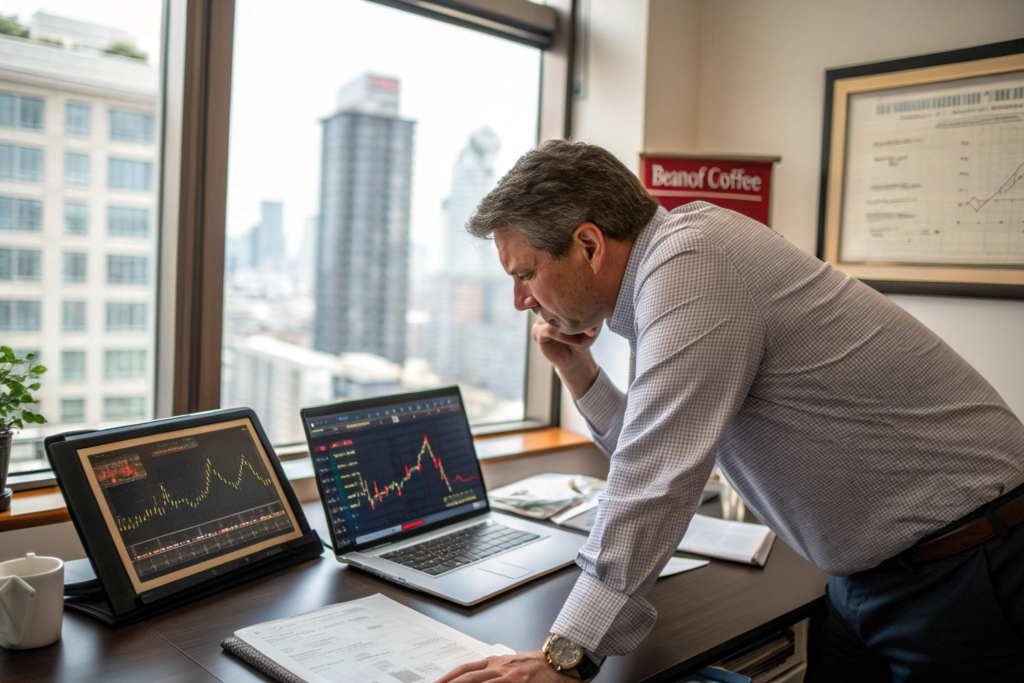
Let's trace a 10% RMB appreciation. My pickers earn 150 RMB per day. That was $20.67 when the exchange rate was 7.25 RMB to 1 USD. If the RMB strengthens to 6.50, that same 150 RMB daily wage now costs me $23.08. My labor cost just jumped 11.6% in dollar terms. Fertilizer. Diesel for the trucks. Electricity for the dry mill. All priced in RMB. All suddenly more expensive in the currency I sell in. My cost of production per pound of green coffee goes up by maybe 15 to 20 cents. My export price to you was maybe $3.50 FOB. That 20-cent increase is a 5.7% cost hike. I can do three things. I can absorb it and make less money. I can raise my FOB price next season. Or I can cut costs, which usually means reducing quality investments. None of these are good for our long-term partnership. This is why I watch the PBOC, the People's Bank of China, like a hawk. Their monetary policy directly affects my ability to deliver you a $3.50 washed Arabica.
Why Don't Chinese Exporters Just Lower the RMB Price Instead?
You might think, "Cathy, just pay your workers less RMB to offset the currency move." That's not how it works in reality. Wages are sticky downwards. You can't tell a skilled cherry picker she earned 150 RMB yesterday and today she earns 135 because the dollar moved. She will walk to the tea plantation down the road. Labor in Yunnan's coffee sector is already tight. The young people are moving to cities. We compete for the remaining workforce. Input costs like fuel and fertilizer are set by global commodity markets and government policy, not by my negotiation. The RMB price floor is rigid. So when the Yuan strengthens, the squeeze is real. It happens at the margin level of my business. A lesser exporter might try to blend cheaper, lower-quality beans into your lot to maintain their margin. You wouldn't see it on the spec sheet, but you would taste it in the cup. A transparent partner tells you about the pressure instead of hiding it in the blend.
How Can a Weak Yuan Be a Sourcing Opportunity for U.S. Buyers?
Now the flip side. The Yuan weakens. Suddenly, my RMB costs translate into fewer dollars. My margin expands. I can afford to invest more in the farm. Or, in a competitive market, I can offer a more attractive dollar price to win your business.
A weak Yuan is a tactical buying opportunity. Your dollars buy more coffee for the same number. You can either negotiate a lower FOB price or request value-adds like upgraded packaging at no extra charge. At BeanofCoffee, when the currency moves in your favor, I proactively work with buyers to lock in long-term contracts at the advantageous rate.
Smart buyers don't just watch the C-market. They watch the FOREX market too.

How to Time a Forward Contract with Favorable Exchange Rates?
A forward contract is a promise to buy coffee at a set price for delivery in the future. If the Yuan is currently weak, say at 7.30 to the dollar, and I offer a forward contract for delivery in six months, that price is based on the current exchange rate environment. You lock it in. Six months later, if the Yuan has strengthened to 6.80, your price is still based on the old 7.30 rate. You just saved maybe 8% on the dollar price. This timing play works best around macroeconomic events. For example, if there is trade tension news that weakens the Yuan temporarily, but the fundamentals suggest it will rebound, that is your window. I can't predict currency markets perfectly. Nobody can. But I can have an honest conversation with you about the current rate and whether it's a good moment to fix a price for 12 months. This is strategic sourcing. It's thinking like a CFO, not just a coffee buyer.
What Additional Value Can a Weak Yuan Unlock?
Sometimes the FOB price is already at a floor. I can't lower it without losing money, even with a favorable exchange rate. But the extra margin created by a weak Yuan doesn't have to sit in my pocket. It can be reinvested in your order. We can upgrade your packaging from jute to GrainPro at no extra charge. We can include a set of printed cupping cards for your marketing team. We can absorb the cost of a special screen-size sorting run. We can even expedite the shipment via a faster vessel. These soft value-adds don't change the per-pound FOB number on the contract, but they lower your operational hassle and your landed cost in indirect ways. Ask me, "Cathy, the Yuan is at 7.35. Can you throw in free pallet-wrapping and barcode labeling?" The answer is probably yes. It costs me RMB, which is cheap for me right now. It saves you dollars. That's a currency-enabled win-win.
How Does the Yuan-Dollar Exchange Rate Impact Contract Stability?
A stable contract is the bedrock of your supply chain. You need that container to arrive, at the agreed price, with the agreed quality, on the agreed date. Currency volatility is the enemy of contract stability. It introduces financial stress that can break the deal.
Extreme Yuan volatility threatens contract stability. If the Yuan spikes 10% after a contract is signed, a financially weak exporter might default or demand a renegotiation. At BeanofCoffee, my contract terms include a currency fluctuation clause that fairly shares extreme risk, ensuring neither party faces a catastrophic loss.
A contract is a promise. Currency chaos can break promises.

What Is a Currency Adjustment Clause and How Does It Work?
A currency adjustment clause is a safety valve. It's a sentence in the contract that says, "If the USD/CNY exchange rate moves by more than 5% from the contract date rate, the parties will meet to adjust the price by 50% of the movement." This means we share the pain. If the Yuan strengthens by 8%, your price goes up by 4%. I absorb the other 4%. If the Yuan weakens by 8%, your price goes down by 4%. This prevents either of us from being wiped out. It keeps the contract alive. Without this clause, a big move creates an incentive for the losing party to break the deal. The supplier might simply not ship. The legal fight would cost more than the coffee. The clause is a pre-agreed solution to a known risk. It's a sign of a mature, professional trading relationship. I include it in my long-term contracts. You should ask for it if it's not there.
How Does Currency Risk Affect Smaller Chinese Exporters Differently?
A small trader with no capital reserves is a currency time bomb. They price in dollars. They buy coffee in RMB. They operate on thin margins. A 5% adverse currency move wipes out their entire profit on the shipment. They have a terrible choice. Ship at a loss and face bankruptcy. Or delay, make excuses, find a legal loophole, and try to get out of the contract. I've seen it happen. Buyers left without coffee. This is a risk of the middleman model we discussed before. A large, vertically-integrated producer like BeanofCoffee is different. We have the balance sheet to absorb short-term currency swings. We also have natural hedges. We buy some inputs, like packaging, in dollars. This partially offsets our RMB exposure. When you source direct from a farm with financial depth, currency risk is a managed variable, not an existential threat. You sleep better.
How to Hedge Currency Risk in Your Green Coffee Procurement?
You are a roaster, not a currency trader. You don't want to speculate on the Yuan. You want to make your coffee cost predictable. There are practical, low-drama ways to remove currency risk from your sourcing. They involve shifting the risk to your supplier, fixing it with a bank, or diversifying your supply base.
You can hedge currency risk by buying on a CIF basis, using forward contracts, or maintaining a multi-origin portfolio. With CIF pricing, the currency risk stays with me, the supplier. At BeanofCoffee, I offer both FOB and CIF options, depending on which side you want to manage the FOREX exposure.
You choose where the risk lives. Be deliberate about it.
Why Does CIF Pricing Shift Currency Risk to the Supplier?
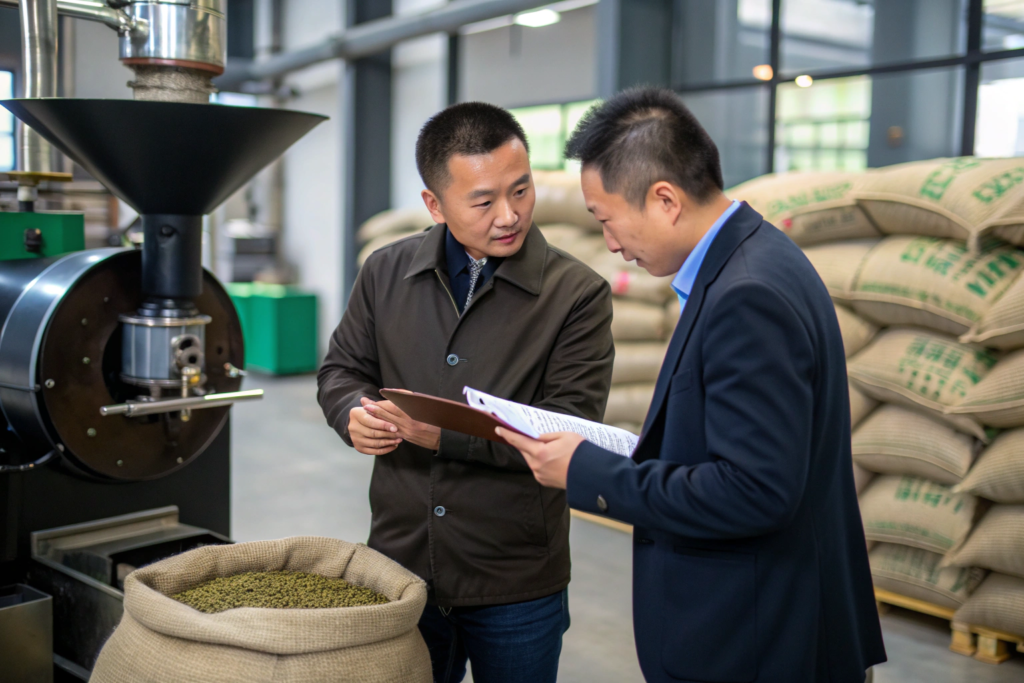
CIF is an all-inclusive price in dollars. It covers the coffee, the freight, and the insurance to your destination port. I price the entire package. You pay one dollar amount. What happens to the RMB during transit is my problem, not yours. If the Yuan strengthens, my freight forwarder still bills me in RMB. The dollar price to you does not move. This is a very clean hedge for a roaster. You offload the currency complexity entirely. The premium you pay for CIF is essentially a risk transfer fee. You are buying peace of mind. For a smaller roaster without a treasury department, CIF is often the smarter choice. You know the exact landed cost the day you sign. No surprises.
How Can a Multi-Origin Sourcing Strategy Mitigate Yuan Risk?
Don't put all your eggs in one currency basket. If your entire book is Chinese coffee, a 10% Yuan move hits 100% of your supply. If you split your sourcing between Yunnan, Colombia, and Ethiopia, a Yuan move only affects a portion of your blends. The Colombian Peso might be moving in the opposite direction. The Euro might be stable. Currency diversification is a natural hedge. I'm a Chinese producer. I obviously want to sell you more coffee. But an honest partner will tell you that a healthy sourcing strategy includes a mix. We should be your primary, reliable, best-value origin. But using us alongside other regions makes your overall cost structure more resilient. It's just smart portfolio management. Don't let a currency bet become a business risk.
Conclusion
The Chinese Yuan is not a distant economic statistic. It is a pricing engine. A strengthening Yuan tightens the screws on my farm costs and eventually pushes your FOB price upward. A weakening Yuan opens a window for you to lock in better rates or get extra value. The currency's volatility is the invisible threat to contract stability, a threat that can break a weak supplier and leave you without coffee. But all of this risk is manageable. You can manage it through timing your forward contracts when the Yuan is weak. You can manage it through CIF pricing that shifts the exposure to me. You can manage it through a currency adjustment clause that shares extreme moves fairly. And you can manage it by partnering with a financially solid, direct supplier who doesn't collapse under margin pressure.
Let's review the current exchange rate environment together. Contact me, Cathy Cai, at cathy@beanofcoffee.com. I'll share my latest market perspective and how it factors into my current Yunnan Arabica pricing. We'll look at FOB and CIF scenarios, forward booking advantages, and structure a contract that keeps your costs predictable. You roast great coffee. I'll manage the currency math.