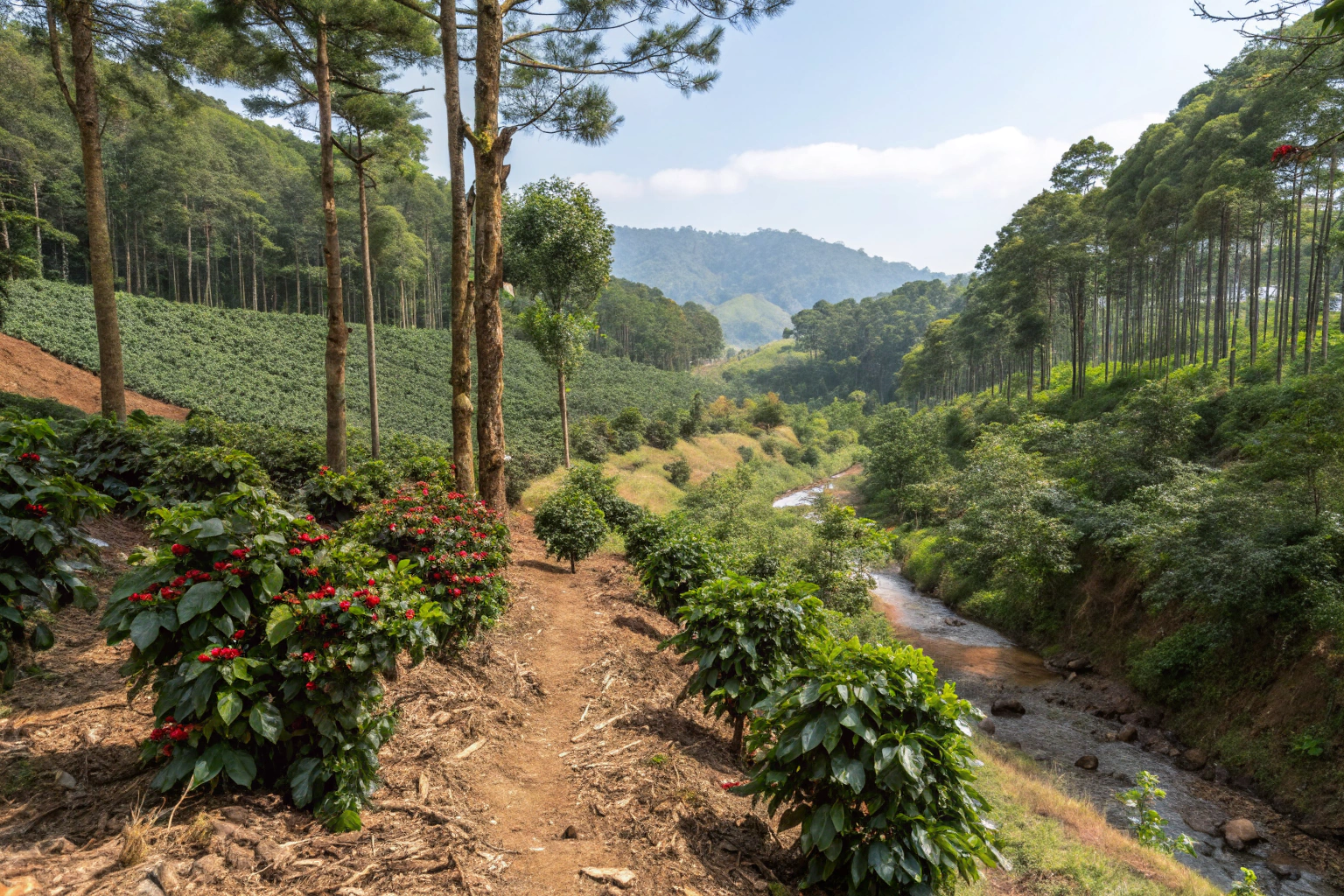
I was at a dinner with a group of European specialty roasters a few years ago. A well-dressed man, the CEO of a well-known brand, leaned across the table and asked me point-blank, "Mr. Cai, let's be honest. We hear the stories about China's environmental record. Can coffee from your country ever truly be green?" I didn't flinch. I reached into my bag and pulled out my phone, not to show him a brochure, but to show him a satellite image of our farm. I pointed to the 10,000 continuous acres of forested coffee and said, "This isn't a story. It is a measurable, audited, and verified reality. Our coffee is not just grown in a forest; it is an active part of restoring one." The conversation transformed from a hostile interrogation to a deep, curious discussion.
Yes, leading Chinese coffee plantations can be and demonstrably are environmentally friendly, moving far beyond a simplistic "do no harm" model to embrace a verifiable, audited framework of regenerative agriculture that actively protects native forests, builds healthy soil, and fosters biodiversity, all under the scrutiny of the world's most rigorous third-party certifications.
The old stereotype does not match the new reality of professional, export-focused farms like ours. Let me show you the evidence that matters. At Shanghai Fumao, this commitment is the core of our identity, detailed on our Sustainability page.
How Does Certifications Prove a Farm's Environmental Commitment?
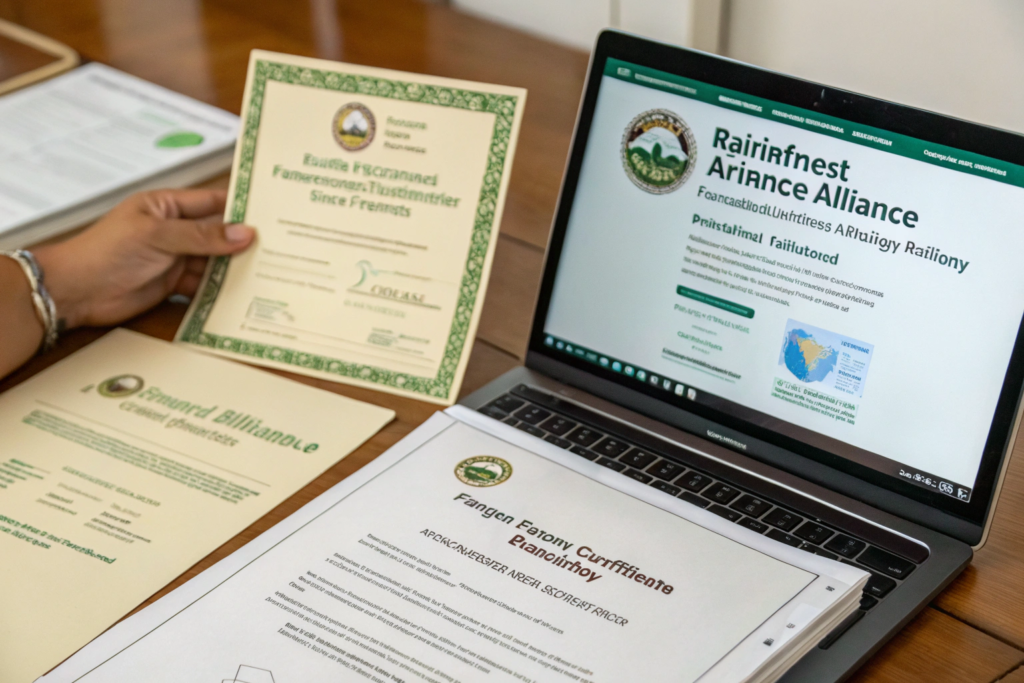
A promise is just words. In an age of rampant greenwashing, the only environmental claim that has any commercial or ethical weight is one that has been independently audited and certified by a globally respected, third-party organization. A farmer telling you they love nature is not evidence. A Rainforest Alliance, organic, or Bird Friendly certificate is evidence. This is the difference between a story and a verified operating system.
A coffee plantation proves its environmental commitment not by its own marketing, but by voluntarily subjecting its entire operation to the rigorous, annual, and unannounced audits of independent third-party certifications, which verify specific, measurable outcomes in forest protection, soil health, and biodiversity.
These are the standards we measure ourselves against, and the public records are there for you to verify. At Shanghai Fumao, you can verify the legitimacy of these claims yourself, as we detail on our Certifications page.
What Does a "Zero Deforestation" Audit Actually Verify?
The Rainforest Alliance certification is not just a set of suggestions. It contains a strict, non-negotiable principle with a hard cut-off date: zero deforestation. This is a black-and-white rule. The annual audit is designed to verify this principle with forensic precision. It is not enough for a farmer to make a promise.
During our audit, the inspector reviews our farm's land-use history with satellite imagery and GPS data. They physically verify that since a specific cut-off date, our coffee production area has not expanded into any native forest. The audit confirms that we are protecting primary forests and restoring degraded ones. This is the environmental safeguard that protects a buyer from the reputational risk of being associated with deforestation, a critical part of compliance with regulations like the EUDR. It is a documented, audited fact, not a guess.
How Does an Organic Audit Protect the Health of Our Waterways?
A farm's environmental responsibility extends far beyond its fence line. What goes into the water affects the entire downstream ecosystem. A USDA or CNOP organic certification has strict, audited requirements for water management that go far beyond a simple "no chemical" rule.
As part of our organic audit, the inspector walks the length of our streams. They verify that we maintain wide, vegetated "riparian buffer" zones of native trees and plants along all waterways. These buffers are not just for show; they are a vital living filter, preventing any soil erosion and ensuring no nutrient runoff reaches the water. The audit also verifies that our wet mill's wastewater is treated in a system of settling ponds and never discharged untreated. This is a holistic, independently verified system that protects the pristine mountain water of the Gaoligong Mountains, the same water that gives our coffee its clean, pure character. This systemic approach is the same one we describe in Are Yunnan coffee beans organic and non-GMO?.
How Are "Climate-Smart" Practices Building Soil Health on Our Farm?
Protecting an existing forest is the first step. The next, more advanced level of environmental commitment is to actively regenerate the land you are farming. This is the core of climate-smart agriculture. Our focus is not just on the coffee tree; it is on the soil beneath it, and we treat that soil as the most important living asset on our farm. Healthy soil is the engine of both a superior cup and a resilient planet.
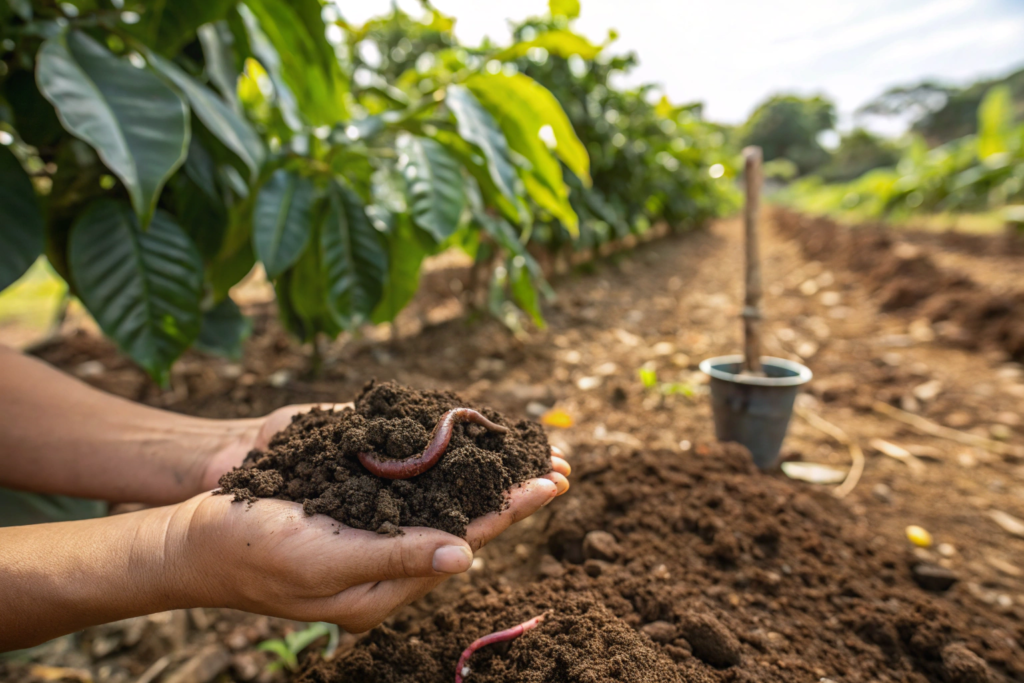
Our climate-smart practices focus on building "living soil" through a system of continuous cover cropping and composting, which sequesters atmospheric carbon, dramatically increases the soil's water-holding capacity to create drought resilience, and fosters a disease-suppressive, biodiverse ecosystem that eliminates the need for synthetic inputs.
We are not just sustaining our land; we are actively manufacturing new, healthy topsoil. This is the environmental story we are proud to tell. You can also learn how we explain this to our partners in our guide on How to Explain Regenerative Coffee Farming Practices to Your Clients?.
What Is "Carbon Sequestration" and How Does a Coffee Farm Do It?
Carbon sequestration is the process of capturing atmospheric carbon dioxide and storing it in a solid, stable form. For a coffee farm, the most powerful tool for this is not a machine, but a plant, and the most effective storage is not a tank, but the soil itself.
When we grow a diverse mix of cover crops between our coffee rows, those plants act like living carbon pumps. Through photosynthesis, they pull CO2 from the air and convert it into plant tissue and sugars. When they are rolled or composted back into the soil, this captured carbon is fed to the vast community of soil microbes. These microbes process it and bind it into stable soil organic matter, effectively storing that carbon safely underground for decades. This is a verifiable process that transforms a coffee farm from a potential emitter into a net carbon sink. This is the future of climate-responsible agriculture.
How Does Building Soil Organic Matter Make a Farm Drought-Proof?
The most immediate climate threat to any coffee farm is drought. A conventional farm with degraded, compacted soil is extremely vulnerable. A regenerative farm, with its soil structurally transformed by high levels of organic matter, is a completely different, more resilient system. This is not magic; it is simple physics.
Soil that is rich in organic matter acts like a giant underground sponge. For every 1% increase in soil organic matter, an acre of land can hold an additional 20,000 gallons of water. This water is stored in the root zone, available to the coffee trees long after the rain has stopped. This deep, natural reservoir is our best insurance against a volatile climate. For a buyer, a contract with a farm that builds its soil is a long-term, climate-smart hedge. It is a guarantee of a crop even in a dry year, making your supply chain fundamentally more reliable.
What Does "Biodiversity" Really Look Like on a Modern Coffee Plantation?
A truly environmentally friendly coffee plantation is not a sterile, tidy monoculture. It is a messy, vibrant, and structurally complex ecosystem that mimics a natural forest. It is a place where the coffee is just one productive member of a much larger community of plants, insects, birds, and animals. This biodiversity is not an accident; it is a deliberate agricultural strategy with direct benefits for the coffee itself.
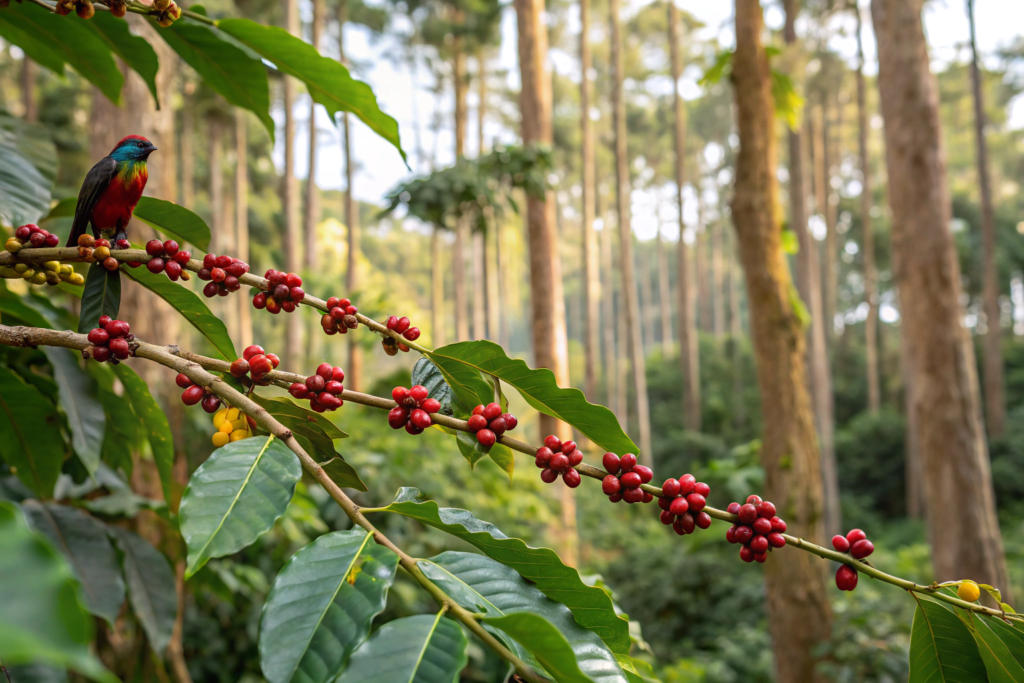
Biodiversity on our plantation manifests as a structurally complex, multi-layered agroforestry system where coffee grows under a diverse canopy of native shade trees, creating a habitat for beneficial insects and migratory birds, which actively controls pests and reduces the need for any intervention.
This is the beautiful, functional ecosystem that produces your coffee. It is the ultimate expression of environmental friendliness. This is the same philosophy we explore in our guide on How to Source Coffee Beans That Are Certified Bird Friendly?.
Why Are Native Shade Trees a "Natural Pest Control" System?
A monoculture farm is a dinner invitation for a pest. An endless field of a single crop is a perfect, simple, and abundant food source. A biodiverse, shade-grown farm is a complex, multi-layered habitat, and it has its own built-in pest control.
The native trees we plant and protect are not just for shade. They are the living quarters for a vast army of beneficial insects, spiders, and insectivorous birds that are the natural predators of the coffee berry borer and other pests. When you walk through our farm, you are walking through a complex food web that is actively working to keep the ecosystem in balance, for free. This is what a truly resilient farm looks like.
How Does a Multi-Layered Canopy Create a Superior Coffee Bean?
The environmental benefit is clear, but the quality benefit is what makes the business case undeniable. The specific architecture of our farm's canopy directly produces a better, more flavorful coffee.
A coffee plant growing in the scorching, full sun is stressed and will push out a crop of cherry as fast as it can, sacrificing sugar development for speed. The result is a less sweet, less complex bean. Our coffee, growing under a cool, protective canopy of native trees, has a completely different reality. The moderated temperature and reduced stress slow the cherry's maturation by weeks. This extended ripening period allows the seed to fill with complex sugars, creating a denser bean and a sweeter, more complex, and more nuanced cup. The biodiversity of our farm is a key ingredient in the flavor you taste, a concept we explore in our deep-dive on What Affects the Flavor of Yunnan Arabica Coffee?.
Conclusion
The question of whether Chinese coffee plantations are environmentally friendly depends entirely on which plantation you are asking about. The old, stereotypical image of a factory farm is being replaced by a new, verifiable reality. Leading estates like ours are not just "less bad"; they are demonstrably regenerative, a net positive for the planet.
We can prove this because it is not a claim we make. It is a conclusion that is independently verified by some of the most respected third-party organizations in the world, from the Rainforest Alliance and the Smithsonian Bird Friendly program to USDA Organic. Their audits are our report card, and that report card is public.
We are building healthy soil, capturing carbon, conserving water, and creating a thriving, biodiverse habitat that produces an exceptional cup of coffee. Our farm is a living proof that environmental responsibility and agricultural profitability can be perfectly aligned.
If you want to taste the difference that a truly regenerative farm can make, and you want to see the certifications and the soil data that prove it, we are ready to share our story with you. Email Cathy Cai. Ask for our "Environmental Impact & Certification Portfolio." Contact Cathy at: cathy@beanofcoffee.com