I still remember the mild panic in a client's voice during a video call last spring. "Cathy," he said, "my usual supplier from Central America is out of my base bean. They said the new crop won't ship until August. Can you help, or is all coffee gone until then?" I smiled. I understood his anxiety. He was caught in a seasonal gap. I told him, "Coffee is not gone. It's just moving. The harvest in Baoshan is finished, and our new crop is resting. But we have your bean. Our warehouse is full of perfectly stored past-crop, and our fresh crop will be milled and ready to ship in June. You won't have a gap." The relief on his face was immediate. The pain of a seasonal shortage is a supply chain disruption that can halt your production and drive you to an expensive spot market.
Seasonal shortages in coffee supply are not random, unpredictable events, but are the direct and predictable result of the fixed annual harvest and resting cycles in each origin country, combined with the logistical bottlenecks of a global shipping calendar, and the most reliable way to avoid them is to build a diversified sourcing strategy that is synced to these natural rhythms.
You do not need to fear the calendar. You need to understand it. Let me explain the seasonal reality of coffee and how a partner like us can help you build a supply chain that never runs dry. At Shanghai Fumao, we plan our entire inventory strategy around this, as detailed on our Logistics & Planning page.
How Does the Global Coffee Harvest Calendar Create Supply Gaps?
The first thing to understand is that coffee is not harvested year-round in a single place. It is a seasonal fruit. This fundamental agricultural reality creates a predictable global rhythm of feast and famine. A supply gap is not a sign of failure; it is a direct, logical consequence of the earth's orbit and the specific climate that a coffee tree needs to flower and fruit. The key is knowing when the gaps happen.
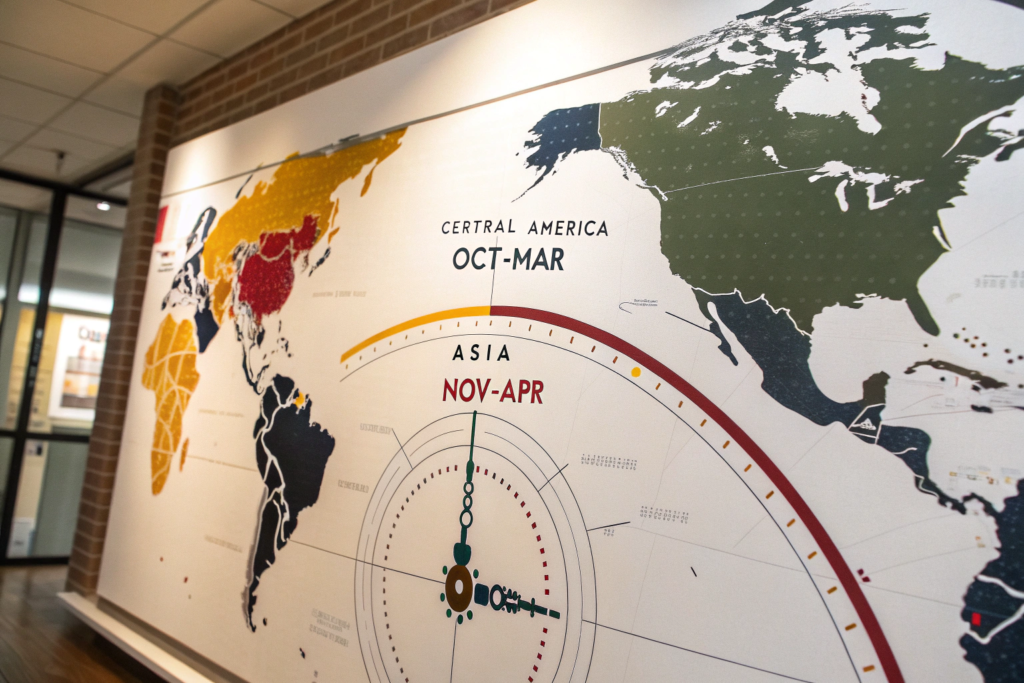
Global coffee supply gaps are created by the fact that different coffee origins have distinct, non-overlapping harvest seasons dictated by their geography, with the most significant global gap typically occurring in the Northern Hemisphere's summer, between the completion of the Central American shipping season and the arrival of the new Asian crops.
This is the predictable gap that catches many roasters off guard. They rely on a single origin, and when that origin's harvest is finished and the old crop is sold out, they face a hole in their green coffee inventory. Diversification is the only long-term solution.
When Is the "Global Gap" in Washed Arabica Availability?
There is a specific time of year when the global pipeline of fresh, high-quality washed Arabica is at its tightest. It is a predictable pinch point that every roaster should have circled on their calendar. This is the single most important seasonality concept to internalize.
The gap generally occurs around May, June, and July. By May, the main harvests in the large Central and South American washed Arabica origins are largely complete, and the best fresh lots have been bought and shipped. The new crops from many of these countries are still many months away. This creates a window where demand can easily outstrip supply for fresh, high-quality washed Arabica. This is exactly the moment when our Yunnan washed Arabica, which is at its peak freshness and shipping right out of its June-August window, becomes a strategically vital alternative. Our coffee arrives when others run out.
How Does the Yunnan Harvest Cycle Perfectly Fill a Key Gap?
This is the strategic genius of a diversified sourcing plan that includes Yunnan. Our harvest cycle is not a disadvantage; it is a powerful temporal asset. It is a direct answer to the global summer gap in washed Arabica.
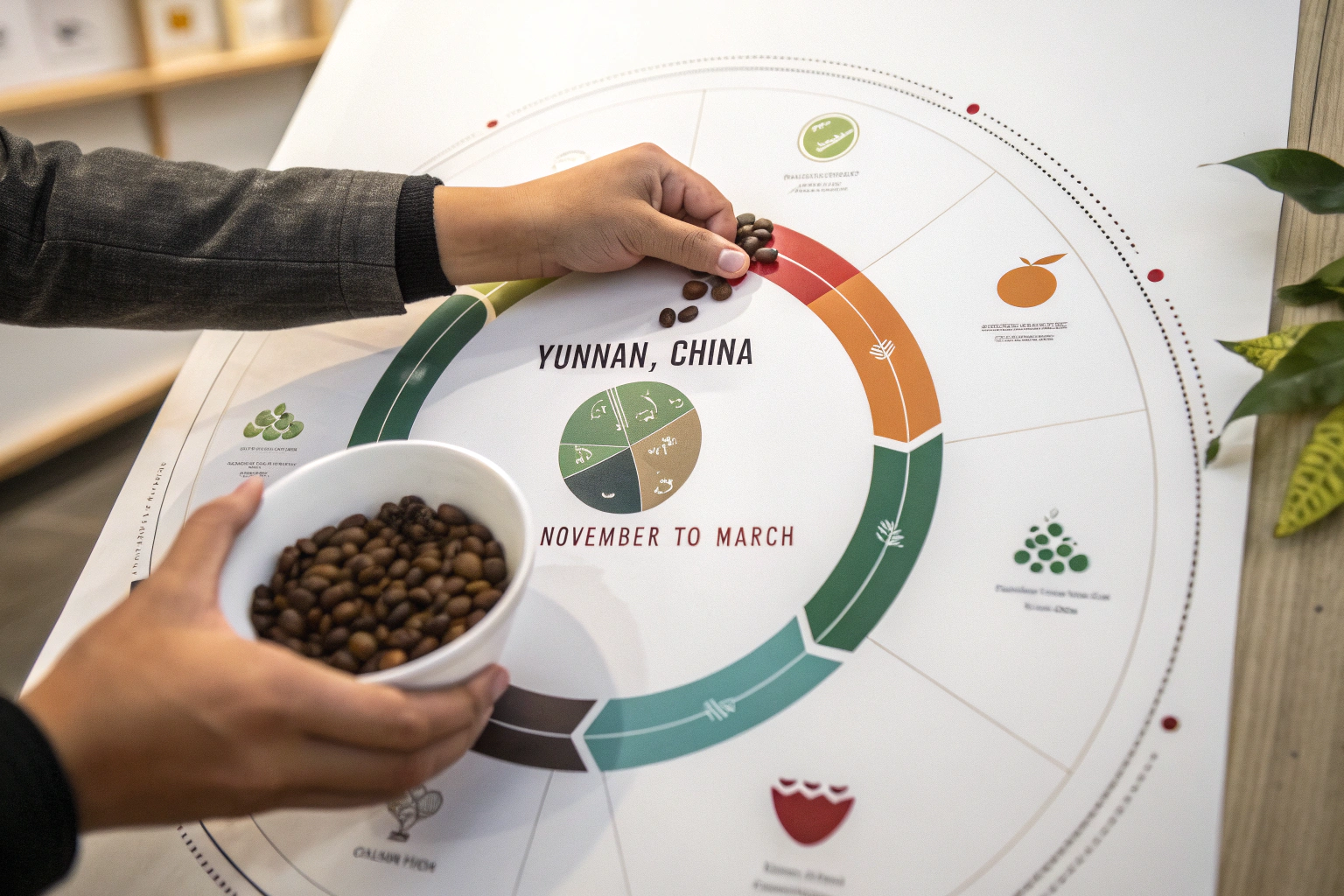
Our harvest in the mountains of Baoshan takes place during the dry, cool winter months, from November through February. The coffee then rests in parchment for several months, as we discuss in our guide on What Is the Best Time to Source Coffee from Yunnan?. This perfectly positions our freshly milled, top-quality washed Arabica to begin shipping in large volumes from June through September. This is exactly when the pipeline from other washed Arabica origins is at its tightest. We are not competing head-to-head; we are providing a high-quality supply of fresh coffee at the precise moment the market needs it most.
How Does Proper Lot Management Create a "Year-Round" Supply from a Single Estate?
A farm's harvest may be seasonal, but a professional, vertically integrated supplier does not sell all their coffee at once. We use technology and disciplined management to flatten the seasonal curve, transforming our single estate into a reliable, year-round pantry for our partners. This is the difference between a farmer and a supply chain manager.
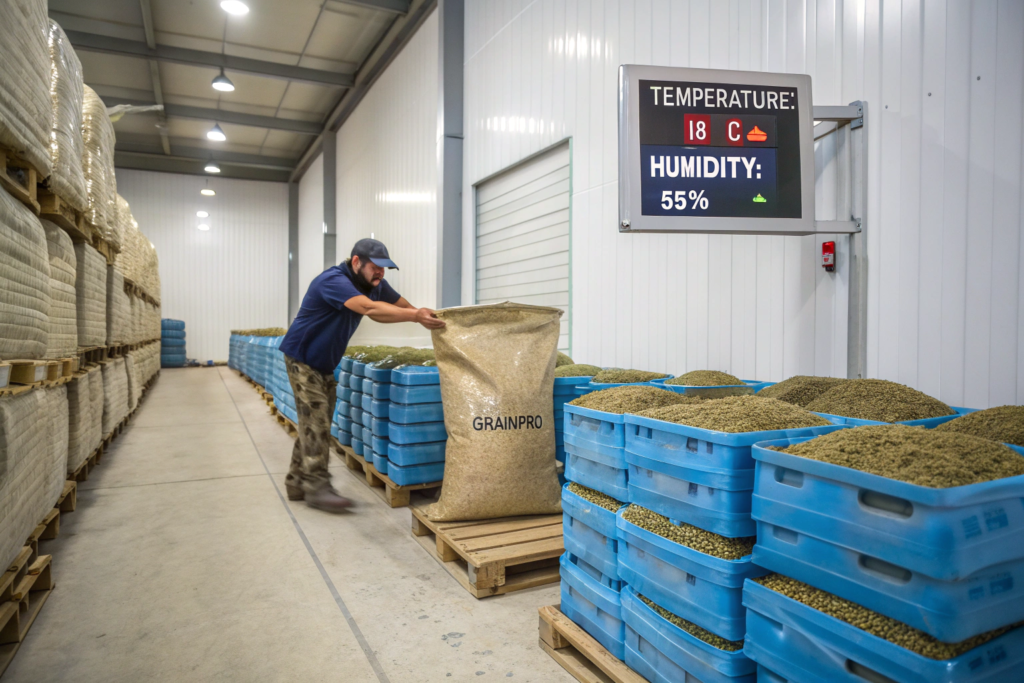
A single estate can provide a year-round supply by using hermetic GrainPro storage to perfectly preserve a portion of the harvest as "past crop" inventory for the lean months, and by timing the dry milling of the new crop to bridge the gap between the two, ensuring a continuous, uninterrupted flow of consistent, high-quality green coffee.
This is a key part of our value proposition at Shanghai Fumao. We do not just grow coffee; we manage its availability to match your business needs.
What Is "Past Crop" Storage and Why Is It Not a Dirty Word?
In many commodity chains, "past crop" is feared. It means old, faded, and dead coffee. In a professional, quality-focused supply chain like ours at BeanofCoffee, properly stored past crop is a premium asset and a guarantee of continuous supply. The quality of a stored coffee is determined entirely by the storage technology.
The difference is the GrainPro bag. As we explain in our article on Why Do Coffee Roasters Prefer GrainPro Bags for Shipments from Asia?, the hermetic liner locks in the coffee's exact moisture and water activity the moment it is sealed, putting the aging process on pause. A coffee stored this way in our cool, high-altitude warehouse will cup beautifully 12-14 months later, having gently mellowed and developed a softer acidity and a richer chocolate body. It is a different, but still exceptional, high-quality product. For an espresso blender, this "past crop" profile is often preferred.
How Does Our "Just-in-Time" Milling Strategy Ensure Peak Freshness?
We do not hull all our dried parchment into green bean at once. That would start the clock on its freshness ticking. Instead, we use a deliberate strategy of "just-in-time" milling to ensure you receive the freshest possible product, even if you are ordering months after the harvest.
We store the coffee in its most stable form: dried parchment, still protected by its natural papery shell. This is the ideal state for long-term storage. Then, based on your contract and shipping schedule, we mill exactly the volume you need, precisely when you need it. This means the green bean you receive is only a few weeks from the huller, not months. This just-in-time milling is a premium service that a large, professional estate can offer, and it guarantees that a Yunnan coffee shipped in November can be as fresh as one shipped in July.
How Can Blending and Contracting Strategies Mitigate Seasonal Risk?
You can also use smart commercial strategies to build a supply chain that is resilient to the seasonal whims of any single origin. By understanding the global calendar, you can design a multi-origin buying plan and negotiate contracts that transfer the risk of a seasonal gap away from you.
The most effective way for a roaster to mitigate seasonal risk is to build a core blend around a reliable, year-round base component, use flexible contract language that allows for origin or grade substitution in case of a documented crop failure, and plan the seasonal highlight components around the peak freshness window of each origin.
This turns the seasonal calendar from a threat into a predictable, and even exciting, cycle of flavor. It also allows you, as a roaster, to build a signature house blend that is both consistent and always features a fresh, seasonal highlight.

Why Is a Fixed-Price, Year-Round Contract a Shelter from the Spot Market?
A seasonal shortage in a commodity market is when the spot price spikes. A roaster who relies on spot-buying their base bean is completely vulnerable to these spikes, and their business model suffers the financial consequences.
A fixed-price, multi-container contract with a reliable, year-round supplier is your shelter from this storm. Because we manage our inventory to provide a continuous supply, we can offer a single, stable price for your base component for up to 12 months. This means when a drought in Brazil causes a market panic in August, the price of your core Yunnan base bean does not change. You have de-risked your supply chain. Contracting is the antidote to seasonal price volatility.
How Can a "Force Majeure" Clause Protect Your Business?
No farmer can control the weather. A once-in-a-century frost or a devastating hurricane is an Act of God. An ethical, long-term supplier contract will acknowledge this reality with a specific clause that defines what happens in a genuine crisis.
A well-written "Force Majeure" or "Act of God" clause protects both you and the supplier. It should clearly define the specific, catastrophic events (like a major earthquake or a total crop failure) that would temporarily excuse the supplier from their delivery obligation. In such an event, a good partner will work with you on a pre-agreed contingency, such as substituting a comparable quality lot from a different block or from their well-stored inventory. This contract clause forms an essential part of the detailed spec sheet we discuss in our guide on How to Write a Clear Specification Sheet for Your Coffee Bean Order?. It ensures that a natural disaster does not become a contract dispute.
Conclusion
Seasonal shortages in coffee supply are a predictable, manageable feature of a global agricultural market. They are not a mystery. The key to avoiding the stress and financial pain of an empty green coffee shelf is a three-part strategy.
You must understand the global harvest calendar so you can predict the gaps. You must partner with a supplier who uses technology like GrainPro storage and just-in-time milling to create a stable, year-round supply from their harvest. And you must use smart contracting, such as a fixed-price annual agreement, to shelter your business from the volatile spot market.
At Shanghai Fumao, our entire inventory and logistics system is designed to make your supply chain boringly predictable. A seasonal gap is a problem we have already engineered out of your coffee supply.
If you want to discuss how our year-round supply program can de-risk your sourcing calendar and protect you from the next seasonal price spike, let's plan for the year ahead together. Email Cathy Cai. Ask for our "Year-Round Supply & Fixed-Price Contract Proposal." Contact Cathy at: cathy@beanofcoffee.com