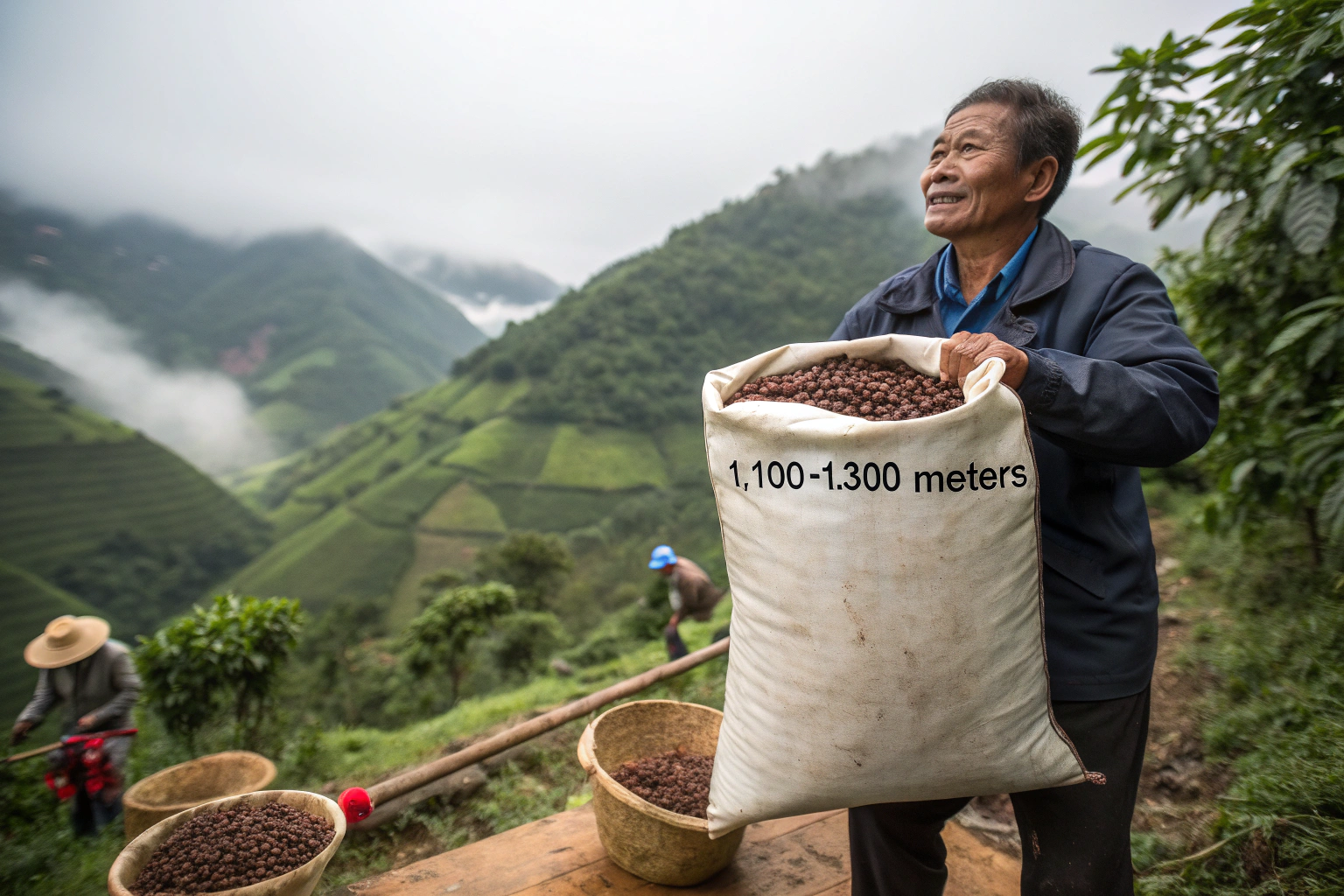
I can't tell you how many times a buyer has asked me this exact question over a cupping table, holding a warm spoon of our washed Arabica. There's this assumption, you know, that high altitude automatically means better coffee. It's like a shortcut in people's minds. And I get it. For years, the specialty coffee world has drilled into us that "elevation equals quality." But then I've seen buyers dismiss a perfectly incredible 1,100-meter lot just because the number didn't match their mental checklist. That's the problem. You could be missing out on exceptional, stable coffee because of a rule of thumb that doesn't tell the whole story, especially in a unique origin like Yunnan.
Yes, high-altitude Yunnan coffee beans grown above 1,400 meters generally develop a more complex and bright flavor profile—think distinct fruity acidity, floral notes, and a lighter body. But "better" is subjective. For many roasters, the rich, chocolatey, and nutty profile of our 1,100-1,300 meter Arabica is actually a superior and more cost-effective choice for espresso blends, proving that the right altitude depends entirely on your target flavor goal.
So, if the answer isn't a simple "yes," how do we figure out what's best for your blend? What does altitude actually do to the bean, and what should a buyer like you look for when comparing Yunnan lots? Let's break this down, not with textbook theories, but with what we actually see on our farms in Baoshan every harvest.
What Does Coffee Altitude Do to the Bean's Physical Structure?
You know, a detail people often miss is that altitude changes the bean's physical density before it even touches the flavor. We had a client from Seattle last year who only bought "strictly hard bean" coffee. In his mind, a dense bean automatically meant a better bean. We did a blind cupping with him. He chose a slightly lower-altitude lot, not our highest. He was shocked. The point is, the physical structure is a signpost, not the destination.
Coffee grown at higher altitudes in Yunnan, specifically between 1,200 and 1,600 meters, develops into a denser, "strictly hard" bean with a tighter center cut and more concentrated sugars. This happens because cooler nighttime temperatures slow the cherry's maturation, giving the plant more time to pump complex sugars and nutrients into the seed, directly impacting how it roasts and tastes.
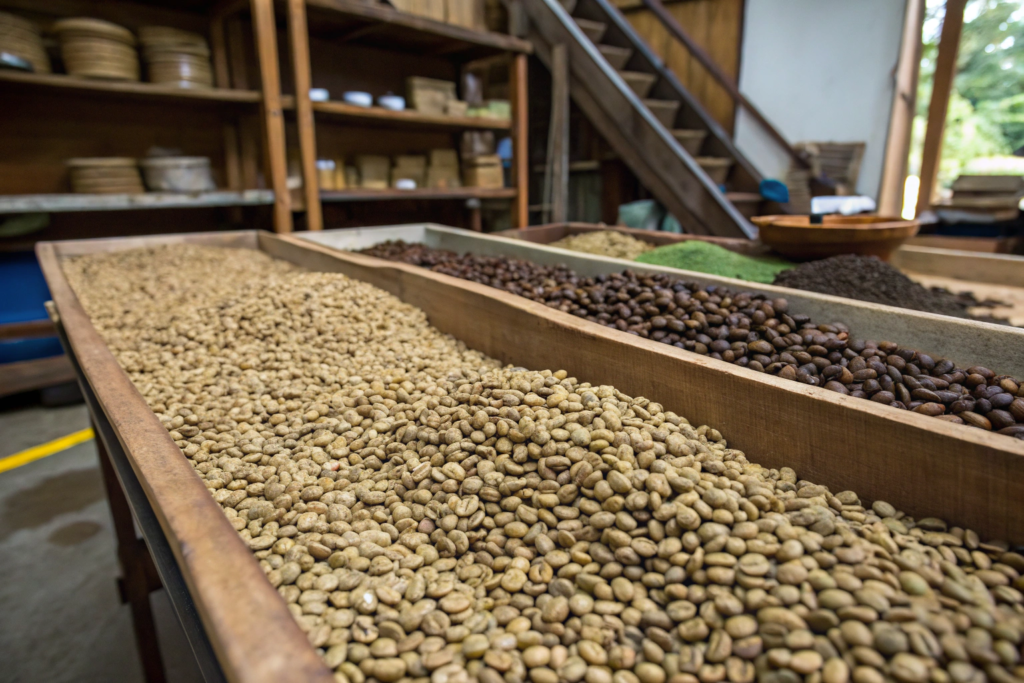
Another way to look at this is by comparing the beans side-by-side on our sorting table. A low-grown Catimor bean looks puffier, opens up easier under the roaster's heat. A high-grown bean is compact, almost like a tiny pebble. This isn't just a fun fact for farmers—it means you have to adjust your roast profile. For a roaster, mistaking one for the other can mean the difference between a flat, baked batch and a lively, dynamic one.
Why does a denser high-altitude bean require different roasting techniques?
A denser bean is like a tough cut of meat. You can't just blast it with high heat and expect a perfect result. It needs more energy at the start to penetrate through to the core, where all the sugars are. If you roast it too fast, you'll scorch the outside before the inside is developed, and you'll get grassy, astringent flavors. We learned this the hard way years ago when we sent samples to a roaster in Melbourne. He used his standard Brazil profile and called me, frustrated, saying the beans were "hollow." He dropped the charge temperature and extended the drying phase. Suddenly, the caramel sweetness burst open. It was a simple adjustment, but it made all the difference. You can look up the science behind bean development on the Roast Magazine article on heat transfer, which explains these fundamentals well. Also, the Cropster roasting blog offers practical profile guides for high-density coffees.
What is the visual difference between low and high-grown Yunnan beans?
Honestly, I can walk into our warehouse and usually tell you the altitude of a lot just by looking at a handful of green beans. Lower-grown beans, those under 1,100 meters, tend to have a more open center cut, almost like a line that's spread apart. They're also slightly paler green. The high-grown ones? The center cut is a tight, zigzag line, pressed together like a zipper. The color is deep jade or even slightly blue-green. When we cup, we keep these physical samples next to the bowls. It's a quick visual check that connects what you see to what you're tasting. I've noticed that beans from our plots at 1,500 meters are also physically smaller and more uniform, which makes roasting them a dream because the heat transfers so evenly through the batch.
How Does Yunnan's Latitude Change Altitude's Impact on Flavor?
Now, this is the part where the "high altitude equals better" rule completely falls apart, especially if you just copy what you know about Colombian coffee and paste it onto China. We are not in Colombia. We are not even in Ethiopia. We are in Baoshan, which sits on a completely different line around the planet. You can't just compare altitude numbers without this context, or you'll make the wrong buying decision.
Because Yunnan's coffee belt sits at the relatively high latitude of 25 degrees North—well outside the typical equatorial coffee zone—the cooling effect we associate with high altitude kicks in at much lower elevations. A 1,200-meter farm in Baoshan can experience the same average temperature and slow cherry maturation as a 1,600-meter farm in Colombia, fundamentally resetting how a buyer should interpret altitude numbers from our region.
What does this mean for you practically? It means our 1,400-meter coffee drinks like a much higher-grown bean from another origin. I've had Q-graders guess our altitude is way higher than it actually is, just based on the cup's brightness. This is one of Yunnan's hidden superpowers. A lot of the complexity you'd pay a huge premium for in a super-high-altitude Central American lot is available to us at a more accessible farming elevation, which directly translates to a better price for you.
How does the Tropic of Cancer's position create a unique Yunnan microclimate?
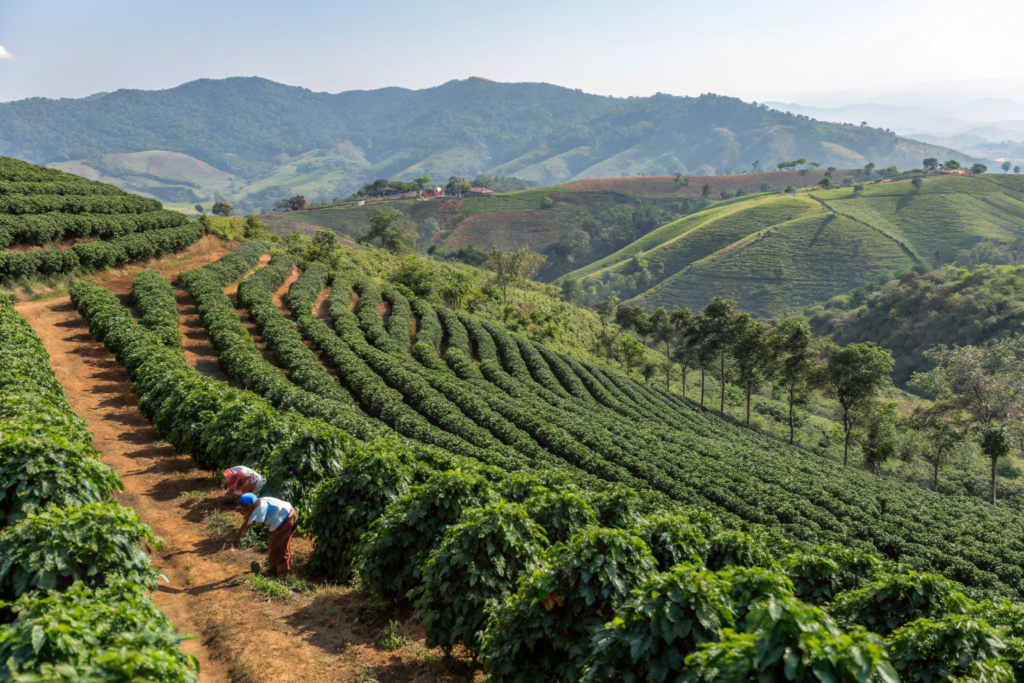
We're just a tiny bit south of the Tropic of Cancer, which means our farms catch a unique angle of sunlight. The seasons are super distinct here—a wet, hot monsoon summer and a dry, cool winter that perfectly overlaps with our harvest. You can find detailed climate analysis for specialty coffee regions on the World Coffee Research climate portal, which shows how these factors play out globally. A personal example: I remember a particularly slow maturation in late 2024 because our winter was cooler than usual. The cherries on our 1,600-meter plot were still being harvested in late February, almost a month late. That extra time on the tree, without the high heat, concentrated so much sugar in the bean. The resulting cup had an almost syrupy body and a distinct brown sugar note. An event like that, born from our specific place on the map, is something you just can't replicate with a textbook altitude chart.
Why can't you directly compare Yunnan and Colombian altitude numbers?
An old client of mine, an importer from Hamburg, put it best. He called Baoshan a "reverse-engineered origin." He meant that to understand our coffee, you have to throw out your existing altitude playbook and start fresh. A strictly high-grown Colombian from 1,800 meters and our top plot at 1,600 meters can sit next to each other in a blind cupping and share an incredibly similar brightness and malic acidity. But the soil, the varietal, the latitude—it's all a completely different puzzle that leads to the same beautiful picture. A roaster who only buys on the number "1,800 meters" would miss out on a stunning, equivalent-quality lot from us at 1,600 meters that's probably 20% cheaper. That's why working with a transparent supplier like Shanghai Fumao matters; we can explain the "why" behind the cup quality, not just the number on the spec sheet.
Can Lower-Altitude Yunnan Beans Still Achieve Specialty-Grade Status?
There is a real stigma, and it honestly works in our favor. Because the market has a bias against it, lower-altitude specialty coffee can be a massive undervalued asset for smart buyers. One of the best blends I ever helped create for a roaster in Canada was built on a foundation of an 82-point Catimor from an 1,100-meter farm. It wasn't the star of the show in a single-origin pour-over, but it was the solid, reliable, and delicious backbone that made their house espresso blend profitable.
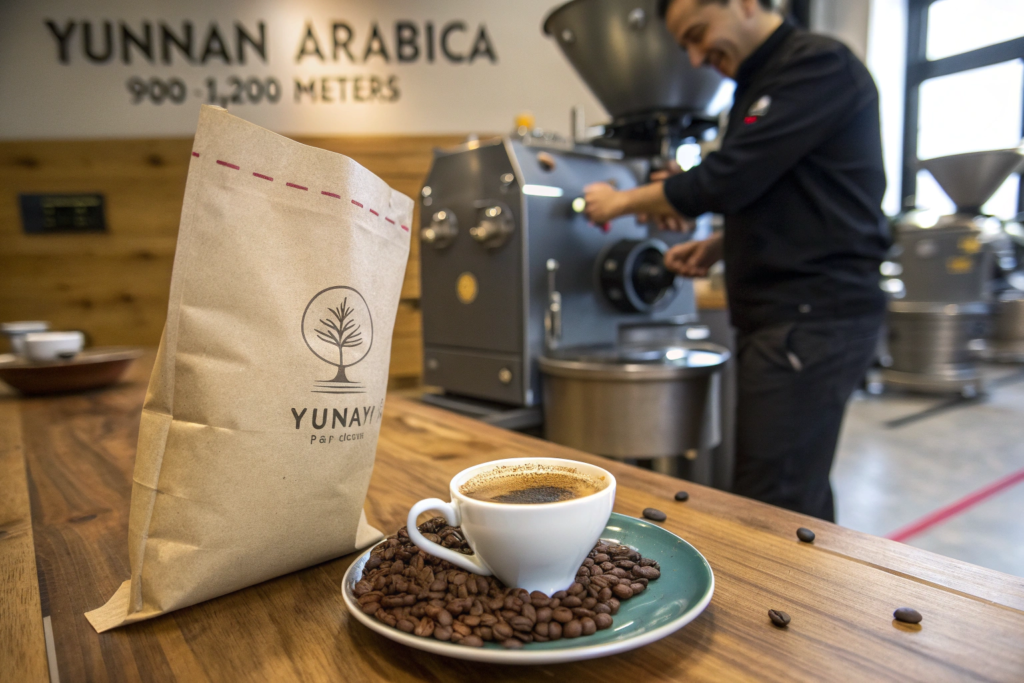
Absolutely. While they present a different cup profile, lower-altitude Yunnan Arabica beans grown between 900 and 1,200 meters can easily score 80-83 points on the SCA scale. They deliver a clean, balanced cup dominated by nuts, dark chocolate, and caramel, often with a much heavier body. For a roaster, this makes them the perfect, consistent base for a high-volume, high-satisfaction espresso blend, and a far more reliable choice than a finicky, overly acidic high-altitude lot.
The trick here is all in the processing. At lower altitudes, you're not fighting to preserve that delicate floral note; you're trying to enhance a deep, comfortable sweetness. I always tell my team, "Don't try to make this bean dance. Let it sing the slow, rich song it's good at." So we use a specific approach.
What processing methods can elevate a lower-altitude Yunnan coffee?
For our lower-grown lots, we avoid high-fermentation experiments like anaerobic maceration. That's like putting heavy makeup on someone who's already naturally beautiful in a different way. We find that a meticulous, fully washed process is the secret. It gives a clarity that polishes the chocolate and nut notes to a shine. A well-executed honey process, though, can be magic here, injecting an extra layer of syrupy body and a deeper caramelized sugar sweetness. We've had great success with our Yellow Honey Catimor, which is consistently one of our most popular lots for clients across Europe and Australia who value its consistency.
What cupping profile defines a great low-grown Yunnan Arabica?
When you cup a great low-grown Yunnan, you should think of a comforting slice of toasted brown bread slathered in melted dark chocolate and butter. It's simple, but if any element is off, it falls apart. If the cup is dusty or has a hint of raw potato, it's a clear sign of poor sorting or drying. The balance of the roasting is another key factor—a gentle approach often yields the best results. Finding a competent wholesaler involves careful evaluation. I often advise buyers to look for how to evaluate a coffee wholesaler to ensure they're getting the best quality. On the other hand, if it's perfectly clean with that rich, nutty-chocolatey core, you've struck gold. This is the coffee that a customer drinks every single morning, never gets tired of, and never quite places why it's so good. It doesn't scream for attention. It just delivers a perfect, satisfying experience, cup after cup. That reliability is more valuable than the latest 88-point, 40-dollar-a-pound micro-lot.
What Altitude Range Should You Choose for Your Specific Roasting Goals?
So, we've looked at the physical bean, the latitude, and the potential at different heights. Now, let's get practical. You're a buyer with a specific need. How do you match a number on an altitude range to a real flavor in a bag? I've simplified this based on what I tell our new wholesale clients when they visit. There's no one-size-fits-all answer, but there is a framework.
For bright, complex single origins ideal for filter coffee, you should target Yunnan lots grown above 1,400 meters. For rich, heavy-bodied espresso bases that offer sweet, nutty consistency, lots between 1,100 and 1,300 meters are your sweet spot. And for an all-purpose workhorse that offers a bit of both and a great price point, a flexible blend from the 1,200-1,400 meter range is the most versatile and profitable choice a roaster can make.
I remember cupping a new experimental lot from our 1,550-meter farm with a visitor from Tokyo. It was all white flowers and green apple, and he was ecstatic. Then I poured him our core blend from a 1,200-meter lot—just dark chocolate, roasted nuts, and a hint of spice. He paused, looked at me, and said, "This one will pay the bills." That's the kind of honest, business-focused thinking I appreciate.
Which altitude is best for an espresso base: high, mid, or low?
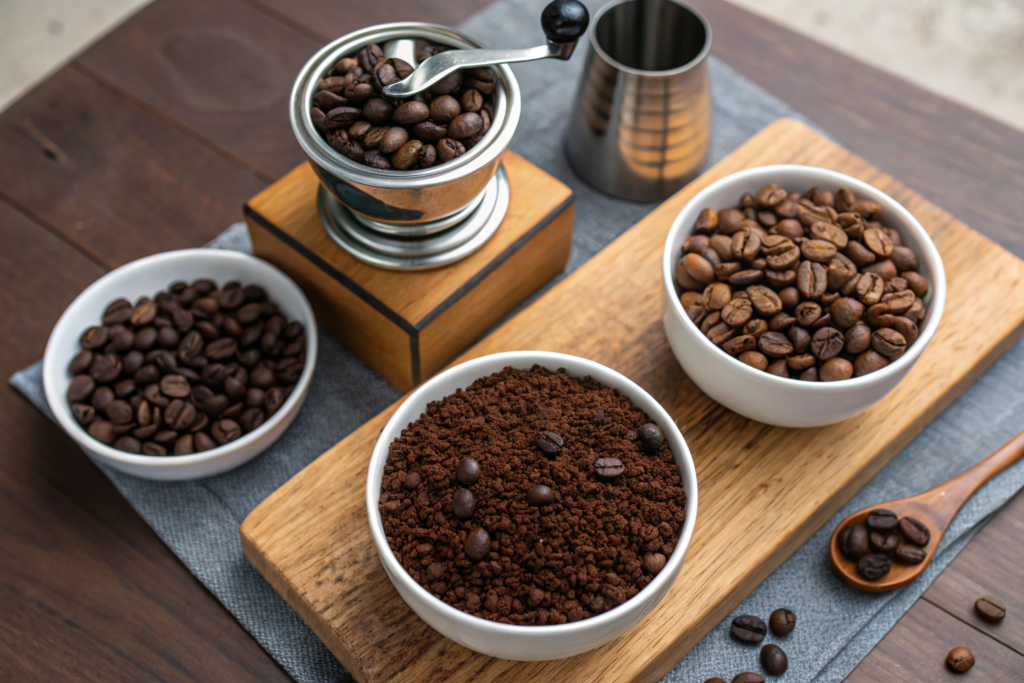
Stop paying extra for acidity you're just going to burn off in the roast. That's the single most common money-saving conversation I have with espresso roasters. A mid-range lot gives you body, sweetness, and acts like a sponge, absorbing milk beautifully. When roasted to a medium or medium-dark profile, the inherent sweetness of a 1,200-meter bean creates a classic "coffee" flavor that customers expect. Our top-selling product for this exact application is our Yunnan Arabica Green Coffee Beans for Espresso, precisely because it was designed for this purpose. If you use an ultra-high-grown, dense, acidic bean as your base, you have to roast it darker to tame it. At that point, you've killed the very aromatics you paid a premium for and are left with a sharp, hollow-tasting shot. It's a lose-lose.
Is a blended altitude lot more consistent for year-round supply?
Yes. This is a strategy we specifically use for our larger chain clients. Relying on a single micro-lot from one altitude is a romance, not a business plan. That lot will run out. If your flagship blend suddenly changes character mid-year, your customers will notice. By understanding the flavor attributes that different altitudes provide, we can create a consistent profile. We may blend a bright, acidic 1,500-meter component with a chocolatey, nutty 1,100-meter base. As one lot finishes, we can substitute another lot of a similar profile from our vast 10,000-acre inventory, completely behind the scenes, so the blend you receive in your November order tastes exactly like the one you loved in April. Shanghai Fumao has the scale and land base to do this because we're not buying from a hundred different smallholders. We're managing a huge, integrated estate.
Conclusion
So, are high-altitude Yunnan beans better? The real answer is they're different, and "better" is a word that belongs to your specific customer's cup, not a marketing sheet. The altitude is a tool. A high-grown lot from our Baoshan farms gives you the complex, bright, high-scoring notes that make a filter coffee stand out. But a beautifully sorted, mid-altitude lot processed well can be the reliable, sweet, chocolatey, and cost-effective foundation of a business that lasts. The latitude of Yunnan means our "mid" is closer to other regions' "high," giving you a hidden advantage either way.
What I want you to take away is this: don't buy altitude. Buy flavor. Buy a partner who can guide you to the right mountain, the right lot, and the right blend for the very specific taste and price you need. If you're building a year-round blend and want to lock in a stable, quality supply from the source, let's talk specifics. Reach out to our team. Cathy Cai can walk you through our available lots, altitude profiles, and shipping schedules and get samples moving to you. Contact her directly at cathy@beanofcoffee.com. We're not just about one good lot; we're about building a reliable coffee story for your brand.