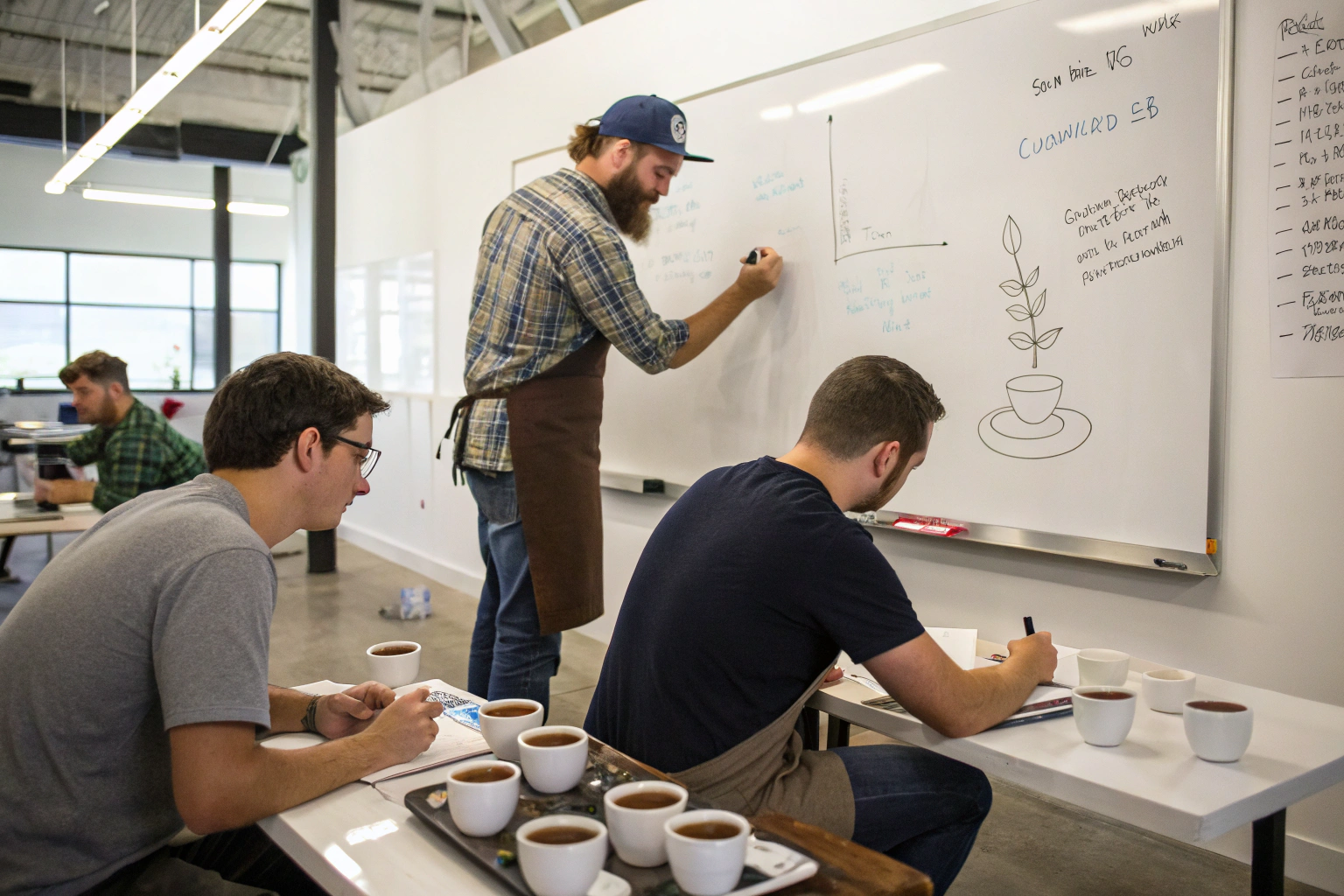
You have a problem. You have sourced incredible coffee. You have a beautiful brand. Your roasting is on point. But when your sales team picks up the phone or walks into a cafe, they sound like everyone else. "Hey, we have great coffee. Good quality. Fair prices. Want to try some?" The cafe owner nods politely and takes the sample, which then sits on a shelf for three weeks. Your team is frustrated. You are watching potential accounts slip away. The coffee is not the problem. The story is. The connection is. The training is.
Selling specialty coffee is not like selling paper clips or software. You are not pushing a commodity. You are offering a partnership, an experience, and a narrative that will live on a menu and be served to hundreds of people. Your sales team needs to be fluent in the language of flavor, the economics of a cafe's margin, and the emotional storytelling that makes a brand unforgettable. They need to stop being order-takers and become trusted advisors. When a salesperson truly understands the product and the customer's business, they don't just close a deal. They open a long-term relationship.
At Shanghai Fumao, we work directly with roasters who are re-selling our coffee. We have seen the difference between a sales pitch that falls flat and one that wins a contract. The winning pitch is built on deep education, sensory passion, and a genuine desire to solve a cafe's problems. It is a skill that can be taught. Let me share the framework for transforming your sales team from coffee sellers into specialty ambassadors.
How Does Deep Product Education Transform a Sales Pitch?
A generic sales pitch is fragile. A single tough question can shatter it. "Is this coffee Rainforest Alliance certified?" "What's the screen size?" "Why does it taste a little earthy?" If your salesperson hesitates or fumbles, they lose all credibility instantly. The cafe owner thinks, "This person doesn't really know their product." The deal is dead. Deep product education transforms a salesperson from a messenger into an expert. They know the coffee's history, its processing, its chemical makeup, and its ideal brewing parameters. They can answer questions with confidence and curiosity.
This education starts at the farm level. Your team should understand the journey of a bean from our Baoshan terraces to the roastery. They should know the difference between a washed and a honey process. They should understand the impact of altitude on density. This knowledge is not just for trivia. It becomes the raw material for a compelling conversation. When a cafe owner asks about the coffee's body, an educated salesperson doesn't just say, "It's heavy." They say, "The heavy, syrupy body comes from the high-altitude slow maturation in the Gaoligong Mountains. It makes the espresso incredibly creamy without any bitterness." That specific, vivid description paints a picture. It sells the experience, not just the bean. The product education makes the sales pitch rich, textured, and bulletproof. It transforms the salesperson into a credible source of valuable information.
What Are the Key Sensory Words That Sell Premium Coffee?
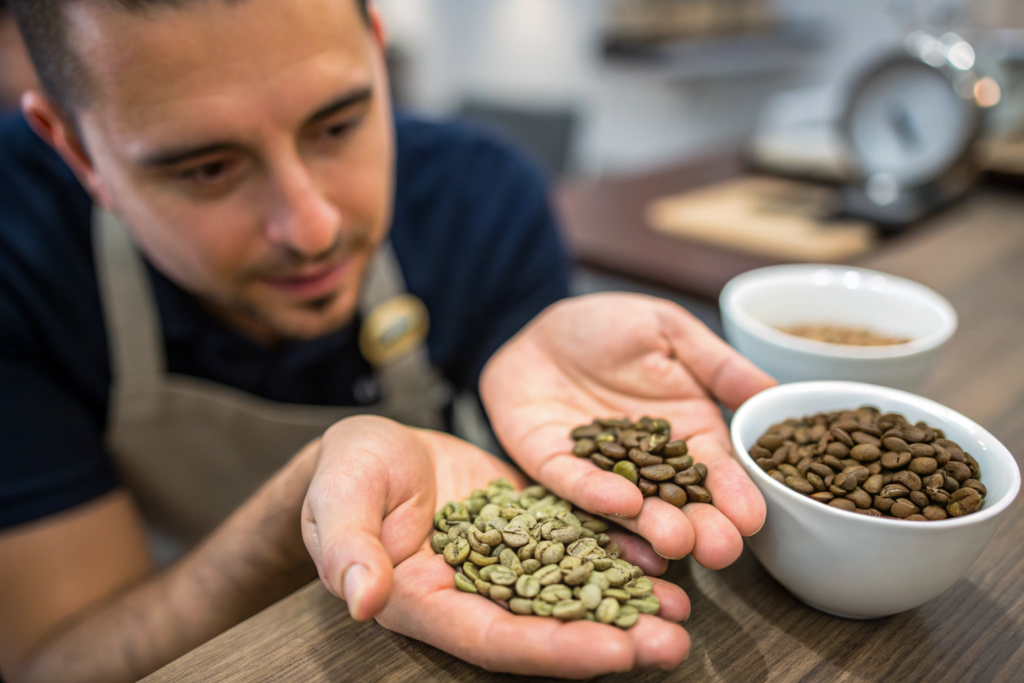
"Good" and "smooth" are dead words. They mean nothing. They apply to gas station coffee. Specialty sales require a precise, evocative sensory vocabulary. Your sales team needs a shared language of flavor that they can use consistently. They should be trained on a simplified flavor wheel, focusing on the categories that resonate most with customers: sweetness, body, acidity, and finish. Instead of "fruity," they say "notes of dried plum and dark cherry." Instead of "strong," they say "a velvety, heavy body that coats the tongue."
The best sensory words connect the flavor to a positive, familiar memory. "This espresso has a finish like dark cacao nibs." "The aroma is like walking into a bakery early in the morning." These words trigger emotional and sensory associations. The customer's brain fills in the gaps and craves the experience. This vocabulary must be practiced. Not just read from a sheet, but spoken aloud in team cupping sessions. "I taste toasted hazelnut. What do you taste?" The team calibrates their palates and their language together. This creates a confident, unified brand voice in the field. When a salesperson describes a coffee as having a "rich, syrupy mouthfeel with a long, clean finish of black tea and honey," they are not just describing a coffee. They are demonstrating mastery. Mastery commands respect. Respect closes deals.
Why Should Salespeople Learn the Roasting Process Basics?
A cafe owner's primary tool is their espresso machine. Their second is their grinder. Their third, and often most mysterious, is their roaster. If your salesperson does not understand basic roasting, they cannot effectively talk to a roaster or a cafe owner who roasts. Learning the basics—the drying phase, the Maillard reaction, the development time, first and second crack—gives your salesperson superpowers. They can discuss how your green coffee will react in the drum. They can suggest ideal roast profiles. They become a technical resource, not just a catalog presenter.
Imagine a cafe owner struggling with a sour espresso from a high-acid coffee. An uneducated salesperson says, "Grind finer." An educated salesperson says, "This coffee has a bright, malic acidity. To tame that into a balanced, sweeter shot, you might try extending your development time by 30 seconds after first crack. That will round out the acidity and bring the chocolate notes forward." The cafe owner's jaw drops. This person understands their problem. They are a partner, not a vendor. This technical credibility is rare and immensely valuable. It deepens the relationship and makes your coffee an integral part of the cafe's solution, not just another bag on the shelf.
How to Teach the "Value Conversation" Instead of a Price Conversation?
The most dangerous question in sales is, "How much is it per pound?" An untrained salesperson answers it directly. "$8.50." The conversation is now about a number, and the number is always too high. A trained salesperson never answers the price question in isolation. They reframe it as a value conversation. They pivot the discussion from cost to return on investment. The goal is to lead with the cafe's profit, not your price.
The script is simple and powerful. The cafe owner asks for the price. Your salesperson says, "I can share the cost, but first, let's quickly look at how this coffee can actually increase your drink sales and your average ticket. Our Yunnan single-origin has a unique, tea-like finish that customers can't find anywhere else. Cafes that feature it as a 'Limited Discovery Series' report a 15% increase in espresso drink sales during the promotion. Let's talk about how that would look on your menu." The price objection is neutralized before it even arrives. The conversation is now about the cafe owner's business goals. The cost of the coffee is framed against the revenue it generates. The salesperson has shifted the entire frame from expense to investment. This skill is the difference between a low-margin vendor and a high-value strategic partner.
How to Calculate and Present a Cafe's Margin Improvement?
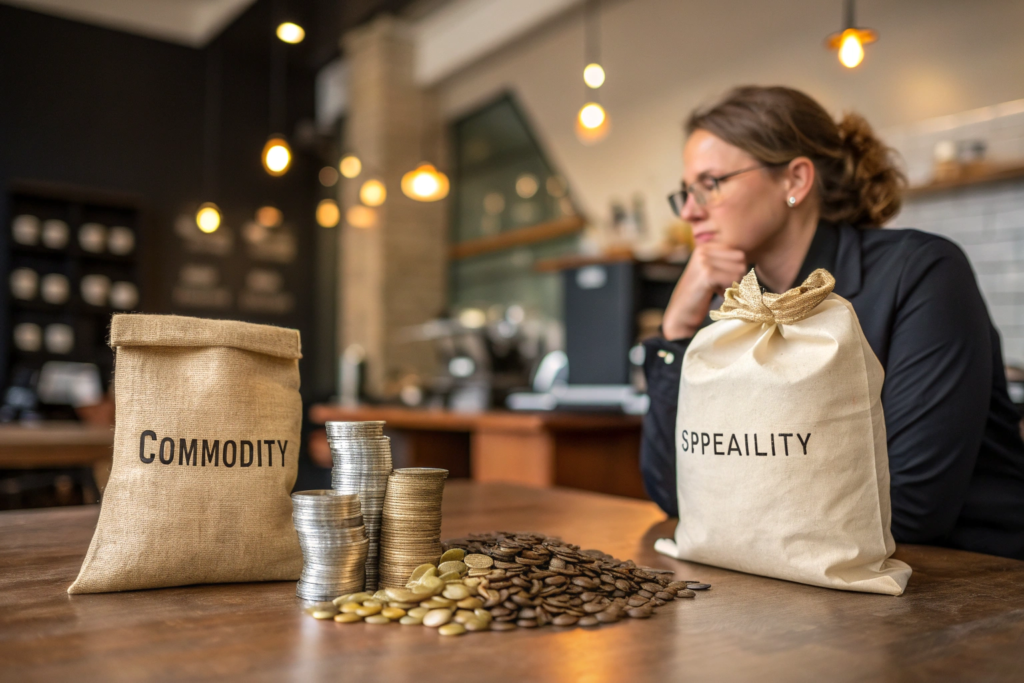
Abstract promises are weak. Concrete math is powerful. Your sales team should be able to do a simple, back-of-the-napkin margin calculation for a cafe owner. They should know the rough cost of a double shot of espresso from your coffee and the average retail price of a latte. "Your cost for a double shot is about 45 cents with our coffee. The typical specialty latte in this neighborhood sells for $5.50. That is a drink margin that's hard to beat. And because our coffee has such a rich, chocolatey body, it stands up beautifully in milk, which reduces the chance of customer complaints and returns."
Train your team to present a simple comparison table. "Commodity Coffee Cost Per Drink vs. Our Specialty Coffee Cost Per Drink vs. Retail Price." The numbers speak loudly. The commodity coffee might save the cafe 10 cents per drink. But it costs them in customer satisfaction and brand prestige. The specialty coffee costs slightly more but sells for a higher price and builds a better reputation. The salesperson is not just talking about coffee. They are talking about the cafe's profitability and brand equity. This makes them a consultant. A consultant's advice is trusted. A trusted advisor earns a recurring order. The Specialty Coffee Association's research on coffee shop profitability provides excellent data points to ground these conversations in industry reality.
What Is the Best Response to "Your Coffee Is Too Expensive"?
This is not a rejection. It is a request for more information. An untrained salesperson gets defensive. "But it's worth it!" A trained salesperson agrees and reframes. "You're right, it is a premium-priced coffee. And there's a reason for that. Can I show you?" The salesperson then walks through the three pillars of value. The quality: "This is an 85-point single-origin from a single estate in Yunnan." The ethics: "We buy directly from the farm, which ensures the farmer is paid fairly and the quality is exceptional." The exclusivity: "You are the only cafe in a five-mile radius we are offering this to."
This response validates the customer's concern, which builds rapport, and then systematically dismantles it by replacing a generic price concern with specific, tangible value. The goal is not to justify a price. It is to educate on value. The customer might still not buy. But they will respect the salesperson and remember the value proposition. Often, the objection is a test. The cafe owner is seeing if the salesperson believes in their product. A calm, confident, value-driven response passes the test. The conversation stays alive, and the door stays open.
How to Use Origin Stories to Build Emotional Connection and Close Deals?
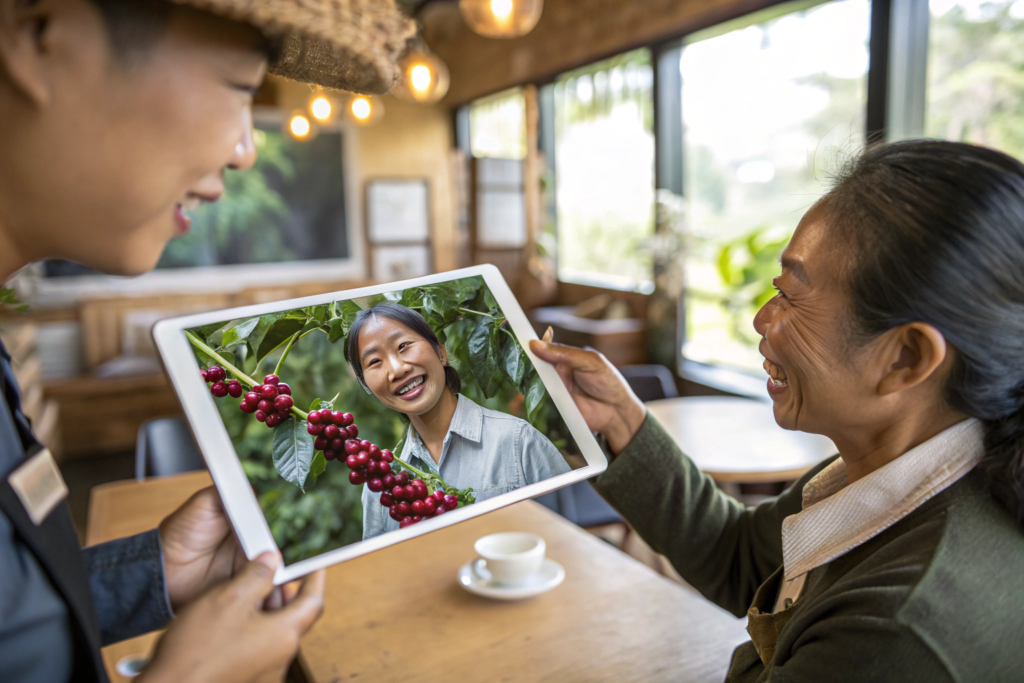
Facts tell. Stories sell. A spec sheet of altitude, varietal, and cupping score is quickly forgotten. A story about a person and a place is remembered. Your sales team's secret weapon is the origin story of your coffee. It transforms the product from a commodity into a character. When we ship our coffee to a roaster, we provide a complete story kit. Photos of the farm. A profile of the farmer. A narrative of the harvest. Your sales team can use this to bring the cafe owner to the mountains of Yunnan.
The storytelling script is cinematic. "The farmer who grew this coffee, Lao Li, wakes up at 4 a.m. He walks through the mist to his terraces on the Gaoligong Mountain. His family has farmed this land for six generations. They used to grow tea for the ancient Tea Horse Road. Now, they grow this incredible coffee. The same hands that once picked tea leaves are now picking these cherries. You can taste that history in the cup. It's a privilege to serve it." This story is not a gimmick. It is a genuine connection to a human being and a legacy. It makes the cafe owner feel something. They are not just buying a product. They are becoming part of a story. Their customers will become part of it, too. An emotional purchase is a stickier purchase. It is less price-sensitive. It creates brand loyalty. A sales team armed with authentic stories is an unstoppable force.
What Story Elements Create a Memorable "Signature Drink" Pitch?
A signature drink is a cash cow for a cafe. It increases average ticket size and creates Instagram buzz. Your sales team can pitch a specific signature drink built around your coffee's unique flavor profile. The pitch is not, "You could make a latte with this." It is, "Because this Yunnan coffee has a distinct dark chocolate and black tea finish, you can create an incredible signature drink. We call it 'The Silk Road Latte.' A double shot of our espresso, steamed oat milk, and a touch of wildflower honey. The honey brings out the tea note, and the oat milk creates a silky, luxurious texture. It tastes like nothing else in the city."
This pitch provides a complete, ready-made marketing package. The cafe owner doesn't have to invent anything. They just have to execute. The story, the name, the recipe—it is all there. This drastically lowers the barrier to saying "yes." It makes your coffee the key ingredient in an exciting new revenue stream. The signature drink pitch is a demonstration of partnership. You are not just selling beans. You are helping the cafe create a hit product. This collaborative, creative approach builds an incredibly strong bond and makes your coffee an irreplaceable part of their menu.
How to Use "Discovery" Framing to Sell New Origins?
"New" is a powerful psychological trigger. But it can also be a risk. A cafe owner might fear that a new, unfamiliar origin like China will be a hard sell to their customers. Your sales team must frame the origin not as a risk, but as a discovery. A chance for the cafe to be a trendsetter. The pitch is, "Your customers trust you. They come here for an experience they can't get at home or at the chain down the street. This Yunnan coffee is a discovery story. It's from the ancient tea mountains. No other cafe in town is serving this. You will be the first. You can tell your customers, 'We just found this incredible coffee from China. You have to try it.' That makes you a hero to them."
This taps into the cafe owner's desire for differentiation. They want to stand out. They want to be known as the place that finds the cool stuff. You are giving them the tools to do that. You are also providing the training for their baristas. The salesperson can offer a five-minute training session on the origin story, the tasting notes, and the perfect language to use with customers. This complete support package de-risks the new origin. It makes the cafe owner feel confident and excited to sell the coffee. The discovery frame turns a potential objection into a primary reason to buy.
Conclusion
Training your sales team to sell specialty coffee better is the highest-leverage investment you can make. It transforms your sales force from a cost center into a value-creation engine. The key is to move them beyond the price list and the product catalog. Educate them deeply on the product, so they become experts. Teach them the value conversation, so they become business consultants. And arm them with authentic origin stories, so they become brand ambassadors. A salesperson with these skills doesn't just push coffee. They build partnerships.
We have walked through the sensory vocabulary, the margin mathematics, the art of the origin story, and the signature drink pitch. These are not abstract theories. They are practical, trainable skills. They can be practiced in your cupping lab, role-played in your weekly sales meetings, and refined in the field. The outcome is a team that approaches every customer interaction with curiosity, confidence, and a genuine desire to help. The coffee you source from us deserves this level of representation. It is world-class. Your sales team should be, too.
If you want to build your sales team's expertise around a truly distinctive origin, let us provide the raw material. We can supply the green coffee, the farm story, and the educational assets to power your team's new sales approach. Contact our export director, Cathy Cai, at cathy@beanofcoffee.com. She can send you a sample kit and a full brand story package. Let's equip your team to tell a story that sells.