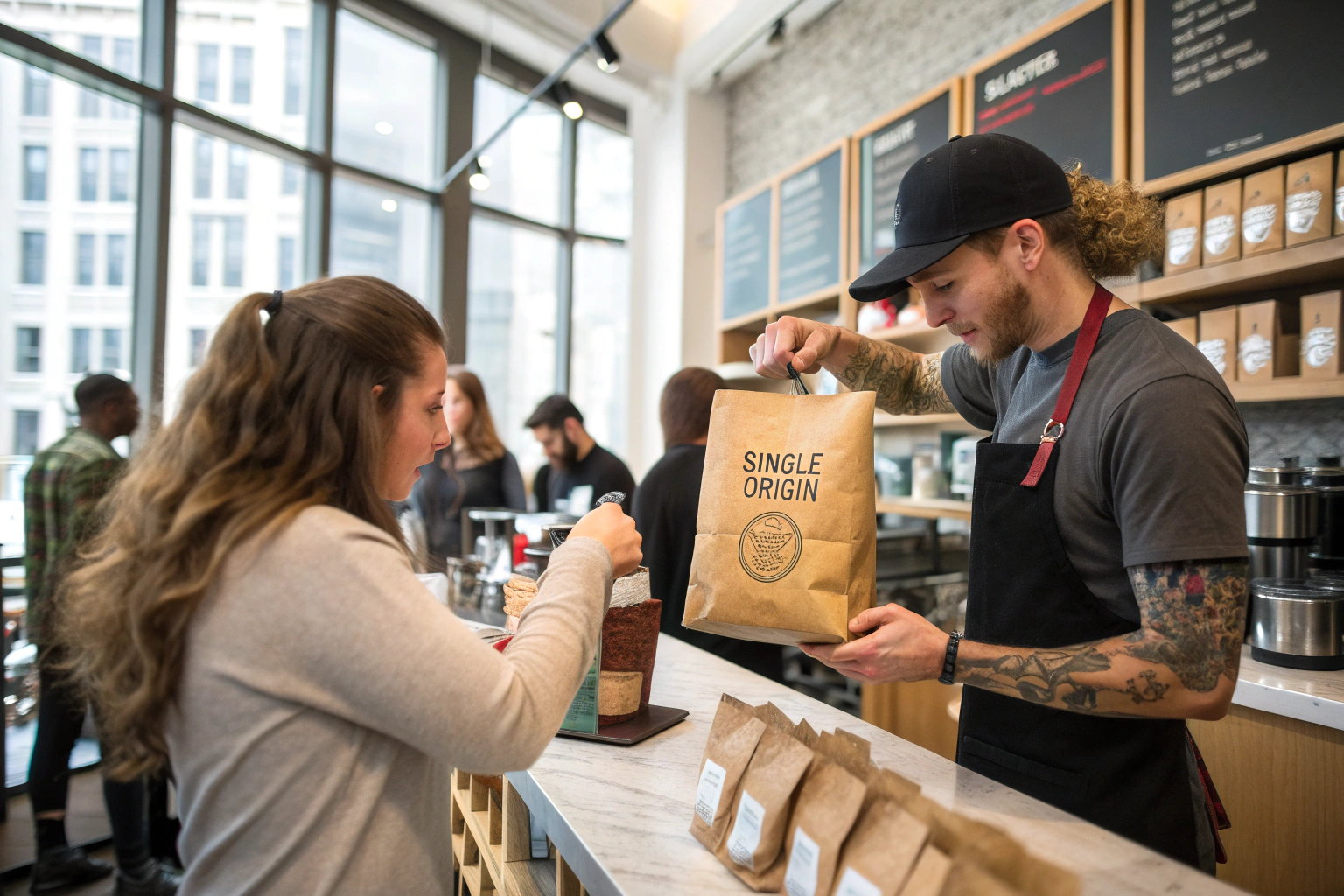
At a trade show in Seattle last year, a roaster from Denver pointed to my cupping table. "Your washed Catimor is great," he said. "But if I buy it, I am taking it to a medium roast. My customers do not want light roast acidity and they do not want dark roast bitterness. They want something in the middle. Something balanced. That is what sells in my shop."
I hear versions of this from North American buyers constantly. Not all of them. The light roast purists in Portland and San Francisco still want their Nordic-style filter coffees. The dark roast traditionalists in certain markets still want their bold, smoky cups. But the broad center of the market—the specialty cafés, the grocery chains, the direct-to-consumer subscription services—has settled on medium roast as the default. And understanding why matters for anyone sourcing green coffee for the North American market.
Medium roast coffee is the dominant roast level in North America because it offers a widely accessible balance of acidity and body, works across multiple brewing methods from drip to espresso, and aligns with the specialty coffee industry's messaging around "origin character" without the polarizing intensity of light roast acidity or dark roast bitterness.
The trend is not accidental. It is driven by consumer taste preferences, café economics, and the evolution of specialty coffee itself. Let me break down what medium roast actually means, why it dominates North American retail shelves, and what it means for the green coffee you buy and how you roast it.
What Defines a Medium Roast for Specialty Coffee?
Defining roast levels is surprisingly difficult because the terms "light," "medium," and "dark" are used inconsistently across the industry. A medium roast at one roastery might be darker than a dark roast at another. The only objective measures are bean temperature, development time, and color.
In the specialty coffee industry, medium roast is typically defined by the bean temperature at the end of the roast, the timing relative to first and second crack, and the Agtron color reading. First crack is the point where the bean's internal water vapor pressure causes the bean to pop audibly. Second crack is the point where the bean's cellulose structure begins to break down and oils migrate to the surface.
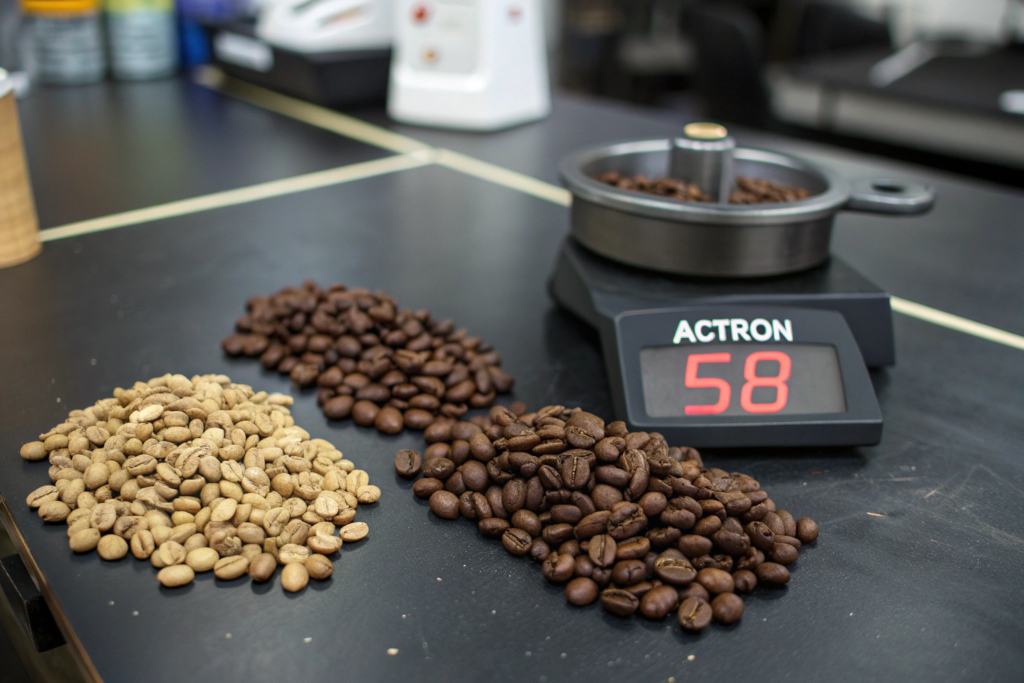
A specialty medium roast is dropped after first crack has fully completed but before second crack begins, at a bean temperature between 210 and 220 degrees Celsius, with an Agtron whole-bean color reading between 55 and 65, resulting in a bean that is fully developed with no green or vegetal notes but with no surface oils and no carbonized roast character.
On the Agtron scale, used widely in the specialty industry, whole-bean readings for medium roast fall between 55 and 65. Below 55 is entering medium-dark territory, where roast character starts to dominate origin character. Above 65 is light roast territory, where the bean is fully developed but the acidity is prominent and the body is lighter.
Visually, a medium roast bean is a uniform milk chocolate brown. The surface is mostly smooth, with the center cut slightly opened but not darkened. There are no visible oils on the surface—oils indicate the roast has entered second crack territory. The bean may have faint wrinkles but not the prominent wrinkling of a very light roast. It looks like what most North American consumers picture when they think of "coffee beans."
How Does Medium Roast Differ from Light Roast Chemically?
The chemical difference between a light roast and a medium roast is dramatic. It is not just a matter of "darker brown." The bean's internal chemistry undergoes fundamental transformations as the roast progresses.
In a light roast, dropped shortly after first crack at a bean temperature around 205 degrees Celsius, many of the original green coffee compounds are still present. Chlorogenic acids, which contribute to perceived acidity and astringency, remain at high concentrations. The Maillard reaction—the browning reaction between amino acids and sugars that creates savory, toasty flavors—has only partially occurred. The volatile aromatic compounds that create floral and fruity notes are preserved but the body-forming polysaccharides have not fully broken down.
In a medium roast, dropped between first and second crack at 210 to 220 degrees Celsius, the chemistry has shifted significantly. More chlorogenic acids have degraded, reducing the perception of sharp acidity. The Maillard reaction has progressed further, creating more melanoidins—brown pigments that contribute to body and toasty, chocolatey flavors. Caramelization of sugars has accelerated, producing caramel, butterscotch, and nutty notes. The volatile aromatics are partially diminished compared to a light roast, but the body is heavier and the flavor is more rounded.
The medium roast chemical profile represents a balance point: enough heat to develop body, sweetness, and chocolate-nut Maillard notes, but not so much heat that the origin's volatile florals and fruit acids are completely incinerated.
A dark roast, dropped during or after second crack above 225 degrees Celsius, has lost most of its origin character. The chlorogenic acids are largely degraded. The volatile aromatics are mostly gone. The dominant flavors come from roast chemistry—carbon, smoke, ash, and dark caramel. The body is thinner as oils have migrated to the surface and cell structure has broken down.
For a roaster buying green coffee, the roast level determines which green coffee characteristics survive into the cup. A washed Yunnan Catimor with mild citrus acidity and chocolate notes will taste balanced and pleasant at a medium roast. At a light roast, the citrus might be too sharp for some consumers. At a dark roast, the chocolate and nut notes will be buried under roast character. Medium roast hits the sweet spot where the origin character is expressed but balanced.
What Brewing Methods Favor Medium Roast Beans?
One reason medium roast dominates North America is its versatility across brewing methods. North American consumers brew coffee in many ways—drip machines, pour-over cones, French presses, Aeropresses, and increasingly, home espresso machines. A medium roast works acceptably well with all of them.
In a drip machine or batch brewer, the most common brewing method in North American homes and offices, medium roast extracts evenly and produces a balanced cup. Light roast in a drip machine can taste under-extracted and sour because the water temperature and contact time are not optimized for dense, lightly roasted beans. Dark roast can taste bitter and over-extracted. Medium roast is forgiving. It works.
In a pour-over, where the brewer has more control, medium roast allows the origin character to shine through while providing enough body and sweetness to satisfy drinkers who do not want a tea-like light roast. The barista can adjust the recipe to highlight acidity or emphasize body, but the starting point is balanced.
Medium roast's broad compatibility with drip, pour-over, French press, and home espresso equipment makes it the safest and most popular choice for North American roasters serving a diverse customer base with varying brewing setups.
In a French press or Aeropress, medium roast produces a heavy, satisfying cup with more body than a light roast and less bitterness than a dark roast. The immersion brewing method extracts fully, and the medium roast's developed sugars contribute sweetness and weight.
In a home espresso machine, which has limited temperature and pressure stability compared to commercial equipment, medium roast is much easier to dial in than light roast. Light roast espresso requires very fine grinding, high temperatures, and precise pressure profiling to avoid sourness. Medium roast espresso is more forgiving. The shots pull with decent crema and balanced flavor even with imperfect technique.
For a café serving drip coffee to a hundred customers a day, medium roast is the reliable choice. It pleases the broadest range of palates. It does not generate complaints about sourness or bitterness. It tastes like what most North Americans expect coffee to taste like. For more on consumer brewing trends and preferences, the National Coffee Association publishes annual reports on North American coffee consumption habits and preferences.
Why Do North American Consumers Prefer Medium Roast?
Taste is cultural. What a consumer expects coffee to taste like is shaped by what they have drunk their entire life. For most North Americans, that baseline is a medium roast.
The North American coffee palate was formed by decades of mass-market coffee—Folgers, Maxwell House, Dunkin' Donuts. These coffees are roasted to a medium or medium-light level. They are mild, smooth, and inoffensive. They are designed to appeal to the broadest possible audience. Generations of North Americans grew up drinking this profile. It is what "coffee" tastes like in their sensory memory.
When these consumers graduate to specialty coffee, they are not looking for a radical departure. They are looking for a better version of what they already know. A medium roast specialty single origin offers exactly that—familiar comfort with elevated quality. The roast level feels right. The flavors are recognizable. The experience is improved but not alien.
North American consumer preference for medium roast is deeply rooted in the flavor legacy of mass-market coffee brands that established a mild, balanced, low-acidity profile as the cultural baseline for what coffee should taste like.
Light roast, with its intense acidity and tea-like body, tastes wrong to many North American consumers. It does not match their expectation. It tastes "weak" or "sour" or "not like coffee." Dark roast, with its smoky bitterness, also misses the mark for many—though a significant minority of North Americans, particularly in certain regions and demographics, do prefer darker roasts.
Specialty coffee education has shifted some consumers toward lighter roasts over the past decade. The "third wave" movement has introduced many drinkers to the pleasures of bright, acidic, fruit-forward coffees. But the shift has been partial. The light roast enthusiast remains a minority within the broader specialty market. The medium roast drinker is the mainstream.
How Does Medium Roast Balance Acidity for the North American Palate?
Acidity is the most divisive attribute in coffee. North American consumers, as a broad generalization, are more acidity-averse than European or Australasian specialty drinkers. The mass-market coffee baseline is low-acid. The preference carries over into specialty.
Light roast acidity can be intense. A washed Ethiopian with bright citric notes or a Kenyan with sharp malic acidity can be exhilarating to a trained cupper. To an average North American consumer, it can taste sour and unpleasant. The word "sour" carries negative connotations. It suggests spoilage. It triggers rejection.
Medium roast reduces perceived acidity through chemistry. As the roast progresses, chlorogenic acids break down into less acidic compounds. The citric and malic acids partially degrade. The overall pH rises slightly. The sharp edges of the acidity are rounded off. What remains is a pleasant brightness that enlivens the cup without dominating it.
Medium roast mellows the aggressive acidity of high-grown Arabica through thermal degradation of sharp organic acids, transforming potentially polarizing citrus notes into a gentle, palatable brightness that North American consumers experience as "smooth" rather than "sour."
The body increase at medium roast also helps balance acidity. The heavier mouthfeel coats the tongue and softens the perception of sharpness. The same acidity that tastes harsh in a light-bodied cup tastes pleasant in a medium-bodied cup. The texture carries the flavor. North American consumers often describe this as "smooth"—a descriptor that is less about flavor and more about mouthfeel and balance.
For a roaster buying green coffee for the North American market, this means selecting coffees with moderate, pleasant acidity rather than intense, aggressive acidity. Yunnan Catimor, with its mild citric acidity and chocolate base, is an ideal medium roast candidate. It does not need a dark roast to tame harsh acidity. It already sits in the balanced zone. A medium roast brings out its best.
What Role Do Grocery Chains Play in Roast Level Popularity?
Grocery stores are where most North Americans buy their coffee. The specialty café is a minority channel. The grocery aisle is the mass market. And the grocery aisle is dominated by medium roast.
Walk down the coffee aisle of a Whole Foods, a Kroger, or a Safeway. The bags on the shelf are overwhelmingly labeled "Medium Roast" or "Breakfast Blend" or "House Roast"—all of which fall into the medium category. Light roast options exist but are a small section. Dark roast options exist but are also limited. The center of the shelf is medium.
Grocery buyers stock what sells. They have the sales data. They know what moves and what sits. Medium roast moves. It is the safe choice for the consumer who does not want to think too hard about roast level. It is the default. The grocery channel reinforces the medium roast preference by making it the most visible and available option.
The dominance of medium roast offerings on North American grocery shelves both reflects and reinforces consumer preference, creating a feedback loop where medium roast is the default, the expected, and the safe choice for the broadest customer base.
Specialty roasters who sell wholesale to grocery chains must meet the buyer's expectations. The grocery buyer wants a coffee that will sell through quickly. They know medium roast sells. They will allocate more shelf space to medium roast SKUs. The roaster who insists on offering only light roasts may find limited grocery placement.
The direct-to-consumer subscription model has partially bypassed the grocery channel. Subscription roasters can offer a wider range of roast levels because they are targeting a self-selected, more adventurous consumer. But even many subscription roasters default to a medium roast for their core blends and offer light and dark as options. Medium roast remains the anchor.
How Should Importers Select Green Coffee Intended for Medium Roast?
Selecting green coffee for medium roast is different from selecting for light roast or dark roast. The roast level acts as a lens. It magnifies certain green coffee attributes and diminishes others. The importer must understand what survives the roast and what the target customer wants.
For medium roast, the ideal green coffee profile has moderate acidity, good body, and a flavor foundation of chocolate, nut, and caramel notes. Intense, aggressive acidity is wasted on a medium roast because the roast will mute it anyway. Very delicate florals and volatile fruit notes will also be partially lost. What shines at medium roast is balance and sweetness.
Body is important. Medium roast develops body through caramelization and Maillard products, but the green coffee's intrinsic body still matters. A coffee that is naturally heavy-bodied—like a wet-hulled Sumatra or a high-grown Catimor—will carry that body through the roast and deliver a satisfying mouthfeel. A naturally light-bodied coffee may taste thin at medium roast.
The best green coffee for medium roast in the North American market has moderate citric or malic acidity, medium to heavy body, clean processing with no ferment defects, and a flavor base of chocolate, toasted nut, and caramel that is enhanced by the Maillard reaction during roasting.
Our washed Yunnan Catimor is purpose-built for this profile. The acidity is mild citric—pleasant but not aggressive. The body is medium-heavy and syrupy. The flavor base is dark chocolate and roasted almond. At a medium roast, these characteristics are amplified. The acidity provides brightness without sharpness. The body provides satisfaction without heaviness. The chocolate and nut notes provide familiarity and comfort.
For more on matching green coffee profiles to roast levels, the Specialty Coffee Association publishes cupping protocols and sensory lexicons that help buyers and roasters communicate about flavor attributes.

Which Origins Naturally Suit a Medium Roast Profile?
Not all origins perform equally well at medium roast. Some origins shine brightest at light roast. Some need dark roast to tame harshness. Some are naturally balanced at medium roast from the start.
Latin American washed coffees—Colombia, Guatemala, Costa Rica—are classic medium roast candidates. They have bright but balanced acidity, medium body, and clean flavors. At medium roast, they produce a classic "breakfast blend" profile that North American consumers love. The acidity is present but smooth. The chocolate and nut notes are developed. The body is satisfying.
Brazilian naturals are also excellent at medium roast. The naturally low acidity and heavy body of a pulped natural Brazil provide a smooth, chocolatey base. Medium roast develops the sweetness and nuttiness without introducing bitterness. Many North American espresso blends use a medium-roasted Brazil as the foundation.
Indonesian wet-hulled coffees—Sumatra, Sulawesi—are interesting at medium roast. The earthy, spicy, heavy-bodied character is less polarizing at medium roast than at light roast, where the earthiness can taste raw and vegetal. Medium roast tames the wilder notes while preserving the body and spice.
Yunnan washed Arabica sits alongside classic Latin American and Brazilian origins as an ideal medium roast candidate, with its naturally balanced acidity, heavy chocolate body, and clean processing providing a familiar yet distinctive profile for the North American market.
Yunnan Catimor, as I have described, fits this list perfectly. It cups at 82 to 84 points with chocolate, nut, and mild citrus notes. It is clean. It is balanced. It is not extreme in any direction. At medium roast, it produces a coffee that tastes like what North American consumers expect specialty coffee to taste like—smooth, rich, and satisfying.
How Does Altitude Influence Medium Roast Performance?
Altitude affects how a coffee roasts and how it tastes at different roast levels. High-grown coffees—those above 1,500 meters—are denser and have higher acidity. Low-grown coffees are softer and less acidic. The medium roast window shifts depending on the green density.
High-grown dense beans require more thermal energy to roast evenly. The roast profile for a high-grown Catimor at medium roast needs a higher charge temperature and a longer development time than the same profile for a lower-grown bean. If the roaster does not adjust, the dense bean may be underdeveloped inside at a medium roast color, tasting grassy and sour.
But when roasted correctly, high-grown beans at medium roast produce a more complex cup than low-grown beans. The preserved organic acids add brightness and dimension. The dense structure produces a more even roast. The sugar browning is more controlled. The result is a medium roast with depth—chocolate and nut base with a spark of citrus or stone fruit complexity.
Our Baoshan Catimor at 1,500 to 1,600 meters is at the upper end of the density spectrum. It takes a medium roast beautifully, but it requires a roaster who understands how to profile dense beans. The reward is a cup that has the smooth balance of a classic medium roast with a hint of the origin's altitude-driven brightness. For more on altitude and roast dynamics, Cropster provides roast profiling tools and community resources that help roasters adapt profiles to bean density.
Conclusion
Medium roast is the dominant roast level in North America because it sits at the intersection of consumer expectation, brewing versatility, and green coffee compatibility. It is what most North Americans grew up drinking. It is what most grocery shelves stock. It works in a drip machine and a pour-over and a French press. It balances acidity and body in a way that feels familiar and satisfying.
For importers and roasters, understanding the medium roast preference means selecting green coffees with moderate acidity, good body, and clean chocolate-nut flavor foundations. Origins like Yunnan Catimor, which naturally cup with these attributes, are purpose-built for this market. The roast profile must be adjusted for bean density, but the target is clear—a balanced, smooth, accessible cup that honors the origin while meeting the consumer where they are.
If you are building or refining a medium roast offering for the North American market and want to taste what Yunnan Catimor contributes at this roast level, contact Cathy Cai at BeanofCoffee. She can send samples roasted to a medium profile so you can evaluate the cup. She can also provide green samples if you prefer to roast your own. Her email is cathy@beanofcoffee.com. She responds quickly and can discuss volume pricing, forward booking, and roast recommendations based on your specific needs.