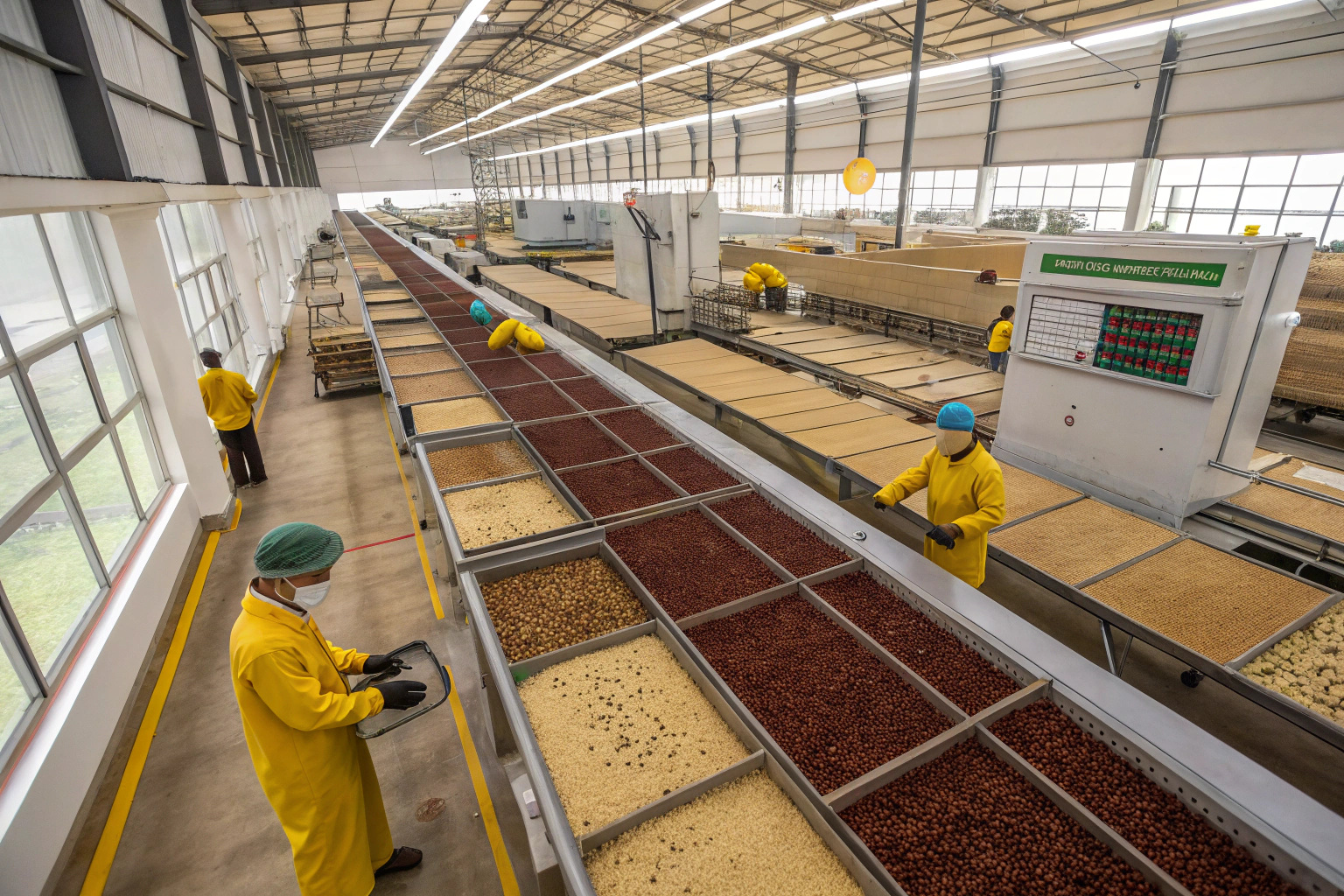
A large European roaster visited our Baoshan facility two years ago. He operated ten cafés and a wholesale business. He needed a consistent espresso base. He had been burned before by suppliers whose quality shifted season to season. "I need the same coffee, every container, every quarter," he said. "Can you actually do that? Because if you cannot, I will find someone who can."
I did not give him a sales pitch. I handed him a tablet with three years of cupping data for the Catimor lot he was interested in. The scores varied by 0.75 points across twelve shipments. The moisture content never drifted outside the 10.8 to 11.6 percent range. The flavor descriptors were nearly identical lot to lot. He scrolled through the data in silence. Then he looked up. "Okay," he said. "Show me how you do this." I walked him through every station, every protocol, every quality checkpoint. He placed a container order before he left.
BeanofCoffee manages consistency across multiple production lines through a rigorous system of plot-level lot segregation, standardized processing protocols with documented parameters, real-time moisture and pH monitoring, and centralized cupping verification that ensures every export lot meets the contracted sensory and physical specifications before shipment.
Consistency is not a marketing promise. It is an operational discipline. It requires systems, documentation, training, and an obsessive attention to detail. Here is exactly how we achieve it across thousands of acres, multiple varieties, and several processing methods, all while shipping to roasters on three continents.
How Are Production Lots Segregated by Variety and Quality?
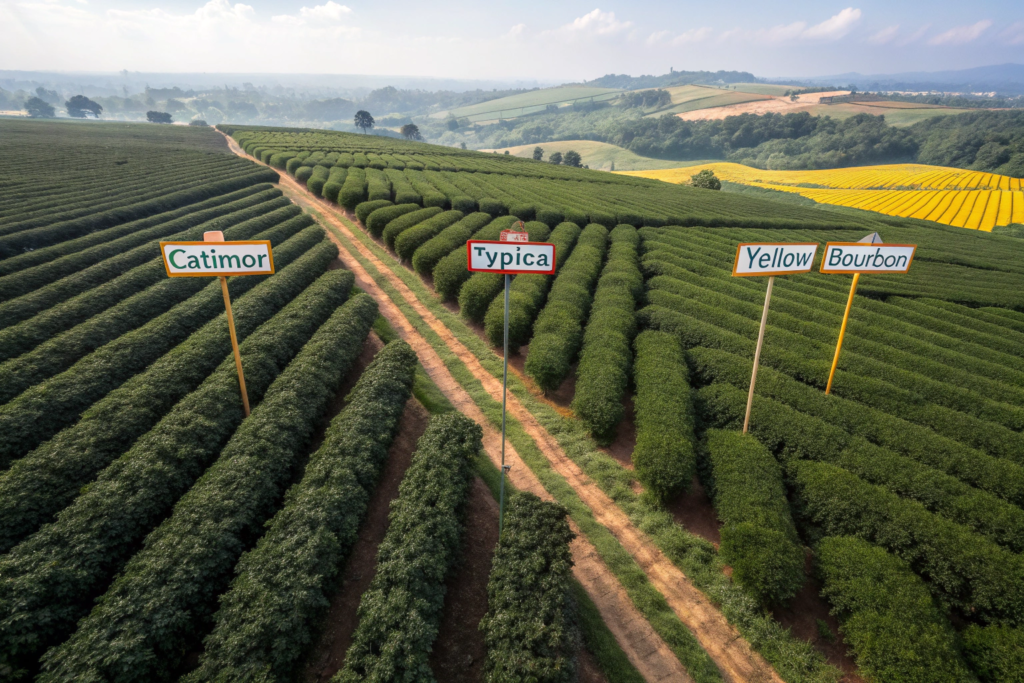
Consistency begins in the field. You cannot make consistent coffee from a mixed harvest. If Catimor cherries get mixed with Typica cherries, the cup profile shifts. If high-altitude cherries get mixed with low-altitude cherries, the density and acidity vary. The first rule of consistency is segregation.
Our 10,000 acres in Baoshan are divided into plots. Not arbitrary divisions. Each plot is defined by variety, planting date, altitude, and soil type. Plot A-14 is Catimor, planted in 2012, at 1,520 meters, on red laterite soil. Plot B-07 is Yellow Bourbon, planted in 2018, at 1,580 meters, on the same soil type. Plot C-03 is SL28, planted in 2016, at 1,620 meters. Every plot has a unique identifier that follows the coffee from the tree to the export bag.
Lot segregation starts at the plot level, with each variety and altitude zone harvested, processed, and stored separately under a unique lot code that provides full traceability from the farm to the container, preventing cross-contamination that would undermine cup consistency.
During harvest, picking teams are assigned to specific plots. The cherries from Plot A-14 go into bags labeled A-14. They are delivered to the processing station separately. They are processed in a dedicated batch. The parchment is dried on beds labeled A-14. The dried parchment is stored in a section of the warehouse marked A-14. The lot code never changes. The coffee never mixes.
This plot-level segregation extends through dry milling. The mill is cleaned between lots. The green beans from Plot A-14 are milled, sorted, and bagged without contacting beans from any other plot. The bags are labeled with the lot code. The sample for cupping is pulled from the finished bags, not from a composite. When a buyer orders a specific lot, they receive coffee from that specific plot, not a blend of whatever was available.
What Protocols Govern the Harvest and Intake Process?
The harvest protocol is the first quality gate. If bad cherries enter the system, no amount of careful processing can fix them. Consistency in the cup starts with consistency in the cherry.
Our picking standard is simple and strict: only ripe, red cherries are picked. No green cherries. No overripe purple cherries. No dried raisins on the branch. Pickers are trained at the start of each harvest season. They are shown examples of acceptable and unacceptable cherries. They are paid a premium for selective hand-picking rather than strip-picking.
At the intake station, every bag of cherries is inspected. A sample is spread on a table. The percentage of under-ripes, over-ripes, and defects is counted. If the defect percentage exceeds three percent, the entire bag is rejected. The picker is given feedback. Repeated rejections result in the picker being reassigned or dismissed.
After passing the visual inspection, the cherries go through a floatation tank. Water is used to separate the dense, ripe cherries from the floaters—the under-ripes, the insect-damaged, the partially dried. The floaters are skimmed off and discarded or sold as low-grade cherry. The sinkers proceed to processing.
This two-stage intake process—visual inspection followed by floatation—ensures that the cherry stream entering the processing station is uniformly ripe and clean. The fermentation behavior, the drying rate, and the final cup quality all depend on this uniformity. For further reading on harvest optimization and processing, the Coffee Quality Institute provides resources on post-harvest best practices that influence consistency.
How Do Plot Codes Enable Full Traceability to the Farm?
Every plot on our farm has a unique alphanumeric code. The code is not just a label. It is a key that unlocks the entire history of the coffee.
The plot code follows the coffee through every stage of production. When the cherries are picked, the harvest bags are tagged with the plot code. When the cherries arrive at the intake station, the plot code is recorded in the intake log along with the weight, the visual inspection results, and the floatation yield. When the cherries enter the processing line, the fermentation tank is labeled with the plot code. The drying beds are labeled. The storage sacks are labeled.
During dry milling, the plot code is printed on every export bag. A buyer who receives a bag labeled "BF-CAT-W-14-2025" can decode it: BF for Baoshan Farm, CAT for Catimor, W for Washed, 14 for Plot 14, 2025 for the harvest year. The code is unique. No other lot in the world has the same identifier.
This traceability serves multiple purposes. For the buyer, it provides confidence that the coffee is what it claims to be. For us, it enables quality investigations. If a lot cups differently than expected, we can trace it back to the specific plot, the specific harvest date, the specific fermentation tank, and the specific drying bed. We can identify the source of the deviation and correct it. For more on traceability systems, World Coffee Research has published resources on lot identification and supply chain transparency.
How Is Processing Standardized Across Washed, Natural, and Honey Lots?
Processing is where consistency is either locked in or lost. The same cherry, processed with the same protocol, produces the same cup. The same cherry, processed with slightly different fermentation times or drying speeds, produces a different cup. Standardization is the answer.
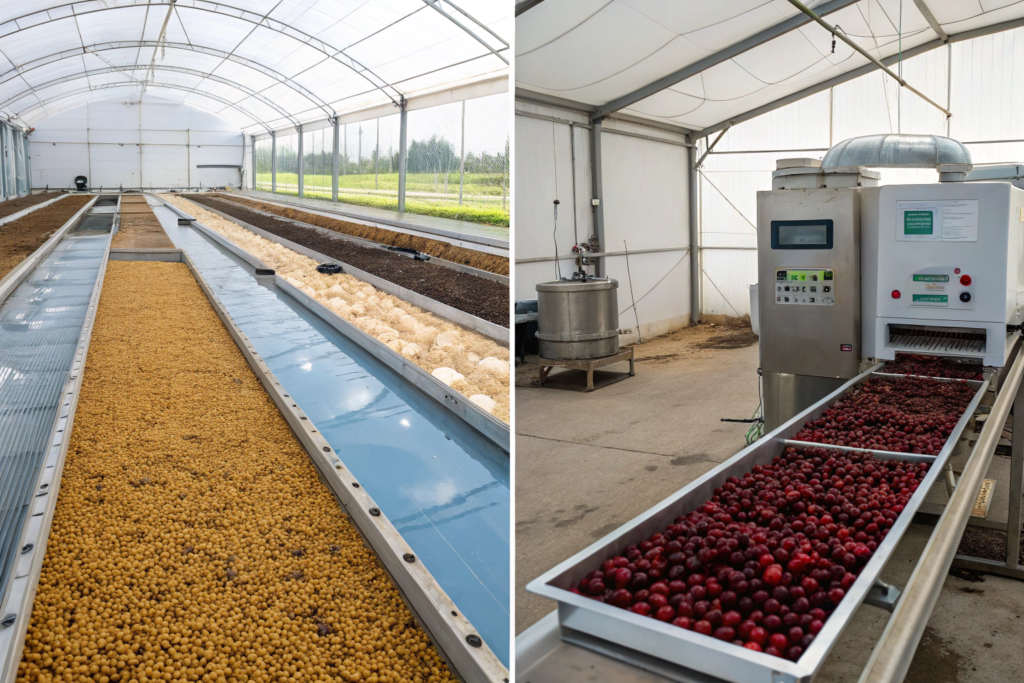
For washed processing, we use a fixed protocol. The pulped beans are fermented in clean water at a controlled temperature of 20 to 22 degrees Celsius. The fermentation duration is determined by pH monitoring, not by a fixed clock. When the pH reaches the target range—typically after 18 to 24 hours—fermentation is stopped. The beans are washed in clean channels to remove all mucilage. The parchment is spread on raised beds in a thin, even layer and dried over 10 to 14 days, depending on the weather, until the moisture content reaches 10.5 to 12 percent.
For natural processing, the protocol is different but equally fixed. The whole cherries are floated to remove under-ripes. They are spread on raised beds in a single layer. They are turned every two hours during the first week to prevent hot spots and ensure even drying. The drying takes 20 to 25 days. The moisture is monitored daily. The cherries are covered at night and during rain. When the moisture reaches the target, the dried cherries are rested in parchment for 30 days before hulling.
Every processing method at BeanofCoffee follows a written standard operating procedure that specifies time, temperature, pH targets, turning frequency, and moisture endpoints, with all critical parameters logged and reviewed before the lot is approved for export.
For honey processing, the protocol lies between washed and natural. The skin is removed but the mucilage is left on the parchment. The amount of mucilage retained—yellow honey, red honey, black honey—is controlled by the degree of washing after pulping. The drying is done on raised beds under shade for 15 to 20 days. The mucilage dries onto the parchment, imparting sweetness and body. The moisture and turning protocols are as strict as for natural processing.
Why Is Real-Time pH and Moisture Monitoring Critical?
You cannot manage what you do not measure. In coffee processing, pH and moisture are the two most important variables to measure because they directly correlate with fermentation control and shelf stability.
pH monitoring tells us when fermentation has progressed far enough and when it has gone too far. At the start of fermentation, the mucilage pH is around 5.5 to 6.0. As fermentation proceeds, the pH drops. The target window for stopping fermentation is pH 3.8 to 4.2. Within this range, the mucilage is fully broken down, but acetic acid has not yet accumulated to defect levels.
We measure pH at the start of fermentation, every six hours during fermentation, and at the endpoint. The measurements are logged in the lot record. If the pH drops too fast—indicating high microbial activity from warm temperatures—we stop fermentation early. If the pH is not dropping—indicating cold temperatures or insufficient microbial activity—we extend the time. The clock serves the pH target, not the other way around.
Moisture monitoring during drying is equally critical. We measure the moisture content of the drying parchment or cherry every day using a calibrated moisture meter. The target endpoint is 10.5 to 12 percent. Drying too fast traps moisture inside the bean and causes case hardening. Drying too slow risks mold and over-fermentation. The daily moisture readings allow us to adjust the drying bed thickness, the turning frequency, and the shade coverage to keep the drying curve on track.
At the end of processing, every lot undergoes a final moisture and water activity check. Water activity below 0.60 is required for export. This ensures the coffee is microbiologically stable and will not mold or stale prematurely during transit and storage. For more on moisture management in coffee processing, World Coffee Research has published best practice guides.
How Are Drying Curves Managed to Prevent Defects?
Drying is the most vulnerable phase of coffee processing. The coffee moves from a high-moisture, biologically active state to a low-moisture, stable state. The path it takes through that transition determines whether defects develop.
A drying curve is a graph of moisture content over time. The ideal curve is a smooth, gradual decline. The curve starts steep—moisture drops quickly in the first few days as surface water evaporates. Then the curve flattens—moisture migrates slowly from the interior of the bean to the surface. The entire curve takes 10 to 14 days for washed parchment and 20 to 25 days for natural cherry.
We manage the drying curve by controlling the bed thickness, the turning frequency, and the exposure to sun and shade. At the start of drying, when the moisture is high and the risk of mold is greatest, we spread the beans thin and turn them frequently. The goal is to remove surface water as quickly as possible without case hardening.
In the middle phase, when the moisture is moderate, we maintain consistent turning and monitor the ambient humidity. If the humidity is high, we may move the beds under cover or into a mechanical dryer to keep the curve on track.
In the final phase, when the moisture is approaching the target, we slow the drying down. The beans are moved to shade or covered during the hottest part of the day. The final few percentage points of moisture are removed slowly and gently to avoid stressing the bean structure.
Every lot has a drying log. The daily moisture readings are plotted on a graph. The log is reviewed before the lot is approved. A lot with an erratic drying curve—rapid drops followed by stalls—is flagged for extra cupping. The drying curve is one of the best predictors of cup quality and shelf stability.
How Does the Centralized Cupping Lab Verify Lot Consistency?
The cupping lab is the final arbiter of consistency. The pH readings, the moisture logs, the drying curves—these are indicators. The cup is the proof. If a lot meets all its technical specifications but cups differently than expected, it does not ship under that specification. It is reclassified or rejected.
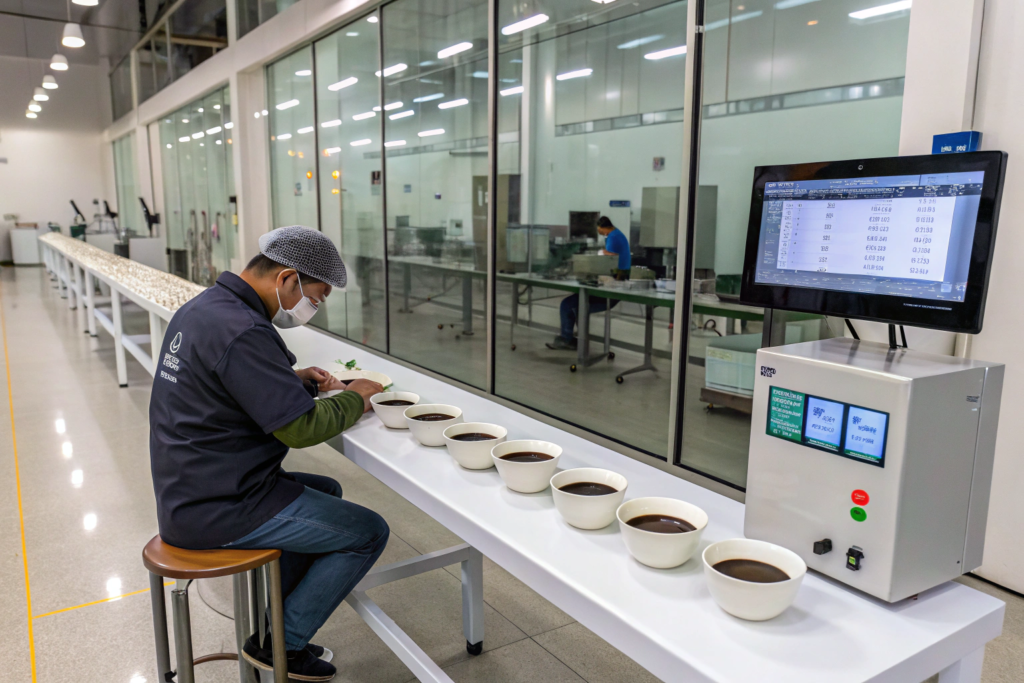
Our centralized cupping lab in Baoshan evaluates every export lot before shipment. The cupping follows the SCA protocol. The cuppers are calibrated Q-graders. Each lot is cupped blind, assigned a random code, and scored across all ten SCA attributes. The scores are recorded in a digital database that tracks lot performance over time.
The centralized cupping lab serves as the final quality gate, evaluating every export lot against both absolute SCA standards and the historical cupping profile of that specific plot, with any lot that deviates by more than one point from its expected score range flagged for investigation and potential reclassification.
The lab also maintains a reference library. Samples of every lot shipped in the past three years are vacuum-sealed and stored. When a new lot from the same plot is cupped, the reference sample is cupped alongside it. This allows the cupper to directly compare the new lot against the historical benchmark. The evaluation is not just "is this coffee good?" It is "does this coffee taste like it should, based on its plot and processing history?"
This reference cupping is how we achieve container-to-container consistency. The Catimor from Plot A-14 should taste like the Catimor from Plot A-14. The reference sample proves it. If the new lot tastes different—a shift in acidity, a new nutty note, a slightly thinner body—the cupper investigates. Was the fermentation slightly different? Was the drying slower than usual? The lot record is reviewed. The deviation is understood and documented. If the deviation is significant, the lot may be reclassified or blended to bring it into spec.
How Is Sensory Data Used to Approve or Reject Export Lots?
The sensory evaluation is not a subjective "I like it" or "I do not like it." It is a structured, scored assessment tied to specific attributes. The scores determine whether the lot ships.
An export lot must meet three criteria to be approved. First, the total SCA score must meet or exceed the contracted minimum. For our specialty-grade Catimor, that minimum is typically 82 points. Second, no individual attribute score may fall below a threshold. A lot that scores 83 overall but scores 6.5 in cleanliness is rejected, even though the total score is acceptable. Third, the flavor profile must match the expected profile for that lot. A Catimor lot that cups with intense fermented fruit notes instead of the expected chocolate and nut is flagged, even if the score is high.
If a lot meets all three criteria, it is approved for export. The cupping scores and notes are added to the lot documentation that accompanies the shipment. The buyer receives a cupping report that matches what is in the bag.
If a lot fails any of the three criteria, it is not shipped under that contract. Depending on the nature of the failure, it may be reclassified as a lower grade, blended with another lot to balance the defect, or rejected entirely and sold domestically. The cost of rejection is borne by us, not by the buyer. This creates a strong incentive to get the processing right.
The sensory data from every lot is also used for continuous improvement. If Plot A-14 consistently cups with a slight green note, we investigate the drying protocol for that plot. Maybe the drying beds are in a cooler, shadier location and need more sun exposure. The data guides the agronomic and processing adjustments for the next harvest. For more on cupping protocols, the Specialty Coffee Association publishes official cupping forms and calibration standards.
How Are Buyers Kept Informed About Their Lot's Journey?
Transparency is part of consistency. If a buyer knows exactly what happened to their coffee at every stage, there are no surprises. The lot that arrives at their roastery is the lot they cupped and approved as a pre-shipment sample.
Every buyer who purchases a lot from Shanghai Fumao receives a digital lot card. The lot card includes the plot identifier, the GPS coordinates, the variety, the harvest date, the processing method, the fermentation log, the drying curve, the moisture and water activity readings, and the cupping scores and notes. The entire history of that coffee, from cherry to container, is documented and shared.
Before the coffee ships, the buyer receives a pre-shipment sample. This is a 200-gram sample pulled from the exact bags that will be loaded into the container. The buyer cups the sample. If the sample cups as expected, the buyer approves the shipment. The container is loaded and dispatched. If the sample cups differently than expected, the buyer can reject the lot before it leaves China.
This pre-shipment approval step is the final consistency check. It ensures that the coffee the buyer cupped and approved during the initial sample stage is the coffee that arrives at their roastery. There is no bait-and-switch. There is no "the sample was great but the container is different." The sample is the container. The container is the sample.
How Is Consistency Maintained Across Different Harvest Years?
The hardest consistency challenge is not across processing lines in the same season. It is across seasons. Harvest 2024 must taste like Harvest 2023 must taste like Harvest 2022. Climate varies. Rainfall varies. Sunlight hours vary. The trees age. Consistency across years requires anticipating and compensating for these variations.
Our approach is data-driven. We maintain detailed agronomic records for every plot. Rainfall, temperature, sunlight hours, flowering date, cherry development time, harvest date, yield per tree—all are recorded annually. When a new harvest comes in, we compare its agronomic data against previous years. If the data shows a deviation—a warmer season, a later harvest, a lower yield—we adjust the processing to compensate.
Year-over-year consistency is achieved through detailed agronomic record-keeping that allows us to identify climatic variations and proactively adjust fermentation times, drying protocols, and resting periods to compensate for seasonal differences and maintain the target cup profile.
For example, if the harvest season is warmer than usual, the cherries may have slightly lower acidity. We may adjust the fermentation protocol—shorter time, lower temperature—to prevent the already-lower acidity from dropping further. If the harvest is cooler and wetter, we may extend the drying time or move more beds under cover to prevent mold.
The goal is not to force every harvest to be identical. That is impossible with an agricultural product. The goal is to keep the variation within a narrow, acceptable range. The cupping scores for a given plot should vary by no more than one point year to year. The flavor profile should be recognizable as the same coffee. The body, acidity, and primary flavor notes should be consistent. The reference cupping protocol, described earlier, is the tool that verifies whether the adjustments worked.
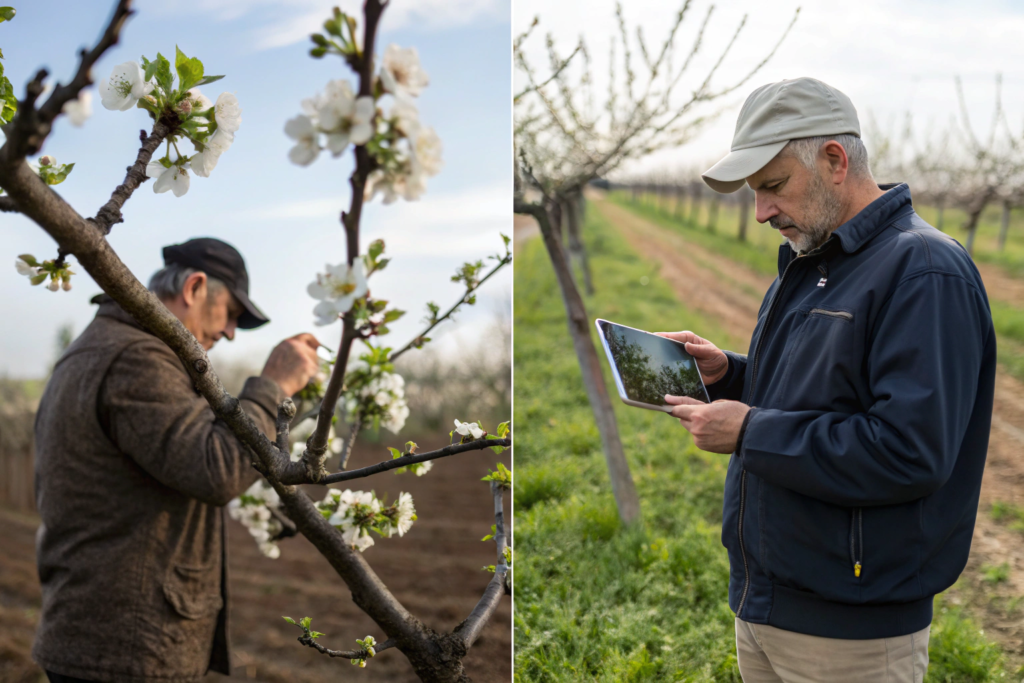
What Agronomic Practices Stabilize Quality Season to Season?
Consistency starts with tree health. A stressed tree produces inconsistent cherries. A healthy, well-nourished tree, pruned correctly and grown in good soil, produces consistent cherries year after year.
Our agronomic practices focus on soil health. We apply organic compost annually to maintain soil organic matter and nutrient levels. We plant nitrogen-fixing cover crops between the coffee rows during the off-season. These cover crops suppress weeds, prevent erosion, and add nitrogen to the soil naturally. We mulch with coffee pulp from the processing station, returning organic matter to the soil.
Pruning is another key practice. Coffee trees alternate between high-yield and low-yield years if left unpruned. We use a systematic pruning rotation that maintains a consistent number of productive branches per tree each year. The trees are pruned in cycles, with different sections of each plot pruned in different years. This evens out the yield and the cherry quality across seasons.
Irrigation management also contributes to consistency. Yunnan has a distinct dry season during harvest, which is ideal for drying. But the trees need adequate water during the cherry development phase months earlier. We use drip irrigation in our higher-density plots to ensure consistent soil moisture during the critical development window. The result is more uniform cherry size, more uniform ripening, and more uniform cup quality. For further reading, World Coffee Research provides variety-specific agronomic best practices.
How Is Harvest Timing Standardized for Uniform Ripeness?
Harvest timing is a consistency variable that many producers overlook. If you harvest too early, the cherries are under-ripe and the cup tastes grassy and astringent. If you harvest too late, the cherries are over-ripe and the cup tastes fermented and flat. Consistency requires harvesting at the peak of ripeness, and doing it the same way every year.
We use a combination of visual assessment and Brix measurement to determine the optimal harvest start date for each plot. Brix is a measure of sugar content in the cherry juice. A refractometer is used to measure the Brix of sample cherries from across the plot. The target Brix for harvest depends on the variety and the intended processing method. For washed Catimor, we target a Brix of 18 to 22. When the average Brix reading across the plot hits the target range, harvest begins.
During harvest, the picking teams are instructed to pick only cherries at peak ripeness. The same plot may be picked multiple times over several weeks as cherries ripen at different rates. This selective harvesting is more labor-intensive than strip-picking, but it ensures that every cherry entering the processing station is at the same ripeness level.
The Brix data is recorded in the plot's agronomic log. Year over year, we compare the harvest start date and the Brix at harvest. If the Brix is trending downward, we investigate soil nutrition, pruning, or irrigation. The data allows us to correct before the cup quality is affected.
Conclusion
Consistency across multiple production lines is not achieved by luck or by having a good palate. It is achieved by systems. Plot-level segregation keeps varieties and altitudes separate. Standardized processing protocols with documented parameters—pH, temperature, moisture, drying curves—ensure every batch is processed the same way. A centralized cupping lab with reference samples and blind evaluation verifies that every export lot meets its contracted sensory specification. Detailed agronomic records and seasonal adjustments maintain that consistency across harvest years. And transparent lot documentation and pre-shipment sampling give the buyer confidence that what they approved is what they will receive.
This system was built over years, with investment in infrastructure, training, and technology. It is what allows us to ship consistent coffee to roasters in North America, Europe, and Australia, season after season. The European roaster who grilled me on my consistency protocols is now a regular buyer. His espresso blend has not changed in two years. His customers do not notice the consistency. That is the point. They just notice that the coffee is always good.
If you want to experience the consistency of our Yunnan lots for yourself, contact Cathy Cai at BeanofCoffee. She can send you cupping data across multiple harvests so you can see the stability yourself. She can also arrange pre-shipment samples and provide lot documentation for any coffee you are considering. Her email is cathy@beanofcoffee.com. She responds quickly and can discuss your specific consistency requirements, whether you need an espresso base that never shifts or a micro-lot that expresses a specific plot's character year after year.