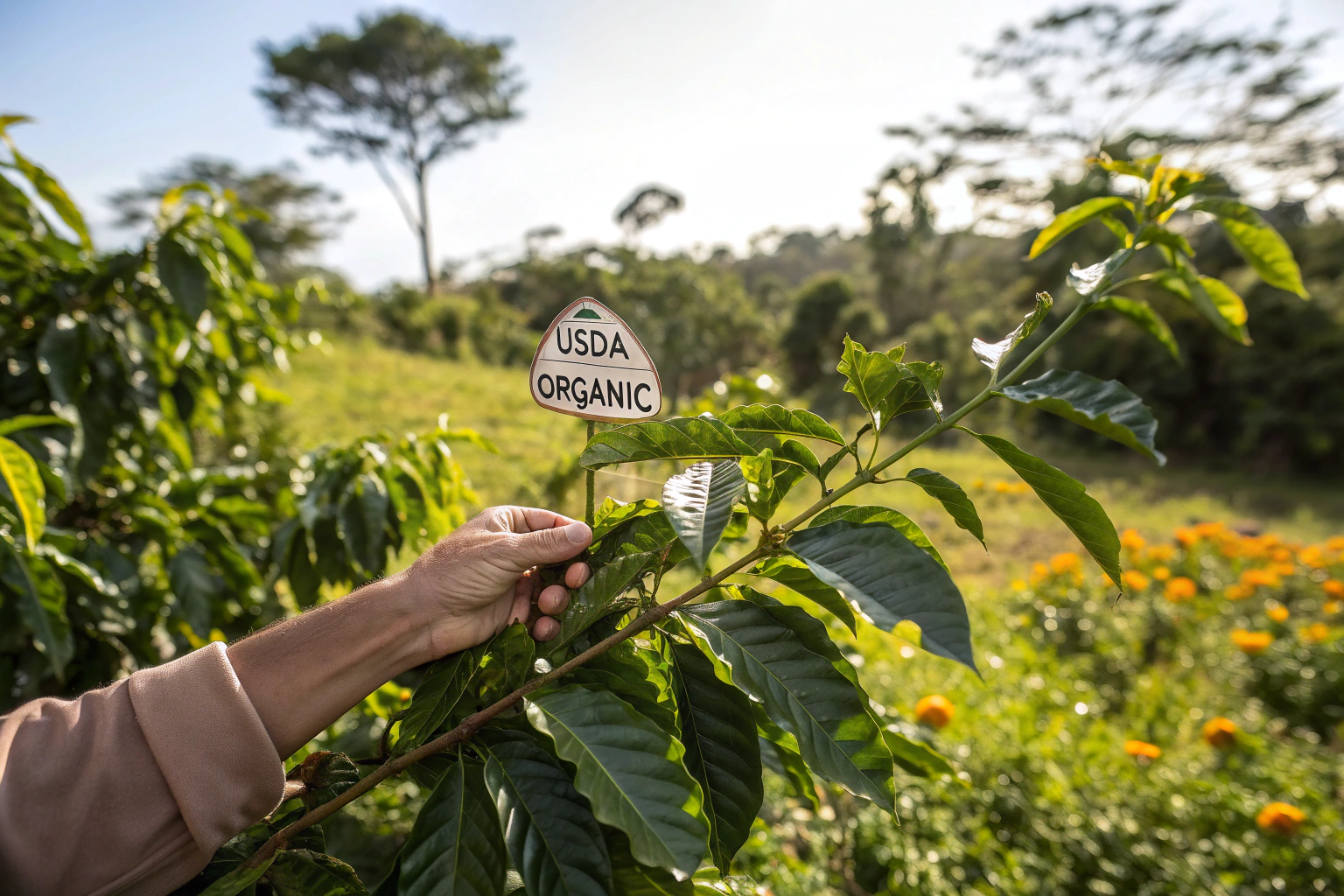
I have a buyer in Berlin. He is third-generation coffee, a purist. For years, his family bought only from a famous cooperative in Honduras. It was their tradition. When he first contacted me, he was polite but deeply skeptical. "Chinese coffee," he said, "can be very nice. But organic? Truly certified, audited organic? You will forgive me if I have doubts." I did not argue. I simply emailed him a copy of our valid Organic Product Certification Certificate from OFDC and our latest NOP Import Certificate for a U.S. shipment. I invited him to look up the certificate number on the CNCA's public verification database. A week later, he placed an order for a full container of our USDA Organic Grade 1 Yunnan Arabica. The skepticism vanished with the public data.
Yes, certified organic coffee beans are not only available from Yunnan plantations, but are produced in significant and growing volumes by leading estates like BeanofCoffee, which hold simultaneously valid certifications under China's own rigorous GB/T 19630 National Organic Program (CNOP) and, through government-to-government equivalency arrangements, are legally recognized and sold as USDA Organic in the United States and as EU Organic in Europe.
This is not a small-scale experiment. It is a mature, scalable, and legally robust supply of organic Arabica that meets the highest international standards. Let me explain exactly what that means and how you can verify it. At Shanghai Fumao, our organic program is the heart of our commitment to quality and sustainability. You can learn more about our approach on our Sustainability page.
What Organic Certifications Do Premium Yunnan Coffee Plantations Hold?
A responsible buyer should never accept a supplier's simple word that their coffee is "organic." You must demand to see the actual, valid certificates. In Yunnan, a legitimate, export-ready organic coffee plantation will hold a specific hierarchy of certifications that provide a multi-layered legal guarantee. You do not need to hope the coffee is organic. You can independently verify it.
Premium Yunnan coffee plantations hold a portfolio of organic certifications, starting with the foundational China National Organic Program (CNOP) certification (GB/T 19630) issued by a CNCA-accredited certifier like OFDC, and then leverage official government-to-government equivalency arrangements to obtain the required NOP Import Certificates for the U.S. market and the corresponding recognized status for the EU organic market.
This is not a single certificate. It is a complete, legally audited, and internationally recognized system that is designed to withstand scrutiny from the world's most demanding customs authorities and retail auditors. At Shanghai Fumao, we hold this complete portfolio, as detailed on our Certifications page.
How Does the China National Organic Program (GB/T 19630) Work?
Before a single bean can be sold as organic internationally, it must first be certified under China's own rigorous domestic standard. This is the foundation of all organic claims from China. It is the source code that the U.S. and EU systems trust. The standard is the GB/T 19630, which is closely modeled on international organic norms and is enforced through an annual, on-site audit by a government-accredited third-party certifier.
For our farm, that certifier is the Organic Food Development Center (OFDC) , one of the most respected certification bodies in Asia. The annual audit is not a paperwork exercise. An OFDC inspector walks our fields, takes soil and leaf samples for residue testing, and audits our complete input records to verify that no synthetic pesticides, herbicides, or fertilizers have been used. They check our processing facility and our storage. The certificate we receive is valid for one year and lists the specific products covered, such as "Green Coffee Beans." It is a living, annually renewed license. This is the same rigorous foundation we discussed in Are Yunnan coffee beans organic and non-GMO?, and it is a document you can verify online.
What Is the U.S.-China "Equivalency Arrangement" for Organic Products?
This is the legal bridge that allows our Chinese organic certificate to function seamlessly for your U.S. business. Without this arrangement, you could not legally label your coffee as "USDA Organic" even if it were grown to the highest standards. It is a formal agreement between the U.S. and Chinese governments that recognizes the two national organic programs as being technically equivalent.
This arrangement eliminates the need for a separate, costly USDA audit by an American certifier. It streamlines trade and makes Chinese organic products accessible to U.S. buyers. The critical document is the NOP Import Certificate. For every specific export shipment, our certifier OFDC issues this electronic or paper document. It declares that the specific lot of coffee covered by the certificate has been produced and certified in accordance with the CNOP standard, which is equivalent to the NOP. You, the U.S. importer, provide this NOP Import Certificate to your customs broker and your own organic certifier. It is the legal proof that the coffee is organic. You can verify the specifics of this arrangement on the USDA Organic Integrity Database.
How Does the Dry Season Harvest Naturally Support Organic Farming?
A skeptic might ask, "How can you grow organic coffee at scale without it being devoured by pests or ruined by disease?" It is a fair question, especially for those accustomed to farming in humid, equatorial climates. The answer lies in our geography. Our organic farming system is not a constant battle against nature; it is a partnership with a climate that is uniquely suited to low-intervention agriculture.
Yunnan's pronounced dry season from November to March, which perfectly coincides with the entire coffee harvest and processing period, is a massive natural advantage for organic farming, as the low humidity actively suppresses the fungal diseases like Coffee Leaf Rust and Coffee Berry Disease that plague wetter origins, drastically reducing the need for any fungicidal intervention.
This is not luck. It is terroir. It is the reason why Yunnan can produce exceptionally clean organic coffee at a scale that is difficult to achieve elsewhere. Our organic coffee is a direct expression of this dry, healthy, high-altitude environment.
Why Is Low Humidity During the Harvest a Natural Fungicide?
Fungal diseases are the single greatest threat to organic coffee production globally. Coffee Leaf Rust (Hemileia vastatrix), for example, requires a film of water on the leaf for its spores to germinate and infect the plant. In many coffee origins, the harvest coincides with the rainy season, creating perfect conditions for an epidemic that can devastate an organic crop.
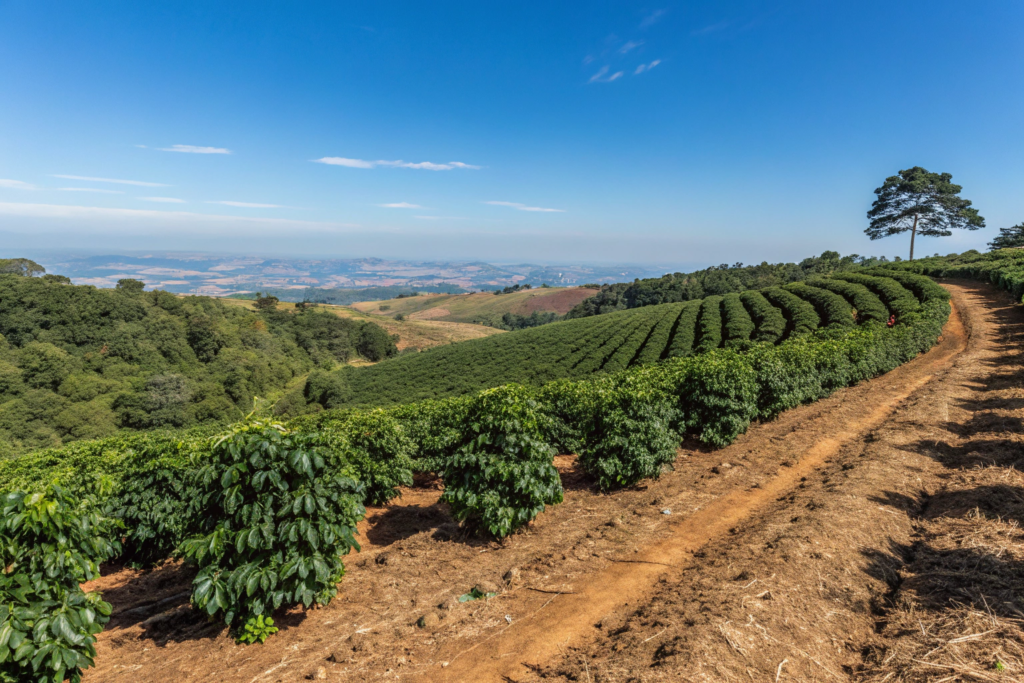
In Baoshan, the situation is reversed. Our harvest happens under bright, dry, sunny skies. The low ambient humidity and lack of rainfall create an environment where the rust fungus simply cannot complete its life cycle. The persistent, low humidity is a natural fungicide. This climatic barrier allows us to farm organically at scale without the devastating losses that would cripple an organic farm in a more humid climate. It is the secret weapon that makes Yunnan one of the most promising origins for reliable, high-volume organic Arabica in the world.
How Does the Dry Climate Simplify the Organic Drying Process?
The challenge of organic farming does not end at the tree. The post-harvest processing, particularly drying, is a critical control point for preventing mold and mycotoxin contamination. In a rainy harvest climate, drying coffee on raised beds is a constant, stressful race against afternoon downpours that can rewet the parchment and create conditions for the growth of Ochratoxin A-producing molds.
Our dry, sunny, and predictably cool harvest climate transforms the drying process into a controlled, low-risk operation. We can spread the washed parchment on our raised African beds and allow the natural sun and dry mountain breeze to dry it slowly and evenly over 10-14 days, without the fear of sudden rain damage. This slow, even sun-drying is critical for developing a clean, sweet cup and for maintaining the microbiological integrity of an organic product, as we discuss in our article on How to Ensure Coffee Beans Are Fresh Upon Arrival?. It allows us to achieve the perfect water activity without ever needing a mechanical dryer, which can be a source of contamination and inconsistent quality. The climate is our most reliable processing partner, helping us to avoid exactly the earthy defects we discuss in Why Do Some Chinese Coffee Beans Taste Earthy and How to Avoid It?.
How Can a Buyer Verify the Integrity of a Yunnan Organic Certificate?
At this point, you know that certified organic Yunnan coffee exists. The final step is knowing how to protect yourself from fraud. A fake organic certificate is a real threat in any origin. The good news is that the Chinese organic certification system has a robust, public digital verification portal that makes it easy for you to independently authenticate any valid certificate. You have the power to check.
A buyer can independently verify the integrity of a Yunnan organic certificate by requesting the supplier's valid certificate, noting the certifier's name (e.g., OFDC) and the unique certificate number, and then going directly to the certifier's own public online database or the national CNCA platform to enter the number and confirm the certificate's current status, scope, and expiry date.
This is a simple, five-minute check that separates a legitimate organic supplier from a fraudulent one. A transparent supplier will not only tolerate this verification, but will actively encourage it.
How Can You Use the CNCA Public Database to Authenticate a Certificate?
The Certification and Accreditation Administration of China (CNCA) maintains a national, publicly accessible platform to verify the authenticity of organic product certifications. This is your ultimate tool.
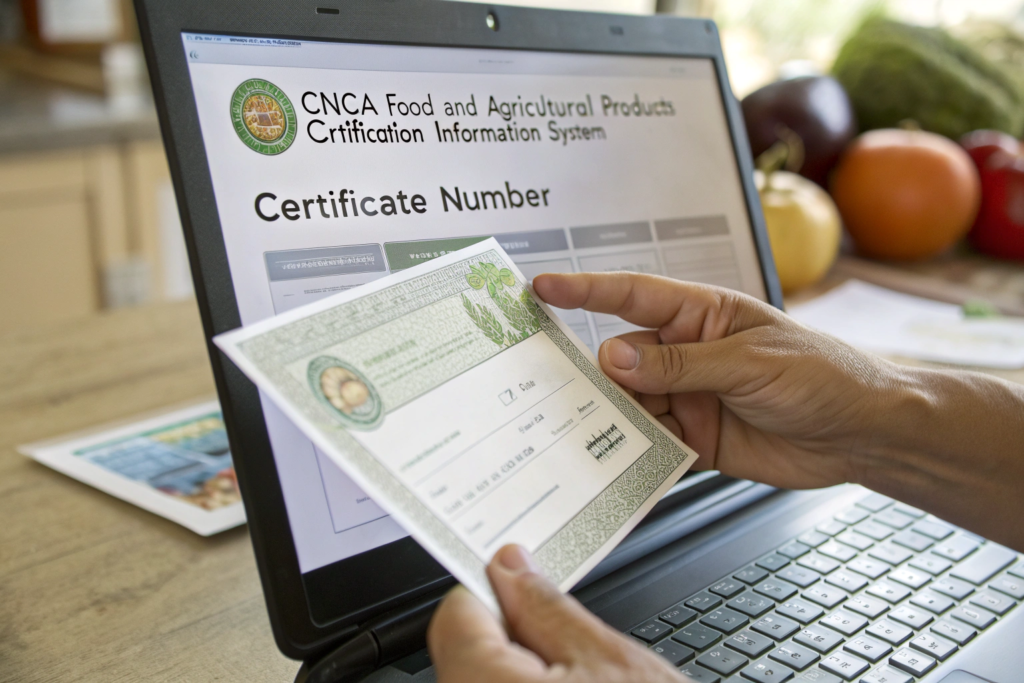
When you receive a certificate from a supplier, the process is straightforward. Look for the issuing certification body's logo and name. Go to the CNCA's "Food and Agricultural Products Certification Information System" online. You can often find a link or portal on the certifier's own website. Enter the certificate number and the company's name. The system will then show the official record, including the certified company's legal name, the certified product scope, and the certificate's valid-through date. If the certificate is fake, out of date, or does not cover coffee, the system will show an error or a mismatch. This public, government-backed verification is what makes the Chinese organic system credible and enforceable. It is your best defense against fraud.
What Should You Do If a Supplier Cannot Provide a Valid NOP Import Certificate?
If a supplier is exporting to you in the United States and claims their coffee is "USDA Organic" but cannot provide a shipment-specific NOP Import Certificate, you have reached the moment of truth. This is not a minor paperwork oversight. It is a fundamental legal and commercial failure.
Without a valid NOP Import Certificate, the coffee cannot legally clear U.S. customs as an organic product. You cannot legally label it as "USDA Organic." If you do, and you are audited by your own certifier, you will be in violation. The coffee, even if it was grown well, is legally conventional for the purposes of the U.S. market. Your course of action is simple: you must instruct your supplier that the shipment is on hold until the valid, correct NOP Import Certificate is provided. If they cannot produce it, you must reject the lot as certified organic and renegotiate the price as conventional coffee, or reject the shipment entirely. A professional and transparent supplier like Shanghai Fumao will provide this certificate as a standard part of the shipment documentation. It is never an afterthought.
Conclusion
The answer to whether organic coffee beans are available from Yunnan plantations is not just "yes." It is an overwhelming, verifiable, and scalable "yes." The organic coffee coming from leading estates like BeanofCoffee is not a niche experiment. It is a serious, professionally managed agricultural product backed by a triple layer of internationally recognized certifications, from China's rigorous GB/T 19630 standard to the government-level equivalency arrangements that make it legal USDA and EU Organic.
Our unique dry-harvest climate provides a powerful natural advantage, making clean, high-quality organic production possible at a volume that is reshaping what buyers can expect from Asia. And with modern verification tools, a buyer can independently authenticate every certificate and document in minutes.
If you are looking for a reliable, documented, and delicious supply of certified organic Arabica, I invite you to verify our certificates for yourself. Email Cathy Cai. Ask for our "Current Organic Certificate and a Sample NOP Import Certificate." Contact Cathy at: cathy@beanofcoffee.com