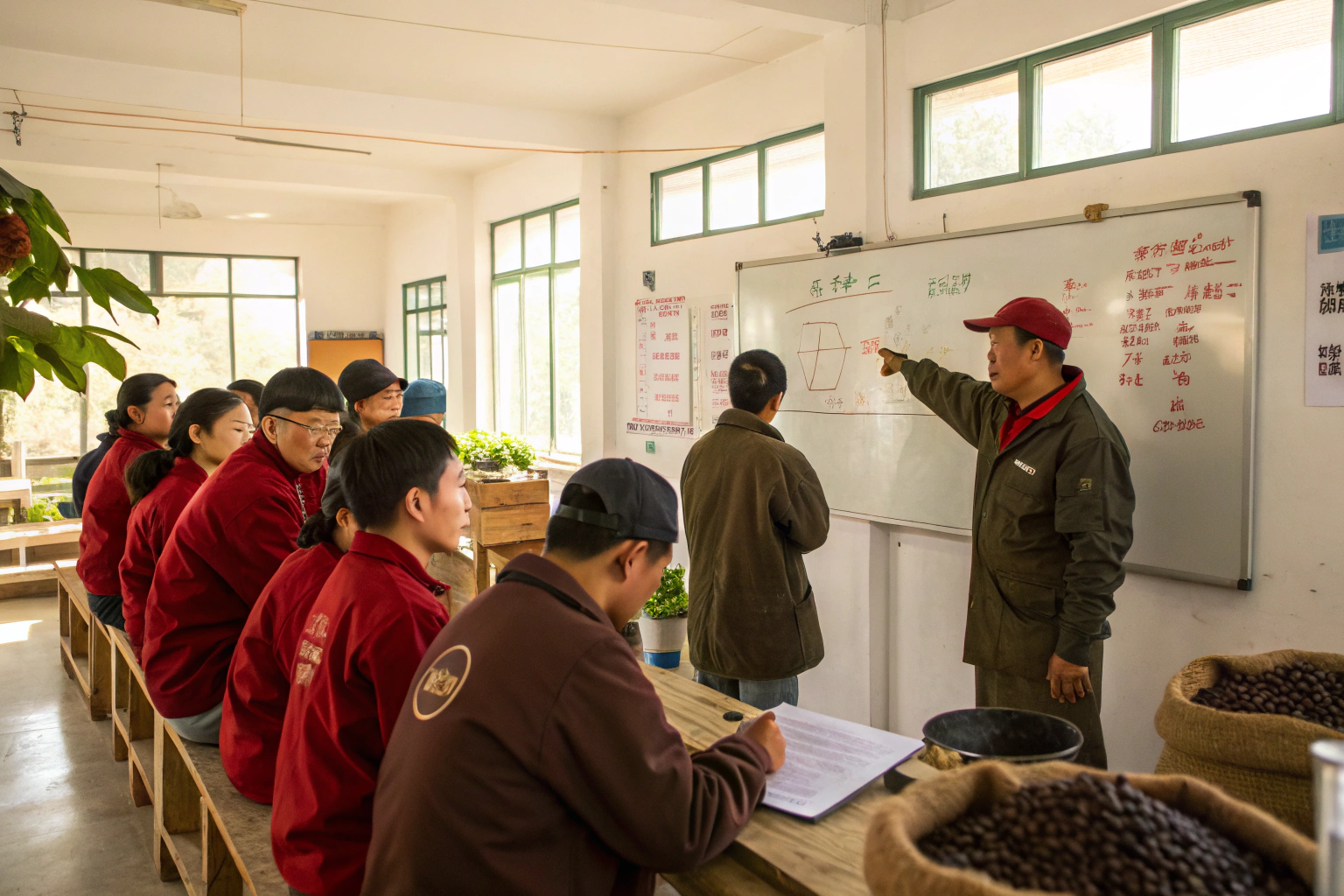
A few years ago, a major European buyer came to audit our farm. He spent the morning walking our fields, checking our composting operation, and inspecting the wet mill. After lunch, he asked to see something else. He wanted to talk to our workers. Not to our managers, but to the people who pick the cherries and rake the drying beds. He asked to see their contracts, their pay stubs, and their safety training logs. He wanted to know if our ethical commitment was just a document on a wall or if it was a reality in their lives. We spent the rest of the day showing him exactly that. At the end, he told me, "Many farms pass the environmental audit. Few pass the human audit. You did." That was the highest compliment I have ever received.
BeanofCoffee ensures ethical sourcing in Yunnan Province not through a single certification, but through a comprehensive, independently audited system built on four interconnected pillars: verified fair labor practices that exceed minimum wage, rigorous occupational health and safety protocols, active community development investments funded by Fairtrade and Rainforest Alliance premiums, and full supply chain transparency that allows a buyer to verify every claim.
Ethical sourcing is not a marketing slogan on our farm. It is a daily operating practice, a legal commitment, and a core part of our identity. Let me show you the evidence. You can also learn more about our integrated approach on our Sustainability page and our specific commitments on our Certifications page.
How Are Fair Labor Practices Verified on Our Baoshan Plantation?
The foundation of ethical sourcing is how you treat the people who do the work. It is easy to write a policy about fair wages. It is much harder to prove, to an independent third-party auditor, that the policy is a lived reality for every single worker. This is the standard we hold ourselves to. Our labor practices are not hidden behind a PR statement. They are documented, transparent, and subject to rigorous external scrutiny.
Fair labor practices on our Baoshan plantation are verified through a system of formal, written employment contracts for all workers, a payroll that guarantees wages exceeding the local minimum, and most importantly, through confidential worker interviews conducted annually by independent auditors from Fairtrade International and the Rainforest Alliance, who have unrestricted access to speak privately with our team.
This external verification is the difference between a promise and a proof. It is what gives our ethical claims legal and commercial weight. This is the same rigorous approach we take with our Quality Control for the product itself.

What Does a "Living Wage" Mean for Our Farm Workers in Baoshan?
A minimum wage is the legal floor. A "living wage" is a higher, more meaningful benchmark. It is the income required for a worker to afford a decent standard of living for themselves and their family, including adequate food, housing, education, healthcare, and some discretionary income. This is the standard we are audited against and are on a documented journey toward achieving.
Our commitment is verified under our Fairtrade certification. We consistently pay above the statutory minimum wage. As part of our Fairtrade audit, we also track the gap between our actual wages and the calculated living wage for the rural Baoshan region. We have a formal, time-bound plan to close that gap, and our progress is reviewed annually. This is what progressive, ethical labor practice looks like. It is a documented, verifiable, and upward-trending line, not just words. You can learn more about the Fairtrade living wage strategy on the Fairtrade International website.
How Does the Fairtrade "Premium Committee" Empower Our Workers?
In a traditional business, decisions about money are made by the owners. The Fairtrade model rewrites this entirely. It creates a mandatory, democratic structure that puts a portion of the money from every sale directly into the hands of the workers to spend on projects they choose. This is the single most powerful mechanism for community self-determination.
For every pound of Fairtrade certified coffee we sell, an additional $0.20 Fairtrade Premium is paid. This money is not absorbed into our general operating budget. It is legally ring-fenced into a separate bank account controlled by a democratically elected Premium Committee. Our workers themselves decide how to spend these significant funds. They have voted to build a new community health clinic, fund scholarships for the daughters of farm workers to attend university, and invest in a program to provide water filtration systems to worker households. When a buyer purchases our Fairtrade coffee, they can request a "Premium Impact Report" to see exactly how their purchase contributed to these specific, community-chosen projects. This is not charity. It is an audited economic partnership.
What Health, Safety, and Social Standards Are in Place for Our Team?
A farm is a workplace. Ensuring that every person returns home safely at the end of the day is our most fundamental ethical obligation. This commitment is not a set of suggestions; it is a formal, externally audited management system that is as rigorous as our food safety program. It involves risk assessment, training, protective equipment, and accountability.
Our occupational health and safety standards are governed by a formal, audited policy that includes mandatory, paid safety training for all workers, the provision of full personal protective equipment (PPE) at no cost, a rigorously maintained Glass and Brittle Plastic Register, and strict protocols for chemical handling and machinery operation, all verified during independent BRCGS and Rainforest Alliance audits.
This system is designed to prevent accidents before they happen and to ensure a swift, effective response if they do. It is a non-negotiable part of how we operate.
What PPE and Training Are Required in Our Wet and Dry Mills?
A responsible employer does not just hand a worker a pair of gloves and hope for the best. There is a documented system for what equipment is required, why it is needed, and how to use it correctly.
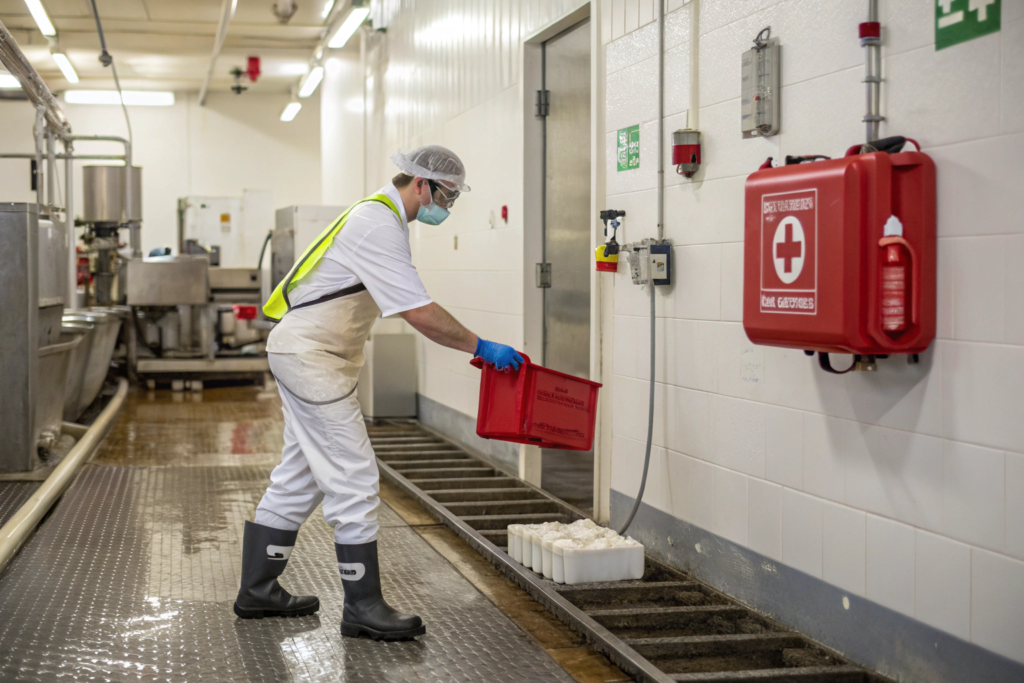
Every worker in our processing facilities is provided with and required to wear the appropriate PPE for their specific task. This includes non-slip safety boots, high-visibility vests, protective eyewear, and specialized hearing protection for anyone working near loud machinery like the dry mill huller. In our wet mill, waterproof gloves and aprons are standard. But equipment is useless without knowledge. Our BRCGS Food Safety and Rainforest Alliance certifications mandate that all workers receive formal, paid training on occupational hazards and safe operating procedures during work hours. This training is documented, and worker competency is verified. This is not just a rule; it is a demonstrated, audited commitment to a safe working environment. For official guidance on occupational safety, you can review resources from the International Labour Organization (ILO).
How Does the "Glass and Brittle Plastic Register" Protect Our Staff?
This is a specific, audited food safety protocol that also has a direct and powerful worker protection benefit. It is one of the most visible manifestations of a safety culture.
The BRCGS standard requires us to maintain a comprehensive register of every single piece of glass, hard brittle plastic, or ceramic on the entire production floor—from the light fixtures and clock faces to the pressure gauges on our machines. Each item is uniquely numbered and inspected at a defined frequency for cracks or chips. This rigorous system is primarily designed to prevent a physical contaminant from reaching a consumer. However, it has an equally profound effect on worker safety. It means that a shattered light cover or a cracked gauge lens—a potential injury hazard for a worker—is proactively identified and replaced before it can cause harm. It creates a hyper-vigilant culture of safety that protects everyone in the facility, both the product and the people who make it.
How Do Certifications Build a Holistic Ethical Framework?
A single ethical certification is a good start. A strategically chosen, overlapping combination of certifications creates a force multiplier. It ensures there are no gaps in our ethical framework. The three pillars of our certification system—Rainforest Alliance, Fairtrade, and BRCGS—are intentionally chosen to work together, each covering a different dimension of responsibility.
Our certifications build a holistic ethical framework by reinforcing each other: the Rainforest Alliance sets the standard for environmental stewardship and worker welfare, Fairtrade provides the unique economic justice model and community empowerment, and BRCGS adds the rigorous, audited food safety and occupational health culture that protects both the product and the people who produce it.
One certifier audits our environmental practices; a second audits our economic fairness to the worker; and a third audits the physical safety of the working environment. Together, they provide a 360-degree audited guarantee of responsible production.
How Do Rainforest Alliance and Fairtrade Complement Each Other?
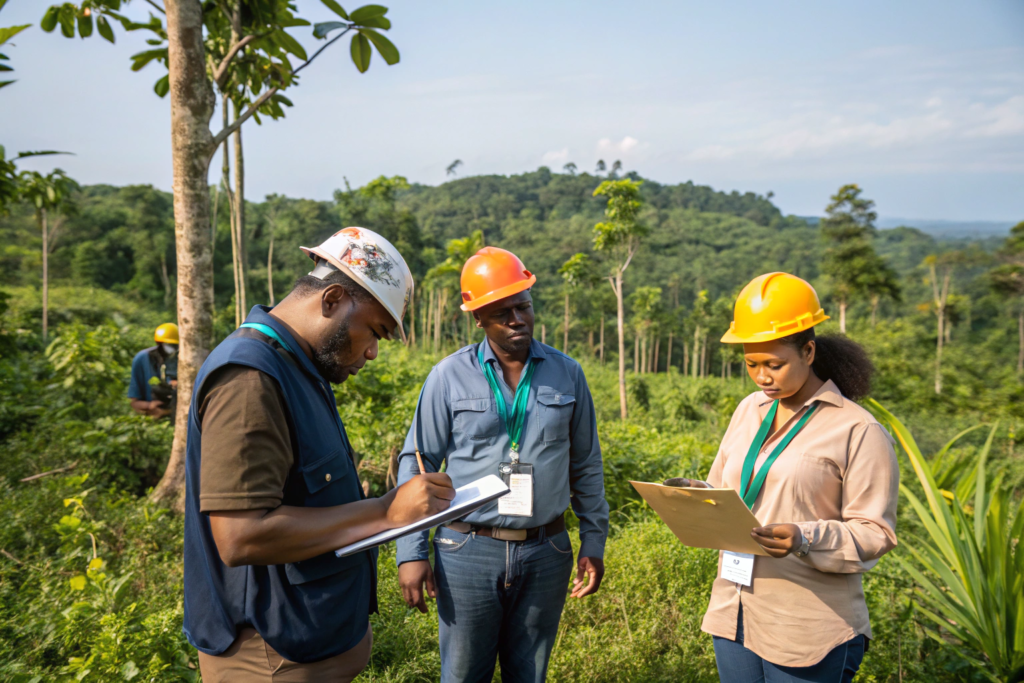
These two certifications are our most powerful combination for sustainability. They are not redundant. They do different jobs. The Rainforest Alliance provides the "how"—the rigorous environmental and social management practices on the farm. The Fairtrade model provides the "what"—the economic guarantee and the community development premium.
As we discussed in our article on What Is the Rainforest Alliance Standard for Coffee Farms in China?, the RA standard ensures we are protecting our native forests, conserving water, and treating our workers safely. The Fairtrade certification then adds the unique layer of the Minimum Price and the worker-controlled Premium. A coffee that is both RA and Fairtrade certified is one of the most comprehensively audited and ethically robust products in the global market. It means the environment is protected, the work is safe, the price was fair, and the community directly benefitted. This is the dual-certification program we offer to our partners.
How Does BRCGS Food Safety Add a Worker Protection Dimension?
Many buyers think of BRCGS purely as a product safety and quality standard. It is. But its rigorous, prescriptive requirements for a clean, organized, and controlled working environment create a powerful, indirect benefit for our entire team.
As we detail in our guide on How to Find a Coffee Supplier with BRCGS Food Safety Certification?, the standard mandates a culture of continuous improvement, unannounced audits, and meticulously documented procedures. This culture of discipline, order, and proactive hazard identification does not just protect the coffee from contamination. It creates a safer, more professional, and more respectful workplace for every single person on the floor, from the forklift driver to the Q-Grader. The clean, well-lit, and orderly environment is a silent testament to our respect for both the product and the people.
Conclusion
Ensuring ethical sourcing is not a project with a finish line. It is an ongoing, daily commitment to transparency, fairness, and continuous improvement. At BeanofCoffee, we ensure this by opening our entire operation to rigorous, independent, third-party scrutiny. We verify our environmental practices with the Rainforest Alliance, our economic justice with Fairtrade, and the physical safety of our team with BRCGS.
But the ultimate proof is not a certificate on a wall. It is the audited reality of a farm worker with a formal contract, a safe job, and a democratic voice in how their community premium is spent. It is a transparent supply chain that allows you, the buyer, to verify every claim we make.
If you want to see the documentation that proves our commitment—from a Fairtrade Premium impact report to our BRCGS certificate—we are ready to be fully transparent. Email Cathy Cai. Ask for our "Ethical Sourcing & Social Compliance Documentation Pack." Contact Cathy at: cathy@beanofcoffee.com