You're building your sourcing program. You have columns for Quality, Price, and Logistics. But there's a fourth column that's becoming non-negotiable: Sustainability. Your wholesale customers are asking. Your retail customers are looking for the seals, the stories, the proof. You see "sustainably grown" on offer sheets from Central and South America. But what about the new player, China? The image of mass industry and environmental challenges looms large. You're asking the direct question: Can I source coffee from China that aligns with my values and meets the verifiable standards my customers demand? Or is "sustainable Chinese coffee" a contradiction in terms?
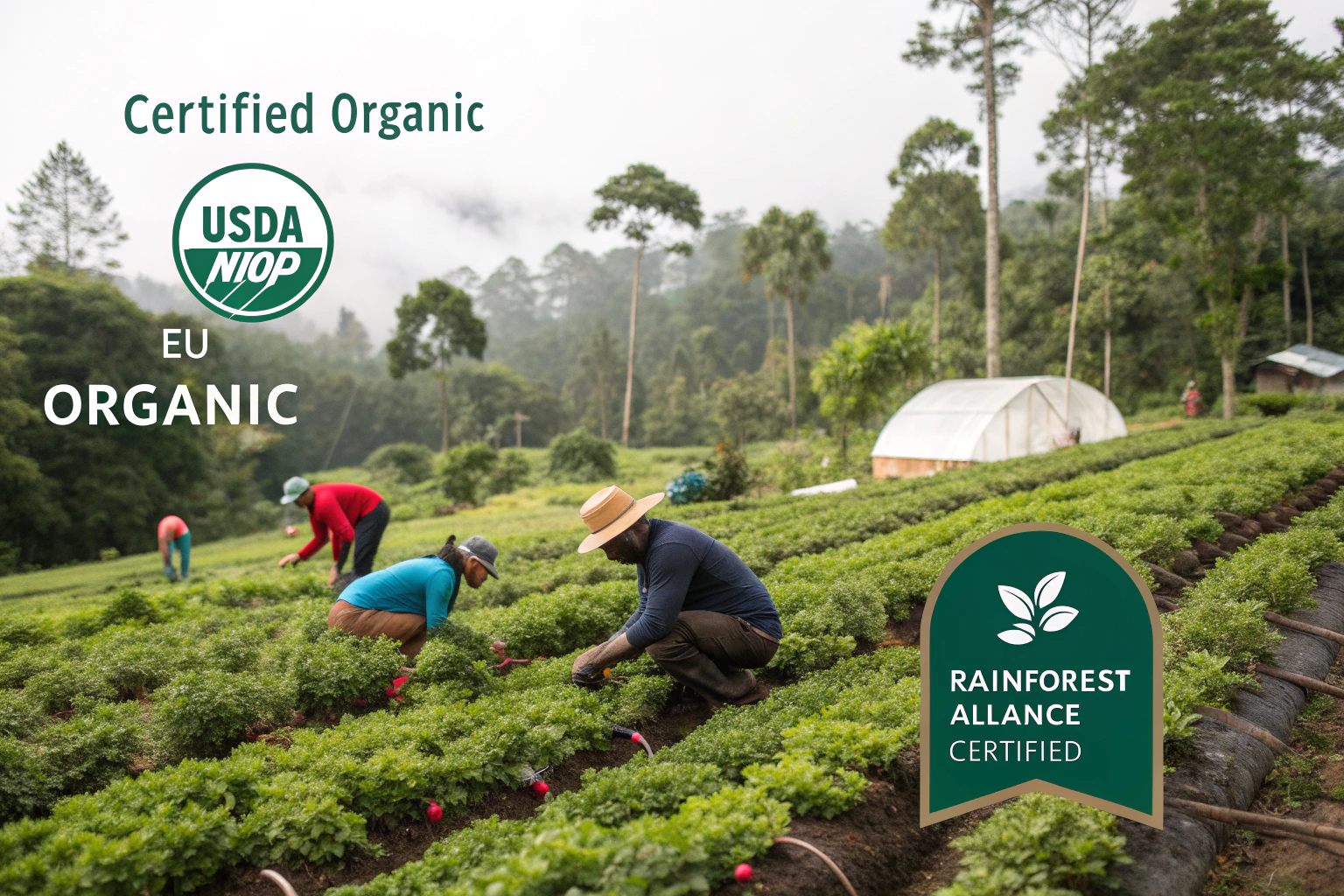
Yes, there are verifiably sustainable coffee options from leading Chinese plantations. The sustainability landscape in Yunnan is not a monolith. While challenges exist across the sector, the top-tier, export-oriented estates are actively implementing and certifying against internationally recognized sustainability standards. These options fall into three main categories: (1) Certified Organic (USDA NOP, EU Organic). (2) Rainforest Alliance Certified. (3) Farms practicing robust, documented "direct trade" sustainability principles, including carbon footprint reduction, water conservation, and significant social investments in worker communities. The key for the buyer is to move past broad assumptions and demand the same specific, verifiable evidence they would require from any other origin.
At Shanghai Fumao, sustainability is not a marketing afterthought. It's woven into how we manage 10,000 acres. Let me show you what real, measurable sustainability looks like on a modern Chinese coffee plantation.
What Certifications Are Available for Sustainable Yunnan Coffee?
The most direct way to verify a sustainability claim is through independent, third-party certification. These are not awards handed out by the farm itself. They are rigorous, audited standards that provide a common language of trust for buyers and consumers.
The primary internationally recognized sustainability certifications available for Yunnan coffee are: (1) Organic Certification (USDA NOP and EU Organic): Verifies the absence of synthetic pesticides and fertilizers and promotes ecological soil management. (2) Rainforest Alliance Certification: A holistic standard encompassing environmental protection (biodiversity, water, soil), social equity (worker rights, community development), and economic viability. (3) 4C (Common Code for the Coffee Community): A baseline standard for good agricultural and management practices, often a stepping stone to more rigorous certifications. (4) Fair Trade: Less common for large estates but available for organized smallholder cooperatives in Yunnan.
What Does Rainforest Alliance Certification Mean on a Yunnan Farm?
The Rainforest Alliance seal, with its distinctive green frog, is one of the most recognized sustainability labels globally. It's a comprehensive standard.
For a Yunnan farm like Shanghai Fumao to achieve and maintain Rainforest Alliance certification, we undergo annual audits that verify our compliance across a wide range of criteria:
- Ecosystem Conservation: Protecting and restoring native forests, maintaining buffer zones along waterways, protecting biodiversity, and prohibiting deforestation (aligning with EUDR).
- Water and Soil Management: Implementing measures to prevent erosion, conserve water, and minimize pollution from milling operations (e.g., treating wastewater from the wet mill).
- Agrochemical Management: Strictly limiting the use of hazardous pesticides and promoting Integrated Pest Management (IPM).
- Worker Well-Being: Ensuring safe working conditions, fair wages, freedom of association, access to housing, education, and healthcare for workers and their families.
- Farm Management: Continuous improvement planning and transparent record-keeping.
This certification provides a holistic, third-party verified assurance that the coffee was produced responsibly. For a roaster, it's a powerful and credible story.
Is USDA Organic Certification a Guarantee of Sustainability?
Organic certification is a cornerstone of sustainable agriculture. It focuses primarily on the inputs and soil health. A USDA Organic seal on Yunnan coffee guarantees:
- No Synthetic Pesticides or Herbicides: Weed and pest control relies on manual labor, biological controls, and approved natural substances.
- No Synthetic Fertilizers: Soil fertility is maintained through composting, cover cropping, and approved natural mineral sources.
- No GMOs: Genetically modified organisms are prohibited.
- Biodiversity: Organic standards encourage practices that support on-farm biodiversity.
However, "Organic" does not automatically encompass the full breadth of sustainability. It has less explicit focus on social criteria like worker housing or wages compared to Rainforest Alliance. The two certifications are highly complementary. Many leading farms pursue both Organic and Rainforest Alliance to provide a complete sustainability assurance package. At Shanghai Fumao, we maintain certified organic plots and are actively pursuing broader Rainforest Alliance certification for our core estate.
What Environmental Practices Are Yunnan Farms Using Beyond Certifications?
Certifications are the proof. But the on-the-ground practices are the reality. Even farms that may not have pursued formal certification are increasingly adopting modern environmental practices because they make good business sense and are often mandated by local environmental regulations.
Key environmental practices on modern Yunnan coffee farms include: (1) Water Recycling and Treatment in wet mills, dramatically reducing water consumption and preventing pollution of local streams. (2) Composting of Coffee Pulp, turning the primary processing waste product into a valuable soil amendment and reducing methane emissions. (3) Erosion Control through contour planting, terracing, and maintaining ground cover. (4) Agroforestry and Shade Management, planting native or beneficial shade trees that provide habitat, improve soil health, and can enhance coffee quality.
How Is Coffee Pulp Being Turned from Waste into a Resource?
In traditional processing, the skin and fruit of the coffee cherry (the pulp) were often dumped into rivers or left in massive piles, creating significant water pollution and greenhouse gas emissions.
This is changing rapidly. Modern Yunnan mills now view pulp as a valuable resource. The practice of composting coffee pulp is becoming standard. The pulp is mixed with animal manure and other organic materials and placed in long windrows. It is regularly turned to aerate the pile. Over several months, it breaks down into a rich, dark, nutrient-dense compost. This compost is then applied back to the coffee fields. This simple, circular practice has profound benefits: it eliminates a major waste stream, reduces reliance on synthetic fertilizers, sequesters carbon in the soil, and improves soil health and water retention. It's a perfect example of industrial ecology applied to coffee. At Shanghai Fumao, we compost thousands of tons of pulp annually. It's a cornerstone of our soil fertility program.
What Role Does Water Recycling Play in a Modern Yunnan Wet Mill?
The washed coffee process is water-intensive. A traditional mill might use 40-60 liters of water to process just one kilogram of green coffee. Much of that water, laden with organic matter and mucilage, was discharged untreated.
Modern mills are engineered for water efficiency and pollution control. They employ several strategies:
- Recirculation Systems: Water from the demucilagator is passed through a screen to remove solids and then pumped back into the system, dramatically reducing fresh water intake.
- Reduced-Flow Equipment: Newer mechanical demucilagators use a fraction of the water required by older models.
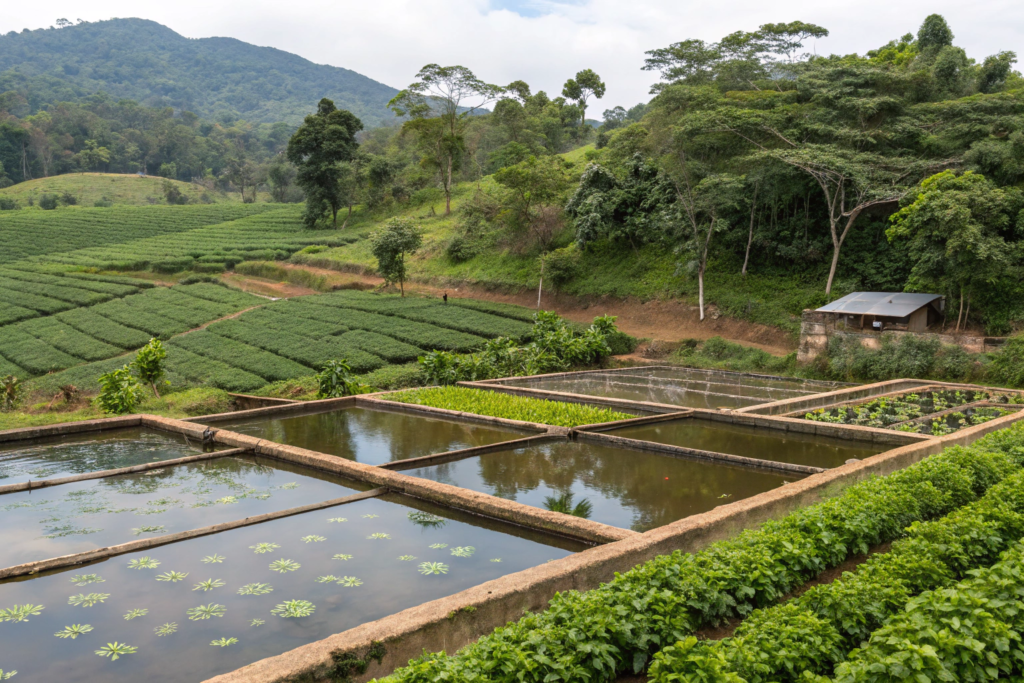
- Wastewater Treatment: Mill effluent is channeled into a series of settling ponds or constructed wetlands. Here, solids settle out, and aquatic plants and microbes break down the organic pollutants. The treated water can then be safely used for irrigation or discharged.
These investments reduce the mill's environmental footprint and lower operating costs. They are a hallmark of a professionally managed, sustainable operation.
How Are Chinese Coffee Farms Addressing Social Sustainability and Worker Welfare?
True sustainability has a human face. It's about the people who plant, tend, harvest, and process the coffee. A farm cannot be truly sustainable if it exploits its workforce. This is an area where Yunnan's leading farms are making significant, visible investments.
Social sustainability on leading Yunnan coffee farms is demonstrated through tangible investments in worker welfare, including: (1) Provision of free, quality housing for seasonal and permanent workers. (2) Access to on-site or subsidized healthcare and education for workers' families. (3) Payment of fair, often above-average, wages and adherence to all Chinese labor laws. (4) Investment in community infrastructure, such as roads and clean water projects. These practices are driven by a combination of corporate social responsibility, certification requirements, and the practical need to attract and retain a stable, skilled workforce.
What Does Worker Housing and Community Look Like on a Large Yunnan Estate?
The harvest in Yunnan requires a large influx of seasonal workers. Historically, living conditions for migrant coffee pickers could be basic and challenging.
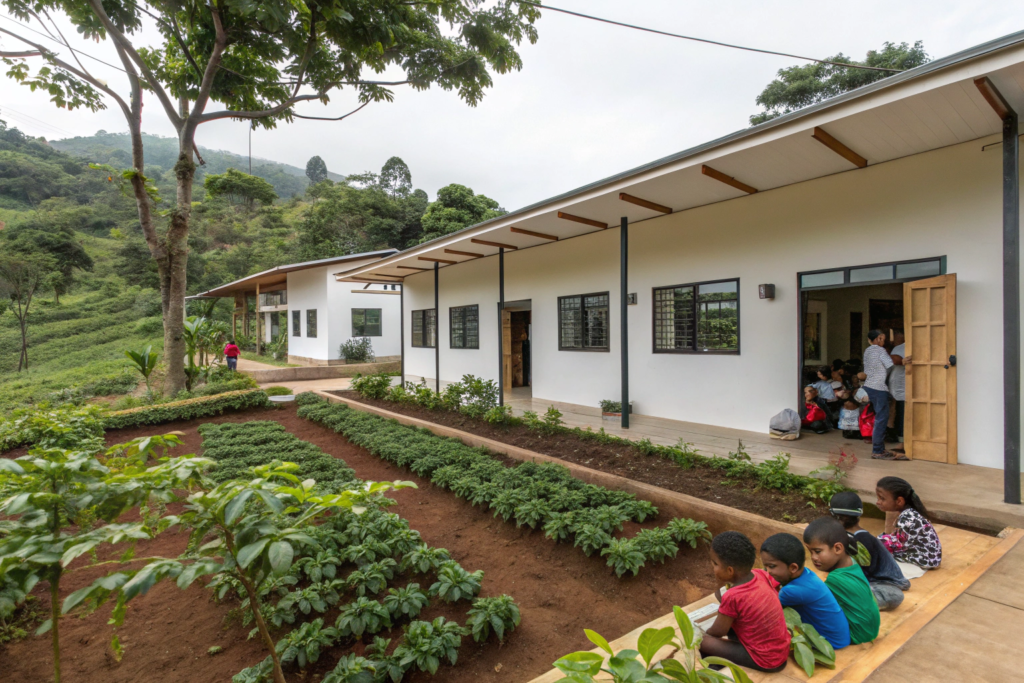
On a modern, professionally managed estate like Shanghai Fumao, this is changing. We have invested in building permanent, decent housing for our seasonal workforce. This includes:
- Dormitories with proper sanitation, running water, and electricity.
- Communal kitchens and dining areas.
- Access to clean drinking water.
- On-site medical clinics or access to local healthcare services.
Providing these conditions is not just an ethical imperative; it's a sound business strategy. It helps us attract the best picking crews, who are more productive and careful when they are treated with dignity. It reduces turnover and builds a sense of community. This investment in human capital is a core component of our long-term sustainability.
Why Is a Stable, Well-Treated Workforce Good for Coffee Quality?
This is a direct connection that buyers often miss. The person picking the cherry has their hands on your quality.
Selective hand-picking—choosing only the perfectly ripe, red cherries—is the single most important quality step on the farm. It requires skill, patience, and attention to detail. A worker who is transient, poorly paid, and living in difficult conditions has little incentive to be selective. They will strip-pick to maximize their daily volume, introducing unripe and overripe cherries that ruin cup quality. A worker who is well-housed, fairly compensated, and part of a stable community has a vested interest in the farm's success. They take pride in their work. They are more likely to follow the picking protocols and deliver the high-quality cherry that is the foundation of a great cup. Investing in social sustainability is a direct investment in cup quality and consistency.
How Can a Buyer Verify Sustainability Claims from a Chinese Supplier?
As with organic claims, the key is to move from "trust" to "verify." A beautiful website and a well-written "Sustainability Report" are a good start, but they are not proof. Independent, third-party verification is the gold standard.
Verifying sustainability claims from a Chinese supplier involves a two-step process: (1) Demand proof of certification by requesting the unique certificate number or license ID for any claimed standard (Rainforest Alliance, Organic, etc.). (2) Independently verify that certification status on the official, public-facing database of the certifying organization. For example, use the "Check a Certified Product" tool on the Rainforest Alliance website, or the USDA Organic Integrity Database. A legitimate certification will be verifiable in these public systems. A claim that cannot be verified is just a story.
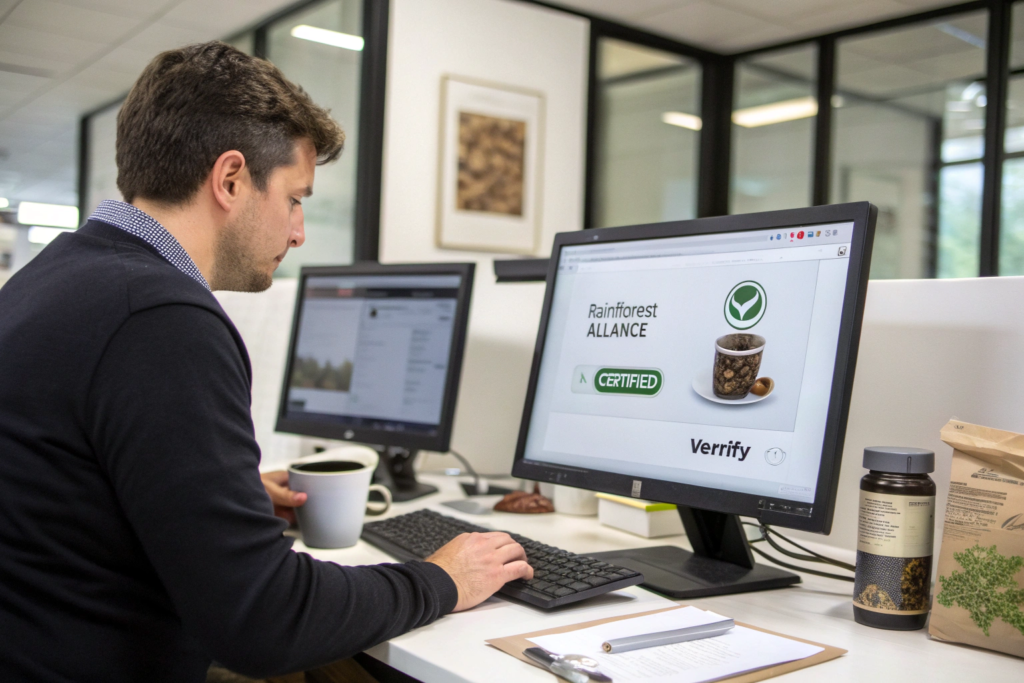
How Do I Use the Rainforest Alliance "Check a Certified Product" Tool?
This is a free, public tool that allows you to verify if a specific product or supplier is currently Rainforest Alliance certified.
- Go to the Rainforest Alliance website and find their "Check a Certified Product" or "Find Certified Products" page.
- You can search by Company Name or by the unique License ID or Certificate Code provided by the supplier.
- Enter the information provided by the Chinese supplier.
- The search result will show the company's name, its certification status ("Certified" or "Not Certified"), the scope of certification (e.g., "Coffee"), and the valid date range.
If the supplier's claim checks out in this independent database, you have a high degree of confidence in their sustainability credentials. At Shanghai Fumao, we are transparent about our certifications and will provide the information needed for you to verify our status independently. We want you to be confident in our claims.
Conclusion
The question is not whether sustainable coffee exists in China. The question is whether you are sourcing from the farms that are leading the way. The Yunnan coffee landscape is diverse. It includes smallholders with traditional methods, and it includes large, modern estates that are at the forefront of implementing globally recognized environmental and social standards.
The options for a values-driven roaster are real and verifiable. They include certified organic lots, Rainforest Alliance certified estates, and farms practicing transparent, documented sustainability initiatives in water, waste, and worker welfare.
The path to sourcing sustainable Yunnan coffee is the same as sourcing quality Yunnan coffee: it requires moving beyond broad assumptions, asking specific questions, and demanding independent, third-party verification. The farms that can provide that verification are the partners you can build a responsible and enduring supply chain with.
If sourcing coffee that aligns with your values is a priority, I invite you to learn more about the specific sustainability programs and certifications at Shanghai Fumao. I'm happy to share our audit reports and certification details. My email is cathy@beanofcoffee.com.