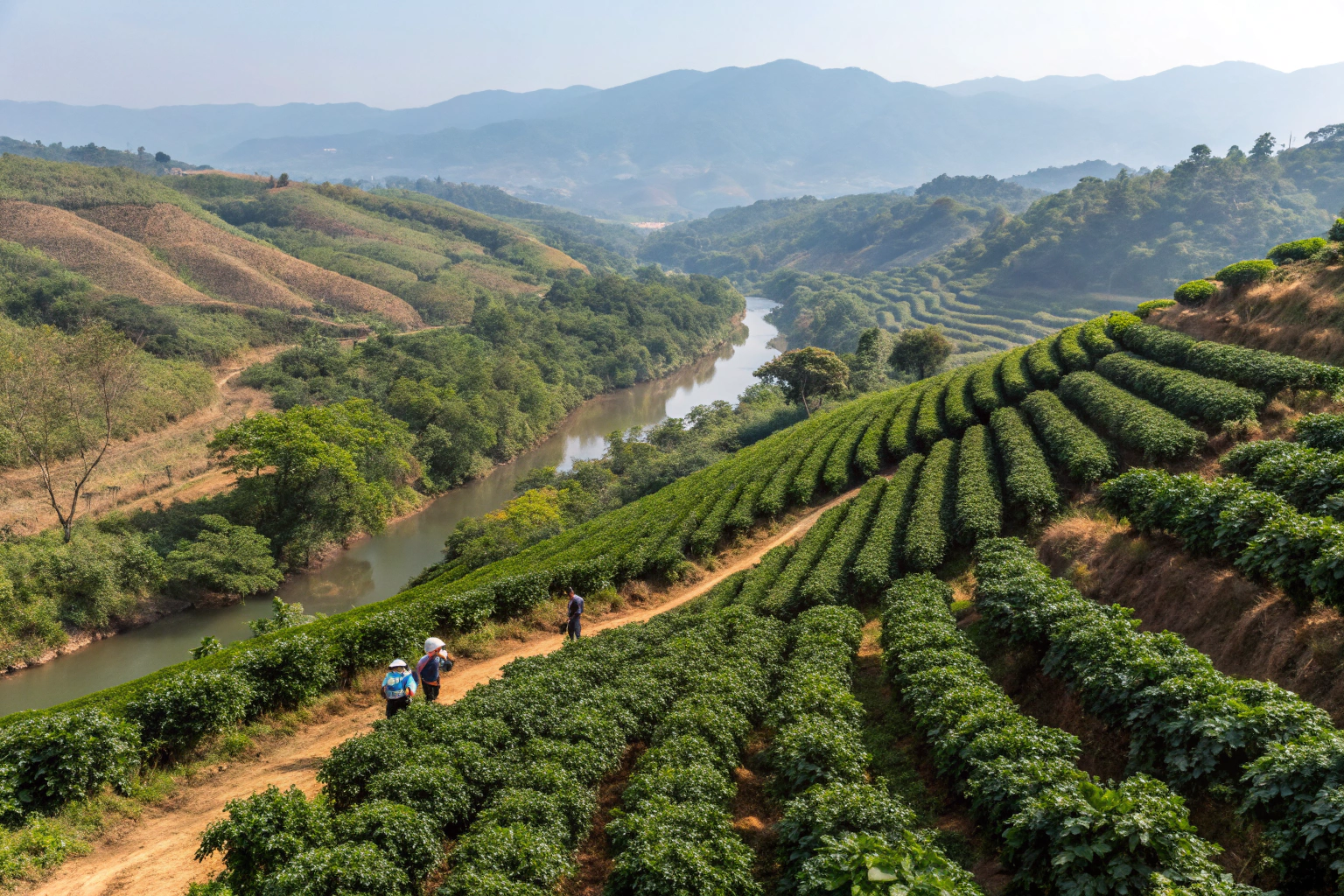
I remember standing on a ridge in Baoshan at dawn about twelve years ago, looking down at a valley that was mostly scrubland and scattered cornfields. An old farmer told me, "This land is too high for rice, too dry for tea, and too steep for anything but goats." Today, that same ridge overlooks some of the most productive specialty coffee farms in China. The scrubland is gone. In its place are terraced rows of Arabica trees, shaded by native nitrogen-fixing trees, with a wet mill at the valley bottom and a drying patio that catches the morning sun perfectly. That transformation is not just our farm's story. It is Baoshan's story. And it is the reason this region has become the epicenter of Chinese specialty coffee exports.
Baoshan is a core coffee exporting region because it uniquely combines four factors that no other region in China, and few in the world, can replicate simultaneously: high-altitude terrain between 1,200 and 1,600 meters with a dry-season harvest window ideal for natural and washed processing; a latitude near the Tropic of Cancer that creates a distinctive slow-ripening microclimate; a deep-water river system that provides consistent processing water and natural irrigation; and a mature, multi-generational coffee farming community with the accumulated agronomic knowledge to produce specialty-grade Arabica at scale. These are not theoretical advantages. They are visible in the cup profile, the yield consistency, and the export infrastructure that now moves millions of kilograms of green coffee annually from Baoshan to ports around the world.
I have spent enough time in coffee-growing regions across Asia, South America, and East Africa to understand what makes a region special. Baoshan is special. Here is why, broken down into the specific factors that a coffee buyer should understand when evaluating this origin.
What Geographical and Climatic Factors Make Baoshan a Prime Coffee Origin?
Baoshan sits in the southwestern corner of Yunnan province, tucked against the border with Myanmar. It is part of the Hengduan Mountain range, a complex system of north-south running ridges and deep river valleys carved by the Salween and Mekong rivers. This is not a gentle, rolling coffee landscape. It is dramatic, vertical terrain where farms climb from riverside subtropical zones up to cool, misty highlands. The geography creates something that a flat, uniform coffee plantation can never replicate: diversity of microclimates across short distances.
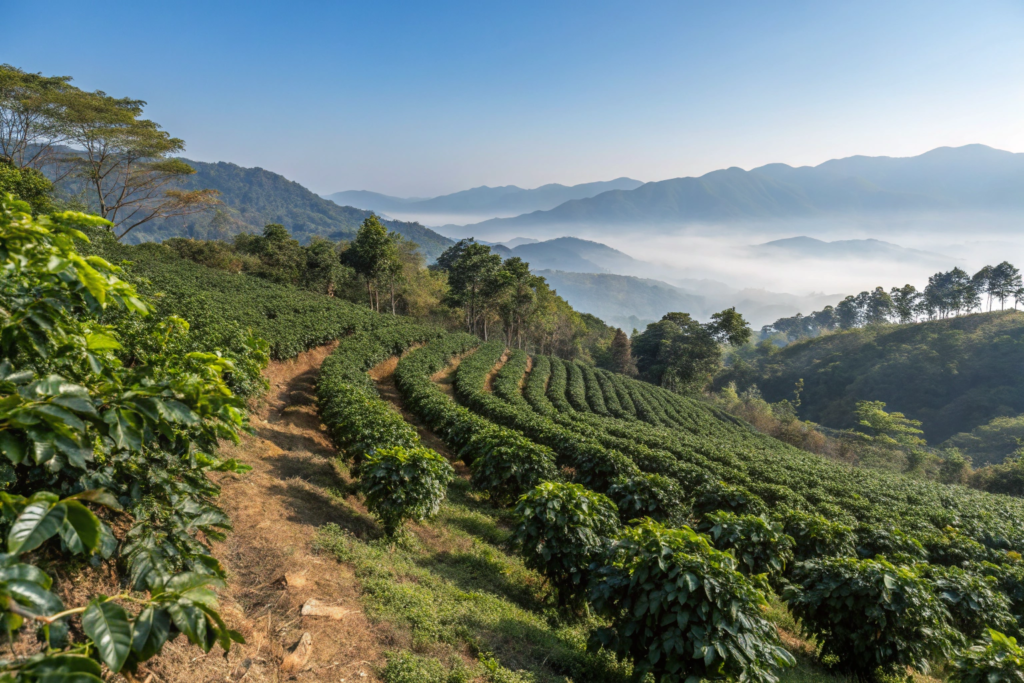
Baoshan's prime coffee-growing altitude range spans 900 to 1,800 meters above sea level, with the sweet spot for specialty Arabica falling between 1,200 and 1,600 meters. At these elevations, average temperatures range from 18 to 22 degrees Celsius, with cool nights that slow cherry maturation and concentrate sugars in the bean. Annual rainfall of 1,200 to 1,500 millimeters is concentrated in a distinct monsoon season from May to October, followed by a dry, sunny harvest season from November to March. This dry-harvest pattern is the critical advantage. It means cherries can be naturally processed on raised beds without the constant rain threat that plagues equatorial origins, and washed processing can be precisely controlled with ample clean water from mountain streams.
I have walked our farm blocks at different elevations on the same day. At 1,200 meters in the morning, the air is warm and the coffee trees are surrounded by banana plants and papayas. By mid-afternoon at 1,600 meters, I am wearing a jacket, and the trees are growing among pines and rhododendrons. The cherries at the higher block are visibly smaller, denser, and ripen a full month later. That range of conditions within a single farm gives us the ability to produce distinctly different cup profiles from different blocks, all processed in the same mill. The World Coffee Research climate suitability maps provide data on how these elevation and temperature factors translate to coffee quality potential, and the FAO's agro-ecological zoning resources explain the broader agricultural context of high-altitude tropical farming.
How does the dry harvest season give Baoshan an advantage over equatorial regions?
In many equatorial coffee regions—Colombia, Kenya, parts of Indonesia—rain can fall during the harvest, disrupting picking schedules, complicating drying, and introducing the risk of fermentation defects and mold. In Baoshan, the harvest runs from November through February, squarely within the dry season. We can plan picking with confidence. We can dry naturals slowly and evenly on raised beds under clear skies. We can manage fermentation times precisely because we are not chasing cherries ahead of an afternoon thunderstorm. This climate predictability translates directly to quality consistency, which is what specialty buyers value above almost everything else.
Why does latitude matter as much as altitude for cup profile development?
Baoshan sits at approximately 25 degrees north latitude, near the northern limit of the global coffee belt. This matters because the further a coffee farm is from the equator, the more pronounced the seasons become. The distinct cool winter during Baoshan's harvest means cherry maturation slows down more dramatically than at similar altitudes near the equator. The bean has more time on the tree to accumulate sugars and develop complex flavor precursors. A 1,400-meter farm in Baoshan can produce a cup with the acidity and complexity more typical of a 1,600-meter farm in Colombia, precisely because of this latitude effect. It is one of Yunnan's hidden advantages that the altitude number on the spec sheet does not fully capture.
How Has Local Coffee Processing Infrastructure Evolved to Support Export Quality?
I remember the old days of coffee processing in Baoshan. Fifteen years ago, most farms were doing full natural processing on concrete patios, with uneven drying, inconsistent fermentation, and minimal sorting. The cup quality was highly variable. Export volumes were small, and much of it went to commodity channels or instant coffee manufacturers. The transformation since then has been driven by investment in infrastructure, training, and a deliberate shift toward specialty-grade processing protocols.
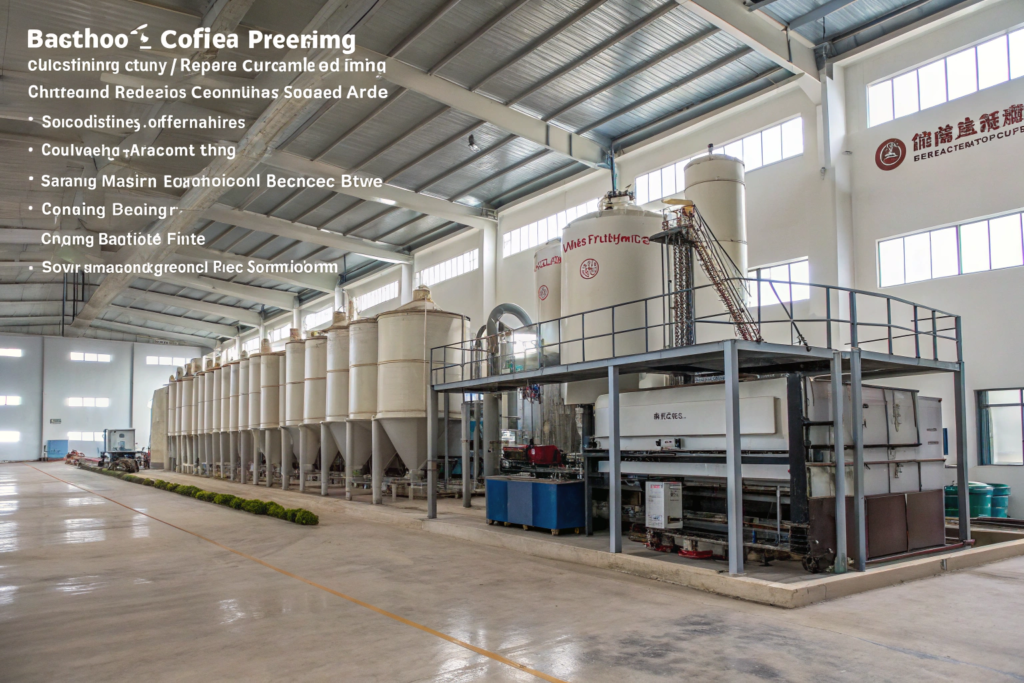
Baoshan's processing infrastructure has evolved from rudimentary sun-drying patios to a sophisticated network of wet mills, dry mills, and conditioning warehouses that rival the infrastructure in established specialty origins. Modern wet mills in the region now feature multi-channel fermentation tanks, mechanical demucilagers for honey processing, and covered raised-bed drying systems with precise temperature and humidity monitoring. Dry mills are equipped with density tables, optical sorters, and screen graders that achieve export-grade physical preparation. The region also now has several SCA-certified cupping labs and Q-graders who evaluate every export lot before shipment. This infrastructure is not concentrated in a single large facility. It is distributed across the region, allowing even medium-sized farms to access professional processing and quality control.
Our own mill has undergone three major upgrades in the past decade. We added a second washing channel to eliminate the earthy defect that used to be associated with Yunnan coffee. We installed mechanical dryers for the rare rainy harvest day. We built a climate-controlled warehouse that holds coffee at stable temperature and humidity, extending the shelf life and preserving cup quality. Each upgrade was driven by feedback from international buyers. The Specialty Coffee Association's processing standards provide the technical framework that mills in Baoshan now follow, and the Coffee Quality Institute's processing education programs have trained many of the region's mill managers.
What is the significance of double-washing in eliminating the old "earthy" Yunnan stereotype?
The old reputation of Yunnan coffee as "earthy" or "dirty" in the cup was not a varietal problem. It was a processing problem. Single-washed coffee often retained trace amounts of mucilage that continued to ferment unevenly during drying, producing phenol compounds that tasted like wet soil or must. Double-washing adds a second channel of clean water after the initial fermentation and wash, physically scrubbing away any remaining mucilage. The result is a clean, transparent cup that allows the terroir and varietal character to express itself without processing taint. Most export-focused mills in Baoshan have now adopted this as standard practice.
How have optical sorters changed the physical quality of Baoshan export lots?
Optical sorters use cameras and compressed air to remove defective beans based on color, shape, and size. Before optical sorters became common in Baoshan, physical sorting was done by hand, which was slow, expensive, and inconsistent. A container lot sorted by hand might still have an unacceptable number of quakers, insect-damaged beans, or over-fermented cherries. Optical sorters operate at high speed and with machine consistency. They have dramatically reduced the defect counts in Baoshan export coffee, bringing the region in line with the physical preparation standards of Costa Rica or Colombia.
What Coffee Varieties Thrive in Baoshan's Soil and Climate Conditions?
I have experimented with more coffee varieties than I care to count. Some have thrived. Some have failed spectacularly. The ones that have become the backbone of Baoshan's export industry are those that combine cup quality with resilience to the region's specific climate challenges: cool winters, occasional drought, and the ever-present threat of coffee leaf rust in the humid summer months.
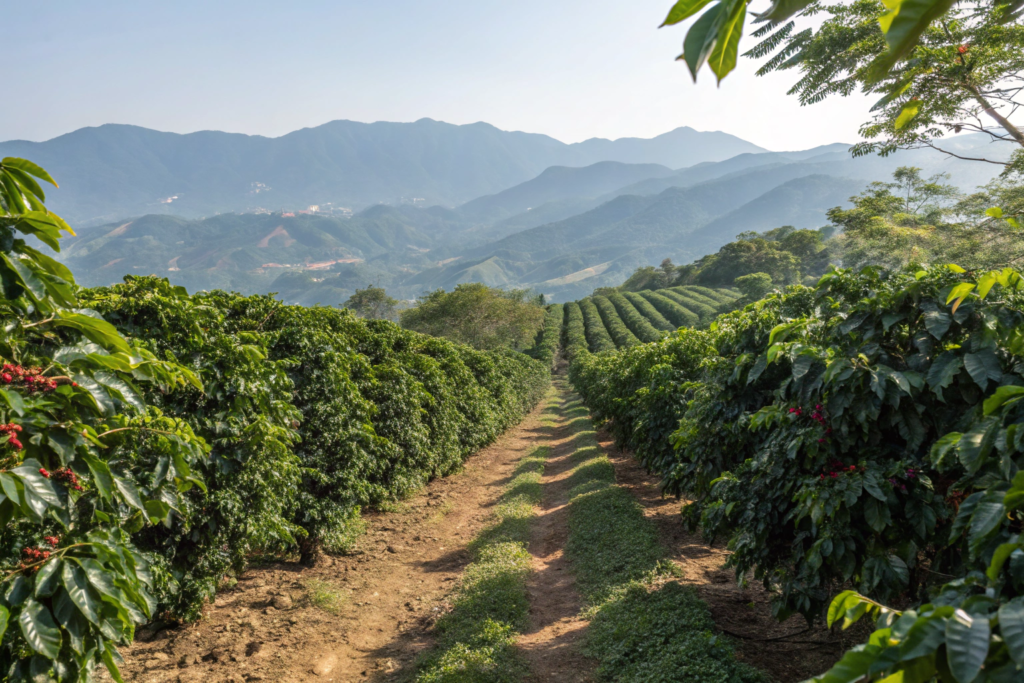
Catimor is the dominant variety in Baoshan, and its reputation is undergoing a significant rehabilitation. Older Catimor cultivars, planted decades ago for disease resistance rather than cup quality, produced coffee with a harsh, herbaceous character that reinforced negative stereotypes about Yunnan coffee. Newer Catimor selections, combined with high-altitude cultivation and modern processing, are producing cups that score 82 to 85 points with clean profiles of dark chocolate, caramel, and toasted nuts. Alongside Catimor, pure Arabica varieties—Bourbon, Typica, Caturra, and increasingly Geisha—are being planted at higher elevations and producing distinctive, complex cups that compete with Central American specialty lots. The variety story in Baoshan is one of rapid evolution from commodity-focused to quality-focused planting decisions.
I planted a trial block of Geisha five years ago at 1,600 meters. It was a risk. Geisha is finicky, low-yielding, and sensitive to climate stress. But the first harvest, processed as a fully washed lot, cupped at 87 points with unmistakable jasmine and bergamot notes. It was not a large volume. It was a proof of concept. It proved that Baoshan can produce world-class specialty coffee in the right microclimate with the right management. The World Coffee Research variety catalog provides detailed profiles of each of these varieties, including their agronomic characteristics and cup quality potential.
Why is Catimor being re-evaluated by specialty buyers?
The re-evaluation of Catimor is driven by three factors. First, improved cultivars. The Catimor being planted today is not the same Catimor of the 1990s. Breeding programs have selected for cup quality alongside disease resistance. Second, altitude. Catimor grown at 1,400 meters and above produces a much cleaner, sweeter cup than Catimor grown at 900 meters. Third, processing. Double-washing and careful drying eliminate the herbaceous, astringent notes that used to be common. For a buyer looking for a cost-effective espresso base with a clean, chocolatey profile, specialty-grade Catimor from Baoshan is increasingly difficult to beat on quality-to-price ratio.
How is Geisha performing in Baoshan compared to its Panama origins?
Geisha in Baoshan is still an experimental crop, not a commercial-scale operation. The yields are lower than in Panama due to cooler winter temperatures and less-established cultivation protocols. But the cup quality of the best lots is genuinely competitive. In blind cuppings I have conducted with visiting buyers, our top Geisha lots have been mistaken for high-end Central American lots. The flavor profile tends toward jasmine, stone fruit, and honey, with a slightly heavier body than Panamanian Geisha due to the slower maturation. For a roaster looking for a unique, story-rich micro-lot, Baoshan Geisha is an emerging opportunity.
What Export Infrastructure and Logistics Support Baoshan's Global Coffee Trade?
Growing great coffee is necessary but not sufficient. The coffee has to get from the farm to the port, through customs, onto a vessel, and across an ocean to the buyer's warehouse. I learned early on that a region's export infrastructure is just as important as its terroir. Baoshan has invested heavily in this infrastructure over the past decade, transforming from a remote, logistically challenging origin to one with reliable, efficient export pathways.
Baoshan's export infrastructure rests on three pillars. First, the physical logistics chain: a modern highway network connects Baoshan to Kunming, the provincial capital, in approximately five hours, and from Kunming, express rail and highway connect to Shanghai, China's largest container port, in two days. Second, the documentation and compliance infrastructure: experienced freight forwarders in Kunming and Shanghai specialize in coffee exports and handle phytosanitary certificates, certificates of origin, and FDA prior notice filings for US-bound shipments. Third, the consolidation infrastructure: multiple dry mills and warehouses in Baoshan can consolidate container loads, allowing buyers to mix lots from different farms into a single shipment. This logistical maturity means a container of Baoshan coffee can be booked, stuffed, and on the water with a level of predictability that was unimaginable a decade ago.
I remember shipping our first container fifteen years ago. The truck broke down on the mountain road. The paperwork was wrong. The coffee sat at the port for two weeks waiting for a corrected certificate. It was a nightmare. Today, I can watch a container loaded at our mill on a Tuesday, track it on the highway to Kunming, and receive confirmation of vessel loading in Shanghai by the following Monday. The system works. The Maersk shipping schedules from Chinese ports provide transit time estimates for the major trade lanes, and the COFCO agricultural logistics network is one of the key infrastructure providers that has improved connectivity for Yunnan's agricultural exports.
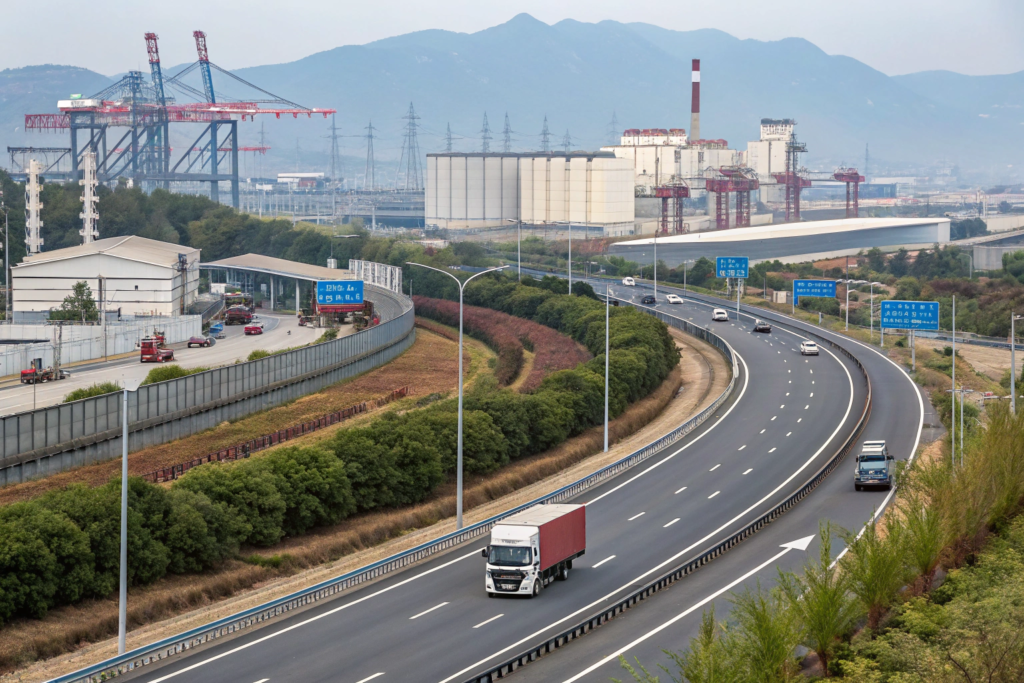
How has the highway connection to Kunming transformed Baoshan's export capability?
The completion of the Hangrui Expressway, connecting Baoshan to Kunming, cut transport time from a full day on winding mountain roads to under five hours on a modern, divided highway. This matters for coffee quality. Less time in transit means less exposure to heat, humidity, and vibration. It matters for reliability. A truck breakdown that once could delay a container by days is now a rare event. And it matters for cost. Faster, more reliable transport reduces the logistics buffer that buyers and suppliers need to build into their contracts.
What export documentation capability should a buyer expect from a professional Baoshan supplier?
A professional export supplier in Baoshan should provide a complete documentation package with every shipment: commercial invoice, packing list, bill of lading, certificate of origin (Form A for generalized system of preferences eligibility), phytosanitary certificate issued by the China Inspection and Quarantine authority, and any buyer-specific documents such as organic or Rainforest Alliance transaction certificates. The supplier should be able to provide draft documents for buyer review before vessel departure and final documents within 48 hours of sailing. If a supplier struggles with this documentation, they are not yet a fully professional export operation.
Conclusion
Baoshan is not a newly discovered coffee origin. It has been growing coffee for decades. But it is a newly matured origin, one that has transitioned from commodity production to specialty-grade export readiness in a remarkably short period. The combination of high-altitude, dry-harvest terroir, modern processing infrastructure, evolving variety selection, and reliable export logistics has transformed the region into China's most important specialty coffee exporting hub. For a buyer, understanding Baoshan means understanding that this is not an origin of potential. It is an origin of proven performance, with the quality, consistency, and infrastructure to compete with established specialty origins globally.
If you are a roaster or importer who has not yet tasted what contemporary Baoshan coffee can deliver, I would welcome the opportunity to send you samples. Our farm sits at the heart of this region, and we have spent fifteen years refining our growing, processing, and exporting practices to meet the standards of the most demanding specialty buyers. Contact Cathy Cai at cathy@beanofcoffee.com. She can send you our current lot list, cupping scores, and a selection of samples that represent the range of what Baoshan can produce. Come taste what this region has become. It is not the Yunnan you remember from a decade ago.