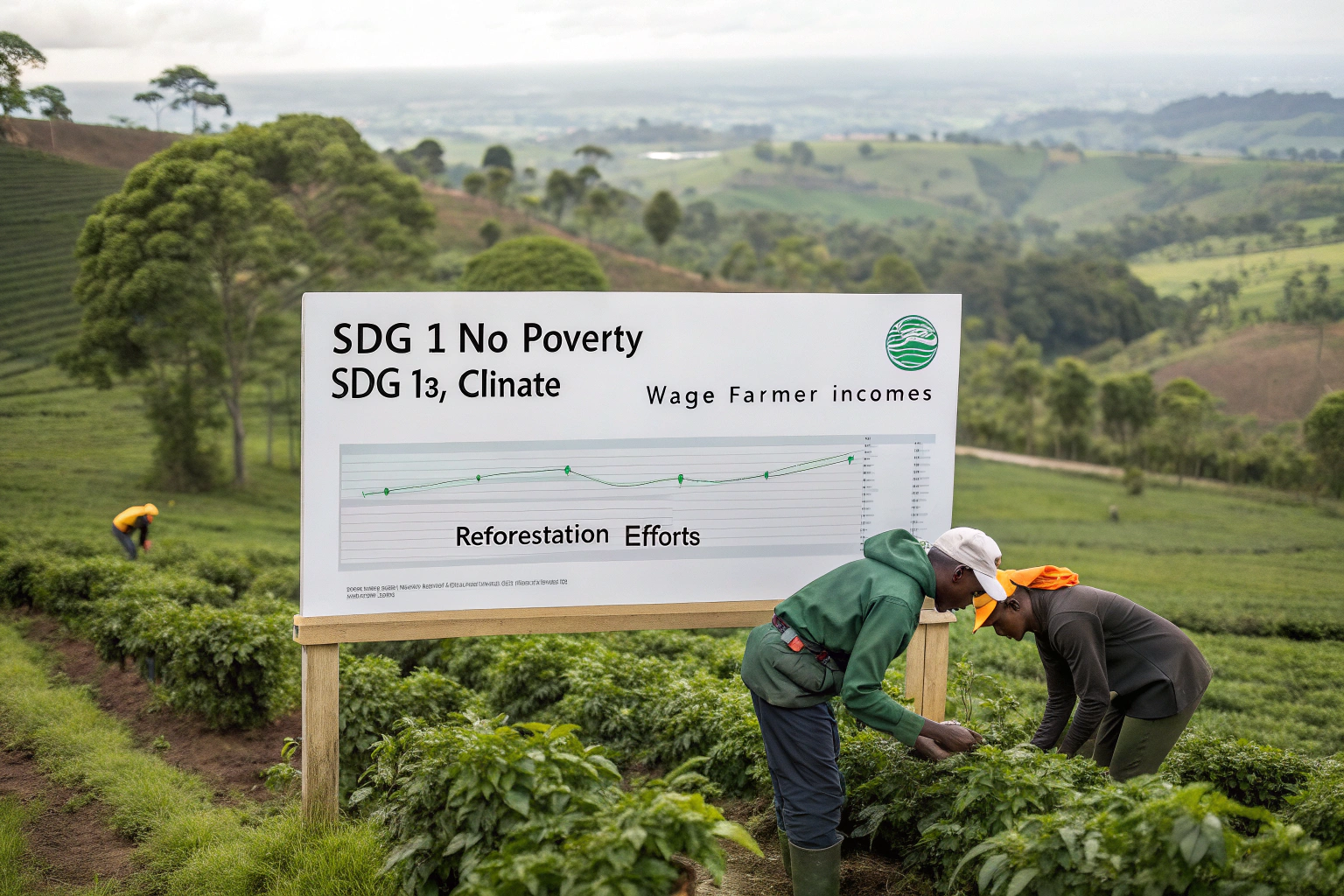
I was sitting in a conference room in Hamburg two years ago, presenting our Yunnan Arabica to the green coffee buying team of a large European roaster. I had my cupping scores ready. I had my pricing sheets. I had my harvest data and my shipping schedules. But the first question the head buyer asked had nothing to do with any of that. She looked at me and said, "Which of the UN Sustainable Development Goals does your farm operation directly support, and can you show me the data?" I paused. I knew we were doing good work—paying fair wages, protecting our watershed, providing housing for our workers. But I had never mapped that work to a global framework or measured it in a way that a sophisticated buyer could evaluate. That pause almost cost us the account.
Coffee buyers should care about the UN Sustainable Development Goals because the SDGs have become the common language of sustainability for the entire food and beverage industry. Large roasters, retailers, and institutional buyers increasingly require suppliers to demonstrate measurable contributions to specific SDGs as a condition of doing business. This is not philanthropy. It is risk management and market access. A coffee supply chain that can prove it supports SDG 1, No Poverty, by documenting above-living-wage farmer incomes, or SDG 13, Climate Action, by showing reforestation and carbon sequestration data, is a supply chain that is more resilient, more stable, and more attractive to the buyers who control the largest and most lucrative contracts. Ignoring the SDGs is not a neutral choice. It is a slow disqualification from the top tier of the global coffee market.
I did not lose that account. I went back to Baoshan, spent three months building an SDG alignment framework for our operations, and returned to Hamburg with data, not just stories. That framework has since become one of the most powerful tools in our sales arsenal. Here is why the SDGs matter, how they apply to coffee specifically, and what buyers should look for when evaluating a supplier's sustainability claims.
What Are the UN Sustainable Development Goals and How Do They Apply to Coffee Production?
The UN Sustainable Development Goals are a set of 17 interconnected global objectives adopted by all United Nations member states in 2015, with a target achievement date of 2030. They cover everything from poverty and hunger to clean water, gender equality, decent work, climate action, and responsible consumption. They are ambitious, universal, and deliberately broad. For a coffee buyer encountering them for the first time, they can feel abstract and disconnected from the daily reality of sourcing and cupping. But they are not abstract. They map directly onto the most critical challenges facing the coffee industry.
The SDGs that most directly apply to coffee production are SDG 1, No Poverty, SDG 2, Zero Hunger and sustainable agriculture, SDG 5, Gender Equality, SDG 6, Clean Water and Sanitation, SDG 8, Decent Work and Economic Growth, SDG 12, Responsible Consumption and Production, SDG 13, Climate Action, and SDG 15, Life on Land. A coffee farm that pays living wages, provides worker housing and healthcare, uses water-efficient processing, avoids deforestation, and sequesters carbon through shade trees is contributing to at least six of these goals simultaneously. For a coffee buyer, this means that choosing a supplier who is aligned with the SDGs is not a separate "sustainability decision." It is a quality, stability, and risk-reduction decision embedded in the same purchasing process.
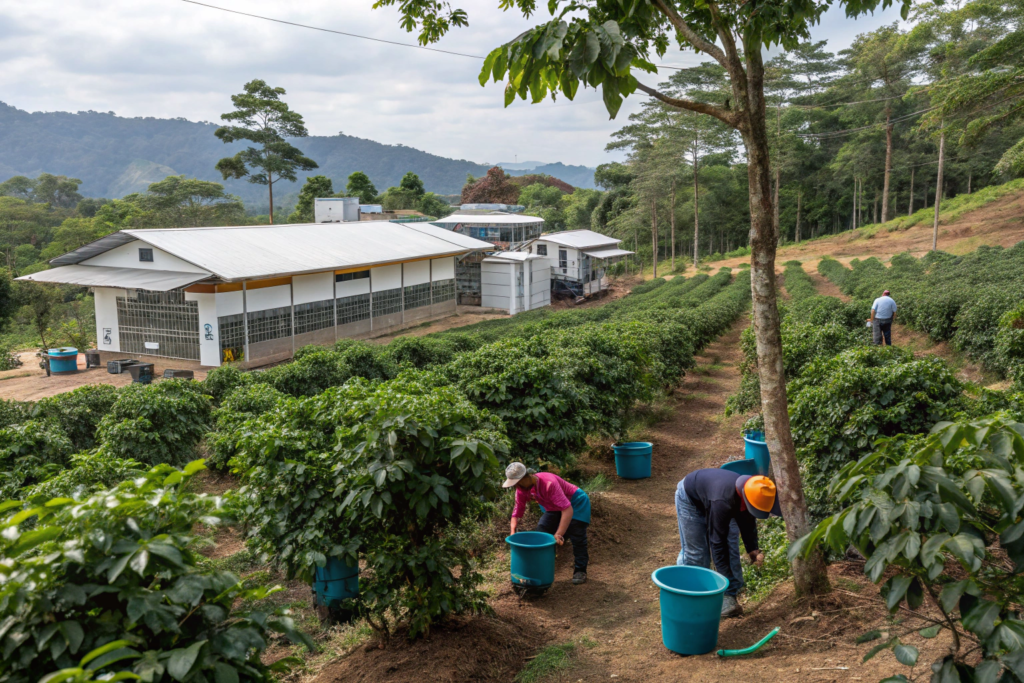
I started by mapping each of our farm's existing practices to the relevant SDG targets. We were already doing most of the work. We just had not named it in a way that resonated with international buyers. The UN SDG official website provides the full text of all 17 goals and their specific targets, and the Global Coffee Platform's sustainability framework translates the SDGs into coffee-specific metrics and indicators.
Which specific SDG targets are most relevant to specialty coffee farming?
SDG 1, Target 1.1, calls for eradicating extreme poverty. In coffee terms, this means ensuring that farmers and farm workers earn above the living income threshold for their region. SDG 6, Target 6.3, calls for improving water quality by reducing pollution. For coffee, this means treating wastewater from wet mills before it re-enters the watershed. SDG 13, Target 13.1, calls for strengthening resilience to climate-related hazards. For coffee, this means planting drought-resistant varieties, diversifying shade trees, and protecting against frost and heat events. Each of these targets can be measured, documented, and verified on a working coffee farm.
How does an SDG framework help a buyer compare sustainability claims across suppliers?
Without a common framework, every supplier defines "sustainable" differently. One says they are sustainable because they do not use pesticides. Another says they are sustainable because they pay above the minimum wage. Both might be true, but they are not comparable. The SDGs provide a standardized, globally recognized language. A buyer can ask every supplier the same set of questions: "What is your farm's living wage benchmark, and what percentage of your workers earn at or above it?" "What is your water usage per kilogram of green coffee produced?" "What is your annual carbon sequestration from on-farm trees?" The answers, grounded in the same SDG targets, become comparable data points rather than marketing narratives.
How Does SDG Alignment Translate Into Tangible Risk Reduction for a Coffee Buyer?
I have a client who is the director of coffee for a large specialty chain. He once told me that his biggest fear is not a bad crop year or a shipping delay. It is opening a newspaper and seeing his company's name next to a headline about child labor, deforestation, or water pollution linked to one of their supply chains. That kind of reputational damage can wipe out decades of brand building in a single news cycle. His sustainability program is not about marketing. It is about sleeping at night.
SDG-aligned sourcing reduces a buyer's exposure to four categories of risk. Reputational risk, by providing documented evidence that the supply chain meets internationally recognized ethical and environmental standards. Regulatory risk, by anticipating and exceeding the due diligence requirements that are becoming law in the European Union and other major markets. Supply disruption risk, by investing in climate resilience and farmer livelihoods that keep coffee flowing even in difficult years. And quality risk, because farms that treat their workers well, protect their ecosystems, and invest in their communities are farms that consistently produce better coffee. Sustainability and quality are not separate. They are two expressions of the same farm management discipline.
The European Union's deforestation regulation, which requires importers to prove that their coffee did not come from deforested land, is a concrete example of SDG alignment shifting from voluntary to mandatory. A supplier who can already demonstrate SDG 15, Life on Land, compliance with geolocation data and deforestation monitoring is a supplier who can continue selling into the European market without disruption. A supplier who cannot is a supplier whose market access is now at risk. The European Commission's deforestation regulation page provides the legal text, and the Preferred by Nature sustainability framework offers practical guidance for coffee producers and buyers.
What is the link between farmer living income and supply chain stability?
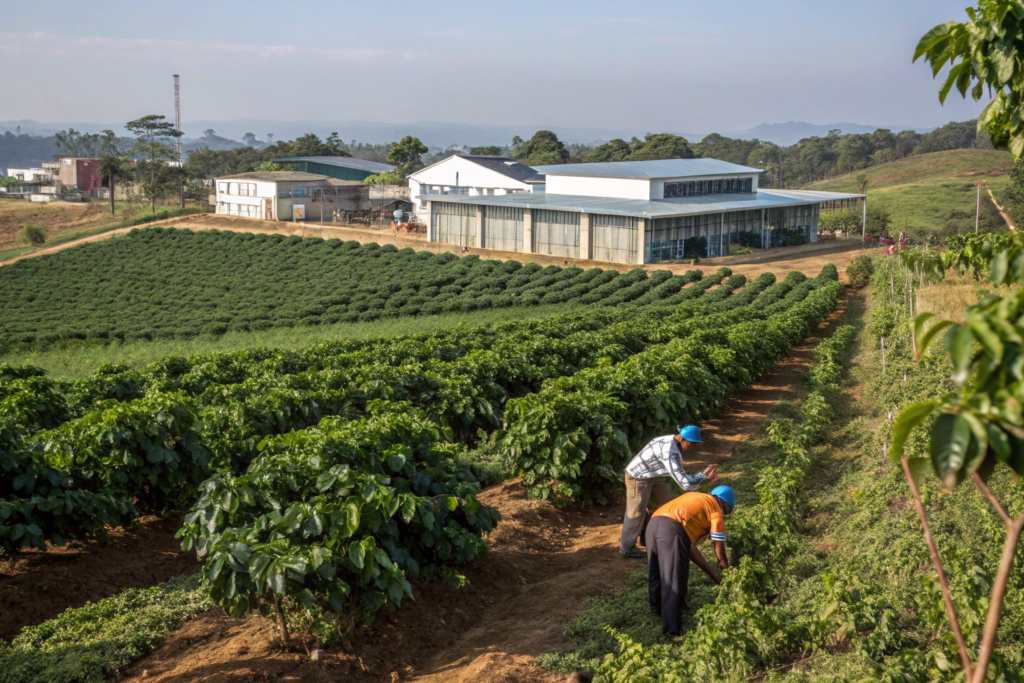
A coffee farmer who earns below a living income cannot afford to invest in their farm. They cannot replace aging trees, improve processing equipment, or pay for the labor required to pick only ripe cherries. Quality declines. Yields decline. Eventually, the farmer abandons coffee entirely for a more reliable crop, or their children leave the farm for urban jobs. The supply chain loses that coffee permanently. When a buyer supports SDG 1, No Poverty, by paying prices that enable a living income, they are not doing charity. They are investing in the long-term survival of their own supply base. The Living Income Community of Practice provides benchmarks and methodologies for measuring living income in coffee-producing regions.
How does climate action investment at the farm level protect a buyer's future volume and quality?
Climate change is not a future threat to coffee. It is a present reality. Rising temperatures are shrinking the suitable altitude range for Arabica. Erratic rainfall is disrupting flowering and cherry development. Frosts, like the one that damaged our highest-altitude plot, are becoming more frequent in some regions. A supplier who is investing in SDG 13, Climate Action—planting shade trees to moderate microclimates, restoring native vegetation along waterways, transitioning to water-efficient processing, measuring and reducing their carbon footprint—is a supplier who is actively protecting their ability to produce coffee in 2035 and beyond. For a buyer building a brand around a specific origin or a specific farm, that investment is the difference between a long-term partnership and a coffee that disappears from your menu in five years.
What Documentation Should a Buyer Request to Verify a Supplier's SDG Contributions?
Anyone can put the SDG logos on a PowerPoint slide. I have seen suppliers do exactly that, with no data, no verification, and no shame. A buyer who accepts a slide full of colorful SDG icons without asking for evidence is not doing due diligence. They are accepting marketing. The difference is in the documentation.
A credible SDG-aligned supplier should be able to provide specific, measurable, and ideally third-party verified data for each SDG claim they make. For SDG 1, No Poverty: a living income benchmark study for their region and payroll records showing that farm workers earn at or above that benchmark. For SDG 6, Clean Water: water quality testing data from their wet mill discharge points. For SDG 13, Climate Action: a carbon footprint assessment and a reforestation or shade tree planting record with survival rates. For SDG 5, Gender Equality: workforce demographic data and policies on equal pay and leadership representation. The data does not need to be perfect. But it needs to exist, to be current, and to be transparent enough for a buyer to evaluate.
When I prepared our SDG documentation for the Hamburg buyer, I did not hire an expensive sustainability consultancy. I started with what we already had: payroll records, water tests, tree planting logs, and organic certification audits. I organized it by SDG target, identified the gaps, and created a plan to fill them over time. The buyer did not expect perfection. She expected honesty, a systematic approach, and a commitment to continuous improvement. That is what we gave her.
What is the difference between a self-declared SDG claim and a verified one?
A self-declared claim is a statement made by the supplier with no external validation. "We pay fair wages." A verified claim is backed by evidence that has been reviewed by an independent third party. "Our wages were audited against the Anker living income benchmark for rural Yunnan by an accredited certification body, and 94% of our permanent workers earn above the benchmark." Verification can come from certifications like Fair Trade, Rainforest Alliance, or organic certifications, from buyer-conducted audits, or from independent research organizations. The more robust the verification, the more credible the claim.
How should a buyer prioritize which SDG metrics to request first?
Start with the SDGs that are most material to coffee production and most relevant to your own brand commitments. If your brand's sustainability messaging focuses on climate, prioritize SDG 13 data. If it focuses on farmer equity, prioritize SDG 1 and SDG 5 data. Do not ask for everything at once. A supplier who is early in their sustainability journey may be overwhelmed by a request for data across ten SDGs. Focus on the three to five that matter most to your business, build a baseline, and expand from there.
How Can a Buyer Use SDG Alignment as a Positive Brand Story for Their Own Customers?
I have a roaster client in the UK who built an entire marketing campaign around SDG 5, Gender Equality. They sourced a lot from a women-led processing cooperative and featured the women's stories on the bag, on their website, and in their cafe. The campaign resonated deeply with their customers. Sales of that lot exceeded projections. The coffee was excellent, but the story made it memorable. The SDG framework gave the story credibility that a generic "empowering women" tagline could not.
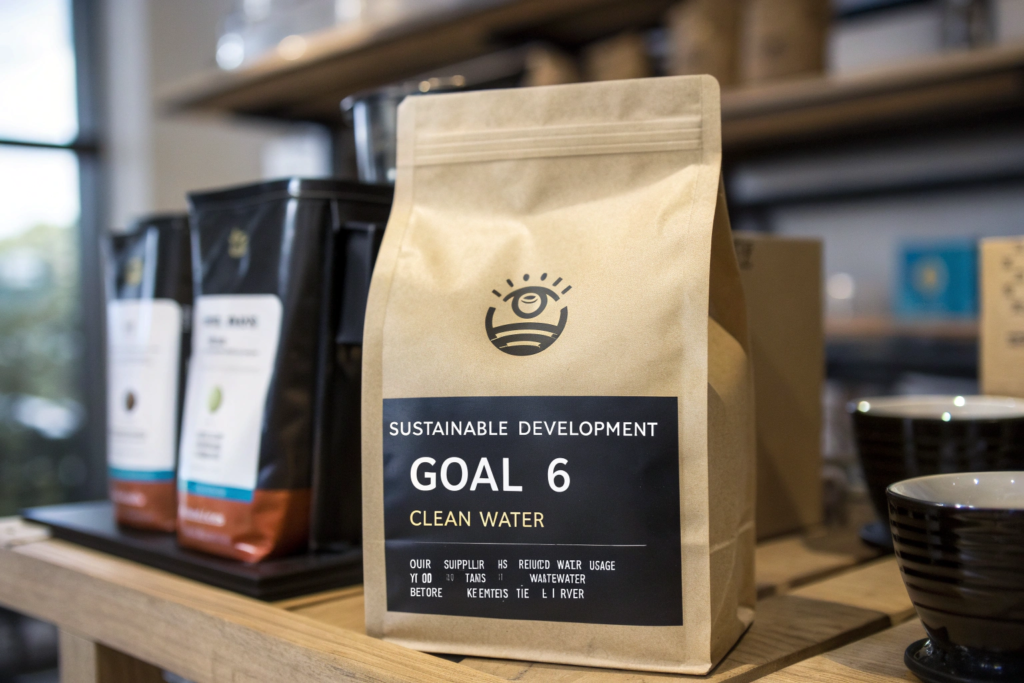
SDG alignment provides a structured, credible narrative framework for a roaster's brand storytelling. Instead of vague claims about "doing good," a roaster can say: "This coffee directly contributes to SDG 6, Clean Water. Our supplier has reduced water usage by 40% and treats 100% of wastewater before it re-enters the local river." This is specific, verifiable, and connected to a global effort that customers may already recognize. It positions the roaster as a professional participant in a worldwide movement, not just a local business with good intentions. For a customer choosing between two bags of specialty coffee on a shelf, the one with a concrete, credible impact story often wins.
The key is specificity. "We care about the environment" is wallpaper. Nobody notices it. "This farm has planted 12,000 native shade trees since 2020, sequestering an estimated 200 tons of carbon dioxide annually" is a fact. It commands attention. It invites questions. It makes the customer feel smart for choosing the coffee, because they now have a fact to share with their own friends and family.
How do you translate a supplier's SDG data into a customer-friendly story?
Take one data point and build a human story around it. The data is the skeleton. The story is the flesh. "SDG 6 compliance: wastewater treatment system installed 2021" becomes "The river that runs through our farm is clean enough for the village children to swim in. We built a water treatment system that cleans every drop used in coffee processing before it goes back to nature." Both are true. One is a compliance note. The other is a story that a customer will remember and repeat.
Why does an SDG framework give a brand story more credibility than a generic sustainability claim?
The SDGs are not a coffee industry invention. They are a United Nations framework ratified by 193 countries. When a roaster references SDG 13, they are not making up a standard. They are connecting to a globally recognized goal. This external reference point gives the story an authority that an internal "our values" statement lacks. A customer who is skeptical of corporate sustainability claims may still trust a framework that is used by governments and NGOs worldwide. The credibility comes from the universality of the reference, not the poetry of the copywriting.
Conclusion
The UN Sustainable Development Goals are not a bureaucratic exercise. They are a risk management tool, a market access requirement, and a storytelling framework, all rolled into one. For a coffee buyer, engaging with the SDGs means asking suppliers for specific, verifiable data on living income, water stewardship, climate resilience, and gender equity. It means using that data to compare suppliers objectively, to protect against reputational and regulatory risk, and to tell credible, compelling stories to customers. The buyers who are doing this already are securing the best supply chains, the most stable partnerships, and the strongest brand positions.
If you are a roaster or a buyer who wants to build an SDG-aligned sourcing program, or if you are simply looking for a supplier who can provide the documentation and the data to back up sustainability claims, we have done the work of mapping our farm operations to the SDG framework. We can provide the payroll records, the water tests, the tree planting logs, and the third-party certifications that make sustainability verifiable, not just verbal. Contact Cathy Cai at cathy@beanofcoffee.com. She can share our SDG alignment report, walk you through the data behind each goal, and help you build a sourcing story that is as credible as it is compelling. Your customers want to know their coffee did some good in the world. We can help you prove it.