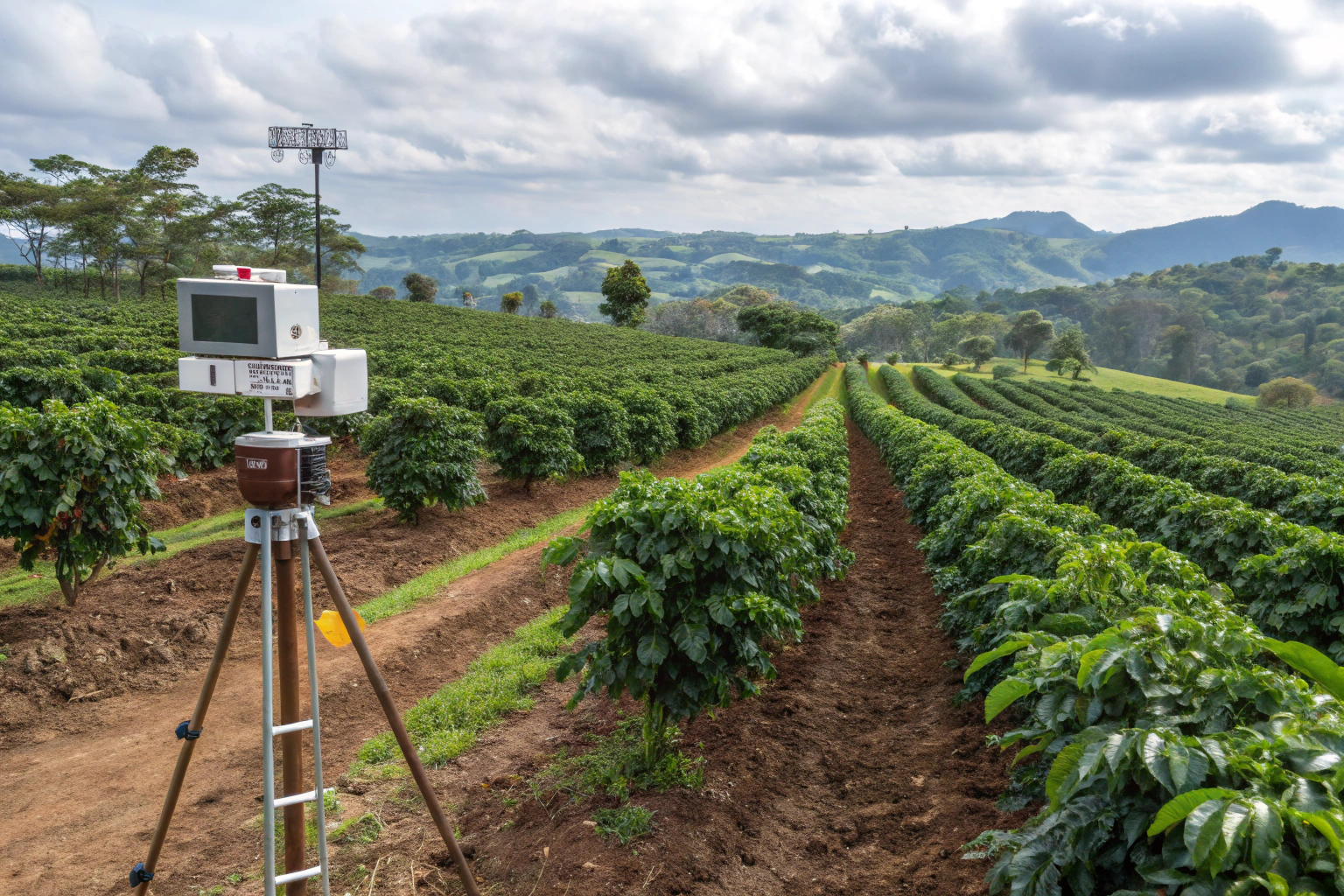
You see the photos. Lush green hills. Terraced landscapes. A farmer in a traditional hat. It looks timeless. Beautiful. But also... old-fashioned. And as a coffee buyer in 2026, you know that beautiful scenery doesn't guarantee a consistent, high-quality, and food-safe product. You need to know: Behind that picturesque facade, is there a modern, professional agricultural operation? Or are you buying from a system that relies on luck and tradition? You're asking: Are Yunnan coffee plantations actually using the modern farming techniques that I need to build a reliable supply chain?
Yes, the leading coffee plantations in Yunnan are aggressively adopting and implementing modern, data-driven farming techniques. This is not universal across all smallholders, but the farms that are driving Yunnan's specialty coffee revolution—particularly the large, vertically integrated estates—are utilizing a sophisticated suite of tools. These include GPS field mapping, soil and leaf tissue analysis for precision fertilization, integrated pest management (IPM), high-density planting with improved varietals, drip irrigation in water-stressed areas, and digital farm management systems. This is modern agriculture, applied to coffee.
I'm not just an exporter. I'm a farmer. At Shanghai Fumao, I walk the 10,000 acres. I see the soil probes and the weather stations. I review the data with our agronomists. Let me take you behind the postcard image and show you the real, modern farming operation that produces the coffee in your cup.
How Are GPS and Satellite Technology Changing Farm Management in Yunnan?
The first step in modern farming is knowing exactly what you have. For decades, farmers relied on memory and rough estimates. "About 50 mu on the east hill." That's not precise enough for quality-focused specialty coffee. Technology has changed that.
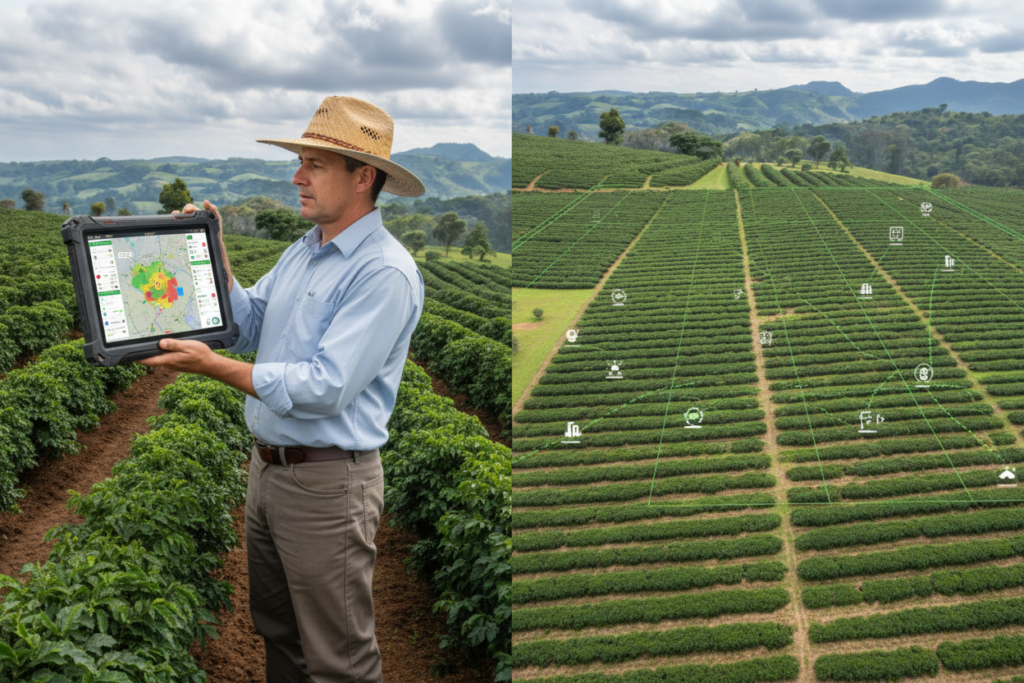
GPS and satellite technology are revolutionizing farm management in Yunnan by providing precise, actionable data. Farms are being digitally mapped, with every block of coffee trees assigned a unique polygon with specific GPS coordinates. This mapping serves multiple critical functions: it is the foundation for EUDR compliance (proving deforestation-free status), it enables precise yield estimation and harvest planning, it allows for variable-rate application of fertilizers based on soil zone maps, and it provides the ultimate traceability tool for the buyer, linking a bag of coffee to a specific, verifiable plot of land.
How Is GPS Mapping Used for EUDR Compliance and Traceability?
As we've discussed, the EU Deforestation Regulation (EUDR) mandates that coffee entering Europe be traceable to the specific plot of land where it was grown, with geolocation data proving it was not deforested after 2020.
For a large Yunnan farm like Shanghai Fumao, manual record-keeping for 10,000 acres would be impossible. The solution is GPS farm mapping. Our entire estate has been walked, boundary by boundary, with high-precision GPS devices. This data is integrated into a Geographic Information System (GIS). For every export lot, we can generate a polygon map showing the exact source of the coffee. This map is the core of our EUDR Due Diligence Statement. It's also a powerful tool for the roaster. You can take the GPS coordinate we provide, plug it into Google Earth or Global Forest Watch, and see the farm for yourself. This is modern, verifiable transparency. You can learn more about the geolocation requirements on the European Commission's EUDR page.
How Does Satellite Imagery Help with Yield Prediction and Harvest Planning?
Knowing the precise area of each coffee block allows us to move from guesswork to data-driven planning. But we also use satellite imagery to monitor plant health.
By analyzing NDVI (Normalized Difference Vegetation Index) data from satellite imagery, our agronomists can assess the vigor and health of the coffee trees across the entire estate. Areas of stress (due to disease, nutrient deficiency, or drought) show up as changes in the "greenness" signature. This allows us to target our interventions—sending a scout to a specific block to diagnose a problem before it spreads. It also allows for much more accurate yield forecasting. By combining historical yield data with current satellite imagery of flowering and cherry set, we can predict the harvest volume for each block with surprising accuracy months in advance. This is invaluable for planning labor, milling capacity, and for giving our buyers reliable estimates of available volume.
What Role Do Soil Science and Precision Fertilization Play in Quality?
Healthy soil equals healthy trees equals high-quality coffee. This is an old truth. What's modern is the precision with which we manage soil health. We no longer just spread a generic "coffee fertilizer" and hope for the best.
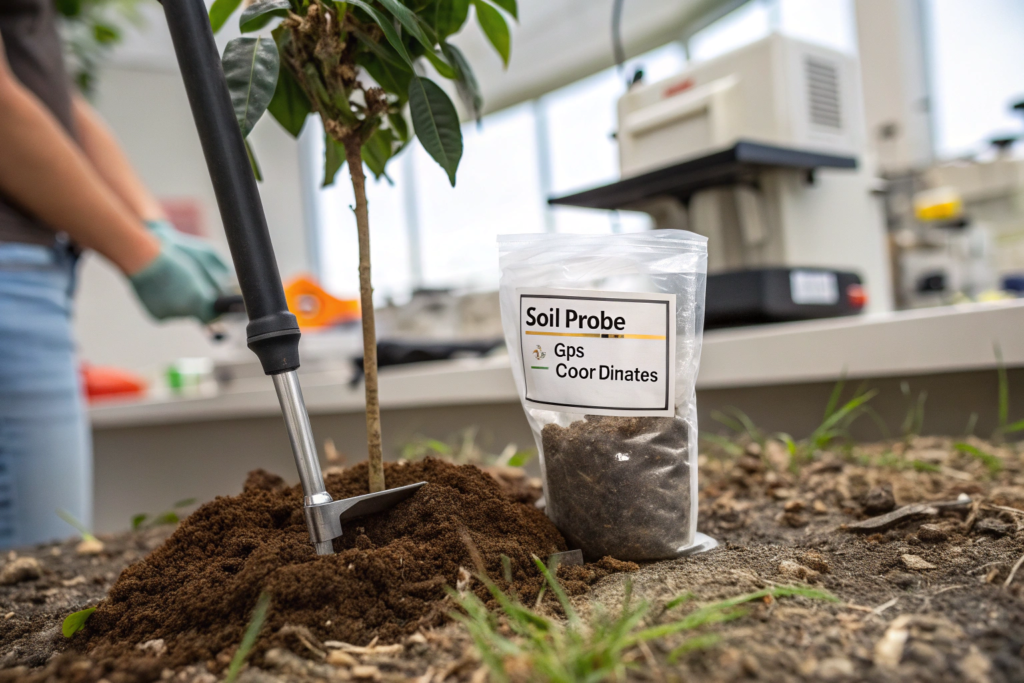
Soil science and precision fertilization in Yunnan involve a cycle of testing, analysis, and targeted application. This begins with systematic grid soil sampling across the farm. Samples are sent to accredited laboratories for analysis of pH, organic matter, and macro/micronutrient levels. Leaf tissue samples are also analyzed to see what nutrients the tree is actually absorbing. Based on this data, a customized fertilization plan is developed for each block, often using a blend of composted organic matter (coffee pulp, manure) and precisely dosed mineral supplements. This ensures the tree gets exactly what it needs, when it needs it, optimizing both yield and cup quality.
Why Is Composting Coffee Pulp a Game-Changer for Yunnan Soil?
Yunnan's red volcanic soils are inherently fertile but can be prone to compaction and erosion. Organic matter is the key to improving soil structure, water retention, and microbial life.
The single best source of organic matter on a coffee farm is the coffee cherry pulp itself—the skin and fruit removed during processing. For years, this was a waste product. Now, it's a valuable resource. At Shanghai Fumao, we compost thousands of tons of coffee pulp annually, mixing it with animal manure. This compost is then returned to the fields. This practice has multiple benefits:
- Improves Soil Health: Adds organic carbon, feeds beneficial microbes, and improves soil structure.
- Reduces Synthetic Fertilizer Use: The compost provides a slow-release source of nitrogen, phosphorus, and potassium, reducing our reliance on synthetic inputs.
- Increases Water Retention: Soils rich in organic matter hold water better, making trees more resilient to dry spells.
- Closes the Loop: It's a beautiful, circular system. The waste from the coffee becomes the food for the next crop.
This is a modern, sustainable farming technique rooted in ecological principles.
How Does Leaf Tissue Analysis Refine the Fertilizer Program?
Soil tests tell you what nutrients are in the soil. Leaf tissue analysis tells you what nutrients the tree is actually absorbing. They are complementary.
We regularly collect leaf samples from specific blocks and send them to a lab. The analysis reveals if the tree is deficient in a critical micronutrient—like zinc or boron—even if it's present in the soil. This could be due to a soil pH issue locking up the nutrient. This information allows for highly targeted foliar feeding—spraying a dilute nutrient solution directly onto the leaves for rapid absorption. This precision prevents over-application of fertilizers, saving money and protecting the environment. It also ensures the tree has the optimal nutritional balance to produce dense, sugar-rich cherries, which directly translates to a sweeter, more complex cup.
How Is Technology Improving Pest and Disease Control in Yunnan?
Pests and diseases, particularly coffee leaf rust and coffee berry borer, are constant threats. The old approach was calendar-based spraying: spray every two weeks, whether needed or not. This is expensive, environmentally damaging, and can lead to pesticide resistance.
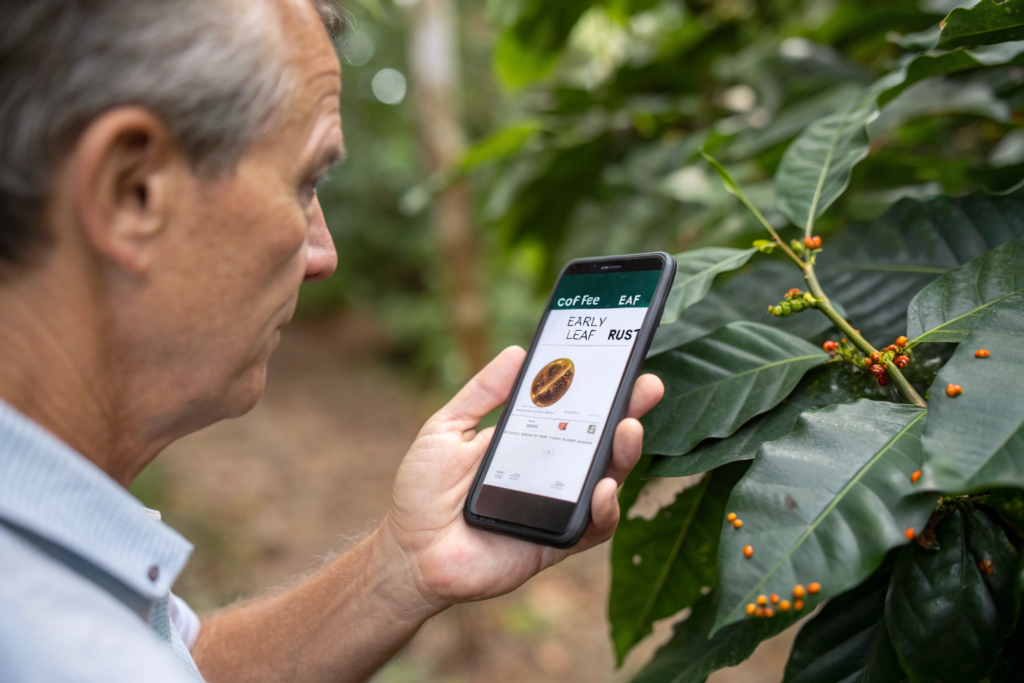
Modern pest and disease control in Yunnan relies on Integrated Pest Management (IPM). This is a data-driven, ecological approach that prioritizes prevention, monitoring, and targeted intervention. Key tools include: (1) Weather stations and predictive models that forecast disease pressure based on temperature and humidity. (2) Regular scouting and trap monitoring to detect pest populations before they reach economic thresholds. (3) Use of biological controls (like beneficial fungi that attack the coffee berry borer). (4) Targeted, minimal application of approved, low-toxicity pesticides only when absolutely necessary. (5) Smartphone apps that help farmers and scouts accurately diagnose problems in the field.
How Are Weather Stations Used to Predict Leaf Rust Outbreaks?
Coffee leaf rust (Hemileia vastatrix) requires specific conditions to germinate and spread: a period of leaf wetness and a suitable temperature range. A well-placed weather station on the farm continuously monitors these variables.
This data is fed into a disease prediction model. The model can forecast, with good accuracy, when conditions are ripe for a rust outbreak—perhaps 7-10 days in advance. This early warning is invaluable. It allows the farm manager to deploy scouts to high-risk blocks for close inspection. If the very first signs of rust are found, a targeted, localized spray can be applied to just that small area, stopping the outbreak before it spreads. This is dramatically more efficient and environmentally sound than blanket spraying the entire farm. It's preventive medicine for the farm.
What Is the Role of Digital Scouting Apps in Yunnan?
Gone are the days of a clipboard and a pencil. Our field scouts now use rugged smartphones loaded with specialized farm management apps.
When a scout walks a block, they use the app to record their GPS location. If they see a potential issue—a few rust spots, some insect damage, a nutrient deficiency symptom—they take a photo with the phone. The app tags the photo with the exact GPS coordinates and a timestamp. This information is instantly uploaded to a central database accessible to the head agronomist. This creates a real-time, georeferenced map of farm health. The agronomist can see exactly where problems are emerging and dispatch a team to address them. It also creates a permanent, auditable record of pest and disease pressure and the interventions taken. This is modern, professional farm management. At Shanghai Fumao, this system is integral to our quality and sustainability programs.
Are High-Density Planting and Improved Varietals Being Used?
Modern farming is also about maximizing the productivity and quality potential of the land. This involves rethinking traditional planting methods and continuously improving the genetic material.
Yes, high-density planting and the systematic introduction of improved varietals are key components of modern Yunnan coffee farming. High-density planting (e.g., 5,000-7,000 trees per hectare instead of the traditional 3,000-4,000) maximizes land use efficiency and can lead to higher early yields. This is combined with a deliberate shift toward improved genetic material: rust-resistant Catimor selections (like P4/P5), high-quality heirloom varietals (Typica, Bourbon), and premium international varietals (Geisha). This is not passive farming; it's active, strategic cultivation.
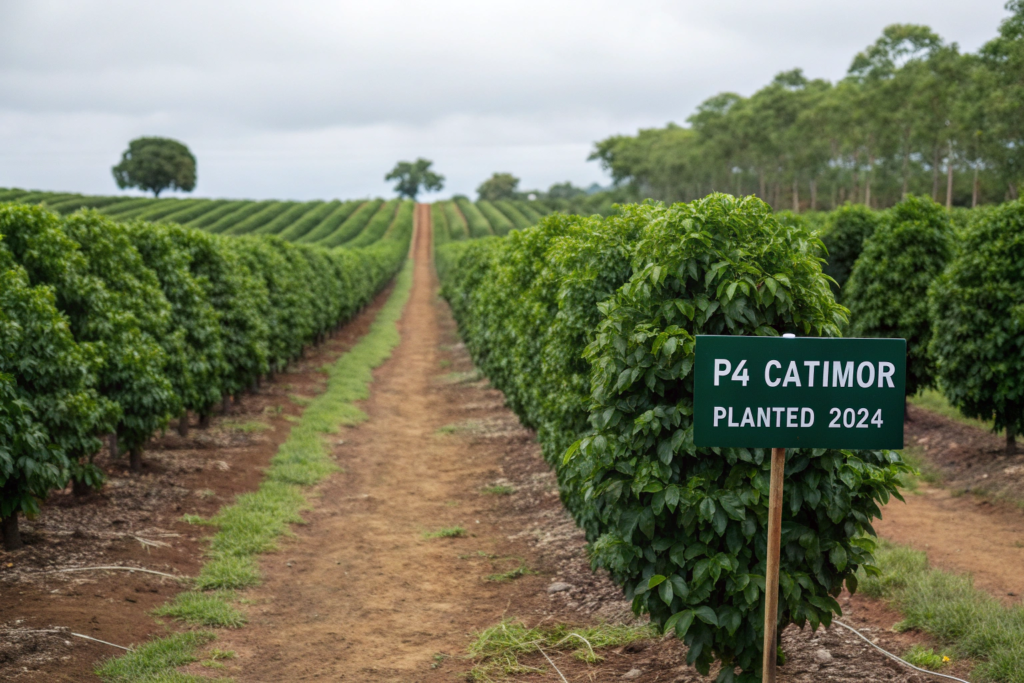
What Are the Benefits of High-Density Planting in Yunnan?
Land suitable for high-quality Arabica in Yunnan is a finite resource. The suitable high-altitude slopes are valuable. High-density planting is a strategy to maximize the return from this premium land.
By planting trees closer together, we increase the total number of trees per hectare. This leads to higher total cherry production per unit of land. The trees also shade each other more quickly, which can help suppress weeds and moderate soil temperatures. This approach requires more intensive management—careful pruning to ensure airflow, and precise fertilization to avoid nutrient competition—but the productivity gains are significant. It's a technique borrowed from modern orchard management in other crops, now applied successfully to coffee in Yunnan.
How Are New Varietals Like Geisha and P4 Integrated into the Farm Plan?
Introducing a new varietal is a long-term strategic decision. It's not just about planting a few novelty trees. It's about careful site selection and long-term management.
Our agronomy team analyzes our farm's different micro-climates. We use GPS and elevation data to identify the specific blocks best suited to each varietal.
- Geisha: Requires the highest, coolest elevations with good drainage to develop its signature delicate profile. We dedicate specific, prime blocks to Geisha.
- Typica/Bourbon: Also require higher elevations and careful management due to their disease susceptibility. We plant them in well-ventilated, manageable blocks.
- P4 Catimor: Is more robust and can thrive across a wider range of elevations. We use it to upgrade the quality of our core production zones.
This is strategic planting, matching the genetic potential of the tree to the specific terroir of the farm. It's a level of sophistication that defines modern, quality-focused coffee growing. At Shanghai Fumao, our variety expansion plan is a core part of our long-term strategy to offer a wider and higher-quality range of coffees.
Conclusion
The image of the timeless, traditional coffee farm is a romantic one. But the reality of producing consistent, high-quality, and traceable coffee in 2026 requires a very different toolkit. The leading plantations in Yunnan have embraced that toolkit.
They are using GPS to map their land and verify their sustainability. They are using soil science and precision fertilization to feed their trees optimally. They are using weather data and digital scouting to manage pests and diseases intelligently. And they are strategically planting improved varietals at optimal densities.
This is the modern reality of Yunnan coffee farming. It's a blend of deep agricultural knowledge and cutting-edge technology. It's this foundation of professional, modern farming that gives buyers the confidence to build long-term, reliable supply chains with Yunnan.
If you're interested in learning more about the specific agronomic practices behind our coffees at Shanghai Fumao, I'm always happy to share more detail. Transparency is a core part of modern farming. My email is cathy@beanofcoffee.com.